
The Silent Math of a Small Leak
Water damage is not dramatic — it is arithmetic. A crack in a supply line just 1/8 of an inch wide, at typical Metro Vancouver municipal pressure of 50–80 psi, releases roughly 250 gallons of water per day. That is 7,500 gallons a month silently entering your home's structure. A toilet with a failed wax ring seeps far less, but it seeps 24 hours a day directly into subfloor that never dries. A slab leak can run for a year under the concrete before anything visible happens upstairs.
The second number that matters is 48: that is approximately how long damp drywall, insulation and framing take to grow visible mold colonies in Vancouver's humid coastal climate. Mold does not wait for summer — an enclosed wet wall cavity in this city is a terrarium. And because hidden leaks stay hidden, the clock runs for weeks before anyone starts it.
Water released per day by a 1/8-inch supply-line crack
For visible mold to colonize damp drywall in coastal BC humidity
Unexplained bill jump that usually means a hidden leak
Typical bill for an undiscovered leak by the time it surfaces
Where the $10,000 figure comes from: it is the realistic total for a mid-size claim we see repeatedly — moisture mapping and mold remediation ($1,500–$4,000), opened and replaced drywall or ceilings ($1,000–$2,500), flooring replacement once laminate or engineered hardwood has swelled ($2,000–$6,000), and the plumbing repair itself ($300–$800). A leak caught in week one is usually the last number alone. The whole point of this guide is to keep you in week one.
The Eight Places Leaks Hide in Metro Vancouver Homes
After thousands of leak calls across 17 cities, the hiding places are remarkably consistent. Check these in rough order of how often they bite:
1 Under sinks
Slow drips from P-trap slip joints, shut-off valve packing nuts and braided supply lines soak the cabinet floor and subfloor below. Run your hand along the underside of the basin and the cabinet base monthly — dampness, swelling, or a musty smell under the kitchen sink is a five-second check.
2 Behind toilets (the wax ring)
A failed wax ring leaks at the toilet base every time you flush — under the floor, not into the room. The tell: a faint sewer odor, a slight wobble in the bowl, or flooring that has darkened or lifted near the toilet's edge. Caulked bases hide it even longer.
3 Slab leaks
Slab-on-grade homes — the standard across Richmond and large parts of Burnaby and North Delta — run hot and cold lines under or through the concrete. Corrosion pinholes them from the outside in. Signs: a hot spot on the floor, unexplained water at the slab edge, or the sound of running water with every tap off.
4 Inside walls
Copper lines passing through studs chafe against the metal edge of every drilled hole for decades until one wears through — especially where sloppy nailing left a nail proud into the pipe cavity. Manifests as stains on the wall or ceiling below, bubbling paint, or a 3am dripping sound.
5 The crawlspace
Homes in Burnaby, North Vancouver, Coquitlam and the Tri-Cities commonly have crawlspace plumbing where drips vanish into gravel and vapor barrier forever. Nobody looks down there; the leak announces itself as a floor that is warm in one spot, a smell, or a water bill that climbed for no reason.
6 Washing machine hoses
Rubber washer hoses are the single most common catastrophic leak source in BC homes — they burst at full pressure, but they usually micro-crack first. A bulge, a crusty mineral streak at the coupling, or a hose older than five years means replace it now, not eventually. Stainless-braided hoses are a $30 fix.
7 The water heater
Tank seepage starts at the weld seams and the drain valve, and an exhausted anode rod accelerates interior rust until the tank weeps. A rust line down the side of the tank, dampness in the pan, or water on the floor that always returns after mopping = replace, and quickly. Our water heater failure signs guide covers the full checklist.
8 Roof and flashing details
Not plumbing, but it behaves identically: failed flashing at a chimney, skylight or vent stack wicks water down between the wall layers. The stain appears meters away from where the water enters. If a ceiling stain grows after rain rather than after faucet use, think roof, and call a building envelope specialist.
Two Metro Vancouver honourable mentions: poly-B pipe itself (grey plastic supply lines installed 1978–1995 that fail unpredictably — if you have it, read the PEX repipe guide), and exterior hose bibs that freeze and split in our January cold snaps, then leak invisibly inside the wall the first time you use them in spring.
Nine Signs a Leak Is Already Happening
Hidden leaks announce themselves — you just have to be listening. Any one of these deserves a same-week investigation; two or more together means stop guessing and go straight to the meter test below.
| Sign | What It Usually Means | Urgency |
|---|---|---|
| Water bill up 20%+ with no habit change | Continuous-flow leak somewhere after the meter — toilet, supply line, slab or irrigation | Investigate this week |
| Musty, earthy smell that returns after cleaning | Mold colony in a wet cavity — wall, under floor, crawlspace | High |
| Warm spot on the floor | Hot-water line leak under a slab (slab-on-grade Richmond/Burnaby homes especially) | High |
| Hissing, dripping or trickling sounds at night | Pressurized leak in a wall or ceiling cavity; nighttime quiet makes it audible | High |
| Stains, bubbling paint or bulging drywall | Water traveling down studs or pooling above; location is often below the actual leak | High |
| Foundation cracks that grow, or doors that stop closing | Soil under a slab leak expanding/eroding and lifting part of the house | Call now |
| Laminate or engineered floor boards darkening/peaking at joints | Subfloor moisture from a slow leak above or below | High |
| Meter test fails (below) | Confirmed leak on the supply side of your plumbing | Confirmed — act |
| Running-toilet behavior or phantom tank refills | Flapper or fill-valve leak — cheap fix, expensive if ignored (up to 200 L/day) | Fix this month |
A note on the smell test: Vancouver's wet basements can smell musty from humidity alone, so use your nose plus your meter. The difference matters — a humidity smell is a dehumidifier problem; a leak smell is a demolition problem if you wait.
The Meter Test, Step by Step
This is the single most valuable five minutes a homeowner can spend, and it costs nothing. The test tells you whether water is moving through your pipes when nothing is using it — which means a leak exists somewhere on your side of the meter. It cannot tell you where, only that you need to look.
Every tap, the dishwasher, the washing machine, the ice maker, humidifiers, evaporative coolers and any irrigation. Do not shut the main shutoff — you want the house pressurized.
In Vancouver and most Metro municipalities the meter sits in a ground box at the property line or in the basement near the front wall. Lift the cap and clean the lens.
Newer meters have a small triangle or star-shaped dial that spins at even a trickle; older meters have a red sweep hand. If that triangle moves with everything off, you have a leak. Full stop.
If the indicator is still, note the meter reading, wait one hour without using any water, and read again. Any change confirms a slow leak — slab leaks and pinholes often move too slowly to spin the dial visibly.
Toilets are the most common leak and the cheapest to confirm: drop a teaspoon of food colouring or a dye tablet in the tank, wait 15–20 minutes without flushing, and check the bowl. Colour in the bowl means a failed flapper — a $20 part, fixed in ten minutes.
Shut the cold inlet at the water heater and re-run the test on the cold side; a leak that stops is on the hot system (water heater, recirculation line, hot feeds — frequent slab-leak territory). This single step halves the search area for whoever hunts it next.
DIY Tools That Find Leaks for Under $60
You do not need a plumber's van to narrow down most leaks. Three consumer tools do 80% of the diagnostic work:
| Tool | Cost | What It Does | Best Used For |
|---|---|---|---|
| Pin-type moisture meter | $40–$70 | Measures wood moisture content at depth; readings above ~16% in drywall or subfloor mean a problem | Tracing the edges of a stain, checking under sinks and behind toilets |
| Thermal camera phone attachment or rental | ~$200 to own; rentable by the day | Shows temperature difference — cold spots are evaporating water; warm floor patches are leaking hot lines | Slab leaks, in-wall hot lines, finding wet insulation boundaries |
| Smart water sensors | $25–$40 each; flood-guard valves $150+ | Alarm or phone alert the moment contacts get wet; flood-guard models auto-shut the main | Under sinks, behind the washer, beside the water heater, in the crawlspace |
The moisture meter deserves a place in every Metro Vancouver tool drawer. Baseline your home on a dry day: interior drywall should read under 12%, subfloor under 16%. Then test anywhere you are suspicious, and map the boundary — the high-moisture edge points back toward the source like a compass rose. A thermal camera rental for a day costs about what one plumber hour costs, and for slab-on-grade Richmond and Burnaby homes it is the difference between guessing which quadrant to open and knowing.
Smart sensors are the set-and-forget play. Place one under the kitchen sink, one behind each toilet, one at the water heater pan, one in the crawlspace (cold-weather homes: near the pressure tank too). They will not find the leak — they catch it at hour one instead of month six, which is the entire financial game. A flood-guard shut-off valve, which closes your main automatically, is the upgrade we recommend for vacation homes, rentals and any poly-B equipped house.
What Professional Leak Detection Costs
When a leak hides beyond meter tests and moisture readings, professional detection combines three technologies: acoustic listening (pressurized leaks make noise through structure), thermal imaging (temperature trails of escaping hot or evaporating water), and tracer gas (an inert gas pumped into the isolated line that seeps out at the leak and is sniffed at the surface). Most Metro Vancouver homes need only the first two; tracer gas is for the stubborn ones.
| Service Level | Includes | Typical Cost |
|---|---|---|
| Basic acoustic + thermal scan | One area of suspicion, listening set + thermal camera, mark-up of findings | $189–$289 |
| Whole-home leak survey | All fixtures, all walls in the affected zone, crawlspace/slab pass, written report for insurance | $289–$389 |
| Tracer gas line isolation | Inert gas on the isolated line, surface sniffing for slab/underground pinpoints | +$150–$250 when required |
| Emergency after-hours detection | Same equipment, nights/weekends dispatch | + emergency premium, flat and disclosed up front |
What you get for that money is a marked leak point — we literally draw on the wall or floor where the pipe is failing — plus a written report your insurer will want later. The detection fee is credited toward the repair when we do the work, which in practice makes the scan free for most customers. When you call around, ask two questions: whether the price is flat or hourly, and whether the technician marks and documents the location. Anything hourly and vague gets expensive.
Insurance: The Sudden-vs-Gradual Line
Here is the part of hidden-leak math nobody explains until it is too late. BC home insurance policies cover sudden and accidental water damage. A burst washing machine hose flooding your laundry room in an afternoon is sudden and accidental — covered, usually well, minus your deductible.
A leak that has been dripping for six weeks behind a wall is gradual damage. Standard policies exclude it — and worse, adjusters can interpret long-running mold and rot as a maintenance failure on your part, which can endanger the whole claim. Worse still, if the insurer discovers the leak originates from poly-B piping or another known-risk material, some will require full repiping before renewal, or decline to renew at all. This is the quiet mechanism by which a $300 repair becomes a $10,000 out-of-pocket loss.
| Situation | Typical BC Policy Response |
|---|---|
| Burst hose / frozen pipe / sudden tank failure | Covered as sudden & accidental — repair + resulting damage, minus deductible |
| Hidden slow leak, found within days, damage limited | Often covered in practice; documentation matters |
| Slow leak discovered after months; mold and rot established | Usually denied as gradual / maintenance issue; repair costs land on you |
| Leak traced to poly-B piping | Repair possibly covered; renewal may require repipe (see our poly-B replacement guide) |
| Overland flooding / sewer backup | Separate optional coverages in BC — check your endorsements |
Three practical moves: photograph your mechanical room and under-sink areas annually (proof of maintenance); keep every plumbing invoice — insurers love documented care; and the moment you suspect a slow leak, get it professionally documented that week. The paper trail converts he-said-she-said into a paid claim. This is general guidance, not a promise about your specific policy — your broker has the last word — but after a decade of walking homeowners through claims, the pattern is consistent.
What the Repair Actually Costs, by Location
The plumbing portion of leak repair is usually the cheapest line on the invoice. The wall, floor and finish restoration is where budgets go to die — which is exactly why early detection pays for itself. Realistic 2026 Metro Vancouver numbers:
| Leak Location | Plumbing Repair | Restoration If Caught Early | Restoration If Caught Late |
|---|---|---|---|
| Under-sink supply line or trap | $150–$350 | $0–$200 (dry out cabinet) | $800–$2,500 (subfloor, cabinet) |
| Toilet wax ring | $220–$400 (reset + ring) | $0 | $900–$3,500 (subfloor, flooring) |
| In-wall pinhole (copper) | $300–$600 + access opening | $250–$600 (one patch + paint) | $2,000–$6,000+ (mold, multi-cavity) |
| Slab leak (reroute or spot fix) | $1,200–$3,500 | $0–$400 | $4,000–$10,000+ (floor lifting, mold) |
| Washing machine hose burst | $100–$200 (hoses, fittings) | $500–$1,500 (dry-out) | $3,000–$8,000 (flooring into adjacent rooms) |
| Water heater seep (replace tank) | $1,400–$2,400 installed | $0–$300 | $2,000–$5,000 (pan failure into flooring) |
| Roof/flashing intrusion | $350–$900 (flashing repair) | $300–$800 (interior patch) | $2,500–$7,000 (structural, insulation) |
Notice the pattern in every row: the plumbing repair is roughly constant whether you catch the leak early or late. The restoration column is what your timing controls. That asymmetry — fixed repair cost, wildly variable damage cost — is the entire business case for the meter test, the $40 moisture meter and the $30 sensors in the chapters above.
Prevention: The 15-Minute Annual Routine
Every catastrophic leak we have cleaned up traces back to one of a handful of preventable failures. Fifteen minutes a year, plus a few dollars of hardware, removes most of them from your future:
- Replace washing machine hoses every 5 years whether they look fine or not — rubber fails from the inside. Stainless-braided hoses cost about $30. Set a phone reminder; it is the highest-return maintenance action in this entire guide.
- Check the water heater anode rod every 3–4 years ($189–$229 with us, including check). The anode sacrifices itself so the tank does not; an exhausted rod is a rusting tank on a timer. Water heater detail is in our failure signs guide.
- Exercise every shut-off valve twice a year — open and close the under-sink stops, the toilet stops, the washing machine stops and the main. Valves that never move seize exactly when you need them, and their packing nuts weep. If a valve will not turn freely, that is a $150 replacement, not a $3,000 flood.
- Flush the water heater annually ($139–$189) to keep sediment from rotting the tank bottom.
- Walk the meter test once a year — same five minutes from Chapter 4, ideally in October before the heating and wet season.
- Book an annual plumbing inspection ($189–$289): we check every fixture seal, the TPR valve, visible supply lines, hose bibs, the crawlspace and the water heater, and we leave you a documented report your insurer will respect.
- Know your main shutoff location today, not during the emergency. In Vancouver-era homes it is usually at the front wall of the basement or crawlspace; in condos, in a hallway or suite access panel. Everyone in the house should know it. Our burst pipe first-60-minutes guide walks the full emergency sequence.
When a Leak Is an Emergency
Not every leak is an emergency, but these situations are — call the 24/7 line and act in parallel:
For the full emergency sequence — main shutoff, breaker, water heater, what to move, what to photograph for insurance — read the first 60 minutes after a burst pipe and our 24/7 emergency plumbing response page. Our emergency line averages a 45-minute arrival across Metro Vancouver, 365 nights a year.
Three Real Vancouver Cases (and Their Bills)
Composites drawn from recent call-outs — names and streets omitted, numbers real.
The Richmond slab leak caught at week two
Homeowner noticed a warm kitchen floor tile and a hot-water bill nudging upward. Thermal scan found a hot-line pinhole under the slab; we rerouted the line overhead for $2,400, plus $300 of laminate re-lay. Caught at month six, the same leak typically means mold remediation and floor replacement: $8,000+.
The Burnaby wax ring that cost a bathroom floor
A faint sewer smell dismissed as "old house" for eight months. By the time we reset the toilet and replaced the wax ring ($320), the subfloor around the flange was black and soft — new subfloor section, vinyl and re-set totalled $3,900. The same repair at week one would have been the $320.
The East Vancouver poly-B leak that changed an insurance renewal
A 1984 build with grey poly-B supply lines developed an in-wall drip. The repair itself was $450 — but the insurer, on seeing the pipe material in the claim photos, required full repiping before renewal. A planned PEX-A repipe ($8,200) followed, and the premium dropped enough afterward to take real sting out of it.
Water Damage Restoration: Before & After
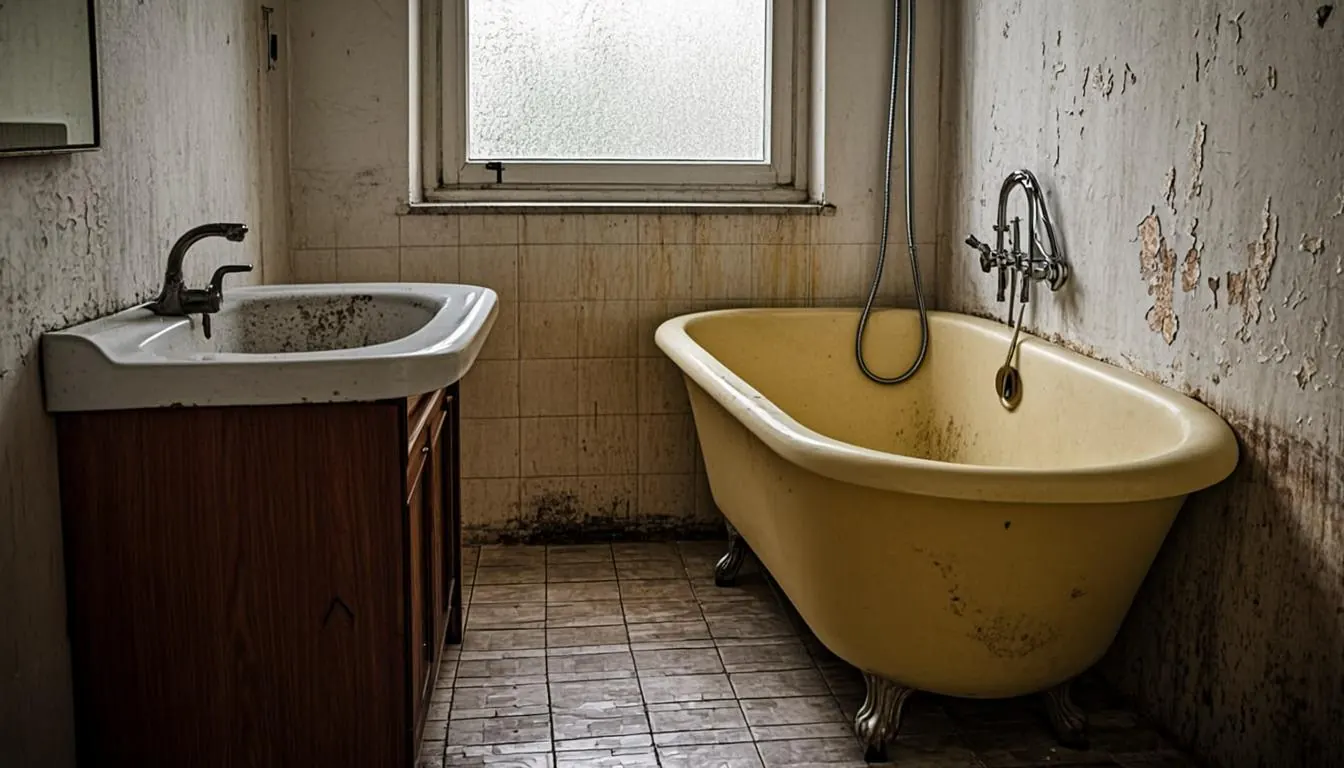
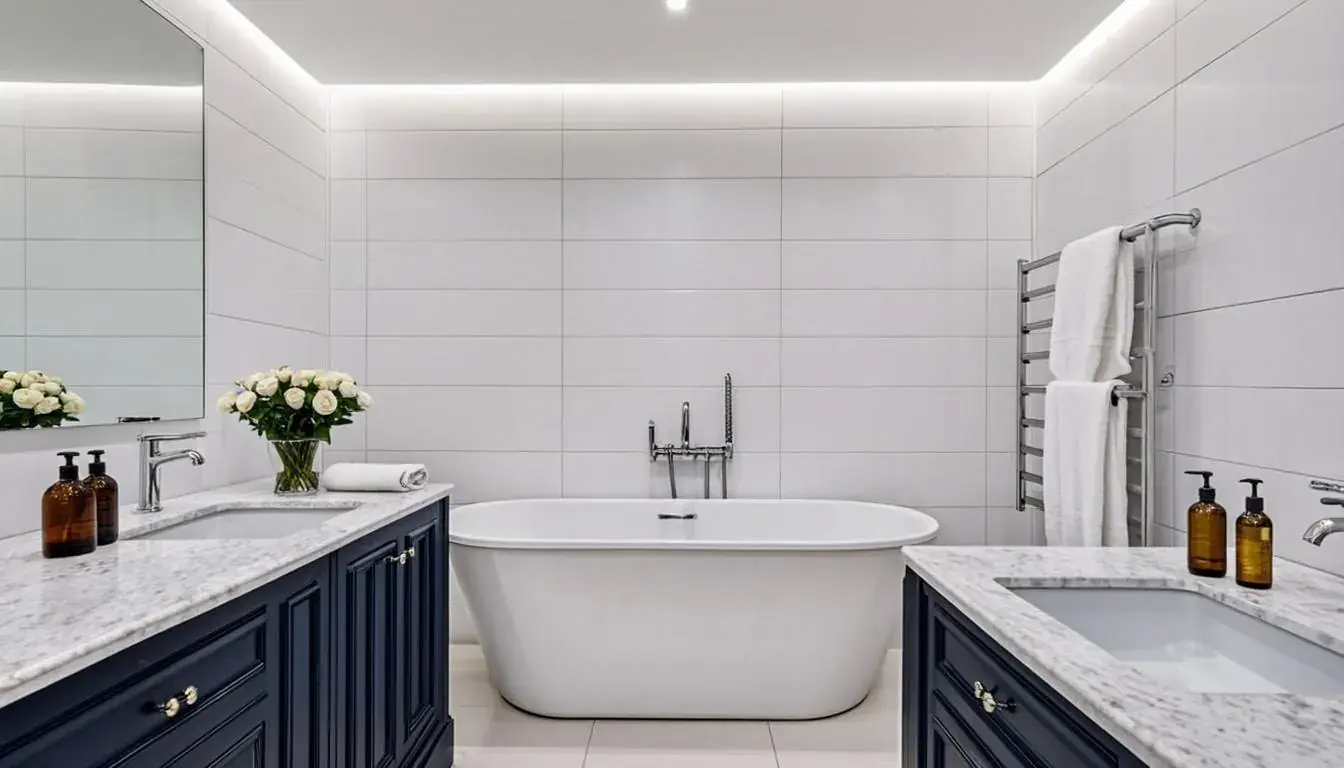
A bathroom gutted by a long-running hidden leak — wax ring and supply-line seepage into the subfloor — rebuilt with new subfloor, waterproofing and fixtures. Drag to compare.
Your 7-Step Leak Action Plan
Print this, or just do it now — the whole list is a single evening:
Show everyone in the household. This is the single control that turns any leak into a non-event.
Five minutes, zero dollars, definitive answer about whether water is escaping right now.
Fifteen minutes per toilet; flappers are the cheapest leak you will ever fix.
Under sinks, toilet bases, washer hoses, water heater seams, plus a nose test in each room. Ten minutes.
Braided washer hoses, two smart sensors, dye tablets. Install the sensors the day they arrive.
Metro Vancouver municipal water billing makes unexplained consumption visible — use it as a free monthly leak monitor.
A $189–$389 detection visit that finds it in week one is the cheapest plumbing you will ever buy. If you have poly-B or galvanized pipe, book the inspection conversation now rather than after the first pinhole.
Think You Have a Hidden Leak? We Find It Before It Finds Your Bank Account
Acoustic, thermal and tracer-gas detection from $189–$389 flat — leak located and marked before we open anything, written report for your insurer, and the detection fee credited toward the repair when we do the work. Emergency dispatch runs 24/7 across all 17 Metro Vancouver cities we serve.
Hidden Water Leak Detection: Your Questions
The questions we field most on leak calls across Vancouver, Surrey and the Tri-Cities — answered the way we answer them on the phone.
One Licensed Crew for Everything Water
Leak detection is one service on a full plumbing and mechanical team — one phone number, one standard of accountability, 24/7 across 17 cities.
Plumbing & Leak Repair
Water leak detection Vancouver homeowners trust, plus PEX repiping Metro Vancouver, drain cleaning and fixture repairs — flat-rate, documented, warrantied.
24/7 Emergency Response
24/7 emergency plumber Vancouver line for active leaks, floods and burst pipe emergency response — 45-minute average arrival, day or night.
Water Heaters
Hot water tank replacement Surrey and Vancouver — tanks, tankless and heat pump units, anode checks and the seeping-tank replacement that stops leaks before floors pay for them.
Financing & Rebates
When a leak means a repipe or a new water heater, home service financing BC families use — $0 down from 7.99% APR — spreads the cost so the fix never waits for the damage to worsen.
Keep Reading Before It Drips Again
Long-form guides written by our plumbing crew for Metro Vancouver homeowners.
Burst Pipe: Your First 60 Minutes
The exact emergency sequence — main shutoff, breaker, water heater, documentation — that limits damage when a leak becomes a flood.
PEX Repipe Guide: The Cure for Poly-B Pipes
Why insurers are demanding replacement of 1978–1995 poly-B plumbing, what PEX-A repiping costs, and the 1–3 day process that ends pinhole leaks for good.
Water Heater Failure Signs
The tank-in-distress checklist — rust streaks, damp pans, rumbling sediment — that tells you when to replace before the floor finds out for you.
This guide was written and reviewed by the plumbers who find these leaks every week — licensed under BC License #BC-PL-2019-4421, $2M insured, WorkSafeBC covered, and rated 4.9 stars across 39 Google reviews. Every price range reflects invoices we have actually written this season, and every detection method described is equipment our vans carry. When the meter test points somewhere you cannot see, that is our job.
Get Your Free Leak Detection Quote in Vancouver & Surrey
Tell us what you are seeing, hearing or smelling, and we will call you back within 15 minutes during business hours. Leak detection quotes are free and flat-rate — acoustic and thermal scanning, slab and crawlspace surveys and written insurance reports included, with the detection fee credited toward your repair. No pressure, no call centers, and no obligation. You talk directly to our Metro Vancouver dispatch team.
Water flowing right now? Call instead.
If a leak is active, shut your main water valve first, then call — our 24/7 emergency line dispatches immediately with a 45-minute average arrival across Metro Vancouver. For hidden-leak investigations and routine quotes, this form is perfect and gets a 15-minute callback in business hours.
Call 604-615-2212Business hours: Mon–Fri 8am–6pm, Sat 9am–4pm. Emergency line: 24/7/365.
Avg emergency arrival
Stars, 39 reviews