The Poly-B Story: BC's Biggest Plumbing Mistake
Polybutylene — "poly-B" to every plumber in BC — is a flexible grey plastic pipe that seemed like a miracle when it arrived in the late 1970s. It was cheap, easy to run, corrosion-proof (unlike the galvanized steel it replaced) and freeze-tolerant. Between roughly 1978 and 1995, it was installed in an estimated 700,000 Canadian homes — an enormous share of everything built during the era, and that era happens to coincide with the biggest suburban building boom in BC history.
The miracle had a flaw. Poly-B's long-chain polymer structure degrades on continuous exposure to chlorine — the exact disinfectant Metro Vancouver and municipal suppliers dose into drinking water — and to ultraviolet light, which is why pipe stored unprotected or run near light sources embrittles fastest. The degradation happens from the inside out: the pipe's inner wall micro-cracks, loses flexibility, and eventually a fitting or a length simply lets go. There is no corrosion schedule to read, no rust to warn you. Poly-B fails suddenly, behind walls, on its own timeline.
The industry figured this out the hard way. In the United States, polybutylene failures spawned the Cox v. Shell class action and a settlement fund that paid out over a billion dollars in repiping claims before it closed to new claims in 2020 — which is worth knowing, because it tells you the failure pattern was never anecdotal. Canadian homeowners had no equivalent settlement. What we got instead was the BC plumbing code removing poly-B from accepted materials in the mid-1990s, and three decades of plumbers replacing failed poly-B runs one leak at a time — or, increasingly, whole-house at once.
Canadian homes plumbed with poly-B during the 1978–1995 window
The install window — every one of those pipes is now 30+ years old
Typical insurance premium drop after documented poly-B replacement
Our written warranty on a complete PEX-A repipe
Do You Have Poly-B? The 5-Minute Identification
You can usually settle the question yourself in five minutes with a flashlight. Poly-B is grey (occasionally white or black, but grey is the Metro Vancouver norm), plastic, and usually stamped along its length with identifiers like "PB2110", "Poly-B", or manufacturer names like Quest / QL, Vanguard, Zenith, or Plastic Pipe. It was typically installed with copper or plastic insert fittings secured by aluminum crimp rings — those dull silver bands are a strong tell on their own.
Where to look, in order
- The water heater closet — the hot and cold lines on top of the tank are the most visible plumbing in the house.
- Under the kitchen and bathroom sinks — the shut-off valves and the stub-outs coming out of the wall.
- Behind the toilets — the supply stub from the wall to the toilet stop.
- The basement ceiling or crawlspace — where main runs are exposed above the utilities; look at pipe stamped markings with a flashlight.
- At the main shutoff / pressure regulator — typically at the front wall of the basement.
Distinguish it from the look-alikes: PEX (modern cross-linked polyethylene) is red, blue, white or orange and feels smoother with no stamped PB markings; CPVC is off-white/ivory and rigid; copper is, obviously, copper. Grey + plastic + crimp rings + a 1978–1995 build date = poly-B until proven otherwise. If any run is hidden in finished walls, assume the same material runs everywhere — builders of that era used one system per house. And if you want certainty, a $189 plumbing inspection from us includes a material identification you can hand to your insurer.
Which Metro Vancouver Homes Are Affected
Poly-B is a dated-material problem, so geography is really just a map of where BC was building between 1978 and 1995 — and the answer is: everywhere the suburbs were exploding.
Surrey & the Fraser Valley boom
Newton, Whalley, Guildford, Fleetwood and North Delta filled with poly-B-era family homes and townhouse complexes from the late 70s through the 90s. This is the single largest concentration we repipe, and secondary suites add bathrooms and fixture count to scope.
Coquitlam, Port Coquitlam & Port Moody
The Tri-Cities built relentlessly through the poly-B window — subdivided single-family stock plus the first waves of 80s/90s strata townhomes, where poly-B failures leak into neighbours' units and turn one repipe into a strata conversation.
Burnaby, New Westminster & North Vancouver
Everything from 80s infill duplexes to 90s hillside builds on the North Shore carries the material; New West's pre-war stock mixes poly-B retrofits into even older galvanized systems, which means we often find both problems in one house.
Vancouver proper — condos & infill
The city's poly-B lives mostly in 1980s condo buildings, rental blocks and laneway-era infill, plus fixture-level runs in renovated character homes. Strata-wide repipes there run through a different process (see Chapter 10's strata notes) and often pair with our emergency leak response between phases.
Quick self-check any homeowner can run: your build year. If your home was built between 1978 and 1995 anywhere in Metro Vancouver, assume poly-B until a plumber confirms otherwise. If it was built before 1960, your question is galvanized steel (Chapter 4). Post-1995 builds used copper or early PEX and are generally clear of both legacy materials.
Galvanized Steel: The Other Legacy Pipe
Poly-B dominates the conversation, but pre-1960 homes across Vancouver's older neighbourhoods — Kitsilano, Mount Pleasant, Grandview, New Westminster's West End, North Vancouver's old districts — run on galvanized steel: iron pipe dipped in zinc. Galvanized does not micro-crack like poly-B; it rusts, from the inside, continuously, for fifty years.
The symptoms arrive in a predictable sequence. First, rusty-tinted water after a tap sits unused overnight (the overnight static water absorbs rust). Then, falling pressure at fixtures far from the main, because the pipe's interior is closing up with scale — a 3/4-inch galvanized line can effectively become a 1/4-inch rusty straw. Then, repeated pinhole leaks at threaded joints where the zinc coating died first. And quietly, all that internal scale and corrosion sediment is beating up every fixture, appliance and water heater downstream of it. If you have ever replaced a faucet in an old Vancouver home and found the aerator packed with rust flakes within weeks — that is your galvanized pipe, not the faucet.
| Factor | Poly-B (1978–1995) | Galvanized Steel (pre-1960) |
|---|---|---|
| Failure mode | Sudden splits at pipe wall and fittings, no warning | Gradual rust-through, pinholes, thread leaks |
| Water quality symptom | None — fails clean | Discolored rusty water, sediment at aerators |
| Pressure symptom | Normal until failure | Progressive pressure loss, worst at far fixtures |
| Insurer attitude 2026 | Replacement often required for renewal or coverage | Rate loading or exclusion on older systems; documented replacement helps |
| Typical Vancouver stock | Surrey, Tri-Cities, Burnaby, 80s–90s builds | Vancouver proper, New Westminster, North Shore pre-1960 |
The treatment is the same: full repipe to PEX-A (or copper in the exposed, high-visibility runs), new shut-offs, new supply lines, reconnection of every fixture. And there is a bonus unique to galvanized homes — when we pull the old pipe out, customers routinely notice their shower pressure transformed. It is the single most common "I wish I'd done this years ago" phone call we receive.
Why Insurers Are Demanding Replacement in 2026
If you insure a poly-B home in 2026, you have likely already felt this. Over the last several renewal cycles, BC insurers have tightened dramatically on water damage — the frequency and severity of claims in aging housing stock has grown, and poly-B is one of the highest-conviction risk markers in a home inspection. The practical reality we see weekly:
- Renewal questionnaires now ask directly about polybutylene plumbing, galvanized supply lines and the age of the water heater. Answering honestly is a legal obligation on your policy.
- Some insurers decline or non-renew poly-B homes outright; others write coverage with a water-damage exclusion — which means the single most likely claim your house can make is the one they will not pay.
- Others raise premiums materially while requiring a repipe commitment within a set window.
- A documented, professional repipe reverses all of it: normal underwriting, coverage restored, and premiums that typically land 10–20% lower than the poly-B surcharged rate — permanently, because the risk marker is gone.
Two things make the 2026 climate different from even a few years ago. First, underwriters now share claims data more aggressively, so a poly-B leak in your neighborhood's housing stock prices into everyone's renewal. Second, real estate transactions are surfacing the material: buyers' home inspectors flag poly-B as a defect, lenders and insurers get nervous, and closing deadlines turn the repipe into a negotiated price item. Sellers increasingly repipe pre-listing because it converts a scary inspection line into a marketing line ("new PEX plumbing, 25-year warranty") that reliably returns more than it costs.
General guidance, not a guarantee about your specific policy — but the direction is unmistakable: every year of delay on a poly-B house is a year of paying a premium penalty for a risk you could remove in three days. The full claims-and-coverage mechanics are covered in our hidden water leaks guide.
Symptoms: When Poly-B Has Started Failing
Poly-B's cruel trick is that the first failure often looks like a fluke. The second failure is the pattern. If you live in a 1978–1995 home and recognize two or more of these, the pipe is talking to you:
1 A pinhole leak in a ceiling or wall
Especially at or near fittings and crimp rings. One repaired leak in a poly-B house is statistically a preview — the same chlorine exposure is aging every other metre of the system identically.
2 Repeated leaks, different locations
Second and third failures within a couple of years is the textbook poly-B cascade. Repair costs stacking toward $1,500+ tell you the system is done, even if no single failure felt decisive.
3 Dripping or seeping at crimp fittings
White mineral crust on grey pipe at the aluminum crimp rings means slow seepage has been occurring — long enough to deposit scale. That is an active-failure signature, not cosmetic.
4 Brittle, chalky pipe surface
Exposed poly-B that snaps or cracks when gently flexed (UV-exposed sections especially, near hatchways and utility rooms) has lost its polymer flexibility everywhere.
5 An insurance letter or renewal questionnaire
If your broker has asked about poly-B, your pipe's age has already been priced. The question is whether you fix it on your schedule or theirs.
6 Nothing at all
The absence of symptoms is the absence of information, not the absence of risk. A 35-year-old poly-B system with a clean history is a coin being flipped monthly. Read Chapter 1 again.
For galvanized homes, swap the symptom set: rusty water at far taps, shrinking pressure, aerator sediment, and pinholes at threaded joints. Either way, the decision math is the same — and it stops being "should we repipe" the moment the failure pattern asserts itself.
PEX-A vs PEX-B vs PEX-C: What We Install and Why
PEX — cross-linked polyethylene — comes in three manufacturing grades, and the differences matter more than the shared name suggests. Cross-linking is what transforms ordinary polyethylene pipe into a material that handles 80 psi municipal pressure and 180°F hot water for decades; the letter describes how the cross-linking was done.
| Property | PEX-A | PEX-B | PEX-C |
|---|---|---|---|
| Cross-linking method | Peroxide (Engel) process — done during extrusion | Post-extrusion silane method | Electron-beam irradiation |
| Cross-link density | ~70–85% — uniform through the wall | ~65–70% — denser at the surface | ~60–70% — lowest and least uniform |
| Flexibility & kink recovery | Best — kinks repairable with a heat gun | Fair — stiffer, kinks stay | Fair to poor |
| Joining system | Expansion fittings (ring expands over pipe, shrinks to seal) — no crimp rings | Crimp or clamp fittings | Crimp fittings |
| Fitting flow characteristics | Full-bore inserts — least pressure loss | Insert fittings reduce internal diameter | Insert fittings reduce internal diameter |
| Chlorine resistance | Excellent (highest-rated for potable water) | Good | Good |
| Typical use | Premium whole-home repipes, manifolds | Tract construction, budget installs | Short runs, radiant loops |
| Our position | What we install on every full repipe | Acceptable for spot repairs only | Not used for repipes |
Why PEX-A expansion fittings are the reliability story: the fitting joint is made by expanding the pipe over a fitting and letting the pipe's memory shrink it back into a tight, uniform seal — no crimp ring to over-tighten, no insert barb choking the flow, and the fitting is actually stronger than the pipe itself. In independent long-cycle testing, properly-made expansion joints have the lowest failure rates of any residential joining method. On a 25-year-warranty repipe, that is the margin we build on.
Does Copper Still Have a Role?
Copper remains a superb plumbing material — rigid, proven over a century, and beautiful where plumbing is meant to be seen. We still use it, selectively, and you should be suspicious of any repipe quote that treats copper as pure villainy or pure necessity. The honest engineering position:
- Exposed, high-visibility runs: utility rooms, mechanical spaces and open ceilings in finished basements look better and take abuse better in copper. In a show-piece mechanical room, copper is worth its premium.
- Rigid structural needs: risers in some configurations, slab-on-grade penetrations, and any detail where the pipe itself must support weight or take knocks — copper's rigidity earns its place.
- Historic and character homes: in Vancouver's pre-war housing stock, copper keeps interiors period-correct where pipes show. The rest of the system behind walls still goes PEX-A.
- Cost and labor reality: copper costs materially more in material and takes longer to install (every joint is soldered), which is why a full copper repipe typically runs 40–60% more than PEX-A with no reliability advantage inside walls.
Our default spec — and the one behind the price tables in the next chapter — is PEX-A throughout, with copper used where exposure or structure genuinely calls for it, priced transparently as an option. Insurers and home inspectors treat a professional PEX-A repipe as fully equivalent to copper for underwriting purposes; the material they care about is the one leaving, not the one arriving.
What a Full PEX Repipe Costs in Vancouver
These are the real 2026 Metro Vancouver ranges we quote for complete PEX-A repipes — every hot and cold line, every shut-off valve, every fixture supply, all patching included, permit and inspection included. The two variables that move a price more than anything else are how many fixtures the house has and how hard the walls are to access.
| Home Size | Scope | 2026 Installed Cost |
|---|---|---|
| Condo / 1-bath apartment | All lines, one bathroom, kitchen, laundry | $4,500–$7,500 |
| 2-bath home or townhome | 2 bathrooms, kitchen, laundry, outside taps, ~10–14 fixtures | $6,500–$9,500 |
| 3-bath home (typical Surrey two-storey) | 3+ bathrooms, kitchen, laundry, suite considerations, ~16–20 fixtures | $8,500–$12,000 |
| 3-bath + finished basement / suite | Full house plus separate suite plumbing and sub-metering options | $10,000–$14,000 |
| Large 4+ bath / two-storey + basement | Custom homes, Morgan Creek–scale builds, multiple manifolds | $13,000–$18,000 |
What moves the price, honestly
- Wall access: unfinished basements and crawlspaces let us run most of a house cheaply; fully finished space, tile-surround bathrooms and plaster walls add opening-and-patching labor. This is the single biggest swing factor.
- Storeys: two-storey homes need a second wet wall penetration strategy; slab-on-grade homes route overhead instead of under-slab.
- Fixture count and valves: every fixture gets a new brass shut-off and braided supply line as part of our standard scope — more fixtures, more brass, more labor.
- Water heater condition: if the tank is 10+ years old, replacing it during the repipe saves duplicating connection labor later; we price it as an option, never a surprise.
- Patch and paint scope: our quote itemizes it. Some customers paint themselves; most take our painter day (typically $800–$1,500 on a 3-bath) for a turnkey finish.
Financing is available on every repipe from 7.99% APR with $0 down — a $9,500 repipe runs about $191/month over 60 months — and combining it with the insurance premium drop means many households' net monthly cost lands close to zero. Full detail on the financing and rebates page.
The Repipe Process: 1–3 Days, Step by Step
A full repipe sounds like a renovation. It is not. Our crews complete most homes in one to three working days, with water off only in controlled windows. Here is exactly what happens:
We photograph and list every fixture, map the current material, mark where openings will go, and confirm the PEX-A layout and manifold locations. You approve a written scope with a fixed price.
Floors and furnishings get protected; we open surgical access points — behind fixtures, in closet backs, at ceiling penetrations — planned to be small and patchable. No demo walls.
Main shut in the morning; old lines abandoned in place where they lie inside walls (standard practice — abandoning is normal, removing every metre means opening every wall). New PEX-A runs from the manifold to every fixture; expansion fittings only.
Every fixture gets a new shut-off valve and braided stainless supply lines — toilets, sinks, dishwasher, laundry, fridge, hose bibs, water heater connections. This is the moment the house gets a decade of "next problems" solved too.
The new system is pressure-tested well above working pressure and inspected; lines are flushed clear. Water is back on, hot and cold verified at every fixture.
Access openings are patched with drywall, taped, mudded and sanded, ready for paint — done by our patchers (or your painter) typically within the same 1–3 day window. Excess old pipe removed from accessible areas and the site cleaned.
Scope-of-work, materials list, warranty registration and install photos — the exact binder your insurer wants at renewal, and the asset sellers hand to buyers' agents.

Strata and townhouse repipes run the same process with one addition: coordination. We work with strata councils on access windows, bylaw documentation and phased scheduling so residents keep water overnight while work proceeds unit by unit. Condo high-rises are quoted after a building review, since riser access and shutoff logistics differ from everything above.
Living Through It: Water-Off Hours, Patching and Paint
The question every customer asks first: "how long will we be without water?" The honest answer for most homes: water is off in blocks of roughly 8am–4pm on working days, and back on every evening — you shower, cook and sleep normally. We sequence the work so kitchens or one bathroom recovers first wherever the layout allows. Total disruption on a typical 2–3 bath house is one to three days; larger homes with finished basements and suites run three to five.
Preparation on your side is minimal: clear access under sinks, around the water heater, and to fixture walls; remove wall-hung items near where access openings will go (we mark them in the walkthrough); plan one day without laundry. Pets and kids coexist with the work fine — crews are background-checked, floors are protected, and the site is cleaned to broom-clean each evening.
On the patching: our standard scope includes drywall patching, tape, mud and sand — finished ready for paint. We deliberately choose access points in low-visibility locations (closet backs, under-counter walls, ceiling lines that run with existing joints). For paint, you have two options: our painter day blends and paints the patched areas to match (typically $800–$1,500, more if rooms get full repaints), or your own painter takes it from sanded-ready. Customers with popcorn or textured ceilings pay slightly more for texture matching — it is quoted up front, never discovered later.
Poly-B to PEX-A: Before & After
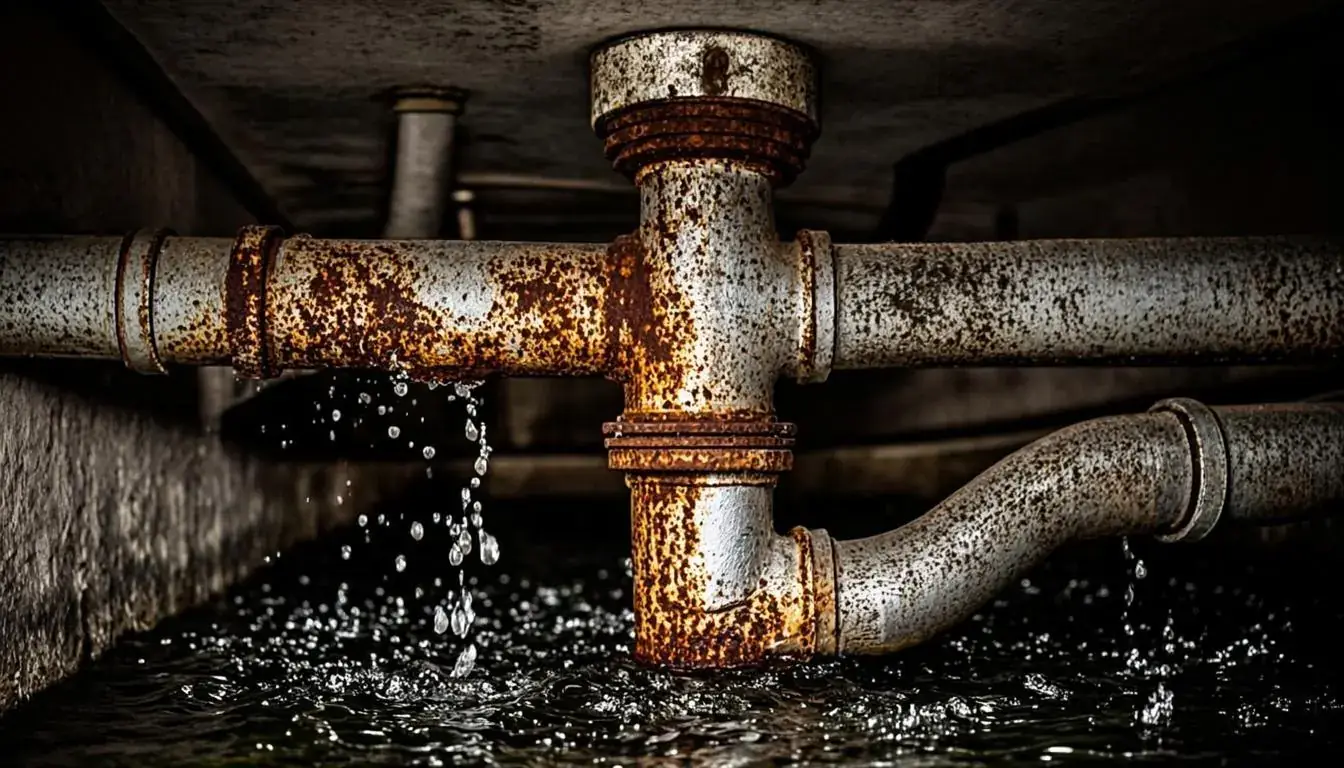
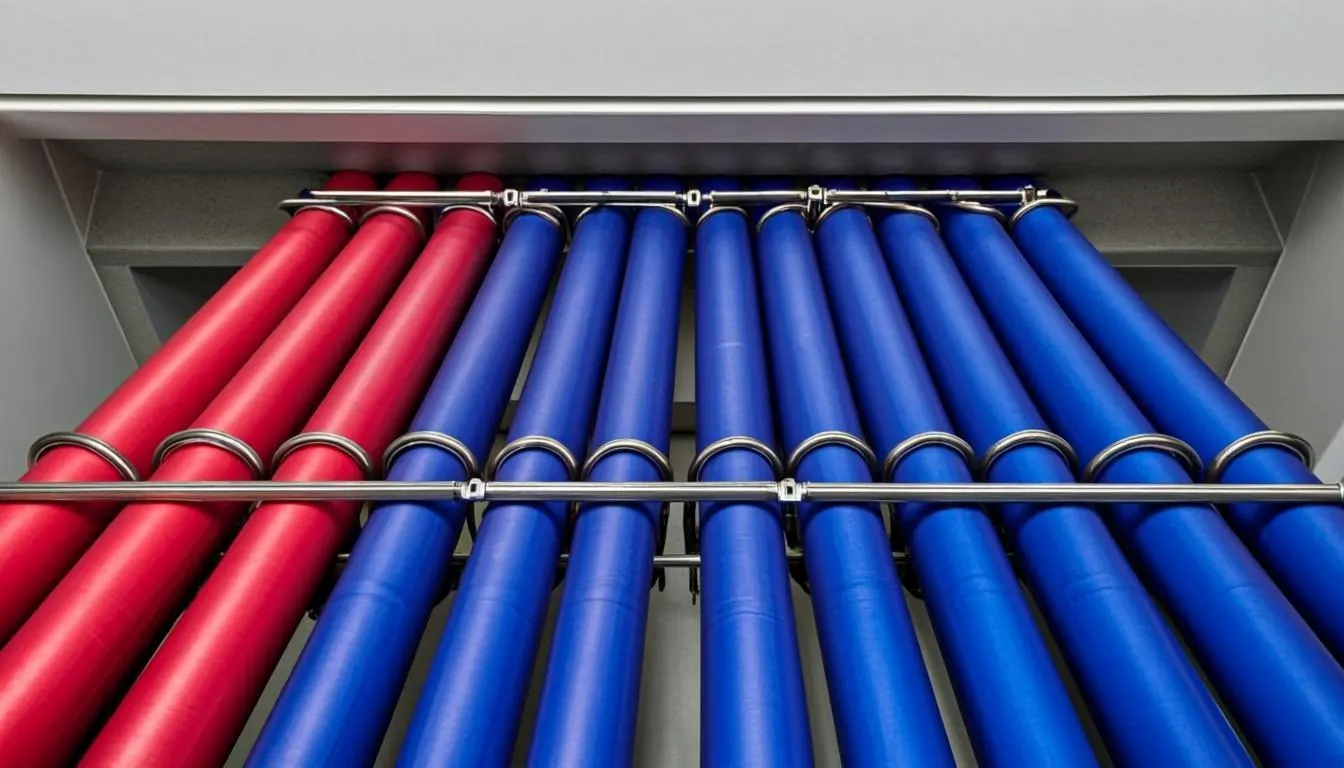
A 1987 Surrey family home with failing grey poly-B, repiped end-to-end in two days: new PEX-A lines, manifold, brass valves and supplies at every fixture. Drag to compare.
After the Repipe: Insurance, Financing and the 25-Year Warranty
The week after a repipe is when customers report the surprise dividends. Pressure at far fixtures improves — sometimes dramatically on galvanized conversions. Shower temperatures stop see-sawing when a toilet flushes, because balanced PEX runs and new valves behave better than 40-year-old pipe. And the insurance letter or renewal questionnaire that started the whole thing gets answered with documentation instead of anxiety: premiums typically settle 10–20% below the poly-B-surcharged rate, water-damage exclusions come off, and underwriting treats the home as rebuilt rather than aging.
Our warranty on a complete PEX-A repipe is 25 years, in writing — covering materials and our labor for the system as installed. It is transferable, which matters if you sell: agents list "repiped 2026, transferable 25-year warranty" as a feature, and buyer inspections stop generating plumbing contingencies. For strata-managed buildings, the same documentation supports reserve-fund planning and disclosure statements.
Maintenance after a repipe is close to nothing: PEX-A does not corrode, does not scale, and its expansion joints do not loosen with age. Once a year, exercise the fixture shut-offs, check the water heater anode, and glance at the manifold — a 10-minute routine covered by our $139–$189 annual plumbing plan, which also keeps your warranty documentation current. That is the whole ownership experience: a plumbing system engineered to be boring, for decades.
The peace-of-mind math
Poly-B house: one insurance surcharge year after year, one unpredictably-timed $10,000+ hidden leak, one anxious renewal. Repiped house: one known cost, financed from about $191/month, a 10–20% premium drop, a transferable 25-year warranty, and the end of pipe anxiety. The spreadsheet finishes the argument.
Our documentation promise
Scope of work, materials list, pressure-test record, install photos and warranty registration — bound and emailed before we leave, formatted for insurance underwriters and buyers' agents alike. Your repipe should be legible to everyone who needs to trust it.
Ready when you are — even if "ready" is a question
Not sure your house is poly-B? The $189 inspection answers it with documentation. Got the insurance letter in hand? We quote within 48 hours and can schedule most repipes inside two weeks. Currently mopping? Our 24/7 emergency line stabilizes today, and the repipe follows.
Poly-B In Your Walls? Get a Fixed-Price Repipe Quote in 48 Hours
Material identification, fixture-by-fixture scope, honest 1–3 day timeline, patching included and a written 25-year warranty — priced flat before we open a single wall. Financing from 7.99% APR with $0 down, and the documentation package your insurer or buyer's agent will ask for is part of the job, not an extra.
PEX Repiping in Vancouver: Your Questions
The questions we answer most on repipe calls across Vancouver, Surrey and the Tri-Cities — the same answers we give at the kitchen table.
Repiping Is One Service on a Full Team
One licensed, insured, Red Seal crew for every system in your Metro Vancouver home — one phone number, one standard of accountability.
Plumbing & Repiping
PEX repiping Metro Vancouver homeowners trust — poly-B and galvanized replacement, leak detection, drains and fixtures, all flat-rate and documented for insurance.
24/7 Emergency Response
Burst pipe emergency response and the 24/7 emergency plumber Vancouver line — 45-minute average arrival when poly-B fails before the repipe is booked.
Water Heaters
Pair the repipe with a tankless water heater Vancouver installation or tank replacement — one mobilization, new connections included, no duplicated labor.
Financing & Rebates
Home service financing BC families use — $0 down from 7.99% APR, 12–84 month terms, and the paperwork handled while your repipe is scheduled.
Keep Reading Before You Decide
Long-form guides written by our plumbing crew for Metro Vancouver homeowners.
Hidden Water Leaks: Find Them Before They Cost You $10,000
The damage math, the meter test, pro detection costs and the sudden-vs-gradual insurance rules — everything to know while a poly-B system still hides in your walls.
Emergency Plumbing in Vancouver
What counts as a true emergency, response times by city, and how to triage the call — the companion guide for the week a legacy pipe fails before its replacement.
Water Heater Failure Signs
The tank-in-distress checklist — rust streaks, damp pans, sediment rumble — for the decision to pair a new water heater with your repipe's plumbing day.
This guide was written and reviewed by the repipe crews that do this work daily — licensed under BC License #BC-PL-2019-4421, $2M insured, WorkSafeBC covered, and rated 4.9 stars across 39 Google reviews. Every price range reflects quotes we have written this season, every insurance claim about premiums reflects renewals our customers have shown us, and every process step is what our vans actually do in your house. If your home was built between 1978 and 1995, come talk to us before the pipe makes the introduction.
Get Your Free PEX Repipe Quote in Vancouver & Surrey
Tell us about your home and its plumbing history, and we will call you back within 15 minutes during business hours. Repipe quotes are free, written and fixed-price — material identification, fixture-by-fixture scope, patching and permit included, with financing from 7.99% APR and the insurance documentation package built into the job. No pressure, no call centers, and no obligation. You talk directly to our Metro Vancouver dispatch team.
Pipe failing right now? Call instead.
If a poly-B line has already let go, shut your main valve and call our 24/7 line — we stabilize the leak today and schedule the repipe behind it. For identification and planned quotes, this form is perfect and gets a 15-minute callback in business hours.
Call 604-615-2212Business hours: Mon–Fri 8am–6pm, Sat 9am–4pm. Emergency line: 24/7/365.
Typical 3-bath repipe timeline
Written, transferable warranty