Why Surrey Is the Hardest AC Decision in Canada
Surrey is Metro Vancouver's growth engine — a city of roughly 620,000 people that adds thousands of new homes every year across Newton, Fleetwood, Clayton, Grandview and Morgan Creek. That growth came in waves, and each wave built differently. The 1970s and 80s filled North Surrey and Newton with split-entry homes and ranchers heated by furnaces with modest ductwork sized for heat only. The 1990s and 2000s filled Fleetwood, Sullivan and Panorama with two-storey family homes — many with basement suites — again with duct systems designed before anyone in BC seriously installed air conditioning. Since the 2010s, East Clayton, Grandview Heights and Cloverdale's new subdivisions have gone up with high-efficiency furnaces, HRVs and ductwork that is genuinely AC-ready.
Then June 2021 happened. The heat dome pushed Surrey past 40°C and changed public opinion about air conditioning overnight. What was once a luxury for a week or two of summer became survival equipment — and the demand has never come back down. Older adults, infants and people with health conditions in homes that hit 34°C indoors are not a comfort problem; they are a safety problem. Since then, every summer has delivered at least one multi-day heat event, and our Surrey cooling crew runs from May straight through September.
AC and heat pump installs across Metro Vancouver since 2010
Surrey homes we quote were built 1980–2005 without AC-ready ducts
Surrey's recorded high in the June 2021 heat dome
The result is a city where the right answer genuinely varies house to house — sometimes street to street. Your neighbour's brand-new central system in a Clayton build tells you nothing about what will work in a 1987 split-entry on 80A Avenue with a finished basement suite below. This guide walks through the decision the way our estimators do it on-site: ducts first, then layout, then budget, then rebates.
First Question: Does Your Home Already Have Ducts?
Every ductless vs central air decision in Surrey starts with one physical fact, and it takes five minutes to check. Walk to your furnace. If you see a large rectangular plenum on top feeding a network of round or rectangular ducts that run through the ceiling of your basement toward floor registers, you have a duct system — and central AC is on the table. If instead you see baseboard heaters, a boiler with radiators, or wall furnaces, you have no duct network, and central AC would mean building one.
Three Surrey situations matter here:
- Ducts, heat-only sized (most 1980–2000 homes). Furnace ductwork was sized to move warm air at lower fan speeds. Adding AC usually works, but a good contractor verifies static pressure and blower capacity first — an undersized blower kills compressor life and freezes coils. Sometimes a simple ECM blower upgrade makes the ducts fully AC-capable for far less than new ductwork.
- Ducts serving only the main floor. Many split-entry and two-storey Surrey homes run ducts to the main level with a couple of awkward basement outlets and a single upstairs register that barely whispers. Central AC will cool the main floor and disappoint the bedrooms — which is exactly where families need cooling at 11pm. Ductless heads upstairs solve this precisely.
- No ducts at all. Electric baseboard homes (common in portions of Whalley, Guildford apartments and condo stock), boiler homes, and laneway or garden suites have no air highway whatsoever. Ductless is not an option here; it is the only option short of a six-figure duct retrofit through finished space.
One warning we give every Surrey homeowner: never accept an AC quote for a ducted home that does not include a static pressure test or blower capacity check. It takes our techs about twenty minutes and it is the difference between a system that cools for fifteen years and one that eats a compressor in four.
How Central Air Conditioning Works
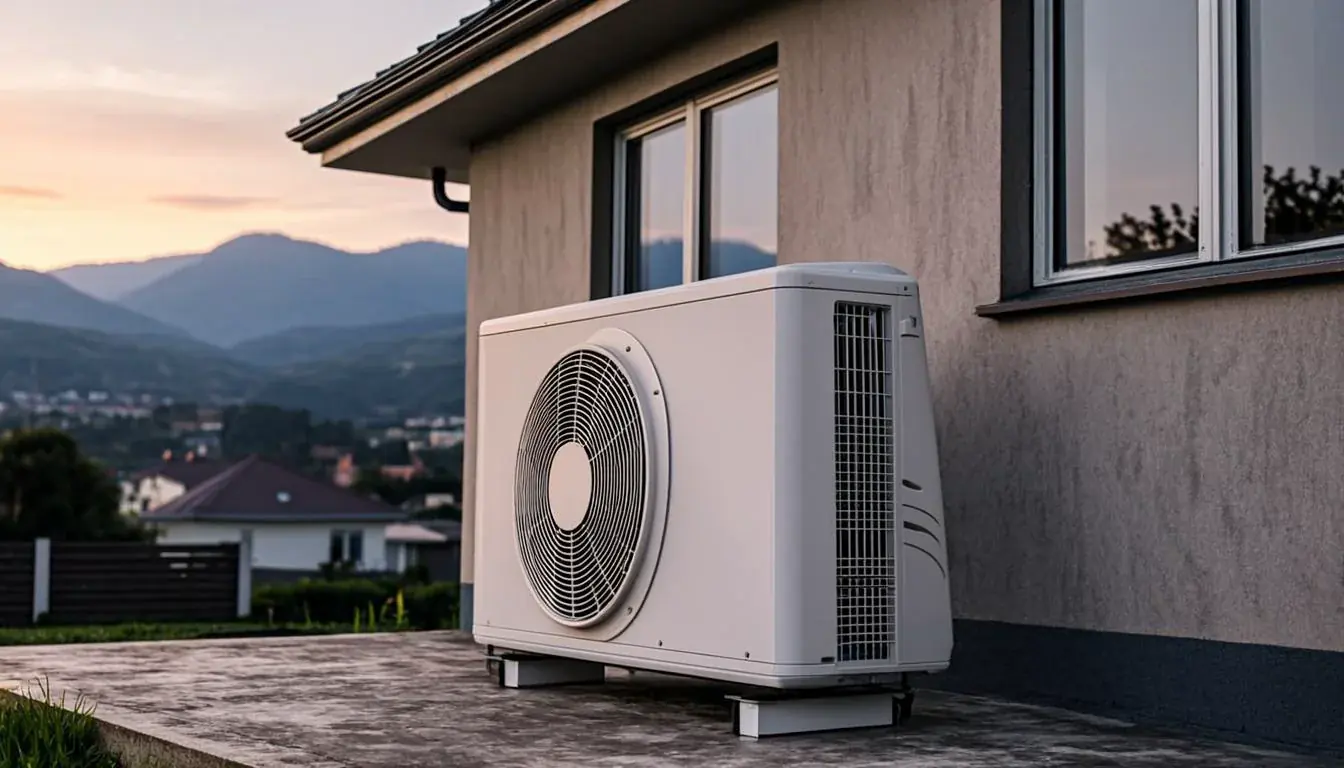
Central air conditioning is a whole-home system with three working parts: an outdoor condenser unit (the metal box beside your house), an indoor evaporator coil mounted on top of or beside your furnace, and the duct network that connects them to every register in the house. The furnace's blower fan pushes warm return air across the cold evaporator coil, the coil absorbs heat, and the resulting cool air travels the ducts to each room while refrigerant carries the captured heat outside to be dumped by the condenser. One thermostat runs the whole show.
The strengths of central AC in a Surrey context are real:
- It is invisible. No equipment on your walls at all — no heads, no line-set covers running down siding. If you hate the look of indoor units or you have heritage-styled interiors, central wins on aesthetics outright.
- Every room gets air, including hallways and bathrooms — no hot pockets far from a wall unit.
- It filters whole-home air through one central filter location, which matters during wildfire smoke weeks in July and August. Pair it with a MERV 13 filter and the whole house gets cleaner air, not just one room.
- It shares its ductwork with the furnace — one air-moving system, one maintenance relationship, one filtration point.
The weaknesses are equally real. Central AC cools the whole house at one temperature, so the finished basement suite ends up freezing while the west-facing master bedroom stays warm. Zoning is possible with motorized dampers, but in a Surrey retrofit that adds $1,500–$2,500 per zone and needs physical space for dampers at the trunk. It depends entirely on duct condition — leaky 1980s ducts can lose 20–30% of cooling into the basement before it ever reaches a register. And it needs a condenser location with real clearance: Surrey's side yards are often narrow, and a condenser starved for airflow trips on high-pressure days, which are exactly the days you bought it for.
How Ductless Mini-Splits Work
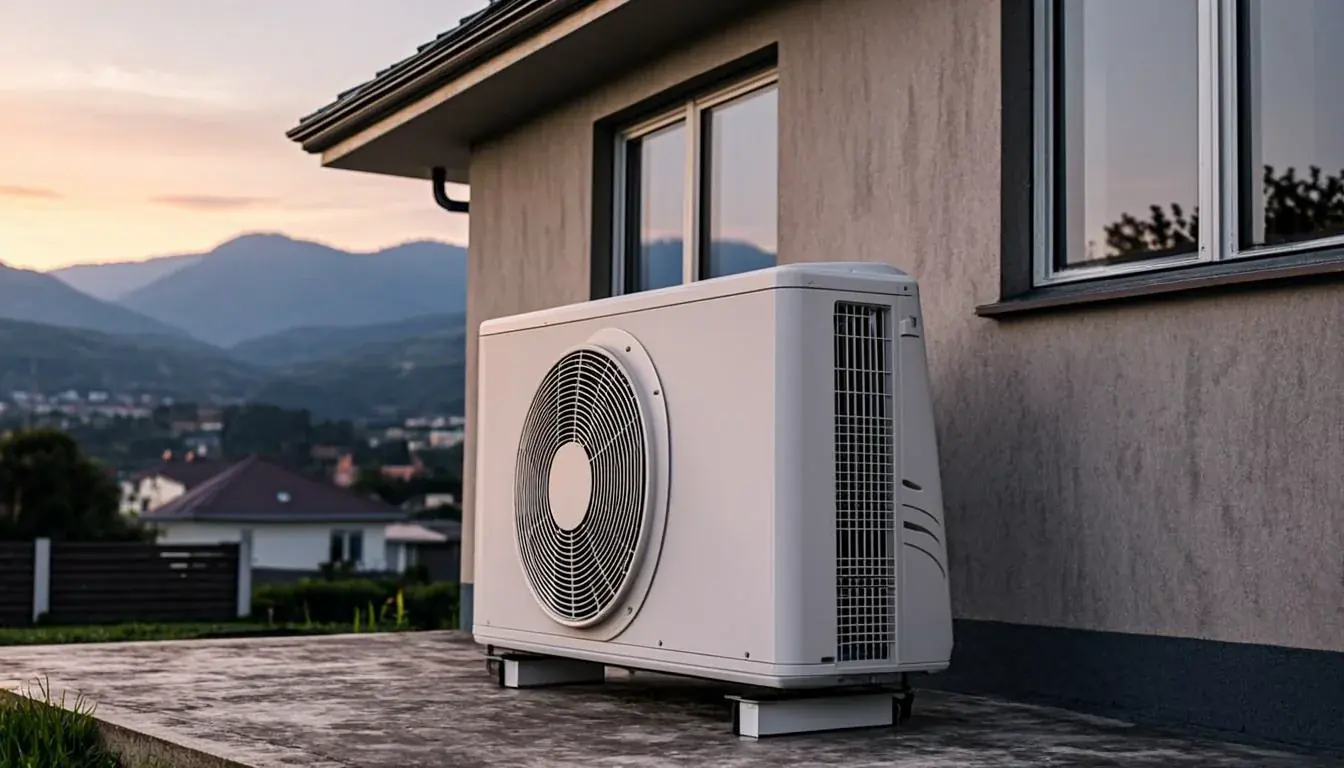
A ductless mini-split is a heat pump or air conditioner split into two halves connected by a small bundle of refrigerant lines and control wiring. Outside sits a slim condenser; inside, high on a wall, sits a compact air handler that blows conditioned air directly into the room it serves. The line-set between them is only about 7–10 cm in diameter and runs through a 7.5 cm hole in the wall — which is why ductless retrofits need almost no construction. No ducts, no bulkheads, no demolition of finished basements or ceilings.
The feature that quietly changed the industry is the inverter-driven compressor. Instead of blasting at full power and shutting off like your parents' old AC, an inverter compressor ramps up and down continuously like a dimmer rather than a switch. It holds temperature within a few tenths of a degree, uses dramatically less electricity at partial load, and — a Surrey-specific virtue — it dehumidifies far better because the coil stays steadily cold instead of cycling warm. Modern ductless systems run at SEER2 ratings of 17–28, compared to 13–17 for typical central equipment.
Why ductless fits so many Surrey homes specifically:
- Zero ductwork needed. The 80s–90s split-entries, ranchers and basement-suite homes that make up most of Surrey's stock can be fully air conditioned with no ceiling surgery.
- Room-by-room zoning is native. Every head has its own thermostat and remote. The basement suite stays at 24°C while the master bedroom runs at 21°C — and nobody argues about it.
- Modular budget. You can cool the upstairs bedrooms this year ($4,500-ish for a single-zone) and add the main floor next season. Central AC has no starter tier.
- Heating capability built in. Ordered as a heat pump rather than AC-only, the same ductless system carries a large share of shoulder-season heating at 2–3x the efficiency of electric baseboard — and unlocks CleanBC rebates.
- Whisper quiet. Premium heads run at 19–35 dB — quieter than a refrigerator. Downstairs-suite tenants and light sleepers notice this immediately.
The honest trade-offs: you see the wall heads (modern ones are slim and neutral, but they are visible furniture); each head needs a condensate drain path (usually gravity-fed through the same wall penetration); and filter access means you wipe heads monthly rather than changing one central filter. In suites and rentals, heads take tenant wear — a flush wall-mounted design in a protected high position solves most of it.
Ductless vs Central AC: The Head-to-Head Table
Here is the comparison our Surrey customers ask for on every first visit, laid out the way we lay it out on the kitchen table. Numbers reflect typical 2026 Metro Vancouver pricing for equipment, installation and basic electrical — not the extremes in either direction.
| Factor | Ductless Mini-Split | Central Air Conditioning |
|---|---|---|
| Needs existing ducts | No — 7.5 cm wall penetration only | Yes — or costly new ductwork |
| Install cost, single room | $3,800–$5,500 installed | Not practical for one room |
| Install cost, whole 3-bedroom home | $8,000–$14,000 (2–3 zones) | $5,500–$9,000 with good ducts; $12,000+ if ducts must be added |
| Efficiency (SEER2) | 17–28 (inverter) | 13–17 typical; up to 18 premium |
| Zoning | Native — every head is its own zone | One zone standard; +$1,500–$2,500 per added zone |
| Indoor noise | 19–35 dB (whisper) | 50–60 dB at registers (air rush) |
| Aesthetics | Visible wall heads (~28 cm deep) | Invisible — vents only |
| Filtration | Per-head washable filters; add-on cartridge options | Whole-home MERV 11–13 — better for smoke weeks |
| Maintenance | Monthly head filter wipe + annual tune-up | Quarterly filter change + annual tune-up |
| Expected lifespan | 15–20 years | 12–15 years (15–18 with meticulous care) |
| Duct losses | None | Up to 20–30% if ducts are leaky or undersized |
| Heat pump upgrade path | Standard — most ductless is heat-pump by default | Available — full central heat pump |
| Rebate eligibility (as heat pump) | Yes — CleanBC $6,000+ replacing gas, up to $16,000 stacked | Yes — same CleanBC programs apply to central heat pumps |
Read the table honestly and one pattern emerges: ductless wins on efficiency, zoning, quiet and retrofit cost; central wins on aesthetics, whole-home filtration and cost-per-room when good ducts already exist. If your Surrey home has healthy, well-sealed ducts serving every level, central AC delivers more comfort per dollar. If it does not — and most 80s–2000s Surrey homes do not — ductless delivers more comfort, full stop.
What Each System Costs in Surrey in 2026
Surrey pricing tracks Metro Vancouver pricing closely, with two local factors: drive time from our dispatch keeps most quotes inside the standard range, and side-yard condenser clearances on narrow lots sometimes add line-set routing work. These are the ranges we actually quote, including installation, commissioning and HST-excluded equipment costs.
| System | Typical Surrey Home | 2026 Installed Cost | Notes |
|---|---|---|---|
| Single-zone ductless (AC or heat pump) | Master bedroom or main-floor addition | $3,800–$5,500 | One head, one condenser, one day of work |
| Dual-zone ductless | Split-entry: upstairs + main floor | $6,500–$9,000 | Two heads on one condenser or two singles |
| Tri/quad-zone ductless | Two-storey + basement suite | $8,000–$14,000 | The most common whole-home Surrey setup |
| Central AC, existing good ducts | Post-2005 Clayton / Grandview builds | $5,500–$9,000 | 2.5–3.5 ton, coil on furnace, condenser pad |
| Central AC + blower/duct upgrades | 1990s Fleetwood / Sullivan two-storey | $8,000–$12,500 | ECM blower, sealing, balancing |
| Central AC + new partial ductwork | Adding AC to previously un-ducted rooms | $12,000–$18,000+ | Bulkheads, finishing, paint — priced room by room |
| Central heat pump (ducted) | Replacing gas furnace role | $12,000–$18,000 before rebates | CleanBC can return $6,000–$16,000 |
Three cost truths worth internalizing before you collect quotes:
- Cheap single-zone quotes usually mean fixed-speed equipment. A $3,000 "special" mini-split is typically a non-inverter unit that will cost hundreds more per cooling season and fail earlier. We only install inverter systems.
- The quote should include load calculation, not square-footage guesswork. Manual J sizing is the difference between a system that dehumidifies properly and one that short-cycles. It is included in every quote we write, free.
- Electrical capacity is a real line item. Older Newton and Whalley homes on 100-amp service may need a subpanel or load calculation for a central system; modern ductless inverters run on standard 15–20 amp circuits and usually skip that cost entirely.
Multi-Zone Setups for Two-Storey Surrey Homes
The classic Surrey family home — two storeys, four bedrooms up, recreation room down, furnace in the garage or basement — has a physics problem with single-zone cooling: heat rises, people sleep upstairs, and the sun pounds the west-facing master and nursery from 4pm to 9pm in July. A single central thermostat downstairs reads 23°C while the bedrooms sit at 28°C.
Multi-zone ductless is built for exactly this geometry. A typical layout we install dozens of times each summer across Fleetwood and Clayton:
- Head 1 — master bedroom, mounted high on the north or east wall so it blows across the ceiling, not onto the bed.
- Head 2 — kids' bedrooms / hallway upstairs, sized to cover two smaller rooms when doors stay open, or split into its own single-zone when the rooms are far apart.
- Head 3 — main floor living/kitchen for daytime comfort and wildfire-smoke filtration with a cartridge filter.
- Head 4 (optional) — basement suite with its own dedicated zone and, in suite situations, its own sub-metered comfort so tenants control their own temperature and hydro share.
The condenser sits on a wall bracket or pad on the side or rear of the house, with line-sets run neatly and concealed where possible. Branch-box multi-zone systems (one outdoor unit driving three or four heads through a distribution manifold) keep the yard to a single condenser — quieter side yards, one service point, and a cleaner look for Morgan Creek–style landscaping.
Strata, Suites and Single-Family: Different Rules
Surrey is a city of strata townhomes — King George Hub towers, Fleetwood and Clayton wood-frame complexes, and bare-land strata developments across South Surrey. Cooling rules change completely inside a strata.
- Townhome strata: through-wall sleeve or heat pump rules. Most Surrey townhome strata have bylaws governing what penetrates the building envelope. Ductless single-zone heads with rear-drum line-sets are the standard approved solution; some strata mandate a specific condenser location or screening. Get the written bylaw and approval before ordering equipment — we provide strata submission drawings as part of the quote.
- Concrete condos: generally portable or nothing. High-rise condos usually cannot mount exterior equipment at all. A single-zone ductless with the condenser on the balcony (where bylaws allow) is sometimes possible; more often the answer is a through-wall sleeve unit or portable AC as a stopgap.
- Basement suites and secondary dwellings: legal secondary suites under the BC Building Code need independent temperature control for the tenant. A dedicated ductless zone with its own thermostat is the cleanest compliance path and the least contention between upstairs and downstairs about temperature.
- Single-family: your property, your rules — aside from the Surrey electrical permit we pull on your behalf and reasonable condenser placement for airflow and neighbour noise.
One note on noise and neighbours: modern inverter condensers run 45–55 dB, quieter than a conversation, and Surrey's noise bylaw concerns are rarely an issue when units are placed away from bedroom windows on the neighbouring lot. We place condensers with neighbour windows in mind on every townhome install.
Neighbourhood by Neighbourhood: What We Install
After six summers of post-heat-dome demand, patterns have hardened into neighbourhood-level truths. This is what our install calendar actually looks like, and why:
Fleetwood
The multi-zone capital. Family two-storeys from the 90s and 2000s, often with suites — our most common install is a 3–4 zone ductless heat pump covering upstairs bedrooms, main floor and suite, usually netting CleanBC support when it replaces or offsets gas.
Newton & Bear Creek
Split-entries and older ranchers on bigger lots. Ductwork is usually heat-only, so we do duct efficiency upgrades plus upstairs ductless, or full multi-zone when the ducts are beyond helping. Older electrical panels get checked on every quote.
Clayton & East Clayton
Post-2005 construction with AC-ready ducts and HRVs. Central AC and ducted central heat pumps dominate — the ducts are genuinely good here, and central delivers the best cost-per-room. Lane-way and garden suites get dedicated single-zone ductless.
Morgan Creek & South Surrey
Larger custom homes, often 3,000+ sq ft with two furnaces and extensive ducts. Central AC (frequently two-stage or variable, 4–5 ton) is the norm; premium ductless serves detached studios, wine rooms and gym additions. Salt-air exposure near Crescent Beach and White Rock pushes us toward coated condenser coils.
Guildford & Whalley
The densest mix: towers, 70s–80s apartments on baseboard heat, and newer wood-frame rentals. Ductless single and dual zones dominate; in rentals we install heads high and protected, with washable filters and tamper-resistant settings.
Cloverdale & Fraser Heights
Cloverdale's newer subdivisions install central; its heritage-adjacent older stock installs ductless. Fraser Heights' executive homes split between premium central AC and multi-zone ductless heat pumps chasing the gas-to-electric rebate path.
Neighbourhood patterns are starting points, not verdicts — we have installed quad-zone ductless in a brand-new Clayton build (the owners wanted bedroom-level control central could not give them) and central AC in a 1982 North Surrey rancher whose ducts were genuinely excellent. The house always outvotes the postal code.
The Heat Pump Twist: Rebates Change the Math
Here is the part of the comparison that surprises most Surrey homeowners in 2026: the single biggest financial variable is not ductless vs central — it is cooling-only vs heat pump. Both architectures are available as heat pumps, and the rebate programs only pay for the ones that heat.
A ductless or central heat pump does everything its AC-only sibling does in summer, then runs in reverse through the winter to deliver heat at 2–3x the efficiency of electric baseboard and roughly 30% cheaper operation than an aging gas furnace in a Metro Vancouver climate that rarely demands extreme cold output. CleanBC Better Homes pays $6,000+ when a heat pump replaces a gas furnace as the primary heating system, with stacking (municipal top-ups and the income-qualified top-up) reaching as much as $16,000 in total support — and the paperwork is something we handle for you.
| Your Current Heating | Heat Pump Choice | Typical CleanBC Support (2026) |
|---|---|---|
| Gas furnace (primary) | Central or multi-zone ductless heat pump replacing it | $6,000+, stackable to $16,000 |
| Electric baseboard | Multi-zone ductless heat pump | $4,000–$6,000 + income-qualified top-up |
| Aging gas + no ducts | Ductless heat pump + retained gas backup (dual fuel) | Reduced — program requires heat pump as primary |
| Furnace with AC-only ducts, no heating change | AC-only central or ductless | $0 — cooling-only does not qualify |
The practical decision path we walk Surrey homeowners through: if your furnace is 15+ years old, the heat pump question comes before the ductless vs central question, because replacing the furnace role with a heat pump changes both the budget and the equipment shortlist. Our heat pump installation guide for Vancouver and Surrey covers the full sizing and rebate detail, and the 2026 CleanBC rebates guide covers every program and top-up currently stacking.
Brands, Install Timelines and Maintenance Compared
Brands we actually install in Surrey
| Brand | Strength | Best Surrey Fit |
|---|---|---|
| Mitsubishi Electric | Quietest heads, bulletproof cold-climate record | Bedroom zones, premium multi-zone |
| Daikin | Best all-around inverter platform + strong warranty | Whole-home multi-zone, suites |
| Fujitsu (Halcyon) | Compact heads, superb dehumidification | Smaller bedrooms, offices, garden suites |
| Lennox | Top-tier variable central SEER2 | Clayton/Morgan Creek central installs |
| Carrier | Two-stage central value, deep parts network | Central AC on post-2000 ducts |
We install and service all five plus Gree's budget mini-split line, and we will service Trane, Goodman, American Standard, Bosch, Panasonic and Samsung units you already own. Brand loyalty matters far less than sizing and install quality — a perfectly-installed mid-tier system outlasts a badly-installed flagship.
How long installation actually takes
- Single-zone ductless: one working day, 5–7 hours. You have cooling by dinner.
- Multi-zone ductless (2–4 heads): 1–2 days. Day one is line-sets and heads; day two is vacuum, commissioning and controls setup.
- Central AC: 1–2 days with existing ducts (coil, condenser, wiring, commissioning); 2–4 days if duct modifications or a blower upgrade are involved; a week-plus for new ductwork with drywall finishing.
- Electrical: most Surrey homes need nothing beyond the circuit; older panels get a load calculation in the quote, and subpanel work adds half a day when required.
Maintenance and lifespan, side by side
Ductless asks for small, frequent attention: wipe each head's filter monthly (two minutes, no tools), keep outdoor condensers clear of cedar mulch and mower debris, and book a $149–$249 annual tune-up that covers coil cleaning, drain flushing, refrigerant verification and electrical checks. Central asks for less frequent but more consequential attention: replace the MERV filter every 1–3 months (a neglected high-MERV filter can actually strangle airflow), keep the condenser clear, and take the same annual tune-up.
Lifespan in Surrey's mild climate runs longer than manufacturer averages: ductless 15–20 years, central 12–15 with realistic 15–18 for systems that get annual care. The two silent killers are skipped maintenance and bad sizing — both fully within your control. Every install we complete includes the first-year tune-up scheduling and a written maintenance plan.
The Verdict: A 60-Second Decision Tree
If you read nothing else, run down this list in order and stop at the first statement that is true for your home:
Multi-zone ductless. You will spend less, get bedroom-level zoning, and skip demolition. This is most 80s–2000s Surrey stock.
Central AC — or better, a central heat pump if your furnace is aging. Invisible, whole-home, best filtration for smoke weeks.
Hybrid: central or furnace-integrated system for the main floor plus one ductless head upstairs. Solve the bedroom problem where the bedrooms are.
Single or dual-zone ductless after written bylaw approval. Bring us the bylaw; we supply the submission drawings.
Stop and price the heat pump path first — CleanBC support of $6,000+ (up to $16,000 stacked) only exists on the heating side, and it can cover most of the project.
One ductless head in the bedroom where you actually sleep ($3,800–$5,500, financed from about $78/month), then add zones next season. Central has no starter tier; ductless was built for exactly this.
And the honest closing note from fifteen years of Surrey installs: the families happiest five years later are not the ones who picked the "right" architecture — they are the ones who got a real load calculation, a reputable installer, inverter equipment and annual maintenance. We are happy to be the ones who do that for you, and the quote is free.
Still Deciding? Get Both Options Priced, On Paper, For Free
A BC Home Service estimator will measure your home, check your ducts and electrical, run the Manual J load calculation, and hand you written quotes for every viable path — ductless, central, hybrid and heat pump with rebates — usually within 48 hours. No pressure, no vague ranges, no obligation.
Ductless vs Central AC in Surrey: Your Questions
The six questions we answer most on Surrey cooling calls — the same answers we give on the phone.
Cooling Is One Trade on a Full-Service Team
One licensed, insured, Red Seal crew for every system in your Surrey home — one phone number, one standard of accountability.
Cooling & AC Services
AC installation Surrey and Vancouver homeowners trust: mini-splits from $3,800, central from $5,500, same-day repair from an $89 credited diagnostic.
Heat Pumps
Heat pump installation Vancouver and Surrey with CleanBC rebates up to $16,000, cold-climate systems and the full rebate paperwork handled.
Heating & Furnace
The heat pump decision starts with your furnace replacement math: repair-vs-replace guidance, 96–98% AFUE installs and honest second opinions.
Financing & Rebates
CleanBC rebates and financing from 7.99% APR with $0 down — payment tables, eligibility rules and the heat pump rebate $16,000 breakdown.
Keep Reading Before You Buy
Long-form guides written by our cooling technicians for Metro Vancouver homeowners.
AC Installation in Vancouver: The Complete Homeowner Guide
Costs by system type and home style, the sizing process, permit and strata realities, and how to compare quotes without fine-print surprises.
Heat Pump Guide for Vancouver Homes
The full heat pump playbook: cold-climate performance, CleanBC rebate stacking, operating-cost math versus gas and baseboard, and sizing.
Summer Heat Dome Preparedness for BC Homes
What 2021 taught us about cooling safety, who is most at risk in heat warnings, and the room-by-room steps that keep your home survivable now.
This guide was written and reviewed by the field team that installs these systems every day — licensed under BC License #BC-PL-2019-4421, $2M insured, WorkSafeBC covered, and rated 4.9 stars across 39 Google reviews. Every price range reflects quotes we have actually written in Surrey this season, and every claim about rebates is checked against the current CleanBC Better Homes program rules.
Get Your Free Ductless or Central AC Quote in Surrey
Tell us about your home and how it handles heat, and we will call you back within 15 minutes during business hours. Quotes for ductless mini-splits, central air, hybrid systems and heat pumps are free, written and valid for 30 days — including the Manual J load calculation, duct assessment and CleanBC rebate eligibility check. No pressure, no call centers, and no obligation. You talk directly to our Metro Vancouver dispatch team.
Melting right now? Call instead.
During heat events our emergency line prioritizes seniors, infants, medically vulnerable households and pets in distress — and 24/7 triage advice is always free. For routine quotes, this form is perfect and gets a 15-minute callback in business hours.
Call 604-615-2212Business hours: Mon–Fri 8am–6pm, Sat 9am–4pm. Emergency line: 24/7/365, including heat warnings.
Stars, 39 reviews
Typical ductless install