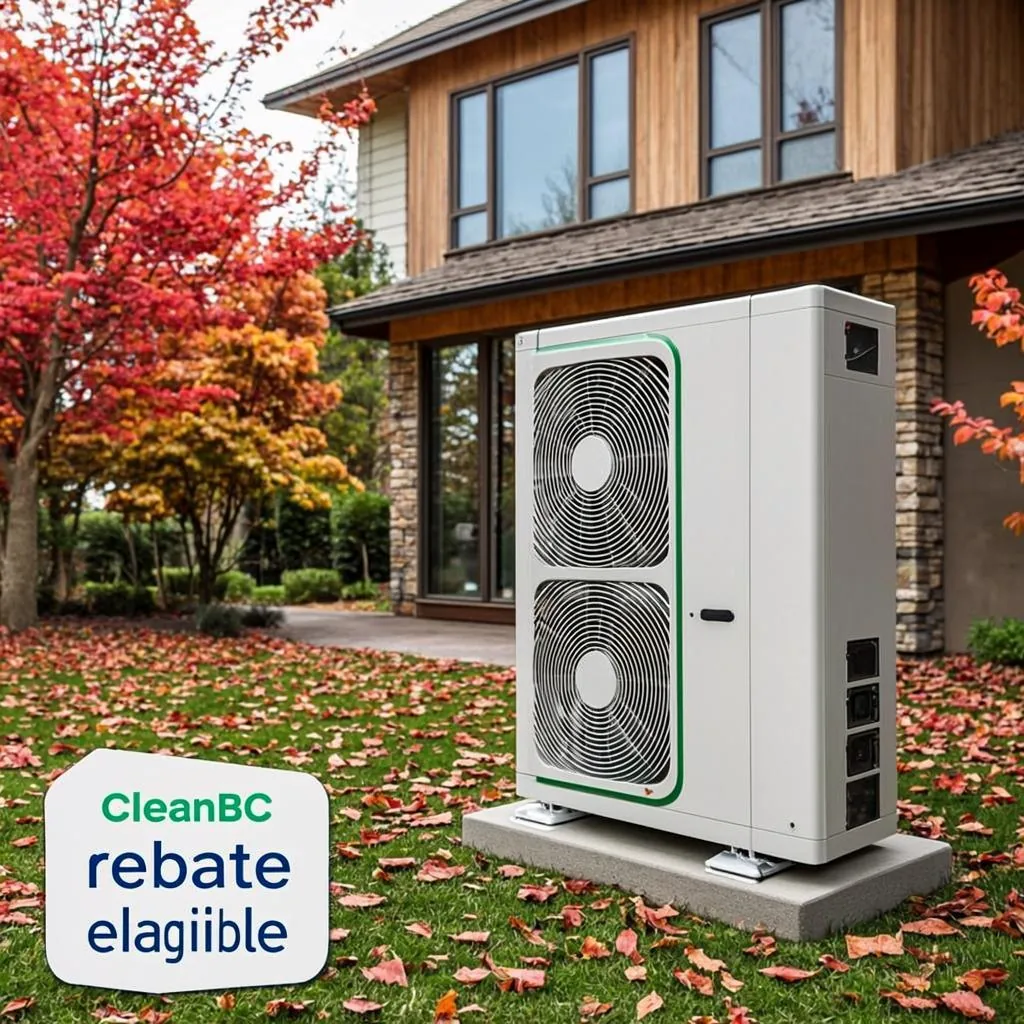
Why Vancouver Is Canada's Best Heat Pump City
Heat pumps love mild, damp winters, and Metro Vancouver delivers exactly that. Our January average daytime high sits around 6°C, overnight lows hover between 0 and 2°C near the water, and the region logs only a handful of nights below -10°C in a typical year. Compare that with Winnipeg's weeks below -25°C or even Kamloops' deep dry freezes: the Lower Mainland spends roughly 90 percent of its heating season in the temperature band where modern cold-climate heat pumps run at or near peak efficiency.
The second reason is our electricity. BC Hydro's grid is over 95 percent renewable, dominated by hydroelectric generation. When your heat pump moves heat using BC electricity instead of burning FortisBC natural gas, your heating carbon footprint drops by more than 90 percent, and you stop paying carbon tax on fuel you no longer buy. For homeowners thinking about resale, that matters: Vancouver's climate targets and building bylaws are steadily pushing the market toward low-carbon electric heating, and heat pumps are the workhorse of that transition.
The third reason hit home in June 2021. During the heat dome, Lytton recorded 49.6°C, the hottest temperature ever measured in Canada, and Metro Vancouver climbed into the low 40s. The BC Coroners Service attributed 619 deaths to that week's heat, most of them inside homes without cooling. Since then, demand for air conditioning and heat pumps in Vancouver has permanently reset. A heat pump is the only single appliance that answers both problems: it replaces your furnace or baseboards and protects your family in the next heat dome, at an efficiency window units cannot touch.
Finally, the housing stock itself is built for this technology. Huge swaths of East Vancouver, Burnaby, New Westminster and Surrey consist of baseboard-heated homes with no ductwork at all: Vancouver Specials, 1970s and 1980s builder houses, duplexes, mortgage-helper suites and laneway homes. Ductless heat pumps exist precisely for these houses, and the CleanBC streams that pay the most are aimed straight at them.
0 peak efficiency
For every unit of electricity consumed, a cold-climate heat pump delivers up to four units of heat at Metro Vancouver winter temperatures.
$0 max stacked rebates
CleanBC Better Homes combined support for eligible 2026 heat pump projects, including fuel-switch and income-qualified streams.
0 realistic lifespan
With twice-yearly maintenance in our mild coastal climate, 15 to 20 years is normal, and ductless systems often outlast that.
0 jobs since 2010
Plumbing, heating and heat pump work completed by our Red Seal team across 17 Metro Vancouver and Fraser Valley cities.
How a Heat Pump Works: COP, Explained Simply
A heat pump does not make heat. It moves it. Your refrigerator is a heat pump running in one direction: it pulls heat out of the fridge box and dumps it into your kitchen. An air-source heat pump is the same loop pointed at your house. In winter, an outdoor coil full of refrigerant absorbs thermal energy from the outside air, a compressor squeezes that refrigerant to a high temperature, and the indoor unit releases the concentrated heat into your living room. In summer a reversing valve flips the loop, and the exact same machine pumps heat out of the house.
What COP means for your hydro bill
Efficiency for heat pumps is measured as COP, the coefficient of performance: units of heat delivered per unit of electricity consumed. An electric baseboard heater has a COP of exactly 1: one kilowatt-hour in, one kilowatt-hour of heat out, always. A modern cold-climate heat pump in Vancouver's typical winter conditions runs a COP of 3 to 4. Put plainly, every dollar of BC Hydro electricity that used to buy one dollar of baseboard heat buys three to four dollars of heat pump heat instead. That is the entire economic case in one sentence, and it is why baseboard-to-heat-pump conversions routinely cut heating bills by 40 to 60 percent.
COP falls as outdoor temperature falls, but it does not fall off a cliff. The units we install hold a COP around 2 to 3 even at -10°C, still two to three times better than any resistance heater, and Vancouver simply does not spend many hours colder than that. Compare the alternatives: the best condensing gas furnace converts at best 95 to 98 percent of its fuel into heat, and the mid-efficiency furnaces common in 1980s and 1990s Metro Vancouver homes convert only 60 to 80 percent.
A furnace can never give you more heat than the fuel it burns. A heat pump gives you three to four times the energy you pay for, because the extra heat comes from the air outside, free, all winter. That asymmetry is why BC's utilities pay you to switch.
Inverter drives and cold-climate ratings
The technology that changed everything is the inverter-driven compressor. Older heat pumps were single-stage: full blast or off, with temperatures swinging up and down around the thermostat. Inverter compressors ramp smoothly between roughly 20 and 120 percent of rated capacity, holding a steady temperature, eliminating loud start-up surges, and letting one outdoor unit serve several indoor heads. They also keep most of their heating capacity in deep cold: NEEP cold-climate certified models publish capacity retention at -15°C, and the best hold 70 to 100 percent of rated output there.
When we say cold-climate, we mean units certified to operate and produce useful heat down to -25°C or below. Vancouver's all-time record low is -17.8°C, set in 1950, and recent winters rarely crack -10°C at the airport. In other words, a properly sized cold-climate unit in Metro Vancouver never approaches its engineering limit. If you want belt and suspenders anyway, a dual-fuel system lets your existing gas furnace act as automatic backup on the handful of nights it would ever be needed.
Sizing and BTUs: Why Oversizing Ruins Comfort
Heat pump capacity is quoted in BTUs per hour. A Metro Vancouver studio or laneway home needs roughly 9,000 BTU. A typical 3-bedroom floor of a Vancouver Special or Surrey family home needs 12,000 to 18,000 BTU. A whole 2,200-square-foot house with decent insulation is often satisfied by a 24,000 to 36,000 BTU multi-zone setup, and a central ducted system typically lands between 2.5 and 4 tons (30,000 to 48,000 BTU). Note how small those numbers are next to the 80,000 to 120,000 BTU furnaces sold in the Prairies: our climate simply does not demand that much heat.
The correct way to size is a Manual J heat load calculation: room-by-room measurements of floor area, glazing, insulation, orientation and air leakage. We do this on every quote because sizing is where heat pump installs go wrong. An oversized heat pump short-cycles: it satisfies the thermostat too fast, running a few minutes at a time. That wastes electricity, wears the compressor, and in cooling mode leaves the air clammy because the unit never runs long enough to dehumidify. An undersized unit runs non-stop on the coldest nights and cannot hold temperature. Both problems are expensive; both are avoided by thirty minutes of proper math.
Watch for one classic Vancouver sizing trap: the estimate done over the phone from square footage alone. Every character home on Commercial Drive behaves differently from every 1990s Surrey townhouse, and the difference between a 12,000 and 18,000 BTU head is several hundred dollars and years of comfort. Insist that your heat pump installation quote in Vancouver is based on an on-site load calculation, in writing.
Ductless vs Ducted vs Multi-Zone: Which Fits Your House
There are three practical architectures, and the right one is determined mostly by what your house already has. If you have baseboard heat and no ducts, ductless heads mounted high on walls (or slim concealed units) deliver heating and cooling per room. If you have a forced-air furnace with existing ducts, a central ducted heat pump simply swaps onto that infrastructure. Multi-zone systems split the difference: one outdoor condenser feeding two to five ductless heads with independent thermostats per zone.
| System type | Typical Metro Vancouver fit | Indoor equipment | Zones | Notes |
|---|---|---|---|---|
| Single-zone ductless | Suites, additions, laneway homes, one cold floor | One wall head + line set | 1 | One-day install, no ducts needed, deepest efficiency |
| Multi-zone ductless | Whole baseboard-heated houses, Vancouver Specials, duplexes | 2 to 5 wall heads, one condenser | 2-5 | Room-by-room control; each head has its own thermostat |
| Central ducted | Homes with existing furnace ductwork | Air handler + outdoor unit | 1-2 | Replaces furnace, adds central AC, keeps registers |
| Dual-fuel hybrid | Young gas furnace + cooling desire | Heat pump + existing furnace | 1-2 | Heat pump runs shoulder seasons; furnace takes coldest nights |
| Ground source | Larger lots, new builds, long-horizon owners | Loop field + indoor unit | 1+ | Highest efficiency, highest upfront cost, drill or trench required |
For most Vancouver homeowners reading this, the answer is multi-zone ductless. Roughly half the region's detached housing predates central air, and ductless avoids the $8,000-to-$15,000 cost of retrofitting ductwork you do not have. Ductless also eliminates duct leakage, which wastes 20 to 30 percent of conditioned air in typical older duct systems. Homeowners converting from baseboards can read our comparison of ductless mini-split and AC installation options in BC for the cooling side of the same decision.
What a Heat Pump Costs in Vancouver: The 2026 Price Table
These ranges reflect what real projects actually invoice for across Metro Vancouver in 2026: equipment, materials, labour, commissioning and disposal included. They are honest ranges, not teaser numbers; the final price moves with equipment tier, number of zones, line-set runs, electrical work and your home's heat load.
| System | Typical installed cost (2026) | Best for |
|---|---|---|
| Single-zone ductless (9k-12k BTU) | $4,500 - $6,500 | Suites, laneway homes, one problem room or floor |
| Dual-zone ductless (2 heads) | $7,000 - $9,500 | Duplex conversions, small bungalows, main + suite |
| Multi-zone ductless (3-5 heads) | $8,000 - $16,000 | Whole-home conversion from baseboards |
| Central ducted (2.5-4 ton) | $12,000 - $16,000 | Homes with existing ducts replacing furnace + adding AC |
| Dual-fuel add-on | $7,500 - $12,000 | Keep a young gas furnace, gain heat pump efficiency + cooling |
| Electrical panel upgrade (if needed) | $2,500 - $4,500 | Pre-1980 homes with 60 or 100-amp service |
What moves the price
- Cold-climate tier: NEEP-certified cold-climate condensers cost 15 to 25 percent more than standard units, and qualify for the largest rebate streams.
- Number of zones: each additional indoor head adds roughly $2,000 to $3,500, mostly for the head, line set and labour.
- Line-set routing: long or concealed runs through finished walls in character homes add labour hours and patching.
- Electrical work: new 208/240V circuits, disconnects, and panel capacity. Older Vancouver homes with 60-amp service should budget for an upgrade.
- Heat-load improvements: air sealing and attic insulation done first shrink the machine you need, sometimes by a whole size class. CleanBC will also rebate those upgrades.
Net after rebates: two real examples
Example one: an East Vancouver baseboard-heated Vancouver Special installs a two-head, 24,000 BTU cold-climate system. Invoice $8,600. The CleanBC electric-baseboard fuel-switch stream pays $4,000. Net cost: $4,600, before any BC Hydro or municipal top-ups, with heating bills cut roughly in half and brand-new cooling for the next heat dome.
Example two: a Surrey family converts from a 1994 mid-efficiency gas furnace to a 3-ton central cold-climate heat pump. Invoice $13,500. The CleanBC gas fuel-switch stream pays $6,000, and an income-qualified top-up of $5,000 applies to their household. Net cost: $2,500. Even without the top-up, $7,500 net for a whole-home heating and cooling replacement is competitive with replacing a furnace and adding an air conditioner separately, and the EnerGuide assessments that unlock the rebate typically cost $350 to $550 combined, paid to the energy advisor directly.
CleanBC 2026 Rebates: The Full Breakdown
CleanBC Better Homes is the provincial program that pays BC homeowners to switch space heating to electric heat pumps. Amounts below reflect the 2026 program year. Our company files these applications for clients every week; we confirm your exact eligibility before you sign anything, because program caps and funding pools shift through the year.
| Rebate stream | Amount | Who qualifies |
|---|---|---|
| Switch from natural gas heating | $6,000 | Homes replacing a gas furnace or boiler with an eligible heat pump |
| Switch from oil heating | $11,000 | Homes heating with oil; the largest single stream |
| Switch from electric baseboard | $4,000 | Baseboard-heated homes converting to ductless or ducted heat pumps |
| Income-qualified top-up | +$5,000 | Households meeting CleanBC income thresholds, stacked on fuel-switch rebates |
| Additional upgrades | $500 - $2,000+ | Insulation, windows and doors, heat pump water heaters, in the same project |
| Canada Greener Homes Loan | Up to $40,000 at 0% | 10-year interest-free federal loan; new intake windows have been limited, verify current status |
The arithmetic that matters: an oil-heated home that qualifies for the income top-up can stack $11,000 plus $5,000, which is how the "$16,000 back" figure quoted across the program is built. A gas-switch home reaches $11,000 stacked the same way. Baseboard homes combine $4,000 with BC Hydro streams.
EnerGuide assessments: the non-negotiable step
CleanBC requires a pre-installation EnerGuide evaluation and a post-installation evaluation by a licensed energy advisor. The pre-assessment documents your home's baseline and locks in eligibility; the post-assessment verifies the installed equipment. Combined cost is typically $350 to $550, paid to the advisor. Skipping it forfeits the entire rebate, so build it into your timeline: assessments book out one to three weeks in busy seasons.
Order of operations matters: the EnerGuide pre-assessment must happen before equipment is ordered, and the equipment model must appear on CleanBC's eligible list at the time of purchase. We register the project, book both assessments, and file the application as part of the job, because a misordered model number can zero out an $11,000 rebate.
BC Hydro and FortisBC streams
Your utility matters. BC Hydro customers leaving baseboards behind can access additional income-qualified and load-limiting program support on top of CleanBC. FortisBC gas customers switching a furnace to a heat pump can see utility conversion incentives in the several-thousand-dollar range on top of provincial streams. A handful of municipalities, including several North Shore and Fraser Valley communities, have run small top-up programs of $500 to $1,000. We check all of them at quote time; see our CleanBC rebate and financing page for how we manage the paperwork start to finish.
Need Help Choosing a Heat Pump or Checking Your Rebates?
Our Red Seal team sizes your home, confirms exactly which CleanBC streams you qualify for, and quotes net-of-rebate pricing in writing. Call 604-615-2212 or get a free quote.
Best Heat Pump Models for 2026
We are brand-neutral and install all the major lines, so this is an honest field guide rather than a sales sheet. The five families below dominate cold-climate installs in Metro Vancouver for good reasons: capacity retention in deep cold, inverter modulation quality, parts availability in Canada, and warranty depth. Model numbers rotate yearly; the families and their behaviour do not.
| Brand family | Standout line | Cold-climate behaviour | Best suited for |
|---|---|---|---|
| Mitsubishi Electric | Zuba Central (ducted) and Hyper-Heat M-Series (ductless) | The cold-climate benchmark; strong capacity retention to -25°C and below, superb modulation | Whole-home conversions where winter performance is non-negotiable |
| Daikin | Aurora cold-climate wall units; Fit side-discharge compact units | Excellent low-ambient heating; the Fit's slim footprint solves tight lot-line placement | City lots, Vancouver Specials, budget-aware multi-zone projects |
| Lennox | Cold-climate variable-capacity series | High seasonal efficiency, strong dealer network, quieter outdoor cabinets | Ducted replacements where existing Lennox or legacy controls are present |
| Carrier | Infinity cold-climate series (ducted) and Mura multi-zone (ductless) | Variable-speed modulation with good capacity at -15°C to -25°C operation | Homeowners wanting premium comfort zoning with a familiar brand |
| Fujitsu | Halcyon (Airstage) ductless | Quiet indoor heads and reliable low-ambient operation; strong value in 2-3 zone builds | Multi-zone ductless retrofits in bedrooms and suites |
Three buying notes. First, check the cold-climate certification listing, not the marketing: you want published capacity at -15°C, and the model on CleanBC's eligible-equipment list. Second, noise matters in this city: look for outdoor sound ratings in the mid-50s dB(A) or lower, which keeps you and your neighbours happy on 10-foot lot lines. Third, warranties: ten-year parts coverage is standard when the install is registered by a licensed contractor, and some brands add longer compressor terms. We register every unit we install so nothing is left on the table.
Heat Pump vs Gas Furnace vs Baseboard: The Real Savings Math
Here is the honest arithmetic for a roughly 2,000-square-foot Metro Vancouver home, using typical BC Hydro Step 1 electricity around 11.5 to 12.5 cents per kilowatt-hour and FortisBC gas in the neighbourhood of $3 per gigajoule plus a fixed daily charge. We would rather give you ranges and the method than a single false-precision number, because your insulation, thermostat habits and family size swing the outcome.
| Heating source | Typical annual heating energy | Approx. annual cost | Verdict |
|---|---|---|---|
| Electric baseboard (COP 1) | 16,000 - 20,000 kWh | $1,900 - $2,600 | Most expensive per unit of heat; the #1 conversion candidate |
| Heat pump after baseboard (COP 3-4) | 4,500 - 6,500 kWh | $550 - $850 | Saves $1,200 - $1,900 per year, plus new cooling |
| Mid-efficiency gas furnace (60-80%) | 70 - 100 GJ | $700 - $1,300 | Cheap fuel but aging equipment, carbon tax, no cooling |
| Heat pump after gas furnace | 5,000 - 7,000 kWh | $600 - $900 | Comparable-to-lower cost, eliminates carbon tax and adds AC |
| High-efficiency furnace (96-98%) | 55 - 85 GJ | $550 - $950 | Efficient combustion is still combustion; no cooling included |
Read the table honestly and two truths emerge. First, the baseboard-to-heat-pump switch is the single best financial move in BC home heating, with payback often landing in three to five years before rebates, and faster after them. Second, the gas-to-heat-pump switch is closer to a wash on raw dollars today: you gain cooling, lose carbon-tax exposure, and cut emissions roughly 90 percent, and future carbon pricing only widens the gap. Anyone who tells you every gas furnace owner should switch tomorrow is selling something; anyone who tells you the gap is not widening is not reading the trend lines.
The wildcard in every gas-versus-heat-pump calculation is where carbon pricing and gas fixed charges go from here, not where they are today. BC's carbon price has climbed every year since 2008, and each increase passes straight through FortisBC bills. Electricity rates in BC, by contrast, have historically moved slowly and remain among North America's most stable. Plans built on today's ratio age quickly.
Installation: What Actually Happens, and How Long It Takes
A well-run heat pump project is boring, and that is the point. Here is the sequence we run, and the sequence any competent contractor should be able to describe to you before taking a deposit:
Assessment and heat load (day 0)
On-site visit, Manual J sizing, electrical panel check, rebate eligibility review, written fixed-price quote.
EnerGuide pre-assessment (week 1-2)
Energy advisor documents your home baseline. Required before ordering equipment if rebates are in play.
Equipment order (week 2-3)
Cold-climate units confirmed against the CleanBC eligible list; electrical work scheduled if the panel needs capacity.
Install day (1-2 days on site)
Mount heads or air handler, run line sets, set condenser on pad or brackets, vacuum and pressure-test, electrical connection.
Commissioning and walkthrough
Verified refrigerant charge, airflow, controls and defrost operation; you get a tutorial, settings and a commissioning report.
Post-assessment and rebate filing (week 3-6)
Second EnerGuide visit, then we submit the CleanBC application and track it; cheques typically arrive in 4 to 8 weeks.
Single-zone ductless installs finish in one day. Multi-zone and ducted systems take one to two days. The project as a whole runs three to six weeks mostly because of assessment scheduling and equipment lead times, so the smart move in Vancouver is starting in late summer for an install that is commissioned before the October heating season. Waiting until the first cold snap puts you in the busiest queue of the year.
Maintenance, Lifespan and Warranties
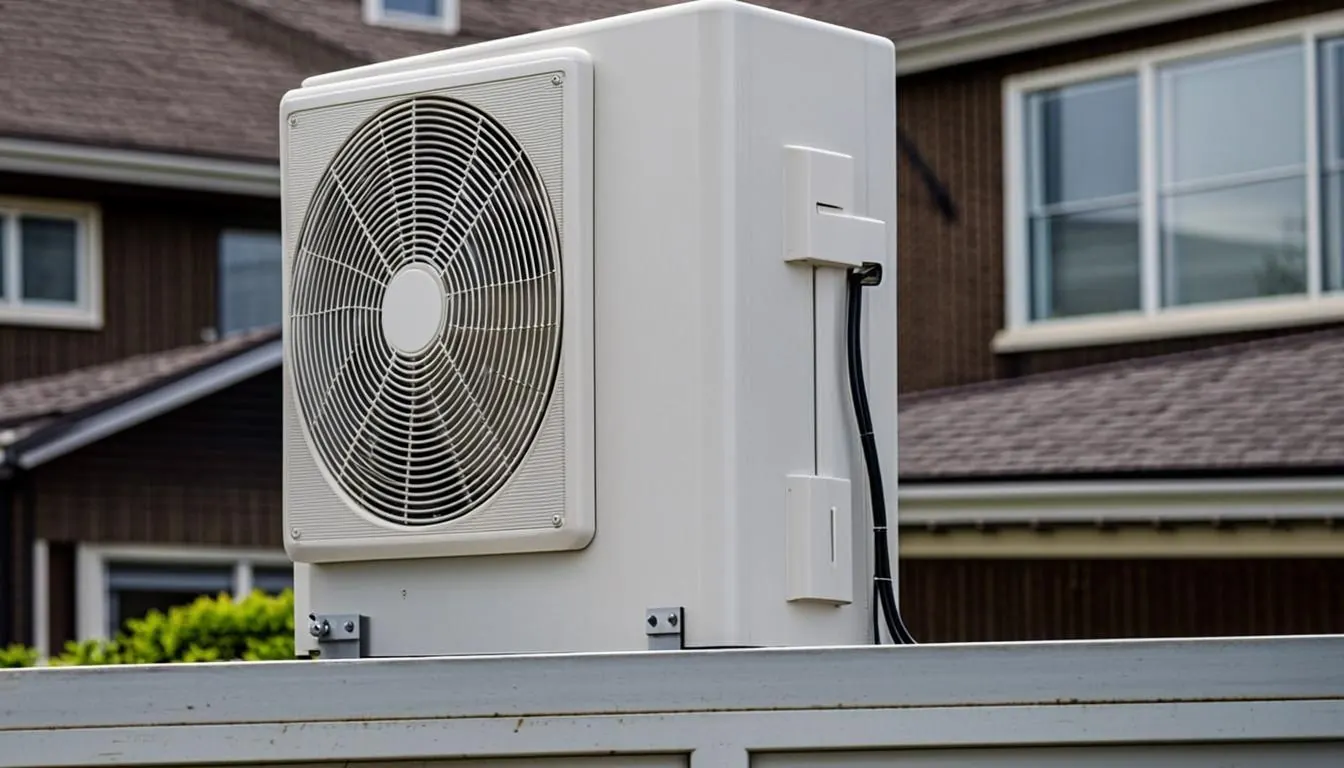
Heat pumps need more attention than furnaces for one simple reason: they run all year, heating in winter and cooling in summer. The maintenance rhythm that keeps them efficient and warranty-compliant is modest, and half of it is homeowner work.
| Task | Frequency | Who | Why it matters |
|---|---|---|---|
| Wash indoor filters | Every 1-3 months in heating season | You | Dirty filters can cut capacity and efficiency 10-20 percent |
| Clear vegetation and debris around condenser | Monthly check | You | Vancouver's wet climate grows moss, ferns and shed cedar needles fast |
| Check condensate drain | Spring and fall | Pro | A blocked drain backs water into the head or air handler |
| Full tune-up: coils, refrigerant, electrical, defrost test | Twice a year (spring + fall) | Pro | Protects efficiency, catches small faults, keeps warranty valid |
| Deep coil clean | Every 2-3 years | Pro | Coastal air films and pollen coat coils; cleaning restores heat transfer |
Lifespan in Metro Vancouver runs 15 to 20 years with that rhythm, and ductless heads often longer because they carry no duct losses and run at lower airflow loads. Manufacturer parts warranties run 10 years on most tier-1 brands when registered; the labour warranty depends on your installing contractor, which is one more reason to pick one with a physical presence and a phone that still answers in year eleven. If your current heat pump is short-cycling, icing up, or grinding, our technicians diagnose all major brands; see the repair and maintenance options on our heat pump service page.
How to Choose a Heat Pump Contractor in BC
The equipment matters less than the install. Refrigerant charge, airflow, line-set brazing quality and commissioning discipline decide whether your heat pump hits its rated efficiency or misses it by a quarter. Your job as a buyer is to filter for the contractors who can prove process. Here is the checklist we would use if we were the customer:
- License and insurance: a BC contractor license (ours is BC-PL-2019-4421), liability coverage in the millions, WorkSafeBC coverage for workers on your property, and Red Seal certified technicians doing the hands-on work.
- On-site heat load sizing: anyone quoting from square footage over the phone is guessing. Manual J or equivalent, on paper, every time.
- CleanBC participation: a participating contractor knows the eligible-equipment list, the EnerGuide sequence, and files the paperwork. Rebate literacy is a competence signal beyond the money.
- Written fixed-price quote: equipment model numbers, scope, electrical work, permit and disposal line items, and the rebate amounts you are being told to expect.
- References and reviews: verifiable local installs, ideally homes like yours: baseboard conversions for baseboard owners, ducted swaps for ducted owners.
- Aftercare: commissioning report, warranty registration completed for you, and a maintenance path that keeps the warranty intact.
Red flags
- One-brand shops that sell whatever is on the truck this week regardless of your load.
- Quotes that skip the electrical panel check, then surprise you with a $4,000 change order mid-install.
- "Today only" pricing on a 15-year appliance decision.
- Rebate numbers quoted without verifying your fuel type or household income bracket first.
- No commissioning or walkthrough, just a handshake at the truck.
We serve all 17 cities from Vancouver to Chilliwack; the service areas page lists response times by city.
Heat Pump Myths, Busted
Cold-climate heat pumps changed faster than the internet's opinions about them. These are the five myths we correct most often on Vancouver doorsteps.
"They don't work below -10°C."
That was true of 1990s two-stage units. Today's cold-climate models are certified to -25°C and below, still producing two to three times their input energy in heat at -10°C. Vancouver's record low is -17.8°C, set in 1950.
"You always need backup heat."
Not on the coast. Properly sized cold-climate systems carry Metro Vancouver winters alone. Backup electric strips or a dual-fuel furnace are options for peace of mind or the Fraser Valley's colder pockets, not requirements.
"Rebates are only for low-income homes."
The base fuel-switch rebates ($6,000 gas, $11,000 oil, $4,000 baseboard) have no income test. Income thresholds only unlock the extra $5,000 top-up. Most rebate dollars in BC flow to ordinary middle-income households.
"They're noisy."
Modern inverter condensers run in the mid-50s dB(A) at part load, quieter than a conversation, because they rarely ramp to full speed in our climate. Placement and mounting matter more than the machine.
"My gas furnace is cheaper to run, forever."
Today it is often close to a wash, as Chapter 8 shows. But gas carries carbon pricing that rises annually plus fixed monthly charges whether or not you burn fuel, while a heat pump also delivers the cooling your furnace never will.
"Bigger is safer."
Oversizing is the most common install mistake: short-cycling, poor dehumidification, and premature compressor wear. Right-sized, inverter-driven and commissioned properly beats oversized every day of the week.
Heat Pump Vancouver: FAQ
Services From This Guide
Everything discussed here is work our Red Seal team performs across Metro Vancouver, 17 cities, every week.
Heat pump installation Vancouver
Cold-climate ductless, multi-zone and central installs with CleanBC rebate management included from day one.
Ductless mini-split & AC installation BC
The same ductless technology sized for cooling-first homes, plus AC repair for existing systems before the heat dome hits.
CleanBC rebates & heat pump financing
Rebate filing service, EnerGuide coordination and payment plans from 7.99 percent so the switch fits any budget.
Furnace repair & heating service
Keeping an existing furnace healthy while you decide, with honest repair-versus-replace advice and 24/7 no-heat response.
Related Guides
CleanBC Rebates 2026: Every Stream Explained
The complete homeowner map of provincial, utility and federal programs, eligibility rules and filing timelines.
EfficiencyEnergy-Efficient Upgrades for BC Homes
Insulation, windows, water heaters and heat pumps ranked by payback for Metro Vancouver houses.
HeatingFurnace Repair vs Replacement: The Honest Guide
The other half of this decision: when fixing your existing furnace beats converting, with real part-by-part costs.
Our Red Seal certified technicians and estimators have completed more than 12,000 plumbing, heating and cooling jobs across Metro Vancouver since 2010, including hundreds of CleanBC heat pump conversions. Licensed (BC-PL-2019-4421), $2M insured, WorkSafeBC covered, and rated 4.9 stars across 39 reviews. We write these guides so homeowners get the same straight answers we give at the kitchen table.
More about our team →Get Your Free Heat Pump Quote in Vancouver & Surrey
Tell us a little about your home and current heating, and we will book a free assessment with a Red Seal estimator. You get a fixed written price, an exact CleanBC rebate breakdown for your situation, and financing options from 7.99 percent, with zero obligation. Most quotes are delivered same-day.
Prefer to talk it through?
Rebate stacking and system choices are easier to sort out in a five-minute call. Our estimators answer real questions, no scripts, no pressure.
Call 604-615-2212 WhatsApp Us