Why BC Energy Costs Keep Climbing
British Columbia has some of the cleanest electricity in North America. BC Hydro generates the overwhelming majority of its power from hydroelectric dams, which is why our grid is often described as 95 percent or more renewable on an annual basis. That is genuinely good news for the climate and for anyone considering electrification. But clean does not mean cheap, and it certainly does not mean frozen. BC Hydro residential rates have been granted a steady series of annual increases by the BC Utilities Commission, and every rate review adds a little more pressure to household budgets across Metro Vancouver.
On the gas side, the pressure is sharper. If your Vancouver or Surrey home heats with a FortisBC natural gas furnace or boiler, you have watched the carbon price on natural gas climb from $65 per tonne in 2023 to $80 in 2024, with further legislated increases arriving each spring through 2027 and beyond. Combined with commodity price swings and delivery charges, the effective cost of heating with gas has risen far faster than general inflation over the past few years. Homeowners in Burnaby, Coquitlam and New Westminster call us every fall asking why a bill that used to be $120 is now pushing $200.
The practical takeaway is simple: an energy efficient home in BC is no longer just an environmental statement. It is a hedge against rate increases on both the electricity and gas sides of your utility bills. The upgrades below are ranked by how quickly they pay that hedge back.
How We Ranked These Upgrades: Payback Years
Energy efficiency marketing usually quotes percentage savings, which is a nearly useless number on its own. Saving 75 percent of your lighting energy sounds impressive until you realize lighting is only about 5 percent of a typical household budget. The honest question is payback period: the installed cost of the upgrade divided by the dollars it puts back in your pocket each year.
For each upgrade in this guide we use realistic Metro Vancouver installed costs from our own job history, typical annual savings for our climate zone, and currently available CleanBC, FortisBC, BC Hydro and municipal rebates. Where numbers vary by home, we say so. A drafty 1912 Kitsilano character home and a 2018 Langley townhouse are not the same project, and pretending they are is how homeowners end up disappointed.
One caveat before the countdown: rebates change program by program and year by year. CleanBC amounts have shifted several times, and municipal top-ups from cities like Vancouver, North Vancouver and New Westminster come and go with budget cycles. Treat the rebate numbers here as planning figures and confirm current amounts when you request a quote.
Payback years = net cost after rebates divided by verified annual savings. Shorter is better. Comfort, noise, health and resale value matter too, and we flag them where they change the math.
| Rank | Upgrade | Typical Net Cost (after rebates) | Typical Annual Savings | Payback |
|---|---|---|---|---|
| 1 | Heat pump (baseboard conversion) | $4,000 to $10,000 | $1,200 to $2,400 | 2 to 5 years |
| 2 | Smart thermostat | $100 to $250 | $150 to $300 | Under 1 year |
| 3 | Heat pump water heater | $2,300 to $3,300 | $250 to $450 | 5 to 8 years |
| 4 | Attic and basement insulation | $1,000 to $5,000 | $300 to $700 | 4 to 9 years |
| 5 | Triple-pane windows (whole home) | $12,000 to $28,000 | $250 to $500 | 20+ years |
| 6 | Air sealing | $200 to $400 | $150 to $350 | 1 to 2 years |
| 7 | LED lighting conversion | $50 to $150 | $100 to $200 | Under 1 year |
RANK 1Heat Pumps: The CleanBC-Powered Champion
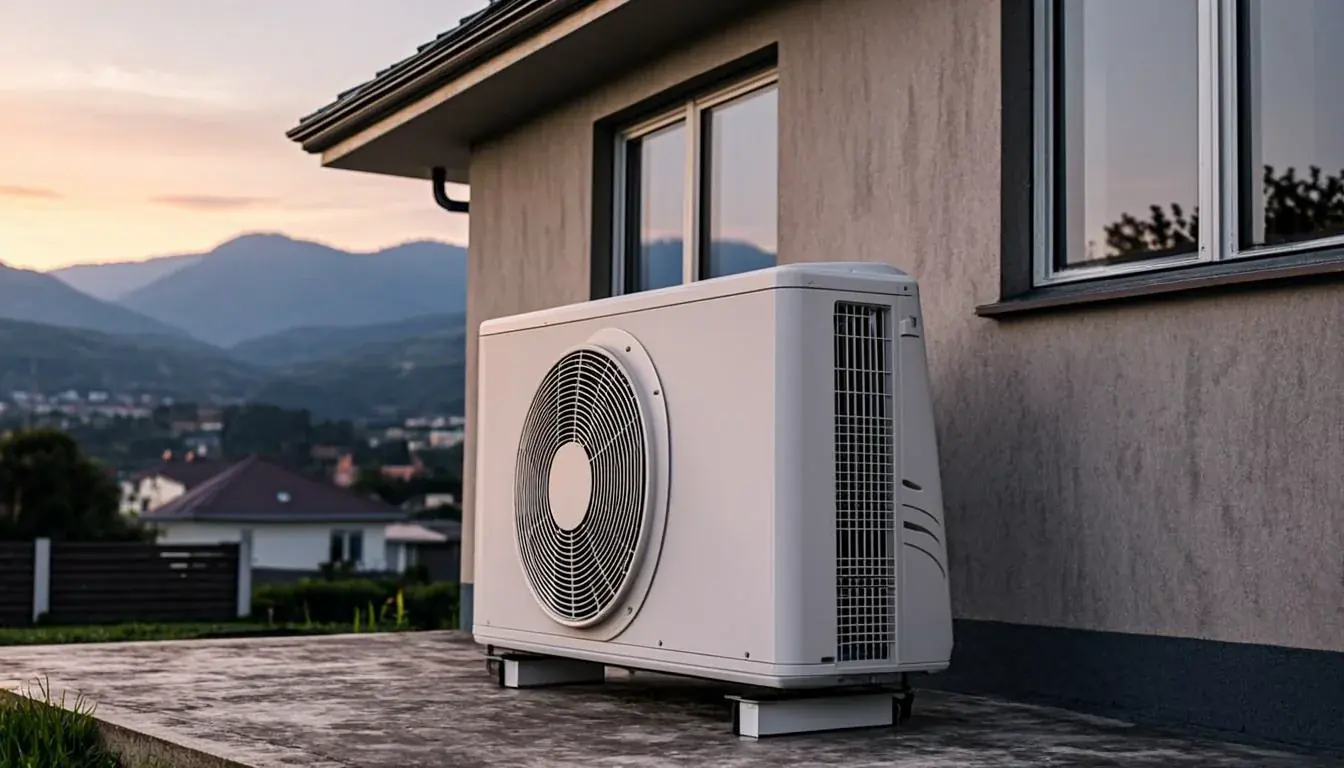
A cold-climate heat pump is the single best return on investment in British Columbia right now, and it is not particularly close. The reason is arithmetic. A resistive electric baseboard or electric furnace converts one unit of electricity into at most about one unit of heat, since a small fraction is lost as fan and wiring losses. A modern inverter heat pump moves heat instead of generating it, delivering roughly three to four units of heat for every unit of electricity it consumes even in our damp Lower Mainland winters, and quality cold-climate units keep most of that ratio down to around minus 15 to minus 25 degrees Celsius.
For the many Vancouver, Burnaby and North Vancouver homes still heated with baseboards, that physics translates into a 40 to 60 percent reduction in heating energy. For gas-heated homes the operating savings are more modest in a low gas-price year, but a heat pump also replaces a separate air conditioner, eliminates combustion risk in the house, and future-proofs you against carbon-price increases on the gas bill.
What makes the payback this good in 2026
CleanBC Better Homes rebates do the heavy lifting. A switch from a gas furnace can qualify for around $6,000, a conversion from oil heat up to $11,000, baseboard-to-heat-pump conversions around $4,000 to $6,000, and income-qualified households can layer a top-up of up to $5,000 on top. Municipal top-ups in several Metro Vancouver cities add hundreds more. That is how a $14,000 ductless multi-zone installation can land at a net cost of $8,000 or less, against annual savings of $1,500 or more for an electrically heated home, for a payback of roughly three to five years.
Rebates require a pre-upgrade EnerGuide assessment for most measures, and income-qualified top-ups require documentation. We handle the paperwork as part of every heat pump installation in Vancouver and confirm current amounts before you commit to anything.
Cost, savings and payback by starting point
| Your current system | Installed cost (typical) | CleanBC support (typical) | Expected annual savings | Payback |
|---|---|---|---|---|
| Electric baseboards | $8,000 to $14,000 (multi-zone ductless) | $4,000 to $6,000 plus top-ups | $1,200 to $2,400 | 2 to 5 years |
| Aging gas furnace | $12,000 to $18,000 (central ducted) | Up to about $6,000 | $400 to $900 plus no future AC purchase | 6 to 10 years |
| Oil furnace or boiler | $10,000 to $16,000 | Up to about $11,000 | $1,500 to $2,500 | 3 to 6 years |
| No cooling at all | $4,500 to $8,000 (single or dual zone) | Varies by heating fuel | $200 to $600 plus summer comfort | Comfort-driven |
The pattern is clear: the more expensive the fuel you are leaving behind, the faster the payback. That is why oil-heated homes in the valley and baseboard-heated Vancouver specials are the strongest candidates, and why heat pumps top this list instead of the flashy-but-slow options further down.
RANK 2Smart Thermostats: Payback in Under a Year
The humble smart thermostat is the most underrated energy upgrade in BC because the absolute dollars are small. A quality unit installed costs $200 to $350, and by trimming runtime overnight, during work hours and on mild shoulder-season days, it typically cuts heating energy by 10 to 15 percent. For the average Metro Vancouver household spending $1,800 a year on heat, that is $180 to $270 back every year, which pays the device off in well under twelve months before any rebate, and almost immediately after one.
Utility programs agree. BC Hydro and FortisBC have both run smart thermostat incentives over the years, typically in the $50 to $125 range for qualifying models, and retailers run bundle pricing each fall. Check both utilities' current offers before buying, because program windows open and close with budget cycles.
Two details that matter in Vancouver homes
First, if you heat with electric baseboards, you cannot simply swap a Nest or Ecobee onto a wall. Baseboards need high-amperage line-voltage smart thermostats such as the Mysa or Cadet models, typically installed one per zone at $100 to $160 each. The savings are just as real, but budget for multiple units. Second, if you heat with a boiler and radiant loops, the thermostat's savings depend heavily on outdoor reset logic, and a modern controls upgrade on the boiler itself can capture even more. Either way, this is the one upgrade where the payback is measured in months, which is why it earns the second spot on pure ROI.
Our service data from Surrey and Burnaby tune-up calls shows scheduling discipline matters more than hardware. The thermostat earns its keep by making the schedule automatic. If you already set back manually seven days a week, your incremental savings will sit at the low end of the range.
RANK 3Heat Pump Water Heaters: Three Times the Efficiency
Water heating is usually the second-largest energy line item in a BC home, often 15 to 25 percent of total consumption. A standard electric tank converts electricity to heat at an efficiency around 0.95, which is about as good as resistance heating gets. A heat pump water heater (HPWH) borrows the same refrigeration trick as a space-heating heat pump and pulls ambient heat from the air around it, delivering roughly three times more hot water per unit of electricity than the tank it replaces.
For a family of four in Vancouver using a typical amount of hot water, that is commonly a drop from $600 to $750 a year in water heating electricity down to $200 to $280, or annual savings of $250 to $450. CleanBC offers around $1,000 toward a qualifying HPWH, which brings a $3,300 to $4,000 installed replacement down to $2,300 to $3,000 net. Run the division and you get a five-to-eight-year payback on a water heater you had to buy anyway, which is why the HPWH takes third place. If your electric tank is ten years old and nearing end of life, the honest comparison is not "spend $3,000 extra or nothing", it is "spend $3,000 net for the efficient unit versus $1,400 more for a tank that costs three times as much to run."
Installation realities in Metro Vancouver
HPWHs want a reasonably warm, voluminous air source. An uninsulated garage in Surrey or Langley works well for most of the year. A cramped Vancouver utility closet may need louvered doors or ducted air. The units also cool and dehumidify the space they sit in, which is a bonus in a laundry room and a consideration in an already-cold basement. Noise is modest but real, comparable to a fridge. We assess the space before recommending, and for homes with tight spaces or heavy simultaneous hot-water demand we discuss tankless alternatives in our full water heater and tankless guide for Vancouver homes.
RANK 4Attic and Basement Insulation: The Envelope Workhorse
In an ideal world insulation would rank first, because in most pre-1990 Metro Vancouver homes the cheapest lost heat is the heat leaking through a thin attic. Many Vancouver specials, post-war burners in Burnaby and New Westminster and split-entries in Coquitlam still carry attic insulation rated around R-19 to R-30, when current BC Building Code practice for our climate calls for roughly R-60. Topping up an attic is fast, non-invasive work, and it cuts heating energy by a meaningful 10 to 20 percent in under-insulated homes.
The CleanBC insulation path runs through their partner network, with support that commonly reaches $2,500 or more depending on scope and how far your home improves on the EnerGuide blower-door and insulation checks, and income-qualified households can sometimes access no-cost insulation. Between the rebate and savings of $300 to $700 a year for a cold house, a $3,500 attic and crawlspace top-up frequently nets out to under $1,000 to $1,500, for a payback in the four-to-nine-year range.
Where the money actually goes
| Scope | Typical cost (Metro Vancouver) | Typical CleanBC support | Notes |
|---|---|---|---|
| Attic top-up to R-60 | $2,200 to $3,800 | Up to roughly $1,000 to $2,500 through the partner network | Best value per dollar in most homes; one-day job |
| Crawlspace or basement header insulation | $1,800 to $4,500 | Varies with combined scope | Also fixes cold floors, common in split-entry homes |
| Exterior wall dense-pack | $6,000 to $14,000 | Varies; usually combined with siding work | Consider during re-siding or stucco repair only |
One Vancouver-specific warning: bypasses beat insulation. Hot air rises through chimney chases, pot-light penetrations and the gap around an attic hatch far faster than it conducts through fiberglass. A top-up without air sealing the attic plane is money left on the table, which conveniently leads to our next ranking.
RANK 5Triple-Pane Windows: Buy Comfort, Not Payback
Here is the uncomfortable truth that window salespeople will not volunteer: replacing every window in your home with triple-pane units cuts window heat loss by 15 to 25 percent, but windows account for only a slice of your envelope, and whole-home replacement in Metro Vancouver runs $12,000 to $28,000. Even with CleanBC's $500 to $2,000 window support, pure energy payback stretches past twenty years, sometimes well past.
That does not make new windows a bad purchase. It makes them a comfort and asset purchase. Triple-pane glazing with Low-E coatings and argon fill transforms the winter experience of a west-facing Tsawwassen or White Rock living room by eliminating the cold radiant curtain next to the glass. It cuts street noise dramatically, which matters if you live near Kingsway, a SkyTrain line or a school. It raises resale value in a way no insulation ever will, and failed seals with fogged glass need attention regardless. But if your goal is strictly to reduce your energy bill, windows are the last big-ticket item you should buy, not the first.
The smart window strategy
Replace windows selectively when they fail, when condensation between panes appears, or when comfort and noise justify it. Prioritize the south and west faces where solar gain and wind-driven rain matter most. Casement frames seal tighter than sliders and squeeze more real-world performance from the same glass package. And if energy savings are the driver, put the same money into a heat pump and attic work first, then revisit the glass. Our full comparison of window replacement options in Vancouver walks through frame materials, EnerGuide ratings and BC brands in detail.
We install windows and profit from selling them, and we still tell customers whose glass is in good shape to spend their money elsewhere first. That is the whole point of ranking by ROI.
RANK 6Air Sealing: The $200-to-$400 Draft Killer
Air leakage is the least glamorous upgrade on this list and the fastest win after LEDs. In blower-door tests across older Vancouver, New Westminster and Maple Ridge homes, we routinely find the equivalent of a permanently open shoebox-sized hole distributed across attic hatches, baseboard trim gaps, exterior door weatherstripping, dryer penetrations and old wall vents. Heated indoor air exits through those paths all winter while cold replacement air is drawn in at the living level, which you experience as "my house feels drafty" and your furnace experiences as extra runtime.
The fix is unglamorous: caulk, weatherstripping, door sweeps, foam gaskets behind switch plates on exterior walls, an insulated attic-hatch cover and sealing top-plate penetrations in the attic. Done professionally, $200 to $400 covers most homes. Typical savings are 5 to 10 percent of heating energy, worth $150 to $350 a year in a leaky house, which lands payback at one to two years even without any rebate.
The one caution is combustion and ventilation. A very tight house with an older atmospheric-vent furnace, draft hood water heater or wood fireplace can create spillage or backdrafting risks once you close its accidental air leaks. If your home has any of those, or if anyone in the household has respiratory sensitivities, pair the sealing work with a ventilation review, and read our emergency-preparedness notes in the heat dome preparedness guide for the summer side of the envelope story.
RANK 7LED Lighting: The Trivial Win You Should Do Today
LED conversion ranks last only because the absolute dollars are small, not because the return is weak. An LED bulb uses roughly 75 percent less energy than the incandescent it replaces and lasts 15 to 25 times longer, so the "payback" on a $2 to $3 bulb is measured in weeks. A home with forty remaining incandescent or halogen bulbs, which we still see constantly in Dunbar, Point Grey and North Vancouver character homes with decorative fixtures, is wasting $100 to $200 a year in lighting energy and buying replacement bulbs every few months.
Three practical notes from a decade of retrofit work. First, buy reputable-brand bulbs for enclosed fixtures and dimmer circuits; cheap no-name LEDs flicker or die early on dimmers, and the savings vanish if you replace them twice a year. Second, match colour temperature per room: around 2700K for living spaces and bedrooms, 3000K to 4000K for kitchens, bathrooms and workspaces. Third, in pot-light-heavy homes, convert the trims to integrated LED units rather than screwing bulbs into old housings; you gain better optics, less attic heat loss and a cleaner ceiling line.
The total cost for a whole-home conversion is typically $50 to $150 in materials, making this the only upgrade on the list with effectively zero decision risk. Do it this weekend and bank the savings while you plan the bigger items above.
Honorable Mentions: Two BC-Specific Sleepers
Two upgrades miss the main list only because they fit narrower situations, and both deserve attention from the right homeowner.
Heat recovery ventilator (HRV)
An HRV exchanges stale indoor air for fresh outdoor air while recovering most of the heat in the exhaust stream. In new, tight construction it is standard practice; in an older home that just got sealed and insulated, it is the difference between an efficient house and an efficient house you actually enjoy breathing in. Installed cost runs roughly $3,500 to $6,500 in Metro Vancouver. The direct energy payback is long because ventilation heat loss is modest, but if you need ventilation anyway, recovering 60 to 80 percent of that heat instead of dumping it is the right call, and moisture control in our wet climate is its own reward.
Drain water heat recovery: quietly brilliant BC tech
Drain water heat recovery is a copper heat exchanger wrapped around your main vertical drain stack that preheats incoming cold water using the warmth of shower water going down the drain. It has no moving parts, lasts decades, and in a shower-heavy household with an electric tank or HPWH it cuts water heating energy by 10 to 25 percent. Installed cost is around $900, with payback in the four-to-seven-year range for families with teenage-shower habits. It works best where the drain stack is vertical and accessible, which is most Vancouver specials and many split-levels, and it pairs beautifully with a heat pump water heater by raising the temperature the HPWH starts from.
Not Sure Which Upgrade Fits Your Home?
Get a free, no-pressure assessment from Red Seal certified technicians who install every system on this list across Vancouver, Surrey and 17 Metro Vancouver cities. We will tell you honestly where your dollars work hardest.
Case Study: A 1960s Vancouver Special, $380 to $150 a Month
Numbers help, but a real house helps more. In the spring of 2026 we retrofitted a classic 1960s Vancouver special in the Fraserview area of southeast Vancouver for a family of four. The home is about 1,900 square feet over two floors, framed in the era when insulation was treated as optional, heated entirely with electric baseboards, and serving hot water from an aging electric tank. Their average combined BC Hydro bill through the heating season was running close to $380 a month, roughly $3,400 a year in total energy.
Here is the work, roughly in the order we recommend to anyone with this house:
- EnerGuide pre-assessment. A licensed energy advisor rated the home, documented the R-19 attic and leaky envelope, and unlocked the CleanBC rebate path. Cost: about $450.
- Air sealing and attic top-up. We sealed the attic plane and top-plates and blew the attic to R-60. Gross cost $3,600; CleanBC insulation support brought the net to roughly $1,500.
- Ductless multi-zone heat pump. A three-head cold-climate system replaced the baseboards on both floors. Gross cost $13,800; the baseboard conversion rebate plus an income-qualified top-up brought the net to about $7,300.
- Heat pump water heater. The old tank lived in a voluminous garage, perfect for an HPWH. Gross cost $3,700 including seismic strapping and condensation management; about $1,000 back from CleanBC.
- Line-voltage smart thermostats on the two remaining baseboard zones in the basement, plus a full LED conversion upstairs. Combined about $500.
Net project cost after rebates landed near $13,000. The following winter, their bills settled around $150 a month in the coldest months and under $90 in the shoulder seasons, for annualized energy savings of about $2,300. Simple payback is just over five years, and the family gained something no baseboard ever provided: whole-home air conditioning for the heat-dome summers, filtered air, and quiet, even heat. This is the compounding effect that a stack of individually modest upgrades produces when someone plans them in the right order.
We sealed and insulated before sizing the heat pump. A tighter envelope meant a smaller, cheaper heat pump did the same job. Sizing first and sealing later would have bought capacity the house did not need.
Start With an Assessment, Then Let Financing Do the Heavy Lifting
Every plan above begins with the same step, and it is the cheapest one: an EnerGuide home energy evaluation. In Metro Vancouver it costs $350 to $550 depending on the advisor and home size, takes a few hours, and produces a report with your home's modeled heat loss, a prioritized upgrade list, and the EnerGuide rating that CleanBC requires before and after most major rebate claims. Think of it as the X-ray before the surgery. It routinely changes the plan: homes we assumed needed a bigger heat pump turn out to need an attic top-up first, and homes with fogged windows turn out to have perfectly sound glass under failed perimeter seals.
Once the plan is set, cash flow does not have to be the constraint. Through our financing options for BC home upgrades we offer $0-down plans from 7.99 to 12.99 percent APR over 12 to 84 months with a 60-second soft credit check, and many of our customers run the numbers so the monthly payment lands below the energy savings from day one. On the Fraserview project above, roughly $13,000 financed over 60 months at the promotional rate is about $260 a month against $190 a month in average savings, meaning the true first-year net cost is about $70 a month, and the loan is retired long before the equipment is.
Income-qualified households should ask specifically about the CleanBC top-ups and BC Hydro and FortisBC programs aimed at lower incomes, which can cover the majority of an insulation or heat pump project. And for the full current rebate landscape in one place, our CleanBC rebates guide for 2026 is updated as program amounts change.
Your next step
Ranking energy upgrades by return on investment removes the guesswork from the most common question we hear: "Where should I spend first?" The answer for most Metro Vancouver homes is some ordering of heat pump, thermostat, water heater, insulation, sealing and lighting, with windows bought for comfort rather than payback. Request a free quote and we will apply this exact ranking logic to your house, your fuel bills and your budget, then handle the rebates and financing around whatever you decide.
Frequently Asked Questions
Smart thermostats and LED lighting have the fastest payback, often under one year once utility rebates are applied. Among major upgrades, heat pumps rank first because CleanBC rebates can cover thousands of dollars of the installed cost while cutting heating energy by 40 to 60 percent compared with electric baseboards.
Yes, for most CleanBC Better Homes rebates on heat pumps, insulation and windows you need a pre-upgrade EnerGuide evaluation and, for the largest payments, a post-upgrade evaluation. Assessments typically cost $350 to $550 each and are booked through a licensed energy advisor.
Homes switching from electric baseboard or electric furnace heating typically see 40 to 60 percent lower heating costs because a heat pump delivers 3 to 4 units of heat per unit of electricity. Households that also switch to a heat pump water heater and improve insulation often cut total energy bills roughly in half.
Triple-pane windows cut window heat loss by 15 to 25 percent and are excellent for comfort, noise control and resale value, but their high upfront cost of roughly $1,000 to $1,500 per window means pure energy payback can exceed 20 years. They are best done when your windows are already failing, not purely for savings.
In many cases yes. CleanBC Better Homes payments can combine with FortisBC offers for gas customers, BC Hydro programs for electric homes and municipal top-ups in cities such as Vancouver, North Vancouver and New Westminster. Rules change each program year, so confirm stacking rules before you sign a contract.
Air sealing and LED conversions are the cheapest meaningful wins. For $200 to $400 in caulking, weatherstripping and door sweeps, plus $1 to $3 per LED bulb, most Metro Vancouver homes eliminate the worst drafts and cut lighting energy by about 75 percent.