Vancouver Winter Prep: The Complete Home Checklist (Plumbing, Heating, Windows)
Vancouver winters do not arrive as blizzards - they arrive as five months of wet cold, windstorms and the occasional arctic outflow that catches everyone off guard. This is the complete pre-winter checklist our own crews work through: plumbing, heating, windows and doors, gutters, trees, emergency readiness and insurance, scheduled week by week from September to November.
Most winter damage in Metro Vancouver is preventable, and almost all of it is cheaper to prevent than to repair. A burst pipe from one hard freeze can flood a finished basement in an afternoon; a $2-per-foot foam sleeve would likely have stopped it. Use this guide as your working checklist - it is organized by system, then by calendar, so you can attack it in weekend-sized pieces before the first week of November.
What a Vancouver Winter Actually Does to Homes
Vancouver's cold is not Prairie cold, and that is exactly why it damages houses differently. Our core winter - November through February - runs daytime highs of 4 to 8 degrees Celsius with overnight lows just above freezing, delivered as rain, drizzle and saturating humidity. That is two months of water working into every gap a building has, followed by windstorms that test trees and roofs.
Then, once or twice most winters, an arctic outflow funnels cold interior air down the Fraser Valley and the temperature drops to -5 to -15 degrees Celsius with wind - often with clear skies and no protective snow cover to insulate the ground. Homes built for mild dampness suddenly face true freeze conditions: hose bibs split, crawl-space pipes burst, and heating systems that were marginal all season fail at the exact moment they are needed most.
The November 2024 freeze event made this pattern impossible to ignore. A sudden, early cold snap caught Metro Vancouver before homes were winterized, and our emergency line ran wall-to-wall with burst outdoor lines, frozen crawl-space piping, no-heat calls and flooding. The expensive failures shared one trait: they were all preventable tasks on a checklist nobody had gotten to yet. The valley communities - Abbotsford, Mission, Chilliwack - always see the deepest outflow temperatures, but the burst pipes in that event were as common in Vancouver and Burnaby because the unprotected plumbing was identical.
Complete the outdoor and crawl-space plumbing tasks before the end of October. Every November freeze event punishes homes that were "about to get to it."
Plumbing: Freeze-Proofing Your Pipes
Frozen plumbing is the number one winter emergency we respond to, and nearly every case traces to the same handful of overlooked tasks. Work this list in order.
Disconnect every outdoor hose
Left attached, a garden hose traps water in the hose bib and the supply pipe behind the wall. When that water freezes, it expands and splits the pipe - often inside the wall cavity where the first sign is a ceiling stain in January, long after the hose was finally removed. Disconnect all hoses, drain them, coil them, and store them in the shed or garage. Then shut off the indoor supply valve feeding each outdoor bib (older Vancouver homes have a shutoff in the basement or a nearby access panel), open the outdoor faucet fully, and let it drain. Frost-free hose bibs help, but they still need the hose off to work as designed.
Know your main shutoff - and prove it
The single most valuable 60 seconds in a flood: knowing where the main water shutoff is and that it actually turns. In most Vancouver-area homes it sits in the basement near the front foundation wall, in a crawl space at the water entry, or beside the water meter. Give it the knowledge test - can every adult in the household close it in the dark? If the valve is seized, corroded or painted over, get it serviced now: trying to learn this on the night of a burst pipe is how small floods become large ones. While you are there, tag it, and clear the boxes stacked in front of it.
Insulate exposed piping
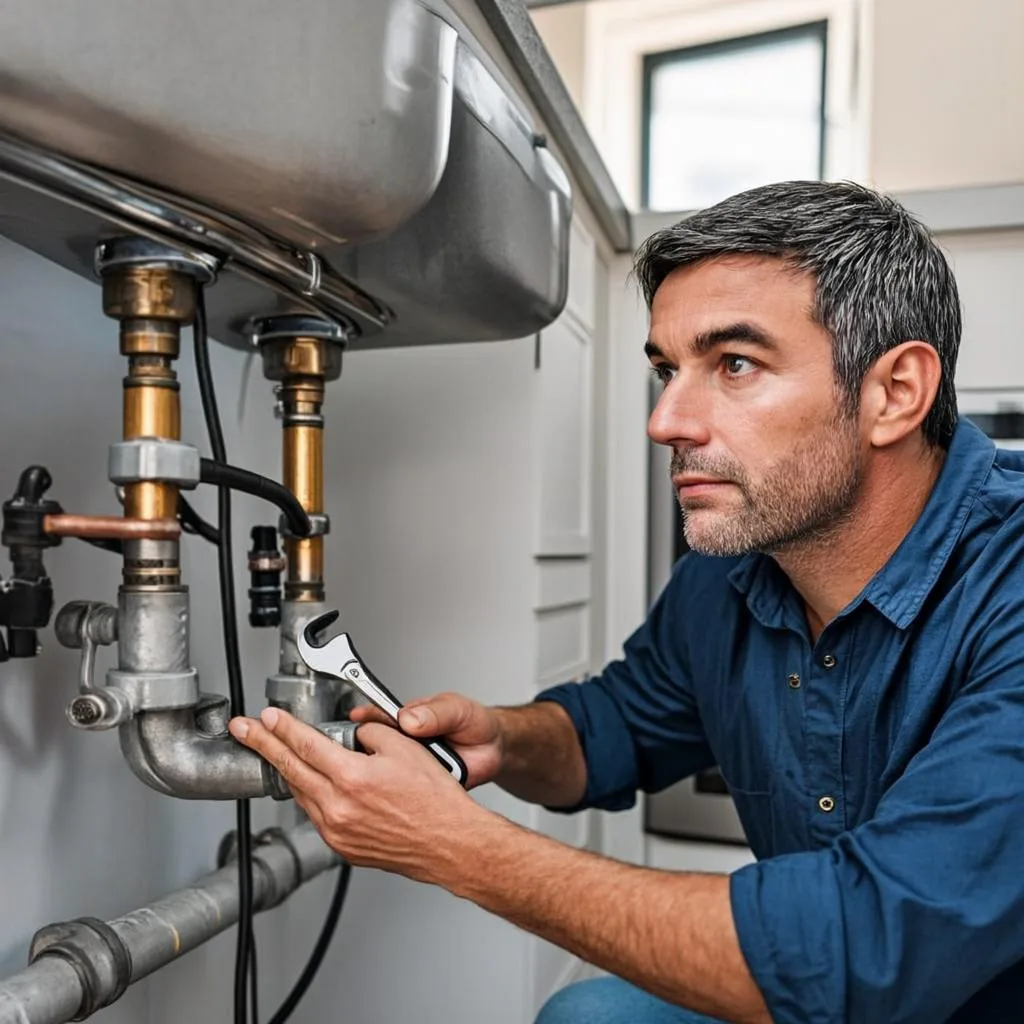
Any water line running through an unheated space - crawl spaces, garages, exterior walls, under decks, along rim joists - is a freeze candidate. Foam pipe insulation sleeves cost roughly $2 per foot at any hardware store and install with a utility knife in an afternoon; choose the sleeve size matching your pipe diameter and slit-fit it around elbows too. Priority zones in our service area: crawl spaces under pre-1980 East Vancouver and Burnaby homes, garage-supply lines in Surrey and Langley townhouses, and pipe runs along uninsulated rim boards everywhere.
Vacation mode, done properly
Travelling over the holidays? Set the thermostat to hold 13 degrees Celsius (55 Fahrenheit) - warm enough to keep interior wall cavities above freezing without paying full heating rates. Then go further: shut the main water valve, open the lowest faucet in the house to drain pressure, and open a high faucet to let air replace water in the lines. A pipe that bursts in an empty, water-shut-off house drips a few gallons; a pipe that bursts with the main open runs for days. For week-plus absences, consider having a neighbour or our service team do a mid-trip walkthrough. Leaving the water on? A smart water-leak sensor under the water heater and near the washing machine ($30 to $60 each) will text you at the first drip.
Hot water recirculation and cold-room checks
If your hot water takes two minutes to arrive at the kitchen tap, your recirculation line (or lack of one) is dumping cooled water through the least-insulated route in the house repeatedly all winter. A demand-controlled recirculation pump retrofits under a sink in a few hours, saves thousands of litres a year, and keeps that pipe run warm - a genuine freeze-prevention bonus for long attic and crawlspace runs. While you are planning it, check that the water heater closet or utility room is not bleeding cold outdoor air through penetrations and that any tankless unit's condensate line is protected and sloped, so it cannot freeze and back up.
| Plumbing task | Cost | Who does it | Prevents |
|---|---|---|---|
| Disconnect hoses, drain and shut off outdoor bibs | $0 | Homeowner | Split bibs and in-wall pipe bursts |
| Locate and exercise the main shutoff valve | $0 | Homeowner | Uncontrolled flooding during a burst |
| Foam pipe insulation for crawl space lines | ~$2 per foot | Homeowner | Frozen and burst supply pipes |
| Water leak sensors (water heater, laundry, under sinks) | $30-$60 each | Homeowner | Days of unnoticed flooding |
| Frost-free hose bib replacement | $220-$380 | Plumber | Repeat outdoor-line freeze failures |
| Demand hot water recirculation pump retrofit | $450-$850 | Plumber | Long cold runs and heat loss through lines |
For deeper coverage, our plumbing page covers frozen pipe response and prevention in detail, and the burst pipe first-60-minutes guide is the companion read for what to do if prevention loses a round.
Heating: Tune It Before It Breaks
The October furnace tune-up ($149-$229) and why it exists
Heating failures in Vancouver are overwhelmingly January problems created in October. A professional tune-up in October - $149 to $229 for most systems - cleans the burner, verifies the heat exchanger, tests safety limits, replaces the flame sensor if weak, and documents combustion efficiency before the first long run of the season. Book it now because every competent company's calendar fills by mid-October, and November freeze events convert skipped tune-ups into no-heat emergency calls at 11 p.m. - at emergency rates, with parts on backorder during cold snaps.

Filters: the monthly $25 habit
A clogged filter starves the blower, overheats the heat exchanger, and quietly shortens the furnace's life by years. Check the filter monthly through the heating season and replace it every one to three months depending on household dust, pets and filter rating. Write the date on the filter frame with a marker; it is the simplest maintenance log you will ever keep.
CO detectors: test them the same weekend
Carbon monoxide is a winter risk because that is when gas appliances run hardest and houses are sealed tight. Test every CO detector, replace any unit older than its printed expiry (typically 7-10 years), and make sure one sits on every sleeping floor and near the furnace or boiler. If your detectors are past date, replace them - they cost $30 to $60 and they are the only device in the house that can smell an invisible failure.
Heat pump winter mode
Heat pump owners have two pre-winter tasks. First, confirm the outdoor unit has 15 to 30 centimetres of clearance all around and no debris, firewood or plants stacked against it, and that it stands clear of gutter drip lines that can ice the coil. Second, understand your defrost cycle: in damp Vancouver cold, outdoor frost on the coil is normal, and brief steam rising during defrost is the system working correctly, not a fault. Do not switch a heat pump to "emergency heat" during regular cold - it doubles running cost; save it for actual equipment failure, and let cold-climate models do their job to their rated temperature.
A thermostat schedule that matches your life
Programming a weekly schedule instead of holding one temperature saves 5 to 10 percent on heating without touching comfort. A sane Metro Vancouver example:
| Time | Setpoint | Why |
|---|---|---|
| 6:00 am weekdays | 20°C | Warm for waking and showers; heating recovers from overnight setback |
| 8:30 am weekdays | 17°C | House empties; 3 degrees of setback is the efficiency sweet spot |
| 5:00 pm weekdays | 20°C | Recovery starts before arrival, staged gently |
| 10:30 pm daily | 17°C | Sleep science and savings together; hydronic homes can use 18°C for gentler morning recovery |
| Weekends | 20°C daytime, 17°C overnight | Home all day; keep the overnight setback |
Going away? Hold 13 degrees Celsius minimum - deep setbacks while travelling are how wall cavities and the pipes inside them reach freezing. The full tune-up checklist and heating service details live on our heating page.
Book Your Pre-Winter Service Before the Calendar Fills
October is the month: furnace tune-ups from $149, boiler services from $189, plumbing winterization visits, and 24/7 emergency coverage all winter across Metro Vancouver. Free quotes, Red Seal certified technicians, and honest advice about what your home actually needs before the freeze.
Windows and Doors: Stopping the Drafts
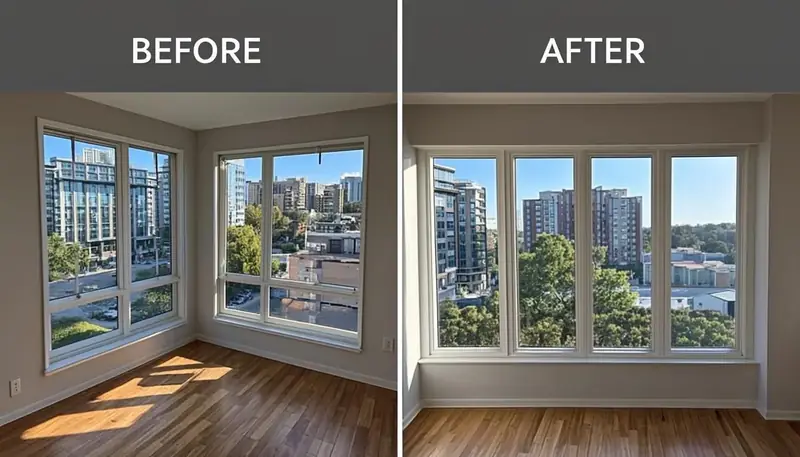
Drafts are comfort killers and heating-bill inflators, and in Vancouver they are mostly a sealing problem, not a window-replacement problem. Sealing the envelope costs dozens of dollars; replacing windows costs thousands (worth it eventually, but rarely an October job).
Find the leaks first: the candle trick
On a windy day, close every window and door and walk the perimeter of each with a lit incense stick or candle held near the frame edges. Where smoke or the flame pulls sideways, air is moving. Test the bottoms of exterior doors, window meeting rails on sliders, and anywhere trim meets framing. Ten minutes of walking finds the winter's worst offenders - typically the front door sweep, the mail slot, the attic hatch, and old sliding-window seals.
Weatherstripping: $15 per door, an afternoon of work
Self-adhesive foam tape, V-strip and door sweeps are hardware-store items costing roughly $15 per door and installable by anyone who can hold scissors. Replace compressed or torn old weatherstripping rather than adding layers on top of it, and sweep-check the door bottom in daylight: light under an exterior door is air moving through the same gap. Door sweeps, threshold adjustment, and foam tape around loose window sashes will recover a surprising share of a drafty room's comfort.
Storm windows, films and curtains
- Interior storm inserts: acrylic or glass panels that magnetize or press into place inside heritage windows - invisible from the street, removable in spring, and they convert a single-pane window to near double-pane performance. Ideal for character homes where replacement is restricted or unwanted.
- Heat-shrink window film: the $20 clear-film kit is a genuine budget solution for basements and bedrooms that will be sealed all winter; applied cleanly it is near-invisible and stops convective loss through the glass.
- Heavy curtains: closed at dusk, open at dawn to capture free solar gain through south glass - the oldest, cheapest window upgrade there is.
- Lock your windows: locking sashes compress their weatherstripping; unlocked sliders and hung windows leak through relaxed seals.
When drafts come from frames that have rotted or glass that fogs between panes, that is a replacement conversation - our windows and doors page covers the options, and the window replacement cost guide has the 2026 numbers.
Gutters and Drainage: Where Winter Damage Starts
The chain of damage is reliably the same every winter: clogged leaves hold meltwater and rain, trapped water freezes, the ice dam backs moisture behind the gutter and under shingles, and the leak enters the wall or soffit. By the time a stain appears on a bedroom ceiling in January, the repair involves roofing, insulation and possibly drywall - versus a $150 to $300 gutter cleaning in October.
Book or perform the cleaning after the last major leaf drop (late October to mid-November for most of Metro Vancouver - the North Shore and any maple-lined street runs later). The job is not just clearing the troughs: flush downspouts with a hose until water runs free, confirm hangers are tight, and make sure downspouts discharge 1.5 to 2 metres from the foundation onto sloped ground or a splash pad. Water pooling at the foundation edge is how wet crawl spaces and hydrostatic seepage happen through the wettest months.
While you are outside: clear the storm drain grate at your curb if leaves are matting over it - a five-minute rake that prevents the classic Vancouver street-flood, which is what pushes water up driveways and into garage door seals. And test any sump pump before the rains: pour a bucket of water into the pit, confirm it cycles, and check the discharge line is not kinked, frozen or dumping right back at the house. Homes in low-lying Richmond, Delta, North Delta and floodplain areas of Abbotsford should treat the sump check as non-negotiable.
Slow drains in November are often root and grease blockages that become full backups when everyone is home for the holidays. A $150 to $300 drain cleaning or camera check now beats a sewage backup on Boxing Day - our pre-winter drain cleaning guide explains the signs.
Trees and Wind: The West Coast Winter Threat
Vancouver's winter storms arrive from the southwest at 60 to 90 km/h with soaked soil, and that combination takes down trees every season - cedars especially, whose dense canopies act like sails in saturated ground. The result lands on roofs, cars, fences and power lines, and the damage is usually weeks in the making: a cracked limb over the roof that wind finishes.
Walk your property in October and look up. Any dead branch, cracked leader, or limb within falling distance of your roof, car zone or your neighbour's, and any cedar or tall conifer leaning or heaving soil at its base, is a job for a certified arborist. An assessment visit runs roughly $150 to $500 depending on the number of trees, and targeted pruning of problem limbs is far cheaper than the emergency crane removal after a storm. Keep in mind the insurance nuance: a tree that falls because it was clearly dead or neglected can put the damage and even the removal cost dispute on the owner of the tree - documentation of due care matters.
Pre-storm habits worth adopting: clear patio furniture and planters into shelter before forecast windstorms, check that fence panels and gates are latched and braced, know where your electrical panel and exterior disconnect are, and keep the number of a 24/7 service team handy. After a wind event, walk the exterior before the next rain: lifted shingles, shifted flashing and punctured gutter runs leak quietly for weeks otherwise.
The Emergency Kit Every Home Needs
Between windstorms and freeze events, Metro Vancouver loses power somewhere every winter. The prepared household rides it out; the unprepared one discovers that sump pumps, furnaces, fridges and phones all share the same vulnerability. Build the kit once and check it every October:
- Flashlights or headlamps for each person, with spare batteries (headlamps leave hands free)
- Battery bank, charged monthly, plus charging cables for the household's phones
- Battery or crank radio for news during extended outages
- Three days of water - four litres per person per day, refreshed annually
- Three days of no-cook food plus a manual can opener
- First aid kit, and a week of any essential medications
- Battery backup or water-powered backup for sump pumps in flood-prone homes
- Spare furnace filters, and a backup CO detector battery
- Warm blankets, and a plan for the one room you will gather in and heat with the fireplace or safely-rated heater
- Candles and matches as tertiary light only - never for heat
- Cash in small bills, printed copies of key documents, and insurer contact
- Snow brush, ice scraper, and a small snow shovel for the rare but real snow days
Two service notes: know where your gas and water shutoffs are and keep the right wrench within arm's reach of each - a paper label on a pipe beats memory in a panic. And never run generators, barbecues or any fuel-burning equipment indoors or in a garage; every windstorm brings a carbon monoxide emergency somewhere in the region.
Insurance: Coverage and Documentation
November is review season for homeowner policies, because the most common Metro Vancouver winter losses are exactly the ones with the most coverage variation. Pull your policy and check three things. First, burst pipe and sudden water damage - standard policies cover sudden and accidental discharge but not damage from long-term neglect, so the frozen hose bib you were "about to fix" can become a negotiation. Second, sewer and sump backup riders: basic policies frequently exclude backup damage, and the rider is inexpensive relative to one basement event. Third, your deductible and your wind/hail terms, especially in tree-heavy North Shore and Coquitlam neighbourhoods.
Then do the 30-minute documentation pass that turns any future claim from a dispute into a formality: photograph every room, the mechanical room, the water heater, the roof line and gutters, and the exterior walls, and store the set in cloud storage. Keep receipts for major systems, service records, and this winter's prevention work - insulation receipts and tune-up invoices are evidence of due care. Insurers move fastest for documented claims, and adjusters take the photos seriously.
If a pipe does burst: shut the main, then call us first for mitigation and repair documentation - photos, cause and scope - and notify your insurer the same day. Chronological records win claims.
The Week-by-Week Checklist (September to November)
Everything above, sequenced so nothing depends on an emergency. Print this, work top to bottom, and by mid-November your house is ready for whatever the season sends.
Early September - Book the pros
Book the furnace or boiler tune-up for a late-September or October date (calendars fill fast), book gutter cleaning for after leaf drop, and schedule the arborist walk-through if trees are near structures. Order any weatherstripping, pipe foam and sensors now so materials arrive before you need a free weekend.
Late September - Yard and envelope walk
Walk the exterior with the candle trick in mind: photograph the roof line, gutters, downspouts and siding for your insurance file. Insulate any accessible crawl-space pipes, trim plants and debris back from the heat pump, and clear 30 centimetres around the outdoor unit.
Early October - Heating and safety
Professional tune-up happens this month. Change the filter, test and date-check CO detectors, program the thermostat schedule from the table above, and run the heat pump through a heating cycle to confirm function before it is needed nightly.
Late October - The freeze-proofing weekend
The critical weekend: disconnect and store all hoses, shut off and drain outdoor bibs, exercise and tag the main shutoff, install leak sensors, finish any pipe insulation, and winterize the sprinkler or irrigation system if you have one. Verify the sump pump cycles and its discharge is clear.
Early November - Final sealing and drains
Apply weatherstripping, door sweeps and films to the rooms you flagged. Gutters get cleaned and flushed after the final leaf drop; slow drains get cleaned before holiday housefuls; clear curb storm drain grates. Emergency kit check: batteries, water dates, medications, charged banks.
Mid-November onwards - Storm mode
Lock windows, close curtains at dusk, watch the forecast for outflow warnings (the pattern: clear skies, Arctic outflow advisory, wind chill below -5), and on the coldest nights open cabinet doors under sinks on exterior walls and let a pencil-thin trickle of cold water run on the most exposed line. That trickle costs cents; a burst costs five figures.
Early Warning Signs Not to Ignore
Winter communicates before it destroys. These are the signals that mean a small fix is still available:
- Louder furnace or longer cycles: a system straining against a clogged filter, failing inducer or dirty sensor - tune-up territory today, breakdown territory in January.
- Yellow or orange furnace flame instead of steady blue: incomplete combustion - shut it down and call a gas technician the same day.
- Reduced water pressure at one fixture: a partially frozen supply line warming up by day - insulate that run immediately, before the next clear cold night finishes the job.
- Frost on exposed pipe runs: the pipe is at freezing temperature and asking for insulation now.
- Staining or mustiness at a ceiling edge or soffit: an active gutter or flashing leak already past the first stage.
- Water pooling at the foundation after rain: a downspout or grading problem that will become a crawl-space problem.
- Gurgling or slow drains: a developing blockage that becomes a backup during holiday usage.
- Heat pump icing solid and staying iced: defrost failure - service call before the compressor fights a block of ice.
Anything on this list that you catch this month is an appointment; the same item ignored until the January cold snap becomes an emergency call. Our 24/7 emergency page covers triage when prevention loses - and the average response across our 17 cities is about 45 minutes.
Vancouver Winter Prep: FAQ
Start in September with bookings, and finish all outdoor plumbing work by the end of October. Vancouver's damaging freezes arrive as early arctic outflows - the November 2024 event caught thousands of homes with hoses still attached - so the safe rule is: hoses off and bibs drained before Halloween, everything else complete by mid-November. Gutter cleaning waits for the final leaf drop in November.
Indoor plumbing typically freezes when sustained outdoor temperatures sit below about -5 degrees Celsius, and exposed runs in crawl spaces, garages and exterior walls freeze first - especially with wind chill. Our outflow events reach -5 to -15, which is deep-freeze territory for unheated cavities. Insulation sleeves ($2 per foot), sealed hose bibs and a 13-degree interior hold are usually enough protection for all but the most exposed runs.
Hold 13 degrees Celsius (55 Fahrenheit) minimum so wall cavities and the pipes inside them stay above freezing. For trips longer than a few days, also shut the main water valve, drain pressure from the lowest faucet, and consider $30-$60 leak sensors near the water heater and laundry. That combination means a worst-case pipe failure releases gallons, not days of continuous flow.
Yes, and October is the month to do it. The tune-up catches the flame sensors, igniters, dirty burners and early heat-exchanger issues that become 11 p.m. no-heat calls during the first cold snap - at emergency rates, when every technician in the region is booked. Clean systems also run measurably closer to rated efficiency, and documented annual service protects both warranty terms and insurance positions. Skipping one year is a gamble with poor odds.
Standard policies generally cover sudden and accidental water damage from a burst pipe, but not damage from long-term neglect - so a hose bib you never drained can turn into a dispute. Sewer and sump backup usually needs a separate rider. Review your policy each November, check your deductible, and photograph your home, mechanical room and systems for a dated record in cloud storage. Prevention receipts and service records are the strongest evidence of due care.
Shut the main water valve first - that is why locating and testing it is a September task. Then shut power to affected areas only if water is near electrical, open the lowest faucet to drain the lines, move valuables out of the water path, and call our 24/7 line at 604-615-2212 (average response about 45 minutes across Metro Vancouver). Photograph everything for insurance before cleanup, and notify your insurer the same day. The detailed minute-by-minute playbook is in our burst pipe first-60-minutes guide.
Get Your Home Winter-Ready - Free Quote
Tell us your neighbourhood and what your house is already telling you - a cold room, a slow drain, a rattling furnace - and we will book a free estimate for winterization work, a tune-up, or a repair plan with honest priorities and written pricing. October slots fill fastest, and our 24/7 emergency line runs all winter if the season wins a round first.
Prefer to talk it through?
Winter-prep questions are answered fastest on the phone. Describe your home's age, its heating system and the symptom you are seeing, and we will tell you whether it is a DIY afternoon, a booking this month, or an emergency today - before anyone charges you anything.
Call 604-615-221224/7 emergency line · Mon-Fri 8am-6pm · Sat 9am-4pm