
The Honest Answer Up Front
There is no honest way to rank HVAC companies in Vancouver by name, and we will not pretend otherwise, because we are one of the companies being ranked. What we can do, and what this guide does, is give you the checklist that makes the best company in the city obvious to you, whoever it is. The test is paperwork and behaviour, not advertising: verifiable licences, insurance certificates on request, flat-rate quotes approved before work starts, diagnostic fees credited to repairs, written warranties, rebate paperwork handled, and a phone that gets answered in year eight.
The honest meta-point: almost every company looks good in the living room during the quote visit. The differences appear in the boring places, the invoice after the job, the response to a two-year-old warranty call, the rebate file that was complete the first time. So this guide is organized as a checklist you can run against any company, including us, and at the end of each chapter we state plainly how BC Home Service meets that item, so you can compare claims instead of adjectives.
One more framing note, because it matters in this city: Vancouver has hundreds of licensed HVAC operators and a healthy number of genuinely good ones. Picking is not scarce; verifying is. Spend twenty minutes on the checklist below and you will filter the field to two or three companies worth quoting, which is the whole game.
0-point checklist
Licence, insurance, pricing, quote, warranty, rebates, reviews, response, brands, sizing, permits, attitude.
0 stars verified
Our own score across 12,000-plus jobs since 2010, complaints answered, not deleted.
0 written workmanship warranty
On every job, printed on the quote, alongside manufacturer parts coverage on registered equipment.
0 flat after-hours
Disclosed upfront on the call. No percentage multipliers, no invoice surprises.
Licences and Certification: Verify, Do Not Trust
The word licensed does the most work and carries the least meaning in this industry, because every company with a pulse has a business licence. A business licence means a company paid a fee to a municipality. What you are looking for is a provincial trade qualification: a BC gas licence held by the company and Red Seal certification held by the technicians doing the work. Those are the credentials that took years to earn and can be checked in minutes.
How to verify: ask for the licence number, then check it against the provincial registry. Ask whether the person who will actually be in your basement holds a gas licence, not just the person who owns the company. Ask for the licence number to be printed on the quote and the invoice; companies that are proud of their credentials print them everywhere, ours appears on every invoice we issue.
How we meet this item: our licence is BC-PL-2019-4421, Red Seal certified, and our gas fitters work under the BC Gas Code on every appliance we touch. Every job is done by licensed technicians, permitted through the proper channels, and inspected where the code requires it. If a company hesitates for even a beat on producing a licence number, that pause is the entire review.

Bottom line
A business licence is a fee, a gas licence is a qualification, and a Red Seal is a standard. Demand the second and third, verify them in the registry, and expect the numbers printed on your paperwork without being asked.
Insurance: The Paperwork That Protects Your House
Two certificates matter, and the absence of either one quietly transfers risk onto you. The first is liability insurance, which pays if the work damages your home: a flooded floor from a botched condensate line, a fire from improper gas work. The second is WorkSafeBC coverage, which matters more than most homeowners realize: if an uninsured technician is injured on your property, the liability conversation can land on your homeowner policy. Uninsured operators charge less because they are spending your money, not theirs.
The numbers to expect in Metro Vancouver: at least $2 million in liability coverage for a company doing appliance replacement work. How to verify: ask for the certificates of insurance and WorkSafeBC clearance letter. This is a routine request; good companies keep current certificates ready to send, because commercial clients ask for them constantly.
How we meet this item: $2M liability coverage and full WorkSafeBC coverage, with certificates produced on request, at the speed of an email attachment. It is not a differentiator in this trade; it is table stakes, and the only thing worth saying about it is that we never make you ask twice.
Pricing Model: Flat Rate, Credited Diagnostics, Honest After-Hours
The pricing model tells you how a company behaves before you can observe anything else. The structure we consider honest, and the structure we run, has three parts. Flat rate approved before work starts: you see the total for the defined scope before a tool comes out of the van, and the number does not move because the job ran long. A diagnostic fee of $89 to $129 that is credited to any approved repair or replacement: the company earns the bigger job by diagnosing honestly, so a proceeding customer never pays the diagnostic twice. A flat, disclosed after-hours premium: $150, stated on the phone, before anyone is dispatched.
The structures to avoid: open-ended hourly billing on replacement work, because it prices effort instead of outcomes; percentage multipliers for evenings and weekends, because you cannot evaluate them until the invoice lands; and free diagnostics, which are recovered in the repair price with markup, or used to get a foot in the door for a sales visit. None of these are fatal in isolation; all of them are patterns.
| Fee | Our structure | Why it matters |
|---|---|---|
| Diagnostic | $89-$129, credited to repair | The company earns the job by diagnosing honestly |
| Repair pricing | Flat rate, approved before work | Furnace repairs $180-$650; no clock-watching |
| Replacement pricing | Flat, written, itemized | Furnaces from $3,800; high-efficiency $5,500-$9,000 |
| Tune-up | $129 flat | Maintenance priced to be done, not upsold |
| After-hours | $150 flat, disclosed on the call | Evaluatable before dispatch, not after the invoice |
How we meet this item: every line in that table is our actual pricing structure, and the deeper price ranges behind it are published openly, in our furnace cost guide and our AC repair cost guide for 2026. Companies that will not publish ranges are not hiding them from competitors; they are hiding them from you.
The Quote: What Good Paperwork Looks Like
A proper HVAC quote is a document you could hand to a competitor and get a meaningful comparison back. It names the equipment by model and serial. It prices the total job flat, including venting changes, condensate drainage, electrical work and disposal. It assigns the permit to the contractor. It states the warranty terms in writing. Where rebates apply, it shows the rebate amounts, the programs, and who files them. And it is approved and signed before any work starts, which in our shop is a hard rule.
What disqualifies a quote: no model numbers, which means you cannot compare it to anything; hourly billing with an estimate, which is a starting point rather than a promise; missing permit language, which means nobody is accountable for code compliance; and verbal warranty claims, which are worth exactly nothing. We see all four weekly on second-opinion calls, most often after a no-heat emergency in January, when the homeowner had no time to compare paperwork.
How we meet this item: our quotes are itemized flat-rate documents with equipment model and serial numbers, permit handling, warranty terms, and rebate math where applicable, approved before work starts. The repair-versus-replace decision is shown with both options priced, which is the part most companies skip; our furnace repair versus replace guide explains why we put both numbers in front of you.
Warranties: Two Layers, Both in Writing
There are two warranties on any install and they protect against different failures. The manufacturer parts warranty covers the equipment: typically 10 years on registered parts, longer on heat exchangers, and it lives or dies on registration being done at install time, which homeowners rarely do and installers should. The workmanship warranty covers the installation: the brazing, the venting, the condensate, the things the manufacturer does not see. A company confident in its work prints this one; a company that hedges says trust us.
The questions to ask: what exactly does the workmanship warranty cover, for how many years, and where is it written? What voids the manufacturer warranty, and who is responsible if registration was missed? What happens in year six when a covered part fails on a Sunday: who diagnoses, who pays the labour, who orders the part, how long does it take?
How we meet this item: a 2-year written workmanship warranty on every job, on top of manufacturer parts coverage that we register at install so it actually exists when you need it. Warranty claims are diagnosed by us, filed by us, and followed up by us, because a warranty you have to chase is a warranty you do not have. The full terms are on the quote before you sign, which is where they belong.
Rebate Paperwork: The Free Money Test
This is the single best filter in the whole checklist, because it costs the company real work and costs you nothing to ask. BC has the most generous home-energy support in the country: combined heat-pump rebates can reach $16,000 across CleanBC, BC Hydro, FortisBC and municipal programs, with limited-time bonuses of up to $1,000 in some seasons, and smaller incentives for high-efficiency gas equipment. Every one of those programs lives or dies on paperwork: eligible model lists, registration, permits, invoices with serial numbers, pre-approval before install in some streams.
Ask any company this exact question: will you complete the rebate paperwork, and will the rebate amounts be printed on the quote? The honest answers are yes and yes. The answers that should end the conversation: the rebate is your problem, that is not something we do, or a number quoted from memory with no program named, which is how people end up denied eight weeks after paying.
How we meet this item: we complete CleanBC, BC Hydro, FortisBC and municipal applications on qualifying installs, print the verified rebate math on the quote, and verify the live amounts at booking because they change seasonally. The mechanics are laid out in our CleanBC rebates guide, and the financing side, from 7.99 percent with approved credit, is on our financing page.
Bottom line
Up to $16,000 in combined support is available in this province, and every dollar of it arrives through paperwork. A company that will not do the paperwork is leaving your money on the table, and a company that does not know the current amounts is guessing with your file.
Reviews and Track Record: How to Read Them
Volume is the least informative statistic in online reviews; specificity and recency are the informative ones. A page of reviews that name the technician, the job, the price and the timeline tells you how the company actually operates. Five hundred generic five-star ratings tells you the company asked for reviews. Read the middle of the distribution, the three and four-star entries, because that is where the honest texture lives.
Two behaviours to check. First, does the company respond to negative reviews, and specifically or defensively? Every honest operator has bad days; the test is whether the response addresses the complaint or attacks the customer. Second, is the track record long enough to matter? HVAC equipment lives 15 to 20 years, so a company that started three years ago has never serviced its own installs in mid-life.
How we meet this item: 4.9 stars from verified reviews, across 12,000-plus jobs since 2010, which means we are now servicing equipment we installed over a decade ago, and answering the phone for customers who bought from the version of us that was smaller and hungrier. The complaints in that history got answered publicly, because that is what the reviews are for. Our about page carries the credentials and the story.
Response Times: The Emergency Test
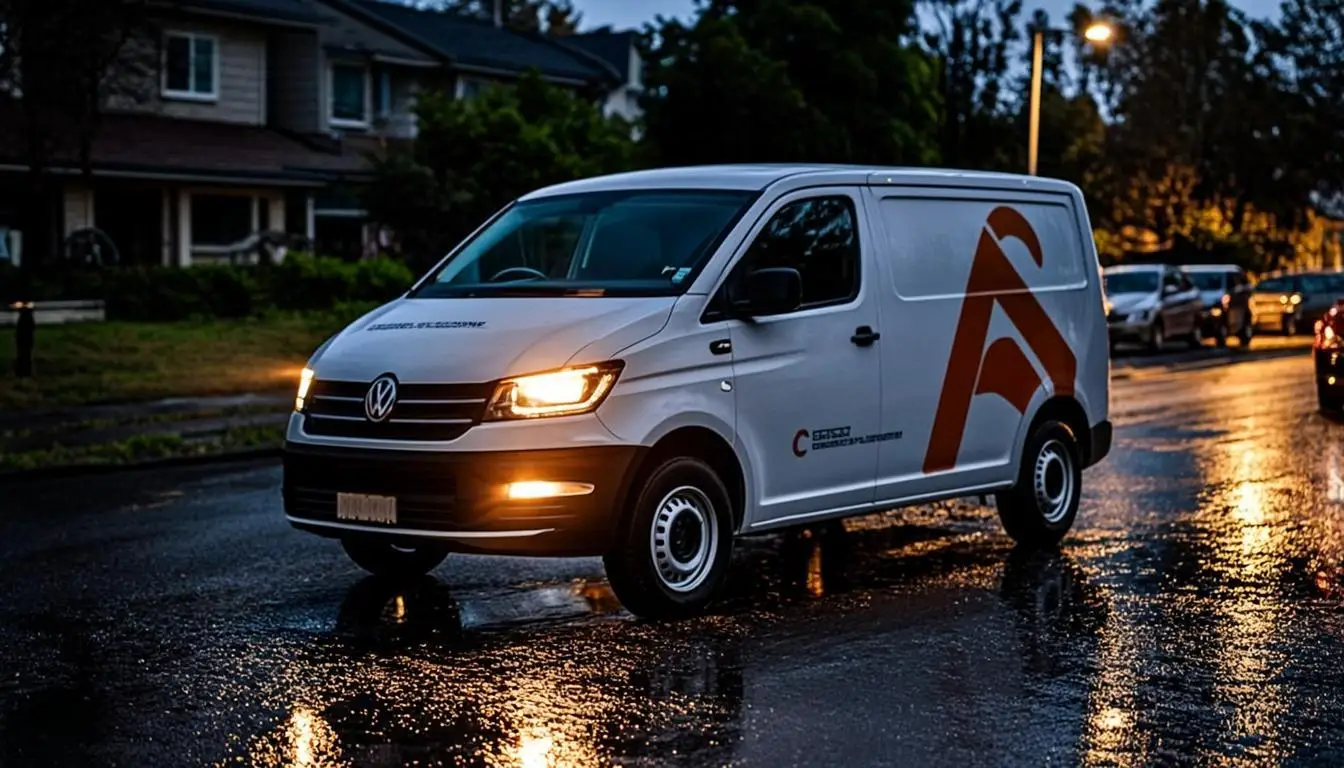
You learn what a company is made of at 11pm on the coldest night of January, which is a bad time to conduct interviews. The test happens before you need it: ask what the after-hours premium is, ask how the dispatch works, and ask for response times by city, because Metro Vancouver geography is real and a company without trucks in your municipality cannot be fast in it.
How we meet this item: our emergency line, 604-615-2212, is answered by live dispatch 24/7, and the after-hours premium is $150 flat, disclosed on the call. Typical response times across the 17 cities we serve:
| Cities | Typical emergency response | Notes |
|---|---|---|
| Vancouver, Burnaby, Richmond, New Westminster, North Vancouver, Port Coquitlam | 30-45 minutes | Core municipalities, trucks throughout the day |
| Surrey, Coquitlam, Langley, Delta | 45-60 minutes | Geography and bridges at peak traffic |
| Maple Ridge | 50-70 minutes | Staged dispatch from the eastern depot |
| Abbotsford | 60-80 minutes | The honest edge of the service map |
Publishing ranges like that is the behaviour you are looking for: numbers you can hold a company to. If a competitor quotes you faster times for Abbotsford than that, ask how many trucks they run east of the Pitt River, because the honest answer is in the dispatch log. Local pages for furnace repair in Vancouver and AC repair in Surrey carry the same numbers for those cities. And the safety note that outranks every response metric: for a gas smell, leave the house and call FortisBC at 1-800-663-9911 or 911, never a trades company.
Brands and Options: Selection, Not Inventory
A good company offers a menu, not a mandate. We install and service Carrier, Lennox, Trane, Goodman, Rheem and Daikin, and the reason is not loyalty to any of them: it is that different homes, ductwork and budgets suit different tiers, and a company that carries one brand has to sell that brand to every house it enters. The one-brand shop is not automatically bad; it is just structurally biased, and you should know that before the quote visit.
What matters more than brand, in order: the sizing calculation, because an oversized furnace short-cycles no matter whose logo is on it; the installation quality, because a great unit installed badly performs like a mediocre one; and parts availability in BC, because a warranty is only as fast as the nearest stocked part. A company that skips the load calculation and picks equipment by rule of thumb is skipping the engineering that determines your comfort for 15 years.
How we meet this item: we quote multiple options at different tiers where the home supports them, show the trade-offs honestly, and stock parts for the lines we carry. For deeper brand-by-brand reading, our 2026 furnace brand guide and the Carrier versus Lennox versus Trane comparison go tier by tier without pretending the logo on the cabinet matters more than the work around it.
The Master Checklist: Green Flags and Red Flags
Here is the entire guide compressed into one table you can run against any company in the city, including us. If a company clears the left column on every row, you have found a good one, whoever it is.
| Criterion | Green flag | Red flag |
|---|---|---|
| Licence | Number printed on quote and invoice, verifiable | Business licence offered as a trade licence |
| Insurance | Certificates emailed on request, current dates | We are fully covered, trust us |
| Pricing | Flat rate approved before work, diagnostic credited | Hourly billing, free diagnostics, percentage premiums |
| Quote | Models, serials, permit, warranty, rebates, all in writing | No model numbers, verbal warranty, vague scope |
| Sizing | Load calculation shown or offered | Same size as the old one, rule of thumb |
| Rebates | Amounts on the quote, paperwork handled, verified at booking | Rebates are your problem after install |
| Reviews | Specific, recent, negative ones answered | Volume only, complaints attacked or deleted |
| Response | Published times by city, flat after-hours premium | We are always fast, premium revealed on invoice |
| Brands | A menu of tiers matched to the home | One brand, one price point, every house |
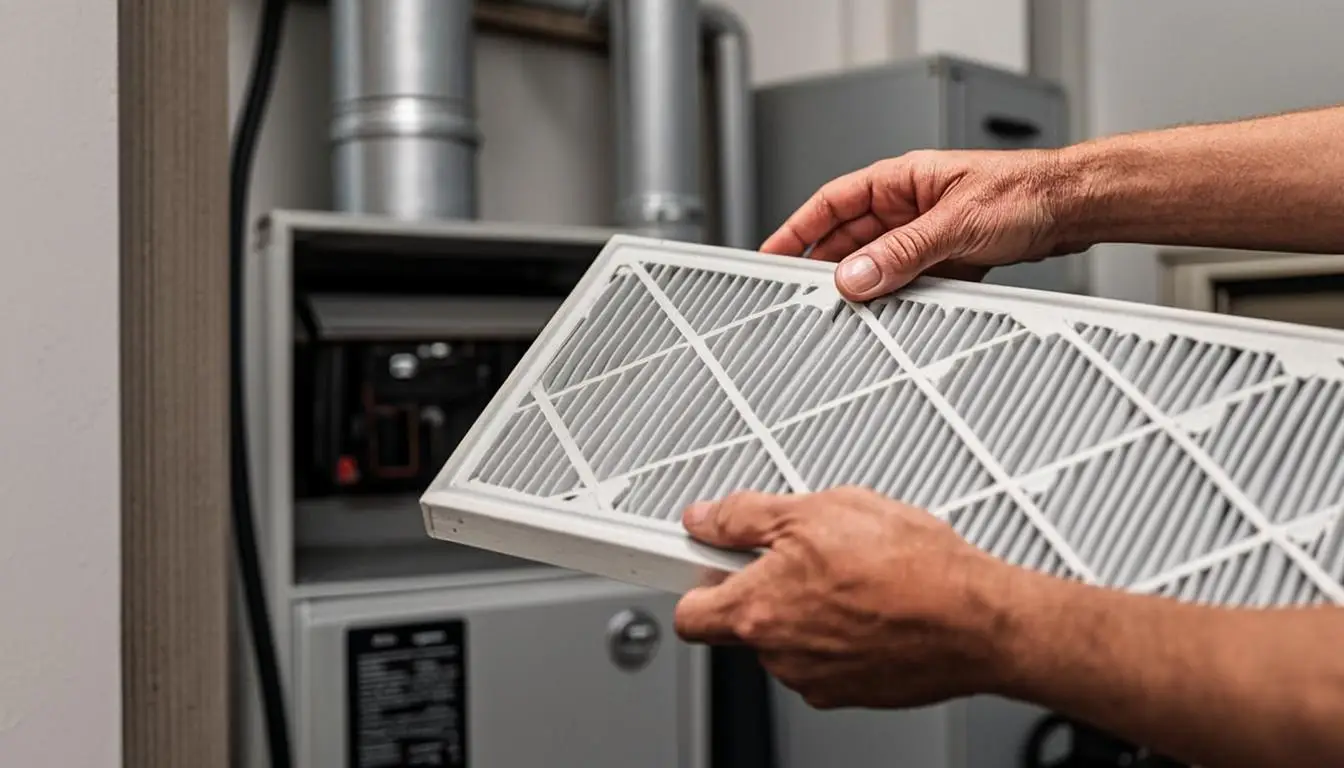
| Maintenance | Tune-up at a published price, filter guidance in writing | Membership pressure at the kitchen table |
What to do this week, if you are choosing right now: get two or three quotes, run the table above against each of them, and watch how each company reacts to being verified. Good companies enjoy it. The others show you something useful. When you want to see how we score against our own checklist, the contact page reaches a live dispatcher, and the longer contractor-selection guide covers the same ground in more depth for readers who want it.
Frequently Asked Questions
Services That Solve This Faster
Furnace and Heating Services
Flat-rate repairs from $180, tune-ups at $129, replacements from $3,800, all quoted in writing first.
Heat Pumps
Cold-climate installs with up to $16,000 in combined rebates and the paperwork handled by us.
Cooling and AC Services
AC installs, repairs from $180 and pre-season maintenance, quoted flat before any work starts.
24/7 Emergency Service
Live dispatch at 604-615-2212, 30 to 45 minute core-city response, flat $150 after-hours premium.
Financing and Rebates
Financing from 7.99 percent with approved credit and full rebate paperwork on qualifying installs.
Related Guides From Our Team
How to Choose an HVAC Contractor in Vancouver — the longer companion piece to this checklist, question by question.
Furnace Cost in Vancouver 2026 — what a fair, complete furnace quote actually contains, line by line.
Best Furnace Brands in Canada 2026 — how to evaluate the equipment side without brand loyalty.
Furnace Repair vs Replace — the decision a good company will show you both sides of, in writing.
CleanBC Rebates 2026 — the programs behind the $16,000 stack your contractor should be filing.
Red Seal certified, licensed gas fitters (BC-PL-2019-4421), $2M insured, 15-plus years on the tools, 12,000-plus jobs across Metro Vancouver since 2010, 4.9 stars from verified reviews. We wrote this guide because Metro Vancouver homeowners deserve the numbers, the code references and the honest trade-offs before anyone touches a wrench or a wallet.
More about our team →Talk to a Real Technician About This Today
Book a visit with a Red Seal technician: a real diagnostic, a written flat-rate quote before any work starts, honest repair-versus-replace math, CleanBC rebate paperwork handled and financing from 7.99 percent with approved credit. Emergencies answered 24/7 at 604-615-2212.
AC humming instead of cooling?
Diagnostics across Metro Vancouver, usually same-day in cooling season, credited to any repair, with the verdict delivered with gauges attached. Heat-wave emergency? The 24/7 line is answered around the clock, priority for maintenance-plan customers, flat $150 after-hours premium.
Call 604-615-2212 WhatsApp Us