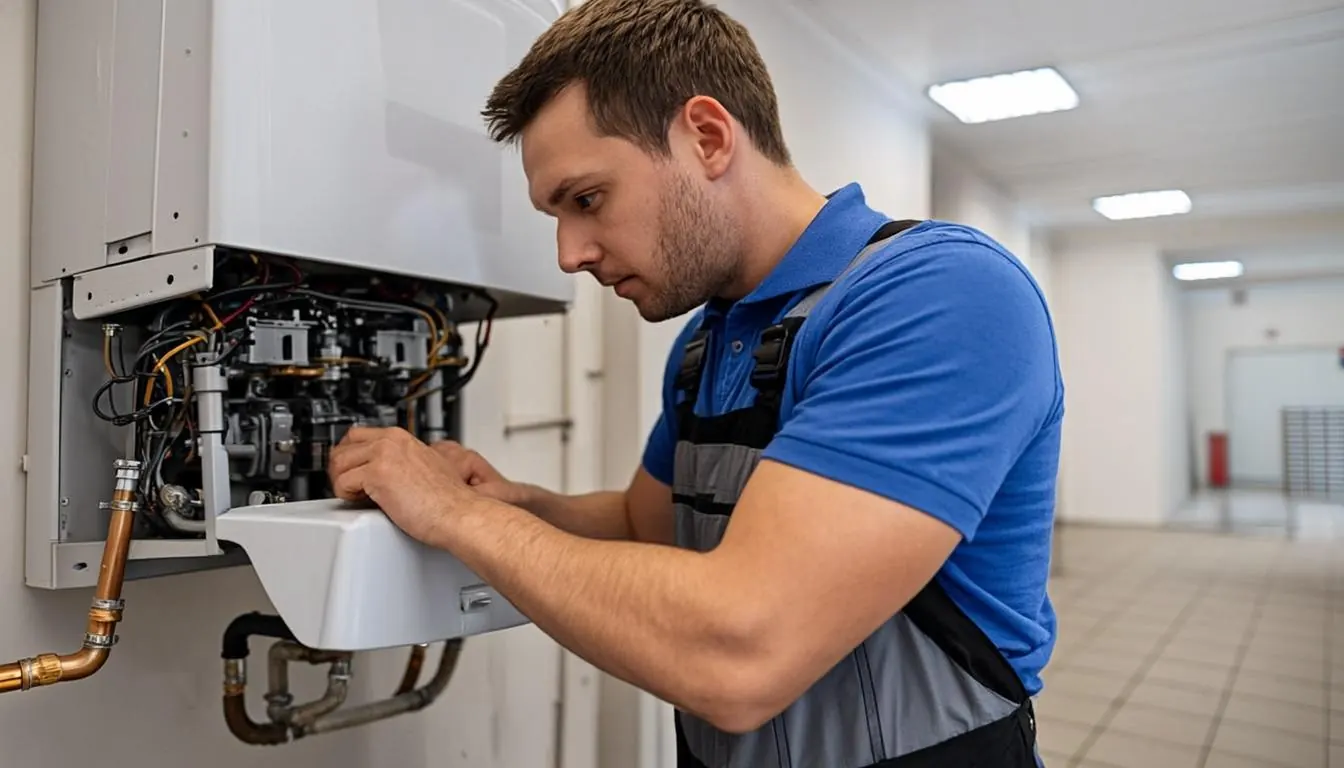
The Honest Answer Up Front
Most Vancouver furnaces are worth repairing, and the industry's worst habit is replacing equipment that has five good years left. Here is the short version we give customers at the kitchen table: if your furnace is under 12 years old, the repair is under $600, and the heat exchanger is sound, fix it. If it is over 15 years and the repair is over half the cost of replacement, replace it, and strongly consider a heat pump instead of another furnace, because CleanBC will pay you up to $6,000 to make that switch. If there is a cracked heat exchanger or a carbon monoxide problem, the debate is over: the unit is red-tagged, and you are replacing or repairing it before it runs again, full stop.
Vancouver's climate shapes this more than most homeowners realize. Our heating season runs October through March, with winter cold snaps between -5°C and -15°C when arctic outflow reaches the coast, but nothing like Prairie deep freezes. Local furnaces accumulate far fewer runtime hours than Calgary furnaces, which is why 20-year-old units still clatter along in East Vancouver basements. The trade-off is coastal humidity, which is hard on blower motors, control boards and igniters, so our repair mix skews toward electrical and ignition parts rather than heat exchangers.
The $89 diagnostic we charge tells you the truth about your furnace in about an hour. Any company that quotes you a replacement over the phone, without opening the cabinet, is guessing with your money.
0 jobs since 2010
Heating, cooling and plumbing jobs completed by our Red Seal team across Metro Vancouver and the Fraser Valley.
0 top AFUE available
Modern condensing furnaces hit 96 to 98 percent fuel efficiency, versus 60 to 80 percent for pre-1995 mid-efficiency units.
0 typical lifespan
15 to 20 years is the realistic range in Metro Vancouver's short heating season, longer with annual tune-ups.
0 star rated
From 500+ verified Google reviews across 17 cities, because honest repair-versus-replace advice earns trust.
The Five Golden Rules
Every furnace decision we have made in 15 years across Vancouver, Surrey and the Fraser Valley collapses into five rules. Score yours honestly and the answer appears on its own.
The 50 percent rule
If the quoted repair exceeds 50 percent of the cost of a comparable replacement, the replacement usually wins on total cost of ownership. A $700 blower motor in a $4,800 replacement market is a coin flip; a $2,800 heat exchanger is not.
Age 15 to 20 is decision time
Under 12, repair almost anything short of the exchanger. Between 12 and 15, repair cheap parts and start planning. Over 15, weigh every repair against remaining lifespan, and expect escalating part prices as manufacturers retire models.
The efficiency jump must be real
Jumping from an 80 percent AFUE furnace to 96-98 percent saves roughly 15 to 20 percent on gas. Jumping from a 60 percent clunker saves 35 to 40 percent. But replacing a working 92 percent unit "for efficiency" saves pennies; that is a sales pitch, not math.
Two repairs in 12 months is a trend
One failure is bad luck. Two failures in a heating season is a system entering its failure cascade: the next part is already stressed. At that point repairs are financing a decline, and the third call always seems to arrive in January at 11 p.m.
Safety ends the debate
Cracked heat exchanger, carbon monoxide in the home, flame rollout, or a red tag from any licensed gas fitter: these are not financial questions. The unit is shut down until made safe, and replacement, not patching, is almost always the right response on older equipment.
Repair Costs by Part: The Real Table
These are the ranges we actually invoice in Metro Vancouver, including parts and labour. Your diagnostic is $89, and we credit it toward any completed repair, so the numbers below are effectively all-in. Coastal humidity and the age of the local housing stock show up clearly in this mix: igniters, sensors, boards and blower motors dominate, exactly the parts that damp basements eat.
| Part / service | Typical cost (parts + labour) | What it is and why it fails |
|---|---|---|
| Diagnostic (credited to repair) | $89 | Full-system fault-finding; waived into the repair invoice when you proceed |
| Flame sensor | $180 - $280 | Senses burner flame; a dusty or corroded sensor makes the furnace short-cycle and lock out. The most common Vancouver repair. |
| Pressure switch | $180 - $320 | Proves the inducer draft before ignition; fails from condensate moisture and age. |
| Flame rollout switch | $150 - $250 | Safety cut-out that trips when burner flame escapes; often reveals a deeper venting problem. |
| Igniter (silicon nitride) | $220 - $420 | Glow-bar or spark igniter; cracks after thousands of heat cycles. Second most common repair. |
| Blower motor (PSC) | $450 - $950 | Standard induction motor; bearings fail from dust load and damp basement air. |
| Blower motor (ECM variable) | $850 - $1,500 | Modulating motors on 96%+ furnaces; more efficient but pricier to replace. |
| Gas valve | $380 - $680 | Regulates gas flow; sticking valves cause no-heat lockouts and uneven burner flame. |
| Inducer / draft motor | $550 - $1,200 | Pushes exhaust through the vent; corrodes from acidic condensate on high-eff units. |
| Integrated control board | $420 - $850 | The furnace brain; humidity and voltage events kill boards in coastal homes. |
| Condensate drain clear | $150 - $350 | High-efficiency furnaces drip litres per day; a clog shuts the furnace down mid-cold-snap. |
| Heat exchanger (cracked) | $1,800 - $3,500+ | The CO safety line. Worth replacing only under warranty on a young furnace. |
| Smart thermostat | $180 - $450 | Not a repair, but often the fix for "short cycling" and scheduling complaints. |
When a $600 repair still makes sense
Run the arithmetic as cost per remaining year. A $550 blower motor in an 11-year-old furnace with a clean heat exchanger costs about $55 per expected remaining year, against $4,800 spread over 18 years, about $265 per year, for replacement. The repair wins on cash and there is no reason a well-maintained 11-year-old unit cannot run to 18 or 20. Flip the ages and the same $550 buys four years of a dying machine while its board and inducer wait their turn. If you are unsure where your unit sits, our furnace repair service in Vancouver starts with that exact honest assessment.
What Replacement Costs in Vancouver
Replacement quotes in Metro Vancouver for 2026, equipment, permits, gas fitting, condensate management, disposal of the old unit and commissioning included. Vancouver's climate keeps the equipment itself modest: most local homes need 40,000 to 70,000 BTU furnaces, not the 100,000-plus BTU monsters sold in colder provinces, and honest sizing is one of the easiest ways to save $800 to $1,200 on the invoice.
| Equipment tier | Typical installed cost | What you get |
|---|---|---|
| 96% AFUE single-stage | $4,200 - $5,200 | Reliable condensing heat, one heat level, solid value for rentals and suites |
| 96-97% AFUE two-stage | $4,800 - $6,500 | Low/high fire, quieter, tighter temperature hold; the Metro Vancouver sweet spot |
| 97-98% AFUE modulating | $5,800 - $7,500 | Variable gas valve and ECM blower, whisper-quiet, best comfort and efficiency |
| Upsize / venting conversion | +$400 - $900 | Older mid-efficiency venting (B-vent) converts to PVC condensing venting |
| Add central AC coil later | +$1,500 - $2,500 | Choose an "AC-ready" coil and control package now, add the condenser in spring |
What moves the price
- Staging: two-stage and modulating gas valves cost more up front and return quieter operation plus 2 to 4 percent fuel savings.
- Venting: switching from metal B-vent to PVC condensing venting adds materials and labour in older Vancouver homes.
- Configuration: upflow basement units are cheapest; horizontal crawlspace and downflow attic installs in Vancouver Specials and laneway homes add labour.
- Ductwork condition: leaky returns kill furnace performance; sealing a few obvious joints costs little and pays back every month.
- Brand tier: Carrier, Lennox and Trane carry premiums; Daikin and Goodman deliver the same AFUE ratings for less. We quote all of them and tell you where the premium is real and where it is paint.
The rebate reality for straight swaps
Honesty time: CleanBC's big money is for fuel switching, not furnace-to-furnace replacement. FortisBC has periodically offered up to roughly $1,000 on qualifying high-efficiency gas furnaces, and we confirm the live amount when quoting. If you are open to a heat pump installation in Vancouver instead, CleanBC's gas fuel-switch stream pays $6,000, with an income-qualified top-up of $5,000, which reframes the entire decision for a lot of homeowners at furnace end-of-life. Full detail is in our heat pump Vancouver guide.
Furnace Acting Up? Get the Truth for $89
Our diagnostic is credited toward any repair, and if replacement is the smarter call, you get honest pricing with no pressure either way. Call 604-615-2212 or get a free quote.
10 Signs Your Furnace Is Failing (and What Each One Usually Means)
Furnaces rarely die silently; they telegraph for weeks. Here is the symptom-to-diagnosis map our technicians carry in their heads, so you can walk into a service call already knowing the likely problem and its typical cost.
| Symptom | Most likely cause | Typical fix cost |
|---|---|---|
| 1. Furnace runs 2-5 minutes, shuts off, repeats | Dirty or failing flame sensor; clogged filter tripping high-limit | $180 - $280 |
| 2. Blows cold air only | Failed igniter, gas valve, or broken limit switch | $220 - $680 |
| 3. Burner flame is yellow or orange, not blue | Combustion problem, dirty burners, or cracked exchanger; get it checked same day | Diagnostic first |
| 4. Loud boom or rumble at startup | Delayed ignition from dirty burners or bad gas pressure | $180 - $450 |
| 5. Squealing or grinding blower | Blower motor bearings failing or belt wear | $450 - $1,500 |
| 6. Short cycling every hour all day | Oversized unit, clogged filter, failing high-limit control | $0 - $420 |
| 7. Gas bills climbing year over year, same usage | Aging efficiency, cracked exchanger, leaking ducts | Diagnostic first |
| 8. Water pooling under the furnace | Condensate drain clog or leaking secondary exchanger | $150 - $350, or serious |
| 9. Soot streaks near registers or the cabinet | Combustion spillage; a CO warning sign | Shut it down, call now |
| 10. Unit is 15+ years and needs its second repair this season | Systemic aging, the failure cascade has started | Start replacement quotes |
Symptoms 3, 9 and 10 deserve special respect: odd flame colour and soot streaking are on the carbon monoxide warning list, and no financial calculation outranks a CO risk. If anyone in the house has unexplained headaches, nausea or dizziness that improves away from home, leave, call BC Hydro or FortisBC's emergency line and us, and get the furnace tested before it runs again.
Heat Exchanger Cracks and Carbon Monoxide
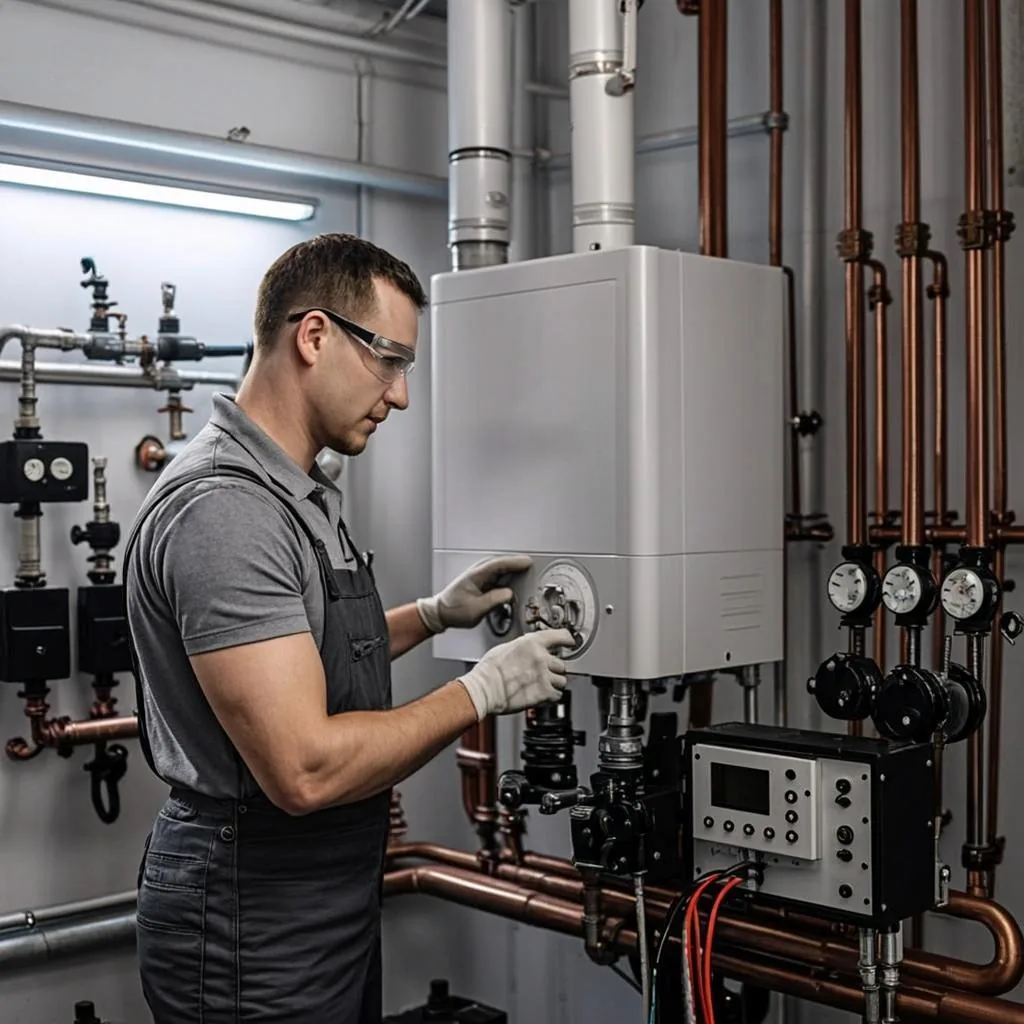
The heat exchanger is the metal clamshell that keeps your household air and the burner's exhaust separated. Gas flames heat the outside of the exchanger; the blower pushes household air over its inside. When it cracks, and 15-plus years of heat cycling eventually embrittles any exchanger, combustion gas, including carbon monoxide, can leak into the air your family breathes.
CO is odourless and displaces the oxygen carried in your blood. Early symptoms look like flu without fever: headaches, nausea, fatigue, dizziness, confusion. The BC Coroners Service investigates CO deaths in this province every year, and heating equipment is a recurring source. That is the entire reason this section exists in an otherwise money-focused guide: the furnace decision is a safety decision first.
Every home with gas appliances needs working CO alarms outside each sleeping area, per the BC Fire Code. Test them when you change furnace filters. They cost under $40 each, and they are the only sensor in your house that can wake you before a cracked exchanger becomes a coroner's report.
How cracks are found and what happens next
Our technicians inspect the exchanger with combustion analysis and visual scopes during the $89 diagnostic and every tune-up. If a crack is confirmed, a licensed gas fitter is legally required to "red tag" the appliance: a documented tag that takes the furnace out of service until it is repaired or replaced. You may also smell exhaust in the airstream, see discoloured flame patterns, or find soot around the burner compartment. Repairing means replacing the exchanger itself, $1,800 to $3,500 plus, which makes sense only on a warranty-covered unit; on a furnace past 15 years, the honest advice is replacement, and we will say so to your face. Gas work in BC is regulated by Technical Safety BC, and all our gas fitters are licensed, with permits pulled on installs so the inspection trail exists for your insurance and your resale.
When Repair Is Genuinely the Right Call
The repair case is stronger than replacement salespeople admit. Repair wins when the furnace is under 12 years old, the failed part is discrete and cheap, the exchanger passes inspection, and the repair brings you to a planned replacement rather than an emergency one.
- Young furnaces, cheap parts: a $250 flame sensor or $400 igniter on a 2018 unit is routine maintenance, not a crisis.
- Planning ahead: repairing now and replacing next summer on your schedule, with quotes in hand, beats a panicked January purchase at premium pricing.
- Selling soon: a sub-$500 repair that clears a home inspection is usually cheaper than a replacement credit, and we can document the fix for buyers.
- Rental economics: landlords running suites in East Vancouver duplexes often prefer a $350 repair over $5,000 of capital while cash-flowing a property.
- Warranty coverage: parts under manufacturer warranty drop repair costs to labour-only, often $180 to $350, and we verify warranty status before quoting.
The pattern to avoid is repair-as-procrastination: $300 in November, $450 in December, then a $1,900 exchanger in February. If you are on your second repair in one season, stop paying instalments on a dying machine and get the replacement conversation started while the weather still allows scheduling on your terms.
Seasonal Timing: Book in October, Not January
Vancouver's heating season starts in earnest in October, when overnight lows drop into single digits and furnaces that sat idle since April wake up. The first two cold weeks of the season are when neglected furnaces fail en masse: dust-cured igniters, seized inducer bearings, and three-year-old filters collapse all at once. Book your tune-up in October and you are ahead of the wave.
By late December through February, when arctic outflow pushes temperatures from -5°C down to -15°C in the Fraser Valley and eastern Metro Vancouver, the calendar turns against you. Install slots compress from days-something-chooseable to one-to-two-week waits, after-hours premiums stack on emergency calls, and your negotiating position evaporates because your family is cold. Replacement decisions made in January are, statistically, the most expensive replacements we do.
The October move costs $149 to $229 for a 20+ point tune-up, catches ignition and exchanger faults early, and doubles as the inspection that tells you whether this is your furnace's last winter, giving you the entire off-season to collect quotes. If you miss October, November still beats January by a mile. Our 24/7 emergency heating response is there for the 2 a.m. lockout, but we would rather meet you in daylight, in autumn, with options.
Maintenance That Adds Years to a Furnace
Furnace maintenance is unglamorous and it works. Units that get annual tune-ups in this climate routinely outlast identical units that do not by three to five years, and every one of those years defers a $5,000 replacement decision. The split of work between you and a pro is simple.
| Task | Frequency | Who |
|---|---|---|
| Check and replace filter (MERV 8-11) | Every 1-3 months in heating season | You |
| Keep return grilles and supply registers unblocked | Always | You |
| Test CO alarms and replace units past 10 years old | Monthly test, annual battery | You |
| Combustion analysis, burner clean, flame inspection | Annually (fall) | Pro |
| Heat exchanger inspection | Annually past year 12 | Pro |
| Blower wheel clean, amp draw, inducer check | Annually | Pro |
| Condensate line flush and trap prime | Annually on high-eff units | Pro |
| Vent and intake inspection (snow, nesting, corrosion) | Annually and after storms | Both |
Two Vancouver-specific notes. First, filter discipline matters more here than in dry climates: coastal dust and humidity load filters faster, and a clogged filter is the single most common cause of high-limit trips and premature blower death. Second, watch the exterior intake and exhaust pipes in deep-cold snaps; frost can block them and shut the furnace down with a pressure-switch fault, which looks like a $400 repair and is actually a five-minute defrost, a favourite January call we would rather you never needed. For deeper seasonal prep, our winter prep guide for Vancouver homes covers pipes, gutters and the rest of the house.

The Contractor Checklist (and the Red Flags)
The repair-versus-replace decision only works if the person advising you is qualified and disinterested. Gas work in BC requires a licensed gas fitter, and the HVAC trade attracts everything from excellent shops to door-knocking commission crews. Filter hard with this checklist:
- BC licence and gas ticket: a licensed contractor number (ours is BC-PL-2019-4421), licensed gas fitters on staff, Red Seal certification, $2M liability and WorkSafeBC coverage. Ask; real companies hand these over without blinking.
- On-site diagnosis before any quote: a replacement quote over the phone, sight unseen, is a guess. Our rule: nobody quotes a furnace without opening the cabinet.
- Written fixed pricing with model numbers: equipment brand, model, BTU size, staging tier, venting changes, permit and disposal lines, all in the document you sign.
- Permits and commissioning: gas permits through your municipality with Technical Safety BC oversight, plus a commissioning sheet showing combustion analysis results, airflow and static pressure after install.
- Load-based sizing: a Manual J calculation, not "whatever came out goes back in." Right-sizing in Vancouver's climate routinely drops a BTU tier and saves money.
- Warranty registration done for you: 10-year parts warranties on major brands require registration; a good contractor files it and hands you the confirmation.
Red flags
- "Your heat exchanger is cracked" declared without a scope, combustion reading or photos. Ask to see the crack.
- One-visit pressure pricing, "today only" discounts, or financing paperwork produced before the diagnosis.
- Quotes that size your furnace by square footage alone or recommend the same 100,000 BTU unit for every house on the street.
- No physical address, no licence number, cash-only requests, or a truck with no company branding.
- Rebate promises without checking your fuel type, utility and household eligibility first.
We work across 17 cities from Vancouver to Chilliwack; response times by city are listed on the service areas page.
Rebates and the Financing Math
Suppose the decision lands on replacement: a 96% AFUE two-stage furnace at $5,500 installed for a typical Surrey family home. Here is how the money actually flows.
Rebates: FortisBC has periodically offered up to roughly $1,000 on qualifying high-efficiency gas furnaces, current amount confirmed at quote time; there is no CleanBC rebate for a like-for-like gas furnace swap. If the household instead converts to a heat pump, CleanBC's gas fuel-switch stream pays $6,000, stackable with an income-qualified $5,000 top-up, which is why end-of-life furnace moments have become heat pump moments in so many Metro Vancouver homes. The full stream-by-stream map is on our CleanBC rebates and financing page.
Financing: our plans run from 7.99 percent APR with terms of 12 to 84 months through Financeit, with a 60-second soft credit check that does not touch your score. On the $5,500 furnace: 60 monthly payments of about $112. The gas savings from jumping an old 70 percent unit to 96 percent, roughly $300 to $450 a year on a typical home, plus the deferral of the next repair cycle, means many households cash-flow positive within the first winter. Run the same numbers on a heat pump conversion and the CleanBC $6,000 makes the comparison lopsided: a $12,000 central system nets to $6,000, financed near $122 a month, with cooling included. We lay both paths side by side in the quote so you choose with your eyes open, and there is no penalty for paying any plan off early.
The Decision Cheat Sheet
Print this, score your furnace against it, and the debate resolves itself. When two rows conflict, the row with the younger age wins the tie.
| Your situation | The call |
|---|---|
| Furnace under 10, repair under $500, clean exchanger | Repair, no hesitation |
| Furnace 10-15, repair under $600, first failure this season | Repair + book a fall tune-up |
| Furnace 12-15, second repair in 12 months | Start replacement quotes now, on your schedule |
| Furnace 15-20, repair over 50% of replacement cost | Replace |
| Furnace 15-20, electric baseboard home, any major failure | Heat pump conversion with CleanBC $4,000+ |
| Cracked heat exchanger or red tag, any age | Safety first: repair only under warranty, otherwise replace |
| Selling within a year, working furnace, cosmetic age | Repair small faults, document everything, price the home honestly |
| Working 80%+ AFUE furnace, "upgrade for efficiency" pitch | Keep it; the math does not support the swap |
Furnace Repair vs Replace: FAQ
Services From This Guide
Diagnostics, repairs, tune-ups and replacements across Metro Vancouver, 17 cities, seven days a week.
Furnace repair Vancouver
$89 diagnostic credited to your repair, 20+ point tune-ups, and honest advice when replacement is the smarter spend.
Heat pump installation Vancouver
The CleanBC $6,000 fuel-switch path from a gas furnace, heating and cooling in one system, paperwork included.
Boiler repair Vancouver
Radiant and baseboard homes run on boilers, not furnaces; same honest diagnostics, combi conversions and power flushing.
24/7 emergency furnace repair
No-heat lockouts answered around the clock with flat after-hours pricing posted in advance, average 45-minute response.
Related Guides
Heat Pump Vancouver: The Complete 2026 Guide
The full costs, CleanBC rebate breakdown and best cold-climate models behind the fuel-switch alternative.
HeatingBoiler vs Furnace for Vancouver Homes
Which heating architecture fits your house: ductwork, radiant slabs, combi units and comfort differences.
SeasonalWinter Prep for Your Vancouver Home
The October checklist that keeps furnaces, pipes and gutters from failing during the first cold snap.
Red Seal certified, licensed gas fitters (BC-PL-2019-4421), $2M insured and 15-plus years in the field, with more than 12,000 jobs completed across Metro Vancouver since 2010 and a 4.9-star rating over 39 reviews. We wrote this guide because the repair-versus-replace answer is only honest when the person giving it has no stake in which way you choose.
More about our team →Get Your Free Furnace Quote in Vancouver & Surrey
Book a $89 diagnostic or a free replacement estimate with a Red Seal estimator. You get the honest repair-versus-replace read on your unit, a fixed written price for either path, and financing options from 7.99 percent if replacement wins. Zero obligation, same-day quotes on most calls.
Furnace down right now?
No-heat calls are answered 24/7 with live dispatch and flat after-hours pricing posted in advance. Daytime? The $89 diagnostic is usually same-day in Vancouver, Burnaby and Surrey.
Call 604-615-2212 WhatsApp Us