
The Honest Answer Up Front
Both Lennox and Goodman build good furnaces, and we install, repair and tune both across Metro Vancouver, so this comparison starts from an uncomfortable place: the badge matters less than almost everything else on the install sheet. Lennox is the premium play. Its Signature tier modulates heat output in fine increments, reaches 98 to 99 percent AFUE at the top of the line-up, and hides behind sound-isolated cabinets quiet enough for a shared bedroom wall. Goodman is the value play. Owned by Daikin since 2012 and built at enormous scale, it delivers a properly sized 96 percent two-stage furnace for thousands less than the premium badges, with a 10-year parts warranty shipped as standard. Neither position is marketing spin. Both are real.
The price frame keeps the comparison honest. An 80 percent single-stage furnace installs from $3,800, and a high-efficiency two-stage furnace runs $5,500 to $9,000 installed, with Goodman typically quoting in the lower half of that band and Lennox tiers in the upper half. Repairs cost the same regardless of badge, $180 to $650, the annual tune-up is $129 for either, and the $89 to $129 diagnostic is credited to any repair you approve. Chapter 6 breaks the money down with the factors that actually move each number.
The blunt recommendations, so you can stop reading if you want to: staying 15-plus years in a noise-sensitive home with the budget to match, Lennox Signature-tier equipment earns its premium every winter. Building a rental portfolio, planning to sell within a decade, or simply wanting dependable heat at the fairest price in BC, Goodman two-stage 96 percent equipment is the value benchmark, full stop. In both cases, the load calculation, the permits and the commissioning done by the installer predict the next 20 years far better than the badge does, and Chapter 11 turns that into a five-question test.
The most honest sentence in this comparison: in ten years of no-heat calls, the variable that predicts an early furnace funeral is never the badge. It is the installation. We have decommissioned 30-year-old builders-grade units that were installed right, and we have pulled five-year-old premium units that were not.
0 jobs since 2010
Installs, repairs and tune-ups across every brand we carry, including both badges in this comparison.
0
We install and repair Lennox and Goodman with no dealer quota, so the recommendation follows your house, not our margin.
0 tune-up, either badge
Combustion analysis, heat exchanger inspection and static pressure testing: the annual visit that decides how long either furnace lasts.
0 star rated
From verified reviews, earned across Lennox and Goodman service work alike.
The Two Brands, One Paragraph Each
Lennox has been building heating equipment since 1895, and its current line-up tiers cleanly: Dave Lennox Signature at the top, Elite in the middle, Merit at the value end. Signature furnaces modulate, adjusting burner output in tiny increments instead of snapping between full blast and off, run at up to 98 to 99 percent AFUE, and sit behind insulated cabinets quiet enough for a bedroom-adjacent mechanical room. Elite is the two-stage workhorse that handles most of the region's straight swaps, and Merit covers single-stage value duty. Lennox pairs the equipment with its iComfort-family controls, which store readable fault history and speed up diagnosis, and the brand has historically distributed parts through its own dealer network, which matters on a Sunday night in January. Our Lennox installation and repair page covers the tiers in detail.
Goodman was built to a thesis: a dependable furnace, built at scale, sold at a price that made the badge almost irrelevant. Houston-built and part of Daikin since 2012, Goodman equipment shares plants and engineering DNA with one of the largest HVAC manufacturers on earth, and its 96 percent two-stage furnaces with variable-speed blowers are, dollar for dollar, the strongest value in BC basements. The famous 10-year parts warranty ships as standard on most units with no registration gymnastics, and because Goodman parts flow through open wholesale distribution, nearly every counter in the province stocks them. The brand's rough reputation comes from that same openness: units sold online to anyone, installed by nobody qualified, and failing early. Chapter 7 tells the honest version of that story. Our Goodman installation and repair page has the line-up.
What the two-brand framing hides is that both companies sell ladders, not furnaces. A premium rung, a mid rung and a value rung exist at both badges, and the rung you buy predicts your winter far more than the name on the cabinet. The next chapter puts the two ladders side by side so the matching exercise becomes obvious.
The Tier Ladder, Side by Side
Every furnace line-up is a ladder with three or four rungs, and the first rule of buying well is to pick the rung before you pick the badge. Here is how the two ladders map onto each other, with the honest note that model numbers shuffle every few years but the rungs never do.
| Tier | Lennox name | Goodman name | Typical AFUE | What the rung buys |
|---|---|---|---|---|
| Premium, modulating | Dave Lennox Signature | Modulating flagship, also sold under the Amana badge | 97-99% | Burner output in tiny increments, near-silent insulated cabinets, communicating controls, the quietest blowers each maker builds |
| Two-stage mid | Lennox Elite | 96 percent two-stage, variable-speed blower options | ~96% | High and low fire, longer gentler cycles, strong efficiency at a moderate installed cost; the region's replacement workhorse |
| Single-stage value | Lennox Merit | 92-95 percent single-stage | 92-95% | Simple on-off heat, the fewest electronics to fail, the friendliest installed price |
| 80 percent builders grade | Merit 80 class | 80 percent single-stage | ~80% | Chimney-vented replacement-in-kind for older homes where the venting decision, not efficiency, drives the job |
Read the ladder honestly and two things jump out. First, the middle rungs are closer together than the price gap suggests: a Goodman 96 percent two-stage and a Lennox Elite 96 percent two-stage are playing the same position, and the comfort difference between them is a coin toss next to the difference between either and a single-stage unit. Second, the top rungs diverge: Lennox Signature modulating equipment has no true Goodman equal, only the 97 percent AFUE flagship sold under the Goodman and Amana badges, which gets close on technology while staying well below on price. If you want the ceiling, Lennox owns it. If you want the middle of the ladder, Goodman owns the value end of it.
Efficiency in a Mild Climate: The AFUE Truth
Metro Vancouver winters are not cold by furnace standards. We average 0 to 6 degrees C through the heating season with roughly 168 rain days a year, and the serious cold arrives as brief outflow events, Arctic air spilling down the Fraser Canyon, that knock us to -10 to -15 for a handful of nights each winter. A furnace here runs long, gentle cycles for seven months rather than heroic short ones for three. That profile flattens the efficiency differences that matter enormously in Winnipeg.
Run the math. On a typical Metro Vancouver heating bill of $800 to $1,200 a year, the step from a 96 to a 98 percent furnace saves about 2 percent of fuel, roughly $15 to $25 a year. The step from 80 to 96 percent saves meaningfully more, about a third of the fuel, and pays for itself within the equipment's life, which is exactly why high-efficiency is the default for any home that can vent it. FortisBC gas rates are also among the lowest in North America, which stretches every efficiency payback out. The honest conclusion: buy high-efficiency for the venting flexibility, the condensing operation and the resale story; buy the last two AFUE points only when they come bundled with the comfort technology you wanted anyway.
The 80 percent question deserves its own honesty. Thousands of 1920s to 1970s homes in Vancouver, Burnaby and New Westminster still heat with chimney-vented 80 percent furnaces, and a like-for-like 80 percent replacement installs from $3,800, thousands less than converting to high-efficiency with side-wall PVC venting, a condensate pump and gas-line verification. If the chimney is sound and the budget is real, an 80 percent unit from either badge is not a mistake; it is a decision. If the chimney is tired, the conversion math changes, and the full Vancouver furnace cost breakdown covers both paths with real numbers.
Comfort, Staging and Noise
Staging is the comfort story. A single-stage furnace is a light switch: full heat or nothing, temperatures swinging a degree and a half either side of the setpoint, air blasting and then stopping. A two-stage furnace runs low fire, roughly 60 to 70 percent capacity, through most of our season, which means longer and gentler cycles, steadier temperatures and quieter operation, and it only calls for high fire on those outflow nights. Modulating equipment, Lennox Signature at the top of this comparison, adjusts in increments as fine as 1 percent and runs almost continuously at a whisper.
The blower matters as much as the burner. Variable-speed ECM blowers ramp airflow gradually, hold temperatures precisely and consume a fraction of the electricity of the old PSC motors, which is a quiet BC Hydro saving every month of the heating season. On noise, the honest ranking at matched tiers: Lennox Signature cabinets are genuinely near-silent indoors; Goodman with the variable-speed blower is pleasantly quiet; Goodman on a standard blower makes honest white-noise that most people stop noticing within a week, though a bedroom sharing a wall with the mechanical room will notice the difference every morning at 6 a.m.
Controls are where Lennox separates itself. The iComfort ecosystem coordinates staging and zoning and stores fault history, effectively a diary of what the furnace has been doing between failures, which shortens diagnoses and keeps repair bills honest. That said, any furnace this side of 2015 pairs well with a good smart thermostat, and scheduling alone trims a few percent off runtime. Just do not buy a modulating furnace and then run it from a bargain-bin control; the equipment deserves the better thermostat, and so does your comfort.

Bottom line
Buy the blower and the staging before the badge. A variable-speed ECM blower and two-stage heat change what you feel every single day of our seven-month heating season; the brand name changes what you tell your neighbour. When the budget forces a choice, put the money into the tier, not the logo.
What They Cost Installed in BC
Installed price is where Goodman and Lennox stop pretending to be the same product. Goodman's business model is scale and open distribution, which lands its equipment in the lower half of the band below; Lennox's is engineering and a curated dealer channel, which lands it in the upper half. Both quotes, from us or anyone licensed, should include the same non-negotiables: a room-by-room load calculation, permits, commissioning to the manufacturer's startup checklist and warranty registration.
| Job | Typical range (CAD) | What moves the number |
|---|---|---|
| 80 percent single-stage replacement | from $3,800 | Chimney condition, closet versus basement install, venting reuse, permit scope |
| High-efficiency two-stage, Goodman tiers | lower half of $5,500-$9,000 | Venting run length and terminus location, gas line size, condensate path, blower option |
| High-efficiency, Lennox Elite to Signature | upper half of $5,500-$9,000 | Tier, communicating controls, acoustic package, venting complexity |
| Furnace repair, either badge | $180-$650 | The part, system age, controls tier, access to the unit |
| Diagnostic | $89-$129, credited | Applied in full to any repair you approve |
| Annual tune-up, either badge | $129 | Combustion analysis, heat exchanger inspection, static pressure, blower cleaning |
Financing starts at 7.99 percent with approved credit, and we complete the paperwork for CleanBC, BC Hydro, FortisBC and municipal programs whenever a project qualifies. One honest rebate note: straight furnace-to-furnace gas swaps rarely qualify for the big money, because the $16,000-scale combined support follows heat pump conversions. If your furnace replacement is really a whole-heating-system decision, the heat pump route deserves ten minutes of reading before you sign anything, and the CleanBC rebates guide explains how the paperwork actually works.

The Repair Log and the Parts Counter
Strip the badges off a decade of no-heat calls and the failure list is nearly identical. Flame sensors lead, because Metro Vancouver's damp combustion air fouls them faster than a dry Prairie climate ever would, and the dirty flame sensor is the single most common no-heat call on both brands. Hot-surface igniters fail second, control boards third, pressure switches stick in wet air, and the occasional inducer motor or ECM blower arrives to remind everyone that comfort and efficiency share a heart. If your furnace died on the first genuinely cold night of the year, that pattern has its own explanation, and our first-cold-snap failure guide covers it.
| Repair | Honest price | What our log says |
|---|---|---|
| Flame sensor clean or replace | $180-$350 | The leading call on both badges; wet coastal air is the accomplice |
| Hot-surface igniter | $180-$450 | A wear item on both; a common part at every counter |
| Control board | within $180-$650 | Communicating Lennox boards carry more intelligence, and more risk, in one component |
| ECM variable-speed blower | $650-$1,150 | The premium repair on both; worth it on an otherwise sound heat exchanger |
| Pressure switch | within $180-$650 | Sticks in damp air; often misdiagnosed as a board failure |
Parts availability is the one place the two badges genuinely diverge on a service call. Goodman parts flow through open wholesale distribution, so sensors, igniters, boards and blowers for the brand sit at licensed counters across the province, and most common repairs happen same-day. Lennox parts have historically moved through its own dealer channel, which is no problem when your service company stocks what it installs, and a real problem when it does not. We stock flame sensors, igniters and boards for both badges on the truck, but the structural point stands: Goodman is the easiest brand in BC to keep running, and that ease is worth something on a January Sunday.
One caution that applies mostly to Goodman's open market: online-sourced parts and unlicensed swaps are how good furnaces die young. A control board bought from a marketplace, wired in by a handyman, with no commissioning and no permit, is not a repair; it is a delayed failure. If a repair estimate looks wrong, the repair-versus-replace math will tell you when to stop spending.
Warranty Structures, Read Closely
Goodman's warranty is the simplest in the industry and it is a genuine buying reason: 10-year parts coverage shipped as standard on most units, no registration window to miss, plus limited lifetime heat exchanger coverage on several models, all honoured through any licensed contractor with proof of a proper installation. That last clause is the fine print that matters. Goodman warranty claims live or die on the installation being licensed, permitted and documented, because the brand's exposure to bad installs is exactly why the clause exists.
Lennox writes a more conventional warranty: register within the window and the parts coverage runs to 10 years, with heat exchanger terms stretching from 20 years on value tiers to limited lifetime on Signature-class equipment. Miss the registration window and the coverage shrinks, which is why our commissioning checklist ends with us registering the equipment for you and filing the paperwork. Keep the invoices; every heat exchanger claim we have ever filed ran on the install record and the maintenance record, nothing else.
The warranty that never gets enough attention is the workmanship warranty, because it covers the 40 percent of early failures that no manufacturer will touch: the venting joint that was never fastened, the condensate trap installed dry, the low-voltage wire pinched under a cabinet. Ours is 2 years, in writing, on every job, backed by a company that is Red Seal certified, licensed under BC-PL-2019-4421, insured for $2M and has been answerable at the same phone number since 2010. When you compare quotes for either badge, compare that paragraph too.
Which Homes Suit Which Badge
Metro Vancouver's housing stock does the sorting. The older stock, 1920s to 1970s character homes in Vancouver, Burnaby and New Westminster, is living through the 80 percent venting decision described in Chapter 4, and either badge handles that job identically well; the deciding factors are the chimney, the venting path and the budget, not the logo. The enormous 1980s to 2000s subdivisions of Surrey, Langley, Coquitlam and Maple Ridge are in their first full replacement cycle right now, and that is two-stage 96 percent territory, where Goodman's value positioning does the most work per dollar. Our Surrey furnace installation page covers that market specifically.
Suites, rentals and laneway homes reward the Goodman logic: simple equipment, honest price, easy parts, and a service record any property manager can read at a glance. Noise-sensitive homes, mechanical rooms sharing a wall with a bedroom, home offices beside the furnace closet, reward the Lennox Signature logic, where the acoustic engineering is the actual product. If the current furnace is still running and you are in research mode, the Vancouver furnace repair page explains what a $89 to $129 diagnostic covers before anyone quotes you a replacement.
Strata adds its own layer. In condos and townhouse complexes, venting terminations and any penetration of the building envelope usually need strata approval, and the gas meter and riser capacity can cap what equipment is practical. None of that changes the brand calculus; all of it changes the installation planning, which is one more reason the installer matters more than the badge.
Making Either One Last 20 Years
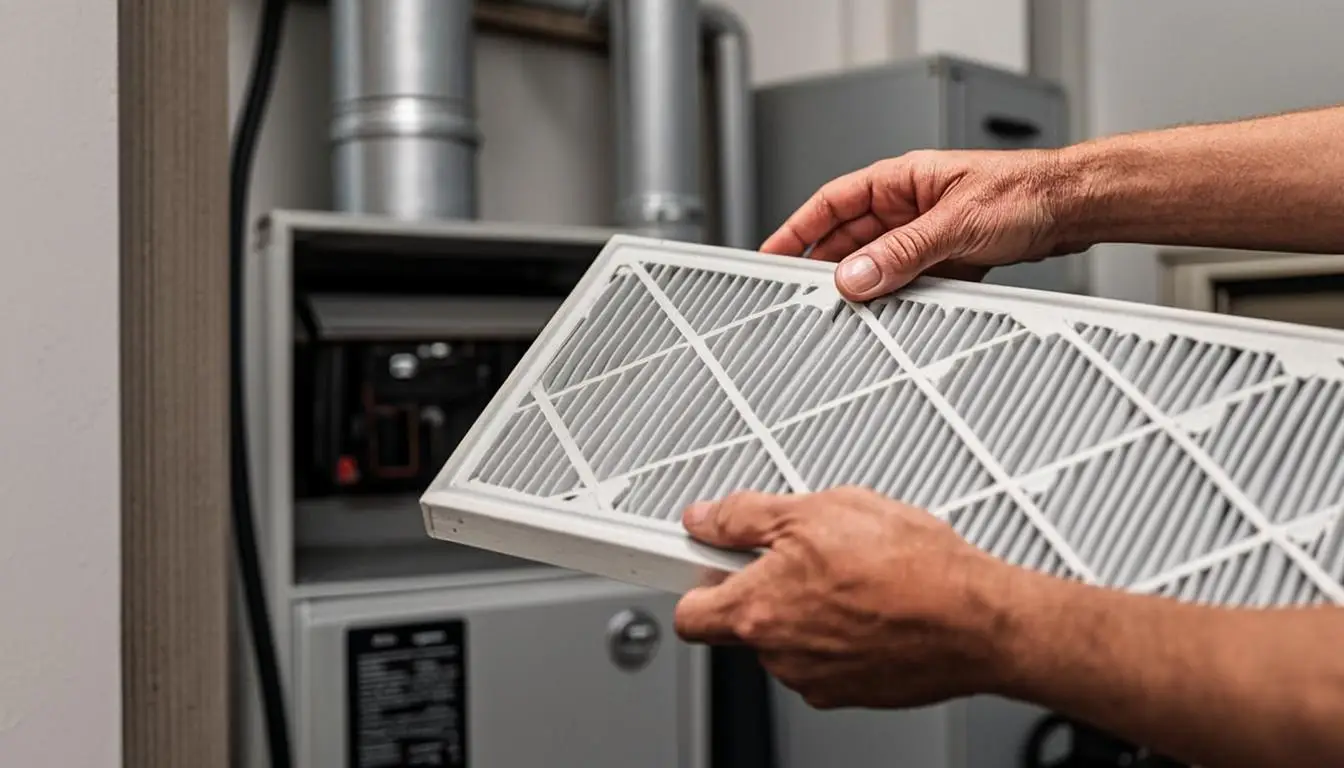
The maintenance answer is identical for both badges, because the climate attacks both in the same places. A $129 annual tune-up before October, every year, with combustion analysis, heat exchanger inspection, static pressure testing and blower cleaning, is what keeps a 15-year-old furnace boring. Between visits, the filter does the daily work: 1 to 2 inch filters every one to three months, 4 to 5 inch media filters every six to twelve months, and never the bargain-bin fiberglass in a high-efficiency unit.
A clogged filter is the number one killer we document. It chokes airflow, trips high-limit switches, cooks heat exchangers, and shows up on the repair invoice as a mysterious board failure when the root cause was twenty dollars of neglect. The second silent issue is the condensate path: on high-efficiency equipment of either badge, a dry trap or a plugged condensate line will shut the furnace down on the coldest night of the year, and frozen condensate lines on exterior walls are a real BC failure mode, which is why slope, insulation and terminus placement are commissioning items, not details.
Two safety items that apply to every gas furnace in the province, whatever the badge: working CO alarms on every level and near sleeping areas, and the gas-smell rule. If you ever smell gas, evacuate first and call FortisBC at 1-800-663-9911 or 911. Never a trades company. That protocol is non-negotiable and it is the one sentence in this guide worth memorizing.
The Decision Test
Five questions, in order. How long are you staying? Premium comfort pays back over decades; a five-year horizon does not. How quiet does the house need to be? Mechanical rooms near bedrooms or home offices justify acoustic engineering. What condition is the ductwork in? Old, leaky ducts reward two-stage gentleness and punish short runtimes. What is the real budget, financing included? And who is doing the installation? That last question outranks the other four, and the contractor-choosing guide lists the credentials and the paperwork a fair quote should carry.
The answer key: long horizon, noise-sensitive, budget allows, Lennox Signature or Elite. Everything else, Goodman at the correct tier, with the savings spent on the installation quality and a good filter cabinet. If you are still torn, the 2026 brand round-up places both badges against Carrier, Trane, Rheem and Daikin, and the premium three-way comparison covers the tier just above this one. Read those before you sign, not after.
Bottom line
If you are staying a decade or more and silence matters, Lennox Signature-tier equipment earns its premium. If you want dependable 96 percent two-stage heat at the fairest price in BC, Goodman is the value benchmark, and it is not particularly close. Either way, the load calculation, the permits and the commissioning predict the next 20 years far better than the badge on the cabinet.
Frequently Asked Questions
Services That Solve This Faster
Heating & Furnace Services
Installation, repair and $129 tune-ups for every brand we carry, sized by load calculation and commissioned to the manufacturer checklist.
Lennox Install & Repair
Signature, Elite and Merit equipment installed, repaired and maintained, with iComfort fault-history diagnostics.
Goodman Install & Repair
Goodman and Amana equipment at the value end of the line-up, with same-day access to parts across BC.
Furnace Repair in Vancouver
No-heat diagnostics from $89 to $129, credited to the repair, with flame sensors, igniters and boards on the truck.
Furnace Installation in Surrey
Two-stage replacements for the 1980s-2000s subdivision stock, quoted flat-rate with permits and commissioning included.
Related Guides From Our Team
Best Furnace Brands in Canada for 2026 — where Lennox and Goodman land against Carrier, Trane, Rheem and Daikin.
Furnace Cost in Vancouver 2026 — the full price breakdown by tier, venting path and home age.
Lennox vs Carrier vs Trane — the premium three-way comparison for the tier above this one.
Furnace Repair or Replace — the age thresholds and repair-cost math that decide when to stop spending.
Why Furnaces Fail at the First Cold Snap in BC — what the first genuinely cold night reveals about any badge.
Red Seal certified, licensed gas fitters (BC-PL-2019-4421), $2M insured, 15-plus years on the tools, 12,000-plus jobs across Metro Vancouver since 2010, 4.9 stars from verified reviews. We wrote this guide because Metro Vancouver homeowners deserve the numbers, the code references and the honest trade-offs before anyone touches a wrench or a wallet.
More about our team →Get Your Lennox vs Goodman Quote
Tell us about the home and we will bring both ladders to you: room-by-room load calculation, flat-rate quotes across the tiers that fit, permits, commissioning and warranty registration included. Financing from 7.99 percent with approved credit, and crews across all 17 Metro Vancouver cities we serve.
Furnace died mid-comparison?
The 24/7 line answers any hour. Repairs run $180 to $650, the $89 to $129 diagnostic is credited to approved work, and the flat $150 after-hours premium is disclosed before the truck rolls, whatever badge is in the basement.
Call 604-615-2212 WhatsApp Us