
The Honest Answer Up Front
Here is the short version, after 12,000-plus jobs across Metro Vancouver since 2010. First, most calls that sound like a water main problem turn out to be something cheaper: a failed toilet flapper, a pinholed interior supply line, a dripping hose bibb or a cracked irrigation fitting. The water main itself is buried, invisible and rarely the first suspect. But when it actually is the culprit, the money looks like this.
A targeted spot repair on a sound, younger copper line typically runs $900 to $2,800 in the Metro Vancouver market. A full replacement, which is the honest recommendation once a line is past roughly 40 years or made of galvanized steel, lands between $6,000 and $18,000 for most homes, quoted per project. The single biggest driver of where you fall inside that range is not the pipe; it is what sits on top of the pipe: lawn, landscaped beds, a concrete driveway, a sidewalk crossing or City right-of-way.
Every diagnosis starts with our $89 to $129 flat diagnostic fee, credited in full to any approved repair. Emergencies are answered 24/7/365 with a flat $150 after-hours premium disclosed before we roll. If you are reading this with water seeping toward your front door right now, jump straight to what replacement day looks like and the emergency steps in it.
0 jobs since 2010
Water service work is the least visible work we do and some of the most consequential.
$89 to $129 diagnostic
Credited in full to any approved repair, before anyone turns a shovel.
30 to 45 min response
Emergency dispatch across Vancouver, Burnaby, Richmond, New Westminster and North Vancouver, 24/7/365.
$6,000 to $18,000
The honest 2026 envelope for a full residential water main replacement across Metro Vancouver.
Bottom line
Repair a young copper line once. Replace a line that is over 40 years old, made of galvanized steel, or leaking for the second time. Everything else in this guide is math and paperwork around those two rules.
What the Water Main Actually Is (and Where Yours Ends)
The water main, more precisely called the water service line in plumbing code language, is the pipe that runs from the city water main under your street to the shut-off valve inside your home. In most of Metro Vancouver the arrangement is: a trunk main under the road, a curb stop or shut-off at the property line (usually under a small round lid in the boulevard or lawn), then your service line under the front yard, into the crawlspace or basement, ending at your main shut-off valve. In most municipalities, you own everything from the curb stop to the house. The city owns the street side.
That ownership split matters more than almost anything else in this guide, because it decides who pays for what. A leak on the city side of the curb stop is your municipality's problem at no cost to you. A leak on your side is yours, and it is also almost always the more expensive side to fix, because the city's portion is short and shallow while yours runs under landscaping, driveways and finished rooms.
A bit of BC context that shapes this work. Metro Vancouver's drinking water comes from the Coquitlam, Capilano and Seymour watersheds, and it is famously soft, low-mineral water. That is kind to pipes from the inside; it is one reason interior copper lasts so long here. What kills water mains in Vancouver is not the water in the pipe but the soil around it: wet clay, stray electrical current, tree roots and 60-plus years of settlement. Also note that many older Vancouver single-family homes are still unmetered on flat-rate billing, which means a service line can quietly leak for months without a bill spike ever tipping you off. In Surrey, Langley and most new construction, homes are metered, and a leaking line shows up on the bill within weeks.
If you are not sure where your curb stop is, that is the first thing we locate on any visit, and we will show you where it is so you can find it in an emergency. It is the single most useful piece of your plumbing system to know by heart, and it costs nothing to learn.
Seven Signs Your Water Main Is Failing
After enough service calls, the pattern becomes predictable. These are the signs we take seriously, roughly in the order they usually appear.
A wet patch or unusually green stripe on the lawn in dry weather. A line losing 20 litres an hour waters a narrow strip between the street and your house. In July, that strip is greener and softer than everywhere else. This is the number one sign, and it is why the first thing we ask on the phone is whether the pattern follows the path of the line.
A sudden drop in pressure everywhere in the house. When every fixture runs weak at once, the restriction is upstream of the manifold, which points at the service line, the PRV or a partially closed curb stop. Interior issues almost never drop the whole house at once.
An unexplained spike on a metered water bill. On metered homes in Surrey, Langley, Coquitlam and most new builds, a doubling of winter usage with no lifestyle change is a leak until proven otherwise. On unmetered Vancouver flat-rate homes, this sign does not exist, which is why unmetered leaks often go months longer.
A hissing or humming sound under the floor when nothing runs. Pressurized water escaping a pinhole makes noise. At 2 a.m. with the house quiet, put your ear near the main shut-off. If you hear it with every fixture off, that is water moving somewhere it should not be.
A small sinkhole, cracked driveway section or heaved walkway. Leaking water washes out soil support. A two-inch depression that keeps deepening near the line's path is the ground telling you the pipe is losing volume.
Rust-coloured water on galvanized service. If the cold tap runs tea-coloured for the first seconds, the inside of a steel service line is shedding. That pipe is living on borrowed time.
Recurring damp or flooding in the crawlspace on the street side. Wetness that follows rain and dry spells equally, concentrated at the front of the crawlspace, is classic service line seepage. Our hidden water leak guide covers the interior version of this pattern, and the first 60 minutes after a burst guide covers what to do while help is on the way.
One sign on its own is suggestive. Two together on a home older than 40 years is close to conclusive, and it is worth a diagnostic visit before it becomes an emergency visit.
Why Water Mains Fail in Vancouver: Age, Roots and Rain
Vancouver's housing stock gives us a predictable map of water service lines. Pre-1965 homes were usually connected with galvanized steel, which rusts from the inside out and effectively has a 40 to 60 year life. Homes from the mid-1960s onward were typically connected in copper, which fares far better but still pinholes in aggressive soil after 50-plus years. Pre-1950 homes should be checked for lead service, which is a replace-on-discovery situation, full stop, no math required.
| Service line material | Typical era in Vancouver | Realistic service life | How it usually fails |
|---|---|---|---|
| Galvanized steel | Roughly pre-1965 | 40-60 years | Rusts through from inside; rusty water, dropping flow, then pinholes |
| Copper (Type K/L) | Mid-1960s onward | 50-70 years | External corrosion in wet soil; pinholes near fittings and under concrete |
| Lead | Pre-1950 pockets | Replace on discovery | Health concern rather than a leak concern; replacement is non-negotiable |
| PEX-a / HDPE service | Modern installs | 50+ rated | Rarely fails on its own; damage almost always comes from later excavation |
Then comes the environment. Vancouver's street trees, Norway maples, ornamental cherries and plums especially, are shallow-rooted, thirsty and relentless. A service line with a weeping joint is a water source, and roots will find it, wedge the joint open and eventually crush a clay or brittle pipe. In the clay soils of Burnaby, New Westminster and the North Shore, winter rain keeps the ground saturated for months, which accelerates external corrosion on copper and speeds settlement on lines that were bedded poorly in the first place. None of this is dramatic; it is just 50 years of mild abuse adding up.
Frost is a smaller factor here than in the Interior, because Metro Vancouver's frost line is shallow and most services sit below it. But a line that was laid high, at minimal cover, to dodge a rock or an old foundation does heave a little every winter, and a hundred micro-movements at a fitting will eventually open it. That is why our replacement quotes always include full-depth bedding; it is the cheapest insurance against the number one cause of new-line failures.
How We Diagnose It Before Anyone Digs
Diagnosis starts at $89 to $129 as a flat fee, and that fee is credited in full to any repair you approve, so in practice the diagnostic costs nothing on a completed job. What you get for it is a verdict, not a guess, and here is the honest sequence we run on a suspected water main.
First, the history and the walk-around: where the signs appeared, when, and whether the pattern tracks the line's path. Second, the isolation test: we close the curb stop and watch what happens inside. If the pressure gauge at your hose bibb holds with the curb stop closed, the leak is on the street side of your piping, either the city's main or the curb stop itself, and you just saved yourself a dig. If pressure bleeds down, the leak is inside your system somewhere. Third, on metered homes, we watch the meter with everything in the house off. A moving meter with a closed house is a leaking line; the meter crawl on the City side of things tells us roughly how big.
Fourth, acoustic listening along the suspected path, and finally, when the evidence all points one way, an exploratory test hole. This is the part people do not love hearing: water service lines cannot be camera inspected like sewers, because they are pressurized and full, not open like a drain. The truth-teller for a water main is a two-foot hole over the suspected failure, exposing the pipe directly. It is the least glamorous step and the only one that is 100 percent certain. We keep that hole as small as possible, and if it turns out to be something else, a crushed curb stop, a failed PRV, an interior leak, we tell you before any bigger work is authorized.
If you want the general framing of what a Vancouver plumber charges for diagnosis across job types, the pattern is the same one we follow: flat diagnostic, credited forward, flat-rate repair approved before work starts.
Repair vs Replace: The Honest Math
Here is the table we walk customers through, using typical Metro Vancouver market ranges. Your specific number is set by the on-site visit and quoted flat before work starts.
| Scenario | Typical range (CAD) | What moves the number |
|---|---|---|
| Diagnostic visit | $89-$129, credited | Credited in full to any approved repair or replacement |
| Spot repair, sound copper line | $900-$2,800 | Depth, surface to restore, whether it sits under lawn, driveway or right-of-way |
| Full replacement, open cut | $6,000-$18,000 | Line length, cover depth, driveway and sidewalk crossings, restoration materials |
| Emergency stabilization | +$150 flat premium | After-hours callout premium, disclosed upfront, never a percentage |
| Interior burst pipe repair (for comparison) | $280-$850 | In-house piping is accessible, buried line work is not; that is the whole difference |
Now the decision logic, which is simpler than the table suggests. Repair when the line is copper, under about 30 years old, and this is its first leak. Replace when the line is galvanized of any age, when it is copper past roughly 40 years, or when this is its second leak. The first leak on an old line is rarely the last leak; it is usually the pipe announcing its schedule. A second callout on the same line within a few years means the pipe is failing systematically, and every $1,800 repair is now buying time on a pipe you will replace anyway.
There is also a resale angle that people underestimate. An old galvanized service line with a leak history is a red flag on a home inspection report, and buyers price the full replacement, plus fear, into their offer. A dated permit, a City inspection record and a Type K copper or PEX service line turn that negotiation item into a selling feature. For the general shape of plumbing costs across Vancouver in 2026, the same flat-rate rules apply.
Bottom line
A second leak is the pipe telling you its plan. Repair once on a young line, replace on the second visit or on any galvanized line, and never spend more than a quarter of the replacement cost chasing leaks on a dying service.
Replacement Methods and Materials Compared
There are three honest ways to replace a residential service line in Vancouver, and choosing between them is mostly about what is on top of the ground.
Open cut is the default. One continuous trench from curb stop to house, full visibility, full-depth bedding, and the simplest inspection path. It is usually the cheapest method on short runs, and it is the only method when the old line has fittings, bends or a non-straight path, which is most Vancouver lots.
Pipe splitting (trenchless) pulls a splitting head through the old line, fragmenting it while dragging the new pipe in behind. It preserves driveways and mature landscaping, needs launch and receiving pits instead of a full trench, and only works on a straight run in reasonable soil. On small residential services it is used selectively; if a vendor sells it as always-available, get the soil condition caveat in writing.
A new independent route with abandonment means leaving the old line dead in the ground and driving a new path, often under the driveway or around mature landscaping. When the old route is inaccessible or previously failed, this is frequently the smartest option, and it is how we protect 40-year-old Japanese maples that no one wants to lose.
| Method | Best for | Surface impact | Honest caveat |
|---|---|---|---|
| Open cut | Short runs, paths with bends, lowest total cost | Full trench, full restoration | Landscaping and driveway sections come up and go back |
| Pipe splitting | Straight runs under prized driveways or gardens | Two pits only | Needs straight alignment, workable soil and no fittings on the run |
| New route, abandon old | Failed or inaccessible original path, mature landscaping | New trench on a fresh path | Old line stays in the ground, capped and recorded as dead |
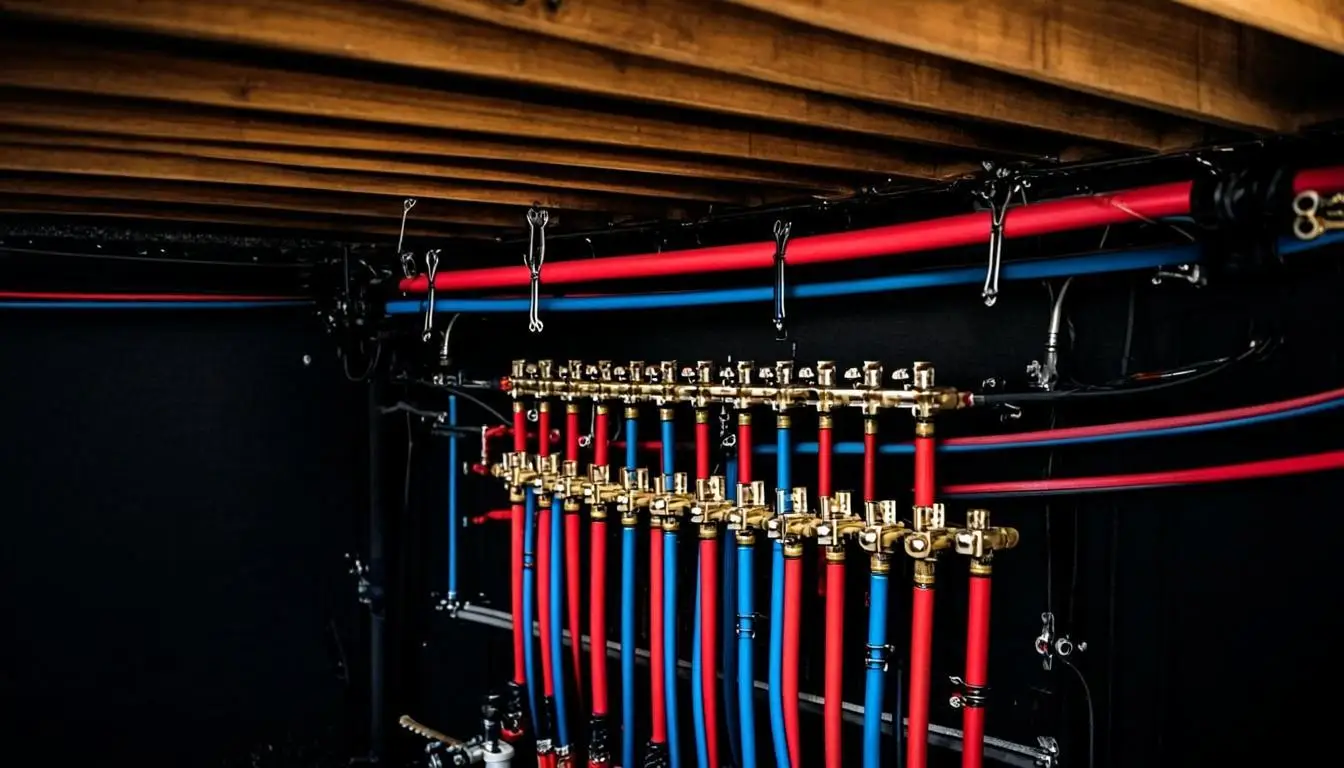
On materials: Type K copper is the benchmark, thick-walled, 50-plus year rated, and what most municipal standards recognize first. PEX-a service pipe is flexible, needs far fewer joints under your lawn, and handles our mild ground conditions well; on longer runs it lowers installed cost without giving up meaningful lifespan. What we never do is reuse any portion of galvanized steel, and we always replace the curb-side connection while we are in there, because a new line on an old corroded connection is a warranty claim waiting to happen. Interior piping is a separate conversation; if your home still has Poly-B interior supply lines, that is a repipe topic covered in our PEX repipe guide for Vancouver homes.
Permits, the City Right-of-Way and Inspections
Any water service replacement in Vancouver, Burnaby, Surrey, Richmond, New Westminster or the other cities we serve requires a plumbing permit, full stop. If the work crosses City property, the boulevard, sidewalk or any part of the road allowance, you also need right-of-way approval before a shovel goes in the ground. This is not bureaucracy for its own sake: the City inspects the connection and the bedding before we backfill, because a covered-up bad connection is invisible for years and then very expensive.
The sequence we run is: BC One Call locates for gas, hydro and telecom, then the plumbing permit and right-of-way application, then excavation, connection and pressure test, then the City inspection, then backfill and surface restoration to City spec. Permit turnaround in Vancouver is typically one to five business days when the application is complete, and permit fees vary by municipality; they are line items in your written quote, never a surprise. The process in Burnaby and Surrey is materially the same with different forms, and it is one reason a licensed, insured contractor is not a luxury on this job; it is the entry fee.
Here is the part that protects you later: unpermitted water main work surfaces at the worst possible moments, during a sale, during an insurance claim, during the next owner's renovation. A dated permit and a passed inspection convert the entire project into paperwork that says the work is real and was verified. When we finish, you get copies of all of it.
What Replacement Day Actually Looks Like
For a planned replacement, day one is the loud day. Locates are confirmed, the curb stop gets coordinated with the City, and the trench or pits go in. By early afternoon the new line is laid on full-depth bedding, connected at the curb stop and at the house, pressure tested, and the interior connection is made. Most single-family replacements in Vancouver finish the mechanical work in one working day; larger lots, deep lines and long runs can take two to three days. The inspection usually lands the next business day, then backfill and compaction, then restoration of the surface, concrete and asphalt patches take their own time to cure regardless of anyone's schedule.

For an emergency, the sequence inverts. The call comes to 24/7 emergency service at 604-615-2212, live dispatch answers, and a technician is rolling with the flat $150 after-hours premium disclosed before the van moves. Vancouver, Burnaby, Richmond, New Westminster, North Vancouver and Port Coquitlam typically see 30 to 45 minute response; Surrey, Coquitlam, Langley and Delta run 45 to 60 minutes; Maple Ridge 50 to 70; Abbotsford 60 to 80. On arrival the priorities are: shut the curb stop, stop water entering the home, protect electrical areas, stabilize. The permanent fix then goes through the normal permit path within days, not weeks. The same response pattern covers emergency plumber calls in Surrey and the rest of the region, and our Vancouver emergency plumbing guide breaks down what each type of after-hours call typically costs.
One safety note that has nothing to do with water: if you ever smell gas during any digging or plumbing work, leave the house first, then call FortisBC at 1-800-663-9911 or 911. Never call a trades company for a gas smell, including us.
Insurance, Warranty and Protecting the Line You Have
The insurance conversation is where honesty matters most. Sudden and accidental water damage inside the home, the soaked flooring, the ruined drywall, is often covered. The pipe repair in the ground usually is not, and gradual leaks that developed over months are usually excluded on both counts. What that means practically: call your insurer before authorizing work, keep every photo, and keep our written report and permit records. Insurers are also increasingly asking about service line age and material on older homes, and a documented replacement makes that conversation short.
On our side of the warranty: every job carries our 2-year written workmanship warranty, on top of manufacturer warranties on the pipe and fittings themselves. The workmanship warranty is the one that matters on buried work, because materials rarely fail; connections and bedding are where quality lives or dies.
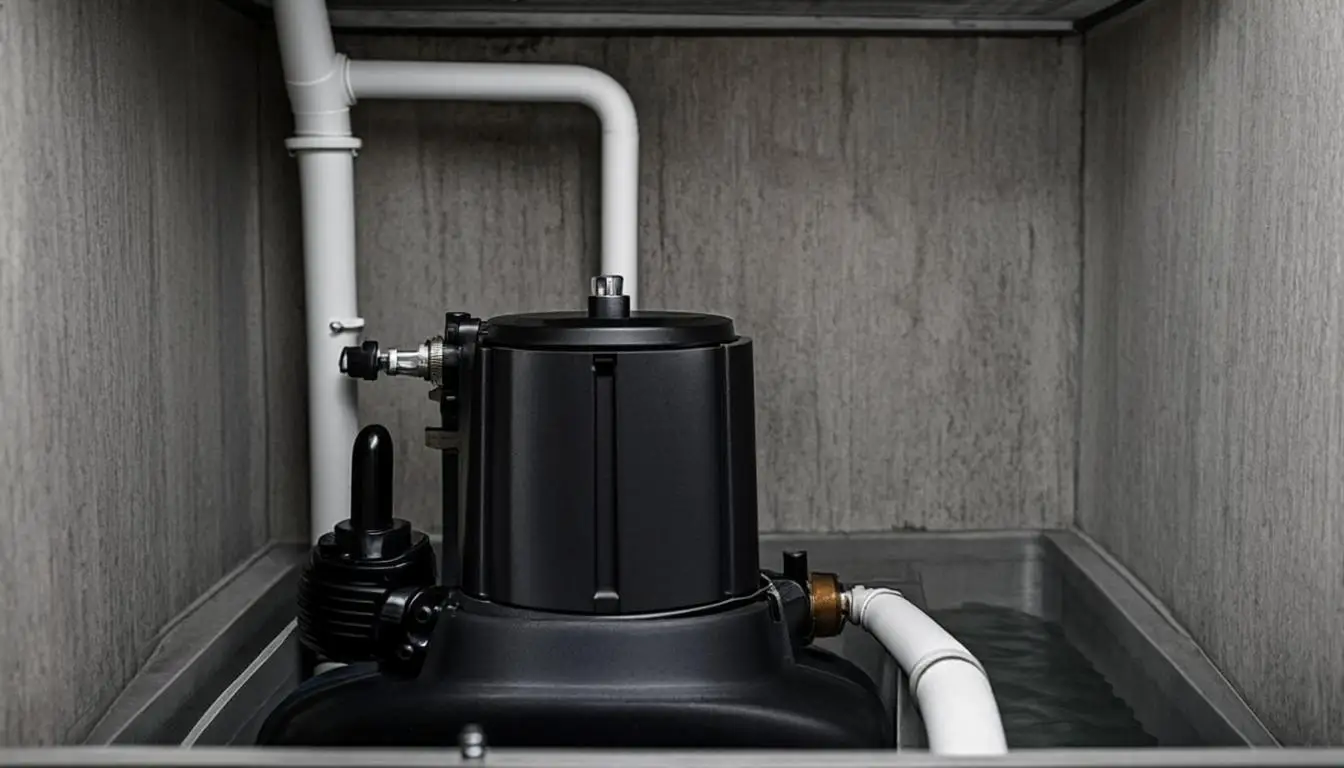
Prevention, for the line you already have: know your curb stop location and make sure it actually turns every couple of years; a curb stop that has seized open is worthless in a real emergency. Keep deep-rooted trees off the service path; a tree planted over the line in 1995 is a leak scheduled for the 2030s. Watch your pressure; if a PRV fails, high street pressure hammers every joint in the house. And for finished basements in particular, a sump pump installed at $650 to $1,400 is the cheapest sleep-at-night money in this entire article. If water ever reaches the living space, our first 60 minutes guide is the sequence to follow while the van is on its way.
The Cheat Sheet: Decide in 60 Seconds
Everything above, compressed into the table we would give a neighbour over the fence.
| If this is your situation | The call that usually makes sense |
|---|---|
| Copper line under 30, first ever leak | Spot repair, $900-$2,800, move on |
| Any galvanized steel line, any age | Replace; repair money is wasted money |
| Second leak on the same line | Replace; the pipe has announced its plan |
| Suspected lead on a pre-1950 home | Test, and replace on discovery |
| Wet crawlspace but bone-dry lawn | Suspect interior or irrigation plumbing first |
| Leak only at the curb stop itself | Call the city water department first; that side may be theirs |
| Selling within two years, old line | Replace before listing; it converts a deduction into a feature |
We serve 17 cities across Metro Vancouver, from Vancouver and Burnaby out to Abbotsford and Mission, with the same flat-rate model on every one of them: written price approved before work starts, 2-year workmanship warranty, $2M liability coverage, and response times posted by city. If any of the signs in chapter 3 sound like your house this week, the $89 to $129 diagnostic is the cheapest piece of information you can buy, and it is credited to whatever we find.
Frequently Asked Questions
Services That Solve This Faster
Plumbing services
From water service diagnosis to full replacements, flat-rate and permitted, across 17 Metro Vancouver cities.
24/7 emergency service
Burst lines and flooding answered around the clock, flat $150 after-hours premium disclosed before we roll.
Plumber in Vancouver
Local crews who know Vancouver's curb stops, soil and permit counters, usually same-day for diagnostics.
Emergency plumber, Surrey
Metered homes in Surrey see leak spikes on the bill fast; our crews cover the city in 45 to 60 minutes.
Related Guides From Our Team
The first 60 minutes after a burst pipe — the exact sequence to run while the emergency van is on its way.
How to detect hidden water leaks — the interior counterpart to this guide, for when the water is inside the walls.
The PEX repipe guide for Vancouver homes — if Poly-B interior piping is your real problem, start here instead.
Plumber costs in Vancouver, 2026 — the full price map for every common plumbing job in the city.
Red Seal certified, licensed gas fitters (BC-PL-2019-4421), $2M insured, 15-plus years on the tools, 12,000-plus jobs across Metro Vancouver since 2010, 4.9 stars from verified reviews. We wrote this guide because Metro Vancouver homeowners deserve the numbers, the code references and the honest trade-offs before anyone touches a wrench or a wallet.
More about our team →Talk to a Real Technician About This Today
Book a visit with a Red Seal technician: a real diagnostic, a written flat-rate quote before any work starts, honest repair-versus-replace math, CleanBC rebate paperwork handled and financing from 7.99 percent with approved credit. Emergencies answered 24/7 at 604-615-2212.
Water where it should not be?
Live dispatch 24/7 at 604-615-2212. Vancouver, Burnaby, Richmond, New Westminster and North Vancouver typically see a technician in 30 to 45 minutes, with the flat $150 after-hours premium disclosed upfront. Daytime diagnostics run $89 to $129 and the fee is credited to any approved repair.
Call 604-615-2212 WhatsApp Us