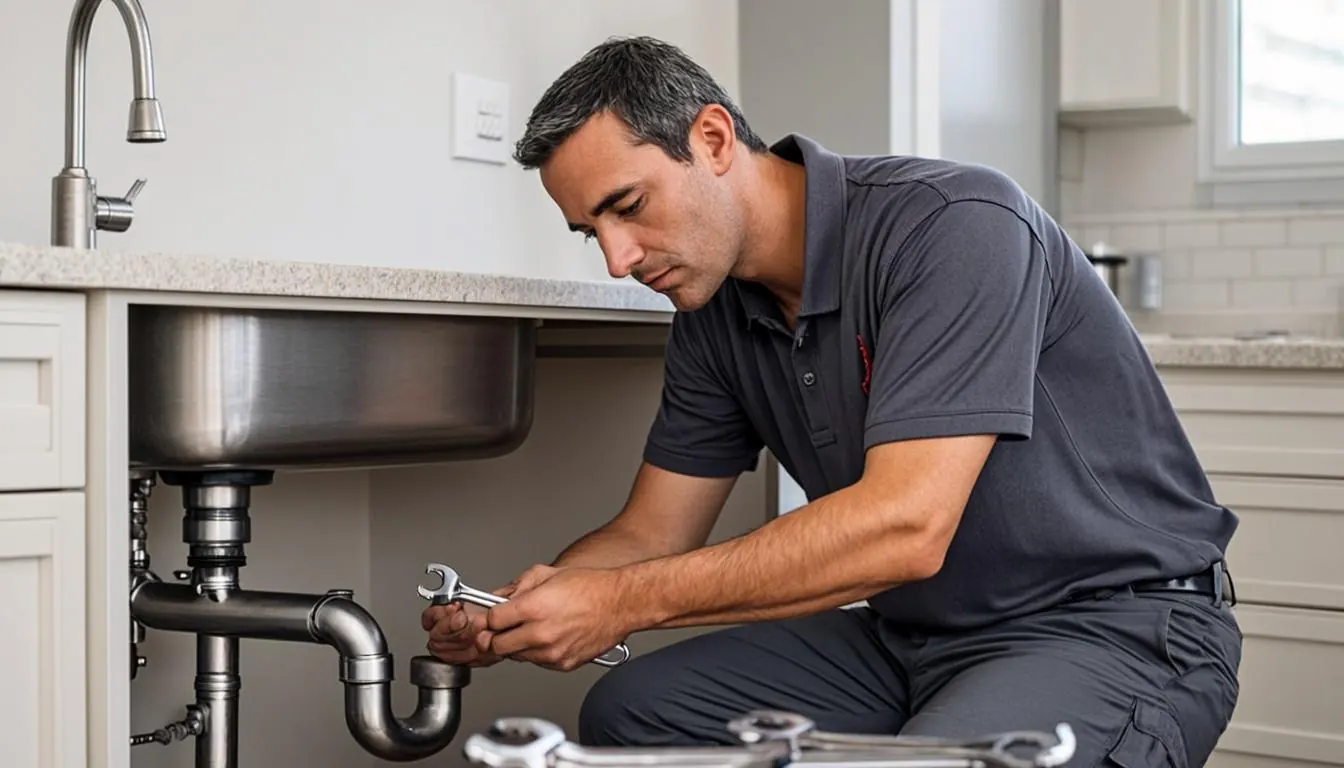
What Actually Counts as an Emergency
The most expensive sentence in emergency plumbing is "better safe than sorry" said at 1 a.m. about a problem that could have waited eight hours. The second most expensive is dismissing a real emergency as "probably fine until Monday." Draw the line correctly and you save either a night premium or a flooded basement. Here is the triage we run on every call.
Call now, any hour
- Burst or actively leaking pipes where water is escaping faster than a bucket per hour, or you cannot close a shutoff.
- Sewage backing up into tubs, showers, floor drains or toilets. Category 3 water: health hazard, not inconvenience.
- Gas smell indoors or at the meter. Leave the house first, call FortisBC at 1-800-663-9911 from outside, then us for the appliance or line repair.
- No heat during freezing weather, especially with seniors, infants or medical equipment in the home. Frozen pipes follow fast.
- Water near electrical: a ceiling leak above light fixtures or a flooding utility room with a live panel. Water plus power is a fire and shock risk.
- Hot water tank failure with active leaking from the tank body. A 40-gallon tank drains into your floor fast.
It can wait until morning (8 AM)
- Dripping taps and running toilets: annoying and mildly expensive on the water bill, but stable overnight. Turn the fixture's angle-stop valve off and sleep on it.
- Slow drains that still move water. Schedule next-day drain cleaning; our pre-winter drain cleaning guide explains why slow drains become emergency backups in November.
- A single cold room while the rest of the house heats: a radiator or zone issue, morning work.
- Water heater not leaking but not hot: a pilot, element or thermostat issue. Take a hotel shower if you must; do not pay a night premium for comfort.
- A small leak fully contained in a bucket under a joint, valve dripping one drop per second. Photograph it, bucket it, book daytime service.
When you call our line at any hour, a real dispatcher answers and asks three questions: is water moving, is anyone unsafe, can you close a valve. If the answer is no-no-yes, we will honestly tell you it can wait until 8 AM and save you the premium. We would rather earn the 9 AM drain clean than the 2 AM upcharge.
0 average response
Typical arrival time across Vancouver, Burnaby, Surrey and the core of Metro Vancouver, with live ETA updates by text.
0 live dispatch
A human answers the emergency line every hour of every day, including statutory holidays, with flat after-hours rates posted in advance.
$0 diagnostic, credited
The same transparent diagnostic price at 2 AM as at 2 PM, and it rolls straight into your completed repair invoice.
0 jobs since 2010
Thousands of them emergency calls, which is why this guide reads like a playbook: it is one, field-tested across 17 cities.
What Emergency Plumbing Really Costs in Vancouver
Here is the pricing anatomy of a 2 AM call, ours specifically, in writing. The structure matters more than any single number: a $89 diagnostic that is credited toward the repair, plus a flat after-hours premium of $120 to $180 on nights, weekends and holidays, plus the repair itself at the same flat rates we charge in daylight. That premium is roughly the "$300" from this guide's title: diagnostic plus premium lands near $210 to $270 before a single part turns, and a small repair on top takes the invoice past $300 in a hurry. No hourly meter, no "additional labour" surprises, and the total is quoted before work begins.
| Common 2 AM job | Typical total (day rate + night premium) | Notes |
|---|---|---|
| Diagnostic visit | $89 (credited to repair) | Same price at any hour; not an extra fee on top of the premium |
| After-hours premium | $120 - $180 flat | Nights, weekends, statutory holidays; posted in advance, not scaled to the job |
| Burst pipe repair (copper, accessible) | $450 - $1,800 | Depends on access, pipe material and how many joints the freeze took out |
| Frozen pipe thawing | $280 - $650 | Safe electrical thawing or re-route; excludes burst repair if the pipe split |
| Main shutoff replacement | $450 - $950 | The gate valve that would not turn is usually why we are there |
| Sewer backup clearing | $480 - $1,500 | Snaking to restore flow; camera and jetting quoted separately for the cause |
| Drain snake (after hours) | $285 - $580 | Main line or branch blockage, roots, grease, flushable wipes |
| Hot water tank leak (same-day swap) | $1,400 - $2,800 | Emergency tank replacement; tankless repair quoted on inspection |
| Sump pump failure replacement | $550 - $1,400 | The reason October rains fill crawlspaces across North and West Vancouver |
| Toilet overflow / clog + seal | $180 - $420 | Clearing plus wax seal or flange repair if the overflow damaged it |
| Washing machine hose burst | $180 - $450 | Shutoff, drain, new braided supply hoses; damage remediation separate |
Why the premium exists (the honest version)
After-hours premiums pay for a real human to be awake, a stocked truck fueled and parked for dispatch, and a licensed technician's family giving up their evening. They are not a gouge; they are overtime, the same premium electricians and HVAC shops across BC charge. What is a gouge is the unposted hourly meter that starts running before the van leaves, the vague "it depends" on the phone, and the invoice that grows after the work is done. Our rule: the flat total, including the premium, is stated before we start, and the $89 diagnostic is never a separate fee when we do the repair.
One more honest note: the smartest money in this entire table is the $285 to $580 after-hours snake that prevents a $480-to-$1,500 backup, and the $280 thaw that catches a pipe before it splits into a $1,800 flood. Cheap emergencies are the ones you catch early. The rest of this guide is about not needing the table at all.
The First 60 Minutes: Burst Pipe Playbook
Water damage in Metro Vancouver basements typically starts at a few hundred dollars and ends at five figures. The difference is what happens in the first hour. Follow this sequence and you will cap the damage instead of documenting it.
Minutes 0-5: kill the water
Close the main shutoff (Chapter 4 tells you where it hides). If the leak is at a fixture, its angle-stop valve under the sink or behind the toilet is faster and keeps the rest of the house in service.
Minutes 5-10: drain the pressure
Open the lowest faucet in the house, usually a basement utility tub or laundry sink, and one hot tap upstairs to let air in. The system holds litres under pressure even after the main is closed.
Minutes 10-15: make it safe
If water is anywhere near wiring, outlets or the panel, switch off the affected breakers. Gas smell at any point: everyone out, door open, FortisBC at 1-800-663-9911 from outside, nothing electrical touched inside.
Minutes 15-30: protect and document
Move belongings out of the wet zone, towels and wet-vac what you can, and photograph everything: the leak, the shutoff, the water line on walls and boxes. Your insurer will want this.
Minutes 30-60: call 604-615-2212
24/7 live dispatch. Describe the leak, give the address and gate or suite codes, and note the pipe material if you can see it: copper, PEX or poly-B changes what the tech stocks. Average arrival is 45 minutes in the core cities.
What NOT to do
- Never thaw a frozen pipe with an open flame or a high-wattage torch near standing water or wall cavities. A hair dryer on low, aimed at the exposed section, with the faucet open, is the safe homeowner move.
- Do not run water "to check" a leaking joint. Every minute of confirmation is a litre on the floor.
- Do not wade into standing water over floor outlets or near the panel. Kill the breakers first from a dry spot.
- Do not open the tank's relief valve or drain a leaking water heater onto a finished floor without a hose and a floor drain; call us and we will talk you through it live.
- Do not wait for morning when the water is still moving. A $200 night premium against a $15,000 remediation is not a close decision.
Where the Main Shutoff Hides in Vancouver Homes
Go find it now, in daylight, while nothing is wrong. Every hour of our emergency response includes at least one homeowner hunting for a valve they have never touched, and Vancouver's housing stock puts that valve in genuinely odd places.
| Home type | Where the shutoff usually is | Watch out for |
|---|---|---|
| Detached house with basement (pre-1990s, most of Vancouver, Burnaby, New Westminster) | Basement front wall near the foundation, often beside the water meter; quarter-turn ball valve on newer homes, round gate valve on older ones | Gate valves seize after decades; if it will not close, that becomes part of the emergency |
| Crawlspace homes (Vancouver Specials, many North Shore and Coquitlam builds) | Crawlspace entry near the front of the house, or at the crawlspace wall under the kitchen or bathroom | Bring a headlamp; keep the access hatch unblocked |
| Slab-on-grade (Richmond, Surrey, Delta ranchers) | Utility closet or garage near the hot water tank, or a ground-level box at the front yard | Some are shared with irrigation; label the house side |
| Strata condos and townhouses | In-suite shutoff behind an access panel near the bathroom or kitchen, plus a building riser valve only property management can close | Call strata's after-hours line in parallel with us; riser valves are their responsibility |
| Laneway and carriage homes | Inside the unit near the tank, with a separate curb stop serving the property | The main house's shutoff does not always cover the laneway |
Two details that matter in this city. First, the curb stop, the city-owned valve at your property line under a small round or rectangular lid, is not yours to operate. If your house shutoff is seized or missing and water is flooding, call our line and City of Vancouver crews (311 after hours for water emergencies); we coordinate both from the truck. Second, on poly-B homes (the grey plastic pipe installed across BC roughly 1978 to 1995), a seized main valve plus a split poly-B line is the single most common catastrophic call we take in January. If you own a poly-B house, read our PEX repipe guide for Vancouver homes before winter, and consider a preventive valve replacement now: $450 to $950 today versus a flooded basement in a cold snap.
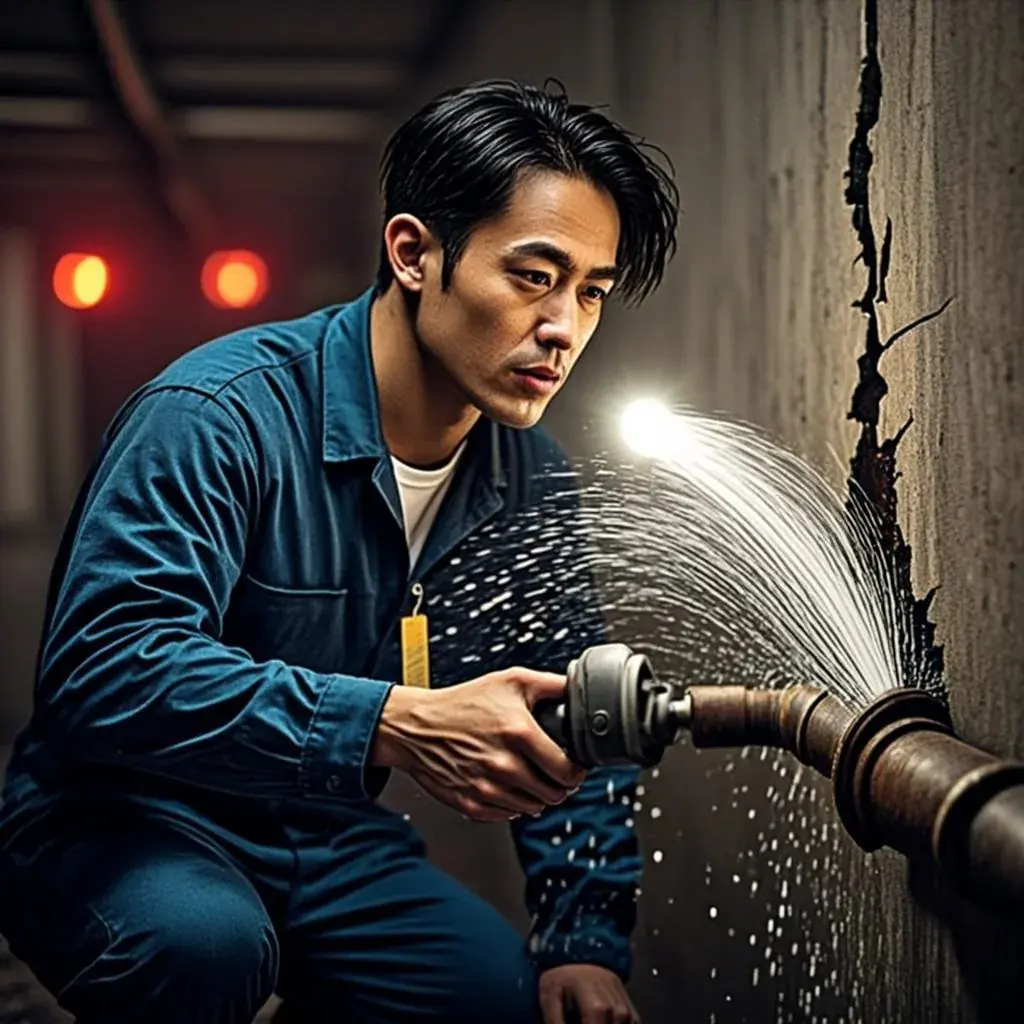
Water Where It Should Not Be Right Now?
Shut the main, open the low tap, and call 604-615-2212. Live dispatch 24/7, flat-rate total quoted before we start, average 45-minute response across Metro Vancouver.
Flooding: Appliances, Tanks and Hoses
Not all floods begin with pipes. The three appliance floods we answer most in Metro Vancouver each have a specific playbook.
Hot water tank failure
Tanks rust from the inside; when the bottom finally lets go, a full tank empties through the floor in minutes. If you see water pooling under the tank, shut the cold inlet valve on top of the unit (right-hand pipe), shut the gas valve or breaker, and connect a hose to the drain valve to direct remaining water to a floor drain while we are en route. A tank past its 10-to-12-year service life is on borrowed time; replacement in daylight costs $1,400 to $2,800, and our water heater failure signs guide lists the warnings weeks before the flood.
Washing machine hoses
Rubber supply hoses burst under constant pressure, and laundry rooms in Vancouver suites are often carpet-adjacent or above finished space. Close the laundry box valves (or the main if those are seized), kill the breaker, and soak up what you can. The permanent fix is $25-per-hose braided stainless replacements and valve exercise twice a year; we install both on any call.
Dishwasher and icemaker lines
Slow drips under kitchen cabinets warp flooring and grow mould long before anyone sees water. If your kitchen floor is suddenly warm or the cabinet base smells sweet and damp, shut the fixture valve under the sink and call it in: a $200 fitting repair beats a $6,000 kitchen floor. These are also the quiet leaks that hidden water leak detection exists to find, and our meters and thermal cameras find them daily.
Sewer Backup: A Health Hazard, Not a Puddle
Sewage in the home is Category 3 water, the same classification as floodwater: it carries bacteria, viruses and parasites. Treat it as a health event first and a plumbing event second. Keep children and pets out of the affected area, do not run the dishwasher or washing machine (they feed the backup), do not flush, and shut the main water to stop any fixture from adding to it.
Vancouver has two sewer realities that make backups a local specialty. First, parts of the city still run combined storm-sanitary sewers, so an October atmospheric river can push the system backwards into basements in older East Vancouver and Strathcona blocks. Second, our big-leaf maples and cedars actively seek the nutrient flow inside old clay and cast-iron service lines; a 1950s lateral that has never been cleaned is a root-mat waiting for the first heavy rain. That is why drain snaking with cutting heads, camera inspection ($285 to $380 to see exactly what is down there) and hydro jetting are the standard sequence, and why spot repairs ($1,800 to $3,500) or full line replacement come up in the follow-up conversation.
Do not clean Category 3 water yourself. Anything porous that contacted sewage, carpet, drywall below the line, cardboard, upholstered items, needs professional remediation or disposal, and your insurer will ask whether it was handled correctly. We restore flow; certified restoration partners handle what the flow touched. Both get documented for your claim.
Gas Leak: FortisBC First, Plumber Second
If you smell gas, rotten-egg odour indoors or near the meter, or hear a hissing line, the sequence is fixed and no part of it is us first. Get everyone out of the house immediately. Do not operate light switches, appliances or anything electrical, including your phone, inside the house; a single spark in the right air mixture is catastrophic. Leave the door open behind you as you exit. From outside, call FortisBC's 24/7 emergency line at 1-800-663-9911; their crews respond around the clock and will shut off and make the source safe.
Then call us for the repair side: the failed appliance connector, the corroded pipe section behind the range, the water heater's pilot and gas valve. We hold BC gas licences, repair and pressure-test the line, and coordinate re-light and inspection so FortisBC restores service the same visit when possible. The identical logic applies to suspected carbon monoxide problems, the other furnace-flue emergency: CO alarms sounding means everyone outside, windows open if you can do it in seconds, furnace off at the thermostat, and our 24/7 heating emergency line or FortisBC on the way.
No Heat in a Vancouver Winter
No-heat calls are emergencies on a clock: the house is losing warmth while the outdoor temperature drops, and every hour below zero raises the odds that plumbing becomes the next emergency. When Vancouver gets an arctic outflow, -5°C to -15°C nights with wind, unheated crawlspaces freeze within hours.
Before you call, run the two-minute checklist that fixes a surprising number of "no heat" nights: thermostat set to HEAT and batteries good, furnace breaker fully on, filter not caked in dust, and, on high-efficiency furnaces, the exterior condensate and intake pipes clear of frost and snow. A frozen condensate drain is the classic false emergency in December: the pressure switch reads blocked vent, the furnace locks out, and a five-minute thaw fixes it. If the two minutes do not do it, call; our heating technicians carry igniters, flame sensors, blower motors and boards on the truck, and most no-heat calls are single-visit repairs. For the deeper decision guide, including when repair money should go toward replacement, see furnace repair versus replacement in Vancouver.
While you wait: run faucets at a pencil-thin trickle on the vulnerable walls, open cabinet doors under sinks, and use space heaters plugged directly into wall outlets, never extension cords or power strips, on hard floors away from fabric. Do not heat the house with a gas oven or bbq; that is a CO event in the making.
Insurance Claims and Direct Billing
BC home insurance generally covers sudden and accidental water damage: the burst pipe, the failed tank, the washer hose. It generally does not cover the pipe repair itself, that is maintenance, or damage from gradual leaks a reasonable homeowner would have addressed. Two consequences follow. First, your policy's duty to mitigate is real: shutting the water, documenting, and stopping further damage are conditions of coverage, and the Chapter 3 playbook is exactly what adjusters look for. Second, small emergencies may fall under your deductible, typically $500 to $1,000, in which case paying us directly and keeping the documentation for your records is the smarter move; we will tell you when that is the case.
For the big ones, our paperwork is built for claims: itemized invoices, timestamped photos of the cause and damage, moisture readings where relevant, and a written cause statement for the adjuster. On approved claims we can bill the insurer directly so you are not fronting thousands while the claim processes. One caution from fifteen years of these calls: the dollar figure that matters most is not the plumbing invoice; it is the remediation and reconstruction behind it, extraction, drying, flooring, drywall, contents. The faster the water stops, the smaller that number gets. That is the entire economic argument for a 45-minute response.
Prevention: The $60 That Saves $6,000
Almost every emergency in this guide has a ten-dollar-to-hundred-dollar prevention. Run this list once in October and once in early spring, and the odds of meeting us at 2 AM drop by most of a order of magnitude. The whole checklist costs less than a single after-hours premium.
| Preventive move | Cost | The emergency it prevents |
|---|---|---|
| Insulate exposed pipes in crawlspaces, garages, exterior walls | $3 - $8 per sleeve | November-to-January burst pipes, the season's #1 claim |
| Water leak sensors under the tank, dishwasher and laundry | $30 - $60 each | Appliance floods found in minutes instead of mornings |
| Braided stainless washer hoses | $25 per hose | The burst hose that floods a finished basement suite |
| Everyone in the house knows the main shutoff location | Free (5-minute drill) | Adding 45 minutes of flooding to a 45-minute response |
| Winterize exterior hose bibs (drain + insulated cover) | $10 cover | Split bib and wall cavity flood on first hard freeze |
| Smart auto-shutoff valve on the main | $400 - $900 | Every leak above, shut automatically in seconds |
| Annual tank flush + anode check at year 8 | $139 - $189 | Tank failure flooding and the $1,400+ same-day swap |
| Root cutting + camera on lines older than 30 years | $285 - $380 | The holiday-dinner sewer backup |
| Sump pump test (bucket pour) spring and fall | Free | October-rain basement flooding on the North Shore |
| Seized shutoff valve replacement | $450 - $950 | The burst you could not stop because the valve would not close |
Poly-B pipe homes deserve their own line: if your pipes are grey plastic with brass or copper crimp rings, you are carrying a known regional liability, and insurer underwriting is increasingly unfriendly to it. A planned PEX-A repipe is a weekday project with a fixed price; a poly-B failure is a 2 AM event with an insurance claim attached. Full detail in our repipe guide.
How to Choose a 24/7 Plumbing Company Before You Need One
Choose the emergency plumber in daylight, the way you would choose a surgeon before the appendicitis. The five promises a legitimate 24/7 company can make, and you should hold us to all five.
- A live human, instantly: phone trees at 2 AM are how not-ready companies behave. Call the number now, in the afternoon, and see who answers and how fast an after-hours dispatch is confirmed.
- Flat-rate totals before work: the emergency premium and repair quoted together, in writing, before a wrench moves. No hourly meters, no "we will see when we open the wall."
- Licensing and insurance that survives scrutiny: BC licence (ours: BC-PL-2019-4421), $2M liability, WorkSafeBC coverage. If an uninsured technician is injured in your home, the claim lands on your homeowner policy.
- Published response times: 45 minutes average in core cities is a real, measurable commitment; vague "fast" is not.
- Tomorrow follows tonight: an emergency patch needs a written permanent-repair plan, itemized claim documentation and a follow-up visit. Companies that vanish at 6 AM are not emergency services; they are premium collectors.
Red flags
- Up-front "dispatch fees" that do not credit to the repair, or premiums quoted as a percentage of the job.
- Cash-only after-hours work, no invoice, no licence number on the truck or paperwork.
- Pressure to replace on the spot what a $200 part would fix, especially at 3 AM with water everywhere; a second opinion in daylight is always allowed.
- No local address or a dispatch "office" that turns out to be a call centre in another province.
- Reviews that are all five stars and six days old, or no review history at all.
We answer across 17 cities, with response-time bands by city published on the service areas page, and the full range of plumbing work behind the emergency line on the plumbing services page.
Vancouver's Seasonal Risk Calendar
Emergency plumbing in this region is seasonal to the bone. Here is what fails, when, and the one move that preempts each month's signature call.
| Window | What we get called for | The preemptive move |
|---|---|---|
| November - January (freeze season) | Burst pipes, frozen lines, seized shutoffs, no-heat cascades, poly-B failures | October: insulate, winterize bibs, find the shutoff, test the furnace |
| December deep-cold snaps (arctic outflow) | Frozen condensate lines, split crawlspace pipes, overnight floods | Trickle taps on cold nights, cabinet doors open, space heater ready |
| February - March (thaw) | Split pipes revealing themselves as ice retreats, sump pumps cycling hard | Inspect crawlspace joints after each long freeze; test the sump |
| March - May (atmospheric rivers) | Combined-sewer backups in older blocks, sump failures, root-mat blockages waking up | Pre-spring drain clean, root cutting on old laterals, sump check |
| June - August (heat + drought) | Clay-soil shifting in Richmond, Surrey and Delta stressing service lines and slab runs; tank failures on vacation weeks | Leak sensors before holidays; watch for warm floors and sweet cabinet smells |
| September - October (leaf fall + first cold) | Drains clogged by cedar needles and maple leaves; the first heating lockouts | Book the October drain clean + furnace tune-up together, before the wave |
The pattern is the lesson: nearly every month's emergency has a prior month's prevention. Our whole winter prep guide for Vancouver homes exists because November rewards October discipline, and the cheapest line in this guide remains the one you never have to call us for.
Emergency Plumber Vancouver: FAQ
Services From This Guide
The emergency line is one door into a full plumbing, heating and cooling shop covering 17 Metro Vancouver cities.
Emergency plumber Vancouver
Burst pipes, backups, no-hot-water and flood response, 24/7 dispatch with flat-rate totals quoted up front.
24/7 emergency response
Every trade on one line: plumbing, heating, no-heat and gas emergencies, triage guidance and city-by-city response times.
Same-day water heater replacement
Tank and tankless swaps from stocked vans, anode and flush maintenance that doubles tank life before the failure.
Emergency furnace and heating repair
No-heat lockouts on freezing nights, frozen condensate thawing, and $89 diagnostics credited to the repair.
Related Guides
Burst Pipe: The First 60 Minutes
The minute-by-minute expansion of Chapter 3, with shutoff locations and insurance documentation details.
DetectionHow to Detect Hidden Water Leaks
Meter tests, thermal imaging and acoustic detection for the slow leaks that become 2 AM emergencies.
PreventionDrain Cleaning Before Winter
Why October drains prevent November backups: roots, grease, combined sewers and the pre-freeze clean.
Red Seal certified, licensed (BC-PL-2019-4421), $2M insured and answering our own phone 24/7 since 2010, with more than 12,000 jobs completed across Metro Vancouver and a 4.9-star rating from 39 reviews. We wrote this guide at the end of a January freeze week, because the calls we would rather not receive are the ones this playbook prevents.
More about our team →Get Your Free Plumbing Quote in Vancouver & Surrey
In an emergency, call 604-615-2212 now; the form below is for daytime quotes, prevention work and planned repairs. Tell us your city and the problem, and a Red Seal estimator responds same-day with fixed pricing and the honest read on what can wait and what cannot.
Active emergency right now?
Skip the form and call the 24/7 line: live dispatch, a flat total before we start, and an average 45-minute arrival across the core cities. Forms are for quotes, phones are for floods.
Call 604-615-2212 WhatsApp Us