The Honest Answer Up Front
Both Daikin and Mitsubishi Electric build heat pumps that handle a BC winter without drama, and anyone who tells you one is clearly superior is selling something. Our position stated plainly: we install and service Daikin among our six brands, we do not carry Mitsubishi, and we are writing this comparison anyway, because the question is legitimate and deserves an answer without a sales angle. Mitsubishi builds an excellent product with a deserved cold-climate reputation. Daikin builds an equally excellent product with the largest manufacturing and parts network in the world behind it.
What actually separates the two in 2026: not efficiency, where their top cold-climate lines post ratings within rounding distance of each other; not noise, where both are quiet enough for a bedroom; and not longevity, where both land in the 15-to-20-year band when maintained. The differences that matter are tier selection within each brand, warranty registration and who processes claims locally, and, more than anything, the quality and serviceability of the installation itself. In Metro Vancouver's mild climate, a mid-tier cold-climate unit from either maker, sized and commissioned properly, outperforms a premium unit from either maker installed casually.
The money context: ductless single-zone installs run $3,800 to $5,500, cold-climate ducted systems run $6,500 to $14,000, and the rebate stack is brand-agnostic, up to $16,000 combined across CleanBC, BC Hydro, FortisBC and municipal programs, with limited-time bonuses of up to $1,000 some seasons. The rest of this guide goes line by line, including the part where we explain what we stock and why.
0 rebate stack
Brand-agnostic combined support on qualifying heat-pump conversions, verified at booking.
Installs from 0
Ductless single-zone heat pumps installed, $3,800 to $5,500 depending on run and tier.
0 parts warranties
Typical on registered equipment from both makers; registration happens at install, and we do it.
0 jobs since 2010
The service side of the trade: repairs, tune-ups at $129 and installs across 17 cities.
The Two Companies Behind the Logos
Daikin Industries, based in Osaka, is the largest HVAC manufacturer in the world, a position it cemented by acquiring Goodman in 2012 and folding a huge North American manufacturing and distribution footprint under one roof. What that scale buys in practice: deep inventories, wide parts availability, and a product ladder that runs from builder-grade to premium cold-climate within one catalogue. The Daikin equipment we install and service in BC is supported by a parts network that rarely leaves a customer waiting on a container ship.
Mitsubishi Electric, a different company from Mitsubishi Heavy Industries, which also builds HVAC, is the pioneer most associated with cold-climate ductless in Canada. Their hyper-heat line and the Zuba Central ducted product built a loyal following in cold provinces, and their reputation at the premium end of the market is earned, not manufactured by marketing. In Canada, Mitsubishi Electric sells through authorized dealer channels, which shapes the service experience: the strength of your local dealer largely is your warranty experience.
The neutral framing we use with customers: these are two enormous, competent Japanese manufacturers whose premium cold-climate products converge on the same engineering targets, low-temperature capacity retention, inverter-driven modulation, quiet operation, and whose differences are mostly in channel structure and local support density. Our Daikin brand page covers the lines we carry in detail for readers who want the model-level view.
Tiers and Installed Prices in BC
Within both brands, the real comparison is tier versus tier, not logo versus logo. Each maker sells entry ductless lines built for mild climates and budgets, and premium cold-climate lines built to hold capacity when the mercury drops. In BC, buy the cold-climate tier or buy nothing, because our outflow winds and February clear nights visit continental temperatures on the Fraser Valley often enough to matter. Here is what the tiers cost installed, flat-rate, across Metro Vancouver.
| Configuration | Typical installed range (CAD) | What moves the number |
|---|---|---|
| Ductless single-zone, entry tier | $3,800-$4,600 | Mounting, line-set run, panel capacity; mild-climate rating |
| Ductless single-zone, cold-climate tier | $4,300-$5,500 | Premium head and compressor tier, same install variables |
| Ductless multi-zone | scales by head count | Branching, line-set lengths, electrical capacity |
| Cold-climate ducted system | $6,500-$14,000 | Ductwork condition, zoning, backup arrangement, capacity |
| Heat pump tune-up | $129 | Fixed price, includes refrigerant and performance checks |
Two honesty notes on that table. First, the entry tier exists and we install it in condos and mild-exposure homes where the budget line is real, but it is not the tier the rebate programs are built around, and it is not the tier we recommend for the Fraser Valley. Second, the same price band covers both brands: installed cost in BC is driven by the site, the run lengths and the ductwork, not by which logo you choose. The Vancouver heat pump guide covers the sizing logic behind these ranges in depth.
Cold-Climate Performance: The Hyper-Heat Question
Mitsubishi's hyper-heat branding set the benchmark for low-temperature ductless: equipment that keeps a large share of its rated heating capacity down to around minus 30 degrees, with the marketing to match. Daikin's cold-climate ductless and ducted lines chase the same target, and the honest engineering summary in 2026 is that the premium lines from both makers deliver more capacity at minus 15 than a Metro Vancouver house will ever ask for on a design night.
The BC nuance is geography. Coastal Vancouver, Burnaby and Richmond almost never see the temperatures that separate hyper-heat from ordinary cold-climate equipment; our heating season is long and mild, which is exactly why heat pumps perform so well here. The Fraser Valley and the valley edges are different: Abbotsford, Maple Ridge and Mission catch continental outflow cold snaps, and a home there should buy the cold-climate tier from whichever maker it chooses, with backup heat arranged honestly rather than assumed away.
What to ask any installer quoting you either brand: what is the capacity at minus 8 and at minus 15 for the specific model, what is the balance point of my house, and what is the backup strategy below it. The answers to those three questions tell you more about your winter comfort than any brand comparison on the internet, including this one.
Efficiency and Noise: Smaller Gaps Than the Forums Suggest
On efficiency, the top cold-climate lines from both makers post SEER2 and HSPF2 numbers within rounding distance of each other, and the installed performance depends more on correct sizing and commissioning than on the catalogue. A unit oversized for the load short-cycles, loses efficiency, and dries the air poorly, whatever the badge says. Chasing a decimal of rated efficiency between brands is choosing a spec sheet over a service relationship.
On noise, both are quiet by the standards of a decade ago. Indoor ductless heads run in the low 20s of decibels at low fan speed, with some Mitsubishi models advertised around 19 dB, which is quieter than a whisper at arm's length. Outdoor units from both makers sit in the mid-50s dB range at full tilt, quieter than a conversation and far quieter than the old single-speed AC units they replace. A two or three decibel difference between specific models is barely perceptible in a lived room.
What actually determines whether you notice the equipment: placement. A head mounted above a bed, an outdoor unit under a bedroom window, a line-set routed through a resonance-prone wall, these matter more than the brand delta. We spend more time on placement in a quote visit than on brand presentation, because that is where the comfort is won. The 2021 heat dome also rewrote expectations on cooling, and quiet equipment that runs all night during a heat event is a feature people now understand viscerally; our heat dome preparedness guide covers that planning.
Warranty Structures, Compared Honestly
Both makers currently run long parts warranties on registered equipment, in the neighbourhood of 12 years, and both require that registration happen at install to get the full term. Confirm the current terms at booking rather than quoting this guide at a salesperson, because manufacturer warranty structures change with marketing cycles. What differs in practice is not the paper but the processing: who files the claim, how parts arrive, and what labour coverage sits on top.
On our installs, the warranty stack is: manufacturer parts coverage, registered at install by us; our 2-year written workmanship warranty on the installation itself, covering the brazing, mounting, line-set routing, condensate and controls work that the manufacturer never sees; and warranty claims handled by us end to end, diagnosis, parts ordering, paperwork, follow-up, so the customer is never the courier between two companies. That last part is the one homeowners overlook until year six, when a control board fails on a Sunday in February.
If you buy Mitsubishi from another shop, ask them the same questions: who registers the equipment, what the workmanship warranty covers in writing, and who processes a parts claim. A strong authorized dealer answers those cleanly. A weak one is how good equipment ends up with a bad reputation.
Serviceability and Parts in BC: Our Honest Position
This is the chapter where we lay our own cards down, because it is the one most comparison articles dodge. We install and service six brands: Carrier, Lennox, Trane, Goodman, Rheem and Daikin. We stock parts for those lines, our technicians are trained on them, and our 2-year workmanship warranty applies to every one of them. We do not carry Mitsubishi, which means we do not install it, and we are not the right shop to service a warranty claim on one.
Does that make Daikin the better choice in BC? It makes Daikin the better choice for our customers, and we think the underlying reasons generalize: Daikin's distribution footprint in Western Canada is enormous, parts availability is consistently fast, and any competent independent shop can service the equipment, which matters when you move, or when your installer retires. Mitsubishi runs a tighter authorized-dealer channel: excellent equipment, but in smaller BC communities the service network is thinner, and warranty processing runs through that channel rather than the open market. If you own or want Mitsubishi, the advice is simple: buy from a strong local authorized dealer and keep their number on the fridge.
What we refuse to do is tell you Mitsubishi builds a lesser machine. It does not, and fifteen years of servicing every brand that exists in Metro Vancouver basements has taught us that the equipment almost never fails the customer; the installation and the service relationship do. Choose the shop first, the tier second, and the badge last. If you want to see how we evaluate shops, our 2026 checklist for picking an HVAC company is the same test we would happily fail or pass in public.
Bottom line
Daikin and Mitsubishi both earn their reputations. We stock and service Daikin, and we tell you so; the equipment you can get serviced quickly in your city, by a shop whose workmanship warranty you hold in writing, is the equipment that treats you best for 15 to 20 years.
Costs and the Rebate Stack
The rebate stack in BC is brand-agnostic, which is the most useful fact in the money conversation. Combined support can reach $16,000 across CleanBC, BC Hydro, FortisBC and municipal programs, with limited-time bonuses of up to $1,000 appearing in some seasons. The requirements are the same for any brand: equipment on the current eligible list, licensed installation, permits, invoices with model and serial numbers, and in some streams registration or pre-approval before the work starts. Amounts change seasonally, and we verify the live figures at booking before you sign anything.
What the stack does to the decision: it flattens the price differences between brands and tiers. When a cold-climate ducted system at $6,500 to $14,000 installed can carry five figures of support, the few hundred dollars between equivalent Daikin and Mitsubishi quotes stops being the deciding factor, and serviceability, warranty processing and installer quality become the tiebreakers, which is where they belonged all along. We complete all the paperwork on qualifying installs, CleanBC, BC Hydro, FortisBC and municipal, and the financing side, from 7.99 percent with approved credit, is on our financing page. The program-by-program mechanics are in our CleanBC rebates guide.
Which Homes Suit Which Configuration
The configuration question outranks the brand question in every home we visit. Baseboard-heated homes, which is half the pre-1980 housing stock in Vancouver and Burnaby, suit ductless: one or two single-zone units at $3,800 to $5,500 cover the main living spaces, and the conversion cuts heating cost to about a third. Ducted homes, most post-1980 construction and anything with an existing furnace, suit a cold-climate ducted heat pump on the existing trunk, or a hybrid pairing the heat pump with the gas furnace for cold snaps.
Strata considerations are real in this region: exterior units generally need strata approval for anything mounted on shared walls or visible elevations, and electrical capacity in older condos can limit multi-head systems. Condo owners should get the strata conversation started before the quote, not after. The full trade-off between ductless and central configurations is laid out in our ductless versus central comparison, written for the same climate and the same housing stock.
For homes in the Valley and eastern municipalities, the configuration math adds a cold-snap term: Abbotsford and Maple Ridge homes should spec the cold-climate tier and decide deliberately between electric backup, gas backup where the home has it, or accepting a small capacity dip on the handful of design nights. Local readers can see city-specific numbers on pages like our Langley heat pump service page.
Controls and the Day-to-Day Experience
Both makers ship app-based controls with their current lines: remote scheduling, setpoint changes from the couch or the airport, and usage history. The ecosystems differ in polish rather than in kind, and both are stable in 2026. Our honest advice on controls is boring and repeated across every guide we publish: set the schedule once, enable heat-pump mode so recoveries stage slowly instead of triggering backup heat, and then leave it alone.
The one control behaviour that costs real money with either brand: cranking the setpoint up by three or four degrees in one motion. The system reads that as a demand for immediate heat, and on a ducted system with electric backup, or a cold-climate ductless at low ambient, it calls the expensive heat. One degree at a time, or a scheduled ramp, keeps the compressor doing the work at its efficient speed.
Integrations with whole-home ecosystems exist for both brands through third-party thermostats and hubs; if that matters to you, raise it at the quote visit, because the compatible list changes and the installer should confirm it against the specific model being quoted, not against the brochure.
Making Either Brand Last 20 Years
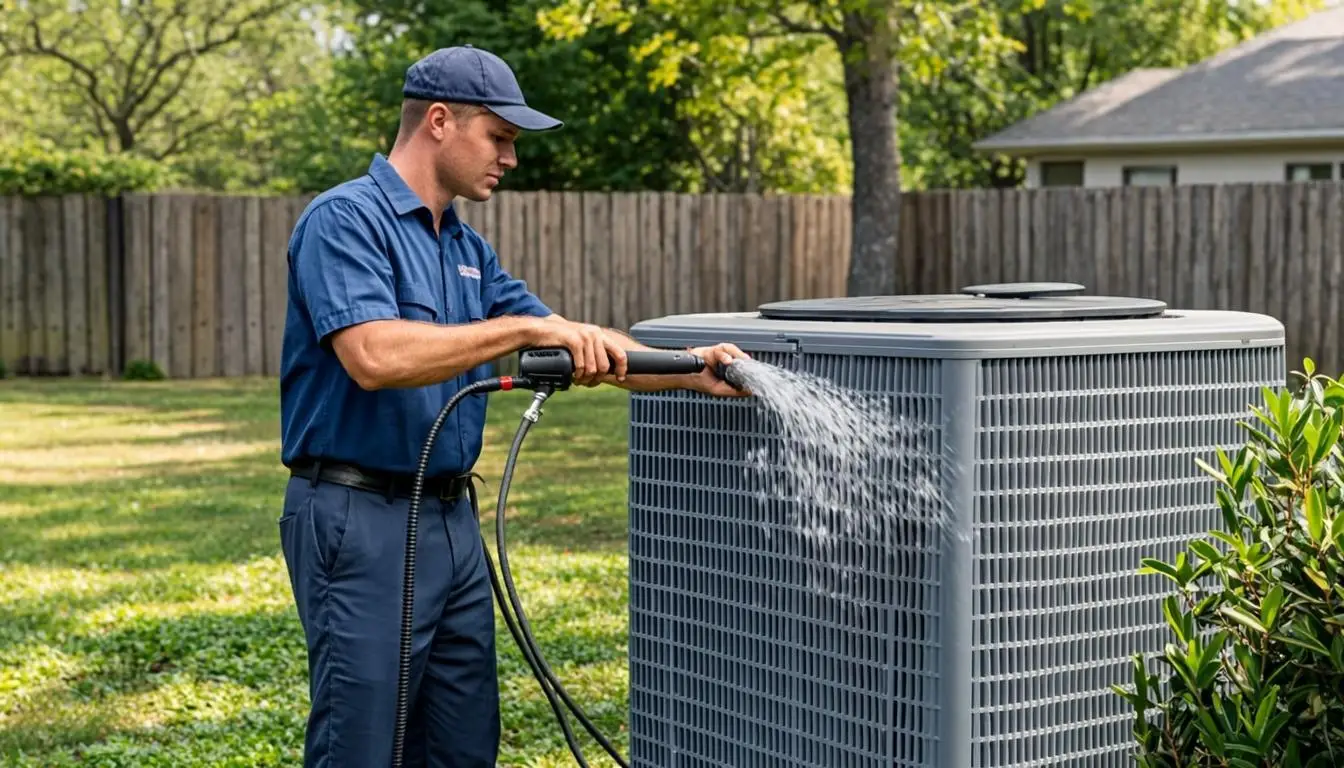
The maintenance that determines lifespan is identical for both machines, because they share the same failure physics. Annual professional service at $129: refrigerant charge verification, coil inspection, electrical connections, condensate drainage, performance testing. Monthly filter checks on ductless heads, which are user-serviceable and take thirty seconds per head. A clear outdoor unit: a foot of clearance from vegetation, and a hose-down of the coil a couple of times a season, more often under coastal trees.
The compressor is the part whose failure ends the conversation, and everything on that list protects it: dirty coils raise head pressure, clogged filters starve airflow, and both make the most expensive component in the system work harder for the same heat. Our service records across 12,000-plus jobs show the pattern without ambiguity: maintained units outlast neglected ones by years, in every brand, at every price point.
The last item is paperwork: keep the commissioning report and the invoice with model and serial numbers. It is your warranty trail, your rebate trail and your resale file in one folder, for either brand. Our seasonal checklists, the spring AC maintenance list and the winter home prep guide, cover the calendar view of the same maintenance.
Frequently Asked Questions
Services That Solve This Faster
Heat Pump Services
Cold-climate ducted and ductless installs, repairs and tune-ups at $129 across Metro Vancouver.
Daikin Brand Page
The lines we carry, model by model, from entry ductless to premium cold-climate.
Financing and Rebates
Financing from 7.99 percent with approved credit and the full rebate stack filed by us.
Heat Pumps in Langley
Valley-side homes where the cold-climate tier earns its keep, quoted locally.
Related Guides From Our Team
Heat Pumps in Vancouver: The Complete Guide — sizing, configuration and the conversion decision behind the brand question.
Ductless vs Central AC in Surrey — the configuration trade-offs for the same housing stock.
CleanBC Rebates 2026 — the brand-agnostic money behind every heat-pump quote.
How to Pick the Best HVAC Company in Vancouver — choose the shop first, the badge last.
Heat Dome Preparedness — why cooling performance now belongs in every BC purchase decision.
Red Seal certified, licensed gas fitters (BC-PL-2019-4421), $2M insured, 15-plus years on the tools, 12,000-plus jobs across Metro Vancouver since 2010, 4.9 stars from verified reviews. We wrote this guide because Metro Vancouver homeowners deserve the numbers, the code references and the honest trade-offs before anyone touches a wrench or a wallet.
More about our team →Talk to a Real Technician About This Today
Book a visit with a Red Seal technician: a real diagnostic, a written flat-rate quote before any work starts, honest repair-versus-replace math, CleanBC rebate paperwork handled and financing from 7.99 percent with approved credit. Emergencies answered 24/7 at 604-615-2212.
AC humming instead of cooling?
Diagnostics across Metro Vancouver, usually same-day in cooling season, credited to any repair, with the verdict delivered with gauges attached. Heat-wave emergency? The 24/7 line is answered around the clock, priority for maintenance-plan customers, flat $150 after-hours premium.
Call 604-615-2212 WhatsApp Us