June 2021: The Week That Rewrote Our Summers
Between June 25 and July 1, 2021, a massive ridge of high pressure stalled over the Pacific Northwest and functioned like a lid on a pot. Daytime temperature records did not just fall; they were erased. On June 29, the village of Lytton in the Fraser Canyon, a community used to basking in BC's hottest summer readings, recorded 49.6 degrees Celsius, the highest temperature ever measured anywhere in Canada. The town was largely destroyed by wildfire the following day, and its residents were displaced for years.
In Metro Vancouver the numbers were less cinematic and more deadly precisely because they landed where people actually live. Vancouver International Airport hit 34.9 degrees at a station designed for the mild influence of the Strait of Georgia. Abbotsford reached the low forties. Overnight lows stayed in the twenties, and that detail matters more than any daytime record: our bodies and our buildings both need cool nights to recover, and in a heat dome there is no recovery window. The BC Coroners Service attributed 619 deaths across the province to the heat event, most of them indoors, most of them older residents living alone in homes without cooling.
We handle this subject the way we would want our own families' experience handled: with respect and without drama. The reason to revisit 2021 is not fear. It is that every lesson from that week is actionable, and most of it costs far less than people assume. The phones in our office rang off the hook for six straight weeks afterward as Metro Vancouver decided, all at once, that cooling was no longer optional. This guide is our answer to the question we have been asked thousands of times since: what should I actually do?
The Data: Heat Waves Are Now an Annual Expectation
One heat dome does not make a trend, but the trend was already there. Long-run climate records for British Columbia show average summer temperatures have climbed roughly 1.5 degrees since the early 1900s, and the character of summer heat has changed more than the average suggests: our hottest days are hotter, our heat events last longer, and the overnight relief that used to reset our homes and bodies is shrinking. Environment and Climate Change Canada has expanded heat warning criteria and response protocols for the South Coast precisely because thresholds that used to trigger once a decade are now tripping every summer.
The infrastructure story is just as important as the thermometer. Metro Vancouver's housing stock and electrical grid were engineered for a climate where air conditioning was a luxury for a few weeks a year, if that. During 2021 and each significant heat event since, we have watched the consequences: BC Hydro sets all-time summer demand records, distribution equipment fails at temperatures it was never rated for, and installation capacity for cooling simply runs out as every homeowner in Surrey, Burnaby and Coquitlam tries to buy the same equipment in the same three-week window. Planning for heat is now basic home maintenance in the Lower Mainland, the same way winterizing pipes is.
The good news is that this region is uniquely well positioned to adapt. Our electricity is among the cleanest in North America, so cooling with a heat pump does not trade heat stroke for carbon guilt. The solutions are proven, the rebates are real, and the passive basics cost almost nothing. What follows is the full playbook, from free to full retrofit.
Why Metro Vancouver Homes Overheat So Fast
Vancouver's homes were designed and built for a heating climate, and it shows the moment a heat dome arrives. The typical detached house in East Vancouver, Burnaby or New Westminster faces a combination of four problems that together can push indoor temperatures 8 to 12 degrees above the outdoor shade temperature by late afternoon.
- Solar gain through south and west glass. A west-facing living room window admits a remarkable amount of energy during a 9pm June sunset. Sunlight entering glass becomes heat inside, and interior blinds only hide it, they do not stop it. Once the energy is in the room, it is in the room.
- Attic heat storage. Attic spaces in full sun reach 50 to 65 degrees Celsius during a heat event. That stored heat re-radiates through the ceiling for hours after sunset, which is why upstairs bedrooms in Vancouver specials and split-entry homes stay unbearable at midnight even when the outside air has finally cooled.
- No night purge. Most local homes were built with the assumption that you simply open windows when it is warm. That works for a normal 24-degree July day. In a heat dome with highs near 40, people open windows all day, admit hot air, then close up at night out of habit or noise concerns and lose the only free cooling window the day offers.
- Zero installed cooling. Before 2021, fewer than half of Metro Vancouver homes had any air conditioning, and older condo stock built for shade and breeze often has none either. There is no mechanical backstop when passive measures fall short.
Understanding those four mechanisms tells you exactly where to attack. You block solar gain before it enters, you slow heat coming through the attic, you exploit every cool hour for ventilation, and if you want real security, you install equipment that actively removes heat. Every measure in the rest of this guide maps to one of those four problems.
People expect insulation to make a house hotter in summer. The opposite is true when paired with night flushing: a well-insulated envelope resists the daytime heat wave and holds the cool air you bank overnight. The same attic top-up that saves winter heating dollars is your summer thermal battery, a two-season return covered in our energy upgrade ROI rankings.
Passive Prep Under $100: Block It Before It Enters
The cheapest cooling in the world is the heat you never let indoors. Start with your windows, because glass facing the sun is the single biggest heat injector in most homes, and the physics have a strict rule: external shading beats internal shading, decisively. A curtain intercepts sunlight after it has already entered the building and become heat, rejecting maybe 15 to 25 percent of it. An exterior screen, awning or reflective film intercepts the energy before it passes the glass and can reject 70 to 80 percent. If you can only afford one layer, put it outside.
The $50 window kit that works
For apartments and rentals, removable heat-control window film is the entry point. A $40 to $60 kit from any hardware store covers a few large windows, installs with soapy water and a squeegee, peels off without residue in fall, and measurably cuts afternoon gain on west glass. For houses, exterior options are better: bamboo or solar screens zip-tied to security bars, clip-on awnings for patio doors, or even a strategically planted deciduous tree that shades the west face in July and drops its leaves to welcome low winter sun. Retractable awnings over south-facing decks cost more but pay off in both comfort and protected furnishings.
Seal before you need it
Winter draft sealing has a summer job too. The weatherstripping that keeps January out also keeps July's 3pm furnace air from infiltrating your sealed, shaded house, and attic hatch seals slow the downward re-radiation of stored heat into your top floor. While you are at it, check that older exhaust vents and unused chimney dampers close properly; a chimney functioning as an open stack in July pulls hot attic air into living space. If your envelope has not been assessed in years, an AC or ventilation consultation includes a review of where your house leaks both ways.
All the shading in the world does nothing if blinds go up at noon. Close exterior covers and interior blinds on east windows before sunrise, on south windows by mid-morning, and on west windows before you leave for work. Heat prevention is a morning job. Afternoon is too late.
Night Flushing and Attic Defense: Use the Cool Hours
Even in the worst heat dome on record, Metro Vancouver nights dropped into the high teens and low twenties. That is cooling fuel, and most homes waste it. Night flushing means deliberately opening the house when outdoor air drops below your indoor temperature, typically from about 10pm to 6am, and driving real air changes, not just cracking a window. Open windows on opposite sides of the home to create cross-ventilation, and if the layout fights you, place a box fan in one window blowing outward so the house pulls cool air in through every other opening. A whole house can drop 5 to 8 degrees overnight with one $60 fan running for a few hours, at a cost of pennies.
The window-timing science that defeats most people: open when the air outside is cooler than the air inside, close when the two cross, which is usually within an hour or two of sunrise. Then keep everything shut, curtains drawn, and the envelope sealed until evening repeats the cycle. Thermometers make this trivial; a $15 indoor-outdoor unit with the outdoor sensor on a north wall removes all the guesswork. During the 2021 event, homes that followed this rhythm stayed dramatically cooler than neighbours who ran windows open all day.
| Time Window | Windows | Shading | Fans | Goal |
|---|---|---|---|---|
| Roughly 10pm to 6am | Open wide, cross-breeze | Open or removed | One fan exhausting outward | Bank cool night air, flush stored heat |
| 6am to 9am | Close everything as outdoor air warms to indoor temperature | Close east first, then south | Off or circulating | Seal the reserve before the sun gets to work |
| 9am to 7pm | Stay closed | South and west glass fully covered, exterior shading in place | Only on people, not rooms | Hold the morning reserve through peak heat |
| 7pm onward | Open only once outdoor air drops below indoor temperature again | Remove west shading after sunset | Resume cross-ventilation | Start the next overnight recharge |
Attic ventilation and insulation as summer gear
Your attic is the radiator that cooks your bedrooms after sunset. Ensure soffit vents and roof vents are unblocked by insulation, bathroom fans exhaust outdoors rather than into the attic, and consider an attic ventilation upgrade if your roof space has no airflow path. On the insulation side, topping up from the R-19 to R-30 commonly found in pre-1990 homes toward R-60 dramatically slows that downward heat flow, and attic fans with solar or thermostat controls can purge superheated air in the evening. This is also, not coincidentally, the exact work CleanBC subsidizes most generously for winter reasons, one more argument for treating your house as a year-round system. Our winter prep guide covers the cold-weather half of the same envelope upgrades.
Beat the Rush: Book Cooling Before the First Heat Warning
Heat pump and AC installation slots across Metro Vancouver fill by late June every year. Book in spring, lock in CleanBC rebates where you qualify, and walk into summer knowing your home is ready. Free quotes across 17 cities from Red Seal certified technicians.
Cooling Options Ranked: From a $40 Fan to a Full Heat Pump
Once passive measures are in place, mechanical cooling is the backstop that makes a heat dome survivable for infants, seniors, pets and anyone whose body struggles with heat. Not every home needs the same answer, and the honest comparison includes purchase cost, operating cost, comfort delivered and rebate eligibility. Here is the full field, ranked from the cheapest stopgap to the systems we install most.
| Option | Cost Range | Cooling Power | Operating Cost | Comfort | Rebates |
|---|---|---|---|---|---|
| Ceiling or box fans | $40 to $150 | None; moves air, cools people not rooms | Pennies per day | Low; useless above ~35°C | None |
| Portable AC (single hose) | $300 to $600 | One small room | Moderate; inefficient design | Fair; noisy, bulky, leaks room air | None |
| Dual-hose portable | $500 to $850 | One room, better efficiency | Moderate | Fair; quieter, more effective | None |
| Window AC unit | $250 to $700 | One to two rooms | Low to moderate | Good for the room it serves | None |
| Central air conditioner | $5,500 to $9,000 | Whole home, needs ductwork | Moderate | Excellent, even cooling | Rare, minor |
| Ductless mini-split (AC or heat pump) | $3,800 to $5,500 single zone, $8,000 to $14,000 multi-zone | Targeted rooms or whole floor | Low; inverter efficiency | Excellent; quiet, zoned | CleanBC when configured as heat pump |
| Cold-climate heat pump (ducted or ductless) | $4,500 to $18,000 by configuration | Whole home cooling plus winter heating | Lowest per unit of cooling | Excellent year-round | Up to about $16,000 combined CleanBC support |
Three practical notes from installing all of these weekly. First, single-hose portables are the most sold and least loved category: they exhaust conditioned air outdoors, forcing hot replacement air in behind them, and in a sealed apartment during a heat dome that working-against-itself design shows. If you must buy portable, dual-hose. Second, window units work genuinely well for the room they serve and suit renters and basements; just secure them properly and avoid running extension cords. Third, if you are buying anything permanent, the financing and rebate arithmetic almost always points to a heat pump, which is the next section.
Renters and strata-bound owners should also know BC's basic rules: strata corporations cannot unreasonably prohibit portable cooling devices, and the residential tenancy framework increasingly recognizes cooling as essential rather than optional during declared heat emergencies. If you are stuck, your municipality's cooling-centre network, covered below, is your pressure release valve.
Why a Heat Pump Is the Best Long-Term Bet in BC
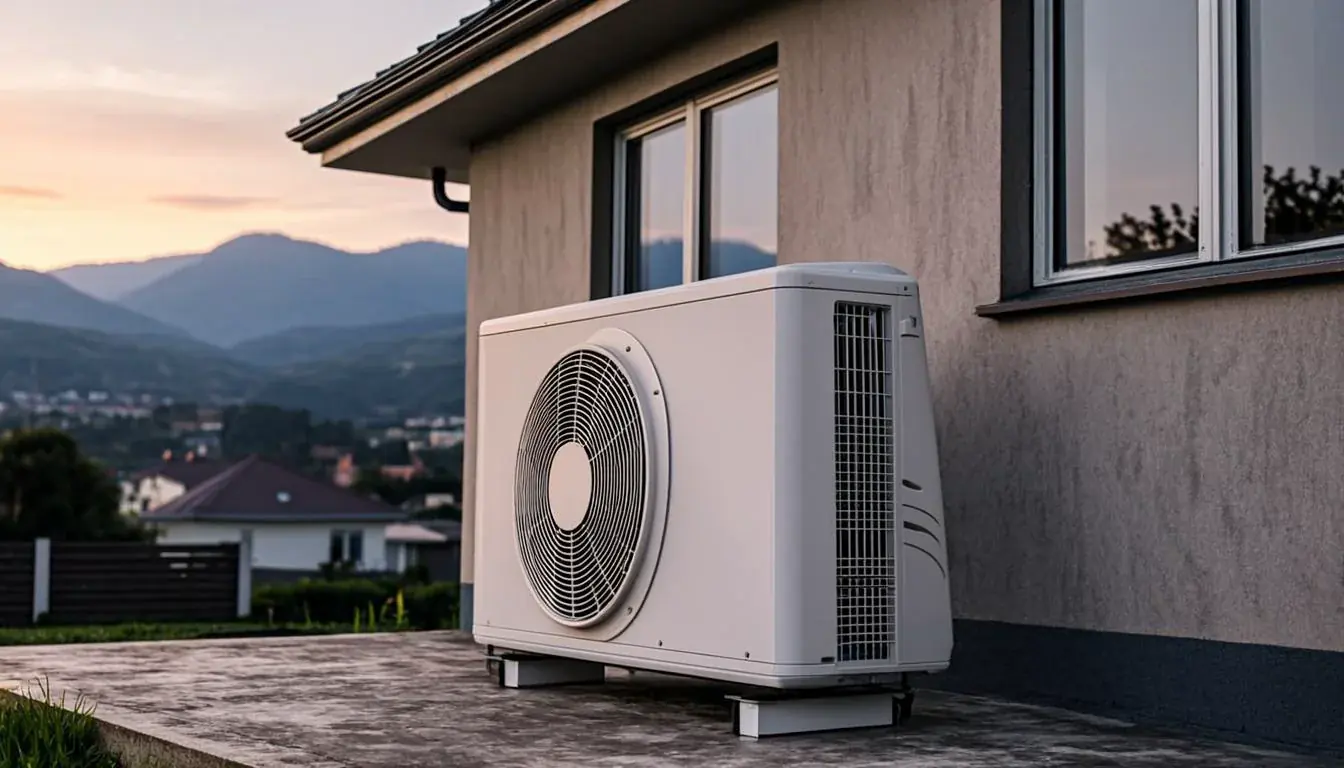
A heat pump is an air conditioner with a reversing valve, and in cooling mode it does exactly the same physics as any AC: absorbs indoor heat at the evaporator and dumps it outdoors at the condenser. The difference is what happens in October. A cooling-only system sits idle for eight months while your furnace or baseboards burn money, while the heat pump flips into heating mode and delivers two to four units of heat per unit of electricity through a Metro Vancouver winter.
That year-round duty is what changes the financials. A central AC purchase is pure consumption; a heat pump purchase is an efficiency investment that qualifies for the CleanBC Better Homes rebate stack, which runs from roughly $4,000 to $6,000 for baseboard conversions up to $11,000 or more for oil-to-heat-pump switches, with income-qualified top-ups and municipal add-ons on top. No cooling-only equipment qualifies for anything close to that. When our customers run the full comparison, the net cost of a heat pump after rebates frequently lands near or below the quoted price of the equivalent cooling-only system, at which point the choice makes itself.
The practical details matter in our climate. Modern inverter-driven cold-climate units modulate their output instead of cycling on and off, which translates to quiet operation, tight temperature control and low summer operating costs measured in pennies per hour. Ductless heads solve the no-ductwork problem in Vancouver specials, character homes and condos with strata constraints, and multi-zone systems give each bedroom its own setpoint for sleeping through heat events. Our complete heat pump installation guide for Vancouver homes covers sizing, brands and the full rebate math, and the comparison between configurations lives in our ductless versus central AC guide.
Heat domes sell heat pumps, but the homeowners happiest through subsequent summers were the ones who bought in April and May with sizing done properly, not the ones who ordered whatever was left on the shelf during the emergency. Heat also sells in winter: the same unit that saved you in July is the one cutting your February baseboard bill by half.
When the Grid and Your Home Both Fail: Cooling Centres and Outage Prep
Extreme heat stresses electricity infrastructure at precisely the moment everyone leans on it hardest. BC Hydro has set new summer demand records during each recent heat event as air conditioning saturates the market, and distribution transformers, cables and stations age faster at high temperatures. Localized outages during heat waves are not a hypothetical; they are a pattern, and a power failure during a 40-degree afternoon converts every AC-equipped home in the neighbourhood into an oven with a view.
Know your cooling centre network before you need it
The City of Vancouver operates a network of cooling centres through its community centres and libraries, activated under the Extreme Heat Response Plan, with some locations open extended hours or around the clock during declared heat emergencies. Every Metro Vancouver municipality runs an equivalent network: Surrey activates civic facilities, Burnaby libraries and community centres, Richmond and the North Shore similar. Locations change with each event, so the habit to build now is checking your city's website and EmergencyInfoBC when a heat warning is issued, and saving the links before summer. Mist cooling stations and extended pool hours typically accompany the activations. When our crews are at capacity and a customer's home cooling has failed, the cooling-centre network is the advice we give first for infants, elderly family members and anyone feeling unwell.
Outage kit for heat, not just windstorms
- Battery-powered or rechargeable fans, charged. A USB fan with a power bank runs all night and keeps air moving over skin, which is how humans actually cool.
- Pre-chilled thermal mass. Frozen water bottles and blue packs double as bed-safe cool packs overnight and drinking water as they melt.
- Know your cool rooms. Identify the lowest, north-side, most shaded room in your home now, and retreat there during any outage.
- Wet towels and spray bottles. Evaporative cooling on skin, wrists and neck drops perceived temperature dramatically with no electricity at all.
- Keep the fridge and freezer closed and have a cooler plan for medications that need refrigeration, such as insulin.
If an outage hits during a heat warning and indoor temperatures keep climbing, do not tough it out at home. That is the moment for the cooling centre, an air-conditioned mall or library, or a family member with power. The 2021 coroners data made clear that waiting indoors is the failure mode; movement is survival. Our 24/7 emergency services page covers the heating and plumbing side of infrastructure failures, including no-heat and burst-pipe response through the winter counterpart of these events.
The Health Checklist: People and Pets
Equipment protects the house; habits protect the people. The 2021 review found most heat deaths were seniors living alone in the hottest units, which converts a neighbourly knock into genuine lifesaving infrastructure. Build these habits now so they are automatic when a warning lands.
- Hydrate before you feel it. By the time thirst registers during extreme heat, you are already behind. Keep water within reach everywhere you sit, and remember that coffee and alcohol quietly work against you.
- Check on elderly neighbours twice daily during warnings. A knock, a phone call, a shared bottle of frozen water. If your building has seniors on upper floors facing west, they are the highest-risk households in your postal code.
- Know the heat illness sequence. Heavy sweating, dizziness, headache and nausea are the body's warnings; a hot, dry, confused person is past the warning stage. Cool aggressively, hydrate if conscious, and call 911 for suspected heat stroke. Do not hesitate on that call.
- Medications amplify risk. Common heart, blood pressure and psychiatric medications impair heat regulation. Anyone on them should treat heat warnings seriously and ask their pharmacist ahead of summer what applies to their prescriptions.
- Never leave children or pets in vehicles, not for a minute, not with windows cracked. Interior temperatures climb past outdoor readings within minutes and kill fast.
- Walk dogs before 8am or after 9pm and test asphalt with the back of your hand for seven seconds before committing paws to it. Cats and rabbits in west-facing rooms need fans, water and floor-level shade too; pets die in top-floor apartments during heat domes.
A written household plan ties the checklist together: where you retreat at home, where you go if power fails, who checks on whom, and the cooling-centre links for your city. Print it. During the event itself, decision quality drops with the temperature, and the households that cope best are the ones that pre-made their decisions.
Book by May: The Capacity Reality Nobody Plans For
Every summer since 2021 has repeated the same curve. Requests for cooling quotes trickle in through March and April, accelerate through May, and then arrive all at once with the first heat warning in late June or July. By then, reputable installers across Metro Vancouver are booked weeks deep, equipment suppliers are rationing the popular ductless models, and the only installs happening fast are the ones paying emergency premiums. The customers sweating through July on a waitlist are the ones who started looking in July.
Flip the calendar and everything improves. Booked in spring, a heat pump or mini-split project gets measured properly, sized against your actual envelope and shading rather than panic-guessed, scheduled around your life, and commissioned with time to test before it matters. Spring is also when CleanBC paperwork flows smoothly, because the EnerGuide advisors who must sign off on rebate-eligible installs are not themselves three weeks behind. If your project involves replacing a furnace at the same time or adding attic insulation before sizing the equipment, spring sequencing is the difference between a coordinated retrofit and a rushed patch.
For BC Home Service, July capacity has sold out every year since 2021. Homeowners who request quotes by May get spring installation, full rebate processing and a tested system before the first warning. Requests that arrive with the first 35-degree forecast go into the emergency queue behind no-cooling emergencies: seniors, infants, medical needs. Plan like the second group will exist, because every year it does.
The same logic applies to maintenance for homes that already have cooling. An AC or heat pump that has not been serviced in years fails on the hottest day, when compressors work hardest and capacitor weaknesses surface. A spring tune-up catches weak capacitors, low refrigerant and blocked coils in April for a fraction of the cost and none of the drama of a July breakdown. Our AC installation guide for Vancouver includes the full pre-season checklist.
The No-AC Survival Guide: Science Over Suffering
Whether you are a renter, between installations, or your unit failed mid-event, the no-AC playbook combines every passive principle in this guide with human physiology. It works, and it is what public health authorities ask British Columbians to know by heart.
Retreat and reset
Move your household's daytime life to the coolest defensible space, usually the basement in a Vancouver special, the north-facing room, or the lowest floor with the least glass. If the basement runs cool, set up the sleeping arrangements there for the duration; overnight sleep is the single most important physiological recovery you can protect, and a 23-degree basement beats a 32-degree bedroom every night of the event. Municipal pools, libraries and malls extend hours during heat warnings for exactly this purpose, and cooling centres take it further.
The wet-towel and fan physics
Human cooling runs on evaporation and airflow. A fan pointing at damp skin can hold perceived temperature roughly 4 degrees below room temperature, which is why fan plus wet towel beats either alone. Apply cold water to pulse points at wrists, neck and ankles; soak a sheet and sleep under it damp rather than dry under nothing; keep a spray bottle at every chair. Take lukewarm, not icy, showers, since extreme cold triggers shivering and vasoconstriction that can raise core temperature. This is also where the battery-fan outage kit earns its keep.
Window timing, one more time
Because it is the highest-value free action in this entire guide: windows open when outdoor air is cooler than indoor air, windows sealed and shaded the moment that flips. Run the rhythm with an indoor-outdoor thermometer and the house becomes a banked thermal reserve, coolest at dawn, defended all day, recharged overnight. A home that opens everything at noon during a heat dome is fighting for the other team.
Cooking, lighting and appliance discipline
Every watt consumed indoors becomes indoor heat. Skip the oven and stovetop during warnings in favour of cold meals, the microwave, the barbecue outside, or takeout. Run dishwashers and laundry after dark, hang dry instead of using the dryer's heating element, and keep lights off in closed rooms. In a well-sealed home these small loads are a meaningful share of the afternoon heat you are fighting.
Frequently Asked Questions
A heat dome is a stationary high-pressure system that traps hot air beneath it like a lid, parking extreme heat over a region for days at a time. The June 2021 heat dome brought Metro Vancouver three consecutive days above 40 degrees Celsius and set Canada's all-time record of 49.6 degrees in Lytton, BC.
Block sun on south and west windows from the outside before it enters, flush the house with cool night air between roughly 10pm and 6am, then shut everything and seal drafts before the sun rises. Retreat to the coolest floor, use fans aimed at your body, and apply cooling towels. These free tactics keep most homes 5 to 10 degrees cooler indoors.
Book by May. Air conditioning and heat pump installation capacity across Metro Vancouver typically fills by late June, and July bookings usually mean waiting through the first heat waves. Spring installation also lets you test the system before you need it and may qualify for seasonal pre-summer pricing.
For most homes, yes. A heat pump provides the same summer cooling as a central AC or ductless system while also replacing or supplementing winter heating, and CleanBC rebates can cover thousands of dollars that a cooling-only system does not qualify for. A quality cold-climate unit handles both jobs efficiently.
The City of Vancouver activates cooling centres at community centres and libraries during heat events, typically 24/7 during extreme heat warnings. Check the City of Vancouver website or EmergencyInfoBC for the current list, and most Metro Vancouver municipalities activate equivalent networks in Surrey, Burnaby, Richmond and the North Shore.
Keep battery-powered fans charged, close blinds on sun-facing windows, move to the lowest coolest floor, dampen skin or clothing with water, and drink water steadily. If indoor temperatures rise past the mid-thirties and anyone in the home feels unwell, relocate to a cooling centre or an air-conditioned public space rather than waiting out the outage.