
The Honest Answer Up Front
A boiler replacement in BC in 2026 costs $5,500 to $13,500 installed, and the type does the sorting: a conventional non-condensing unit lands $5,500 to $8,500, a system boiler $6,500 to $9,500, a combi that does heat and domestic hot water in one wall-hung cabinet $6,500 to $11,500, and a full radiant-floor project $12 to $22 per square foot of heated floor. Navien and Rinnai own the combi market here; Viessmann and Lochinvar sit at the premium end of the condensing class.
The honest context: most boiler replacements in this region are not emergencies, they are planned. Cast-iron units from the 1960s through 1980s routinely outlive their expected life by decades, so the decision is usually a repair-versus-replace question at year 25, not a flooded-floor question. The replacement that pays is the condensing upgrade: at 95 percent versus 80 percent AFUE, and with FortisBC paying up to $1,000 on qualifying condensing models, the payback on a house with real run hours is inside ten years.
One more honest line: boiler work is the most credential-sensitive trade on this list. Every install requires a licensed gas fitter, a permit and a Technical Safety BC inspection, and hydronic systems add pressure testing and glycol chemistry that a general plumber cannot sign off. Our boiler crews do this daily across twelve cities, and this is the pricing we hand across the table.
A cast-iron boiler from 1972 still heating a Vancouver Special is not a testimonial to build quality. It is a countdown running at 55 percent efficiency with a fuel bill attached.
65000 to $11.5k
The combi band: one wall-hung unit, heat plus endless hot water, no tank.
950% AFUE
The condensing standard for new boilers in 2026; non-condensing floors at 80.
120 to $22/sq ft
Radiant floor heating installed, the premium path for new builds and major renos.
250 yr crossroad
The age where repair-versus-replace math stops forgiving the repair side.
The Four Boiler Types, Priced
Boiler pricing starts with the type, because the type decides the venting, the piping, the controls and whether you also need a chimney strategy. Here is the honest 2026 ladder with the trade-offs that come attached to each rung.
| Type | 2026 installed range | Hot water | Best fit | Trade-off |
|---|---|---|---|---|
| Conventional non-condensing | $5,500-$8,500 | Separate tank or combi role | Budget changeouts, rentals | 80% AFUE, chimney dependent, no rebate |
| System condensing | $6,500-$9,500 | Separate tank | Houses with existing tank | Two appliances, two service lives |
| Combi condensing | $6,500-$11,500 | Built-in, endless | The Metro Vancouver default | Single point of failure for heat and water |
| Radiant floor project | $12-$22 per sq ft | Combi or system | Renos, additions, basements | Highest comfort, highest entry price |
Why combi dominates here: Metro Vancouver houses are small by national standards, mechanical rooms are closets, and combi units delete the tank entirely. The trade is concentration: one unit does everything, so a failure means both systems wait for the same part. Our rule of thumb on sizing: a combi needs honest domestic hot water math, because the shower load, not the heating load, sets the equipment size.
What Is in a Boiler Quote
A boiler quote has more moving parts than a furnace quote because the distribution system is part of the job. This is how ours itemize.
| Line item | Typical range | Notes |
|---|---|---|
| Boiler equipment | 45-55% of total | Navien NCB or NPE lines, Rinnai Q-series, Viessmann at premium |
| Piping and near-boiler work | $1,200-$3,500 | Primary-secondary loops, hydraulic separator, new manifolds |
| Venting | $400-$1,600 | Sidewall PVC on condensing; stainless AL294C where runs get long |
| Gas line work | $150-$900 | Upsizing to 3/4 inch common when the old unit was undersized |
| Electrical and controls | $200-$900 | Outdoor reset sensors, zone controls, condensate pump |
| Permit and TSBC inspection | $150-$350 | Gas permit, pressure test record, inspection sign-off |
| Drain and flush | $250-$600 | System flush, inhibitor refill, sometimes radiator rebalancing |
The near-boiler piping is where boiler quotes genuinely differ, and where the cheap ones cut. The primary-secondary arrangement, the air separator, the properly sized circulators: none of it is visible from the hallway, all of it decides whether you hear kettling at 2 a.m. in year three. Our boiler repair guide carries the full repair price table.
The 1950s Radiator Question
Metro Vancouver has thousands of houses heating through cast-iron radiators installed mid-century, and the good news is that most of them are keepers. Cast iron holds up to modern condensing temperatures better than the steel fin-tube that replaced it, and a condensing boiler running outdoor reset at low temperatures is the best thing that ever happened to an old radiator loop, provided the loops get balanced and flushed.
What changes with old distribution
Expect three additions on the quote: a proper system flush before the new boiler connects ($250 to $600 depending on sludge), radiator valve upgrades where the old ones have seized ($80 to $180 each), and in two-storey houses, a rebalance visit after commissioning. Sludge from decades of oxygen ingress is the enemy of new condensing heat exchangers, which is why the flush is non-negotiable, and the inhibitor refill after it is what protects the new unit.
Houses with fin-tube baseboard from the 1970s are the marginal case: high-resistance loops sometimes need larger pipework or an added separator to reach condensing temperatures. That is a $1,000 to $2,500 decision, and it belongs on the quote, not in the warranty file. The full hydronic versus air comparison is in our boiler versus furnace guide.
The Combi Arithmetic: Deleting the Tank
A combi replaces two appliances, and the honest comparison is against boiler-plus-tank, not boiler alone. On that basis: a mid Navien combi at $9,000 installed replaces roughly $7,500 of boiler and $2,800 of tankless-grade hot water equipment, deletes the tank footprint, and removes a second service visit a year. Against an aging 40-gallon tank that is ten years from a $1,800 replacement anyway, the combi usually wins on total cost of ownership.
The two cautions from our service desk: households with three simultaneous showers need the higher-output units, not the base models, and combi units reward annual maintenance more than any other appliance we service, because the heat exchanger that does double duty collects double the scale. The Navien versus Rinnai comparison covers the hot-water side of that decision, and the tankless versus tank guide covers the tank it deletes.
Repair or Replace: The 25-Year Crossroad
The rule our techs use in the field: past 20 years of age, a repair quote above a third of the replacement price argues for replacement; past 25, any repair above 15 percent does, because condensing efficiency and the FortisBC rebate are worth more than the part. And two failures end the conversation immediately regardless of age: a cracked heat exchanger and any evidence of combustion spillage.
| Situation | 2026 cost | Verdict |
|---|---|---|
| Circulator replacement | $450-$850 | Repair at any age, routine |
| Expansion tank failed | $250-$450 | Repair; replace the tank, not the boiler |
| Gas valve or ignition fault | $400-$900 | Repair under 15 yrs; weigh it past 20 |
| Heat exchanger crack | $2,000+ or parts-stalled | Replace; safety issue, no repair path |
| Constant kettling, poor circulation | $300 flush first | Diagnose before deciding; sludge mimics a dying boiler |
| Zone valve failures | $250-$450 each | Repair; but three zones failing together is a system-age signal |
The diagnostic matters more than the part: we have replaced circulators on 30-year-old cast iron that then ran another decade, and we have watched new boilers fail in five years because nobody flushed the system. The boiler repair cost guide carries the full repair price table.
Rebates and the Condensing Case
The FortisBC program pays up to $1,000 on qualifying condensing boilers at 95 percent AFUE or better, occasionally more when paired with thermostat and insulation measures. There is no CleanBC money for gas boilers as such: the big pools fund heat pumps, which is why every boiler conversation in 2026 includes at least a look at the hybrid question, a boiler carrying the shoulder-season hot water while a ductless head carries the bedrooms. That pairing is common in North and West Vancouver and is covered honestly in our boiler versus furnace guide.
Efficiency framing for the spreadsheet people: at 95 versus 80 percent AFUE on a typical detached Vancouver house with run hours, a condensing upgrade saves $200 to $320 a year at 2026 gas rates, before the outdoor-reset savings that come from matching water temperature to weather instead of running 180°F into radiators on a 10°C day.
The outdoor reset dividend
Outdoor reset is the quiet technology that makes the whole upgrade work: a sensor on the north wall reads the weather and the controls dial water temperature to match, 90°F on a drizzly November morning, 140°F only when it truly freezes. Old boilers ran one temperature, hot, always, because that was all the aquastat knew. On cast-iron systems the comfort change is visible within a week: radiators go warm instead of hot, the air stops drying out, and the rooms stop swinging between too cold and too hot, which is the pattern that made half the region believe it needed a bigger boiler when it needed a smarter one. Every condensing quote should include the sensor, and on our installs it is not an option line, it is the default.
What a Boiler Swap Looks Like
A combi or system boiler changeout is one to two days, and the second day is usually the better sign, because it means the flush, the inhibitor and the rebalance are actually happening. Day one: isolation, drain, old unit out, near-boiler piping rebuilt, new unit hung, gas tested, venting sealed, fill and purge. Day two: fire, commission, record combustion numbers, walk the zones, balance, hand over the commissioning sheet and register the warranty.
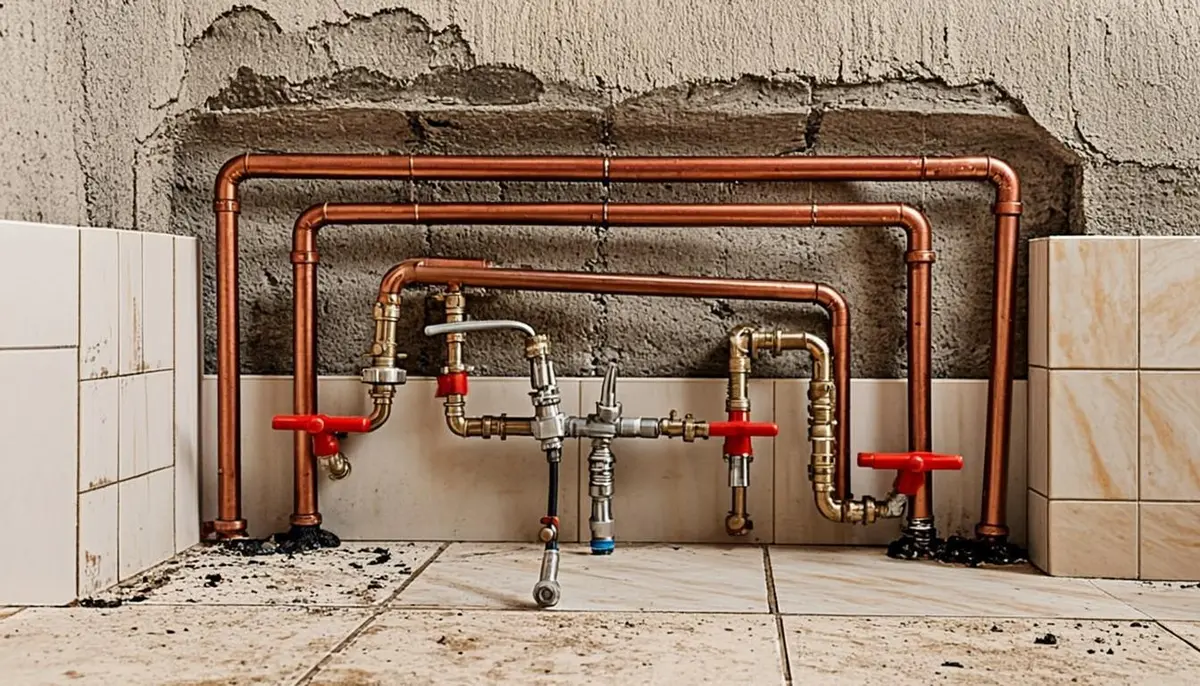
City Notes: Where the Old Boilers Live
Boiler work follows the housing eras. These are the patterns across our twelve-city footprint.
- Vancouver and Burnaby: Vancouver Specials and 1950s-60s ranchers with cast iron or fin-tube, the combi heartland.
- North and West Vancouver: radiant-era homes and slab houses, where outdoor reset pays the biggest comfort dividend.
- New Westminster: heritage stock with oversized radiators, low-temp condensing is the ideal match.
- Surrey and Langley: 1990s+ houses mostly furnace-heated; boiler work here is additions, garages and laneway suites.
- Richmond: slab foundations and suite density; combi units and secondary-loop zoning dominate.
The local pages, like boiler installation in Burnaby and New Westminster boiler installs, carry the era-specific notes, and the boiler versus furnace guide is the deeper dive on the type most of you will choose.
The Boiler Cost Cheat Sheet
The kitchen-table questions about boiler money, answered straight.
| Question | The honest answer |
|---|---|
| Combi installed? | $6,500-$11,500, the Metro Vancouver default |
| System boiler? | $6,500-$9,500 with a tank still in the picture |
| Conventional changeout? | $5,500-$8,500, no rebate, fading market |
| Radiant floor? | $12-$22 per square foot of heated floor |
| Old radiators? | Usually keepers: flush, rebalance, run them cool |
| Rebate? | FortisBC up to $1,000 on 95%+ AFUE condensing |
| Repair cutoff? | Past 20 years, a third of replacement price; past 25, a seventh |
| Signs to stop repairing? | Cracked exchanger, spillage, repeated same-part failures |
| Annual service? | $149-$250, and FortisBC returns up to $150 on qualifying plans |
One line to keep: buy the near-boiler piping, not the badge, because the piping is the part you will hear for fifteen years. Call 604-615-2212 and the quote itemizes every loop, valve and litre of inhibitor, or we do not book it.
Get a Boiler Quote Built Loop by Loop
Type recommendation with the trade-offs stated, near-boiler piping itemized, flush and inhibitor included, commissioning numbers recorded. Flat-rate pricing before we start, financing shown beside cash.
Frequently Asked Questions
Services From This Guide
Licensed crews, flat-rate quotes and 24/7 emergency response across the twelve Metro Vancouver cities we serve.
Boiler Service
Combi, system and radiant installs and repair.
Boiler Installation Burnaby
Special-era and Vancouver Special combi swaps.
Boiler Installation Vancouver
Closet mechanical rooms handled properly.
Boiler Repair Surrey
Diagnostics before parts, always.
Water Heaters
The tank side of the combi decision.
Financing and Rebates
From 7.99 percent, rebate math included.
{esc(a['author'])}
More about our team →Get Your Boiler Quote With the Piping Itemized
Type recommendation, near-boiler work itemized, flush and inhibitor included, commissioning numbers recorded. Flat-rate pricing before we start, cash and financed shown together.
No heat tonight?
24/7 response with a flat $150 after-hours premium posted in advance, and the $89 diagnostic credited to any repair. Cold houses move up the queue.
Call 604-615-2212 WhatsApp Us