24/7 Emergency Service Mon-Fri 8am-6pm · Sat 9am-4pm
Short · Practical · Filmed on real BC jobs

Watch the Fix Before You Book It.

A growing library of short repair videos from Metro Vancouver and Fraser Valley jobs — furnace checks you can do tonight, water heater flushes, jetting footage and the emergency shutoff every homeowner should know. Each one comes with the full shooting script, because the fastest diagnostic is often the one you can read.

12-video series scripted Full scripts published No staged disasters
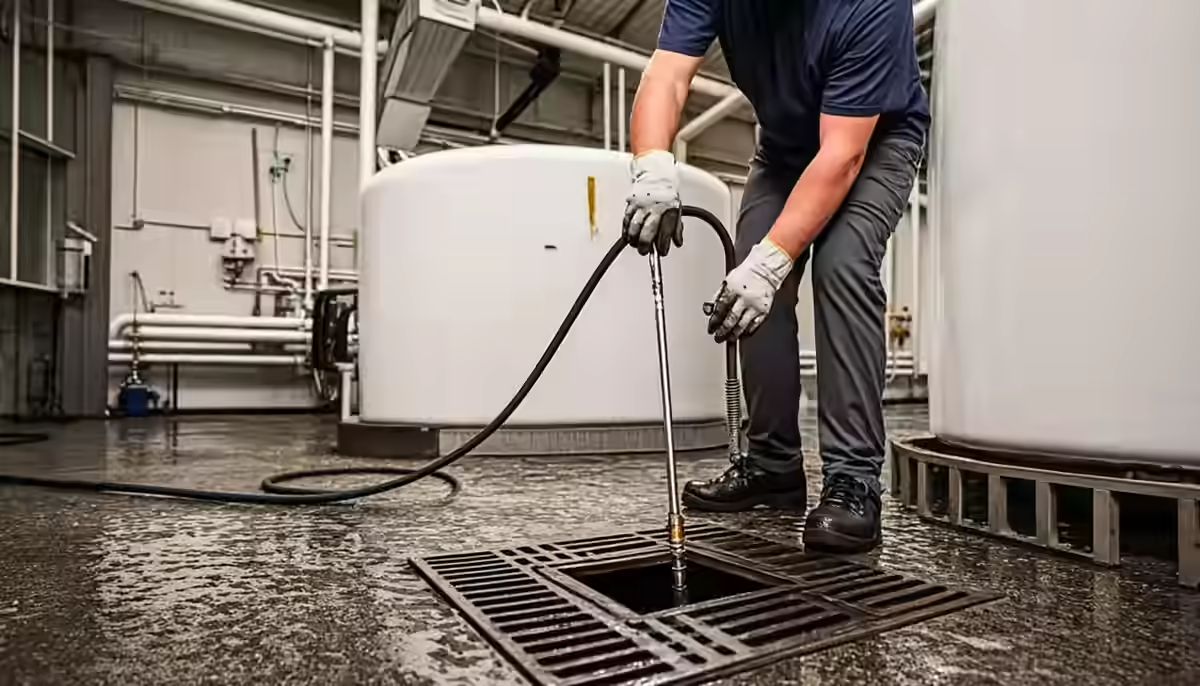
BC Home Service hydro jetting machine clearing a main drain line on a Metro Vancouver job
60-90s each video,
no filler
Why a video library

Why We Film Our Own Repairs

A trades company that shows you the actual job is a trades company that has nothing to hide. Every video in this library exists because a customer asked the same question on a call.

Proof over promises

Before-and-after footage from real jobs — jetted lines, cleared traps, live diagnostics — is the most honest marketing a service company can publish, and it is why our crews carry cameras on main-line work by default.

Safety you can repeat

The shutoff-location, sump-test and breaker-reset routines in this series are the exact steps our dispatchers walk customers through by phone — filmed once so every homeowner in the region can rehearse them.

Faster diagnostics

Customers who arrive knowing their blink code, their pilot status and what they already tried cut the diagnostic in half. The videos make you a better reporter, and better reports mean cheaper repairs.

Written to be read

Every video ships with its full script. Search engines read, viewers skim, and the 1 a.m. homeowner with a dead furnace needs text, not autoplay — so nothing in this library is video-only.

The series

The BC Repair Video Library

Twelve shorts, scripted start to finish and filmed across Metro Vancouver and the Fraser Valley. Cards show the filming queue today and play right here as each video lands on our YouTube channel — the page never moves.

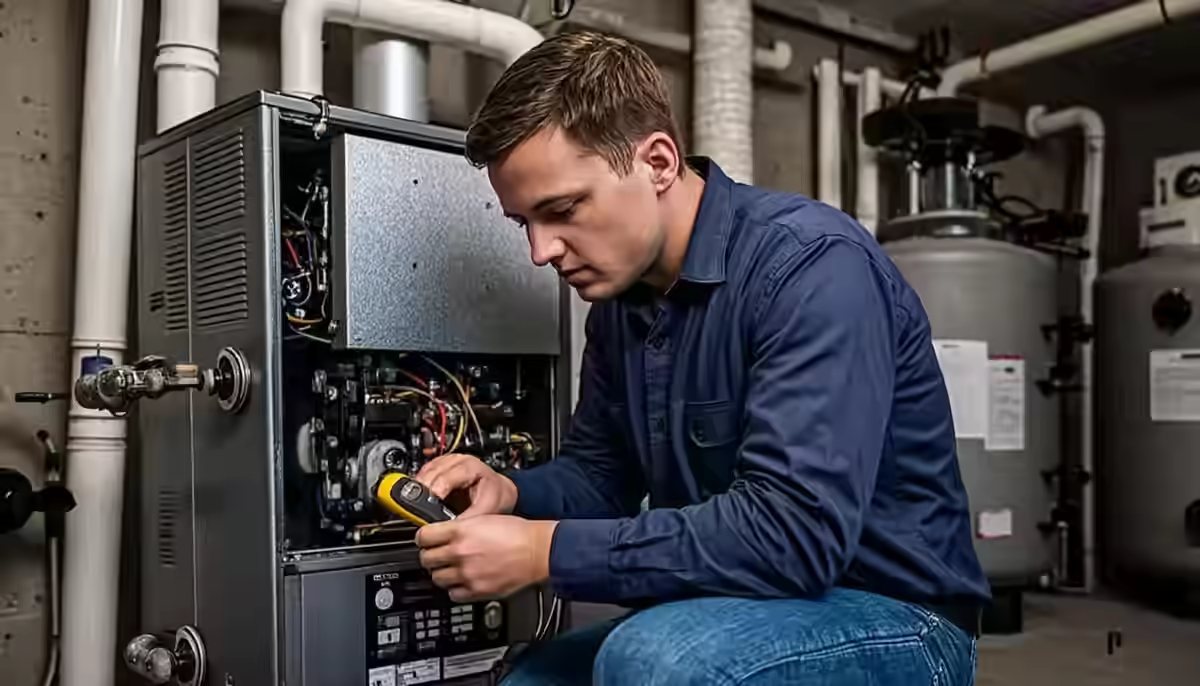
Furnace Not Starting? 5 Checks Before You Call — BC Home Service repair video thumbnail 2:10 Filming queue

Furnace Not Starting? 5 Checks Before You Call

The five checks that solve a third of no-heat calls before a van rolls: thermostat batteries, breaker, furnace switch, filter and the error-code blink pattern.

Read the full shooting script

HOOK (0:00-0:10): Standing at a cold register in Burnaby — before you call anyone, five checks, in this order. STEP 1 (0:10-0:30): Thermostat — confirm HEAT mode, raise the setpoint three degrees above room temperature, and swap in fresh batteries on any thermostat older than a year. STEP 2 (0:30-0:50): The breaker panel — find the furnace breaker, flip fully off, count to five, back on. A half-tripped breaker looks on and is not. STEP 3 (0:50-1:10): The light switch on the furnace itself — the single most-common no-heat cause in Metro Vancouver. Someone flips it thinking it is a laundry light. STEP 4 (1:10-1:30): Pull the filter and hold it to a lamp. A filter you cannot see light through is starving the unit — leave it out for the test and see if the furnace runs. STEP 5 (1:30-1:50): Count the control-board blink pattern and read it against the sticker inside the door. CLOSE (1:50-2:10): Still dead after all five? That is a real diagnostic — call us and tell the dispatcher the blink count; the right parts get preloaded before the van leaves. Comment which check fixed yours.
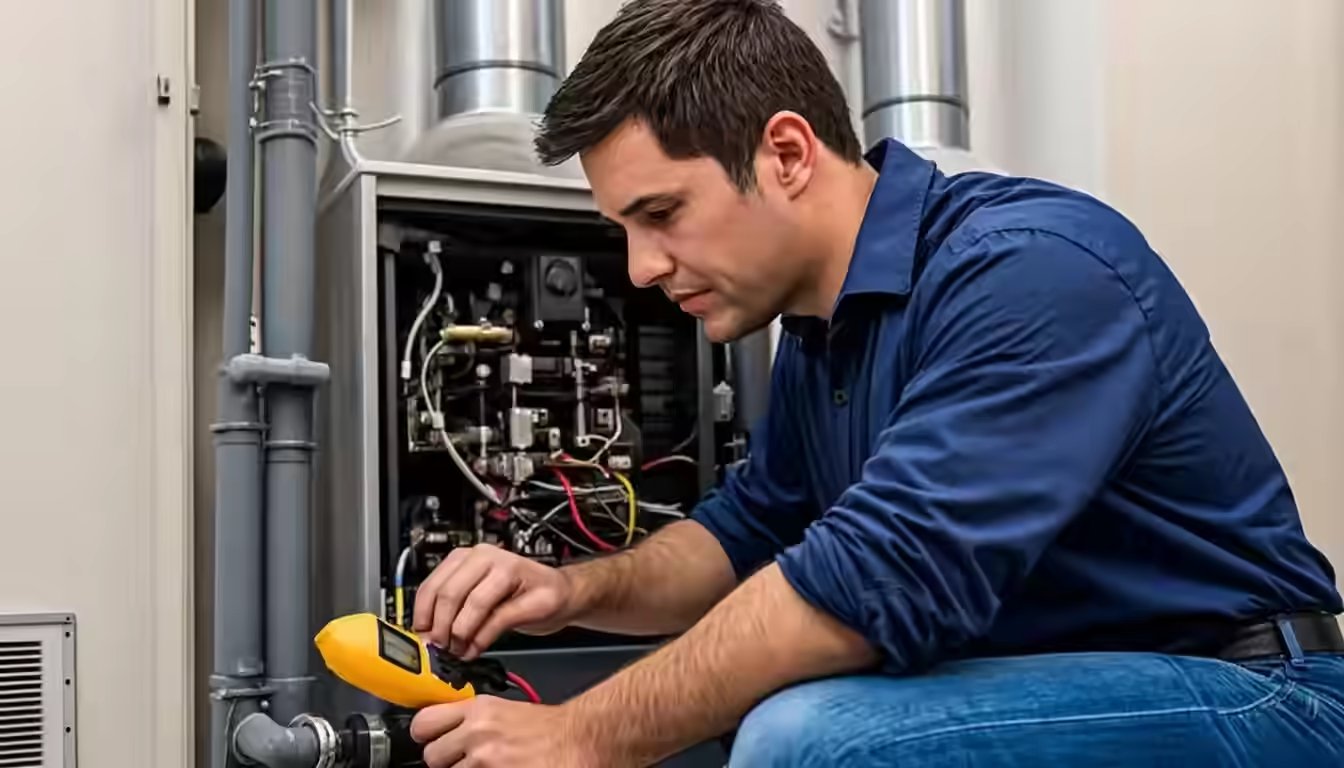
Tripped Furnace Limit Switch — What It Means, What Not To Do — BC Home Service repair video thumbnail 1:45 Filming queue

Tripped Furnace Limit Switch — What It Means, What Not To Do

Why a high-limit trip is almost always an airflow problem, the reset that is safe to try once, and the repeated-trip pattern that means a technician visit.

Read the full shooting script

HOOK (0:00-0:10): Your furnace shut itself down mid-cycle and the blower kept running — that is a limit switch doing its job. EXPLAIN (0:10-0:35): The limit switch is a heat circuit breaker. It trips when the heat exchanger runs hotter than it should, which almost always means air is not moving fast enough: a packed filter, blocked returns, a failing blower. SAFE RESET (0:35-1:00): Replace the filter first, wait ten minutes for the unit to cool, power-cycle the switch. One reset after a fix is reasonable. DO NOT (1:00-1:20): Never tape a switch closed or keep resetting without changing anything — the switch is the last line before the heat exchanger cracks. CLOSE (1:20-1:45): A switch that trips twice in one week is a diagnosis, not a nuisance: filter, blower motor, ductwork or a cracked exchanger. That is the visit where our $89 diagnostic is credited to the repair.

Why Your Furnace Runs 3 Minutes and Stops — BC Home Service repair video thumbnail 2:00 Filming queue

Why Your Furnace Runs 3 Minutes and Stops

Short-cycling in under three minutes, every time: the filter test, the register-count problem, and the sizing mistake nobody admits to.

Read the full shooting script

HOOK (0:00-0:10): On, three minutes, off, five minutes, on — your furnace is short-cycling, and every cycle costs a cold start. CAUSE ONE (0:10-0:40): Airflow. Pull the filter; if the cycle lengthens, that was it. Show a filter side-by-side with a clean one. CAUSE TWO (0:40-1:10): Closed registers. More than a quarter of your registers closed chokes the return path — show walking the house counting them. CAUSE THREE (1:10-1:35): Oversizing. A furnace sized for the coldest day of the year saturates the thermostat in minutes — the short-cycle that no filter will ever fix. CLOSE (1:35-2:00): Short-cycling quietly eats igniters and heat exchangers. If the filter and register checks change nothing, book a diagnostic — we measure actual airflow and cycle times against the nameplate.

Pilot Light Out? Thermocouple Basics on Older Tanks — BC Home Service repair video thumbnail 2:20 Filming queue

Pilot Light Out? Thermocouple Basics on Older Tanks

The pilot that will not stay lit is usually a thermocouple reading a dead flame — how the safety chain works and what a replacement involves.

Read the full shooting script

HOOK (0:00-0:10): Pilot lights, you release the button, it dies — you have met the thermocouple. EXPLAIN (0:10-0:45): The thermocouple is a safety probe sitting in the pilot flame; heat generates a tiny voltage that holds the gas valve open. No flame on the probe, no voltage, valve closes. Light the pilot with the probe out of the flame and you are holding the button against the safety. DIAGNOSE (0:45-1:20): Watch the pilot flame colour — a strong blue cone engulfing the probe tip is healthy; a lazy yellow flame that barely touches it means either gas pressure or a probe drifting out of position. FIX (1:20-1:50): Thermocouples are a $180-$280 installed repair on most older Metro Vancouver tanks — not a DIY gas job; the pilot assembly is a sealed safety chain. CLOSE (1:50-2:20): If the tank is past fifteen years and this is its second repair, the replacement math beats the repair math — our cost calculator runs the honest numbers in sixty seconds.

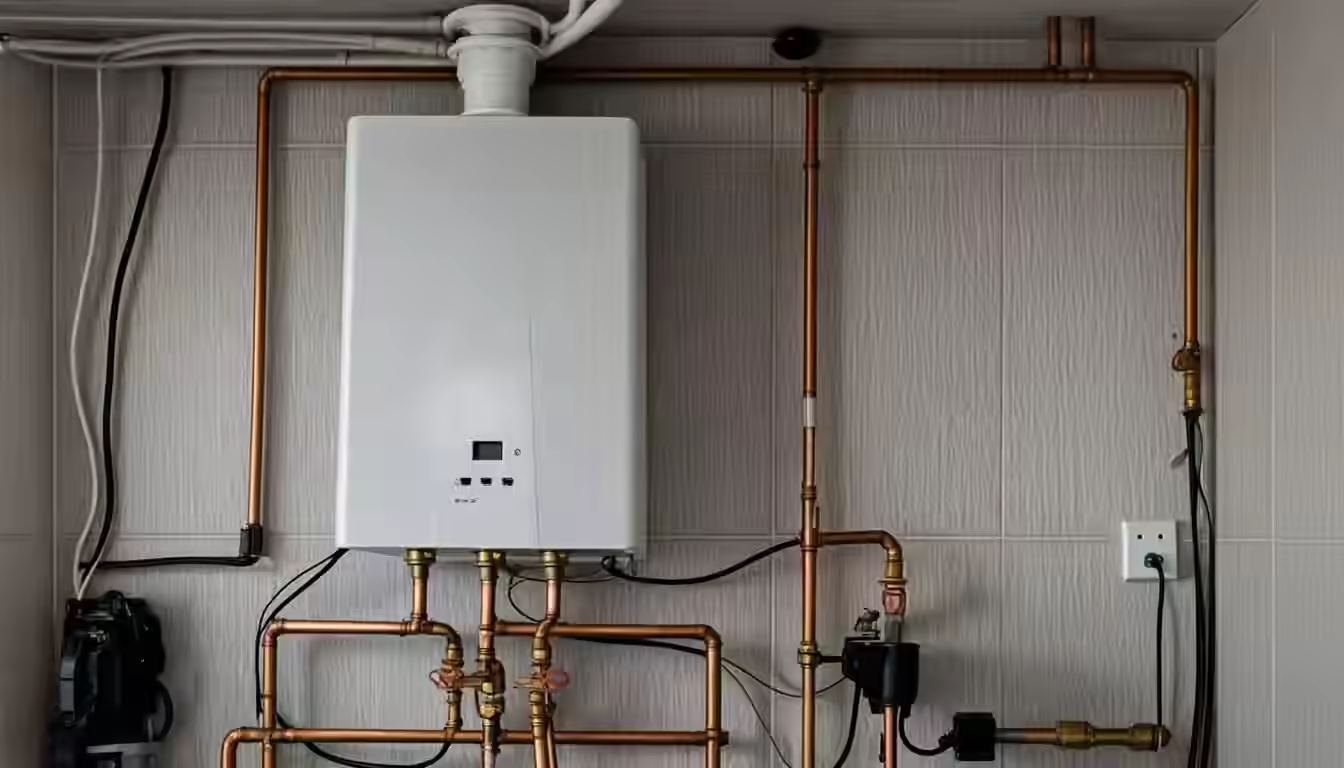
No Hot Water? A 3-Minute Diagnostic — BC Home Service repair video thumbnail 1:55 Filming queue

No Hot Water? A 3-Minute Diagnostic

Tank or tankless, gas or electric — the four checks that tell you whether the fix is a button, a breaker or a technician.

Read the full shooting script

HOOK (0:00-0:10): Cold shower twenty minutes before work — three minutes of checks will tell you who to blame. CHECK ONE (0:10-0:35): Gas tanks — is the pilot lit? View through the sight window; a dead pilot plus a smell of rotten eggs means stop and call, no matches. CHECK TWO (0:35-1:00): Electric tanks — the two breakers in the panel labelled water heater; a half-tripped pair resets like the furnace breaker. CHECK THREE (1:00-1:20): Tankless — the error code on the remote or unit face; write it down before touching anything. CHECK FOUR (1:20-1:40): Every system — is it no hot water everywhere, or just one fixture? A single cold shower with hot kitchen taps is a fixture valve, not a water heater. CLOSE (1:40-1:55): Still cold everywhere? Call with the code or the breaker result — that context cuts the diagnostic in half.

Draining Your Water Heater — The Annual Flush — BC Home Service repair video thumbnail 2:30 Filming queue

Draining Your Water Heater — The Annual Flush

Why Metro Vancouver water builds sediment, what a flush actually removes, and the valve sequence that keeps the job off your floors.

Read the full shooting script

HOOK (0:00-0:10): The rumble at the bottom of your tank is not a problem — it is a symptom with a maintenance schedule. WHY (0:10-0:35): Mineral content in regional water settles in the tank bottom, bakes onto the element, and forces burners to heat rock before they heat water. Twice the run time, half the life. PREP (0:35-1:05): Gas to pilot or breaker off, water supply off, garden hose to the drain valve, hose end in a floor drain. Open a hot tap upstairs to break the vacuum. SEQUENCE (1:05-1:45): Drain valve open, let the first gallon run cloudy, then quick-flush: supply on for thirty seconds, off, repeat until the drain runs clear. Show the actual sediment in a bucket. CLOSE (1:45-2:30): Close in reverse order, run the hot tap until it flows steady before powering up. Annual on tanks under eight years old; every six months past that. We do it as part of the $189-$289 flush service with the anode checked in the same visit.

Test Your Sump Pump in 60 Seconds — BC Home Service repair video thumbnail 1:30 Filming queue

Test Your Sump Pump in 60 Seconds

The bucket test, the float check and the check-valve tell — the one-minute routine that protects your basement through the wettest BC months.

Read the full shooting script

HOOK (0:00-0:10): October through March, this pump is the only thing between rain and your finished basement — test it now, not during the storm. TEST ONE (0:10-0:35): Pour a bucket of water into the pit. The float should rise, the pump should kick on before the water reaches the inlet, and the pit should empty to the shutoff level. TEST TWO (0:35-0:55): Watch the discharge — a strong flow means the check valve is holding; a gurgle back into the pit after shutoff means the valve is failing and the pump is re-pumping the same water. TEST THREE (0:55-1:15): Unplug, replug — the pump should restart. Any hum without pumping is an impeller problem. CLOSE (1:15-1:30): Failed any test before the wet season? Repair visits start at $180 and beat a flooded carpet every time.

Shut Off Your Water Main — Find It Before You Need It — BC Home Service repair video thumbnail 1:40 Filming queue

Shut Off Your Water Main — Find It Before You Need It

Every minute of a burst pipe is roughly a bathtub of water. Where the shutoff lives in Metro Vancouver homes and the two-hand close that stops the flood.

Read the full shooting script

HOOK (0:00-0:10): A burst supply line puts a bathtub of water on your floor every minute — this video is the sixty seconds you want to have watched already. WHERE (0:10-0:45): Metro Vancouver homes: the basement front-wall side facing the street, a meter closet in townhomes, or the crawlspace in older lowland houses. Walk and find it — on camera, in a real Surrey split-level. HOW (0:45-1:10): The ball valve closes with a quarter turn, handle across the pipe. Gate valves turn clockwise until firm — never wrench-hard. Hot water tank: the dedicated shutoff on the cold inlet above the tank. PRACTICE (1:10-1:25): Close and reopen it once a year; a valve that has not moved in a decade seizes exactly when you need it. CLOSE (1:25-1:40): Everyone in the house should know the location — including teenagers. Then call us; the after-hours line answers around the clock.

Clear a Sink Trap Without Chemicals — BC Home Service repair video thumbnail 2:05 Filming queue

Clear a Sink Trap Without Chemicals

The bucket-and-wrench routine that fixes most single-sink clogs in ten minutes — and why the caustic bottle under your sink makes it worse.

Read the full shooting script

HOOK (0:00-0:10): One slow sink, every other drain fine — nine times out of ten the clog is sitting in the trap you can see. SAFETY (0:10-0:25): If anyone has poured chemicals in the last 24 hours, stop — a caustic pool in an open trap belongs to a plumber with gloves, not to you. SETUP (0:25-0:45): Bucket under the trap, towel, slip-joint pliers or hands if the nuts are plastic. THE PULL (0:45-1:25): Loosen both nuts, lower the trap, show the actual clog — grease plus coffee grounds is the classic Metro Vancouver kitchen recipe — and clear it over the bucket. RESEAL (1:25-1:45): Hand-tight plus a quarter turn; overtightening plastic nuts cracks them. TEST (1:45-2:05): Run hot water two minutes. Still slow with a clean trap? The clog is past it — that is cable or camera territory, from $149.

What Hydro Jetting Actually Looks Like — BC Home Service repair video thumbnail 2:15 Filming queue

What Hydro Jetting Actually Looks Like

Real before-and-after camera footage of a jetted main line — the pressure classes, what the walls should look like when it is done, and who should not get jetted.

Read the full shooting script

HOOK (0:00-0:10): This is the same drain line, eleven minutes apart — camera footage first, then the jetter. BEFORE (0:10-0:40): Scope down a grease-packed main from a Langley family home; narrate what the camera reads — wall buildup, root hair at a joint, the waterline sitting where it should not. THE TOOL (0:40-1:10): Jetting heads and pressure classes; why pressure is matched to pipe material and condition, and why a fragile clay lateral gets a different head than sound ABS. THE RUN (1:10-1:40): Jetting passes, then the after-camera — show actual clean pipe walls and a full-bore channel. WHO SHOULD NOT (1:40-2:00): Offset joints and badly cracked lines can get worse under jetting; that is why the camera goes in first, always. CLOSE (2:00-2:15): Jetting runs $350-$550 with before-and-after footage kept on file — the video is the proof.

Furnace Filters — Buying the Right One — BC Home Service repair video thumbnail 1:35 Filming queue

Furnace Filters — Buying the Right One

Where the size actually is written, what MERV numbers mean for Metro Vancouver homes, and the one upgrade that quietly strangles airflow.

Read the full shooting script

HOOK (0:00-0:10): The filter aisle has forty sizes and none of them look like yours — here is how to never buy the wrong one again. THE SIZE (0:10-0:35): The nominal size printed on the filter frame is not the measured size — pull the old one, read the frame, buy that. Show the sticker inside the filter slot as the backup source. MERV (0:35-1:05): MERV 8 for basic dust, MERV 11 for pets and pollen season, MERV 13 for smoke weeks — with the honest caveat that every step up the MERV ladder costs airflow, and older blowers feel it. THE UPGRADE TRAP (1:05-1:25): A MERV 13 in a system designed for MERV 8 is a slow limit-switch problem in the making. CLOSE (1:25-1:35): When in doubt, bring the old filter in — or check the furnace page for the house-call version of this advice.

High-Efficiency Furnace? Clean the Condensate Line — BC Home Service repair video thumbnail 1:50 Filming queue

High-Efficiency Furnace? Clean the Condensate Line

The float switch that shuts your furnace down every October, the wet-dry vacuum trick, and why damp-night trips are a drainage fix, not a parts fix.

Read the full shooting script

HOOK (0:00-0:10): Furnace dead on the first damp night of October, error code points at pressure — nine times in ten, this is the condensate line. EXPLAIN (0:10-0:40): High-efficiency furnaces make water all winter. It drains through a trap and line to a floor drain; algae grows in the warm dark line, the line slows, the float switch trips, the furnace shuts down as designed. THE FIX (0:40-1:15): Locate the cleanout tee, wet-dry vac on the exterior port, ninety seconds of suction — show the gunk. Flush with the vinegar-to-water ratio, not bleach, on lines sharing space with condensate pumps. PREVENT (1:15-1:35): Once a season, October ideally; twice if the unit sits in a humid crawlspace. CLOSE (1:35-1:50): Float switch tripping repeatedly after a cleanout is a real drainage diagnosis — that is a visit, and the fee is credited to the fix.

Production notes

How the Videos Are Made

No studio, no actors, no rented showroom units — one technician, one phone rig, real homes across the region.

Each short follows the same production rule: sixty to ninety seconds, one problem, one fix, zero filler. The hook states the symptom exactly as customers describe it on the phone — furnace runs three minutes and stops, pilot lights but will not stay lit, cold shower before work — because that is how people search, and it is how the video earns its click. The middle is the checklist our technicians actually follow, filmed in the order they follow it, with the part numbers, valve names and pressure classes spoken aloud.

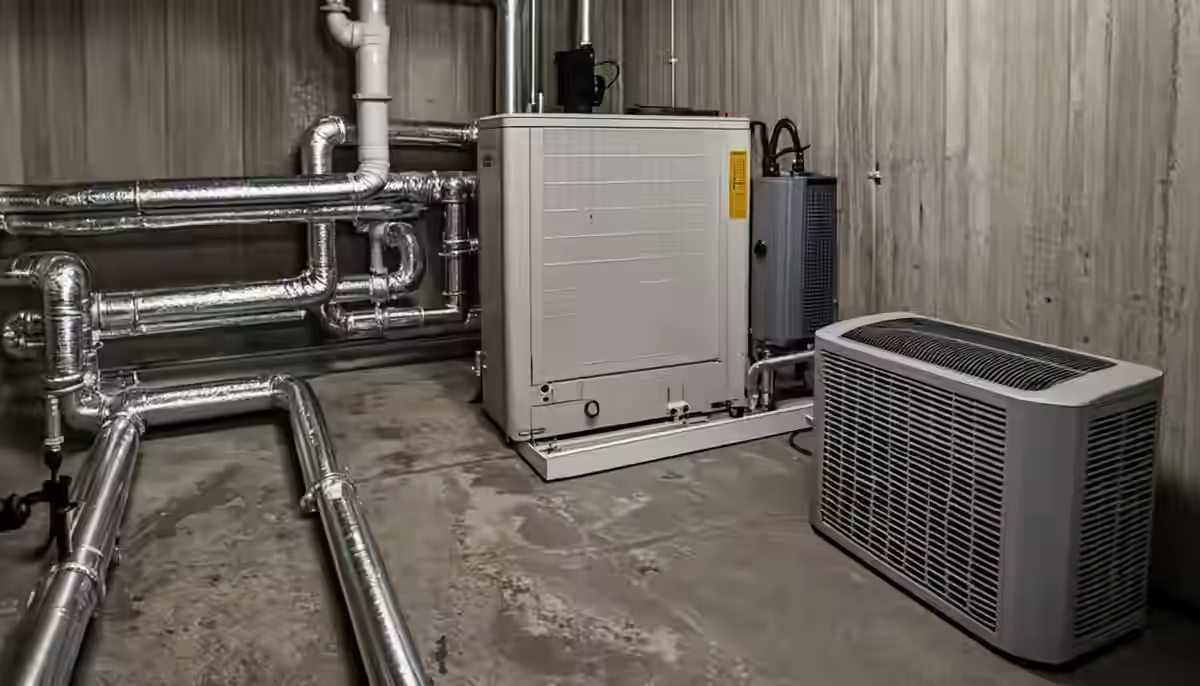
The close is always the same honest structure: what you can safely do yourself, what belongs to a licensed technician, and what it costs when it is us — the same flat-rate numbers published across this site, from the $89 credited diagnostic to the $350-$550 jetting pass. If a video cannot be made honestly in ninety seconds, it becomes two videos. The series is filmed across a season of real calls: a Langley main line, a Surrey sump pit, a Burnaby mechanical room, a White Rock tank. When a job cannot be filmed — customer privacy comes first, always — the same checklist is demonstrated on our own shop rigs.

Questions

Repair Video FAQs

What homeowners ask about the series.

Yes — every video is filmed on actual Metro Vancouver and Fraser Valley service calls or in our own techs' homes. We do not stage disasters or rent showroom units; if a video shows a packed filter, a real Langley family home supplied it. That is the point of the library: you should be able to see what your problem looks like before anyone quotes you for it.
Each card carries the full shooting script because half our audience reads faster than videos load — and because a written script is searchable. If you are trying to identify a noise or a blink pattern at 1 a.m., the text version is the fastest way in. The scripts are also the exact checklist our technicians work from, so nothing in the video is improvised.
The hub ships with the full series planned, scripted and thumbnailed. As each video is filmed and uploaded to our YouTube channel, its ID goes into the video manager in the admin panel and the card here upgrades to a playable embed automatically — same page, same URL, no rebuild. Subscribe to the channel and the newest upload appears here the same day.
The filter, breaker, thermostat, sump-test and shutoff-location steps are safe for any homeowner and that is exactly why we filmed them. Anything involving gas lines, pilot assemblies, venting or electricity inside the unit belongs to a licensed technician — the videos show you what the job looks like so you can buy it with confidence, not so you perform it on a weekend.
The repairs are the same in Vancouver, Surrey, Burnaby or Chilliwack — the housing stock differs, which is what our city pages cover in writing. The videos are the visual layer on top: the furnace checks that solve a Coquitlam no-heat call are identical to a White Rock one, and the shutoff locations map to the same Metro Vancouver building patterns.
Call the dispatch line at 604-615-2212 — the $89 diagnostic is credited to any repair you approve, and the visit itself often becomes the next video in the series. Tell the dispatcher what you watched and what it did not solve; the more specific you are, the better the parts loadout on the van.

Watched the video, still stuck?

That is what the vans are for. A licensed technician, a written flat rate and the $89 diagnostic credited to your repair — across Metro Vancouver and the Fraser Valley, 24/7.

Estimate your repair first? Try the free cost calculator.

Free Estimate

Get a Flat-Rate Quote

Tell us what the video did not solve — a Red Seal technician confirms the flat rate before any work starts.

Why homeowners call us first

  • Red Seal licensed, insured $2M, WorkSafeBC covered
  • Flat-rate pricing approved before work starts
  • $89 diagnostic credited to your repair
  • 2-year workmanship warranty, in writing
  • Stocked vans — most repairs done first visit
  • 40-55 minute average emergency response
  • Camera verification on drain and main-line work
  • Genuine 24/7 dispatch, 604-615-2212
Call Now Free Quote