The Honest Answer Up Front
Most AC repairs in Vancouver cost between $180 and $450, all-in, parts and labour. That is the honest headline, and it covers the overwhelming majority of what actually breaks in this climate: run and start capacitors, contactors, fan motors, fuses, thermostats, control boards, small refrigerant repairs and condensate drain clogs. Below that band you are mostly buying a diagnosis or a trivial part; above it, someone is either doing genuine fan motor or coil work, or padding the number. The diagnostic visit that settles which case you are in runs $89 to $129, and we credit every dollar of it to any repair you approve, so for anyone who proceeds, the diagnosis is effectively free.
If the call happens after hours, the premium is a flat $150, disclosed before we roll, never a doubled hourly rate. And when a repair estimate starts pushing past the top of the band, the honest question changes from what does it cost to is repair still the right buy. A new central air conditioner installed on existing ductwork runs $3,800 to $6,500. A ductless mini-split runs $3,800 to $5,500. A cold-climate ducted heat pump runs $6,500 to $14,000, but combined CleanBC, BC Hydro, FortisBC and municipal rebates can reach $16,000, which is why 2026 has turned every big AC repair quote into a heat pump conversation. We install and service Carrier, Lennox, Trane, Goodman, Rheem and Daikin, and our cooling crews work all 17 cities we serve, so the numbers in this guide are the numbers on our quotes in this region, not a national average dressed up as local.
What this guide will not do is hand you one number and call it the average, because averages hide the two things that actually set your price: what failed, and how hard it is to reach. What it will do is show you the real ranges, name every factor that moves them, and give you the questions that expose a padded quote in about thirty seconds.
0 jobs since 2010
Cooling, heating and plumbing calls across 17 Metro Vancouver cities, including every heat wave since the 2021 dome.
0 typical repair band
Where most cooling repairs land, parts and labour, after a diagnostic that is credited back in full.
0 star verified rating
From customers who called in July, in a panic, and were billed the number they approved on the phone.
0 flat after-hours premium
Disclosed before dispatch, never a doubled rate. Vancouver, Burnaby and Richmond response runs 30 to 45 minutes.
The Diagnostic Fee, Explained Honestly
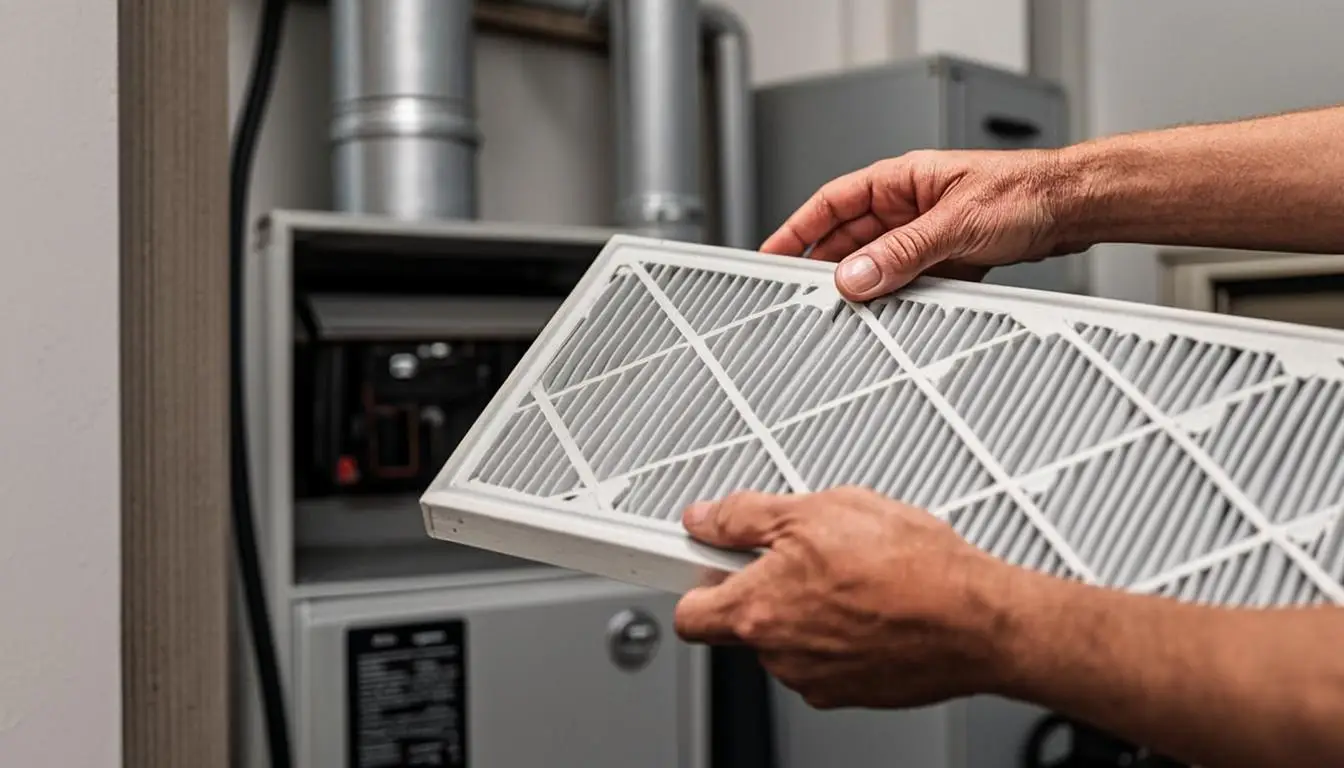
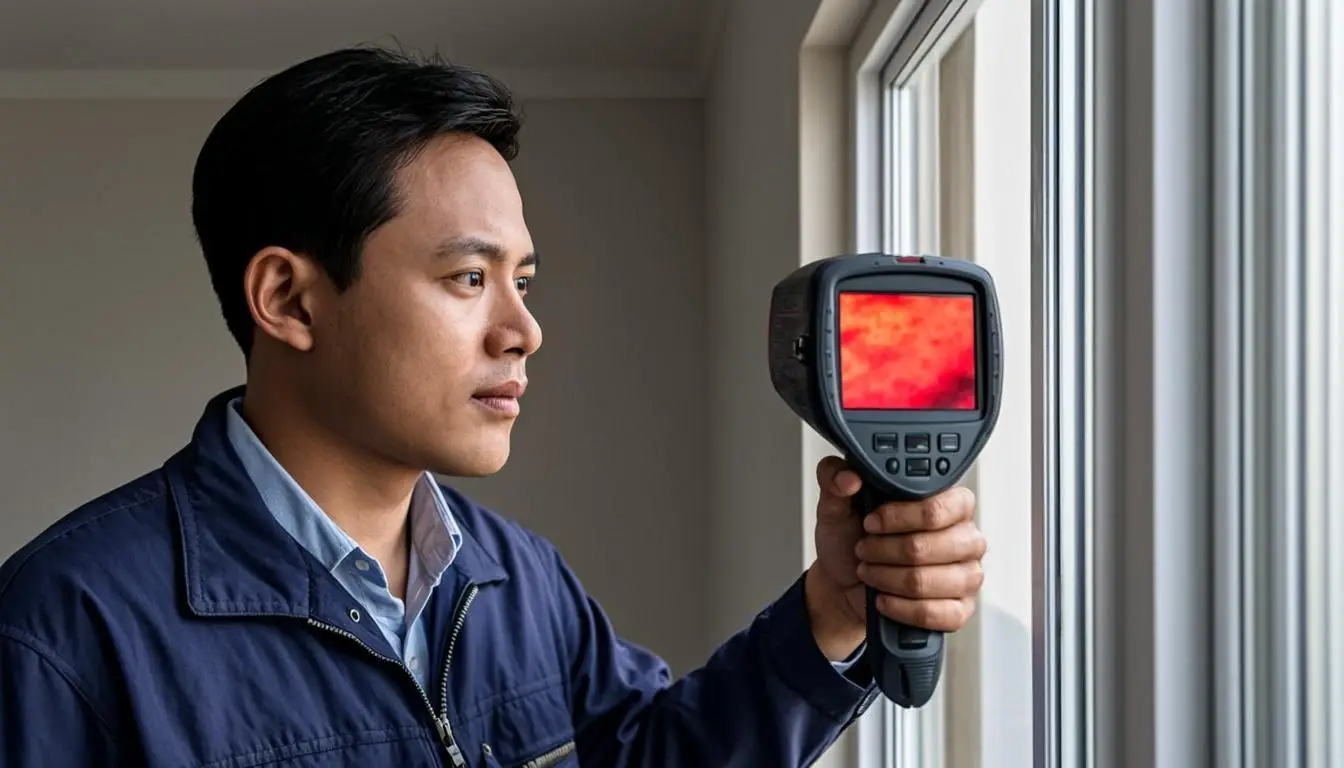
Some companies advertise a free diagnostic and make it back on the repair. We charge $89 to $129 for the visit and credit it in full to any repair you approve, which means the diagnosis is effectively free for anyone who proceeds, and fairly priced for anyone who just wants the truth about their system. That fee buys up to an hour on site: an electrical checkout of the capacitor, contactor and wiring with a meter, amperage on the compressor against its nameplate rating, a temperature split across the indoor coil, a look at the filter and blower, and a gauge reading if the symptoms point at the refrigerant circuit.
The visit ends in a written flat-rate quote, and that quote is the only number that matters for the rest of this guide, because it prices the job, not the hour. If the finding is a capacitor, you see the part, the labour and the total before anyone picks up a wrench. If the finding is a dying compressor, you see the amperage readings that prove it, and the replacement line will say quoted per system, because tonnage, refrigerant and access genuinely change that job. We are deliberately blunt about this because the most expensive AC repair in Vancouver is the one that never needed to happen: the compressor verdict delivered without gauges by someone whose business model needs the replacement sale. A real diagnostic is instrument work, and our crews on the Vancouver AC repair route carry the instruments on every call, from White Rock to Abbotsford.
One more honest note on the economics of the fee. A diagnostic performed properly takes an hour of a trained technician's time, a van stocked with meters, and the discipline to report what was measured rather than what sells. The $89 to $129 range reflects how long that takes on a straightforward system versus a rooftop package or a ductless head buried behind a hedge. It is a service. Companies that wave it away are recovering it somewhere, and the somewhere is always the repair invoice.
What AC Repairs Actually Cost
Here is the ladder, using our own Metro Vancouver numbers. Most of what we get called out for, capacitors, contactors, fuses, thermostats, drain flushes, small electrical repairs, sits in the $180-$450 band. The low end is a simple electrical part with good access; the top end is fan motor work, coil cleaning in place, or a refrigerant leak search that actually found something. A recharge on its own is not a repair: without finding and fixing the leak you are buying refrigerant for the atmosphere, so our quotes pair the recharge with the fix. The most-read related page on our site in June is the capacitor replacement guide, which tells you something about which part fails most in this region.
| Job | Typical range (CAD) | What moves the number |
|---|---|---|
| Diagnostic visit | $89-$129 | Credited in full to any approved repair |
| Typical AC repair | $180-$450 | Which part failed, access, parts availability |
| After-hours dispatch | +$150 flat | Flat premium, disclosed before the van rolls |
| Central AC, new install | $3,800-$6,500 | Existing ductwork, tonnage, efficiency tier |
| Ductless mini-split | $3,800-$5,500 | Single-zone figure; each added zone adds |
| Cold-climate ducted heat pump | $6,500-$14,000 | Ducted scope and sizing; rebates can offset heavily |
Two honest notes on the replacement rows. First, those are install ranges, not repair ranges, and they assume existing ductwork in reasonable condition; ductwork scope moves the number, and a proper load calculation sets the tonnage, not the square footage on the realtor listing. Second, the heat pump row is where 2026 BC changes the math: with combined rebates up to $16,000, the net cost of a cold-climate heat pump can land below the central AC row it replaces, while also covering most of your heating in the shoulder seasons. That is not a sales line, it is arithmetic, and we will show it to you on paper with your house's numbers in it.
What Moves Your Number Up or Down
The same failed part can cost differently on two houses on the same street, and the difference is rarely the company's mood. These are the factors that genuinely move a cooling repair quote in Metro Vancouver, roughly in order of how often they matter on our calls:
| Factor | Why it moves the price | What to ask |
|---|---|---|
| Access to the unit | Rooftop packages, crawlspace air handlers and fenced side yards add real time to the same repair | Is there clear access on the sides I can clear myself? |
| System age | Parts for 2000s-era systems can mean sourcing time or OEM substitutes | Is the exact OEM part in stock today? |
| Refrigerant generation | The R-410A to R-454B transition changes the long-game math on older systems | Which refrigerant does mine run, and does it change this repair? |
| Brand | Carrier, Lennox, Trane, Goodman, Rheem and Daikin run different parts pipelines in BC | Is the replacement part OEM for my brand? |
| System type | Ductless heads, rooftop packages and central splits are different jobs with different access stories | What system type do I actually have? |
| Timing | After-hours adds a flat $150; heat-wave weeks add scheduling pressure, not price creep | Does this need tonight, or is Thursday fine? |
The refrigerant transition deserves a plain-English paragraph, because it is the 2026 factor nobody in this region had to think about five years ago. R-410A is being phased down in favour of lower global-warming-potential refrigerants such as R-454B across new equipment. If your system runs R-410A, repairs remain completely serviceable today; the honest nuance is that a major repair on an older R-410A system in 2026 deserves a side-by-side with replacement, because you are investing in a refrigerant generation with a horizon. That is exactly the kind of thing a diagnostic conversation should surface unprompted, and if it does not, you now know to ask.
Repair or Replace: The Arithmetic
The arithmetic, by age. Under five years: repair, almost always, and check the warranty first, because parts may be covered. Five to ten: repair, unless the finding is the compressor or the condenser coil, the two parts whose price changes the conversation. Ten to fifteen: the math tightens, because a $450 repair on a thirteen-year-old system with a tired coil is a one-season patch, and an honest quote says so in writing. Over fifteen: replacement usually wins, and in 2026 the replacement question is really a heat pump question.
Here is the BC context that reframes all of it. The BC Building Code now requires cooling capability in new homes, and Step Code 3+ makes heat pumps effectively mandatory for new multiplexes. The 2021 heat dome is now a design condition rather than a freak event, and our heat dome preparedness guide covers what that means beyond the AC itself. So when a major repair quote lands on a twelve-year-old system, the honest comparison is not repair versus a like-for-like air conditioner; it is repair versus a heat pump that cools at least as well, heats for most of the year, and pulls combined rebates up to $16,000 through CleanBC, BC Hydro, FortisBC and municipal programs, with the paperwork handled by us. Financing from 7.99% with approved credit exists precisely for that moment, in plain terms on our financing page.
What we refuse to do is push it. A $250 capacitor repair that buys a household one more cool summer while they save for the right replacement is a good trade, and we quote it without a lecture. If you are leaning toward replacement, the AC not cooling guide walks the full triage list first, and our heat pump pages cover the conversion path. What we insist on is that the decision be made with the numbers on the table, in writing, which is the entire point of this guide.
Bottom line
Under 10 years old, repair is usually the right buy. Over 15, replacement usually wins. In between, demand the side-by-side on paper: the repair quote versus $3,800-$6,500 for a central AC, $3,800-$5,500 for ductless, or a cold-climate heat pump with combined rebates up to $16,000.
Vancouver Factors: Why Your Bill Differs From Your Neighbour's
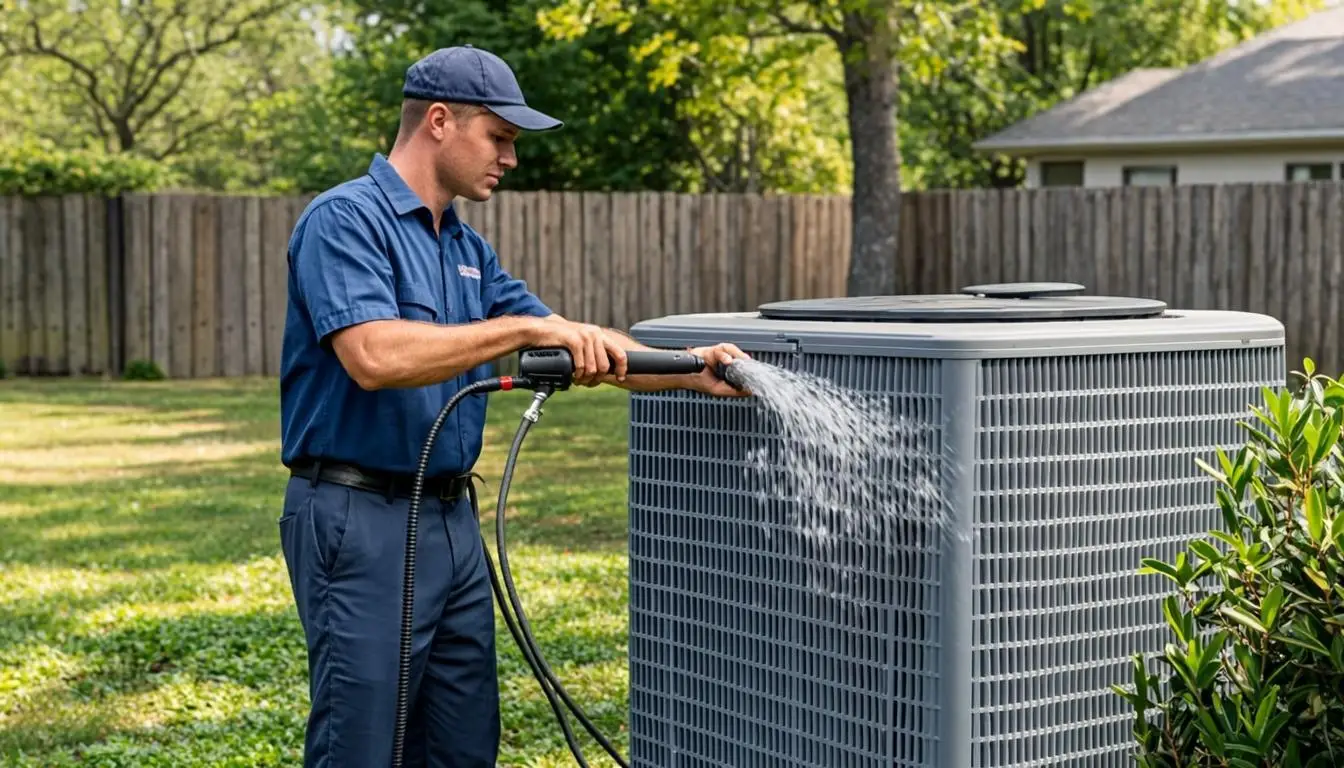
Vancouver is not a hard cooling climate, but it is a hard climate on cooling equipment. Rain for eight months a year grows moss and algae on outdoor coils, cottonwood fluff in June packs condensers like insulation, and the trees this city plants enthusiastically drop debris into fan blades while shading houses in ways that change cooling loads block by block. The practical result is that coil fouling is the number one accelerant of AC aging here, and it is the one factor you can partly control with a hose, a shut-off at the breaker, and ten minutes in May.
Housing stock matters as much as weather. Much of the region's central cooling was retrofitted into 1960s-to-90s houses whose ductwork was designed for heating only, and whose electrical panels sometimes need work before a modern condenser can land. Older line sets corrode fastest near the ocean-side blocks of Kitsilano and Point Grey, and strata rules in the city's townhouse stock can decide where a condenser may sit and who is allowed to move it. None of this is exotic, but all of it moves quotes, and a technician who has worked this region for years prices it at the first look rather than as a surprise on the invoice. Our Surrey AC repair crews see the same story inland with different trees, and the pattern holds across all 17 cities we serve.
The heat dome legacy is the last factor, and the one that changed expectations permanently. Before 2021, air conditioning in Vancouver was a luxury; after it, cooling is a health question in a heat wave, and demand shows it, with our cooling call volume in July 2021 and every July since running at multiples of any pre-dome season. The practical takeaway is simple: book diagnostics and tune-ups in spring rather than in the first thirty-degree week, when every crew in the region is at capacity. Spring work is the same price and a quarter of the stress, and it usually catches the part that would have failed in July.
The After-Hours Math: What a Heat-Wave Emergency Costs
After-hours pricing in this trade has a bad reputation, earned by hourly rates that double after six in the evening and by surcharges discovered on the invoice. Ours is a flat $150 premium, disclosed on the phone before we dispatch, on top of the same flat-rate repair you would be quoted at noon. So a $180-$450 repair at midnight is $330-$600, known before the van moves. That is the whole after-hours math; there is no fine print underneath it, and the emergency line at 604-615-2212 is answered around the clock, every day of the year.
| Where you are | Typical emergency response | After-hours premium |
|---|---|---|
| Vancouver, Burnaby, Richmond, New Westminster, North Vancouver, Port Coquitlam | 30-45 min | Flat $150 |
| Surrey, Coquitlam, Langley, Delta | 45-60 min | Flat $150 |
| Maple Ridge | 50-70 min | Flat $150 |
| Abbotsford | 60-80 min | Flat $150 |
Two honest additions to that table. First, in a heat wave the $150 is the cheapest line item in the story. The alternative is a 28-degree bedroom for infants, seniors and anyone on heat-sensitive medication, and heat is a genuine health risk, which is why our 24/7 emergency line treats cooling failures during heat waves as priority dispatch. Second, some July calls are not emergencies at all, and a good dispatcher will say so: if the house cools overnight and the forecast breaks Thursday, booking a Thursday diagnostic at standard rates saves the premium and gets the same technician. Our dispatchers are trained to ask the questions that sort one from the other before anyone promises a van.
Rebates: Why They Matter to a Repair Decision
The rebate landscape in one honest paragraph: repairs do not qualify, replacements can. CleanBC Better Homes, BC Hydro, FortisBC and several municipal programs fund efficiency upgrades, chiefly heat pump conversions, and the combined stack for a heat pump replacement can reach $16,000, with limited-time bonus top-ups of up to $1,000 in some seasons. There is no program that pays you to fix a capacitor, and anyone who hints otherwise is selling something. The CleanBC rebates guide has the current program details, and the heat pumps page has the equipment side of the story.
Where rebates matter to a repair decision is timing. A system one major failure from replacement is exactly when the side-by-side should happen: the repair quote, the heat pump quote, and the net figure after rebates, on one page. We prepare the CleanBC, BC Hydro, FortisBC and municipal paperwork as part of the job, because the paperwork is genuinely the annoying half of a rebate and doing it for you is our contribution to the arithmetic. What we will not do is quote a rebate as if it were guaranteed before checking eligibility, because programs have windows, quotas and pre-approval requirements, and a quote that assumes a rebate without checking is not a quote, it is a guess with your name on it.
So the standing advice is this: read every number in this guide as a before-incentives number, treat the rebate stack as the last page of the conversation rather than the first, and insist on seeing the net figure in writing. When the net cost of a heat pump lands where a plain AC replacement would have, that is worth knowing. When it does not, because your ductwork or electrical service needs work first, that is worth knowing too, and it is why the diagnostic conversation earns its fee.
How to Read an AC Repair Quote
A fair AC repair quote has four features, and you can check them in under a minute. It is flat-rate: one number for the complete job, approved by you before work starts, that does not move if the job runs long. It itemizes the diagnostic finding in plain language, so the line says something like failed run capacitor, out of tolerance, replaced with OEM part rather than electrical repair. It states the warranty in writing: our repairs carry a 2-year written workmanship warranty, and parts carry the manufacturer warranty, registered on your behalf. And it is comparable: because it is flat-rate, you can set it beside another company's quote and the comparison actually means something.
The red flags are just as quick to list. Hourly pricing with an open-ended estimate. Parts and labour billed separately so the headline number looks smaller. A compressor verdict with no gauges attached, delivered in the first five minutes on site. A quote that arrives before any diagnostic, or a diagnostic that cannot explain what was measured. And any version of the price is only good today, which is not urgency, it is pressure. The how to choose an HVAC contractor guide walks the full checklist, and the same standards apply whether you hire us or anyone else. We would rather earn the work on the numbers.
The licence and insurance check is the last one, and it is free: our licence is BC-PL-2019-4421, Red Seal certified, with $2M liability coverage and WorkSafeBC coverage, and any legitimate company in this province can produce the equivalents in one email. If a company hesitates on that request, nothing else on their quote matters.

Bottom line
Flat-rate approved before work starts, the finding itemized in plain language, a 2-year workmanship warranty in writing, and a licence number you can verify. Four checks, one minute, and most bad quotes fail the first one.
Making the Repair Last
What you can do, free: hose the outdoor coil gently from the inside out with the disconnect pulled, once in May and once in late July; keep a hand-width of clearance on the intake side, which the moss and the hedge will fight you for all summer; change the filter on schedule, because a clogged filter is the most common cause of coil freeze-ups that look exactly like refrigerant problems; and pick a setpoint you can hold rather than one the system chases. That is the homeowner half, and in this climate it genuinely moves the needle.
What we do in a tune-up: electrical checkout of capacitors and contactors before they fail in July, coil cleaning in place, blower inspection, a drain flush, temperature and pressure readings against specification, and a written report on the system's condition. Cooling tune-ups are quoted per system, because a ductless head and a rooftop package are different jobs. The habit that pays is booking in spring, exactly as the spring maintenance checklist describes, and maintenance-plan customers get priority dispatch during heat waves, which in late July is worth more than the tune-up itself.
The honest economics of maintenance: it does not make equipment immortal, it makes the failures cheaper and rarer. A capacitor caught in April costs the low end of the band in June. A coil cleaned every year does not force the compressor to work against high head pressure through August. And the written report you get after each visit is the paper trail that makes any future repair-versus-replace conversation honest, because it documents the system's condition over time instead of relying on anyone's memory of it.

The One-Page Cheat Sheet
If you remember nothing else from this guide, remember this page. Print it, screenshot it, or read it to the next company you call and see how they do against it.
- Diagnostic: $89-$129, credited in full to any approved repair.
- Typical repair band: $180-$450, parts and labour, flat-rate, approved before work starts.
- After-hours: flat $150 premium, disclosed before dispatch. No multipliers, ever.
- Replacement: central AC $3,800-$6,500 on existing ducts; ductless $3,800-$5,500; cold-climate ducted heat pump $6,500-$14,000 before rebates.
- Rebates: repairs never qualify; heat pump conversions can stack up to $16,000 combined, with bonus top-ups up to $1,000 in some seasons.
- Decision rule: under 10 years, repair; over 15, replace; in between, demand the side-by-side on paper.
- Emergency response: 30-45 minutes across Vancouver, Burnaby, Richmond, New Westminster, North Vancouver and Port Coquitlam; 45-60 across Surrey, Coquitlam, Langley and Delta.
- Warranty: 2-year written workmanship on every repair, manufacturer parts warranty registered for you.
- The number: 604-615-2212, 24/7, live dispatch, real technicians.
Behind all of it is the standing offer: a real diagnostic with instruments, a written flat-rate quote, honest repair-versus-replace math, rebate paperwork handled, and financing from 7.99% with approved credit for the day the arithmetic says replace. That is the whole job, and in a heat wave it is also a plan you can sleep under.
Frequently Asked Questions
Services That Solve This Faster
Cooling and AC repair
Diagnostics, repairs and installs across Metro Vancouver, flat-rate, $89-$129 diagnostic credited to the repair.
AC repair in Vancouver
City crews with stocked vans for same-visit repairs, 30-45 minute emergency response in heat waves.
AC repair in Surrey
45-60 minute emergency response across Surrey, with the instruments on board to prove every verdict.
Heat pump conversions
Cold-climate heat pumps with combined rebates up to $16,000 and the CleanBC paperwork handled for you.
24/7 emergency service
Heat-wave cooling failures answered around the clock, flat $150 after-hours premium stated upfront.
Related Guides From Our Team
AC Not Cooling? The Full Triage Guide — the ten causes behind warm air, and the three you can check yourself before paying anyone.
AC Capacitor Replacement Guide — the part that fails most in Vancouver, and the one whose failure is most often misdiagnosed as a compressor.
Ductless vs Central AC — the replacement comparison that should be on the table the moment a repair quote passes $450.
CleanBC Rebates 2026 Guide — the current programs, eligibility rules and paperwork, in plain language.
How to Choose an HVAC Contractor in Vancouver — the checklist that makes quote comparison fair, from licences to warranties.
Red Seal certified, licensed gas fitters (BC-PL-2019-4421), $2M insured, 15-plus years on the tools, 12,000-plus jobs across Metro Vancouver since 2010, 4.9 stars from verified reviews. We wrote this guide because Metro Vancouver homeowners deserve the numbers, the code references and the honest trade-offs before anyone touches a wrench or a wallet.
More about our team →Talk to a Real Technician About This Today
Book a visit with a Red Seal technician: a real diagnostic, a written flat-rate quote before any work starts, honest repair-versus-replace math, CleanBC rebate paperwork handled and financing from 7.99 percent with approved credit. Emergencies answered 24/7 at 604-615-2212.
AC humming instead of cooling?
Diagnostics across Metro Vancouver, usually same-day in cooling season, credited to any repair, with the verdict delivered with gauges attached. Heat-wave emergency? The 24/7 line is answered around the clock, priority for maintenance-plan customers, flat $150 after-hours premium.
Call 604-615-2212 WhatsApp Us