
The Honest Answer Up Front
If your air conditioner hums but will not start, blows warm air on the hottest day of July, or trips its breaker every time the outdoor unit kicks on, the single most likely culprit is the capacitor. It is the most replaced part in residential cooling, it is usually a straightforward fix inside our $180 to $450 AC repair band, and in the hands of a licensed technician it is often a same-visit repair. That is the good news, and it is true.
The honest caveats come next. First, a capacitor is sometimes the victim rather than the cause: a compressor drawing too many amps, a coil choked with cottonwood fluff, or a mismatched part installed by a previous contractor can all kill a healthy capacitor in weeks. Second, this is one repair we genuinely do not recommend as a homeowner DIY, because it stores a charge that can seriously hurt you and because the wrong microfarad rating quietly destroys the motor it feeds. Third, a weak capacitor left running does not save you money, it spends your compressor.
This guide walks through what the part does, how to recognize its failure patterns, what replacement costs, how long capacitors last on the West Coast, and how to tell a part from a symptom, straight from what our Red Seal cooling crews find on real calls across Vancouver, Surrey, Burnaby and the rest of the region.
The capacitor is the part your compressor leans on to get out of bed every morning. When it weakens, everything downstream still tries to work, and that is exactly why the damage compounds quietly: the fan labours, the compressor runs hot, and the next call is not a capacitor call anymore.
0 jobs since 2010
Cooling, heating and plumbing jobs completed by our Red Seal team across Metro Vancouver and the Fraser Valley.
0 star rated, 39 reviews
Homeowners rating the work flat-rate, on time and explained honestly before the wrench turns.
0 average response
Live 24/7 dispatch across 17 Metro Vancouver cities, with the $150 flat after-hours premium posted in advance.
$0 diagnostic, credited
The full system read on your first visit, deducted from any repair that follows the same day.
What the Capacitor Actually Does
Your condenser motors need far more current to start than to run, more than household wiring can hand over gracefully. The capacitor buffers and releases that burst. It is a simple metal cylinder, and it decides more comfort outcomes than any part its size should.
It stores energy between cycles
A capacitor is two metal plates separated by an insulator. While the unit idles, it charges quietly to line voltage. When the thermostat calls for cooling, that stored energy is released in a surge, and the surge is what gives the compressor and fan motors the starting torque they need to break loose from a standstill.
Start capacitors versus run capacitors
A start capacitor lives in the circuit only for the first second, then drops out, and it exists to start stubborn loads like older compressors. A run capacitor stays in the circuit the whole time, smoothing the motor power and keeping the compressor and fan running efficiently instead of labouring. Most residential systems carry a run capacitor, and some carry both.
The dual-run capacitor does two jobs
Most central AC condensers use one dual-run capacitor with three terminals, marked C for common, HERM for the compressor and FAN for the outdoor fan motor. It is two capacitors in one can, and because it serves both motors, its failure takes down both cooling and airflow at the same time. That is the cylinder our techs test first on a no-cooling call.
It is rated in microfarads and voltage
The label prints a capacitance rating in microfarads with a tolerance of about plus or minus 6 percent, and a voltage rating of 370 or 440 volts AC. Both numbers matter. A reading more than about 10 percent below the printed microfarad rating means the capacitor is failing, even if it still "works", and an undersized or oversized replacement will slowly cook the motor it is supposed to serve.
None of this requires a physics degree to act on. The takeaway is simpler: the capacitor is a wear part with a measurable health number. A two-minute meter test turns a guess into a diagnosis, which is why our cooling and AC services teams test capacitors on every cooling call, whether or not they are suspected.
Signs of Failure: The Symptom Map
Capacitors almost always announce their decline before they die completely. The pattern usually builds over days or weeks: cooling that starts fine and fades, start-ups that sound laboured, a fan that needs a moment to get up to speed. Then one hot afternoon the unit hums, clicks and does nothing. Here is the symptom-to-cause map our technicians carry into every call.
| Symptom | What it usually means | The honest action |
|---|---|---|
| Outdoor unit hums, fan will not spin | Fan-run capacitor too weak to start the motor, or a seized fan motor | Shut it off; test capacitor and motor amp draw before ordering parts |
| Compressor clicks, hums, will not start, tries repeatedly | Weak dual-run capacitor starved the compressor start | Stop retrying; every failed start heats the compressor windings |
| Cooling starts strong, fades within minutes | Motor running out of phase under a weak run capacitor, overheating and cutting out | Diagnostic visit; meter the capacitor under both start and run |
| Breaker trips when AC starts | Inrush current spiking on a failed capacitor or failing compressor | Treat as urgent; repeated resets stress the breaker and the motor |
| Loud humming from the panel, intermittent clicking | Contactor chattering, often alongside a weak capacitor | Replace contactor and capacitor together; they age as a pair |
| Swollen, domed or oily capacitor can | Definitive failure, visible without a meter | Replacement, plus a look at why it ran hot enough to vent |
| Fan spins only after a push start | Classic weak fan capacitor; motor may still be healthy | Capacitor test, then motor bearings; do not make push-starting a habit |
| AC worked last summer, dead this June | Capacitor died over winter sitting charged, common with 8-plus-year-old cans | Seasonal start-up check; capacitor, contactor and refrigerant pressures |
Two symptoms deserve special urgency. A breaker that trips on start-up means the system is drawing far more current than it should, and repeated resets stress the breaker and the motor both. And a compressor that hums and clicks repeatedly is sending its windings toward a failure that costs more than the whole capacitor diagnosis. If you are hearing either pattern during a heat event, our AC repair crews in Vancouver answer 24/7 through the heat-dome weeks.
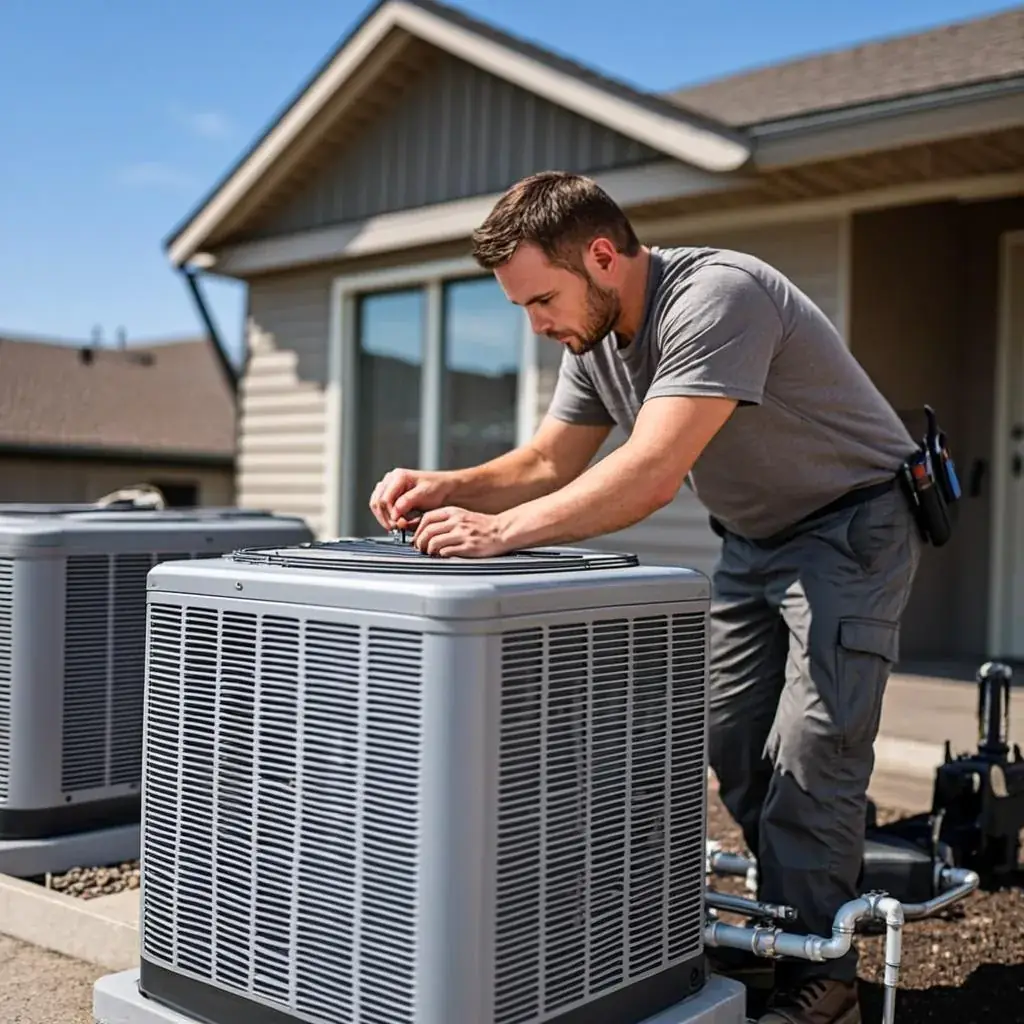
Capacitor Lifespan in a BC Summer
The honest range is wide because duty varies so much. In a shaded Surrey yard with a clean condenser and stable power, a quality run capacitor can serve 10 years and sometimes 15. In full sun against a south-facing fence, in a coastal yard with salt air, or on a unit that short-cycles all afternoon, the same part can fail in 3 to 5 summers. The industry rule of thumb treats 5 to 10 years as a normal service life, and past year 8 we treat every capacitor as living on borrowed time.
Metro Vancouver is gentler than continent-interior climates because our cooling season is short: most systems here run a few hundred hours a summer, not the thousands a Phoenix or Toronto unit endures. But our stress is concentrated. When a heat dome parks over the region, outdoor temperatures push past 30C for days, condensers run nearly around the clock, and the week of heaviest load is precisely when the weakest capacitors in the city die together. Our service board during the 2021 heat dome was almost entirely capacitor and contactor calls, and the pattern repeats in miniature every hot stretch. That concentration is also why we recommend a spring start-up check before the first heat wave, not after it, a habit our heat dome preparedness guide covers in detail.
The other lifespan factor is what the capacitor sits in. Condensers mounted in full western sun run their capacitors 10 to 15 degrees hotter than shaded units, and heat is the primary capacitor killer. Coastal corrosion matters too: salt-laden air attacks the terminals and seams, which is why we see more external capacitor corrosion in Richmond, Tsawwassen and ocean-facing North Shore yards than inland in Coquitlam or Langley. And capacitors even age in the off-season, degrading slowly at standby voltage, which is why the first hot weekend of June is our busiest capacitor week of the year.
What Replacement Actually Costs
Our pricing is flat-rate and posted before work begins, and capacitor replacement falls inside the standard AC repair band of $180 to $450. The diagnostic that finds it costs $89 and is credited in full against the repair when we do the work the same visit, so a straightforward capacitor call effectively prices as the repair itself. Here is where the honest range comes from.
| Situation | Where it lands | What is included |
|---|---|---|
| Single fan-run capacitor, otherwise healthy system | Lower half of the $180 to $450 band | Metered diagnosis, matched replacement, start test and amp verification |
| Dual-run capacitor (compressor plus fan) | Middle of the band | The most common capacitor job; includes terminal and wiring inspection |
| Capacitor plus worn contactor | Upper half of the band | Contactors and capacitors age together; replacing the pair prevents the repeat call |
| Capacitor plus start relay or hard-start kit on an older compressor | Top of the band | Legitimate on aging compressors; we say when it is and is not worth it |
| After-hours or weekend call | Band plus $150 flat premium | Posted in advance, not discovered on the invoice |
| Capacitor is fine, diagnosis finds another cause | $89 diagnostic only, credited to that repair | You never pay for a part your system did not need |
What is not on that table: a capacitor should never be sold as a reason to upsell a compressor "while we are in there". If the compressor tests healthy on amp draw, a capacitor is a repair, full stop. When the compressor does not test healthy, that is a different conversation with real numbers, which Chapter 10 covers honestly.
A capacitor job is where flat-rate pricing earns its keep: the same can, the same hour, the same written number whether your unit sits in Point Grey or Panorama Ridge. If a quote for a capacitor lands far above the repair band, or arrives without a metered microfarad reading behind it, the part is probably not the problem with your system.
Is Your AC Humming Instead of Starting?
Do not push-start the fan and hope. The $89 diagnostic meters the capacitor, contactor and motor draws in one visit, credited to the repair if it is the capacitor. Call 604-615-2212 or get a free quote.
The DIY Question, Answered Honestly
We are candid about which repairs belong to homeowners and which do not. Cleaning a condenser with a garden hose on low pressure: yours. A thermostat battery: yours. A capacitor is in the other category, and the reasons are physical, not commercial.
- Stored charge. A capacitor can hold a serious charge hours after the breaker is off, at 370 to 440 volts. Discharging it requires a proper bleed resistor and insulated tools, not a screwdriver across the terminals. Technicians treat every capacitor as loaded until proven otherwise.
- The label is the spec, not a suggestion. Replacements must match the microfarad rating within tight tolerance and meet or exceed the voltage rating. A can that is 20 percent off does not fail loudly; it quietly runs the compressor motor out of phase until the motor dies, converting a small repair into a system replacement.
- The diagnosis is the real skill. Swapping a capacitor that metered healthy wastes the part and leaves the true cause, a failing fan bearing, a tight compressor, a chattering contactor, in place to fail again in August.
- Warranty and supply realities. Licensed contractors install listed parts matched to the equipment, and the work carries our 2-year workmanship warranty. A failed DIY attempt on the same part voids that protection and sometimes the equipment warranty with it.
The safe homeowner move is the safe move everywhere in this guide: gather the evidence and make one good call. Note what the unit does on start-up, shut it off at the thermostat and the outdoor disconnect, and book the diagnostic. Our crews across Surrey and the rest of the region carry matched capacitors for every major brand on the truck, which is what makes same-visit repair the norm rather than the exception.
What the $89 Diagnostic Includes
The diagnostic is a metered inspection, not a guess. Here is the sequence our Red Seal technicians run on every suspected capacitor call, and it is the same sequence whether the unit is four years old or eighteen.
Listen to the story before the tools
When it fails, what it sounds like, whether the fan spins, whether the breaker tripped: half the diagnosis is the pattern you already observed, and the fastest honest fix starts with the best description.
Kill power safely, both places
The outdoor disconnect and the breaker both come off. Then, and only then, the panel opens. Every capacitor gets treated as charged until the meter proves otherwise.
Inspect the can, the terminals and the contactor
A domed or oily capacitor is a verdict without a meter. We also check terminal corrosion, wire rub-through at the cabinet edge, and the contactor points that capacitor failures love to travel with.
Meter the microfarads under the rating
The capacitor is tested against its printed rating. Below tolerance, it is failing, full stop. In tolerance but borderline with matching symptoms, we say so and give you the choice instead of a scare.
Test the motors the capacitor serves
Compressor and fan amp draws tell us whether the capacitor is the whole story or the first casualty of a bigger load. This one step is what separates a repair from a repeat call next month.
Report in plain words, flat price in writing
You hear what we found, what it costs, and what we would do if it were our house. The $89 is credited to any repair completed the same visit, and nothing is replaced without your yes.
What Kills Capacitors Early
When we replace a capacitor that should have lasted a decade and lasted three summers, one of these five causes is almost always behind it. Finding the cause matters more than the part, because a new capacitor in the same conditions dies on the same schedule.
| Killer | How it works | The fix that actually fixes it |
|---|---|---|
| Sustained heat | Capacitors are rated for temperature; every 10 degrees above rating roughly halves service life. Full-sun condensers against west-facing walls cook their capacitors | Shade the unit with airflow clearance, or plan on shorter capacitor life and test annually |
| Dirty condenser coils | Clogged coils raise head pressure and discharge temperatures, and the whole cabinet, capacitor included, runs hotter than design | Professional coil cleaning as part of seasonal maintenance |
| Short cycling | Starts are exactly when the capacitor works hardest. A unit that starts every few minutes, from an oversized system, a bad thermostat program or a low-charge cut-out, racks up start cycles fast | Diagnose the cycle cause; do not just keep replacing cans |
| Power quality | Brownouts, surges and neighbourhood voltage sags stress capacitors from the grid side; summer peak-load days are the worst | Surge protection at the disconnect or panel where the property warrants it |
| Corrosion | Coastal salt air attacks terminals and seams, causing gradual capacitance loss and leak paths | Annual inspection in coastal yards; terminal protection where practical |
One habit deserves a fair hearing, because homeowners get blamed for it unfairly: a wide thermostat swing on a heat-dome week does not murder a healthy capacitor, but it does maximize hard, hot restarts per day. Tighter setpoints with the fan circulating genuinely reduce start stress, because fewer, longer run cycles are kinder to every part in the cabinet than constant restarts.
Making the Next One Last
Capacitor longevity is mostly environment and maintenance, which means most of it is controllable. The list below is short, and it is the same advice we give our own families before a heat wave, in order of impact.
- Give the condenser shade and breathing room. A unit with two feet of clearance on all sides, out of the afternoon sun, runs measurably cooler. Fences, decks and dense shrubs that box in a condenser trap the hot discharge air it just threw off, and the cabinet recirculates its own heat.
- Keep the coil clean. A coil rinsed of cottonwood fluff, grass clippings and road grit keeps head pressure, temperature and capacitor stress where the design intended. Gentle hose pressure is a homeowner task; deeper cleaning belongs to a maintenance visit.
- Book the spring start-up before the first heat wave. Metered testing in May finds the winter-weakened capacitor in April prices, before the first 30C weekend makes it an emergency. Timing is the cheapest form of prevention this guide offers.
- Consider surge protection. Metro Vancouver sees its grid stress on exactly the peak-heat days capacitors are most fragile. A properly sized surge device at the equipment is inexpensive protection for every electronic part in the condenser.
- Fix short cycling at the cause. If the unit starts and stops constantly through the afternoon, the capacitor is being asked for its hardest work at 10 times the normal rate. The thermostat program, the system sizing or the refrigerant charge is the real repair.
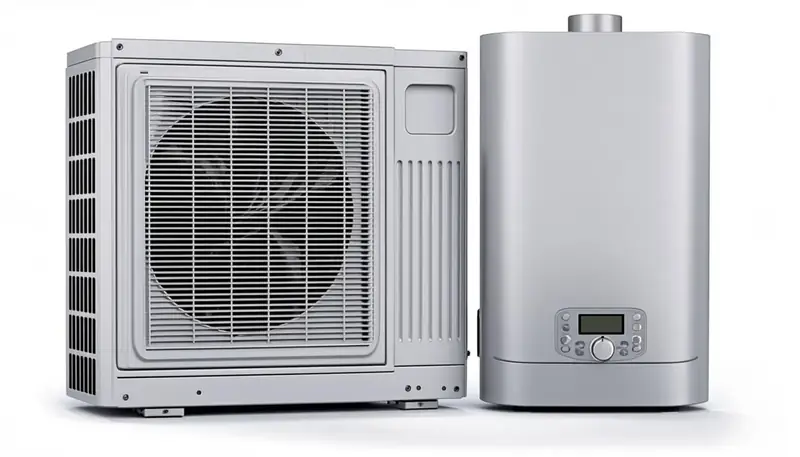
When a Bad Capacitor Is a Symptom
Three scenarios turn a capacitor call into a bigger conversation, and you deserve to hear them before you authorize either a repair or a replacement.
- The compressor is drawing high amps. When the capacitor meters fine or was just replaced and the compressor still labours, the motor itself is aging toward failure. On a unit past 12 to 15 years, repeated hard-start symptoms justify an honest replacement conversation instead of a third part.
- The wrong capacitor was installed previously. We regularly find cans 15 to 20 percent off the nameplate rating, usually from a quick swap by a previous contractor. The fix is cheap, the diagnosis is the value: it explains years of hot running and shortened motor life.
- The unit is a repeated capacitor offender. Three capacitors in four summers is not bad luck. The cause is one of the Chapter 8 killers, and sometimes the honest conclusion is that the aging system, not its can, is the part worth replacing.
When the honest answer is replacement, the numbers matter and we give them flat. A new central air system runs $3,800 to $6,500 installed, and ductless heat pump options start at $3,800 to $5,500 with CleanBC, BC Hydro and FortisBC rebate support that can reach $16,000 on qualifying cold-climate heat pumps in 2026. Our AC installation guide for Vancouver homes walks through sizing, brand and staging decisions, and a free estimate with a Red Seal estimator puts real numbers against your actual unit, its age and its repair history.
The general rule we use on the truck: a single capacitor on a system under 10 years old is a repair, no hesitation. A second capacitor inside two years on a system over 12 deserves a sit-down with the numbers for both paths, in writing, before the next heat wave chooses for you.
City Notes Across Metro Vancouver
The capacitor failure pattern shifts with yard exposure, housing vintage and how close to the ocean the condenser sits. Our city crews see these differences every July.
Vancouver
Shaded side yards and older 1990s condensers; June capacitor calls after idle winters, with strata units needing panel-access coordination.
Surrey
Big new-construction subdivisions with west-facing backyards: full-sun heat load and cottonwood season clog coils and cook capacitors.
Burnaby
Hillside homes and infill builds; retrofit condensers in tight side passages run hot and benefit most from spring testing.
Richmond
Coastal salt air accelerates terminal corrosion; annual capacitor inspection is the standing advice for island and flat-land yards.
Coquitlam
Tree-canopy lots drop needle and seed debris into coils; shade helps the cabinet but demands more coil cleaning.
Langley
Farm-fringe dust, grass clipping drift and long run times on larger rural lots; surge protection pays for itself here.
The Decision Cheat Sheet
One screen, the whole guide. If you remember nothing else, remember this.
| Situation | Do this |
|---|---|
| Unit hums, fan will not spin | Shut off at thermostat and disconnect; book same-day diagnostic. Do not push-start repeatedly |
| Breaker trips on start-up | Stop resetting it. Treat as urgent: failed capacitor or failing compressor, both need a meter |
| Capacitor can looks swollen or oily | Replacement is certain; have the cause checked while the panel is open |
| Suspected capacitor, unit under 10 years old | Repair, $180 to $450 band, $89 diagnostic credited. No dilemma |
| Second or third capacitor on a unit 12-plus years | Get both numbers: repair now versus replacement from $3,800 before the next heat wave |
| System fine today, over 8 years old, never tested | Spring start-up check with metered capacitor test, before June |
| Want it to never happen during a heat dome | Shade, clearance, clean coil, surge protection, and a maintenance relationship with the unit |
The capacitor is the cheapest big problem in your air conditioner: cheap to test, cheap to replace, expensive to ignore. The entire risk in this guide lives in the waiting, and the entire fix lives in one metered visit.
Frequently Asked Questions
Services From This Guide
Metered capacitor diagnosis, same-visit repairs and replacement estimates across 17 Metro Vancouver cities, flat-rate and Red Seal certified.
AC repair and maintenance
Capacitor, contactor and motor repairs in the $180 to $450 band, with the $89 diagnostic credited to same-visit work.
Heat pump installs and rebates
Cold-climate heat pumps with CleanBC, BC Hydro and FortisBC top-ups that can reach $16,000 in 2026. We handle the paperwork.
AC repair in Langley
Rural-lot crews stocked with matched capacitors for every major brand, plus surge protection advice for long-run properties.
24/7 emergency cooling
Heat-dome no-cooling calls answered around the clock, $150 flat after-hours premium posted in advance.
Related Guides
AC Installation in Vancouver
Sizing, staging and brand decisions for the day a capacitor repair becomes a replacement conversation.
CoolingDuctless vs Central AC in Surrey
The honest comparison when the old condenser exits: head-per-room flexibility versus ducted whole-home cooling.
SeasonalHeat Dome Preparedness
The pre-heat-wave checklist that finds winter-weakened parts in May instead of mid-July.
Red Seal certified, licensed gas fitters (BC-PL-2019-4421), $2M insured and 15-plus years in the field, with more than 12,000 jobs completed across Metro Vancouver since 2010 and a 4.9-star rating over 39 reviews. We wrote this guide because capacitor calls are the most over-diagnosed and under-explained cooling call we answer: the honest fix depends on whether the can is the cause or the casualty, and a meter, not a sales pitch, decides which.
More about our team →Get Your Honest AC Capacitor Answer
Book the $89 diagnostic or a free replacement estimate with a Red Seal tech. You get the honest read on whether your system needs a capacitor, a compressor or a conversation about replacement, a flat written price for either path, and financing from 7.99 percent if replacement wins. Zero obligation, same-day quotes on most calls.
AC dead in the heat right now?
No-cooling calls are answered 24/7 with live dispatch and the $150 flat after-hours premium posted in advance. Daytime? The $89 diagnostic is usually same-day in Vancouver, Burnaby and Surrey.
Call 604-615-2212 WhatsApp Us