
The Honest Answer Up Front
Here is the answer we give neighbours over the fence. Most BC homes are still billed on BC Hydro's two-tier conservation rate, and time-of-use pricing, where the same kWh costs more in the evening peak and less overnight, has been arriving gradually through optional structures and regulatory decisions rather than one switch-flip. The exact windows and rates change, so the only binding source is your own bill. What does not change is the winning behaviour: move the big electric loads out of the late-afternoon-to-evening peak, and heat with the cheapest equipment you can.
How much is on the table? Shifting load earns you a few cents per kWh, typically, which sounds small until you multiply it across the thousands of kilowatt-hours a winter of heating or a summer of cooling consumes. The bigger levers are equipment and envelope: a cold-climate heat pump running at a seasonal COP around 2.5 to 3 delivers two and a half to three units of heat per unit of electricity, and combined rebate support for heat pumps can reach $16,000 across CleanBC, BC Hydro, FortisBC and municipal programs, with limited-time bonuses of up to $1,000 in some seasons.
So the honest priority order for almost every Metro Vancouver home: first fix the rate you are actually on, then program the thermostat around the peak window, then, when equipment replacement time comes, choose for efficiency and take the rebate stack. This guide walks each step with real numbers, BC realities included, and none of the magic-thinking savings claims that circulate every winter.
0 rebate stack
CleanBC, BC Hydro, FortisBC and municipal support combined on qualifying heat-pump installs.
0 heat per kWh
A cold-climate heat pump at seasonal COP around 3 turns one kWh into about three kWh of heat.
0 tier threshold
The two-month conservation-rate threshold neighbourhood; heavy winter heating is what blows past it.
0 jobs since 2010
Metro Vancouver heating and cooling work, flat-rate quoted, rebate paperwork handled.
How BC Hydro Bills Your Home Today
Start with the structure most people already have. The residential conservation rate is two tiers: electricity up to a threshold, in the neighbourhood of 1,350 kWh per two-month billing period, is charged at the Step 1 rate, and everything above it at a higher Step 2 rate, roughly a third to a half more per kWh. The threshold and rates get adjusted periodically through regulatory processes, which is why we describe the shape and not the cents; your bill prints the current numbers, and it is the only source that never goes stale.
What the two-tier structure means in practice: a household that heats with electric baseboards, or adds an EV charger, or runs a hot tub, routinely crosses into Step 2 for part of the winter, and that marginal electricity is the expensive electricity. This is why load discipline and efficient equipment pay in BC even before time-of-use enters the picture. A heat pump that delivers three units of heat per kWh effectively cuts the cost of each unit of heat to about a third of resistance heating, Step 2 rates included.
Metering is the quiet enabler. Smart meters record consumption in intervals, which is what makes any time-of-use billing possible at all. If you have ever looked at your hourly usage in the BC Hydro online account, you have seen the data that time-of-use rates are built on. That same hourly view is the best free diagnostic for your home: you can literally watch the dinner-time spike, the baseboard heaters cycling overnight in January, and the AC compressor hammering through a July afternoon.
What Time-of-Use Actually Changes
Time-of-use pricing charges different rates by the clock instead of by monthly volume. The pattern used in most North American designs, and in the structures BC Hydro has been moving toward, is a peak window in the late afternoon and evening, roughly 4 to 9 pm, with cheaper off-peak hours overnight and through the middle of the day. Winter weekdays are the sharpest: that is when cooking, lighting, entertainment and space heating stack up province-wide while industry is still running.
Why a public utility cares when you use power: the provincial grid's worst moments are cold, dark winter evenings, and meeting peak demand is what drives spending on generation and transmission capacity. Shifting consumption even modestly out of the peak flattens that mountain and delays expensive infrastructure. Time-of-use rates are the price signal that makes your self-interest line up with the grid's.
Now the honest caveats. The exact windows, the rate levels, and which customers are on which structure are set through regulatory decisions and they change; this guide was written in late 2026 and you should confirm your own schedule in your BC Hydro account before programming anything. Some structures are opt-in, some apply regionally, and enrolment rules have shifted more than once. The behaviours we teach in the next two chapters work on both the two-tier rate and time-of-use, which is the point: they are the robust moves, not the ones that depend on a specific tariff that might be revised next year.
The Heating Play: Pre-Heat, Coast, Recover Early
The heating strategy on time-of-use rates is three moves. First, pre-heat: warm the house by a degree or two in the late morning or early afternoon, while electricity is cheap or mid-priced, so the building itself becomes a thermal battery. Second, coast: hold or gently reduce the setpoint through the evening peak, letting the house drift down a degree instead of fighting to hold a precise number. Third, recover early: bring the temperature back up before the peak starts, not during it, because recovery is when heating equipment runs hardest.
The setback arithmetic, honestly stated: sustained lower temperatures save roughly 2 to 3 percent per degree of setback over a season, because heat loss scales with the indoor-outdoor temperature difference. A Metro Vancouver winter is mild enough that a leaky house loses heat slowly, which is what makes coasting workable. What kills the savings is aggressive recovery with the wrong equipment: an electric furnace or baseboards recovering three degrees at 8pm, or worse, a heat pump calling its electric backup strips because someone cranked the dial from 17 to 23 at once.
For heat-pump homes, the schedule is deliberately boring: 20 to 21 degrees when home and awake, a degree lower overnight, recovery ramps starting an hour or two before the peak window, and never a manual jump of more than about a degree, because a big step is exactly what commands backup heat at COP 1. If your thermostat has a heat-pump mode or adaptive recovery, turn it on; if you are not sure your thermostat is configured for a heat pump, that is a five-minute conversation with us, and it is worth having, because a misconfigured thermostat is the most common way heat-pump owners accidentally buy expensive heat. Our heating services page covers the equipment side.
The Cooling Play: Pre-Cool and Drift
Cooling used to be an afterthought in Metro Vancouver, and then the 2021 heat dome rewrote everyone's assumptions. BC's new housing code acknowledges the new reality: since 2024 changes now referenced in the 2026 BC Building Code, new homes require cooling capability, and Step Code 3 and higher effectively pushes new multiplex construction toward heat pumps. Our BC Step Code guide covers the new-build side, and our heat-dome preparation piece covers the human side; both matter more than a few cents per kWh on extreme days.
On a normal hot day, the play mirrors heating: pre-cool the house a degree or two below your usual setpoint in the late morning when electricity is cheap, then let it drift up through the afternoon and evening peak with blinds closed on the sun side. The compressor runs its hours in the cheap window and mostly idles through the expensive one. The savings are modest, real, and largest in homes with decent insulation, which is the recurring theme of every energy conversation in this province.
Equipment reality check, because a strategy is only as good as the machine running it: central AC installs run $3,800 to $6,500, ductless mini-splits $3,800 to $5,500, and a heat pump does both jobs for a similar investment while unlocking the rebate stack. If your AC is limping through July afternoons, that is the sign to plan, not to hope; repair calls on cooling run $180 to $450, and the pre-season maintenance that prevents most of them is cheap by comparison. The full service lineup is on our cooling services page.
The Big Lever: Heat Pumps and COP Math
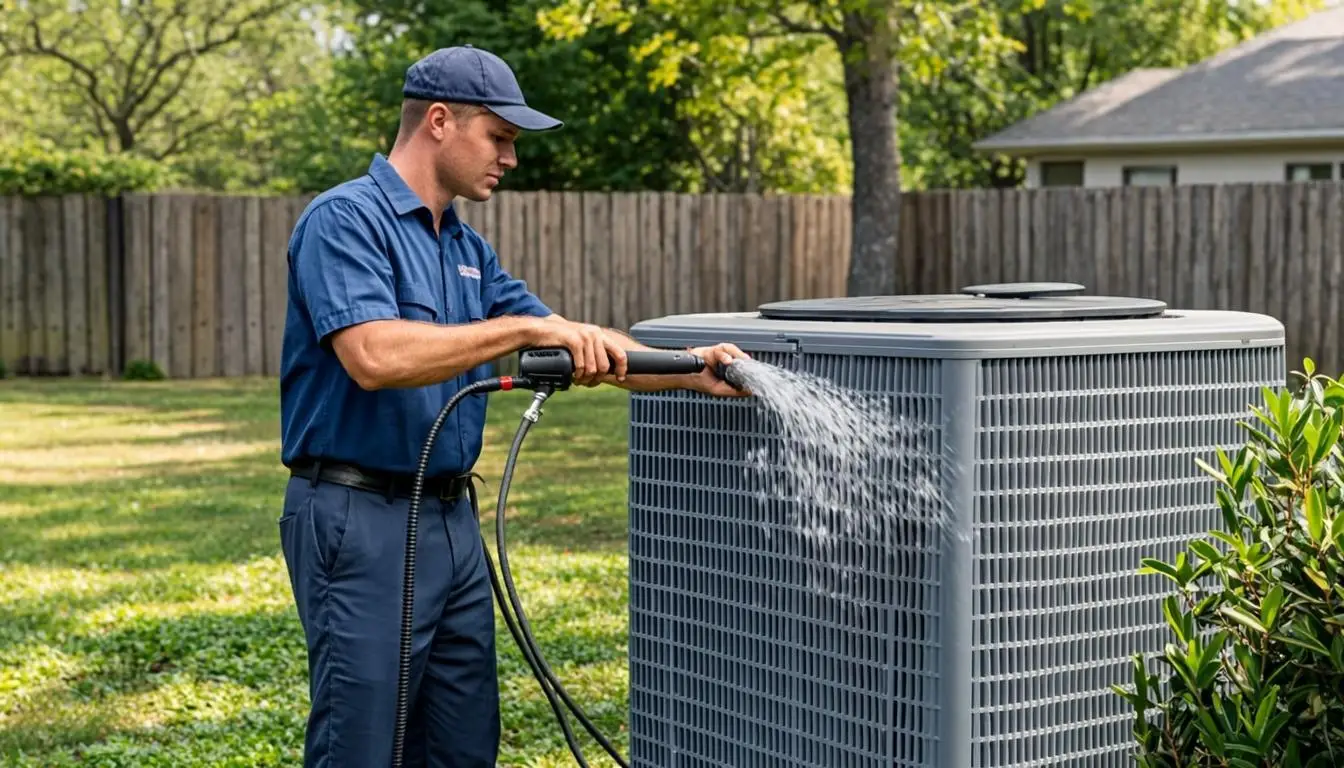
Load shifting saves cents; equipment choice saves hundreds. The number that matters is COP, coefficient of performance: units of heat moved per unit of electricity consumed. Electric baseboards and backup strips run at COP 1, one kWh in, one kWh of heat out. A cold-climate heat pump in Metro Vancouver's mild winter runs a seasonal COP around 2.5 to 3, and higher in spring and fall, which is most of our heating season. Same kilowatt-hour, two to three times the heat.
The honest comparison against gas, because this is where internet arguments live. A 96 percent AFUE furnace converts gas to heat at 96 percent efficiency. Whether the heat pump or the furnace is cheaper to run depends on the price of gas versus the price of electricity and on the heat pump's seasonal COP, all three of which move. At recent BC price relationships, a cold-climate heat pump at COP around 2.5 to 3 lands in the same neighbourhood as a high-efficiency furnace, sometimes ahead, sometimes behind, and the delta is rarely decisive on its own. What is decisive is the capital math: up to $16,000 in combined support for heat-pump conversions versus essentially nothing for a like-for-like furnace swap.
| Heating source | Effective efficiency | What that means at the meter |
|---|---|---|
| Electric baseboards or backup strips | COP 1 | Every kWh of heat costs a full kWh; the expensive way, especially in Step 2 or peak hours |
| 80 percent AFUE gas furnace | 80 percent | 20 cents of every gas dollar goes up the flue; no carbon-related concern after 2025 fuel charge removal, just fuel math |
| 96 percent AFUE gas furnace | 96 percent | Strong gas option; operating cost tracks gas prices and delivery charges |
| Cold-climate heat pump | COP 2.5-3 seasonal | Two and a half to three kWh of heat per kWh consumed; eligible for the big rebate stack |
| Hybrid: heat pump plus furnace | Best of both | Heat pump carries mild weather, furnace takes cold snaps; controls decide the switchover |
For a deeper treatment of the equipment itself, our Vancouver heat pump guide and heat pumps service page cover sizing, cold-climate performance and the brands we install and service, which include Carrier, Lennox, Trane, Goodman, Rheem and Daikin.
What the Equipment Costs Installed
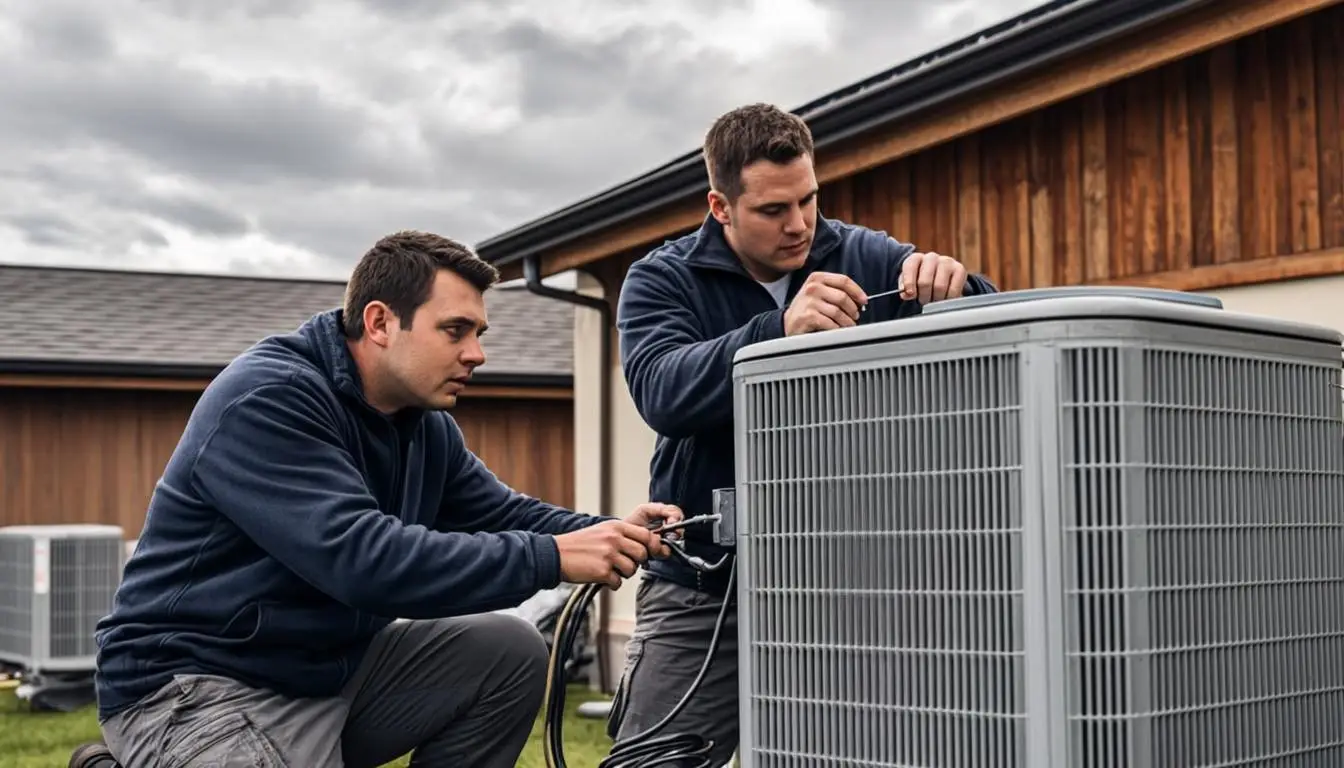
Strategy is free; equipment is not. These are our flat-rate installed ranges across Metro Vancouver, approved in writing before any work starts, with the $89 to $129 diagnostic credited to any approved repair or replacement.
| Job | Typical range (CAD) | What moves the number |
|---|---|---|
| Ductless single-zone heat pump | $3,800-$5,500 | Mounting, line-set run, electrical capacity at the panel |
| Cold-climate ducted heat pump | $6,500-$14,000 | Ductwork condition, zones, backup arrangement, capacity |
| Central AC install | $3,800-$6,500 | Coil match with furnace, line sets, panel capacity |
| 80 percent furnace install | from $3,800 | Access and venting; the budget-legal option, no big rebates |
| High-efficiency two-stage furnace | $5,500-$9,000 | Venting rework, condensate, duct condition |
| AC repair | $180-$450 | Capacitors, contactors, fan motors, refrigerant leaks |
| Annual tune-up | $129 | Fixed price, combustion or refrigerant checks included |
A note on the ductless-versus-central question, which we answer hourly in Surrey and beyond: ductless mini-splits win on zoning and install cost for homes without ducts, central systems win on whole-home air distribution where ducts already exist, and the full trade-offs are laid out in our ductless versus central AC comparison. Financing from 7.99 percent with approved credit is available across all of it, details on our financing page.
The Rebate Stack: Where the Real Money Is
If the thermostat game saves you tens of dollars a season, the rebate game saves you thousands at once. Combined heat-pump support can reach $16,000 across CleanBC, BC Hydro, FortisBC and municipal programs, with limited-time bonuses of up to $1,000 appearing in some seasons. The exact stack depends on your fuel, your address, the equipment and the program cycle; amounts change seasonally and we verify the live figures at booking, before you sign anything.
What the programs want in common: eligible equipment from current lists, licensed installation, permits, invoices with model and serial numbers, and in some streams registration or pre-approval before the work starts. That is the same paperwork discipline we describe in our CleanBC rebates guide, and it is why rebate files fail more often on paperwork than eligibility. We handle the whole package on qualifying installs, CleanBC, BC Hydro, FortisBC and municipal, because a stack that is real money but never gets claimed is worth exactly zero.
Bottom line
Time-of-use habits save cents per kilowatt-hour; a heat pump conversion with the full stack saves up to $16,000 up front and cuts the electricity behind every remaining kilowatt-hour by two thirds. Do the behaviour changes, then take the big lever when the equipment decision arrives.
Thermostats and Controls Done Right
The thermostat is where rate strategy becomes reality, and most homes have one that is either unprogrammed or programmed wrong. The schedule that fits a Metro Vancouver home on time-of-use rates looks like this: 20 to 21 degrees from wake-up through early afternoon; a gentle step down of a degree or two through the evening peak; overnight at 18 to 19; and recovery ramps that start before the peak window, not after it. Cooling mirrors it: pre-cool late morning, drift through the afternoon.
Three controls details that outperform everything else. First, heat-pump mode matters: thermostats configured for a heat pump stage the recovery slowly instead of commanding backup strips, and that single setting is the difference between the schedule saving money and costing it. Second, adaptive or smart recovery learns how long your house takes to warm and starts early; let it. Third, hold modes are for vacations, not Tuesdays; a permanent hold defeats the entire schedule you built.
On smart thermostats generally: the hardware is inexpensive, the value is in the programming, and a thermostat nobody programs is a decoration. If you want the broader picture of controls, envelope and equipment working together, our energy-efficient upgrades guide for BC ranks the projects by payback, honestly, including the boring ones like air sealing that beat the glamorous ones like gadgets.
Six Time-of-Use Mistakes That Cost Money
1. Assuming you are on time-of-use when you are not. Plenty of households optimize peak hours on a conservation-rate bill, or vice versa. Read the rate name on the bill, then program. The habits overlap, but the arithmetic is different.
2. Deep setbacks with a heat pump. The furnace-era advice of dropping to 16 degrees all day backfires with heat pumps: the recovery calls backup strips at COP 1 and burns the savings. Shallow setbacks, early ramps, no cranking.
3. Pre-heating, then cooking a roast through the peak. The oven and the electric cooktop are big loads in exactly the window you are trying to avoid. Shifting the big cooking earlier, or using smaller appliances, is the same play as shifting the heating; one evening is not decisive, but the pattern is.
4. Chasing the schedule into discomfort. A strategy that makes the family miserable gets overridden in week two, and then you are on permanent hold at 23 degrees. Pick the schedule the household can sustain.
5. Ignoring the envelope. Time-of-use strategy in a leaky house is bailing with a teacup. Air sealing, attic insulation and window upgrades, double-pane installed at $650 to $950 a unit and triple-pane at $800 to $1,400, cut the load every rate structure charges you for.
6. Skipping maintenance on the equipment doing the shifting. A heat pump with a dirty filter or a fouled coil loses COP, and lost COP silently doubles the cost of every hour you shifted. The tune-up is $129 and it protects the whole strategy. Our AC maintenance checklist covers the cooling side, and the winter prep guide covers the heating side.
What We Would Do, By Situation
Electric baseboard home: the ductless heat pump is the move. One or two single-zone units at $3,800 to $5,500 installed cover the main living spaces, cut the heat cost to about a third, and qualify for the rebate stack. This is the highest-confidence upgrade in this entire guide.
Aging gas furnace, ducts in good shape: go hybrid. A cold-climate heat pump paired with a new high-efficiency furnace, $5,500 to $9,000 for the furnace side, gives you cheap mild-weather heating, gas backup for the cold snaps, and access to the hybrid rebate paths. The controls decide the switchover point, and we set it based on your actual rates.
Working AC over 12 years old: plan the heat-pump conversion before the next compressor failure, not after. Emergency replacements happen in heat waves, at premium timing, with no load calculation and no rebate file. Planned conversions happen with correct sizing and the full stack.
New build or major reno: the code has already made the decision for you; cooling capability is required and Step Code 3 pushes multiplexes to heat pumps. Design with the equipment in mind from day one, and read our Step Code guide before the drawings are finalized.
Every home, this week: pull up the BC Hydro account, look at the hourly usage graph, find your evening mountain, and set the thermostat schedule against it. It costs nothing, it works on whatever rate you are on, and it is the honest first move. When you are ready for the equipment conversation, our Vancouver heat pump team quotes flat-rate with the rebate math shown in writing.
Frequently Asked Questions
Services That Solve This Faster
Heat Pumps
Cold-climate ducted and ductless installs with the rebate stack and paperwork handled.
Cooling and AC Services
AC installs, repairs and pre-season maintenance that protect your summer peak strategy.
Furnace and Heating Services
Repairs, tune-ups at $129 and hybrid system design with flat-rate quotes.
Financing and Rebates
Financing from 7.99 percent with approved credit and full rebate paperwork on qualifying installs.
Heat Pumps in Vancouver
Local heat-pump conversions with load-based sizing and the full rebate math in writing.
Related Guides From Our Team
Heat Pumps in Vancouver: The Complete Guide — sizing, cold-climate performance and the conversion decision.
CleanBC Rebates 2026 — the provincial program side of the $16,000 stack, paperwork included.
Energy-Efficient Upgrades for BC Homes — every project ranked by honest payback.
Heat Dome Preparedness — the extreme-day plan that outranks rate strategy.
Winter Prep for Vancouver Homes — the October checklist that protects the whole heating season.
Red Seal certified, licensed gas fitters (BC-PL-2019-4421), $2M insured, 15-plus years on the tools, 12,000-plus jobs across Metro Vancouver since 2010, 4.9 stars from verified reviews. We wrote this guide because Metro Vancouver homeowners deserve the numbers, the code references and the honest trade-offs before anyone touches a wrench or a wallet.
More about our team →Talk to a Real Technician About This Today
Book a visit with a Red Seal technician: a real diagnostic, a written flat-rate quote before any work starts, honest repair-versus-replace math, CleanBC rebate paperwork handled and financing from 7.99 percent with approved credit. Emergencies answered 24/7 at 604-615-2212.
AC humming instead of cooling?
Diagnostics across Metro Vancouver, usually same-day in cooling season, credited to any repair, with the verdict delivered with gauges attached. Heat-wave emergency? The 24/7 line is answered around the clock, priority for maintenance-plan customers, flat $150 after-hours premium.
Call 604-615-2212 WhatsApp Us