The Honest Answer Up Front
Here is the decision in three sentences. If your drain is blocked and you need it working today, you need a snake — it is the faster, cheaper restore-flow tool and the correct first response to almost every clog we are called to. If your drain blocks on a schedule — the same main line, the same kitchen sink, every year or two — you need jetting, because the pipe has a memory made of grease, scale or roots and the cable is not erasing it. And if anyone proposes jetting your line without putting a camera down it first, decline politely and call someone else, because 4,000 psi aimed at an unrepaired crack, a belly full of standing water, or a fragile clay joint is not cleaning, it is gambling with a shovel as the stake.
The economics surprise people in both directions. Snaking at $280 to $650 for a main line looks cheaper until you have bought it four Novembers in a row — the annualized cost of a recurring root cut exceeds a single $500 to $900 jet with a maintenance rhythm attached. Jetting looks expensive until you compare it with the spot repair or full replacement that recurring neglect eventually quotes at. The honest framing is not snake versus jet as rivals; it is restore versus restore-and-clean, chosen on evidence — and the evidence is a camera, a maintenance history, and what the last technician wrote on the invoice you kept.
What this guide is not: a pitch for the more expensive service. Plenty of Metro Vancouver homes need a snake once in five years and nothing more, and we tell them so happily. But the homes that need jetting — and you will recognize yours halfway through chapter four — are usually the ones that have been buying the wrong service on repeat, and that is the pattern worth breaking once, with information.
0 jetting pressure class
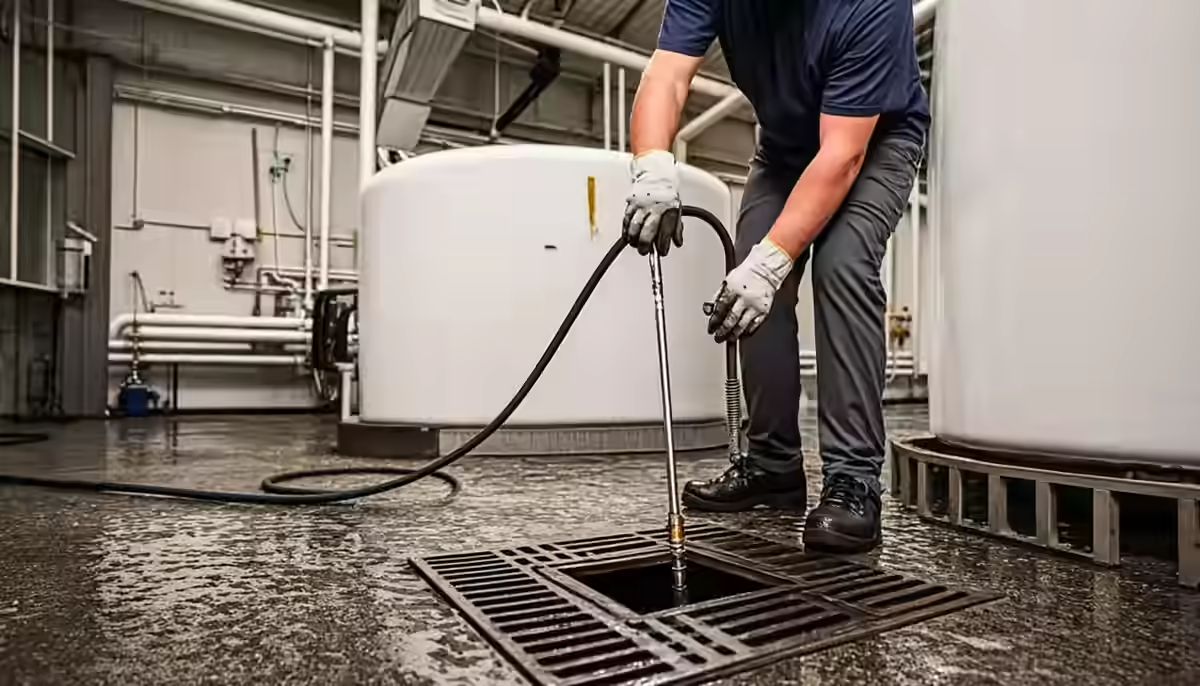
Residential hydro jets scrub at pressures no cable can imitate — with nozzle types tuned to grease, roots or scale, not brute force alone.
0 main-line snaking band
The restore-flow service: cable to the street, cut through the blockage, working drains tonight. The right first call for most clogs.
0 hydro jetting band
The clean-the-pipe service: walls stripped of grease and root mass, video-verified. Cheaper per year than snaking the same line annually.
0 camera scope first
The non-negotiable preflight for jetting: know the pipe material, the belly, and the crack before you put 4,000 psi near it.
What a Drain Snake Actually Does
A drain snake — the professional version is a sectional or continuous cable machine with interchangeable heads — is a mechanical cutting tool. The technician feeds the cable down the cleanout or fixture line until it meets the blockage, then rotates a cutting head: a corkscrew to pull soft masses back, a blade to saw through root mats, an auger to punch through grease plugs. Flow restores through the channel the head carves. It is fast, it is mechanical, it is diagnosable by feel — a good drain tech reads the cable the way a mechanic reads a scanner, feeling the difference between grease, scale, roots and a collapsed section.
What the snake cannot do is clean. The channel it carves through a root ball is exactly that — a channel, typically restoring something like half the pipe's original bore, with the root mass still anchored in the walls and the grease film still coating everything upstream and downstream of the hole. Within a season, roots grow back into the opening the way a hedge fills a gap; grease re-accumulates on the walls the way it left them. This is not a failure of the tool — the tool was never a cleaning device — it is the reason the recurring-clog conversation exists. If your invoice history says "snaked main line" more than twice in three years, the pipe is telling you it wants more than a hole.
Where the snake wins outright: emergency blockages at any hour, fragile or deteriorated pipes where jetting pressure is unwise before repair, fixture-level clogs close to the trap, and first-time blockages in PVC lines with no history — which describes most post-1985 suburban construction across Surrey, Langley and Coquitlam. It also wins on diagnosis: a cable that hits a specific depth and stops, or that returns with clay on the head, has just told you more than any guess could. The 24/7 emergency crews run snakes for a living, and the honest ones tell you when the cable is the whole answer versus the first half of one.
What Hydro Jetting Actually Does
A hydro jet is a high-pressure water pump feeding a specialised nozzle on a flexible hose. The nozzle points some jets forward to break up the blockage and many jets backward — and those rearward jets do two jobs: they scrub the pipe wall as they pull the nozzle forward on its own thrust, and they drive the dislodged debris back toward the access point where it can be flushed and captured. The result is not a channel through the problem; it is a pipe whose interior is stripped back to bare material — grease emulsified and washed away, scale flaked off and carried out, root mass shredded and cleared from the walls.
The pressures deserve honest context, because "4,000 psi" scares people who have held a pressure washer. Nozzle selection is the craft: grease calls for a different jet count and angle than roots, and fragile or older pipe calls for lower pressure, wider fan patterns and slower passes. A competent operator starts conservative and works up, watches the water returning at the cleanout, and re-runs the camera afterward to verify the walls are actually clean — that post-jet camera pass is the difference between jetting as a service and jetting as a performance. When we jet, the video before-and-after is part of the work product; you should be suspicious of any jetting quote that does not include seeing the result.
What jetting buys, in the language of return visits: on a grease line, it resets the accumulation clock to zero and a maintenance rhythm holds it there. On a root line, it removes the mass the cable could only pierce — and while it cannot stop the roots at the joint from returning, a clean pipe lets the next treatment, mechanical or chemical, work at the wall where roots actually enter. On scale, it removes what no snake touches at all. And before a trenchless liner install, jetting to bare wall is mandatory prep — the trenchless guide covers why a liner bonded to grease is a warranty void wearing a smile.
What Actually Blocks Metro Vancouver Pipes
The regional blockage catalogue is short and consistent. Roots are the heavyweight: our climate grows big, thirsty trees twelve months a year, and every clay-tile hub joint from the 1920s through the 1950s — the New Westminster heritage streets, old Burnaby, East Vancouver, the North Shore older blocks — is a potential entry point. Roots find the hairline gap at a hub, thread in, and then thrive in the nutrient stream. A root-invaded line blocks on a rhythm of months to years, and every cable pass buys less time than the last, because the mass regrows from the walls inward.
Grease is the other constant, and it is not just restaurants. Household kitchens send fats, oils and food waste down the drain; the grease coats the pipe walls, cools, thickens, and catches every particle that passes until the bore narrows to a fraction of design. The grease line announces itself with slow kitchen drains, gurgling, and the smell we diagnose in the sewer smell guide. Scale — the mineral crust inside older cast iron and galvanized drains — narrows and roughens pipes across century homes. And the modern menaces: "flushable" wipes, which are flushable in the same sense that a cheque is edible, and congealed masses of wipes plus grease that we pull out of main lines with the solemnity of landing a fish.
The material map matters to the choice. Clay tile roots: snake to restore, jet to clear the walls, camera to plan the joint repairs or lining. Grease in any pipe: jetting is the only real reset; snaking a grease line is poking a hole in butter. Scale in cast iron: jetting with the right nozzle, camera after. Wipes and soft masses: either tool clears them; the follow-up conversation is what went down the drain, and whether a strainer and a grease jar belong in the kitchen. PVC lines (post-1985): jetting is safe and gentle at tuned pressures, and most blockages there are behavioural rather than structural.
- Roots: recurring main-line blockages, clay or soil on the cable head, worst in late summer and fall when trees drink hardest.
- Grease: slow kitchen drains first, gurgling, smell that survives trap refills; history of oil going down the sink.
- Scale: century-home cast iron, slow drains everywhere, recurring fixture clogs with no grease history.
- Wipes: sudden hard blockage, often in the main shortly after a bathroom-heavy weekend; the cable pulls back the evidence.
- Bellies and breaks: every blockage at the same depth, standing water in the line on camera — a repair problem, not a cleaning problem.
Why Jetting Without a Camera First Is Malpractice
The rule deserves its own chapter because it is the single best consumer protection in this entire market: nobody should jet a drain they have not looked at. The reasons are mechanical. A hydro jet propels a nozzle upstream under thousands of psi of thrust; if the line has a broken section, an offset joint, or a belly holding standing water, the jet can extend the damage, wedge debris deeper, or blow contaminated water out of the failure point and into the surrounding soil. On old clay tile — a large share of the pre-1955 housing stock in New Westminster, Burnaby and Vancouver — a cracked hub joint that would have been a minor spot repair can become a collapsed section under an aggressive jetting pass.
The camera-first sequence also determines whether jetting will even help. A belly — a sagged section of pipe holding standing water — will re-block regardless of how clean its walls are, because the mechanism is geometry, not accumulation. A line with a major root intrusion through a cracked joint will re-block too, and faster, because the entry point remains. Jetting a belly is paying $500 to $900 to polish a pothole. The camera turns the jetting decision from a guess into a strategy: clean and maintain where the pipe is sound, repair where it is not, and know the difference with the pipe-era and condition evidence the camera inspection guide walks through in detail.
The practical consumer version: when a company quotes jetting over the phone without scoping, or offers "free jetting with inspection" and arrives with the jet already running, the sequence is inverted — the expensive service is leading the diagnosis. Our sequence is fixed: camera at $250 to $400, findings narrated onto video you keep, and then an honest recommendation among snaking, jetting, maintenance, repair or some combination — with the footage to justify each. The scope fee is credited toward jetting work when jetting is the answer, because evidence-gathering should never be punished.
The Head-to-Head, Blockage by Blockage
Roots, first, because they dominate our region's recurring-clog history. A snake with a root saw restores flow today and buys months; jetting with a root nozzle strips the wall-held mass and buys years — but neither seals the joint the roots entered through, so the durable fix for a root line is eventually a spot repair or a liner, and the cleaning services are how you buy time until you are ready for that conversation. The honest cadence for a root line that is staying in service: camera, jet, then mechanical or chemical maintenance on an annual rhythm, with the calendar set by how fast the roots returned last time.
Grease, second, because it is the clearest win for jetting. Snaking a grease line restores flow for weeks; jetting it resets the accumulation to zero. For a household grease line, one jet plus habit change — the jar for cooled oil, the strainer in the sink — is often a permanent fix. For a restaurant, jetting on a scheduled program is not optional maintenance, it is the difference between a kitchen that runs and a Friday-night closure with a flooded floor. Scale in cast iron responds to jetting with the right nozzle and to nothing else on this list; snaking scale is a placebo with a cable. Soft masses — wipes, paper, food — clear with either tool, and the choice is access and price.
The rest of the decision matrix is situational: blockage at 2 a.m. with sewage surfacing is a snake-and-assess emergency, full stop. Pre-purchase diligence on an older home is camera, then jet only if the walls need it. Pre-lining prep is jet, always, because liner adhesion demands bare pipe. And the "both" answer is common and honest: snake to open a badly blocked line so the camera can actually see it, then scope, then jet as the considered follow-up. That sequence — open, look, clean — is how the Vancouver drain crews run main lines that arrive badly blocked, and it is worth asking any contractor to articulate their version of it.
| Blockage | Snake result | Jet result | Honest verdict |
|---|---|---|---|
| Roots at clay joints | Hole through mass; months bought | Walls stripped; years bought | Both temporary; repair or liner is the cure |
| Kitchen grease | Hole; weeks bought | Full reset to bare wall | Jet plus habit change wins |
| Scale in cast iron | Scratches the surface | Flakes and clears the crust | Jet is the only real option |
| Wipes and soft mass | Pulls or punches through | Emulsifies and flushes | Either; then stop flushing wipes |
| Bellies and sags | Clears the sitting debris | Clears it, re-blocks on schedule | Neither — repair the geometry |
| Broken or offset pipe | Feel and clay reveal it | Unsafe before repair | Camera, then repair, then clean |
| Pre-liner prep | Not sufficient | Mandatory bare-wall clean | Jet, always, before lining |
| 2 a.m. sewage backup | Fastest restore | Slower setup | Snake now; plan the rest at daylight |
Snake versus jet, blockage by blockage — what each restores and what it does not.
The Honest Costs in Metro Vancouver
Published plainly, the way we publish them on the pricing page: main-line drain snaking runs $280 to $650 in our market — the spread is access (cleanout versus pulling a toilet), severity, and how far the cable travels toward the street. Hydro jetting runs $500 to $900 for a typical residential main line — the spread is line length, nozzle passes needed, debris volume and capture. The camera inspection that should precede jetting runs $250 to $400 and is credited toward jetting work when jetting follows. The $89 diagnostic that starts a drain visit is credited against any completed clearing work. After-hours calls carry one flat $150 premium, disclosed before dispatch, never a multiplier.
The discount-shop version of this market deserves one honest paragraph, because drain services are where the "quoted $99, billed $1,400" horror stories live. Jetting equipment is expensive to own and operate, which is why some operators sell it aggressively to every caller regardless of need — the camera-first rule in the previous chapter is your defence. The mirror-image trap is the company that only owns a cable machine and sells you annual snaking for a line that a single jet would have settled for years. Owning both machines, and booking each for its own reasons, is not a luxury; it is what makes a recommendation honest. Ask any contractor which machines their quote assumes and why — the answer should name a blockage type, not a payment plan.
The maintenance-economics math, run honestly: a recurring root line snaked every November at, say, $450 a visit costs $1,800 over four years and is slowly losing ground — each pass buys less. A camera at $325 plus a jet at $700, followed by an annual maintenance visit at the $189 deep-service tier, costs more in year one and then holds the line flat — and if the findings eventually justify a liner or spot repair, the accumulated video makes that quote precise instead of exploratory. We run this math with customers on paper, at the kitchen table, because "cheaper" and "cheaper this month" are different questions.
Clay Tile Country: New Westminster, Old Burnaby, East Vancouver
The pre-1955 streets of New Westminster and old Burnaby — and the 1920s-to-1940s pockets of East Vancouver and the North Shore — constitute our region's clay-tile heartland. Clay tile drains last astonishingly long as material: a century is routine. Their weakness is the joint: every four-foot length meets the next in a hub joint packed with mortar or oakum, and a hairline shift in the surrounding soil opens a gap that roots find with what can only be described as enthusiasm. Add our climate — wet soil twelve months a year, trees planted decades ago now at peak thirst — and the clay-tile main line becomes the single most jetted asset class in the region.
The honest clay-tile playbook, from our drain board: camera first, always, because clay lines hide bellies, root plugs at hubs, and the occasional crush under a driveway poured above a degrading section. Jetting with tuned pressure and the right nozzle is safe and effective on sound clay — the walls come clean and the joint entries are visible for what they are. Then the rhythm: root mass returns at a rate set by the trees, the soil, and the rainfall year; annual maintenance jetting, often paired with a mechanical root cut in heavy years, holds the line open indefinitely at a fraction of replacement cost. The New Westminster drain crews keep calendars like dentists — same line, same month, year over year, and the lines that hold the schedule are the lines that stay out of the excavation conversation.
When clay stops being maintainable — a crushed section, a runaway belly, a joint opened too wide to ignore — the modern options are kinder than the folklore remembers. Spot repairs open a single section; trenchless lining rebuilds the inside of the pipe from cleanout to street without digging the yard. Both are covered with numbers in the trenchless sewer repair guide, including the slope and access conditions that honestly disqualify some homes. The role of jetting in that story is preparation and time-buying: the clean line is the one that gets a liner, and the maintained line is the one that never needs one.
Restaurants, Strata and Maintenance Jetting Programs
A commercial kitchen is a grease factory with seating, and its drain lines are the factory's only exit. By the time a kitchen line blocks, the grease has usually been building for months — coating, cooling, thickening, catching solids — and the health-department dimension arrives with the backup: standing water, closure risk, and a repair bill priced in lost Fridays. This is why restaurants jet on schedules rather than symptoms. A quarterly program for a busy kitchen, semi-annual for a moderate one, with camera verification on a longer cycle, converts drain catastrophe into a line item. Our crews run these programs across the region — from Gastown heritage buildings with ninety-year-old drains under the kitchen floor to Surrey strip-mall chains with grease interceptors that still need the downstream lines cleaned.
Strata buildings are the second maintenance-jetting world, and the politics are as interesting as the plumbing: a main line that serves forty units backs up into whichever unit sits lowest, usually through no fault of that owner, and the strata minutes fill with the same argument every year until the line goes on a program. Multi-unit grease and root loads, shared responsibility, and the long pipe runs from penthouse to street make jetting with periodic camera checks the cheapest peace the council will ever buy. We scope, clean, and report to strata standards — written findings, video on file, recommendations budgeted years out — because a maintenance program without documentation is just a subscription.
The domestic version of the program, for the record, is smaller and simpler: a household with a grease-prone kitchen or a root-prone line puts a visit on the calendar at the interval the evidence supports, and the $199 a year maintenance plan turns it into a scheduled event with priority booking and ten percent off any repair it finds. The households that do this stop meeting us at midnight, which we are reliably informed is the goal.
When the Snake Is the Right Answer
The snake's case, made with the enthusiasm it deserves. First blockage in a line with no history: snake it — statistically, most first-time clogs are local events, and paying for jetting on a first-time fixture clog is buying a fire hose for a birthday candle. Emergency restore at any hour: the snake is the faster setup, the faster clear, and the cheaper 2 a.m. invoice; the jetting conversation can happen at daylight with the camera evidence in hand. Fixture-level clogs within reach of the trap: kitchen sinks, tubs, toilets — the cable is the right scale, and jetting a two-inch branch line is usually overkill with extra water logistics.
Fragile and deteriorated pipes: where the camera shows a line that should not take pressure — old clay with a suspicious crack, a joint that is visibly offset, a cast-iron section scaled to lace — the conservative sequence is a gentle cable pass to restore flow, then the repair conversation, then cleaning after the structure is sound. Jetting can be tuned down, and sometimes is exactly the gentle option, but the decision belongs to the footage, not the brochure. And the diagnostic value deserves repeating: the cable feels the line. A cable that stops at 38 feet every time, or returns with grey clay on the head, has earned its invoice as an instrument even when the flow restores in minutes.
The honest self-test for homeowners: how many times has this line been cleared before? Once, ever — snake it and move on with your life. Twice in two years — snake it and book the camera while the memory is fresh. Three or more times, or annually on a predictable month — the recurring-clog fingerprint, and the next call should be scope-then-jet, because the pipe has now formally requested a cleaning rather than another piercing.
When Jetting Is the Right Answer
Grease, anywhere, any pipe: jetting is the reset button. The household version is one jet plus habit change, and the habit jar is on us to mention at every visit. Recurring root lines that have been snaked into submission: jetting strips the mass the cable leaves anchored, extends the interval between visits, and — critically — leaves the joint entries visible for the camera's repair assessment. Scale in cast iron: nothing else touches it. Pre-purchase or pre-renovation hygiene on an older home where the camera shows sound but filthy pipe: clean it now, know your baseline, and compare footage year over year — the clean line is the monitorable line.
The pre-liner and pre-repair cases are technical and absolute: liner installations demand jetted, bare-wall pipe or the liner bonds to grease and fails; spot repairs are cleaner and better-priced when the surrounding line is clean; and any lining company that skips the jet-and-scope prep is selling a warranty it has not met the conditions for. The post-jet camera verification, run as a matter of course, is what converts jetting from a service into evidence: you see the walls, you keep the video, and the next decision — maintenance, treatment, repair — starts from a known state instead of an assumption.
And the quiet winner: households that are simply done meeting the drain truck every November. The maintenance-jet rhythm — scope once, clean once, then annual tune-tier visits — is the version of drain care that makes the emergency number feel optional. If you have recognized your house in this paragraph twice, the pre-winter drain guide is the seasonal companion piece, and the booking conversation starts with the footage you already have.
The Risks and the Honest Limits of Both
The risks of jetting, named without drama: pressure on damaged pipe can extend a crack or dislodge a fragile joint — mitigated entirely by the camera-first rule and conservative nozzle selection; debris driven backward toward the access point can emerge with force — mitigated by proper setup, flow capture and a technician who is not standing in the splash zone narrating for social media; and water volume itself, in a line with a belly or break, can surface somewhere you did not want water — which is, again, why the scope comes first. These are operator-discipline risks, not equipment vices. The jet is a tool with a learning curve, and the top of that curve looks boring: methodical passes, captured debris, verification footage, clean site.
The honest limits, which no tool escapes. Jetting does not fix geometry: a bellied line re-blocks, a collapsed line stays collapsed, and cleaning either is theatre. Jetting does not stop roots at the source: it clears the mass and lengthens the interval, but the joint entry remains until repaired or lined. Snaking's limits are the mirror image: it restores flow without resetting anything, and its repeated use on a line that needs cleaning is how a $450 annual ritual becomes a $6,000 surprise. Both tools are downstream of behaviour: the wipes, the grease, the roots — the pipe reflects the household and the street, and the permanent fixes are sometimes a strainer, a jar, and a tree assessment.
The last limit is the market's, and it is the one this guide exists to arm you against: tools get sold by whoever owns them. The cable-only company quotes snaking; the jet-only company quotes jetting; the camera-first company quotes evidence, and then the right tool. The plumbing and drain teams that run all three — cable, jet, camera — are structurally capable of an honest answer, and the question worth asking any of them is the one this chapter answers: what would you book if this were your own house?
The Prevention Calendar (What to Do Instead of Either)
The cheapest drain service is the one you never book, and the prevention list is short, unglamorous and effective. In the kitchen: a sink strainer for solids, a jar or tin for cooled grease and oil — never the drain, even with hot water and detergent, because the grease re-solidifies exactly where the pipe cools, which is your line — and the disposal treated as a convenience for scraps, not a garbage can. In the bathroom: nothing down the toilet that did not pass through a body first, with "flushable" wipes formally exiled to the bin where they belong. In the yard: know where your sewer runs before planting — willows, poplars and big-leaf maples within ten metres of a clay line are a subscription to this entire guide.
The household rhythm, for those with history: an annual maintenance visit — the $189 deep-service tier covers drain health as part of the mechanical once-over, and root-prone lines add the mechanical or jetting maintenance on the interval the footage supports. October is the month, in our region, for reasons the before-winter guide explains: heavy-use season is coming, tree roots are at their annual drinking peak, and November's atmospheric rivers put the whole system under load. A line that is clear in October faces the winter as a pipe; a line that is marginal in October faces it as a lottery ticket.
And when the calendar fails or the tree wins: the sequence this guide has repeated enough times to be a chorus. Camera first — $250 to $400, video kept, findings narrated. Then the honest fork: snake to restore, jet to clean, repair to fix, maintain to hold. Book the tool that matches the blockage and the evidence, expect the sequence rather than a single heroic machine, and keep the invoices — the history is the diagnosis. The drain crews at 604-615-2212 answer around the clock, the $89 diagnostic credits against any clearing work, and the flat $150 after-hours premium is the only night-time arithmetic you will ever have to do with us.
Frequently Asked Questions
Services That Solve This Faster
Drain Snaking and Main-Line Clearing
Cable machines on every truck — main-line clearing from $280, root saws, and the $89 diagnostic credited to the work.
Hydro Jetting Service
Camera-verified jetting from $500 — grease, scale and root mass stripped to bare wall, with before-and-after video.
24/7 Emergency Drain Response
Sewage surfacing at midnight? Live dispatch at 604-615-2212, flat $150 after-hours premium, 30-45 minute core response.
Camera Inspection and Locating
$250-$400 narrated scopes with locating and depth-marking — the evidence layer under every honest drain decision.
Related Guides From Our Team
Sewer Camera Inspection: What It Costs in BC — the scope-first playbook — pipe eras, findings, and the video you own.
Trenchless Sewer Repair: The Honest Guide — lining versus bursting versus open-cut, and why jetting comes first.
Sewer Smell in Your House? Find the Source — the dried-trap, venting and wax-ring hunt that precedes most drain calls.
Drain Cleaning Before Winter — the October clearing rhythm that keeps lines clear through atmospheric-river season.
Emergency Plumber Costs in Surrey — what after-hours drain work honestly costs, premium disclosed before dispatch.
Red Seal certified, licensed gas fitters (BC-PL-2019-4421), $2M insured, 15-plus years on the tools, 12,000-plus jobs across Metro Vancouver since 2010, 4.9 stars from verified reviews. We wrote this guide because Metro Vancouver homeowners deserve the numbers, the code references and the honest trade-offs before anyone touches a wrench or a wallet.
More about our team →Book the Right Tool, Not the Loudest One
Camera-first drain diagnosis: the $89 diagnostic credited to any clearing work, narrated scope video you keep, and flat-rate snaking or jetting priced before we start. Emergencies answered 24/7 at 604-615-2212.
Same drain, same month, every year?
Recurring-clog diagnosis across Metro Vancouver: camera first, then the tool the footage justifies — snake to restore, jet to clean, repair where the structure says so. The $89 diagnostic credits against any clearing work, and the before-and-after video is yours to keep. Emergency? The 24/7 line is answered around the clock, flat $150 after-hours premium, disclosed up front.
Call 604-615-2212 WhatsApp Us