Why Vancouver Drains Clog in Winter (Tree Roots, Grease & What To Do)
Every November the calls start: slow drains in Dunbar, gurgling toilets in New Westminster, a basement floor drain backing up in Surrey. This is the field guide to why Metro Vancouver drains clog in cold months - the clay-tile sewers, the willow and maple roots, the turkey grease - and exactly what works, what wastes money, and what turns a nuisance into an emergency.

On This Page
- Metro Vancouver's Aging Sewers
- Tree Roots: The #1 Cause of Sewer Clogs
- Grease Buildup: The Science
- Why Winter Makes Everything Worse
- Warning Signs You Should Never Ignore
- DIY Drain Cleaning, Ranked
- Hydro Jetting & Camera Inspection
- When a Clog Is an Emergency
- Root Cutting vs Lining vs Replacement
- Prevention: The Year-Round Drain Plan
- Your Pre-Winter Drain Checklist
Drain problems in Vancouver have a season. Between late October and February, our call volume for slow drains, gurgling fixtures and sewer backups roughly doubles, and the pattern is so reliable we plan staffing around it. It is not a coincidence of weather alone - it is the collision of three forces: a housing stock whose buried drains were built from materials with known lifespans that are now expired, a climate that swings between rain-soaked and freeze-thaw all winter, and a calendar that puts the heaviest possible load on kitchen drains exactly when the ground is coldest.
This guide is written from the drain-cleaning side of the business - the camera inspections, the hydro jetting, the 2am backup calls. It covers what is actually under your lawn (and why your neighbor's sewer matters to yours), which trees are the usual suspects, why the holiday turkey starts a three-week countdown to a clog, what DIY methods earn their keep, what professional work costs in Metro Vancouver, and the prevention habits that keep the whole problem off your calendar. Roughly six in ten homes in this region predate 1980; if yours is one of them, at least skim the tree-root and warning-signs sections before this winter.
Drains cleared across Metro Vancouver since 2010
Average emergency response in Vancouver, Burnaby & Richmond
Camera inspection that shows exactly what is in your line
From 512 verified Metro Vancouver reviews
Metro Vancouver's Aging Sewers: Why This Region Is Different
Every city has clogged drains. Metro Vancouver has a specific, structural reason for having more of them, and it is buried four feet under your garden: the material of the drain lines themselves.
In the City of Vancouver, homes built from roughly the 1930s through the 1970s - which is most of the housing stock in neighborhoods like Dunbar, Kerrisdale, Point Grey, Kitsilano, Mount Pleasant and East Vancouver - were typically connected with clay tile pipe. Clay was the regional standard for decades because it is inert, cheap and effectively corrosion-proof; a clay pipe that stays dry and root-free can outlive its owners. Its weakness is at the joints: each tile was a two-to-three-foot section, joined with a bell-and-spigot or gasketed coupling, and a 50-foot sewer lateral could carry 20 or more of those joints. Every joint is a seam. Every seam is an invitation.
New Westminster adds a second materials story: as one of BC's oldest cities, its pre-war and interwar housing stock carries a heavy share of cast iron and galvanized drains. Cast iron lasts 50 to 80 years in dry conditions, but in Metro Vancouver's wet, mildly acidic ground it corrodes from the outside in and flakes from the inside out - rust scale narrows the pipe, catches solids, and turns a 4-inch sewer into an effective 2-inch sewer long before it fully fails. New Westminster, Burnaby's pre-war pockets, and the older parts of Vancouver's West End condos-from-mansions era are where our camera most often shows corroded, scaled cast iron.
The third factor is the combined-sewer era. Large parts of Vancouver historically ran stormwater and sewage in shared pipes, and while the city has spent decades separating them (the combined-sewer overflow program continues), older laterals still interact with saturated winter ground: when the water table rises in a wet November, water finds every crack and joint in your line, carrying soil, shifting backfill and - critically - giving roots a drink exactly when they want one.
- 1930s-1970s Vancouver homes: clay tile laterals, joint-heavy, root-prone past year 40.
- New Westminster & pre-war Burnaby: cast iron and galvanized, corroding from both directions, scale-narrowed.
- 1970s-1990s region-wide: concrete and early plastics; concrete suffers root intrusion at joints and sulphide attack; early ABS/PVC generally holds up best.
- Everything pre-1980, one shared trait: no modern gasketed joint integrity. Roughly six in ten Metro Vancouver homes predate 1980 - the math is the math.
Why your neighbor's sewer matters to yours: the city main under the street collects every lateral on the block. A root-choked main upstream can back-flow into the lowest lateral on the street - which is usually the lowest basement. If your basement backs up while upstairs neighbors run water, the problem may not even be on your property. That is a camera-and-city conversation, and it is exactly the diagnosis pattern our 24/7 line handles on wet winter nights.
Tree Roots: The #1 Cause of Vancouver Sewer Clogs
Ask any Metro Vancouver drain tech what is inside the average slow sewer from an older neighborhood, and the answer is a felt mat of fine roots. Roots are the defining drain problem of this region, because the region's sewers (clay, jointed, aging) and the region's streetscapes (large, mature, water-hungry trees over shallow laterals) were designed without reference to each other.
How roots actually get in
Roots do not drill through solid pipe. They exploit existing openings: the bell-joint gaps of old clay tile, hairline cracks in corroded cast iron, offset joints from decades of ground settlement, and the connection points at cleanouts and transitions. A fine root tip the width of a hair finds a joint that exudes warm, humid, nutrient-rich air - a sewer is a greenhouse advertisement in root language - and enters. Once inside, it grows along the water path, branching into a fibrous net that you could pull out and wear as a wig. Over 5 to 15 years that net traps grease, sediment and flushed solids until the pipe's effective diameter chokes to nothing. Winter is when it finally announces itself, because cold-weather flow patterns and household load peak at the same time.
Which trees are the worst offenders
Not all trees are equal. The aggressiveness of root systems toward sewers comes down to water-seeking drive and root density near the surface, and Metro Vancouver's most common street and yard trees include several of the worst:
| Tree | Root Behaviour Near Sewers | Where You Meet Them in Metro Van |
|---|---|---|
| Willows (all varieties) | Rank 1 offender - aggressive water-seeking roots that travel remarkable distances to moisture sources; a sewer line is a target, not an obstacle | Older properties near creeks and low ground: Renfrew, Still Creek basin, North Shore properties near streams |
| Maples (especially Norway maple) | Dense, shallow, fibrous root mats; notorious for entering jointed clay and completely colonizing a lateral | Street trees across Vancouver, Burnaby, New West - maple is a default boulevard tree of the mid-century era |
| Cedars & other cypress-family hedging | Shallow but relentless feeder-root networks; hedges planted directly over laterals are a recurring camera finding | Surrey, Langley, White Rock and Delta properties - the cedar hedge is the regional fence |
| Birch & poplar/cottonwood | Enthusiastic water-seekers with fast-growing, invasive roots; poplar roots are famous for following a sewer for the length of a property | Post-war neighborhoods across the region; river-adjacent properties in Coquitlam and Maple Ridge |
| Cherry, plum & other fruiting trees | Moderate - seek moisture in dry summers, enter through weak joints, but slower to colonize than the top four | Everywhere - heritage cherries in Vancouver, old orchard properties in Cloverdale and Kelowna-style valley lots |
The distance rule of thumb: roots that will reach your sewer generally originate within about 10 to 30 feet of it for most species (willows and poplars can travel further), and most laterals run under the front lawn, garden or driveway, 2 to 5 feet deep. In Dunbar and Shaughnessy, where 80-year-old specimen trees overhang 80-year-old clay laterals, it is close to a certainty; in Surrey's Cloverdale, mature cedar hedges planted over 1960s concrete or clay laterals produce the same outcome on a 30-year delay.
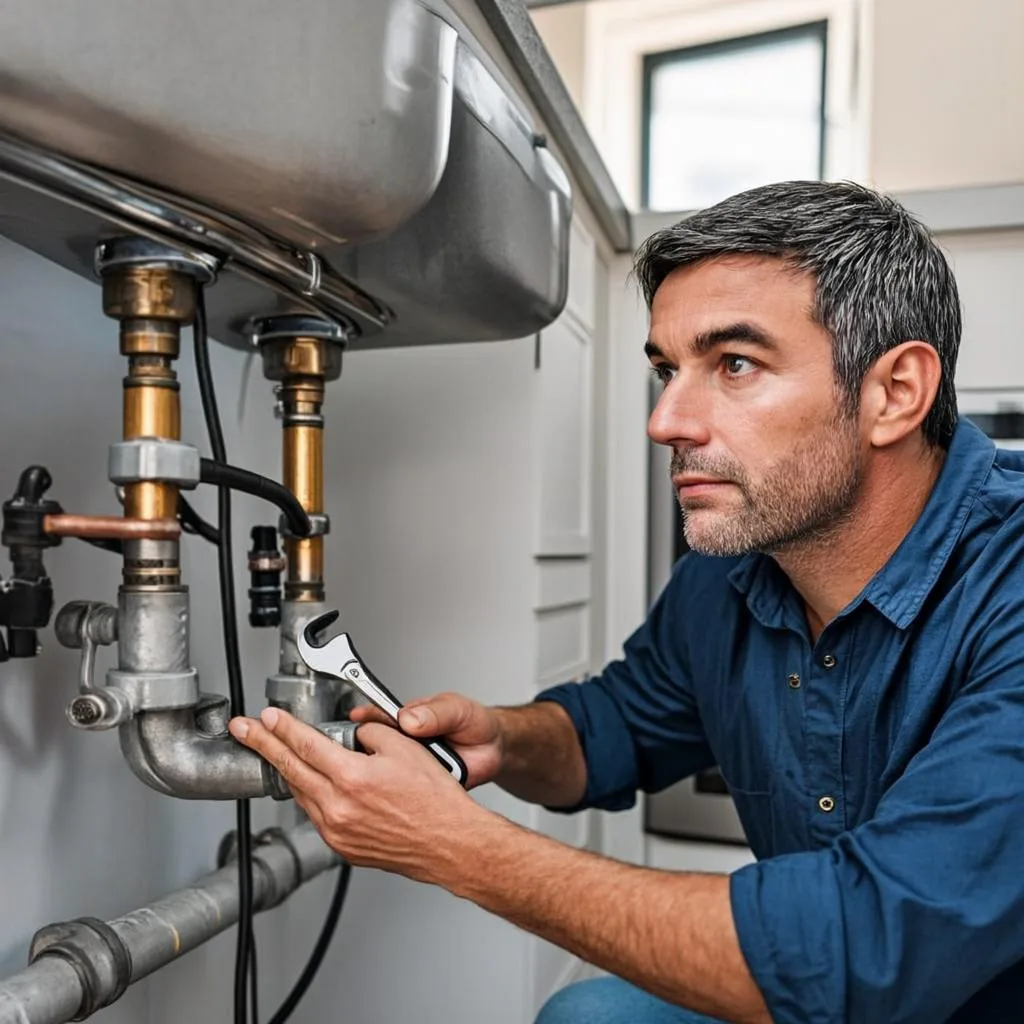
The recur-and-repeat trap: a one-time root cutting clears today's clog but leaves the root crown and every entry joint intact - regrowth starts within weeks and is usually back to a flow-restricting mat within a year in willow/maple territory. If your camera shows roots, the honest conversation is about maintenance frequency (annual jetting) or a liner/replacement, not about the third emergency call in three winters.
Grease Buildup: The Science of a Clogged Kitchen Line
Roots own the sewer line; grease owns the kitchen line. The mechanism is simple chemistry with a nasty timeline.
Liquid fats, oils and grease - plumbers say FOG - pour into a drain as warm liquid, but your pipes sit at ground temperature, and grease begins to solidify the moment it contacts anything cooler than about 40 degrees Celsius. In a kitchen line, the first contact is the pipe wall itself: the fat congeals as a thin film, and every subsequent warm pour lays a new layer over the old. Run a camera down a decade-old kitchen line and you will often see the pipe's inner wall wearing a tan-to-brown sleeve that has reduced a 2-inch line to the diameter of a quarter. The buildup is gradual, self-reinforcing (the greasy wall is sticky), and completely invisible until the day a load of food solids meets the narrowed passage and the sink stops draining.
Vancouver's famously soft water changes the companion problem rather than removing it. Hard-water cities fight mineral scale combined with soap; our soft mountain water skips the limescale but still produces soap scum - the reaction product of soap and whatever minerals and organics are present - which binds with grease layers into a paste that water alone will not dissolve. Add dishwasher detergent residue and food fines, and the kitchen line becomes a composite-material problem: grease, scum, and solids, in that order, from the wall inward.
- Worst pour: animal fats from roasting pans and bacon grease - solidify at the highest temperatures, coat fastest.
- Sneaky pours: salad dressings, sauces, gravy, dairy, and "oily but liquid" pan residue that looks harmless at 60 degrees.
- The grinder myth: a garburator (in-sink disposal) does not make grease or solids drain-safe - it converts visible waste into a slurry that re-congeals and settles further down the line, where access is worse.
- Garburator legality note: many Metro Vancouver municipalities have moved to discourage or restrict in-sink disposals precisely because of load on the regional sewer system - when we replace a kitchen line, we discuss whether the garburator stays.
The disposal rule that prevents all of it: fats, oils and grease never touch the drain. Cool the pan, pour or wipe grease into a tin can or jar, bin it when full; wipe oily pans with paper towel before washing. That 10-second habit is the difference between a kitchen line that lasts 50 years and one that needs jetting every second winter.
Why Winter Makes Everything Worse
Summer clogs exist, but the winter surge is real, measurable, and driven by four stacking factors.
1. Freeze-thaw ground movement
Metro Vancouver winters oscillate between rain and frost, sometimes within the same week. Every freeze-thaw cycle makes soil expand and contract, which micro-shifts buried pipe and racks old joints further out of alignment. An offset clay joint that passed water cleanly in August opens a gap in January - roots and soil find it, and the blockage that was "80% there" crosses the finish line. Heave also stresses the shallow (<2-foot) sections of laterals under driveways, which carry vehicle load on top of frost movement.
2. The holiday cooking spike
October through February contains the year's heaviest grease-loading events: Thanksgiving turkey and roast drippings, December holiday baking and frying, hot-pot and dumpling season, and - very much a Vancouver phenomenon - Lunar New Year feasts in late January or February, which our crews have learned to expect as a reliable second surge of kitchen-line calls, two to three weeks after the holiday. Grease clogs are a delayed reaction: the big pour narrows the line, and the clog completes itself days or weeks later, which is why the January "mystery clog" almost always traces back to December's roasting pans.
3. Houseguests and load
Winter is when occupancy peaks: relatives visiting, adult children home, suites running full-time because nobody is outside. More people means more showers, laundry and toilet load per household - which means the pipe that was coping at 60% restriction in October gets asked to move 150% of its usual flow in December. Restrictions that tolerated quiet summers simply get exposed.
4. Colder water, slower everything
Cold water carries grease differently - it solidifies faster and settles sooner, so the same pour that washed along in July parks itself in the first low spot in January. Cold also slows the bacterial action that gradually digests organic films in drains, and the enzyme products (see prevention) work measurably more slowly in cold lines. The system that self-cleaned all summer stops self-cleaning precisely when the loading peaks.
The result is the shape of our winter call curve: a trickle in October, the Thanksgiving grease bump in early November, the December climb, and the deep-winter peak from early January through the first hard February thaw, when months of accumulated restriction meets freeze-thaw joint movement and household load all at once. The homes that skip all of it have one thing in common - they cleaned before winter.
Warning Signs You Should Never Ignore
A mainline clog is almost never a surprise - it announces itself in a sequence, over days or weeks. Homeowners who catch the sequence early turn a possible backup into a routine $400 jetting; homeowners who ignore it meet the sewage version. In rough order of escalation:
- Gurgling sounds from drains or the toilet, especially when another fixture drains. That sound is air trapped behind a partial blockage - the sewer equivalent of a wheeze.
- One slow drain - usually the kitchen (grease) or the lowest-use bathroom (hair and scale). Local, fixable, cheap.
- Multiple slow drains - the hallmark of a mainline problem, not a fixture problem. When the tub, the sink and the toilet all slow down together, the shared pipe is restricted.
- Smell - a sewer odor from floor drains or fixtures means gas is being pushed back by blockage or a dry trap; either way, the system is not venting properly.
- Water pooling around the basement floor drain after laundry, showers or dishwasher cycles - the main line is accepting water slower than your house produces it.
- Toilet bubbling or rising water level when the laundry machine or a shower runs - direct evidence of a restricted main downstream.
- Fruit flies or drain flies around fixtures - organic film buildup inside drains feeding a population; cosmetic alone, but a marker of the same accumulation.
- The lawn clue - a suspiciously lush, dark-green strip over the sewer route in an otherwise ordinary lawn: your line is leaking water and fertilizer-grade nutrients into the soil. Roots will be next, if they are not already there.
Escalation rule: gurgling plus one slow drain equals book a camera; multiple slow drains or any floor-drain pooling equals stop putting water down the main and call the same day. Every hour of continued use adds water mass behind a blockage that is one flush away from your basement floor.
DIY Drain Cleaning Methods, Ranked From Fine To Foolish
The internet is full of drain advice. Here is the version from people who see the aftermath, ranked honestly.
Fine: the plunger (done properly)
Plungers work on fixture-local blockages - the sink trap, the toilet bend - and they work when used correctly: block the overflow, seal the cup fully, and work slow firm strokes for 20 to 30 seconds rather than frantic little bounces. A sink plunger (flat cup) for sinks and tubs, a flange plunger for toilets; do not cross-contaminate the two, for reasons your imagination can supply. If the clog is in the fixture arm, the plunger resolves it. If the clog is in the main, the plunger moves nothing - which is itself diagnostic information.
Limited: baking soda and vinegar
The fizzy volcano is real chemistry but small-scale: the reaction produces a modest amount of agitation and pressure that can shift a fresh, soft blockage in the trap or the first few feet of arm. It does nothing to grease sleeves further down the line, nothing to roots, and nothing to scale. As a maintenance ritual (half cup baking soda, chase with vinegar, hot-water flush 30 minutes later), it is harmless and slightly helpful. As a cure for an actual clog, it is mostly a YouTube moment.
Cautious: hot water flushes
A kettle of near-boiling water cuts fresh grease film in a kitchen line - modestly. Two cautions: repeated boiling water into PVC fixture arms can soften joints over time (run the tap hot after the kettle pour to dilute), and if the line is already greased to a narrow sleeve, hot water can detach a slab of grease that re-solidifies further down as a worse, denser plug. Warm-not-scalding plus dish detergent is the safer home version.
Bad: chemical drain cleaners
The bottles under the sink deserve a straight answer: we recommend against them, essentially always. Three reasons. First, chemistry: the powerful ones are extreme-alkaline (caustic lye) or acidic formulations that generate heat in the pipe - effective on hair in a fixture trap sometimes, but genuinely dangerous in the hands of a homeowner with a standing water clog, and the heat can deform PVC and stress old cast iron. Second, and worse for your finances: when they fail to clear the clog (common on main-line and grease problems), the bottle's worth of caustic sits in the pipe and in the trap - and the next person on that drain is the plumber, or you with a plunger, or the homeowner cleaning a backup, now with chemical-burn water on the floor and on skin. Third, the environment: whatever clears your line enters the regional sewer system and eventually the Fraser River and Burrard Inlet; Metro Vancouver's sewer bylaws and FOG-reduction programs exist precisely because household chemistry accumulates. There is no scenario where the $12 bottle beats the plunger for fixture clogs or the camera for mainline clogs.
Risky: rental drain snakes
A rented 25-to-50-foot drum auger from the hardware store can clear a mid-line soft clog, and competent homeowners do manage it. The honest risk profile: without camera knowledge, you do not know what you are snaking - and a heavy hand with a snake head in 80-year-old clay or scaled cast iron can crack a tile, punch through a corroded wall, or get the cable itself stuck (a stuck cable in a collapsing line is a two-problem day: extraction plus repair). Our rule of thumb for clients: if you cannot answer "what is in the line," the machine that answers costs $189 - cheaper than the machine that guesses.
| Method | Actually Works On | Does Nothing To | Risk Level |
|---|---|---|---|
| Flange/flat plunger | Toilet and trap-local clogs | Mainline, roots, deep grease | None - recommended first step |
| Baking soda + vinegar | Fresh soft blockages in the trap | Grease sleeves, roots, scale | None - limited value |
| Hot water + detergent | Fresh grease film (kitchen) | Established buildup | Low - can mobilize grease plugs downward |
| Chemical cleaners | Occasionally hair in fixture arms | Grease, roots, mainline clogs | High - pipe damage, chemical burns, environment |
| Rental snake | Soft clogs mid-line, when you know the pipe | Roots (cutting heads aside), full grease sleeves | Medium-high on old clay/cast iron; stuck-cable risk |
| Enzyme maintenance products | Preventing grease/organic buildup (ongoing) | Existing clogs of any kind | None - prevention, not cure |
Slow drains before the holidays? That is the calendar talking.
Pre-winter drain cleaning in Vancouver and Surrey: camera inspection from $189, hydro jetting $350-550, flat-rate written quotes and 24/7 emergency dispatch if a backup beats you to it. Gurgles today are backups in December - clear the line first.
Book My Drain Cleaning Call 604-615-221224/7 live dispatch · avg 45 min response in Vancouver, Burnaby & Richmond · no overtime premium hidden in fine print
Professional Solutions: Hydro Jetting & Camera Inspection
Professional drain cleaning is two technologies working together: the camera that diagnoses, and the jetter that cleans. Understanding what each actually does explains the price - and why "snake it and hope" keeps costing people twice.
Camera inspection ($189): see before you cut
A drain camera is a self-lighting, waterproof camera head on a push-rod, fed down your cleanout or a pulled toilet. On screen, we travel your line in real time: the material, the joints, the restrictions, the roots, the grease, the cracks, the offsets, the bellies (sagging sections that hold water), and the intrusions. A sonde transmitter in the camera head lets us mark the exact surface location and depth of any defect - so a future repair opens ground in the right spot instead of the exploratory trenching that older methods required. The $189 inspection answers, in one visit: what is in the line, where it is, what condition the pipe is in, and therefore which of the three honest solutions (clean, line, or replace) applies. It is the cheapest diagnostic in home services.
Hydro jetting ($350-550): clean the whole pipe, not a hole through the clog
Hydro jetting pushes highly pressurized water - typically 1,500 to 4,000 PSI, adjusted to your pipe's material and condition - through a specialized nozzle head. Forward jets blast the blockage; rear-facing jets pull the nozzle forward and, critically, scour the pipe walls, stripping grease sleeves, soap paste, scale flakes and root fibers back to clean pipe. A snake punches a tunnel through a grease clog and leaves the sleeve that caused it; a jetter removes the sleeve. On root mats, a mechanical cutting head can be run first to clear the mass, then the jetter flushes the debris and finishes the walls. On Metro Vancouver's old clay and cast iron, we run conservative pressures and inspect after - jetting is safe for old pipe in trained hands, and the camera confirms the result before we leave.
| Professional Service | Typical Metro Van Cost | What It Includes | Best For |
|---|---|---|---|
| Camera inspection + locating | $189 | Full line video, defect locating and depth marking, condition report, still photos | Any mystery clog; before any repair decision; insurance documentation |
| Hydro jetting (residential line) | $350-550 | Pressure-matched jetting, grease/root flush, post-clean camera verification | Grease sleeves, recurring slow drains, pre-winter maintenance, post-root-cutting flush |
| Root cutting (mechanical) | $250-500 (often bundled with jetting) | Cutting head clears root mass, jetting flushes debris, camera confirms clearance | Known root intrusion pending lining/replacement or on an annual maintenance plan |
| Emergency backup response (24/7) | $89 diagnostic, credited to work performed | Live dispatch, extraction, sanitizing guidance, immediate-flow restoration | Sewage backup into the home - call 604-615-2212, day or night |
Costs are typical 2026 Metro Vancouver ranges for standard residential laterals; access, length and severity move individual quotes. Every job is priced flat-rate and in writing before work starts.
Jetting is not hydro-excavation: a fair question we get from owners of 1930s clay is whether 3,000 PSI will shatter their pipe. Properly pressure-matched jetting scours deposits without harming sound pipe - and the post-jet camera pass proves it on screen before we pack up. Deteriorated pipe that would fail under cleaning would fail under the next clog anyway; finding that on camera, on a scheduled visit, is the cheap version of finding it.
When a Clog Is an Emergency: Sewage Backup
A slow drain is an inconvenience. A sewage backup is a health hazard, and the difference deserves plain language: raw sewage carries bacteria, viruses and parasites - E. coli, salmonella, giardia among the routine cast. Backup water in a living space is Category 3 (black water) in restoration terminology, the same category as floodwater. It is not a mop-and-move-on event, and it is not a next-morning event.
What backup looks like in practice around here: the basement floor drain begins to burp water during a shower; the laundry cycle finishes and the floor drain has delivered a surprise; the toilet flushes and the tub fills. The immediate protocol, in order:
- Stop putting water down the drains immediately - no showers, no laundry, no dishwasher, no flushing beyond what is unavoidable. Every litre adds to what is coming back up.
- Keep people and pets out of the affected area, and keep children away from the floor entirely. Wash hands after any contact.
- Kill power to the affected area if water is near outlets or appliances - from the breaker, not by wading in to unplug things.
- Open windows for ventilation; do not run HVAC fans that will circulate air from the affected zone.
- Call the 24/7 line at 604-615-2212. Our average response in Vancouver, Burnaby and Richmond is 45 minutes, around the clock. The first objectives are extracting the water, clearing the blockage and stopping the inflow; sanitizing follows.
Two practical notes homeowners thank us for later. First, insurance: sudden-and-accidental sewer backup is covered under most homeowner policies when the backup rider is present - but gradual issues, neglect and some "maintenance-related" root claims are not, and every policy differs. Document everything: photos before cleanup begins, the camera report, the invoice. Our reports are written in the format adjusters need. Second, restore, do not just remove: porous materials that have soaked in black water (carpet underlay, unsealed MDF, cardboard storage) generally need to go, and affected hard surfaces need actual disinfection, not a wipe. We stop the plumbing emergency; a restoration contractor finishes the space - and knowing which is which is part of the 2am conversation.
Do not chemically attack a backup: pouring caustic cleaner into a backed-up line adds a bottle of lye to sewage on your floor, damages the pipe you are about to need cleared, and creates a hazard for every responder. Extraction first, always.
Root Cutting vs Pipe Lining vs Replacement: The Real Costs
When the camera shows roots or structural damage, there are exactly three honest strategies, and choosing between them is arithmetic plus your plans for the house.
| Strategy | Typical Metro Van Cost | Effective Lifespan | Best For |
|---|---|---|---|
| Root cutting + jetting (maintenance) | $250-550 per visit | 6-12 months of flow in root-prone lines | Buying time; lines with entry joints but sound structure; homes planning lining/replacement later |
| Cured-in-place pipe lining (CIPP) | ~$150-300 per linear foot, typical residential line $4,000-9,000 | 50-year design life | Structurally tired but continuous clay/cast iron; no-dig solution; landscaping and driveways preserved |
| Spot repair (excavation of defect) | $1,500-3,500 per spot | As new at that section | Camera-verified isolated problem: one offset joint, one crack, one collapsed short section |
| Full open-cut replacement | ~$200-350 per linear foot, typical $6,000-12,000+ with restoration | 50-100 years (modern PVC, gasketed joints) | Collapsed or heavily segmented pipe; deep bellies; full yard renovation planned anyway |
Ranges reflect typical residential lateral work in Metro Vancouver; depth, access, surface restoration and city re-connection requirements move individual projects. Every repair quote follows a camera inspection - never a blind dig.
How lining works (the no-dig option)
Cured-in-place lining inserts a flexible, resin-saturated felt tube into your existing pipe, inflates it against the pipe wall, and cures it - usually with hot water or steam - into a seamless, jointless new pipe inside the old one. Roots lose every entry point forever (there are no joints left), flow diameter is barely reduced, and the process needs an entry pit or cleanout, not a trench through your Dunbar garden or your Surrey driveway. For the classic Vancouver situation - 1940s clay, three willows on the block, structure still round - lining is usually the value answer: permanent, at half to two-thirds the disruption-adjusted cost of replacement.
When replacement is the honest answer
Lining requires a pipe that is still a pipe - roughly round, continuous, able to contain the liner. Collapsed sections, severe offset joints, and badly bellied (sagging) lines need excavation: dig, remove, install new gasketed PVC, reconnect, restore surface. It costs more and wrecks a lawn for a season, and it is still the right call when the camera says the pipe is done - because every other option is buying time for a failure that is already scheduled.
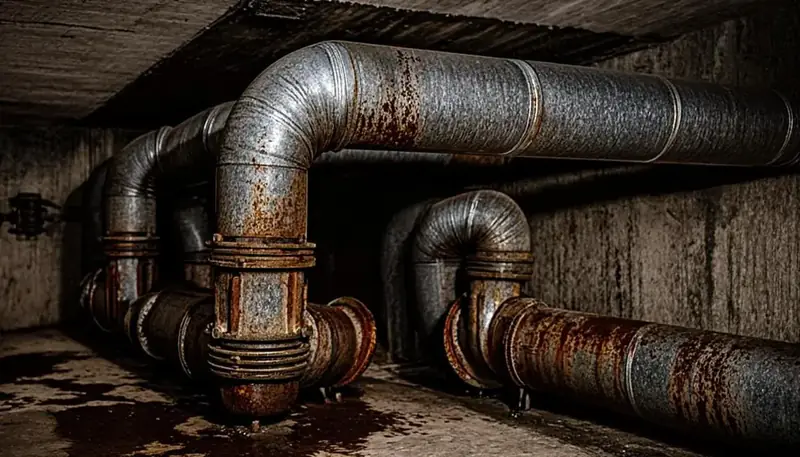
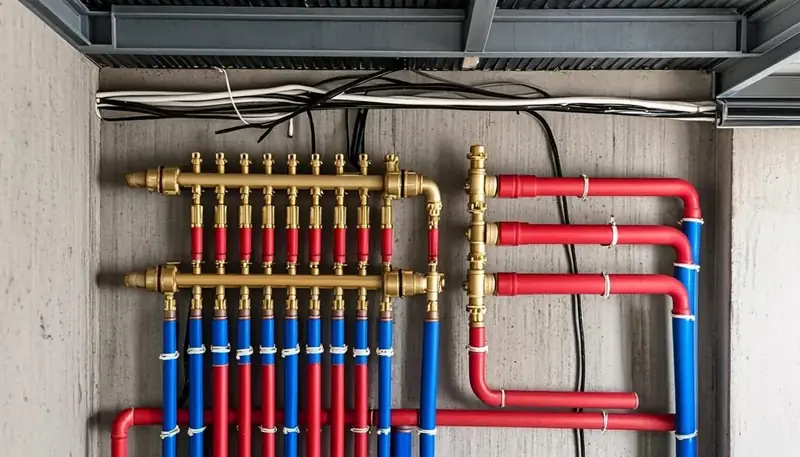
The same era of buried-pipe problems, above ground: corroded 1970s lines renewed with modern materials. What the camera finds below your lawn follows the same decision logic - cut, line, or replace.
The budget truth for older homes: root maintenance is a subscription, lining is a purchase, and replacement is a renovation. Annual jetting at $400 on a $9,000 liner is 20 years of equal outflow with zero of the liner's certainty - so the real decision variables are how long you will own the home, whether a backup would hit a finished basement, and whether the camera shows structure worth keeping. We lay those three answers out with the video running; clients make the call in about ten minutes.
Prevention: The Year-Round Drain Care Plan
Everything above has a cheaper preventive version, and for drains the prevention is unusually unglamorous and effective.
The annual professional flush
For homes on pre-1980 laterals - which is most of Metro Vancouver - an annual professional cleaning (camera-check plus jetting where indicated, $189-550 depending on what the camera says) is the single habit that keeps root-prone and grease-prone lines from ever crossing the clog threshold. Fall is the correct season: you clear the summer's grease film before the holiday loading, confirm no root regrowth before the freeze-thaw cycle racks the joints, and enter December with a line at full diameter. Homes with known root entry can stretch to every 12 months; heavy-use kitchens and willow/maple territory should treat it as annual without exception.
Enzyme treatments: $20/month of quiet biology
Monthly enzyme treatments - bacterial cultures that digest grease and organic film, poured down the kitchen line with warm water at bedtime - genuinely reduce buildup between professional visits. They are slow, temperature-sensitive (they work best in warm months; expect less from them in a cold January line, as we noted), and they are prevention, not cure: an enzyme will not touch an existing clog, a root, or a century of scale. But as a $20-per-month habit on a kitchen line that saw its last jetting, they measurably extend the interval between cleanings. Use drain-safe products as directed; more is not better.
What never goes down the drain
| Item | Why It Clogs (or Worse) | Do This Instead |
|---|---|---|
| "Flushable" wipes | The marketing myth of the decade - they do flush, and then they do not biodegrade; they are the #1 binding agent in modern clogs and pump failures region-wide | Bin them, always - the only truly flushable paper is toilet paper |
| Grease, fat, drippings | Coats and narrows the line progressively; the December clog that started as an October pour | Cool, pour into a tin/jar, bin when solid; wipe pans first |
| Coffee grounds | Settle and pack like wet sand in low spots; bind with grease into a sludge plug | Compost or bin - never the sink, even with a garburator |
| Eggshells, rice, pasta, flour | Swell, paste and pack; a garburator makes them smaller, not drain-safe | Compost or bin |
| Paper towels, tissues, hygiene products | Designed to hold together wet - the opposite of toilet paper's job | Bin |
| Food labels, stickers, produce stickers | Adhesive-backed, catch on everything, accumulate at joints | Bin before rinsing produce |
| Paint, solvents, medications | Not a clog issue - a sewer-system and receiving-water issue; regulated under Metro Van bylaws | Take-back programs and hazardous-waste depots |
The other three habits
- Strainers everywhere: a $5 mesh strainer in the kitchen sink and every tub catches the hair, grounds and fines that otherwise build the first layer of every clog. Empty into the bin, not the drain.
- Run water while the garburator runs, and for 10 seconds after - flush the line, not just the grind.
- Know your cleanout: the capped pipe, usually near the foundation or in the garage, that gives us direct access to your sewer. Finding it at 2am by flashlight while the basement fills is the worst time to meet it. Every homeowner should know its location and keep a 24-inch clearance around it.
Your Pre-Winter Drain Checklist (Late September to Early November)
Run this list once a year, before the first hard frost, and the winter drain story - the one this whole guide is about - mostly happens to other people.
- Listen: one full evening with the dishwasher, a shower and a laundry load - any gurgle, any slow fixture, any floor-drain smell moves you straight to item 3.
- Clean the easy layer: strainers out and scrubbed; traps under kitchen and bathroom sinks hand-cleared (bucket under the trap, quarter-turn the nuts); hair catchers pulled from tub drains.
- Camera if due or suspicious: $189 buys certainty - on pre-1980 homes, book the inspection every one to two years, or immediately if any warning sign from this guide is present.
- Jet if the camera says so: $350-550 restores full diameter before the holiday loading; root-prone lines get their cutting head pass now, not in January.
- Grease-proof the kitchen routines before the holidays: counter jar or tin for grease stationed next to the stove; family briefing that the garburator is not a garbage can; roasting-pan plan for Thanksgiving (cool, pour, wipe, then wash).
- Guest-load prep: visiting relatives add 50-100% to water use; make sure the line that will carry it is clean, and show guests the wipes bin (item: flushable-wipe myth above).
- Locate and clear your cleanout and your main water shutoff - both should be reachable in under a minute, in the dark.
- Know the emergency number: 604-615-2212, answered around the clock. Save it now; the version of you with water on the basement floor will not want to be searching.
One closing thought from the drain side of the business: Metro Vancouver's clog season is not a mystery or bad luck - it is aging pipe, roots, grease and a wet, freezing, feasting season, all arriving together, every year. The homes that skip the drama are not lucky; they did item 3 or 4 in October. This year, be that house.
Drain Cleaning FAQ from Metro Vancouver Homeowners
Camera inspection runs $189; hydro jetting $350-550 for a standard residential line; root cutting $250-500, often bundled with jetting; emergency backup response starts with an $89 diagnostic that is credited to the work performed. Repairs, if the camera calls for them: spot repairs from $1,500, lining roughly $4,000-9,000 for a typical lateral, full replacement $6,000-12,000+ with restoration. Every job is quoted flat-rate and in writing before we start.
The signature pattern is multiple slow fixtures at once (tub, sink and toilet together), gurgling from floor drains, recurring clogs that snaking clears temporarily, or a suspiciously lush strip of lawn over the sewer route. The only definitive answer is the camera - $189 shows the roots, the entry joints and the pipe condition on screen, and tells us whether the answer is jetting, lining or replacement. If your home predates 1980 and willows, maples or cedar hedges are within 30 feet of the line, assume roots until the camera says otherwise.
We advise against them, essentially always. Caustic and acidic cleaners generate heat that can deform PVC joints and further stress old cast iron; on a standing clog they leave a bottle of active chemical sitting in your pipe - a hazard for you and for whoever clears the line next; and whatever goes down eventually reaches the regional sewer system and the Fraser River and Burrard Inlet. For fixture clogs, a proper plunger does more with zero risk. For mainline clogs, chemicals do nothing to grease sleeves or roots anyway. The $12 bottle is the most expensive $12 in plumbing.
Once a year for pre-1980 homes and any line the camera has flagged for roots or grease - booked in fall, before the holiday loading and the freeze-thaw season. Modern PVC lines with no history of problems can run two to three years between camera checks. Heavy-use kitchens, rental properties with deferred maintenance and willow/maple territory should hold the annual rhythm strictly; root regrowth in an unlined, jointed clay line is usually flow-restricting again within 12 months of a cleaning.
Not when it is pressure-matched to the pipe, which is the entire skill of the service. We run conservative pressures on Metro Vancouver's old clay and scaled cast iron, and we camera-verify the line before and after the jetting pass. Sound pipe comes out clean; pipe that was already failing shows itself on camera - which is exactly the information you want before it fails on a February night instead. What genuinely damages old pipe is the un-inspected combination of repeated clogs, standing water and freeze-thaw, not a properly matched cleaning.
Stop using all water immediately - no showers, laundry, dishwasher or flushing; keep people and pets out of the affected area (sewage is Category 3 black water and a genuine health hazard); cut power to the zone from the breaker if water is near outlets; open windows; and call our 24/7 line at 604-615-2212 - average response is 45 minutes in Vancouver, Burnaby and Richmond. Photograph everything before any cleanup for your insurer, and do not pour any chemical cleaner into the line. Porous soaked materials (carpet underlay, unsealed MDF, boxes) should be assumed lost; hard surfaces need actual disinfection, not a wipe.
What We Can Do For Your Drains This Week
Drain Cleaning Surrey & Vancouver: Hydro Jetting, Cameras & Root Removal
Camera inspection from $189, jetting $350-550, root cutting, pipe lining and full replacements - flat-rate written quotes and pre-winter scheduling across 17 Metro Van cities.
24/7 Emergency Plumber Vancouver: Sewer Backup & Burst Pipe Response
Live dispatch around the clock, average 45-minute response in the core cities, extraction and flow restoration for backups, plus insurance-ready documentation.
Furnace Maintenance & Heating Tune-Ups Before the Cold
The other half of the pre-winter checklist: 20-point furnace tune-ups from $149-229 so the heat that protects your pipes never fails during a January cold snap.
Hot Water Tank Flush & Replacement Vancouver
Annual tank flushes from $139 clear the sediment that winter load turns into rumbling and failure - and same-day replacement when a tank finally lets go.
Related Winter Guides
Burst Pipe? Your First 60 Minutes, Step by Step
Shutoff locations in Vancouver homes, what to do in what order, and what a January burst costs when you act fast versus slow.
Winter PrepHow To Winter-Prep a Vancouver Home: The Complete Checklist
Drains, pipes, furnace, gutters and the cold snaps this region actually gets - one master checklist for freeze-safe winters.
PlumbingHow To Detect Hidden Water Leaks Before They Cost Thousands
Meter tricks, acoustic detection and the silent-failure spots in Metro Vancouver homes - the non-emergency version of a plumbing disaster.
Get Your Free Drain Cleaning Quote in Vancouver & Surrey
Tell us what the drains are doing - gurgling, slow, backing up, on a schedule - and we will quote the camera inspection, jetting or repair flat-rate and in writing. Pre-winter slots book fast in November; emergency backup response is available 24/7 at 604-615-2212 with average 45-minute response in the core cities.
Why Homeowners Choose Us
- 6,000+ drains cleared across Metro Vancouver since 2010
- Red Seal licensed plumbers, $2M insured, WorkSafeBC
- 4.9-star average from 512 verified reviews
- Flat-rate written quotes - $89 emergency diagnostic credited to work
- Camera-verified results: we show you the line, before and after
- 24/7 live dispatch, average 45-minute core-city response
- No-pretense advice: maintenance, lining or replacement, with the math