
The Honest Answer Up Front
A compressor failure is the biggest event in an air conditioner's life, and the honest answer has three parts. First, most of the symptoms homeowners attribute to the compressor, humming, hard starting, warm air, tripped breakers, are more often caused by cheap parts standing in front of it, capacitors, relays, contactors and fans, and the only way to know is a proper diagnostic. Second, when the compressor has genuinely failed, the replace-the-part-or-the-system decision is arithmetic, age, warranty status, refrigerant generation and the cost of a new system, and that arithmetic should be shown to you, not summarized for you. Third, compressor replacement is quoted per system, because tonnage, refrigerant, accessibility and warranty status move the number.
The costs we can state flat out, because they are ours and they are posted: a diagnostic visit runs $89 to $129 and is credited to the repair when you proceed, common repairs around the compressor, capacitor, coil, fan motor work, run $245 to $695 with parts and labour, a refrigerant recharge with leak check runs $245 to $495, and a new central AC on existing ductwork runs $4,500 to $8,500 installed, $8,500 to $14,000 with ductwork in scope. Everything compressor-specific is quoted per system, after the visit. And the BC twist that changes the whole decision tree: replacing an AC with a heat pump can qualify for up to $16,000 in combined CleanBC, BC Hydro, FortisBC and municipal support, and we handle the paperwork.
One expectation to set before the detail: a failing compressor is rarely an emergency from October to April, but in a July heat wave it becomes one overnight, because the 2021 heat dome taught BC what a house without cooling becomes. Our cooling team runs 24/7 through those weeks, with priority for maintenance-plan customers and a flat $150 after-hours premium stated in advance. The best version of this story starts in spring, with a diagnostic, not in July, with a warm bedroom.
0 jobs since 2010
Cooling, heating, plumbing and window calls across Metro Vancouver, including heat-wave compressor diagnostics.
0 of a dying compressor
Humming, hard starts, breaker trips, warm air, short cycling, vibration, oil traces. Each has a mimic, and the diagnostic separates them.
0 star rated
512 verified reviews, many from customers whose compressor diagnosis turned out to be a capacitor and a small bill.
0 manufacturer warranty
On the systems we install, plus our own 2-year workmanship guarantee, registered for you at install.
What the Compressor Actually Does
An air conditioner is a heat-moving machine, and the compressor is the pump that makes the loop flow. Refrigerant arrives as a cool, low-pressure gas, the compressor squeezes it into a hot, high-pressure gas and pushes it to the condenser coil, where the outdoor fan sheds the heat. The refrigerant then expands, chills, and flows through the indoor coil absorbing heat from your house before returning to do it all again. Every BTU your AC moves rides on that cycle, and the cycle rides on the compressor.
Two details explain nearly everything in this guide. First, the compressor is a sealed unit: the motor and pump live inside a welded steel shell with no serviceable interior, so a genuine failure means replacing the whole sealed part, never repairing its guts. Second, the compressor depends on the health of everything around it, the refrigerant charge as working fluid and coolant, the outdoor coil as its heat shed, the capacitor and contactor as its starting muscles, and the airflow across both coils, which means the rest of the system quietly decides how long the compressor lives. That dependency is why our tune-ups exist and why the Chapter 10 list matters: compressors rarely die of old age alone.
It also explains why compressor diagnosis is instrument work rather than eyeball work. A technician measuring amperage, pressures and temperatures across the cycle can see whether the pump is pumping, whether the refrigerant is present, and whether the electrical side is delivering, and that triangulation separates a dead compressor from a starving one. It is why we are suspicious of any compressor verdict delivered without gauges, and why our Surrey AC repair crews carry the instruments on every call.
The Seven Signs, and Their Mimics
Compressors announce their decline, but they announce it in a dialect that several cheaper parts also speak. The table below is the honest version: each sign, what it sounds like from the couch, and what else can cause exactly the same symptom.
| Sign | What you notice | What else does this |
|---|---|---|
| Humming, no start | The outdoor unit hums but the fan and cooling never truly engage | A failed start capacitor, the most common mimic of all, or a stuck contactor |
| Clicking retries | Click, hum, silence, repeat, as something tries and fails to start | Start relay and capacitor problems; low voltage; a hard-start kit that failed |
| Tripped breaker | The AC breaker trips on start or after some running time | A weak capacitor, a shorted fan motor, or a genuinely seized compressor drawing locked-rotor current |
| Warm air at the registers | Airflow is fine but the air is not cold | Low refrigerant from a leak, a failed capacitor running the compressor hot, or a burned compressor |
| Short cycling | Runs minutes, shuts off, restarts soon after | Oversizing, a mis-sized or failing run capacitor, low charge, coil fouling, or a struggling compressor |
| Rattling or vibration | The outdoor unit shakes or buzzes louder than its old self | Loose mounts, fan imbalance, debris in the fan, or a compressor coming apart internally |
| Oil traces at the unit | Dark oily residue on lines, coil or base | A refrigerant leak, which starves the compressor; the oil is the refrigerant circuit showing itself |
The pattern to take seriously is clustering and persistence. One humming afternoon in a heat wave is a capacitor until proven otherwise: a real story from our files, an AC that stopped cooling at 7pm in July, a technician on site by 7:25, a bad capacitor in the van, and a $295 repair later the house was cooling again. But humming plus breaker trips plus declining cooling across a season is the compressor writing its memo, and the diagnostic exists to read it with gauges instead of hope.
What Kills Compressors in BC
Compressor deaths have causes, and the causes are mostly preventable, which is the encouraging half of this guide. The leading killer is refrigerant loss through small leaks: the charge is both the working fluid and part of the compressor's cooling, so a system running quietly low works its pump hot and hard until the pump loses years of life it paid for. The second is dirty coils, and the cooling page puts a number on it that deserves repeating here, dirty condenser coils can cut efficiency by 20 percent, which translates directly into the compressor working harder against higher head pressure through every heat wave.
Electrical supply does its share. A weak run capacitor makes the compressor labor every minute it runs; hard starts, the moment of highest electrical stress in the machine's cycle, happen dozens of times a day in cooling season; and voltage sags during grid strain make both worse. The 2021 heat dome belongs in this chapter as our region's stress test: systems that had coasted on mild summers ran flat out at design-extreme temperatures for days, and the survivors were disproportionately the maintained ones. The heat dome is now a recurring design condition, not a freak event, and our heat dome preparedness guide covers what that means for the whole house.
And age, honestly stated: a compressor that reaches the 10-to-15-year zone with good maintenance has had a full career, and one that reaches it with dirty coils and an aging capacitor has been retired early by its environment. A 10-year parts warranty can turn a compressor death from a crisis into a parts claim, and knowing your warranty status before the failure is worth real money.
The Diagnostic Visit That Settles It
The diagnostic is where this whole guide is won or lost, and it deserves a chapter of its own because it is the part most often skipped. Our visit runs up to an hour on site: the technician works through the electrical side, capacitors, contactor, relays, wiring, the mechanical side, fan motor, coils, airflow, the refrigerant circuit with gauges, and finally the compressor itself, amperage against nameplate and start behaviour. The verdict arrives as measurements, and the written flat-rate quote that follows is priced against those measurements, not a menu.
The economics are deliberately friendly to the diagnosis: the visit is $89 to $129, credited to the repair when you proceed, so the diagnosis is effectively free for anyone who fixes the finding. The common findings, capacitor, coil and fan motor work, fall in the $245 to $695 band with parts and labour, same visit in most cases because the parts ride in the van. A recharge with leak check runs $245 to $495 when the finding is a low charge rather than a dead pump. This is the structure behind every story where the "compressor call" ends as a small bill: the mimic was unmasked, and the expensive part stayed in the catalog.
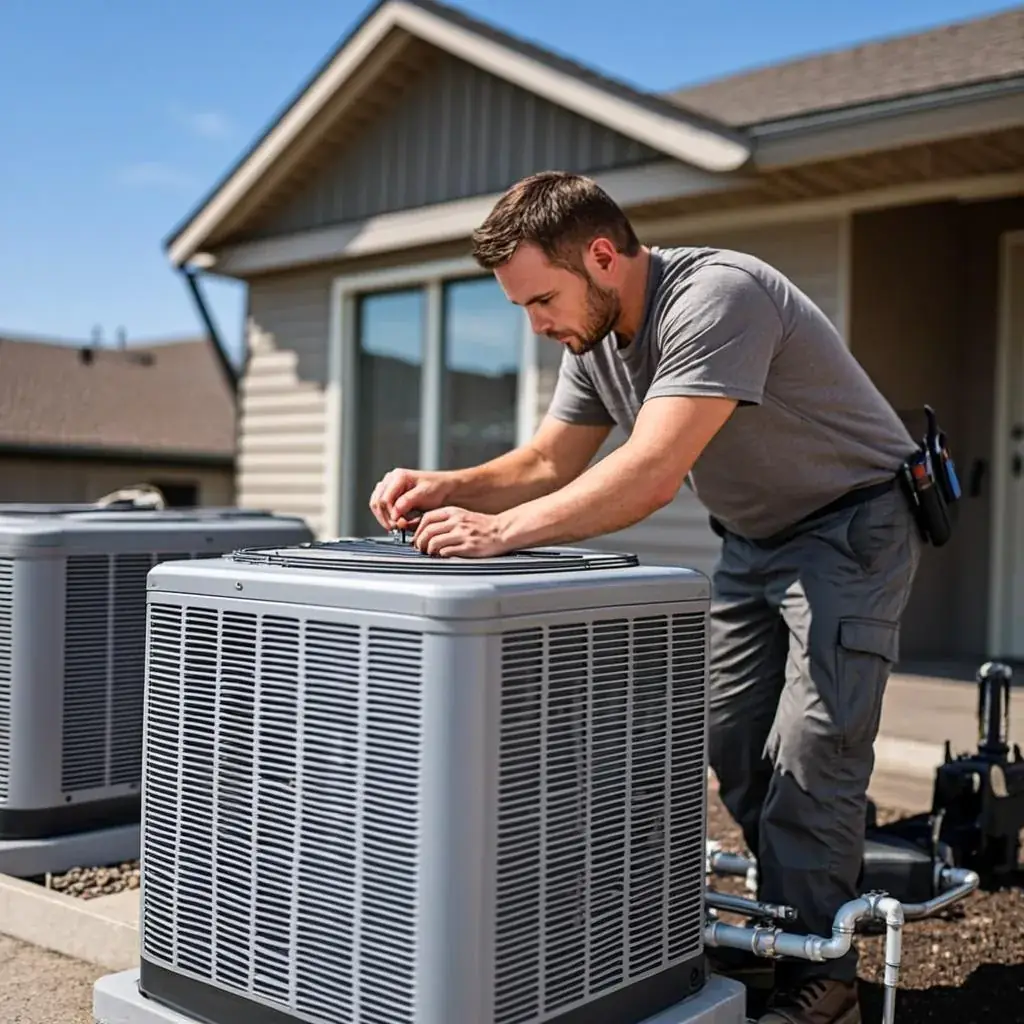
What a compressor verdict should look like: the technician shows you the readings, demonstrates the failed start on the ammeter, tests the capacitor in front of you, and lays out the age, warranty and refrigerant facts on paper. What a bad verdict looks like: a sigh, a look at the outdoor unit, and a replacement quote with no gauges attached. We train for the first version, and the Vancouver AC repair teams live it through the heat-wave weeks when the stakes are highest.
Replace the Compressor or the System
When the compressor has genuinely failed, the decision is the arithmetic, and the arithmetic has four inputs. Age: a compressor replacement in a system under warranty is usually an easy yes, while one in a 12-to-15-year-old system is buying a new heart for a body with tired coils, controls and fan. Refrigerant generation: the industry is moving through a refrigerant transition, and an older system's refrigerant era affects the long-term serviceability of everything around the part. Remaining components: if the coil, the blower and the controls have their own years left, the part can carry them, and if the coil is corroded or the indoor side is failing too, the system decision makes itself. And the price gap: the compressor replacement, quoted per system, against a new central AC at $4,500 to $8,500 installed on existing ducts, or $8,500 to $14,000 with ductwork in scope.
The honest tiebreakers lean toward the system more often than homeowners expect. A new install arrives with a 10-year manufacturer warranty and our 2-year workmanship guarantee, versus a replaced compressor carrying its parts warranty inside an aging chassis. A new system arrives at current efficiency standards, with right-sizing via Manual J instead of whatever the builder guessed in 2009, and the sizing matters: most 1,500 to 2,000 square foot Vancouver homes need 1.5 to 2.5 tons. And a new system, in 2026 BC, can be a heat pump, which is where the next chapter starts.
The cases where the part wins are real and we quote them happily: a system under a strong parts warranty, a home where the budget timing is genuinely wrong for replacement, a matched coil-and-compressor situation in a younger chassis. The point of this chapter is not to push the decision either way, it is to insist the decision be made with all four inputs on the table, in writing, which is exactly what our AC not cooling guide means when it says diagnose before deciding.
The Honest Cost Picture
Here is every number we can honestly put in a table, and the one we refuse to. The refusal is the compressor replacement itself, quoted per system, because tonnage, refrigerant type, accessibility of the unit, disposal and warranty status genuinely change the job, and a fake national average would be marketing wearing a tool belt. Everything around that number is posted, flat-rate, ours.
| Service | Posted range | What it includes |
|---|---|---|
| Diagnostic visit | $89 to $129 | Up to an hour, full diagnosis, written flat-rate quote, credited to the repair |
| Common repairs, capacitor, coil, fan motor | $245 to $695 | Parts and labour, same visit in most cases |
| Refrigerant recharge with leak check | $245 to $495 | Leak check, refrigerant, system pressure balance |
| AC tune-up, annual | $149 to $229 | Coil clean, refrigerant check, electrical tightening, performance test |
| Maintenance plan | $199 per year | Priority booking through heat waves, 15-point service, discounts |
| New central AC, existing ductwork | $4,500 to $8,500 | Condenser, coil, disconnect, pad, startup, warranty registration |
| New central system, with ductwork | $8,500 to $14,000 | Condenser, coil, ductwork modifications, electrical |
| Ductless single zone | $3,200 to $5,800 | Indoor and outdoor unit, line set, electrical |
| Ductless multi-zone, 2 to 4 zones | $7,500 to $14,000 | One outdoor unit, multiple indoor units, line sets, controls |
| Compressor replacement | Quoted per system | Recovery, part, brazing, evacuation, recharge, startup, driven by tonnage, refrigerant and access |
Read the table as a decision map rather than a menu. The top rows are the cheap days, and they are the days most "compressor calls" turn out to be. The middle rows are the maintenance that postpones the bottom of the table. And the system rows are what the Chapter 6 arithmetic competes against, with the after-hours premium a flat $150 whenever the decision gets forced at 9pm in July, and financing from 7.99 percent with approved credit through our financing options when the timing is wrong for cash.
The Heat Pump Conversion Moment
A failed compressor is the single best moment to consider a heat pump, and BC in 2026 is the single best place to have that consideration. The equipment logic is simple: the outdoor unit your compressor lives in is half of a heat pump, so replacing the failed system with a heat pump means the same ducts and indoor-side work, plus a machine that heats the house through the winter as well as cooling it through the heat domes. The cooling you already valued, you keep; the heating you were buying gas for, you partially stop.
The money logic is the BC part. Combined CleanBC Better Homes, BC Hydro, FortisBC and municipal top-ups can reach $16,000 for qualifying cold-climate heat pump projects in 2026, built from a base rebate of $9,400 plus a $5,000 income-qualified top-up plus bonus offers, and we complete the pre and post assessments and the paperwork. Cheques typically arrive weeks after the post-installation assessment, and the rebate can be applied to reduce the financed amount. Set against a central AC replacement at $4,500 to $8,500 on existing ducts, the support changes the math from "why would I" to "why wouldn't I", which is why compressor failures in Surrey and Langley so often end as heat pump installs in our booking calendar.
The honest caveats: eligibility is program-specific, the supports target the home's primary heating system, and the right move on any address is to check the paperwork rather than assume either direction. That check is part of every conversion quote we write, and the full decision framework lives in our CleanBC rebates guide and the ductless-versus-central comparison. Compressor failure put the decision on your desk either way; the rebate era is what makes it an interesting desk.
What Compressor Replacement Day Looks Like
Whether the day ends in a new compressor or a new system, the shape is similar, and knowing it removes the fear from the quote. For a compressor replacement on a system whose arithmetic favoured the part, this is the day.
Confirm the diagnosis and protect the site
Readings re-verified against the written quote, power isolated, drop cloths set, the old refrigerant recovered into tanks by code.
Open the circuit and remove the failed part
Circuit opened at the service valves, the dead compressor unbolted and lifted clear, the filter-drier replaced as standard practice.
Install and braze the new compressor
The replacement set and mounted, lines brazed with nitrogen flowing to prevent scale, joints inspected.
Pressure test and evacuate
The circuit pressure tested with dry nitrogen for leaks, then pulled to a deep vacuum on the gauge, because a wet circuit kills the new compressor the way the old one died.
Charge, start and verify
Refrigerant weighed in to nameplate, the system started through full cycles, amperage, pressures and temperature split verified, photos and report sent, warranty registered.
The nitrogen purge, the deep vacuum and the weighed-in charge are the three steps that separate a compressor replacement from a compressor installation, and they are non-negotiable on our jobs. The same discipline, recovery, evacuation, verification, closes every new-system install we do, which is why the 10-year manufacturer warranty plus our 2-year workmanship guarantee mean what they say on paper.
Making the Next Compressor Last
Everything in this chapter is cheap, which is the point: these are the moves that turn a 10-year compressor into a 15-year compressor, and they cost a fraction of any row in the Chapter 7 table. The annual tune-up, $149 to $229, cleans the condenser coil, checks the refrigerant, tightens the electrical and runs a performance test, and the coil-clean alone matters because of that 20 percent efficiency loss to fouling. The maintenance plan at $199 a year bundles the tune-up with priority booking through heat waves, which is the difference between being a customer we can reach in July and a phone number in a queue, plus repair discounts that soften the years in between.
- Book the tune-up in May or early June. Before cooling season, not during it. A clean coil and a tested capacitor entering the heat dome is compressor insurance at its cheapest.
- Watch the start behaviour. A unit that hums, retries or trips a breaker is telling you something is straining. That is a diagnostic day, and diagnostics are credited to repairs.
- Keep the outdoor unit breathing. Clear leaves and planting growth around the condenser, and never build decks or fencing tight to the coils. Restricted airflow is a slow compressor murder.
- Change the furnace filter on schedule. The indoor coil's airflow is the other half of the compressor's environment, and a starved indoor coil starves the whole loop.
- Fix small refrigerant losses fast. A recharge with leak check is $245 to $495; running low for a season is a compressor running hot, so the cheap fix stays cheap only early.
The framing that makes this chapter easy to remember: a compressor has no enemies it can fight, only enemies it quietly absorbs, dirty coils, weak capacitors, low charge, hot starts. Maintenance removes the enemies on a schedule, once a year before summer, in the spring checklist format our cooling crews publish. Skip the enemies, and the compressor eventually presents the bill this entire guide is about.
Warranty Truths for the Compressor Era
Warranties are money, and compressor failures are the day they pay or the day you learn they expired. The systems we install carry a 10-year manufacturer warranty, with our own 2-year workmanship guarantee on top, and we register the coverage for you at install, because registration is the step homeowners most often miss and manufacturers most often require. Compressors are frequently among the longest-covered components on the parts side, which is why Chapter 6 said to check warranty status before deciding anything: a strong parts warranty can make the replace-the-part arithmetic decisive.
The maintenance connection is not a myth: manufacturers commonly condition parts coverage on documented annual maintenance, and our tune-ups, $149 to $229, or the $199 plan, keep that paper trail unbroken. A compressor claim supported by service records is a claim; a claim supported by a shrug is a negotiation. If your coverage status is unknown, the model and serial numbers tell the story, and knowing it before the failure is worth a visit on its own.
What our own guarantee covers so it is never fuzzy: 2 years of workmanship on everything we install, meaning if our brazing, our evacuation or our mounting gives out, the answer is us, at no charge. That guarantee rides on every compressor, AC and heat pump we put in, from Vancouver and Burnaby through Surrey, Richmond, Delta, New Westminster, Coquitlam, Port Coquitlam, Langley, Maple Ridge, North Vancouver and Abbotsford, the twelve cities on our service areas map.
The One-Page Cheat Sheet
The whole guide compressed for the fridge door. Work top to bottom, and let the gauge, not the fear, make the call.
| Question | The honest answer |
|---|---|
| How do I know the compressor is really bad? | Humming, hard starts, breaker trips, warm air, short cycling, vibration, oil traces. Confirmed only by a diagnostic with gauges, $89 to $129, credited to repair |
| Could it be something cheaper? | Usually, yes. Capacitors, relays and fan motors mimic compressor failure, and the common repairs run $245 to $695 |
| What does the compressor cost to replace? | Quoted per system: tonnage, refrigerant, access and warranty status decide it. Never a phone number |
| Replace the part or the system? | Arithmetic: age, warranty, refrigerant era, remaining components, against $4,500 to $8,500 for a new central AC on existing ducts |
| What is the BC twist? | A failed AC is the cheapest moment to convert to a heat pump, with combined CleanBC-era support up to $16,000 and the paperwork handled |
| How do I make the next one last? | Annual tune-up at $149 to $229, coil kept clean, capacitor tested, small leaks fixed at $245 to $495 before they run hot |
| What warranty protects me? | 10-year manufacturer coverage on systems we install plus our 2-year workmanship guarantee, registered for you |
| What if it fails in a heat wave? | 24/7 line, priority for maintenance-plan customers, flat $150 after-hours premium, financing from 7.99 percent with approved credit |
A compressor decision made in spring with gauges on the table beats one made in July with sweat on the thermostat. Bring the symptoms early and we bring the readings, the arithmetic and the flat-rate number: 604-615-2212, 24/7, across Metro Vancouver.
Frequently Asked Questions
Services From This Guide
AC diagnostics, compressor decisions and heat pump conversions across Metro Vancouver: gauges on every call, flat-rate quotes, warranty registered.
Cooling and AC service
Diagnostics, repairs, tune-ups and installs for every brand, Manual J sized, 10-year manufacturer warranty on installs.
Heat pump installation
Cold-climate heat pump conversions with CleanBC paperwork handled, up to $16,000 in combined support.
AC repair in Surrey
Surrey cooling crews with stocked parts for same-visit repairs, $89 diagnostic credited to the repair.
24/7 emergency service
Heat-wave cooling emergencies answered around the clock, priority for maintenance-plan customers, flat $150 after-hours premium.
Related Guides
AC Not Cooling
The full triage list from thermostat to compressor, ten causes and the ones you can check yourself.
Heating & CoolingAC Capacitors
The part that most often dresses up as a compressor failure: signs, costs, lifespan.
Rebates & Moneyundefined
The 2026 rebate map for heat pump conversions, including the $16,000 combined support and eligibility.
Red Seal certified, licensed gas fitters (BC-PL-2019-4421), $2M insured, 15-plus years on the tools, 12,000-plus jobs across Metro Vancouver since 2010, 4.9 stars over 39 reviews. We wrote this guide because a compressor verdict delivered without gauges is a verdict delivered without evidence, and the BC rebate era has made compressor failure the most consequential decision in home cooling.
More about our team →Get Your AC Compressor Diagnosed Honestly
Book a diagnostic with a Red Seal cooling technician. You get the gauges and the capacitor test before anyone says compressor, a written flat-rate quote, and if replacement wins, the heat pump conversion numbers with CleanBC paperwork included. Financing from 7.99 percent with approved credit.
AC humming instead of cooling?
Diagnostics across Metro Vancouver, usually same-day in cooling season, credited to any repair, with the verdict delivered with gauges attached. Heat-wave emergency? The 24/7 line is answered around the clock, priority for maintenance-plan customers, flat $150 after-hours premium.
Call 604-615-2212 WhatsApp Us