AC Installation Vancouver: Complete Cost Guide + Why We All Need AC Now
For decades, air conditioning in Vancouver was a punchline — "it only hits 30 for two weeks a year." The June 2021 heat dome ended that joke permanently. This guide covers real 2026 AC installation costs in Vancouver, which system fits a pre-war character home versus a Surrey new build, sizing science, SEER2 ratings, strata rules for condo patios, and why booking in May beats begging for an install slot in July.
Vancouver's AC Transformation: From Punchline to Priority
Before 2021, British Columbia had among the lowest air conditioning penetration in Canada — roughly one in three Lower Mainland households had any form of cooling, and many of those were a single window unit dragged out of storage each July. Our ocean-moderated climate meant a fan and a basement were usually enough. Then, between June 25 and July 1, 2021, a heat dome parked over the Pacific Northwest and rewrote the record books.
Canada's All-Time Heat Record
Lytton, BC, June 29, 2021 — a full 1.2°C hotter than any temperature ever recorded anywhere in the country. The village burned the next day.
Sudden Deaths in the 2021 Heat Dome
The BC Coroners Service confirmed 619 heat-related deaths in one week — 98% of them indoors, in homes without adequate cooling.
Homes With AC Before 2021
Only about a third of Metro Vancouver households had cooling. Sales the summer of 2021 shattered every record as lines formed at big-box stores.
Cooling Installs Since 2010
Ductless, central and heat pump systems we have installed across 17 Metro Vancouver and Fraser Valley cities — demand has roughly tripled since 2021.
The coroners' report made one fact blunt: the killer was indoor heat. Conventional frame homes in East Vancouver and Burnaby hit interior temperatures above 35°C for days, and nighttime lows that stayed near 20°C gave bodies no chance to recover. Almost all of the deaths were seniors living alone — people who had never needed AC in their lives.
The climate trend since has not reversed. Environment and Climate Change Canada's projections for the South Coast show heat events arriving earlier, lasting longer, and packing higher overnight minimums — and it is the overnight temperature, not the afternoon peak, that determines whether a house can reset. Many Metro Vancouver homes are lightweight wood-frame construction with generous west-facing glazing, which means they absorb heat fast and release it slowly. A 1920s Vancouver Special or character house in Mount Pleasant can be 8°C hotter inside than outside by dinner time, and still be hot at 2 a.m.
So the question Metro Vancouver homeowners now ask is not "do we need AC?" but "which AC, at what cost, and what are the rules?" — which is exactly what the rest of this guide answers, with 2026 pricing from thousands of local installs.
Every AC Type and Cost Compared
These are realistic installed price ranges for the Vancouver market — equipment, labour, materials, permits and GST-era expectations included, based on what we actually invoice. Your home's specifics (line-set length, electrical capacity, panel space, wall construction) move the number up or down, which is why we quote in writing after seeing the space, never over the phone.
| System Type | Typical Installed Cost | Cools | Best For | Rebate Eligible? |
|---|---|---|---|---|
| Window unit | $400–800 (DIY) | 1 room | Renters, bedrooms, stopgaps | No |
| Portable AC | $500–900 (DIY) | 1 room, poorly | Strata units with window restrictions | No |
| Single-zone ductless mini-split | $3,800–5,500 | 1 open area or 2–3 connected rooms | Character homes, condos, additions, bedrooms | Heat pump versions: yes |
| Multi-zone ductless (2–4 heads) | $8,000–14,000 | Whole home, room by room | Most pre-ductwork Vancouver & Burnaby houses | Heat pump versions: yes |
| Central AC (ducted) | $5,500–9,000 | Whole home through existing ducts | Post-1980 homes, Surrey/Langley builds with furnaces | No (AC-only) |
| Cold-climate heat pump (ducted or ductless) | $12,000–18,000 before rebates | Whole home — heats in winter too | Anyone replacing heating + adding cooling in one project | Yes — up to $16,000 |
Read that last row twice, because it is the single most important line in the table for BC homeowners. A heat pump is an air conditioner — identical compressor, identical refrigerant, identical cooling performance — with one added part: a reversing valve that lets it run backwards and heat your home in winter, efficiently, down to −25°C on cold-climate models. Because it displaces fossil-fuel or electric-resistance heating, it qualifies for CleanBC Better Homes rebates (up to $6,000 for a gas-furnace switch, $11,000 off oil, $4,000–6,000 off baseboards, plus a $5,000 income-qualified top-up, stacking to as much as $16,000). An AC-only unit qualifies for nothing.
That is why our single most common 2026 cooling project is a multi-zone heat pump: the homeowner wanted "AC" and ended up with cooling plus a cheaper-to-run winter system for a net cost that often lands within a few thousand dollars of an AC-only install — sometimes below it, after rebates. Full scenario math is in our heat pump installation guide and our CleanBC rebates and financing page.
Why Window and Portable Units Disappoint Here
We understand the appeal: a $500 box, no installers, cool bedroom tonight. And in a mild July, a window unit genuinely helps. The disappointment arrives exactly when you need it most, for reasons that are physics rather than marketing.
A window unit must reject its heat through a condenser that is metres, not decametres, from the air you are cooling — and it draws some of that rejected heat right back in through the window frame. In a 2021-style event, when outdoor air is 40°C+, the temperature differential that drives the refrigeration cycle shrinks, and capacity drops precisely at the moment demand spikes. Portable units are worse: single-hose models suck conditioned air from your room, blow it outside, and create a vacuum that pulls hot outdoor air in through every gap in the building envelope — you are air conditioning the neighbourhood in a loop. Independent testing has repeatedly measured single-hose portables at 30–50% below their nameplate rating in real rooms.
Then come the local realities. Many Vancouver stratas prohibit window units outright for appearance and egress reasons — fire code requires bedroom windows to remain openable for escape, and an AC wedged in the frame fails that test. Vinyl window frames in most post-1990 condos are not rated to carry a unit's weight without a support bracket that itself needs strata approval. And a window unit's 55–65 dB of compressor drone, three metres from your pillow, is a quality-of-sleep problem that a 19–29 dB ductless head does not have.
- Capacity collapse: window and portable ratings assume a 35°C day; at 41°C delivered cooling falls off a cliff.
- One room only: bedroom door closed means the rest of the home stays 30°C+, and the envelope never resets overnight.
- Egress and strata risk: blocked bedroom windows fail fire-escape requirements; many councils fine for visible units.
- Operational cost: at 8–12 EER, a portable costs roughly 2–3x more per degree of comfort than a modern ductless heat pump head.
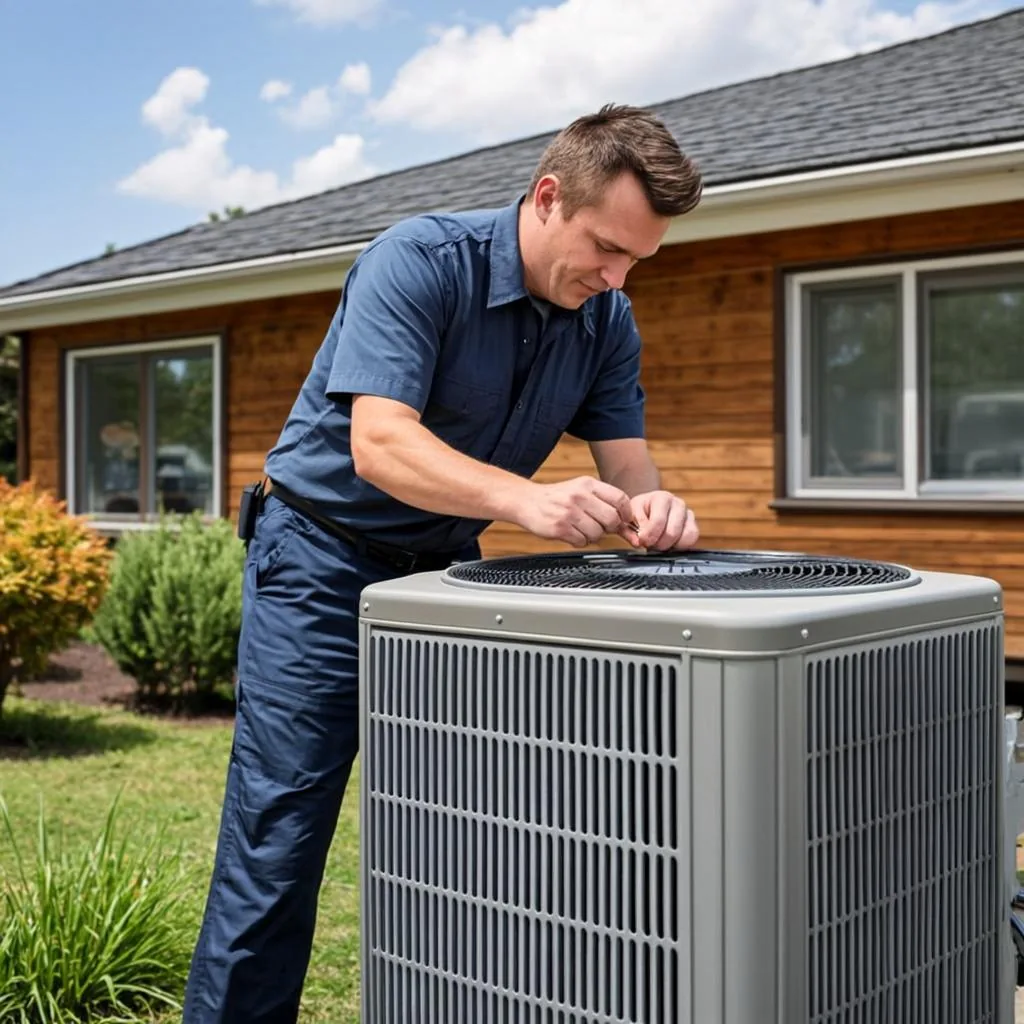
A fixed mini-split moves 2–4x the cooling of any plugin box, at a third of the noise, and it keeps working on the 41°C days when it matters. The jump from a window unit to a single-zone ductless system is the single biggest comfort upgrade per dollar in this guide.
Why Ductless Mini-Splits Fit Our Older Homes So Well
Roughly two-thirds of Vancouver's single-family housing stock predates 1980, and the overwhelming majority was built with hydronic baseboards, radiators or wall furnaces — no ductwork at all. Central AC needs ducts. Retrofitting them into a 1912 Strathcona character home means losing ceiling height, opening up plaster, and a renovation-scale budget. Ductless avoids all of it.
A ductless mini-split pairs a slim wall-mounted indoor head (about 80 cm wide, 28 cm tall) with an outdoor condenser, connected by a 7–10 cm bundle — two refrigerant lines, a condensate drain, and control wiring — that runs through one 8 cm hole in an exterior wall. The heads mount high on the wall, blow conditioned air across the ceiling in a wide, quiet sheet, and each one is its own zone with its own temperature sensor and remote. One outdoor unit typically serves up to four heads, so a two-storey East Vancouver house commonly gets a two- or three-zone system: one head in the main living space, one in the master bedroom, optionally one in a downstairs suite.
The zoning is not a gimmick in our climate — it is the whole point. Bedrooms need cooling from about 9 p.m. to 7 a.m.; living rooms need it from noon to 8 p.m. With independent heads you run each space only when it is occupied, instead of chilling an entire ducted volume. Inverter-driven compressors modate their speed instead of cycling on and off, which is why modern heads hold a room within half a degree, run at 19–29 dB (quieter than a whispered conversation), and draw 30–40% less power than fixed-speed equipment of the same capacity.
And critically for BC: the heat pump version of the same hardware is CleanBC-eligible. Baseboard-heated homes — an enormous share of Vancouver, Burnaby and New Westminster stock — are the program's sweet spot: a multi-zone heat pump can remove the electric baseboards, cut winter heating bills by 40–60%, add the summer cooling you originally called about, and collect $4,000–6,000 plus the income-qualified top-up on the way. For laneway homes, condos and additions, see the strata and permitting section below for the condo-specific rules before you fall in love with a specific head location.
Central AC: The Right Call When You Already Have Ducts
If your Surrey, Langley, Coquitlam or Cloverdale home was built after about 1985 with a forced-air gas furnace, you already own the most expensive part of a central cooling system: the ductwork. Adding a central AC or heat pump condenser outside, an evaporator coil on top of (or inside) the furnace plenum, and a 240 V circuit turns your heating system into a year-round air handler. That is why central installs land at $5,500–9,000 — a whole house of cooling for less than three ductless zones.
The caveats are ductwork condition and blower compatibility. Older builder-grade ducts in 1980s–90s homes were often sized for heating airflow only; cooling needs marginally higher velocities, and undersized returns upstairs mean cold air pooling in the basement while the master bedroom stays warm. We measure static pressure and room-by-room airflow before quoting — if a bedroom needs help, a small booster duct or a single supplementary ductless head is a cheaper fix than re-building trunk lines. High-efficiency furnaces from the last 15 years have ECM blower motors that modulate beautifully for AC; a 40-year-old belt-drive blower may need replacement or an upgrade to move cooling-season air quietly.
One more Metro Vancouver-specific note: a central heat pump (instead of AC-only) can reuse the same ducts and the same indoor coil position, pair with your existing furnace as a dual-fuel system, and bring the same CleanBC eligibility as the ductless version. If your furnace is 15+ years old, the smartest project is often a furnace-and-heat-pump pairing done together — one set of trades, one permit set, one rebate file. Our furnace and heating page covers that combination in detail.
BTU Sizing: The Science of Not Oversizing Your AC
Air conditioner capacity is measured in BTU per hour. Too small, and the system runs flat-out without catching up during a heat event. Too large — the far more common mistake — and it short-cycles: blasts cold air for six minutes, satisfies the thermostat, shuts down, and repeats. Short-cycling costs you more electricity, wears the compressor, and critically fails at dehumidification, because dehumidification only happens while air moves steadily over a cold coil. An oversized AC leaves you in a cold-but-clammy room.
| Area Being Cooled | Baseline Capacity | Typical Metro Vancouver Fit |
|---|---|---|
| Up to 400 sq ft (bedroom, den, laneway studio) | 9,000 BTU | Single head over a bed or desk; strata-condo main room |
| 400–600 sq ft (1-bed suite, small condo) | 12,000 BTU | Open-plan condo living/dining in Yaletown or Metrotown towers |
| 700–1,000 sq ft (main floor of a bungalow) | 18,000 BTU | Post-war bungalows in Dunbar, Poco, North Delta |
| 1,000–1,400 sq ft (open main + kitchen) | 24,000 BTU | Vancouver Specials, townhouse main floors |
| Whole 2-storey home, zoned | 2–3 heads, 27,000–36,000 BTU combined | Two heads down, one up; each zone sized to its room |
| Whole home, ducted (up to ~2,400 sq ft) | 2.5–3.5 ton (30,000–42,000 BTU) | Forced-air homes in Surrey, Langley, Abbotsford |
That table is a starting rule of thumb — roughly 20–25 BTU per square foot in our climate. A proper quote then adjusts for the factors that actually matter in a specific house:
- Ceiling height: a 1912 character home with 10-ft ceilings and a lofted landing holds ~25% more air than the same floor area at 8 ft — size on volume, not area.
- Glazing and orientation: a wall of west-facing glass in a White Rock condo can add 15–20% to the room's load; north-facing bedrooms barely need adjustment.
- Insulation and envelope: pre-1940 balloon-frame homes with no wall insulation, original single-pane windows, and an attic last topped up in the 1970s need more capacity per square foot than a 2018 built-code home — or better, an insulation and window upgrade that shrinks the load permanently.
- Occupancy and equipment: add ~600 BTU per person beyond two, and size kitchens up — cooking appliances dump 3–5 kW of heat into the zone.
- Adjacent unconditioned space: heads serving rooms over crawlspaces or garages (common in Burnaby and North Vancouver splits) need margin for floor gains.
For whole-home projects we run a room-by-room Manual J load calculation — the industry-standard method — rather than guessing. It takes a site visit and about 45 minutes, and it is the difference between a system you forget about and one you resent. Oversizing by "one size to be safe" is the #1 complaint we inherit from other companies' installs: the homeowner upgraded to a bigger head, got arctic blasts, noise, and a room that feels muggy anyway.
SEER2, Explained in Plain English
SEER (Seasonal Energy Efficiency Ratio) is cooling output divided by electricity consumed over a simulated season: higher numbers mean more cold per dollar. In January 2023 the testing standard changed to SEER2, which measures airflow under more realistic duct resistance — the same equipment now wears slightly lower numbers, so a 15 SEER2 unit is roughly a 16–17 SEER unit under the old system. Everything sold in Canada since 2023 is rated on SEER2, and the legal minimum in the north zone is 13.4 SEER2.
What the numbers mean for a Vancouver household: a 13.4 SEER2 minimum unit, a 16–17 SEER2 mid-tier ductless head, and a 20+ SEER2 premium inverter head differ by roughly 25–35% in summer electricity cost. If a heat event drives 500 cooling hours a season, a three-head system at BC Hydro's stepped residential rates works out to a difference of about $90–150 per year between minimum and premium efficiency. That means: pay the efficiency premium when it buys you inverter technology, sound levels and warranty length — not for the rating alone, because our relatively short cooling season stretches the payback of chasing the last few SEER points. The math is different in Phoenix; here, reliability and noise win.
Two companion ratings matter if you choose a heat pump: HSPF2 (heating performance) and the cold-climate designation, which certifies meaningful heat output at −15°C and −25°C — the difference between a heat pump that carries your North Vancouver home through a January outflow and one that needs backup heat every cold snap. And on the refrigerant side: the industry is mid-transition from R-410A to lower-GWP A2L refrigerants (R-454B, R-32); both are safe, both are current code, and A2L equipment is what new installs should be quoting in 2026 so you are not buying yesterday's refrigerant supply chain.
What AC Installation Actually Looks Like, Day by Day
A single-zone ductless install is one working day. A multi-zone or central system is one to two days. Here is the honest timeline from the moment you say yes.
Site visit & load calculation (day 0)
A technician measures each room, checks the electrical panel and outdoor placement options, photographs everything, and walks you through head locations. You get a written flat-rate quote the same day: equipment, labour, materials, permits, and warranty terms, with no allowances that balloon later.
Equipment ordered, permit pulled (2–7 days)
We order from local suppliers (2–5 days typical stock, longer for premium multi-zone inverters), submit the municipal electrical permit, and for strata properties supply the drawings your council needs. Nothing is drilled until approvals are in hand.
Install day, morning: mount, drill, set
Heads go up first on their mounting plates; one 8 cm hole per head through exterior wall; the condenser is set on its pad or brackets with code clearances (30 cm from the wall, 60 cm from property lines and neighbours' windows in most municipalities). Line sets, drain and control cable are routed and secured in UV-protected casing — we hide them properly, we do not staple a bare copper bundle to your siding.
Install day, afternoon: connect & commission
Lines are brazed under nitrogen, pressure-tested at 550 psi, vacuum-pulled to 500 microns and verified holding — the steps that separate a 15-year install from a three-year refrigerant leak. The circuit is landed in the panel, the system is charged by weighed-in quantity, and every zone is commissioned: airflow measured, drain tested with a water pour, temperature drop verified, Wi-Fi setup, and a walkthrough where we hand you the remotes and show you the filters.
Inspection & rebate filing
The electrical permit closes with a city inspection. For heat pumps we handle the CleanBC paperwork — including the EnerGuide pre- and post-assessments the program requires — and the rebate cheque comes to you. For rebate-eligible projects this whole stream is included, not an upsell.
Planning AC this summer? Get your quote before the July rush.
Free, written, flat-rate quotes across Vancouver, Surrey and Metro Vancouver — including the load calculation, permit strategy and, for heat pumps, the full CleanBC rebate file. Red Seal certified, licensed BC-PL-2019-4421, $2M insured, 4.9 stars from 39 reviews.
Average answer time under 15 minutes during business hours. 24/7 emergency line for no-cooling failures during heat events.
Permits, Strata Rules and Patio Condensers: The Condo Reality Check
Roughly half the households in Vancouver proper are strata-titled, and cooling installs in condos hit a wall of rules that single-family homeowners never see. The good news: almost all of it is navigable with the right paperwork, and we prepare that paperwork for you.
Under the Strata Property Act, the exterior of your building — including your patio's perimeter walls, the slab, and the outside face of the glass — is common property. Mounting a condenser on the patio, running a line set along an exterior wall, or drilling a penetration through concrete or building envelope therefore requires written approval from your strata council, not just a friendly nod from a neighbour. Councils care about four things, and your request should answer all four in one reading:
- Placement: most bylaws forbid anything that obstructs walkways, creates a trip hazard, or sits within a set distance of the patio rail. Slab-mounted units in the corner farthest from your door clear most bylaws automatically.
- Sound: condensers run 45–55 dB; bylaws commonly require under 50 dB measured at the property line during quiet hours. Inverter mini-splits idle at 45 dB or less, and we supply the manufacturer sound sheet with the request.
- Line sets and penetrations: envelope penetrations in rainscreen buildings can void warranty or violate the envelope engineer's design. Where a hole is not allowed, line sets can often route through interior walls to a bedroom head, or through a dryer-vent style sleeve the strata already uses elsewhere.
- Insurance and licensing: attach our licence number, WorkSafeBC coverage and $2M liability confirmation to the request — councils approve complete packages, and stall on verbal ones.
On the municipal side, a new 240 V circuit for the condenser requires an electrical permit in virtually every Metro Vancouver jurisdiction, and condo work typically needs your strata's authorization form submitted with it. In detached homes the same permit applies, plus a gas-fitting ticket if the project touches a furnace or boiler. We pull all of it under BC licence BC-PL-2019-4421, so the inspector signs off on our work, not on a homeowner's DIY weekend.
The Brands We Install and How They Compare
We are not locked to one manufacturer, which means the recommendation below is about what each brand actually does well — and what it costs you to own for 15 years.
| Brand | Known For | Relative Cost | Best Fit |
|---|---|---|---|
| Daikin | Quiet operation, excellent multi-zone inverter logic, huge North American parts network | Mid to premium | Whole-home ductless retrofits, noise-sensitive strata |
| Mitsubishi Electric | Cold-climate Hyper-Heat performance, bulletproof compressors, industry-leading warranties | Premium | Heat pump projects that must carry winter heating |
| Lennox | High-SEER central AC, strong ducted ecosystem, quietest central condensers | Mid to premium | Forced-air homes pairing with a furnace |
| Fujitsu | Efficient single-zone heads, compact wall units, dependable Halcyon line | Mid | Bedrooms, additions, laneway homes |
| Gree | Value pricing from the world's largest AC manufacturer, solid inverter fundamentals | Value | Budget-conscious single and two-zone projects |
Two purchase decisions matter more than the badge on the side. First, who installs it: 80% of early-life mini-split failures we service trace to installation — undercharged systems, brazing without nitrogen, drains without slope, line sets without insulation. Second, warranty registration and serviceability: buy a brand a local company can get parts for in 24 hours, not one that needs a two-week courier from overseas. Every system above passes that test in the Lower Mainland.
Maintenance: What Four Grand of Equipment Actually Needs
Cooling systems in Metro Vancouver work a short, intense season, and the maintenance list is correspondingly short. Ductless heads: rinse the mesh filters monthly in-season (two minutes, no tools — a clogged filter can cut capacity 15% and dumps water from an overflowing drain pan). The condenser: keep the coil face clear of debris, ensure 30 cm of breathing room, and hose the fins gently once a season — cottonwood fluff in June is the Lower Mainland's #1 condenser killer. Annual professional tune-up: $149–229, covering refrigerant and electrical checks, drain flush, and commissioning data comparison; it also preserves warranty terms on premium brands.
Watch for three symptoms between services: a head that smells musty (mould in the drain pan or blower wheel, fixable with a coil treatment), water dripping from the head (drain blockage — stop using it and call before it stains the wall), and a gradual loss of cooling across all zones (usually a low refrigerant charge from a slow leak; catching it early is the difference between a $350 repair and a $4,000 compressor). And when a heat event is forecast: pre-cool the house in the morning when the outdoor unit works efficiently, and keep drapes closed on the west side — the cheapest cooling in this guide is the cooling you never need.
Minutes to rinse a head filter
Monthly during the season. The single highest-return habit in AC ownership.
Annual tune-up
Refrigerant, electrical, drain and performance checks that keep warranties alive.
Realistic equipment life
For a properly commissioned inverter system in our mild coastal climate — often longer than in harsher markets.
Why May and June Are the Smartest Months to Book
Every year the pattern repeats like a tide: quiet April, a busy May, a frantic June, and by the second week of July every reputable installer in the Lower Mainland is quoting installs for late August. Heat waves are not forecastable three months out, but the booking crunch is — homeowners remember last summer and act at the first 25°C day. The practical consequences of booking late are concrete: 3–6 week waits exactly when the risk peaks, thinner equipment choice at distributors (the popular 12,000 and 18,000 BTU heads sell out first), overtime rates in some shops, and zero bandwidth for the complex strata-approval projects that need a council meeting cycle.
Booking in May or June flips all of that: install within days, full equipment selection, and the work happens before you need it — which is the entire point. If you are reading this in peak July heat, call anyway: we hold daily capacity for no-cooling emergencies (a failed system during a heat event is a health situation, not a comfort one, and our 24/7 emergency line triages those first), and cancellations free install slots weekly.
On money: cooling projects from about $3,800 are financeable — $0 down, from 7.99% APR OAC, 2–10 year terms, so a three-zone heat pump can land near $180–320 per month while rebate cheques flow back to you. A May quote also means your CleanBC file (which needs pre- and post-install EnerGuide assessments for heat pump routes) is processed well before autumn, with no rebate-window anxiety. Full financing and rebate-stacking detail lives on our financing page, and the deep comparison of heat pump routes is our Vancouver heat pump guide.
Vancouver AC Questions, Answered Straight
Single-zone ductless runs $3,800–5,500 installed; multi-zone whole-home ductless runs $8,000–14,000; central AC in an already-ducted home runs $5,500–9,000; and a cold-climate heat pump runs $12,000–18,000 before CleanBC rebates of up to $16,000. Window ($400–800) and portable ($500–900) units cost far less up front but cool one room and struggle in true heat events. Every real quote in this market is written after a site visit — treat any exact over-the-phone number as a warning sign.
Usually yes — with written strata approval. The patio and exterior walls are common property under the Strata Property Act, so council sign-off is mandatory before any mounting or envelope penetration. Our request packages include placement drawings, manufacturer sound data, our licence and insurance certificates, and the municipal permit details, which is what a council needs to approve in a single meeting. Where a patio simply will not work, interior line-set routing or a through-wall sleeve are the usual fallbacks.
Start at 20–25 BTU per square foot and adjust: a 400 sq ft bedroom wants a 9,000 BTU head, a 1,000 sq ft bungalow main floor about 18,000 BTU, and a typical 2,400 sq ft ducted Surrey house 2.5–3.5 tons. Ceiling height, west-facing glazing, insulation quality and crawlspace exposure move the number, which is why our quotes are backed by a room-by-room Manual J load calculation. Oversizing is the expensive mistake — short-cycling wastes power and leaves rooms cold and clammy.
In Metro Vancouver, the heat pump usually wins. Same summer cooling, plus winter heating at a fraction of baseboard or furnace costs, and it is the only version eligible for CleanBC rebates — AC-only equipment qualifies for nothing. If your existing heating is young and efficient, AC-only or a dual-fuel pairing can still make sense, and we will say so when it does. The full comparison, with the rebate math by heating type, is in our heat pump guide and financing pages.
Yes for the electrical work: a new condenser circuit requires an electrical permit in virtually every Metro Vancouver municipality, and refrigerant handling must be done by certified technicians. In strata buildings you also need council authorization before anything touches common property. We include permits and filings in every written quote and schedule the inspection ourselves, so the paperwork is invisible to you.
May or June, before the summer booking crunch. By early July most Lower Mainland installers are running 3–6 week waitlists, popular equipment sizes go on backorder, and strata-approval timelines stretch. Spring installs get full equipment selection, calmer scheduling, and finished systems before the first heat event — plus CleanBC rebate files for heat pumps are submitted and processed with time to spare.
Cooling Services From the Same Licensed Crew
Cooling & AC Services
Every AC installation in Vancouver and air conditioning repair in Surrey we do — ductless, central and multi-zone, with same-season scheduling.
Heat Pumps
Heat pump installation in Vancouver with CleanBC heat pump rebates up to $16,000 and cold-climate heat pump sizing for January outflows.
Financing & Rebates
$0-down home service financing in BC from 7.99% APR and current CleanBC rebates we stack with your cooling project.
24/7 Emergency Service
24/7 emergency response in Vancouver — failed AC during a heat event, no-cooling emergencies and burst pipe emergency response all year.
Related Guides From Our Blog
Summer Heat Dome Preparedness for BC Homes
What the 2021 dome taught us, room-by-room cooling strategy, and the pre-heat-event checklist that protects seniors and kids first.
Heat PumpsThe Complete Vancouver Heat Pump Guide
Cold-climate performance, HSPF2 vs SEER2, and the full CleanBC rebate math by heating type — the deep comparison this article only summarizes.
RebatesCleanBC Rebates 2026: The Complete Claiming Guide
Every current stream — heat pumps, heat pump water heaters, windows, income top-ups — with eligibility rules and filing timelines.
Written and reviewed by the licensed crew that has installed 2,400+ cooling systems across Metro Vancouver since 2010. Every price range, code reference and rebate figure in this guide comes from jobs we actually performed this year. Questions about your specific home? Meet the team or call 604-615-2212 and talk to the person who will do the work.
Get Your Free AC Installation Quote in Vancouver & Surrey
Tell us about your home — size, storeys, heating type, and which rooms overheat first — and we will call back within 15 minutes during business hours with a plan and a booking window. Quotes are written, flat-rate and include equipment, labour, permits and the CleanBC rebate file for heat pump projects. No obligation, no pressure, and never a fee for choosing to think it over.
Why Homeowners Choose Us
- Serving Metro Vancouver since 2010 — 2,400+ cooling installs
- Red Seal licensed technicians, $2M insured, WorkSafeBC
- 4.9-star average from 512 verified reviews
- Written flat-rate quotes with load calculations, not guesses
- Strata approval packages prepared for you
- CleanBC rebate filing handled end-to-end
- 24/7 emergency line for no-cooling heat-event failures