The Honest Answer Up Front
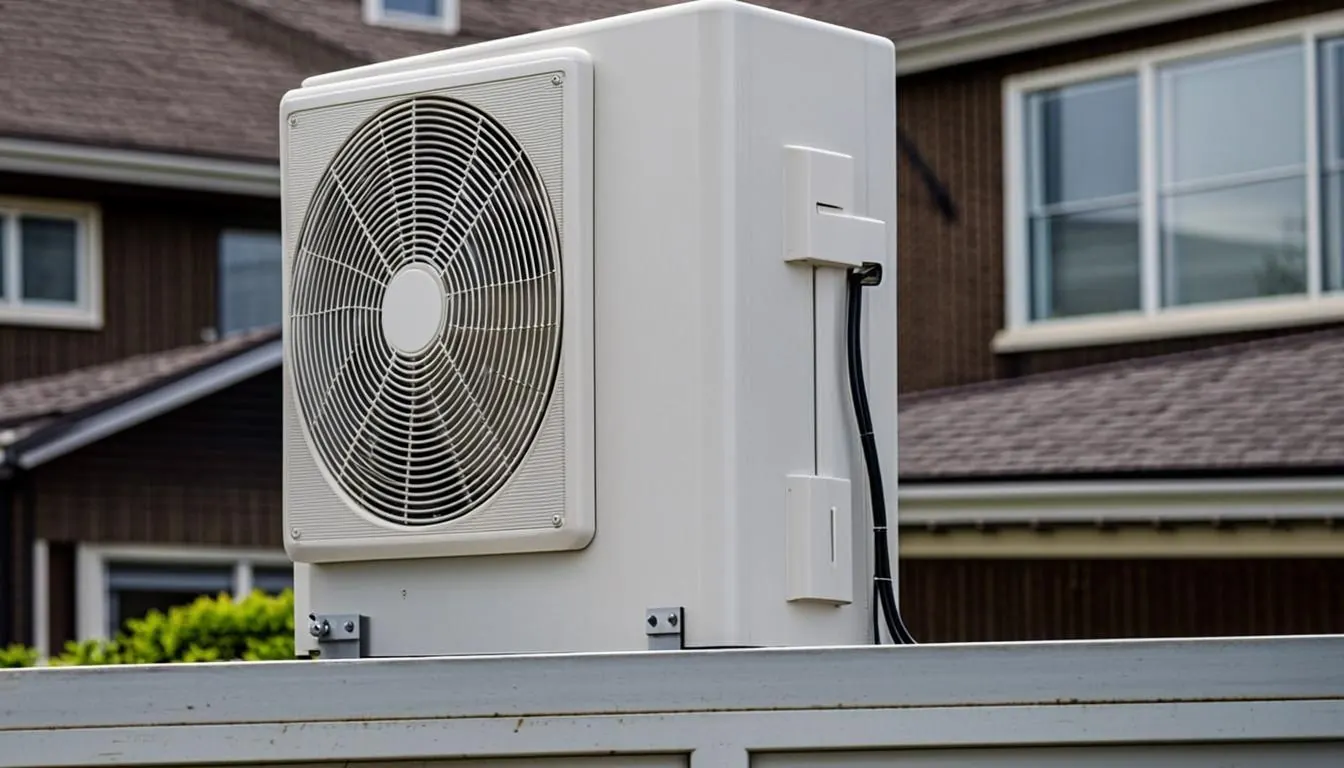
An air handler is the indoor half of a ducted heat pump system: the steel cabinet in your utility room that moves air through the ducts, holds the coil where heating and cooling actually happen, and replaces the blower-and-cabinet role your furnace plays today. Every ducted heat pump in Metro Vancouver has one, almost nobody buying a heat pump asks about it first, and it is the component that decides whether your new system feels like gentle even comfort or like a wind tunnel with a thermostat. If you are replacing a furnace with a ducted heat pump, the air handler is the piece taking over your furnace's job, minus the flame.
The honest framing we give at the kitchen table: the outdoor unit gets the brand-name reputation, the rebate paperwork and the neighbour conversations, but the air handler determines three things you will live with every single day. How loud your vents are. How even your temperatures are room to room. And whether backup heat kicks in gracefully or expensively on the three coldest nights of the winter. A premium outdoor unit bolted to a mismatched air handler is a common way to waste money in this region, and it is entirely avoidable with one matching rule covered in Chapter 6.
Our heat pump installation service sizes and matches both halves as a system, because that is how the manufacturers rate them and how the rebates inspect them. If your ducted system questions are more specific to your city, our Surrey heat pump team and our Coquitlam crews handle air handler matching on every quoted job, and the rules are identical across the region.
The outdoor unit harvests the heat. The air handler delivers it. Homeowners research the first component and live with the second one, which is exactly backwards.
0 jobs since 2010
Ducted heat pumps, dual fuel systems and furnace work across Metro Vancouver, all of it duct-and-airflow work at heart.
0 per cabinet
Move air, exchange heat, manage condensate. Every other feature on an air handler exists to support those three.
0 star rated
512 verified reviews, many of them air handler diagnostics where the fix was airflow, not refrigerant.
0 workmanship warranty
On the install, on top of manufacturer parts coverage, in writing, on every matched system we build.
What an Air Handler Actually Is
Strip away the branding and an air handler is a rectangular cabinet with six functional parts. The blower assembly, a fan and motor that pushes air. The indoor coil, a refrigerant-to-air heat exchanger mounted in the airflow path. The electric heater section, backup resistance strips in most BC installs. The filter rack, which holds the only filter your system has. The control board, which choreographs blower speeds, staging and safety switches. And the cabinet shell itself, insulated to keep the heat where it belongs and quiet enough to live beside.
If you own a furnace today, you already own most of this machine. A furnace is an air handler plus a combustion section: gas valve, burners, igniter, flame sensor and a heat exchanger designed around a flame instead of a refrigerant coil. When a fuel-switching home removes the furnace and installs a ducted heat pump, the air handler slots into the same footprint, connects to the same supply and return ducts, and uses the same thermostat wire in most cases. The chimney venting goes away entirely, which is one of the quiet perks of the switch: no combustion, no vent, no carbon monoxide conversation at all.
| Part | What it does | Furnace equivalent |
|---|---|---|
| Blower and motor | Moves air across the coil and through the ducts | Same part, same job |
| Indoor coil | Refrigerant absorbs or releases heat here | The heat exchanger, but fed by refrigerant instead of flame |
| Electric strip section | Backup resistance heat for the coldest snaps | The burners, as a fallback instead of the primary |
| Filter rack | Holds the system filter | Identical |
| Control board | Runs blower stages and safeties | Runs ignition and safeties too |
| Cabinet and insulation | Holds it all, keeps it quiet | Same shell concept, no vent connections |
One naming note that saves confusion at quote time. Some contractors call it a fan coil, some call it an air handler, and ductless indoor heads are sometimes described as zone air handlers. In this guide, air handler means the ducted indoor cabinet paired with a ducted outdoor unit. The ductless world is a different architecture covered in our ductless versus central comparison guide, and the choice between ducted and ductless is usually made by whether your house already has usable ducts.
The Four Jobs It Does Every Day
Job one is airflow. The blower has to deliver roughly 350 to 400 cubic feet per minute of air for every ton of heat pump capacity, a ratio the equipment is engineered around. An undersized blower or choked ductwork starves the coil, which drops capacity, raises energy use and, in cooling mode, freezes the coil into a block of ice. Airflow is the single most diagnosed problem in our service calls on ducted heat pump systems, and most of the fixes live on the duct side, not inside the cabinet.
Job two is heat exchange. In heating mode the coil carries cold refrigerant that absorbs warmth from the returning household air, then sends that warmth outdoors to be upgraded by the compressor; the air leaving the coil is cooler than the room, not warmer, which confuses everyone the first time they check. Wait, that is backwards, customers say. It is not: the heat being moved is in the refrigerant loop, and the register air is warm because the loop runs through the outdoor unit first. In cooling mode the directions flip, the coil gets cold, the air gets colder, and the moisture in your house condenses on the coil on its way to the drain pan.
Job three is filtration. Every cubic foot of heated or cooled air passes through the one filter in the rack, which makes that filter the hardest-working consumable in the house. Job four is condensate management, strictly a cooling-season duty in our climate but a serious one: a heat pump in July can pull litres of water per day out of coastal air, and all of it has to reach a drain reliably. Chapters 7 and 8 cover the two jobs homeowners most often get wrong.
The Coil and the Refrigerant Loop, From the Inside
Two copper lines connect the air handler to the outdoor unit: a thin liquid line and an insulated suction line. The indoor coil sits between them, and a metering device, in modern equipment an electronic expansion valve, throttles refrigerant into the coil at exactly the rate the system demands. In heating mode the refrigerant arrives cold, colder than the returning house air, so heat flows from your 21-degree air into the refrigerant. The compressor outdoors squeezes that captured warmth to a much higher temperature, the outdoor coil rejects it inward, and the room gets the benefit. In cooling the loop simply runs the other way.
This is why the air handler coil must match the outdoor unit. The metering valve, the coil circuit count, the metering orifice and the rated airflow are engineered as a set. Mix a premium outdoor unit with a leftover or bargain indoor coil and the system runs off its design curve: capacity drops, the compressor works harder, defrost behaviour gets erratic, and the efficiency you paid a premium for never materializes. Matched systems are also what rebate programs inspect for, so a mismatch can cost you at the paperwork stage as well as on the bill.
The refrigerant itself deserves one paragraph of respect. It is under pressure in both directions, it is charged by exact weight at install, and its lineset has to be dry and clean inside. That is why a proper installation includes pulling a deep vacuum on the loop before charging, a process measured in microns that we cover hour by hour in our Vancouver heat pump guide. A rushed vacuum leaves moisture in the loop that degrades performance and corrodes the metering valve, and no amount of premium equipment forgives it.
ECM versus PSC: The Blower Motor Decision
Blower motors come in two families. The older PSC, permanent split capacitor, motor runs at fixed speed and ramps hard: on at full push, off completely. The newer ECM, electronically commutated motor, is a variable-speed or multi-speed device that ramps gently, holds constant airflow against a dirty filter by working harder, and sips electricity at low speed. In a heat pump system the difference is not cosmetic. Heat pumps move lower-temperature air than furnaces do, so they need longer, gentler, continuous circulation, which is precisely the ECM profile.
| Characteristic | PSC blower | ECM blower |
|---|---|---|
| Speed behaviour | Fixed, full on and full off | Variable, ramps and holds targets |
| Electricity use | Steady draw whenever running | Far lower draw at low speeds |
| Dirty filter response | Airflow just drops | Works harder to hold airflow, then trips safeties |
| Comfort profile | Blast and drift cycles | Long quiet near-continuous circulation |
| Fit with heat pumps | Acceptable in budget builds | The natural pairing for modulation |
| Replacement cost class | Lower | Higher, and usually worth it |
The one ECM behaviour homeowners should know about is the ramp. On a call for heat the blower starts slow, audibly soft, while the coil comes up to temperature, then settles into a low continuous hum that may run for an hour. That is not a malfunction, that is the design. The first autumn after a furnace-to-heat-pump conversion generates a predictable batch of calls from homeowners convinced the fan is stuck on, and the answer is always the same: it is supposed to run. Air movement is the delivery method now.
Sizing, CFM and the Duct Conversation Nobody Wants
An air handler is sized to the system tonnage, and the system tonnage comes from a heat-loss and heat-gain calculation on your actual house, not from the square footage of the old furnace nameplate. The airflow target is roughly 350 to 400 CFM per ton: a three-ton system wants around 1,050 to 1,200 CFM moving through the coil. The blower can deliver that only if the ducts can carry it, which is where static pressure enters your life.
Static pressure is the resistance the duct system presents, measured in inches of water column on a manometer at commissioning. Oversized ducts, crushed flex, closed registers, a clogged filter or a coil packed with dust all raise it. A quality commissioning includes measuring it and adjusting blower profiles to the actual installation, and it is one of the numbers our crews record on the commissioning sheet. If a quote for a ducted heat pump does not mention duct evaluation at all, treat that as the red flag it is, because the equipment may be flawless and the delivery system may still be the constraint.
Heat-loss calculation first
Room-by-room heat loss and gain on the house as built, which sets the tonnage the system must deliver.
Airflow target second
Tonnage times 350 to 400 CFM per ton sets the air the blower must move through the coil.
Duct capacity third
Supply and return sizing, flex condition and register count decide whether the target air can actually travel.
Static pressure measured
The commissioning visit verifies the real resistance and the blower is configured to the installed reality, not the brochure.
Oversizing deserves its own warning because it is the default sin of this industry. An oversized air handler and outdoor unit satisfy the thermostat fast, then shut down: short cycles, poor dehumidification in summer, uneven room temperatures and a compressor that accumulates start-stress. The right size runs long and quiet and holds temperature, which is the entire comfort argument for heat pumps in the first place.
Electric Backup Strips: Insurance With a Catch
Most BC air handlers include one or two electric resistance heating elements, strip heat, sized as a fraction of the system capacity. Their honest job is narrow: carry the house during the rare deep-outflow hours when even a cold-climate heat pump is running below full capacity, and bridge the defrost cycles when the outdoor unit briefly reverses to melt frost. In a well-matched system on the coast, the strips may run a handful of hours per winter, and their existence costs you almost nothing.
The catch is arithmetic. Strip heat is resistance heat, the same physics as baseboard heaters: every unit of warmth costs a full unit of electricity, a COP of 1, while the heat pump itself delivers two to three. A system that leans on its strips through January, because it was undersized, or because the homeowner set the thermostat up four degrees at once, runs at baseboard economics precisely when the rates matter most. Smart recovery settings and staged thermostat behaviour exist to prevent exactly this, and it is on the walkthrough checklist every time we commission a ducted system.
The sizing decision matters here too. Strips are usually selected to cover a meaningful share of the design load in the coldest pockets of the Fraser Valley and a minimal share on the coast, where the heat pump rarely needs the help. If an installer proposes a full-capacity strip bank for a Vancouver or Burnaby home, ask why, because the honest answer is usually that the heat pump itself is undersized and the strips are being asked to hide it.
Condensate: The BC-Specific Chapter
Cooling season in Metro Vancouver is humid by national standards, and an air handler in cooling mode is also a dehumidifier. Water condenses on the cold coil constantly, runs down the fins into the drain pan, and exits through a small line to a floor drain, condensate pump or laundry tub. On a muggy August day the volume is measured in litres, which is why this humble plumbing detail earns its own chapter: it is the most common source of water damage and service calls on otherwise healthy systems.
Two protections matter. A float switch in the pan shuts the system down before overflow becomes a ceiling stain, and a secondary drain pan or overflow route under the cabinet catches the failure case. The line itself needs periodic flushing, because algae grows in warm wet vinyl in our climate and eventually mats into a plug. A tablespoon of diligence in spring prevents the August overflow, and flushing the line is a five-minute homeowner task we teach on every walkthrough. If your air handler sits above finished space, a ceiling below an attic install, a conditioned floor above a basement suite, the float switch is not optional equipment.
Common Failures, Ranked by Frequency
After 12,000-plus jobs, the failure list for air handlers is short and stable, and most entries trace back to airflow or water rather than the machinery itself. The $89 diagnostic, credited toward any resulting repair, resolves almost all of these in one visit, and the honest pattern to notice is how rarely the expensive components are the culprits.
| Failure | What it looks like | Usual root cause |
|---|---|---|
| Clogged condensate line | Water at the cabinet, system shutting off in cooling | Algae in the drain line, no flush routine |
| Frozen indoor coil | Weak airflow, ice on the refrigerant lines | Low airflow from a spent filter or blocked return |
| Blower motor failure | No air at the registers, hum at the cabinet | Bearing wear, or years of dirty-filter strain |
| Control board faults | Blower will not start, odd staging behaviour | Voltage events, age, moisture exposure |
| Failed float switch | System refuses to run cooling, dry pan | Stuck or corroded safety switch, replace-and-go |
| Refrigerant leak at the coil | Slow capacity loss over seasons | Coil corrosion, rare but the career repair |
Two symptoms specifically do not mean the air handler is failing. A gentle continuous blower hum through shoulder seasons is the ECM doing its job. A brief stop and soft restart during cold snaps is defrost logic, coordinated with the outdoor unit, and there is a whole guide in this series on the defrost cycle because it generates so many worried mid-winter calls. Diagnosing by noise alone is how healthy systems get replaced unnecessarily, and our flat-rate book is structured so a diagnostic visit costs the same whether the news is a filter or a motor.
The Maintenance Shortlist
An air handler asks for less than a furnace asks for, because there is no combustion to analyze and no flame to inspect. The annual professional visit covers coil inspection and cleaning as needed, blower and electrical checks, refrigerant and strip verification, and a condensate function test. Homeowner duties between visits are the same three habits that govern most of the outcomes: the filter on schedule, registers and returns unblocked, and the outdoor unit clear of debris and snow drift.
The filter schedule deserves precision because it is the cheapest control you have over every failure mode in Chapter 9. One-inch filters in a household with pets or wildfire-smoke summers may need monthly attention, deeper media filters run six months or more, and the honest instruction is to write the install date on the filter edge and check it sooner than you think it needs. A choked filter is the root cause behind frozen coils and strained blower motors, which makes it the highest-return five-minute chore in the house.
Replacing a Furnace With an Air Handler: The Real Math
The furnace-to-air-handler conversion is the classic fuel-switching project in this region, and the installed numbers come as a system, not as parts. A cold-climate ducted heat pump system, outdoor unit plus matched air handler plus strip section plus electrical and commissioning, installs in the $6,500 to $14,000 range in Metro Vancouver depending on capacity tier, duct condition and site electrical work. A dual fuel alternative, keeping the furnace and adding a heat pump, is covered honestly in another guide, and it remains the right answer for some houses with young furnaces.
Combined CleanBC Better Homes, BC Hydro, FortisBC and municipal top-ups can reach $16,000 for cold-climate heat pumps in 2026 — we complete the paperwork. Fuel-switching homes, baseboard or furnace households moving to a certified cold-climate system, are precisely the audience those programs are built for, which is why the effective net cost of a conversion is often far below the sticker range. Monthly financing from 7.99 percent, detailed on our financing and rebates page, closes the gap for households where the switch pays for itself but the capital does not arrive today.
Which brings the guide to the scenarios. These six cover most of the conversions our Vancouver crews quote in a given month, and the pattern to notice is that the air handler decision follows the house, not the calendar.
1970s bungalow, furnace in the hallway closet
Straight swap: matched air handler in the same footprint, existing ducts evaluated for static pressure, strips sized modestly for the coast.
Two-storey with one always-cold bedroom upstairs
Ducted conversion plus zoning, or a single ductless head for the problem room. The air handler alone will not fix a duct-supply imbalance.
House with a 6-year-old high-efficiency furnace
Dual fuel, not conversion. The furnace keeps the blower role and the heat pump pairs through it. Scrapping healthy equipment is not honest advice.
Baseboard-heated home with no ducts at all
No air handler and no ducted quote. Multi-zone ductless at $9,500 to $16,000 is the correct architecture for this house.
Condo or townhouse with an electric furnace
A packaged heat pump with its own air handler replaces it, with strata and electrical-panel checks before any signature.
Rental suite with a separate meter
Landlord math: a single-zone ducted system cuts the tenant electric heat bill sharply and the suite gains cooling it never had.
The One-Page Cheat Sheet
The whole guide compressed for the quote meeting. If a proposal cannot answer these rows, it is not a proposal, it is a brochure.
| Question | The answer |
|---|---|
| What is an air handler? | The indoor cabinet of a ducted heat pump: blower, coil, filter, strips and controls, the furnace minus the flame |
| Airflow target? | 350 to 400 CFM per ton, set by a real heat-loss calculation |
| Which blower? | ECM in any heat pump application worth the name |
| What do strips cost to run? | Baseboard economics, COP 1. They are insurance, not the primary heat |
| System installed cost? | $6,500 to $14,000 ducted cold-climate, outdoor unit and air handler as one matched price |
| Rebates? | Up to $16,000 combined in 2026 on cold-climate systems, paperwork filed by us |
| Most common failure? | Airflow and water, not machinery. Filter and condensate line discipline prevent most service calls |
| Match rule? | Indoor coil, metering device and outdoor unit from one engineered set, always |
Frequently Asked Questions
Services From This Guide
Ducted heat pump conversion quotes, airflow diagnostics on existing systems, and matched system design across Metro Vancouver.
Heat pump installation
Cold-climate ducted and ductless systems, matched indoor and outdoor, sized from real heat-loss math.
Heat pump Surrey
City-specific ducted conversions and air handler diagnostics across Surrey, White Rock and North Delta.
Furnace and heating service
The dual fuel path and honest furnace work on the other side of the fuel-switching fork.
24/7 emergency service
No-heat and no-cool calls answered around the clock, average 45-minute response, flat after-hours premium.
Related Guides
The Vancouver Heat Pump Guide
The equipment, cost and process overview for the outdoor half of the system this guide pairs with.
Heat PumpsDuctless vs Central: The Surrey Guide
Whether your house needs an air handler and ducts at all, or heads straight to ductless heads.
RebatesCleanBC Rebates: The 2026 Guide
The incentive stack behind the $16,000 cold-climate heat pump ceiling, program by program.
Red Seal certified, licensed gas fitters (BC-PL-2019-4421), $2M insured and 15-plus years in the field, with more than 12,000 jobs completed across Metro Vancouver since 2010 and a 4.9-star rating over 39 reviews. We wrote this guide because the indoor half of a ducted heat pump is the half homeowners never research and live with every day, and because an industry that only talks about the outdoor unit keeps selling systems that disappoint in the rooms where it matters.
More about our team →Get Your Air Handler Questions Answered
Book a $89 diagnostic or a free ducted heat pump estimate with a Red Seal estimator. You get a heat-loss calculation, an airflow and static pressure read on your ducts, a written flat-rate price for the matched system, and the rebate stack applied to the numbers. Zero obligation, same-day quotes on most calls.
Heating or cooling acting up?
No-heat and no-cool calls are answered 24/7 with live dispatch and flat after-hours pricing posted in advance. Daytime? The $89 diagnostic is usually same-day in Vancouver, Burnaby and Surrey.
Call 604-615-2212 WhatsApp Us