
The Ranking, Up Front
Ranked for a typical BC home heating with electric baseboard, the upgrade paths run like this. First, the nearly-free layer: proper per-room control and air sealing, because a baseboard zone with a stuck thermostat is a zone that heats the street. Second, a single ductless heat pump zone at $3,800 to $5,500 covering the living area where you actually spend your evenings, which converts the bulk of your consumption from resistance to heat-pump economics. Third, multi-zone coverage at $9,500 to $16,000 for bedrooms and the whole floor plan. Fourth, where hydronic pipe already exists, condensing boilers at $8,500 to $14,000 and combi units at $7,000 to $11,000. A full electric-furnace-and-duct retrofit ranks last, and the honest answer is that most homes should never reach it.
The reasoning behind that order never changes: attack the controls and the envelope first because they are cheap and permanent, then convert the hours of heating that dominate the bill, then buy equipment for the remainder. Every step reduces the size of the next one. Skipping to the end of the list buys the most machinery for the least benefit, which is the single most expensive mistake we see in baseboard homes. We have made this ranking in person more than a thousand times, backed by 12,000-plus jobs since 2010, flat-rate pricing, Red Seal certification and a 2-year workmanship warranty on everything below.
Baseboard is not a design flaw, it was a 1970s trade-off that BC Hydro rates slowly turned into a tax. The upgrade sequence that works is the one that starts with the cheapest kilowatt-hours to eliminate, not the most impressive machine to buy.
0 jobs since 2010
Heat pump conversions, thermostat upgrades and hydronic work across seventeen cities in Metro Vancouver and the Fraser Valley.
0 diagnostic, credited
Confirms electric versus hydronic, circuit capacity and upgrade path in one visit, with the fee credited into the work that follows.
0 star rated
26 verified reviews from condo owners and homeowners who got the ranking before the invoice.
0 workmanship warranty
Every heat pump, thermostat and boiler install warrantied, with 24/7 coverage at a flat $150 after-hours premium.
Why BC Grew So Much Baseboard
Electric baseboard is the signature of a specific construction era. Through the 1960s to 1980s, the towers and three-storey wood-frame walk-ups of Vancouver, Burnaby, New Westminster and Richmond went up fast and electric, because baseboard needed no furnace room, no boiler, no fuel storage, no maintenance contract and no ductwork, and because electricity looked permanently cheap. Condo developers loved an heating system with no moving parts and a decades-long warranty question they would never have to answer. Tens of thousands of suites later, the region is still living with that decision, and so is everyone who opens a BC Hydro bill in January.
Two complications hide inside the same word. Electric baseboard is resistance heat, wires glowing warm, and everything in this guide addresses it. Hydronic baseboard looks almost identical, finned pipe along the wall, but carries hot water from a boiler, and its upgrade path is entirely different, Chapter 8. There is also the middle generation of in-suite electric furnaces and wall fan-forced heaters, which behave like baseboard with a blower. The $89 diagnostic distinguishes them in minutes, because the first honest step in any upgrade is knowing exactly what is in your walls, and the fee credits into whichever repair or conversion follows.
Electric baseboard
Resistance heat at near 100 percent conversion, per-room zones, nothing to maintain, and the highest running cost per unit of heat on a BC Hydro bill.
Hydronic baseboard
Fin-tube loops on boiler water, usually gas. Same silhouette, different physics, different upgrade ranking, and a different utility bill entirely.
Fan-forced and in-suite furnaces
Resistance heat with a blower, common in closets of older walk-ups. Treat as baseboard with air movement, and rank the upgrades the same way.
Strata metering legacy
Some towers still pool electricity into strata fees, hiding each suite's consumption. Meter separation is its own conversation, and often the wake-up call.
The Four Real Problems
Resistance electric heat has exactly one virtue, converting every watt it draws into warmth, and exactly one structural flaw, needing three times the watts a heat pump would need for the same warmth. That flaw is Problem One, the running cost, and it lands hardest in the winter months when the BC Hydro bill stacks up through the upper step. Problem Two is silence about air: baseboard heats by convection along the floor, moves almost no air, filters nothing, and leaves dust, cooking film and wildfire-smoke seasons entirely unaddressed. Problem Three is no cooling, which was a Pacific Northwest joke for decades and stopped being one after the 2021 heat dome. Problem Four is control, because a wall dial per room is only zone control if the dials actually work, and forty-year-old bimetal thermostats mostly do not.
Notice what is not on the list: reliability. Baseboard elements essentially never fail, which is precisely the trap. The system does not break loudly the way a furnace does, so it never triggers a replacement decision, and households pay the difference quietly for decades instead. The upgrade decision has to be made deliberately, on the numbers, which is what the rest of this guide is for.
Every Option, Ranked Honestly
Six paths, ranked by what they return per dollar in a BC home that heats with baseboard today. The prices are installed figures from our own flat-rate quotes; the rankings shift only when your house shifts them.
Electronic zone thermostats and sealing
Replacing tired line-voltage dials with accurate electronic control, plus caulk, weatherstrip and gaskets. The cheapest kilowatt-hours you will ever eliminate, and the step that shrinks every later purchase.
One ductless heat pump zone
$3,800 to $5,500 installed over the main living area. Converts your largest heated space from resistance economics to heat pump economics, and quietly adds cooling, filtration and dehumidification to the room you live in.
Multi-zone ductless coverage
$9,500 to $16,000 for the bedrooms and the rest of the plan. The house stops buying resistance heat almost entirely, and each room gets its own setpoint. The choice for owners staying five years or more.
Hydronic conversion where pipe exists
Condensing boilers $8,500 to $14,000, combi units $7,000 to $11,000. Worth it when the building already has the loops and the boiler is aging, pointless as a retrofit into an electric building.
Cold-climate ducted heat pump
$6,500 to $14,000 where ductwork exists or can be added, typically houses rather than condos. Whole-home comfort and the strongest rebate exposure, but the duct requirement is real.
Electric furnace and full duct retrofit
Last place, and it is not close: resistance heat plus the cost and disruption of new ductwork buys the highest running cost and the biggest construction bill. Almost never the right answer, listed here so you can recognize it when someone proposes it.
The Cheap Layer First
Two upgrades cost almost nothing and change baseboard behaviour immediately. The first is control: forty-year-old line-voltage thermostats swing several degrees around their setpoint, which means every zone overheats and then overcools in slow waves. Modern electronic line-voltage thermostats hold a setpoint tightly, and when they add a schedule they remove the hours nobody is home. The second is air sealing, because baseboard convection pulls air through every gap at the floor line, and caulk, gaskets and door sweeps are the cheapest envelope repair that exists. Together these two routinely trim a meaningful slice off a resistance-heated bill before any equipment is purchased.
Windows are the next rung, worth their own calculation where frames are failing rather than merely old. Picture units run from $650 to $950, casement from $800 to $1,400, and a full home runs $12,000 to $30,000 depending on count and configuration, and rebates may apply, which we check as part of the quote. The compounding logic matters more than any single price: every unit of heat the envelope stops needing is equipment you do not buy, so the sequencing in this chapter deliberately shrinks Chapter 6 and Chapter 7 before you reach them. The full envelope-to-equipment strategy is laid out in our guide to energy-efficient upgrades in BC, written for exactly this order of operations.
| Layer | Typical installed cost | What it returns |
|---|---|---|
| Electronic line-voltage thermostats | Small, per zone | Accurate setpoints, schedules, and the end of overshoot waves |
| Air sealing package | Small, per suite | Fewer heated-air escapes at the floor line, immediately |
| Window replacement | $650-$950 picture, $800-$1,400 casement, $12,000-$30,000 whole home | Comfort and envelope load reduction, rebates may apply |
| Ductless heat pump zone | $3,800-$5,500 | The living room stops buying resistance heat, plus cooling and filtration |
| Multi-zone system | $9,500-$16,000 | Whole-home conversion from resistance economics |
The Ductless Heat Pump Zone
The single-zone ductless heat pump is the upgrade that changed baseboard economics in BC. At $3,800 to $5,500 installed, a wall-mounted head in the main living area replaces the majority of that room's resistance heating with equipment that moves two to four units of heat per unit of electricity, and it does the same trick in reverse through the summer, which matters more every year. Placement does most of the work: mounted high on the wall that faces the open space, the indoor unit throws a conditioned sheet across the room, and in open-concept condos that sheet reaches the kitchen and dining areas the baseboard never quite warmed.
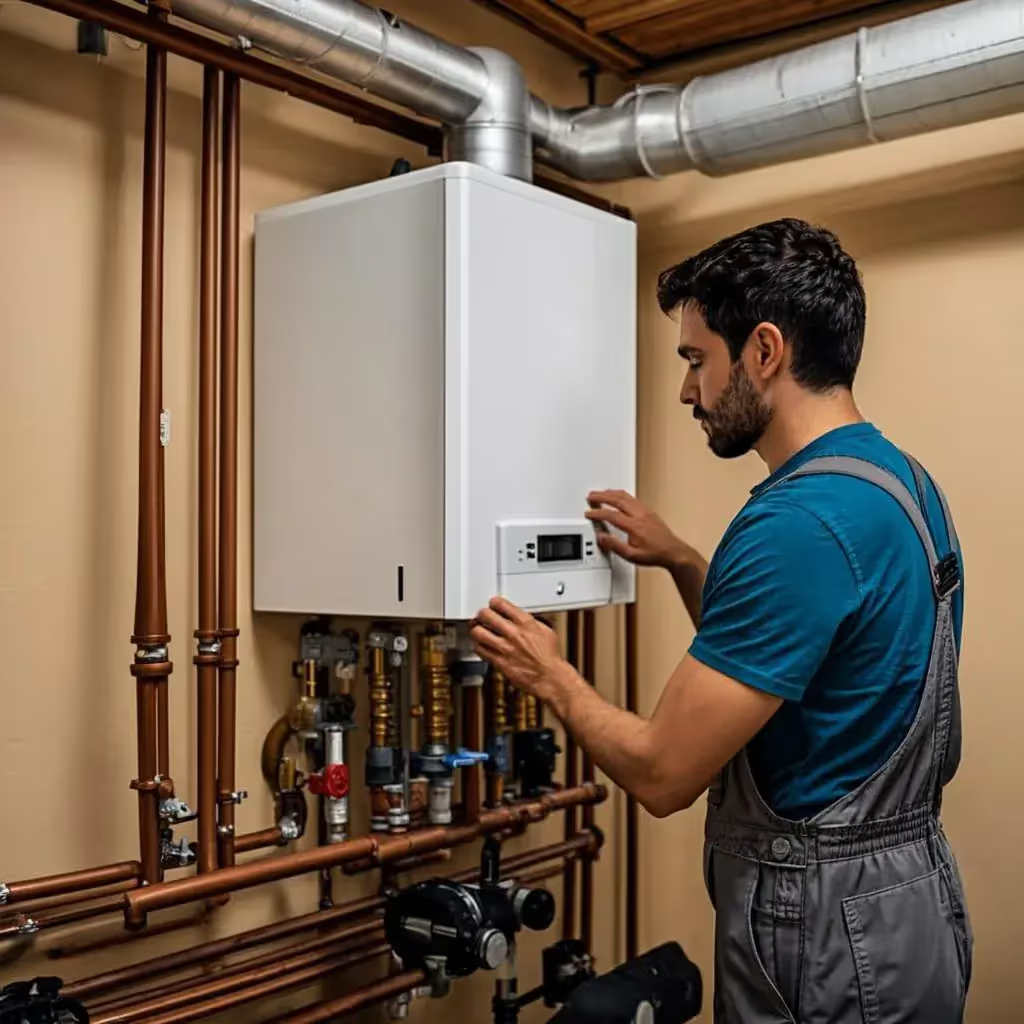
The honest limits of a single zone: bedrooms keep their baseboard, and that is fine, because bedrooms need less heat per hour than living spaces and the zone math still wins the bill. Sizing matters, oversizing short-cycles and costs comfort, and the whole sizing discipline, room-by-room heat loss rather than square-foot folklore, is covered in our Vancouver heat pump guide. The heat pump installations we run include the line-set routing, condensate planning and condenser placement that decide whether the equipment performs for fifteen years, all flat-rate and warrantied for two years on workmanship.
Multi-Zone and Whole-Home Systems
When the plan is to stop buying resistance heat entirely, the equipment is a multi-zone ductless system, $9,500 to $16,000 installed, one outdoor condenser serving two to four indoor heads, each with its own thermostat and its own schedule. The economics stack because a single outdoor unit serving several zones runs at part-load most of the year, which is where inverter heat pumps are most efficient, and because bedrooms that used to each run their own 1,500-watt elements now share one compressor's effort. In houses where ductwork can be added or already exists, the cold-climate ducted alternative at $6,500 to $14,000 moves air through registers instead and hides the equipment entirely.
The dividing line between the two is rarely cost, it is architecture. Condos and slab-on-grade homes take multi-zone ductless, because there is nowhere to hide ducts; two-storey houses with a crawlspace or attic take either, and the choice becomes aesthetic. What both share is the sizing discipline: zone-by-zone heat loss, a balance-point calculation against the coldest night your city delivers, and an auxiliary-heat strategy configured at the control rather than left to defaults. Get those three right and the system quietly outperforms its rating; get them wrong and no brand on the sticker will save the monthly bill.
The Hydronic Alternative
If your baseboard is actually fin-tube on boiler water, the ranking in this guide changes completely and the conversation moves to the boiler room. Aging boiler stock across the region's hydronic homes splits into two sensible replacement shapes: condensing boilers at $8,500 to $14,000, which extract the latent heat from flue gases and reward the low water temperatures that fin-tube and radiant loops love, and combi boilers at $7,000 to $11,000, which heat the house and supply endless domestic hot water from one wall-hung unit, freeing the closet where the tank used to live.
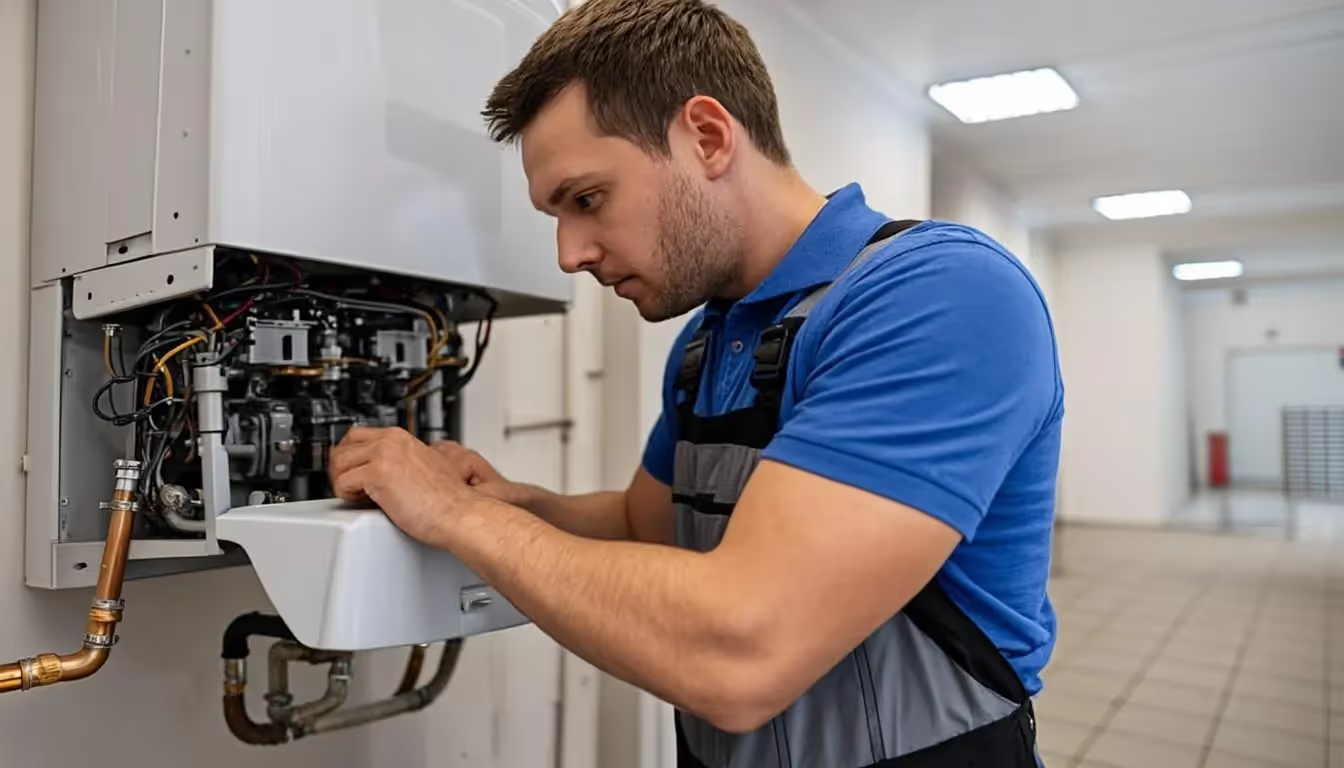
Between replacements, keep the water side boring: boiler service runs $149 to $250 per visit and boiler repairs $180 to $550 for the pumps, zones and controls that age between them. And because a hydronic home is also a heat pump candidate, the modern answer is sometimes both, an air-to-water heat pump feeding existing loops, sized and staged by someone who reads heat-loss curves for a living. Our heating services cover the gas side, the heat pump side and the honest comparison between them, in writing, before you commit to either.
Strata Realities for Condo Owners
In a condo, the physics is the easy half. The BC Strata Property Act makes the strata corporation the owner of the building envelope and common property, and a heat pump touches both: the refrigerant line set passes through walls, the condensate drain penetrates somewhere, and the outdoor unit sits on a balcony, patio or roof that the bylaws govern. Written approval before work begins is the rule in nearly every strata, and councils approve clean packages and reject vague ones. The package that succeeds is specific: equipment cut sheets, photos showing proposed indoor and outdoor placement, the line-set route, the condensate plan, vibration pads, and the licence and insurance of the contractor performing it.
We prepare that documentation as part of every condo quote, because a well-assembled request is usually a one-meeting approval and a sloppy one is a three-month argument. Two more strata realities worth naming: electrical capacity, since an older tower's suite panel must carry the new heat pump circuit, and the neighbours, because a condenser placement that respects sound and sightlines is a placement that survives its AGM. None of this is a barrier, it is a process, and it is one we run hundreds of times a year across the region's towers.
Rebates and Financing in 2026
Rebates move the ranking in Chapter 4 more than any other single number. Combined CleanBC Better Homes, BC Hydro, FortisBC and municipal top-ups can reach $16,000 for cold-climate heat pumps in 2026, and we complete the paperwork. For windows, thermostats and other envelope measures, rebates may apply, and we check eligibility and handle the paperwork as part of those quotes too. The practical effect on a baseboard conversion is that a multi-zone project can land closer to the cost of a single zone once programs pay their share, which is why the eligibility check belongs at the start of the conversation, not the end.
Financing closes the remaining gap for owners who prefer to spread equipment cost across the seasons it performs in, with approved-credit plans from 7.99 percent through our office. Sequenced honestly, a baseboard home can reach heat pump economics one layer at a time, controls first, living zone second, bedrooms third, with each step paying a measurable share of the next. That is the version of this upgrade that fits real budgets, and it is the version we quote most often.
City Notes: Towers to Subdivisions
Vancouver and Burnaby are the tower capitals, where our Vancouver heat pump teams spend their days on strata packages, balcony condensers and one-zone conversions, and where electrical capacity checks precede every quote. New Westminster and Richmond mix concrete towers with wood-frame walk-ups whose panels and wiring deserve the same respect. Surrey and Langley are the subdivision story, where baseboard usually means additions, suites and older ranchers, and multi-zone systems at $9,500 to $16,000 answer for whole floor plans, which is why our Surrey heat pump crews quote them daily. Coquitlam, Port Coquitlam and Maple Ridge sit between the two worlds, and the $89 diagnostic sorts any address into the right chapter of this guide within minutes.
The 60-Second Cheat Sheet
| Question | The short answer |
|---|---|
| First move in a baseboard home? | Electronic zone thermostats plus air sealing. Cheapest kilowatt-hours eliminated, and every later purchase shrinks. |
| Best single equipment purchase? | A ductless heat pump zone at $3,800-$5,500 over the living area, adding cooling and filtration to the room you use most. |
| What about the whole home? | Multi-zone ductless at $9,500-$16,000, or cold-climate ducted at $6,500-$14,000 where ducts exist or can be added. |
| My baseboard has a boiler behind it? | Different guide chapter: condensing boiler $8,500-$14,000 or combi $7,000-$11,000, and service at $149-$250 keeps it honest. |
| Condo? | Everything is possible with a strata package: cut sheets, placement photos, line-set route, licensed contractor. We prepare it with the quote. |
| Rebates? | Heat pumps can reach $16,000 combined in 2026, paperwork included; envelope measures may qualify too, and we check. |
Baseboard upgrades reward sequence over scale: cheap layer, main zone, remaining zones, each measured against the bill it just changed. Start with the diagnostic that tells you what you actually own, and every step after that is arithmetic, 24/7 at 604-615-2212 whenever the arithmetic turns into a question.
Frequently Asked Questions
Services From This Guide
Diagnostics, ductless and multi-zone heat pumps, thermostats and hydronic work across Metro Vancouver, 20 cities, 24/7.
Heat pump conversions
Ductless zones $3,800-$5,500 and multi-zone systems $9,500-$16,000, sized zone by zone and warrantied 2 years.
Hydronic and boiler service
Boiler service $149-$250, repairs $180-$550, condensing and combi replacements quoted flat-rate in writing.
Condo heat pump packages
Strata-ready documentation, panel checks and balcony-friendly placements for towers across Metro Vancouver.
Rebates and financing
Rebate eligibility checked and paperwork completed, with approved-credit financing from 7.99 percent.
Related Guides
The Vancouver Heat Pump Guide
Sizing, cold-climate performance and the economics behind the rankings in this guide.
EfficiencyEnergy-Efficient Upgrades in BC
The envelope-first sequence that shrinks every equipment purchase in this ranking.
PlumbingHow to Detect Hidden Water Leaks
Condo and suite owners share walls and pipes. The meter test that catches problems before the ceiling does.

Red Seal certified, licensed gas fitters (BC-PL-2019-4421), $2M insured and 15-plus years in the field, with more than 12,000 jobs completed across Metro Vancouver since 2010 and a 5.0-star rating across 26 Google reviews. We wrote this guide because baseboard homes have been told for decades that their heating is fine, and the honest ranking of what to do about it deserves the same evidence we bring to every other decision. To book instead of DIY, see boiler repair in Surrey — same-day across the city.
More about our team →Start Your Baseboard Upgrade
Book the $89 diagnostic or a free baseboard upgrade estimate with a Red Seal estimator. You get an honest read on what is actually in your walls, the ranked options for your suite or home, a flat-rate written price for any path, and financing options from 7.99 percent where equipment wins. Zero obligation, same-day quotes on most calls. If you would rather hand this to a pro, our boiler services pages cover Metro Vancouver.
No heat right now?
No-heat calls are answered 24/7 with live dispatch and a flat $150 after-hours premium posted in advance. Daytime? The $89 diagnostic is usually same-day in Vancouver, Burnaby and Surrey.
Call 604-615-2212 WhatsApp Us