7 Warning Signs Your Water Heater Is About to Fail (And What It Costs)
A hot water tank in Vancouver rarely dies without warning — it sends signals for months first. This guide decodes all seven: what rusty water, rumbling noises and damp floors actually mean inside the tank, how to read your serial number in under a minute, what a burst tank really costs in a condo, and the 2026 replacement prices for every type of water heater. Catch the signs early and replacement is a planned, priced, same-day visit. Ignore them and it is a 3 a.m. flood.
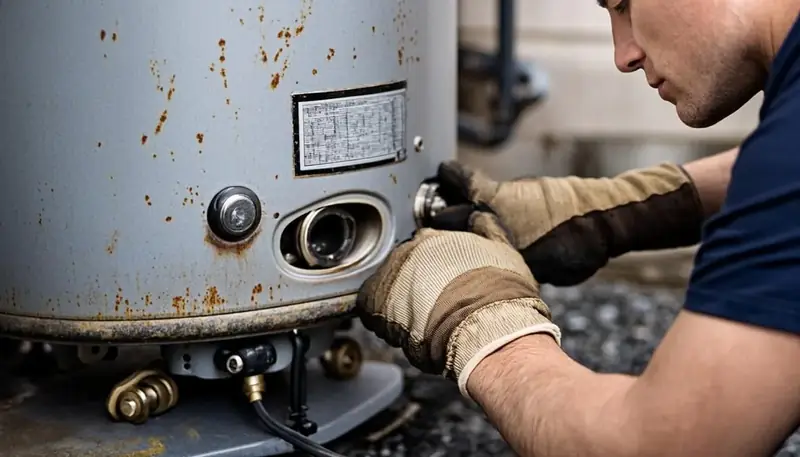
The 7 Warning Signs, Deep-Dived
Water heater failure in Metro Vancouver follows patterns we have seen across thousands of tanks since 2010. Here is what each symptom means, why it happens, and what it tells you about how much runway is left.
Water Heaters Replaced Since 2010
Tanks, tankless and heat pump units across 17 Metro Vancouver and Fraser Valley cities.
Of Replacements Are Same-Day
Call before 2pm and the most common tank sizes are on the van and installed before bedtime.
Average Tank Lifespan
Glass-lined tanks average 10–12 years; maintained tanks with fresh anodes regularly reach 15+.
Diagnostic, Credited to Repairs
A flat $89 to know exactly which sign your tank is showing — applied to the fix if you proceed.
Sign 1: Rust-coloured hot water
Fill a white bucket from the hot tap. If the water carries an orange, brown or rusty tinge — while the cold tap runs clear — the tank's glass lining is compromised and the sacrificial anode rod is spent. That rod exists to corrode so the steel tank does not; once it is consumed, every litre of water is mining the tank itself. Important local note: Vancouver, Burnaby and the North Shore draw very soft mountain reservoir water, which is aggressive toward bare steel precisely because it carries little protective mineral content. Rust-coloured hot water on a tank older than eight years is the classic two-years-left signal. (If both hot and cold are rusty, the problem is your pipes or the municipal supply — a different diagnosis, and our plumbing team traces that too.)
Sign 2: Rumbling, popping or knocking sounds
That kettle-desperate rumble is sediment. Incoming water carries dissolved minerals; as the tank heats and cools through thousands of cycles, minerals settle and bake into a crust on the burner or elements. Steam bubbles form under the crust and burst up through it — pop, rumble, knock. The sound itself is annoying but harmless; what it signals is deadly: the sediment layer insulates the water from the heat source, so the burner runs longer and hotter, cooking the glass lining and the tank bottom. In Fraser Valley communities on well water — Langley, Abbotsford, Mission, Chilliwack — we hear rumbling tanks in year five or six, a full half-decade earlier than in Vancouver proper. A flush ($139–189) removes loose sediment and buys time; a tank that has rumbled for years has usually already paid for its own replacement in wasted gas.
Sign 3: Moisture, rust streaks or drips at the base
Run your hand around the tank's lower seam and look at the floor beneath. Dampness, mineral-crusted drip trails, or a rust bleed at the weld seam means the tank wall has a slow seep — and a seep is a preview. Steel tanks under 40–60 psi do not heal; the seep erodes the thinning metal until it becomes a run, and the run becomes a breach. Condensation on a cold tank in a humid basement can mimic a leak, which is why the $89 diagnostic includes a proper source test — but if the moisture is tank-originated, the calendar is measured in weeks, not years. This is the one sign that belongs in the "book today" tier: a tank that is actively weeping can let go completely overnight, and every hour matters.
Sign 4: Inconsistent temperature — scalding one day, lukewarm the next
When a thermostat, heating element or gas control valve begins failing, output wanders: a shower that alternates between perfect, tepid and unexpectedly hot. On electric tanks, a single failed lower element halves recovery and the tank "runs out" after one shower; on gas tanks, a tired gas valve or fouled thermocouple produces the same drifting behaviour. Two cautions from the field: first, thermostat failures on aging tanks often mask the real story — scale buildup — so replacing a $200 part on a 12-year-old tank is money toward a machine already near end-of-life. Second, never chase this sign by simply cranking the thermostat: above 60°C storage temperature, you create a scald and legionella-risk situation in the opposite direction. Diagnose, do not compensate.
Sign 5: The tank is simply old — the 10-year rule
Age is the single best predictor of failure because every failure mode above is time-driven: anodes deplete, sediment accumulates, glass lining fatigues. Industry actuarial data puts glass-lined tank life at 10–12 years, and our own replacement logs in Metro Vancouver agree. The efficiency kicker: a 15-year-old tank loses 20–30% of its efficiency to sediment and worn insulation, quietly adding $10–20 to monthly FortisBC or BC Hydro bills long before it fails outright. If you do not know your tank's age, the next section shows you how to read it off the rating plate in under a minute.
Sign 6: A pilot light that will not stay lit
A pilot that relights, burns an hour, and dies again points at three suspects in order of likelihood: a fatigued thermocouple ($220–350 replaced, the cheapest fix in this list), a partially blocked vent collapsing the draft, or a failing gas control valve ($350–550). The first is a legitimate repair on a younger tank; the third is end-of-life economics on an older one, because the gas valve is the tank's brain and rarely fails alone — corrosion and heat stress that killed one component usually have the next one in line. Frequent pilot-outs on a 10+ year gas tank is our most common "replace rather than repair" call, and the least disputed by homeowners once they see the parts math.
Sign 7: Gas or hydro bills creeping up with no other change
A water heater is typically the second-largest energy consumer in a Metro Vancouver home after space heating — 18–25% of household energy. When sediment coats the burner or elements, recovery times stretch, standby losses climb, and the meter quietly eats more for the same showers. Pull your FortisBC or BC Hydro usage history and compare this year to two years ago with similar household routines; if the trend is up while usage is flat, your tank is running a fever. It is the least dramatic sign and the easiest to dismiss — and it is the one that costs you money every single month while the tank finishes dying.
How Old Is Your Tank? Decoding the Serial Number
Every tank wears a rating plate — usually a sticker or metal tag on the upper side of the jacket, with the model and a serial number. The serial encodes the manufacture date, and the encoding varies by brand. Here are the formats we see most in Metro Vancouver basements and utility rooms.
| Brand | Serial Example | How to Read It |
|---|---|---|
| Rheem / Ruud | 0618B12345 | First four digits are month + year: 06 18 = June 2018. |
| Bradford White | ND04123456 | First letter = year on a 20-year cycle (A = 2004, B = 2005 ... M = 2016, N = 2017); next two digits = week: N D04 = week 04 of 2017. |
| John Wood / GSW | 1192A034567 | Digits vary by plant era — if the first pattern does not match, the certification sticker usually prints the manufacture date plainly; or text us a photo of the plate. |
| Navien / Rinnai (tankless) | Serial on side panel | The first two digits encode the manufacture year; the built-in display also reports total operating hours, which tells you wear, not just age. |
| Giant, other private-label | Rating plate sticker | Most post-2010 private-label tanks print the date directly (look for "MFG DATE" or a four-digit code). When in doubt, send us the photo. |
Two honest field notes. First, manufacture date is not install date — a tank sitting in a warehouse for a year is effectively a year younger than its warranty assumes, but the serial is still the best number available. Second, many Metro Vancouver homes are on their second or third tank, and the replacement history hides in odd places: a permit record with the city, a label on the tank from the installing company (we often find our own stickers from a decade ago), or the home inspection report from your purchase. If the serial is unreadable, corroded, or painted over, photograph the whole plate and WhatsApp it to us — we decode plates for free because an accurate age is the cheapest diagnostic there is.
What Actually Happens When a Tank Lets Go
A 50-gallon tank holds about 190 litres. When the bottom seam fails, all of it arrives at once — and then the supply line keeps feeding the opening, because the municipal main behind it does not know your tank has failed. In the average Vancouver basement or utility room, that first hour delivers 300–500 litres of water at floor level, seeking the lowest point: the drain if you are lucky, the furnace room, storage, and the foundation wall if you are not.
In a condo or upper-floor installation the physics gets crueler. Water follows gravity: it pools on the slab, finds every penetration — recessed lights, vent boots, plumbing chases — and begins loading the ceiling below. Saturated gypsum ceiling panels gain water weight until fixings let go and sections drop. A burst tank in a top-floor unit in Burnaby or New Westminster routinely damages three units: the source unit, the unit below, and the unit below that. Remediation for a multi-unit event — extraction, drying, drywall, flooring, cabinetry, contents, temporary accommodation — regularly runs $15,000 and well beyond, and that is before the intangibles: months of paperwork, deductible cheques, and the strata's loss history affecting everyone's premiums.
Even in a detached house, the bill shocks people: the tank itself is the cheap part. The costs are water extraction and structural drying (commercial dehumidifiers running for days), mould prevention inside wall cavities (the 48-hour window is real in our humid coastal climate), drywall and insulation replacement, and whatever the water soaked on its way through — stored boxes, carpet, electronics, the furnace or heat pump sitting on the same floor. This is why our pricing philosophy on aging tanks is blunt: a planned $2,500 replacement is always cheaper than an unplanned $15,000 remediation. For the water-side emergency response itself, our 24/7 emergency page covers the first-sixty-minutes playbook, and the burst-pipe first-60-minutes guide applies almost line-for-line to a tank breach: shut the main, kill power to the unit, drain, document.
Tank acting up? Know for $89 — before it decides for you.
Our flat $89 diagnostic identifies which failure mode you are looking at, and the fee is credited to any repair or replacement you book. Same-day replacement across Vancouver, Surrey and Metro Vancouver with tanks stocked on the vans. Licensed BC-PL-2019-4421, Red Seal certified, 4.9 stars from 39 reviews.
Water at the tank base right now? Call — that is the same-day tier, and the line is answered 24/7.
Replacement Urgency: Plan It, Book It, or Stop Reading and Call
Every symptom maps to a time budget. Use this triage the way our dispatchers do.
Age alone, or a single mild sign
- Tank 8–12 years, no symptoms: research now, replace within 6–12 months
- Slight rumble, hot water still consistent: flush + anode service now, plan the swap
- Bills creeping up with an aging tank: start shopping while everything still works
- Freedom to choose tankless or heat pump deliberately, with rebate paperwork done properly
Multiple signs on an aging tank
- Rust-tinged hot water on a 10+ year tank
- Rumbling plus temperature inconsistency
- Recurring pilot-outs or error codes
- Intermittent dampness you cannot source around the base
- Goal: replace on your schedule, at quoted pricing, before the tank chooses a day for you
Active failure in progress
- Visible water, drip trails or puddling at the tank base
- Hissing or running-water sounds at the tank
- Tank cold with no recovery and a flooded pan beneath it
- Stop reading, close the water valve on top of the tank, kill the breaker or gas valve, and call the 24/7 line: 604-615-2212
What Water Heater Replacement Costs in Vancouver
Real installed ranges for the Metro Vancouver market — unit, permit, labour, strapping, pan, and old-tank disposal included. Repairs are listed too, because half of every diagnostic ends with "actually, this one is fixable," and we would rather you knew that price going in.
| Service | Typical Installed / Repair Cost | Notes |
|---|---|---|
| 40-gallon tank (gas or electric) | $1,600–2,800 | Condos, suites, laneway homes, 1–2 person households |
| 50-gallon gas tank | $1,800–3,200 | The Metro Vancouver family standard; fastest recovery |
| 50–60-gallon electric tank | $1,400–2,400 | No venting needed; best where no gas service exists |
| 75–80-gallon tank | $2,600–4,200 | Large families, jetted tubs, in-law configurations |
| Tankless (condensing) | $2,800–5,500 | Endless hot water, 20+ year life; venting and gas-line work move the number |
| Heat pump water heater | $3,200–4,800 before rebate | Roughly 3x electric efficiency; up to $1,000 CleanBC |
| Anode rod replacement | $189 | The life-doubling service — every 3–4 years |
| Tank flush | $139–189 | Annual; more often on Fraser Valley well water |
| Thermocouple / pilot repair | $220–350 | Legitimate fix on tanks under ~8 years |
| TPR valve replacement | $189 | Safety device; never defer this one |
| Element / thermostat (electric) | $280–450 | Per element; pair replacement if the tank is drained anyway |
| Gas control valve | $350–550 | On a 10+ year tank, replacement usually wins the math |
What moves a quote up or down: venting changes (switching to a power-vent or concentric system adds real cost), gas-line upsizing for tankless, drain-pan and seismic-strapping requirements in your municipality, expansion tanks on metered systems, and access — a tank wedged behind a furnace in a 1920s basement crawl takes longer than one in an open utility room. Every one of those items appears as a written line before work starts. And for context on running costs: gas tanks in BC typically cost $28–40 per month on FortisBC rates versus $55–75 for the same tank on BC Hydro electricity — a decade-long difference worth factoring into which replacement you choose.
Choosing the Replacement: Tank, Tankless, or Heat Pump
You are about to spend real money — spend it on the machine that fits your household, not the one a brochure loves.
Storage tank
The cheapest install and the simplest machine in the building: one cylinder, one burner or pair of elements, a first-hour rating you can plan showers around. In BC, a gas tank on FortisBC rates is remarkably cheap to run. Buy a 12-year-warranty model (better anode, longer glass lining) rather than the 6-year builder grade, and budget the $189 anode swap at mid-life. Right choice for: budget-first replacements, existing venting, homes where hot-water demand peaks in one busy hour.
Tankless (on-demand)
Heats water the moment a tap opens and never stores it: endless hot water, 96%+ efficiency, 20+ year life, and the floor space back — which is why Vancouver condos, townhouses and laneway homes adopt it fastest. The honest caveats: higher install cost when venting and gas lines need upsizing, and capacity math must be done at Metro Vancouver winter groundwater temperatures (6–8°C), not showroom-summer numbers. Right choice for: growing households, back-to-back morning schedules, space-constrained utility rooms. Our tankless vs tank comparison guide runs the full math.
Heat pump water heater
A tank with a small heat pump on top that pulls heat from surrounding air instead of converting electricity directly to heat — roughly 3x the efficiency of a standard electric tank, with up to $1,000 in CleanBC support. Needs headroom and air volume (a garage or open utility room; a tight closet will starve it or chill it). Right choice for: electric-heated homes, rebate stackers, and anyone whose mechanical room doubles as a dehumidifier bonus — it dries the air it feeds on.
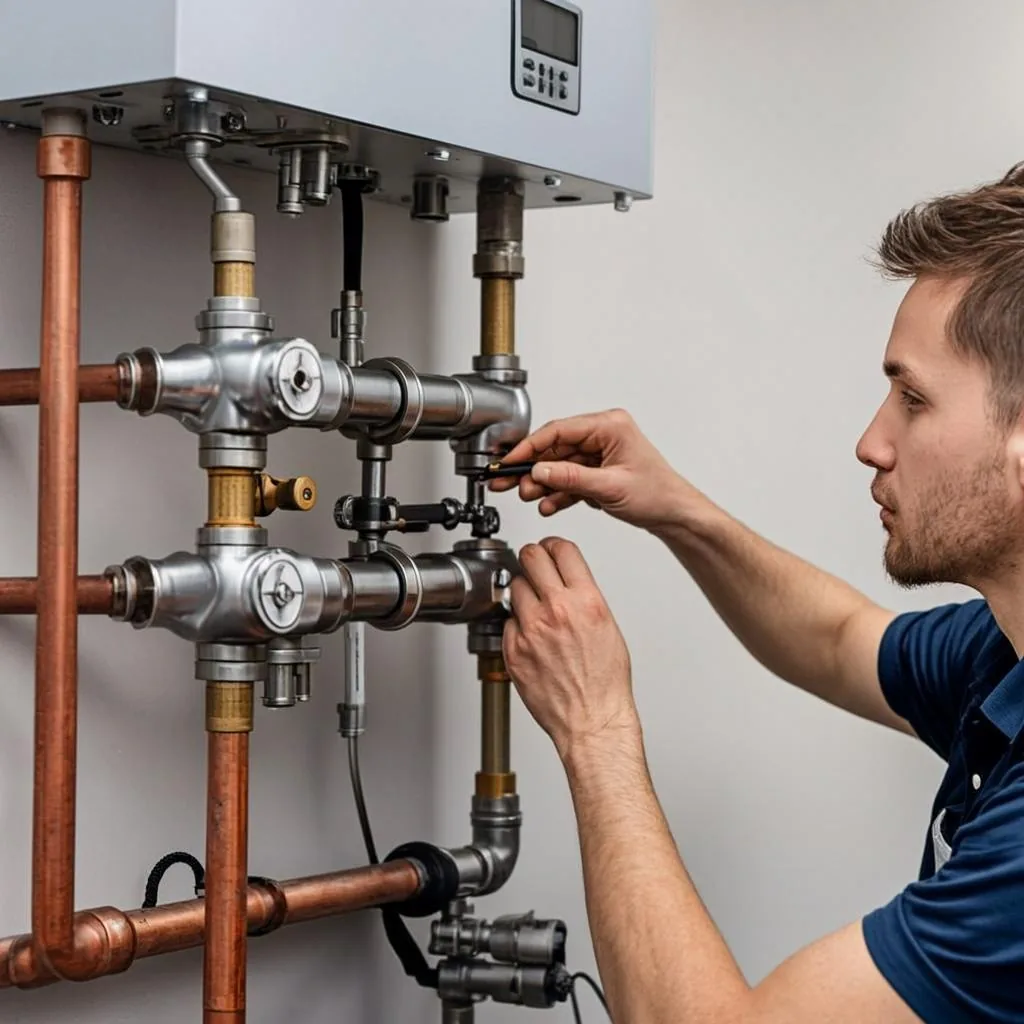
Sizing matters more than type: a 40-gallon high-recovery gas tank out-performs a low-recovery 50-gallon electric in the shower race. We size by household and fixture count, not by sticker.
Same-Day Replacement: How the Process Works
"Same-day" is not a slogan — it is a supply-chain decision. Here is the machinery behind it, and what your part in the day looks like.
Morning call, diagnostic, flat quote
Call before 2pm and a technician arrives with the common sizes — 40, 50, 60 and 75-gallon gas and electric — already on the van. The $89 diagnostic confirms the failure mode; if replacement is the answer, you get a written flat price on the spot with the exact tank, warranty tier, and code upgrades itemized. Approve it and the clock starts.
Drain, disconnect, remove
Water and gas or power come off, the old tank drains to the floor drain (or out a hose to the yard), and the unit is hauled away for recycling — not left in your garage as a favour. This is also when we verify the shutoff valve, gas connection and venting that will serve the new tank; anything marginal gets flagged before, not after.
Install to current code
New tank set in a drain pan, seismic strapping to BC requirements, fresh TPR valve piped to code, new flex connectors, permit filed with your municipality. In Vancouver, Burnaby, Surrey and our other 17 cities, replacements are permitted work — the inspection closes the file and protects your insurance standing.
Commission, purge, teach
The tank fills, air purges from the lines, burner or elements fire, and we verify delivery temperature and recovery before we call it done. Then the two-minute walkthrough: where the shutoff is, how to read the thermostat, when the first anode check is due. Typical elapsed time on a straightforward swap: 3–4 hours, and hot water by dinner.
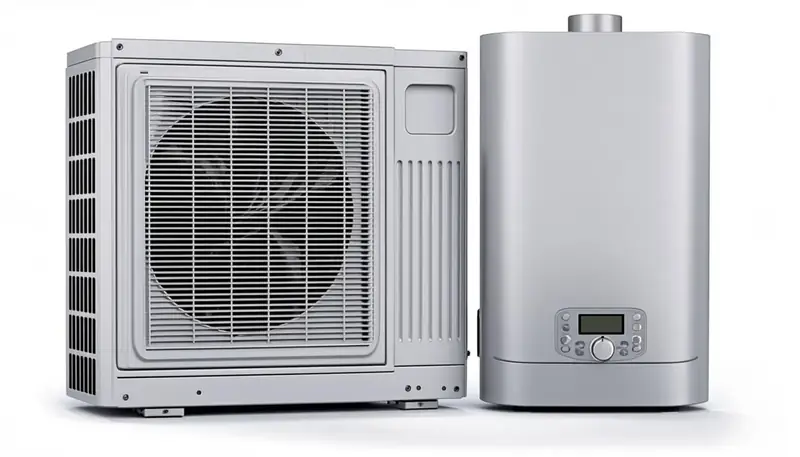
Two services — an $189 anode rod and a $139 annual flush — are the difference between a 10-year tank and a 15-year one. No exaggeration, no upsell: they are simply the only two wear items the machine has.
The Maintenance That Doubles Tank Life
A water heater has exactly two consumable parts, and both are cheap. The sacrificial anode rod is a length of magnesium or aluminum suspended in the tank that corrodes on purpose, protecting the steel. Once it is spent — typically 3–4 years in Vancouver's soft water, 2–3 years on Fraser Valley well water — the tank starts corroding instead. Replacing it at $189 is the highest-return maintenance in this entire guide: tanks that get fresh anodes routinely run 14–16 years instead of 10–12.
The second is the annual flush ($139–189): drain 15–20 litres from the bottom valve, and the sediment layer that insulates the burner and bakes the lining never gets established. On a gas tank this also protects recovery speed and gas bills; on electric tanks it shields the lower element from being buried and overheated.
- Anode inspection: every 3 years from install; every 2 on well water in Langley, Abbotsford, Mission, Chilliwack.
- Flush: annually; twice-yearly on hard well water.
- TPR valve test: part of every maintenance visit — a weeping or seized safety valve is replaced the same day.
- Combustion + venting check (gas): annual, and not optional — it is the carbon-monoxide safety item.
Our maintenance plan bundles all of it for $139/year with priority booking and 15% off repairs — see the water heater services page for the full inclusions. Whether you use us or a neighbour's cousin, do those two things and the tank you choose next will outlast the one it replaced by years.
Warranties, Rentals, and the Paperwork That Protects You
Tank warranties come in tiers — typically 6, 9 and 12 years — and here is the open secret: the tanks are nearly identical. What you are buying with the longer tier is a beefed-up anode, a second factory inspection, and longer parts coverage. Two separate warranties actually govern your install: the manufacturer parts warranty (years on the tank and components) and the labour warranty (who pays the plumber when a covered part fails — usually 1–2 years, extendable). Read the labour part closely: a "12-year tank" with one-year labour still hands you a bill in year five when the valve fails and the part is free but the visit is not. Registration matters too — warranties follow the registered owner, so register the serial the week it is installed.
On rentals: the model that dominates Ontario and Quebec — a $15–40 monthly rental fee on your energy bill, owned by a utility or finance company — never took hold in BC. Metro Vancouver homeowners overwhelmingly own their tanks, and the math favours ownership: a $2,200 owned tank is fully depreciated in under five years of avoided rental fees and keeps every rebate and warranty in your name. What we do still see in the Lower Mainland is door-to-door rental paperwork, sometimes presented as a "free upgrade" or "mandatory replacement" — a complaint pattern with a long history at consumer-protection agencies. If someone is in your hallway with a clipboard and a deadline, the correct response is to close the door and call a licensed local company at a number you looked up yourself.
Water Heater Failure Questions, Answered
Watch for seven signs: rust-coloured hot water, rumbling or popping sounds, moisture or rust streaks at the tank base, inconsistent temperatures, an age over 10 years, a pilot light that repeatedly dies, and creeping gas or hydro bills. One sign on a young tank is usually a repair; two or more on a tank past its first decade is the replacement countdown. A $89 diagnostic — credited to any work you book — turns the guess into a diagnosis in about an hour.
50-gallon gas tanks run $1,800–3,200 installed; 40-gallon and electric tanks less; tankless $2,800–5,500; heat pump water heaters $3,200–4,800 before the up-to-$1,000 CleanBC rebate. Every quote includes the unit, permit, seismic strapping, drain pan, TPR valve, labour and disposal — and is written before work begins. Venting changes and gas-line work for tankless are the items that most commonly move a number upward.
Glass-lined tanks average 10–12 years; with anode replacements and annual flushes, 14–16 is realistic. Condensing tankless units last 20+ years. Two local factors matter: Vancouver's soft mountain reservoir water is anode-hungry and steel-aggressive, and Fraser Valley well water in Langley, Abbotsford, Mission and Chilliwack builds sediment scale years earlier. Check the serial number on the rating plate — one minute, no tools — and you will know exactly where you stand.
Yes — 190 litres release immediately from a 50-gallon tank, and the supply keeps feeding the breach until the shutoff closes. In condos and upper-floor mechanical rooms the water loads ceilings below and can drop saturated drywall, damaging two or three units. Remediation — extraction, structural drying, drywall, flooring, contents, accommodation — regularly exceeds $15,000. If you see water at the tank base, close the shutoff valve on top of the tank, kill the breaker or gas valve, and call 604-615-2212.
Repair when the tank is under 8 years old, the fix is a known small part (thermocouple, element, TPR valve), and the quote is under about a third of replacement cost. Replace when the tank is 10+, shows rust-coloured water or base moisture, or needs a gas valve on aging equipment — at that point repairs fund a machine already near end-of-life. Our diagnostic fee is credited toward either path, so the honest answer costs you $89, not a guess.
In BC, almost certainly own — the rental model common in Ontario never took hold in Metro Vancouver, though a small number of homes carry legacy rental lines. Check your FortisBC or BC Hydro statement for any water-heater rental charge before replacing anything. And treat door-to-door "mandatory upgrade" rental offers with the suspicion they have earned: verify any claim with a licensed local company before signing.
Water Heater Services From the Same Licensed Crew
Water Heater Services
Same-day hot water tank replacement in Surrey and Vancouver, tankless water heater installation, heat pump units and the $139/yr maintenance plan.
Plumbing
When rusty water points at the pipes instead of the tank: emergency plumber Vancouver, drain cleaning Surrey and PEX repiping Metro Vancouver.
Boilers & Combi Units
Radiant homes can make domestic hot water from one appliance — ask about combi boiler installation when the tank and the boiler are both aging.
Financing & Rebates
$0-down financing from 7.99% APR and the CleanBC rebates (up to $1,000 on heat pump water heaters) we file for you — see the financing and rebates page.
Related Guides From Our Blog
Tankless vs Tank Water Heater: The Honest BC Comparison
Costs, lifespans and GPM math at Vancouver winter groundwater temperatures — which homes should go tankless, and which should not bother.
Leak DetectionHow to Detect Hidden Water Leaks Before They Cost Thousands
Meter tests, moisture mapping and the places Metro Vancouver homes leak silently — toilets, crawlspace joints, and behind washers.
EfficiencyEnergy-Efficient Upgrades in BC: What Actually Pays Off
Heat pump water heaters, heat pumps, windows and insulation ranked by payback period with current rebate stacking.
Written and reviewed by the licensed crew behind 2,400+ water heater replacements across Metro Vancouver. The failure patterns, serial-number tables and price ranges in this guide come directly from our service records — not a manufacturer brochure. Want your tank decoded? Call 604-615-2212 or meet the team first — either way, you talk to the people who will do the work.
Get Your Free Water Heater Quote in Vancouver & Surrey
Tell us what your tank is doing — sounds, colours, ages, whatever you noticed — and we will call back within 15 minutes during business hours. Quotes are written, flat-rate, and include the unit, permit, strapping, pan, labour and disposal, whether you need same-day replacement, a tankless conversion or an honest $89 diagnostic. No obligation, and never a fee for choosing to think it over.
Why Homeowners Choose Us
- 2,400+ water heaters installed since 2010
- Red Seal licensed plumbers & gas fitters, $2M insured
- 4.9-star average from 512 verified reviews
- 92% of replacements completed same-day
- Common tank sizes stocked on the vans
- Permits, strapping and code upgrades included in quotes
- 24/7 emergency line for tanks already leaking