The Honest Answer Up Front
A properly sized cold-climate heat pump will carry your Metro Vancouver home through essentially the entire winter, including outflow weeks, while using roughly a third of the electricity that baseboards would need for the same heat. It will deliver most of its rated capacity at -15°C, it will not shut off until air temperatures pass -25°C to -30°C depending on the model, and it will do all of that while also being your air conditioner next summer. The honest qualifiers are three: the physics gets less impressive the colder it gets, sizing is where most installs go wrong, and a small number of BC homes, drafty ones, valley ones, ones with legacy ductwork problems, will want a backup plan for the coldest two weeks of the decade.
The "heat pumps do not work here" objection survives on two kinds of evidence, both real and both outdated. The first is remembered experience with 2000s-era units that genuinely did fold below -8°C, when cold-climate compressor technology, variable-speed drives and flash-injector design were not on the market yet. The second is badly sized modern installs, usually an oversized-for-cooling unit carrying an undersized-for-heating load, that lean on electric backup strips all January and then get blamed for the electric bill. Distinguish those two failures from the equipment class and the reputation problem dissolves. Our heat pump installation page covers the equipment options; this guide is about why the cold end of the thermometer is no longer the dealbreaker people remember.
Since 2010 we have fitted and serviced heat pumps across every Metro Vancouver microclimate, from Point Grey sea-level damp to the frost pockets of the Fraser Valley, 12,000-plus jobs deep now, and the winter calls we answer are almost never "the technology failed." They are defrost habits that looked alarming, aux heat engaged by a thermostat set wrong, and units sized by square footage instead of heat loss. Read this guide to the end and you will know how to spot all three before they cost you a service call.
Cold-climate heat pumps do not fail BC winters. Badly sized heat pumps fail BC winters, and then the technology takes the blame. The heat-loss calculation is the whole ballgame.
0 jobs since 2010
Heat pump installs and service across every Metro Vancouver microclimate, coast to valley.
0 shutoff territory
Modern cold-climate compressors keep running at temperatures Metro Vancouver never reaches.
0 star rated
26 verified Google reviews, earned in a market where one bad winter would end the reputation.
0 rebate ceiling
Combined 2026 CleanBC, BC Hydro, FortisBC and municipal top-ups on cold-climate installs, paperwork handled by us.
The Physics: Pulling Heat Out of Cold Air
The sentence that breaks everyone’s brain is that -15°C air still contains a great deal of heat. It is true, and it is the entire business model of a heat pump. Heat is molecular motion, and air at -15°C has molecules moving with plenty of energy to harvest. Absolute zero, the point where motion stops, sits at -273°C, so even the coldest outflow night in BC history is, thermodynamically speaking, a warm bath by comparison.
A heat pump exploits the fact that refrigerants boil at absurdly low temperatures. The outdoor coil contains a refrigerant under carefully controlled pressure, chosen so that it evaporates even when the coil is colder than the January air flowing over it. Evaporating absorbs heat, the same way sweat leaving your skin cools you, so the refrigerant leaves the outdoor coil as a cold vapour carrying heat it stole from the outdoor air. A compressor squeezes that vapour, which raises its temperature dramatically, and indoors the now-hot refrigerant condenses in the indoor coil, releasing exactly the heat it collected outside. Run the loop in reverse and the same machine is your summer air conditioner. Nothing is created, nothing is burned; heat is moved, and moving heat is far cheaper than making it.
Why the machine gets less efficient as it gets colder: the temperature gap it must bridge widens. At 5°C, the refrigerant only needs to end up warm enough to heat your house from a modest starting point, a small staircase. At -15°C, the same trip is a much longer climb, so the compressor works harder for every unit of heat delivered. Cold-climate models narrow the gap with better compressors: variable-speed inverter drives that ramp instead of cycling, vapor-injection that effectively gives the compressor a second bite at the refrigerant, and larger outdoor coils with finer fin pitch that wring more heat from each cubic metre of air. That engineering, not marketing, is what separates a cold-climate unit from the standard units sold in warmer markets.
The payoff number is COP, coefficient of performance: heat out divided by electricity in. A COP of 3 means the unit delivers three times the heat of an electric baseboard drawing the same power, because the other two-thirds of the energy came out of the outdoor air for free. Even at -15°C, a cold-climate unit still posts COPs around 1.5 to 2, holding a real advantage over resistance heating right down to its shutoff, and across a Metro Vancouver winter, where the overwhelming majority of heating hours sit above -5°C, the seasonal average lands closer to 2.5 to 3. That average, not the worst-case January night, is what shows up on your BC Hydro bill.
Reading the Cold-Climate Spec Sheet
Every legitimate cold-climate heat pump publishes a set of numbers, and knowing which ones matter is the difference between shopping and being shopped. The marketing headline is usually the maximum operating temperature, "works to -30°C," which is real but nearly irrelevant in Metro Vancouver because we never get there. The numbers that decide your January comfort are capacity retention and COP at specific low temperatures, and they are printed in the extended performance tables, not the brochure cover.
| Spec line | What it means | What to look for in BC |
|---|---|---|
| Maximum operating temp | Lowest outdoor temp the compressor runs at | -25°C or better is the current cold-climate standard; anything warmer is a standard unit |
| Capacity at -15°C | Heating output in kilowatts at that temperature | 70-80 percent or more of rated output; below 60 percent means a January gap |
| COP at -8°C / -15°C | Efficiency at the temperatures that matter here | Roughly 2 or better at -8°C is the honest cold-climate class |
| HSPF2 (region 4/5) | Seasonal heating efficiency, the winter version of SEER2 | Higher is better; compare only within the same region number |
| Variable-speed / inverter | Compressor modulates instead of cycling on and off | Essential for cold-climate performance and cold-weather comfort |
| Aux / strip heat rating | Electric resistance backup in the air handler | Sized as insurance, not as the primary January heat source |
Two honest reading notes. First, capacity and COP numbers are laboratory conditions, real installs with real refrigerant line lengths, real static pressure and real defrost cycles land a few points below the table, which is why we always design with a margin instead of matching the brochure to the load calculation exactly. Second, the cold-climate designation itself matters for more than bragging rights: it is a requirement for the top CleanBC Better Homes rebate tiers, so a "good deal" on a standard-climate unit quietly costs you thousands in foregone incentives. We verify the qualification list before quoting anything, because that single check has saved customers more money than any discount ever did.
What a BC Winter Actually Asks of a Heat Pump
Metro Vancouver is, statistically, one of the easiest heating climates in Canada, and that shapes everything about heat pump design here. The coast’s heating design temperature, the number engineers size to, sits in the -5°C to -7°C range. Most of the heating season is 4°C to 10°C drizzle, conditions where a cold-climate heat pump is at its absolute best, running COPs of 3 or better while modulating quietly along at partial load. If our climate were only its averages, every heat pump sold here would be a hero.
What the averages hide is the outflow event. Every few winters, and some winters more than a few, arctic air funnels down the Fraser Canyon as a northeasterly wind and parks over the region for anywhere from three days to two weeks. Temperatures slide to -10°C on the coast and -15°C or colder in the valley, the wind strips heat from walls and windows faster than calm air ever does, and humidity falls off a cliff. Those are the weeks that decide whether a heat pump install was honest or optimistic, and they are precisely why we size to the local design temperature plus a margin rather than to the average. The Vancouver heat pump guide maps the neighbourhood factors; the short version is that exposure, insulation and glazing move your load more than your municipality’s name does.
Geography splits the region into three honest tiers. Vancouver, Burnaby, Richmond and the North Shore are tier one, mild with rare -10°C exposure, where a right-sized cold-climate unit covers essentially everything. Surrey, Coquitlam, Langley and Delta are tier two, a shade colder on clear nights, still overwhelmingly heat-pump-friendly with ordinary sizing care. Abbotsford and the valley floor are tier three, where outflow pools and -15°C hours are routine, and where our Tri-Cities and valley crews and Fraser Valley installs lean conservative on balance points and backup heat. Same equipment, same physics, three different conversations, which is the entire argument for local installers over national averages.
One more BC-specific note that surprises newcomers: humidity is a winter factor here, not just a summer one. Coastal moist air means more frost forms on outdoor coils during the shoulder season, which means more defrost cycles at temperatures that stay above the hard-freeze range. Defrost is normal operation, Chapter 5 covers it, but the coastal frequency of it is why we recommend cold-climate units with demand-defrost logic rather than simple timed defrost, a choice that quietly trims both electric bills and the steam-cloud moments that worry the neighbours.
Defrost Cycles and Backup Heat, Explained Without Panic
The most alarming heat pump experience is entirely normal: a cold morning, the outdoor unit wearing a coat of frost, and then it pauses, whirs into reverse, steams like a kettle, and resumes heating. That is the defrost cycle. Frost forms on the outdoor coil because it is colder than the surrounding moist air, and a frosted coil cannot absorb heat, so periodically the machine runs the refrigeration loop backwards for a few minutes, sending heat outdoors to melt its own coil. The indoor air goes briefly lukewarm, sometimes the aux heat flicks on for those minutes, then everything returns. Healthy defrost cycles are short, occasional, and end with a clean coil.
When defrost becomes a problem worth calling us about: cycles running longer than roughly ten minutes, steam shows up hourly through the shoulder season, frost is uneven, clumped on one corner, or the unit never fully clears, or you can see ice rather than frost bridging the fins. Those patterns point at low refrigerant, a failing sensor, a stuck reversing valve or a coil starved for airflow, and our $89 diagnostic, credited toward any repair, is the honest next step rather than a season of anxious window-watching.
Backup heat is the second half of the cold-weather story. Auxiliary resistance strips in a ducted air handler are cheap insurance and expensive primary heat, COP 1 forever, so the goal is a system sized to need them only during the deepest outflow hours. Ductless systems typically skip strips entirely and rely on right-sizing, extra head capacity, or a supplemental source. The strongest backup arrangement for homes with existing ductwork is a dual fuel pairing, a furnace as the backup stage instead of resistance coils, which is a design decision worth its own conversation with our heat pump team in Surrey or wherever in the region you happen to live. The honest summary of this chapter: defrost is normal, aux heat is a tool, and neither should carry your January.
Sizing to the Balance Point, Not the Brochure
Every heat pump install has a number called the balance point: the outdoor temperature where the house’s heat loss exactly equals the heat pump’s output. Above it, the unit carries the house alone and cycles with the weather. Below it, there is a gap, and something fills it, resistance strips, a furnace, or patience while the indoor temperature drifts a degree or two. Sizing is the art of putting that balance point low enough that the gap hours are rare and shallow.
The calculation starts with a heat-loss assessment of the actual house: envelope area, insulation values, window areas and quality, air leakage, orientation, and the local design temperature. Room by room, surface by surface. It takes hours, it requires someone in the building, and it is the difference between a January of comfort and a January of aux heat. The shortcut versions, square footage multipliers and "whatever the last house got," are how heat pumps earn their old reputation, because an undersized unit slides its balance point up into everyday temperatures, while an oversized one short-cycles all October, never dehumidifies in summer, and wears its compressor early. We run the full calculation on every quote because both failure directions cost the customer, in comfort now and equipment life later.
In our design practice the numbers usually land like this: a Metro Vancouver home with reasonable envelope and a design temperature around -5°C to -7°C needs a cold-climate unit whose -15°C capacity is still close to the house’s deep-cold loss, which most current models achieve in one or two sizes up from their cooling load. Where the heating load runs much larger than the cooling load, the honest options are a small ducted unit plus supplemental heads, a dual fuel arrangement, or envelope work that shrinks the load itself, insulation and air sealing that pay every winter for the rest of the house’s life. That last option is the one homeowners skip most often and regret most consistently, because a heat pump installed on an inflated load is a bigger bill every month for twenty years.
The heat-loss assessment
Measured on site, room by room, against your local design temperature. No measurements, no quote, that is the rule.
Equipment selection on the low-temperature table
The unit is chosen by its -15°C output against the house’s design load, with a margin for real-world losses.
Balance point check
We plot capacity against loss, find where they cross, and confirm the gap hours below it are rare for your exposure.
Backup strategy decided on purpose
Strips, furnace pairing, extra head capacity, or none at all, chosen by the math, not by the equipment inventory.
Commissioning against the paperwork
Refrigerant charge, airflow, controls and defrost verified, balance point entered into the thermostat logic, written report.
What It Costs Here, After Rebates
Flat-rate, written, and regional, because Metro Vancouver installs carry real costs the national average hides. The honest ranges below reflect the scope and complexity differences, single-zone ductless at the entry end, full ducted cold-climate systems with air handlers at the top, multi-zone when the house needs room-by-room control.
| System | Installed range | Best fit |
|---|---|---|
| Single-zone ductless | $3,800-$5,500 | One problem room, a suite, an addition |
| Cold-climate ducted system | $6,500-$14,000 | Whole home with existing or new ductwork |
| Multi-zone ductless | $9,500-$16,000 | Whole home without usable ducts, floor-by-floor control |
| Dual fuel (heat pump + furnace) | Quoted as a pair | Valley exposure or a serviceable existing furnace |
Then the part that changes the math completely: the incentives. Combined CleanBC Better Homes, BC Hydro, FortisBC and municipal top-ups can reach $16,000 for cold-climate heat pumps in 2026 — we complete the paperwork. The stack rewards exactly the equipment this guide describes, certified cold-climate models replacing fossil-fuel heating, with additional top-ups available in several municipalities and enhanced amounts for income-qualified households. Eligibility turns on your current heating fuel, your utility service area and the equipment chosen, so we confirm your specific total in writing as part of the quote rather than letting you shop against a number that is not yours. Our CleanBC rebates guide walks the programs line by line.
Bills, Comfort and Noise: Real Expectations
On bills, the honest framing is a comparison of moving heat versus making it. If you are heating with electric baseboards, a cold-climate heat pump cuts the heating portion of your BC Hydro bill roughly by half to two-thirds, because a seasonal COP near 2.5 to 3 is simply that many times better than resistance wire. If you are heating with an old gas furnace, the comparison gets more interesting, electricity in this province is among the least expensive in North America while gas floats with markets, so the crossover depends on your rates, your envelope and your tolerance for two line items on the utility budget. We run the actual arithmetic on your last twelve months of bills during the estimate, because the answer genuinely varies house to house, and "everyone saves" is not a number.
On comfort, the news is good in ways the specs do not advertise. A variable-speed cold-climate heat pump does not blast and stop like a single-stage furnace, it modulates, running long, gentle cycles that hold temperature within a fraction of a degree and mix the air continuously. The dry-outflow-week scratchiness many homeowners associate with forced air is softer too, because heat pumps warm air more gently than a 60-degree furnace blast. The adjustment worth knowing in advance: supply air from a heat pump feels cooler to the hand than furnace air even when the room is at exactly the same temperature, roughly 35°C to 45°C at the register instead of 55°C to 60°C. The house is warm, the air is warm, and the hand over the vent is a bad thermometer.
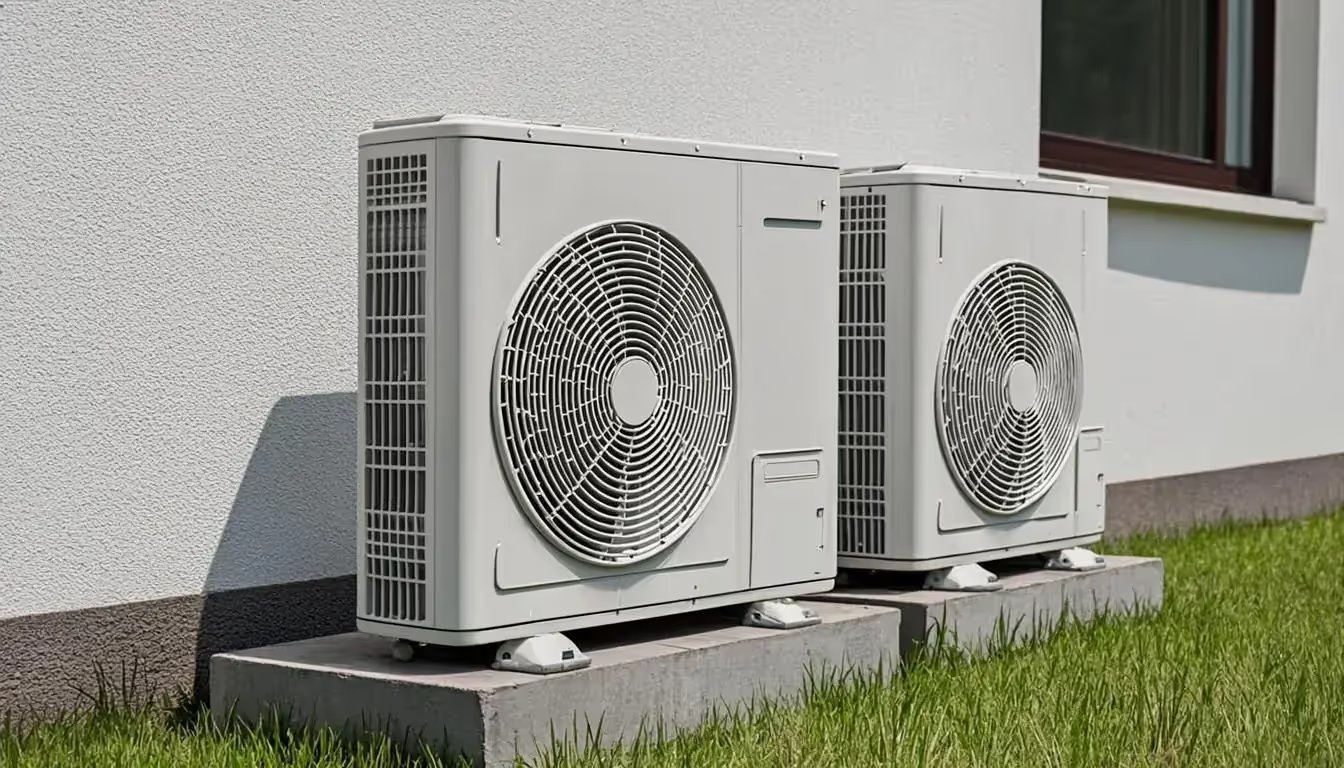
On noise, current cold-climate outdoor units run in the 50s of decibels at partial load, quieter than a normal conversation and far quieter than the 2000s-era units the reputation was built on, and inverter modulation means they rarely even reach their rated maximum. What you will notice in winter is defrost steam and occasional frost sounds, both covered above, and placement matters: keep the unit away from bedroom windows and property lines not just for bylaw comfort but for your own January 3 a.m. Where the equipment sits is a design decision we make with you on site, not a default the installer grabs.
Who Should Not Buy One Yet
Honesty requires a chapter the sales brochures skip. A cold-climate heat pump is the right default for most Metro Vancouver homes, and these are the exceptions where something else should happen first, or instead, and we say so at the kitchen table.
The leaky envelope
A house losing heat through 1960s single-pane windows and uninsulated walls punishes any heat source. Seal and insulate first, then the heat pump gets smaller and cheaper.
The condemned ductwork
Ducts leaking a third of their air into a crawlspace waste a third of any equipment you attach. Fix the ducts or choose ductless, do not pay to pressurize the crawlspace.
The one-room problem
A single cold bedroom does not need a whole-home system. One ductless head at $3,800 to $5,500 solves it for a fraction of a ducted retrofit.
The furnace with years left
A well-maintained furnace under ten years old is not a reason to panic-swap. Ask us about dual fuel, add cooling, and let the equipment schedule make sense.
The panel at its limit
Rare in our region but real in older homes: no electrical headroom for a heat pump and the coming EV together. The panel conversation belongs in the quote, not after it.
The quote without a heat-loss calc
A company that sizes your house from the driveway is selling you equipment, not engineering. Whatever you buy, do not buy it from them.
Choosing a Unit and an Installer in BC
The equipment matters, and the installer matters more, because the same cold-climate unit commissioned properly and commissioned lazily are two different machines. On equipment, buy the cold-climate class, not the standard class, for the capacity retention, the defrost logic and the rebate eligibility that come with it, and prefer inverter-driven variable capacity in every tier. Brand loyalty matters far less than the local support behind it: parts availability in the Fraser Valley, warranty administration that answers, and a company that will still exist when the compressor warranty is eleven years old.
On installers, the checklist is short and unforgiving. A heat-loss calculation on your house, performed in your house, before any price. A written commissioning report at the end, charge, airflow, balance point, defrost verification. Registration of your warranties on your behalf, ten-year parts registration is standard practice for the reputable tier, plus our own 2-year workmanship warranty standing behind the labour. Flat-rate pricing in writing, so weather and mood do not move your invoice. And references from cold-climate installs specifically, not generic HVAC work, because January is the season that tests the craft.
We hold ourselves to that list the way we hold our licence, BC-PL-2019-4421, and our $2M liability coverage, as minimums, not differentiators. Since 2010, 12,000-plus jobs and a 5.0-star rating across 26 Google reviews later, the pattern our customers teach us is that the equipment class is mature and the local engineering is the product. Choose the machine from the tables, and choose the people who will still answer the phone at -12°C.
The One-Page Cheat Sheet
Everything above, compressed to the decisions. Photocopy it, challenge every quote with it, and call 604-615-2212 when a line does not add up.
| Question | The answer |
|---|---|
| Does it work at -15°C? | Yes, 70-80 percent of capacity on certified cold-climate units |
| When does it stop? | -25°C to -30°C shutoff, far past any Metro Vancouver weather |
| Winter efficiency? | COP 3+ in shoulder season, 2.5-3 seasonal, 1.5-2 at -15°C |
| Backup heat needed? | Rarely on the coast, sometimes the valley, never as primary |
| Defrost steam? | Normal. Long, frequent or one-sided frost is a service call |
| Installed cost? | $6,500-$14,000 ducted; $3,800-$5,500 one zone; $9,500-$16,000 multi-zone |
| Rebates? | Up to $16,000 combined in 2026, paperwork completed by us |
| Non-negotiable? | Heat-loss calculation before price, commissioning report after |
Frequently Asked Questions
Services From This Guide
Cold-climate heat pump installs, sizing, ducted and ductless systems and honest dual-fuel advice across seventeen Metro Vancouver cities.
Heat pump installation
Cold-climate ducted, ductless and multi-zone installs sized from a real heat-loss calculation, not a brochure.
Heat pump Surrey
From Guildford to Cloverdale, cold-climate installs and repairs with the 2-year workmanship warranty behind them.
Heat pump Coquitlam
Tri-Cities homes get the valley sizing treatment: conservative balance points and honest backup-heat math.
24/7 emergency heat pump repair
No-heat calls answered around the clock, average 45-minute response, $150 flat after-hours premium posted up front.
Related Guides
The Vancouver Heat Pump Guide
The complete local overview: equipment types, costs, sizing logic and what a Vancouver install day looks like.
RebatesCleanBC Rebates: The 2026 Guide
Program by program breakdown of the incentives stacked on cold-climate heat pumps this year, and how we file them.
EfficiencyEnergy-Efficient Upgrades for BC Homes
Where a heat pump sits in the full efficiency stack: envelopes, thermostats and the upgrades that compound.

Red Seal certified, licensed gas fitters (BC-PL-2019-4421), $2M insured and 15-plus years in the field, with more than 12,000 jobs completed across Metro Vancouver since 2010 and a 5.0-star rating across 26 Google reviews. We wrote this guide because the "heat pumps do not work in Canadian winters" objection deserves a real answer with numbers in it, not a slogan. The physics has been settled for years, the sizing and backup-heat decisions are where honest contractors earn their keep, and that is exactly what we do across Metro Vancouver. To book instead of DIY, see heat pump repair in Burnaby — same-day across the city.
More about our team →Get Your Cold-Climate Heat Pump Quote
Book a $89 diagnostic or a free replacement estimate with a Red Seal estimator. You get a proper heat-loss assessment, a written flat-rate price for the system that actually fits your house, and the rebate paperwork handled start to finish. Zero obligation, financing from 7.99 percent with approved credit if it wins. Zero obligation, same-day quotes on most calls. If you would rather hand this to a pro, our heat pump services pages cover Metro Vancouver.
Heat pump down right now?
No-heat calls are answered 24/7 with live dispatch and flat after-hours pricing posted in advance. Daytime? The $89 diagnostic is usually same-day in Vancouver, Burnaby and Surrey.
Call 604-615-2212 WhatsApp Us