
The Honest Answer Up Front
With ordinary equipment, gas heating in BC is usually cheaper to run than electric resistance heating, because BC Hydro electricity is more expensive per unit of energy than FortisBC natural gas. That single sentence is where most internet comparisons stop, and it is the least useful sentence in the discussion, because it compares the wrong electric equipment. A heat pump is an electric appliance that does not convert electricity into heat, it moves heat that already exists, delivering roughly two to four units of warmth per unit of electricity in a Metro Vancouver winter. Run that math against a gas furnace at 80 to 97 percent efficiency and the fuel-cost gap closes or reverses.
So the honest answer is a decision tree, not a slogan. If you have a healthy gas furnace, keep and maintain it. If your furnace is aging or you want air conditioning, a cold-climate heat pump replaces furnace and AC in one purchase with rebate support. If you heat with electric baseboard, a heat pump conversion is the clearest win in this entire guide. And if you are building or doing a major renovation, all-electric is where codes, programs and the market are all walking. We install and service both sides, so this comparison comes with no stake in the outcome, just 12,000-plus jobs of field experience since 2010.
Gas versus electric is the wrong question. Gas versus heat pump is the right one, and the answer depends on your equipment, your house and the year you plan to make the switch.
0 jobs since 2010
Gas furnace, boiler, heat pump and thermostat installs and repairs across Metro Vancouver, both sides of this comparison.
0 diagnostic, credited
One visit tells you which side of this comparison your current equipment is actually on, and the fee credits into any repair.
0 star rated
26 verified reviews, earned by telling customers to keep equipment when keeping it is the right answer.
0 workmanship warranty
Every install on either side of this guide, flat-rate priced in writing, with 24/7 coverage at a flat $150 after-hours premium.
Three Questions, Not One
Families argue about gas versus electric as if it were one question. It is three, and they have different winners. The first is equipment cost: what the hardware and its installation run, from furnace to boiler to heat pump, including venting, gas work, electrical and permits. The second is running cost: what each unit of delivered heat costs under your actual utility rate structures. The third is ownership cost across fifteen to twenty years: maintenance, repairs and how each technology ages in a coastal climate that is wetter and milder than the one most online comparisons assume.
The efficiency labels hide the one number that matters most. A gas furnace is capped by combustion physics near 98 percent: nearly all the fuel's heat enters the ducts, but the fuel itself is gone. Electric baseboard converts essentially all of its electricity into heat, 100 percent, and that still sounds impressive until you meet the appliance that laughs at the hundred-percent ceiling. A heat pump's seasonal performance in a Metro Vancouver climate lands around two to four times its input, because the electricity is moving heat from outdoors rather than creating it. That multiple is why the fuel-cost comparison in Chapter 5 is not the blowout the raw rates suggest.
Equipment cost
Hardware, venting, gas fitting, electrical, permits and disposal. Gas conversions can add service-line work; heat pumps can add panel capacity.
Running cost
BC Hydro steps on one side, FortisBC commodity plus delivery on the other, and the COP multiplier deciding how the contest actually scores.
Ownership cost
Combustion safety checks for gas, seasonal service for heat pumps, and the repair patterns fifteen years of each technology teach you.
The exit question
Rebates attach to conversions, not to status quo. What your next equipment purchase qualifies for changes the arithmetic on the day you buy it.
The Gas Side: Equipment and Costs
Gas heating in Metro Vancouver is mostly furnaces, with boilers running the hydronic homes of Vancouver's west side, New Westminster and North Vancouver. An 80-percent single-stage furnace installs from $3,800, and high-efficiency two-stage equipment runs $5,500 to $9,000, with the upper end reflecting variable-speed blowers, better acoustics and the venting work that sidewall PVC demands. Condensing boilers run $8,500 to $14,000, and combi boilers that heat the house and supply endless domestic hot water from one wall-hung unit run $7,000 to $11,000, the space-saving favourite for suites and laneway homes.
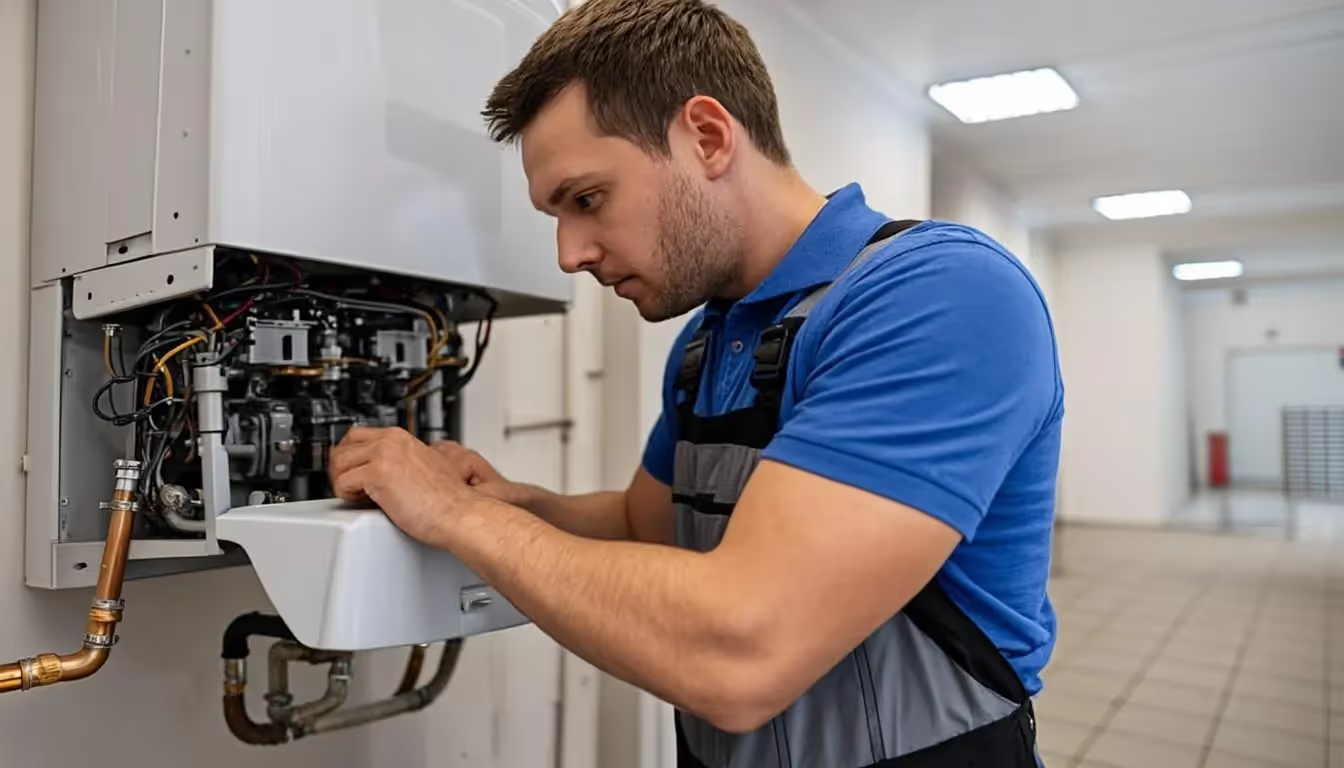
The running story for gas is equally concrete. Annual maintenance is the $129 tune-up, which matters for safety as much as efficiency, because a gas appliance deserves a combustion check every year. Repairs on furnaces run $180 to $650 for the great majority of ignition, sensor, blower and control failures, and boiler repairs run $180 to $550 with annual service at $149 to $250. The equipment lives 15 to 20 years for furnaces and 20-plus for well-kept boilers. When something larger is wrong with your gas equipment, our heating and furnace services cover the full diagnosis-and-quote sequence, and our crews run furnace repair across Surrey and the rest of the region with the $89 diagnostic credited to the completed fix.
The Electric Side: Three Very Different Products
Electric heat in BC is three products wearing one label. Electric baseboard is resistance heat: cheap to install, silent, room-by-room controllable, and the most expensive way to warm a house on a BC Hydro bill, which is why so many condo owners are replacing it. Electric furnaces are the ducted cousin, same resistance physics, useful where gas is unavailable. And heat pumps are the category that changed the conversation: single ductless zones install at $3,800 to $5,500, cold-climate ducted systems at $6,500 to $14,000, and multi-zone setups covering a whole floor plan at $9,500 to $16,000. All of them deliver both heating and cooling, which quietly halves the comparison against any furnace-plus-AC stack.
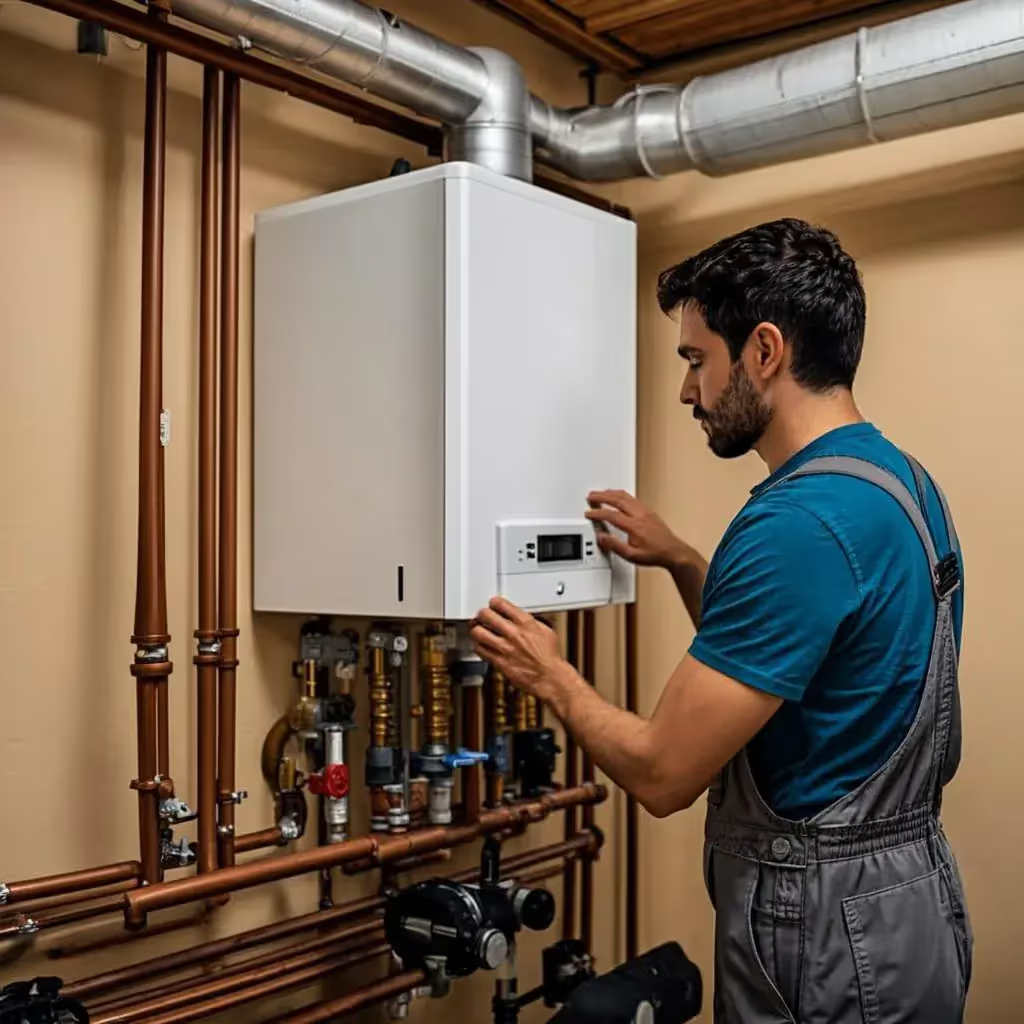
Cold-climate heat pumps are the ones that matter here, rated to hold capacity through the -5 to -15 degree stretches that outflow wind brings to the Fraser Valley a few nights each winter. The heat pump systems we install are sized to a room-by-room heat loss, not to a brochure, and the sizing logic is covered in depth in our Vancouver heat pump guide. The short version that belongs in this comparison: an oversized heat pump short-cycles and a undersized one leans on auxiliary strips, and both mistakes cost money every month for fifteen years.
The Fuel Math, Done Honestly
Rather than quote utility rates that change more often than this guide does, here is the structure that decides the arithmetic, because the structure is stable even when the numbers move. BC Hydro bills residential electricity in two steps, and the more you consume in a month, the larger the share billed at the upper step. FortisBC gas bills split into a market-moving commodity charge and a largely fixed delivery charge, which means gas savings scale with consumption while the floor of the bill stays put. Both structures reward the same thing: consuming less, especially at the margin.
Resistance versus combustion
Baseboard converts electricity to heat at essentially 100 percent; a good furnace converts gas at 95-plus. At BC rates, gas per unit of delivered heat typically wins this pairing, which is why baseboard bills sting in January.
The COP multiplier
A heat pump delivering three units of heat per unit of electricity is effectively buying electricity at a third of its price for heating purposes. That multiplier is what lets electric equipment compete with, and often beat, the burner.
The step-rate interaction
Homes with electric heat living near the BC Hydro step threshold feel every extra hour of runtime at the upper rate, which is why envelope upgrades and heat pump conversions show up so clearly on those bills.
The delivery reality
Both utilities charge to move energy, not just to sell it, and fixed delivery charges reward households that reduce total consumption rather than merely rescheduling it. The thermostat trims hours; the equipment choice trims the rate of hours.
Put the four together and the practical 2026 summary is this: gas furnaces still hold a running-cost edge over resistance heat, heat pumps close most or all of that gap in this climate, and equipment age decides which side of the gap you actually sit on, because a 1990s 75-percent furnace loses to a modern heat pump that a 2020 high-efficiency furnace beats only on paper.
Emissions on a Hydro Grid
BC generates the large majority of its electricity from hydro, which gives electric heating a carbon profile most provinces can only envy. A heat pump running on this grid emits far less per unit of heat than any gas appliance, and the comparison is not close: no on-site combustion, no flue losses, and every efficiency gain in the envelope multiplying through. Resistance heat is clean at the wall too, but spending three times the electricity for the same heat is a waste of clean generation, which is why electrification plans are built on heat pumps rather than baseboard.
Gas equipment is not the villain of a dishonest story. A modern condensing furnace or boiler emits meaningfully less than the mid-efficiency unit it replaces, and keeping a functioning appliance to end-of-life is usually greener than manufacturing and trucking a replacement early. The sequencing that matters most is envelope first, then equipment at the natural replacement moment, and the full stack is laid out in our guide to energy-efficient upgrades in BC. Municipal climate plans across Metro Vancouver point the same direction, which is why heat pump conversions now carry the rebate weight and new gas service to existing homes is the path getting narrower.
Lifespans and Maintenance
Furnaces serve 15 to 20 years, boilers 20 and often more, and heat pumps 12 to 15 in coastal service, with inverter-driven cold-climate units on the longer end when the seasonal checks are kept. Gas equipment carries an annual obligation the electric side does not: a combustion safety check, the $129 tune-up, which inspects the burner, exchanger and venting for the failure modes that matter. Heat pump service is lighter per visit but twice seasonal in practice, a cooling-season check and a heating-season check, and both technologies punish neglect the same way, quietly, through efficiency decay you only see in the monthly bill.
Repair patterns differ in character more than in cost. Gas repairs concentrate in ignition, flame sensing, venting and controls, mostly $180 to $650; heat pump repairs concentrate in capacitors, contactors, defrost boards and refrigerant circuit work, with AC-side failures of the same components running $180 to $450. Neither side has a monopoly on reliability, and both have a maintenance schedule that determines which half of the repair statistics you live in. The equipment you own deserves the calendar it was designed for, not the one you remember when the bill spikes.
| Ownership item | Gas furnace | Electric baseboard | Cold-climate heat pump |
|---|---|---|---|
| Typical service life | 15-20 years | 20-plus years, elements near-indefinite | 12-15 years in coastal service |
| Annual maintenance | $129 combustion tune-up, safety-critical | None scheduled, vacuum and vacuum again | Seasonal check, heating and cooling |
| Typical repair band | $180-$650 furnace, $180-$550 boiler | Thermostat and element replacement | $180-$450 on controls and AC-side parts |
| Cooling included | No, separate AC at $3,800-$6,500 | No | Yes, in the same machine |
| Rebate exposure in 2026 | Limited, may apply | None as equipment | Up to $16,000 combined for cold-climate units |
The Verdict by Home Type
This is the table that answers the question people actually have. Match your situation, and the row is your 2026 answer.
| Your situation | The honest 2026 call |
|---|---|
| Gas furnace under 10 years old, healthy | Keep it. Maintain it at $129 a year, run a smart thermostat, and revisit at the 15-year mark with runtime history in hand. |
| Gas furnace past 15 years, or repeated repairs | Decision point. High-efficiency replacement at $5,500-$9,000 versus a cold-climate heat pump at $6,500-$14,000 with rebate support, both quoted flat-rate with the comparison in writing. |
| Gas furnace plus aging or absent AC | Heat pump or dual fuel replaces both heating decisions at once, since central AC installs alone at $3,800-$6,500 and adds no heating value. |
| Electric baseboard house or condo | The clearest win in this guide: ductless heat pump zones at $3,800-$5,500 each, staged as budget allows, oldest and coldest rooms first. |
| Hydronic home with aging boiler | Condensing boiler $8,500-$14,000 or combi $7,000-$11,000 if hot water is also due, with boiler repairs $180-$550 buying time if it is not. |
| New build or major renovation | All-electric with a cold-climate heat pump, designed in from the start, is where programs, codes and resale conversations are all moving. |
Dual Fuel: The Honest Hybrid
For homes with a good furnace and a desire for cooling, the middle path deserves its own chapter. A dual-fuel system pairs the existing gas furnace with a heat pump on shared ductwork, and an outdoor-temperature switchover decides which side runs: the heat pump through the mild shoulder months and the bulk of winter, the furnace during the genuinely cold nights when its combustion economics take over. You keep the furnace's cold-snap output, gain the heat pump's efficiency across the months that dominate a BC heating season, and get full air conditioning as a feature of the same machine.
The honest caveats: the switchover point is an economics calculation, not a superstition, and it should be set by someone who has seen your bills, not copied from a manual; the furnace still needs its annual combustion check; and the controls need proper configuration so the furnace does not get summoned by a lazy thermostat. Done right, dual fuel is the best of both sides of this entire guide. Done carelessly, it is the most expensive way to run a furnace. The difference, as always, is configuration, and it is the kind of work our estimators quote flat-rate in writing.
Rebates and Financing in 2026
The rebate landscape tilts this comparison, and pretending otherwise would make this guide less honest. Combined CleanBC Better Homes, BC Hydro, FortisBC and municipal top-ups can reach $16,000 for cold-climate heat pumps in 2026, and we complete the paperwork. There is no comparable stack attached to a gas furnace replacement, where rebates may apply for high-efficiency equipment in limited programs, and we check eligibility and handle the paperwork on those too. When a heat pump conversation starts at a $16,000 discount before financing, the fuel-cost comparison in Chapter 5 is no longer the only number that matters, and the payback math can arrive years early.
Financing sits on top of all of it, with approved-credit plans from 7.99 percent available through our office on either a furnace or a heat pump, so the decision can ride on total cost of ownership rather than on cash flow this quarter. The sequence we recommend to every homeowner weighing this guide: get the flat-rate written quotes for both paths in your actual house, subtract the rebates each path qualifies for, and compare the financed monthly cost against the fuel bills each path projects. That is a decision made on evidence, and it takes one visit.
City Notes Across Metro Vancouver
The comparison lands differently by city. Vancouver and New Westminster carry the oldest gas equipment in the region, and their hydronic homes face boiler-versus-heat-pump decisions earlier than everyone else. Surrey, Langley and Coquitlam are the two-stage-furnace heartland, where the question usually arrives as furnace-plus-AC replacement, which is precisely the scenario heat pumps were built to win. Burnaby and Richmond straddle both worlds, high-rise baseboard condos and gas-heated subdivisions, sometimes in the same family. North Vancouver and Maple Ridge add elevation and tree cover, which rewards proper heat-loss sizing over rules of thumb. Wherever you sit, our Vancouver furnace crews and the regional teams behind them answer both sides of this guide, 24/7, at 604-615-2212.
The 60-Second Cheat Sheet
| Question | The short answer |
|---|---|
| Cheaper to run, gas or electric? | Gas beats resistance electric in BC; heat pumps close or reverse the gap by multiplying each kilowatt-hour into two to four units of heat. |
| Cheaper to install? | 80-percent furnaces start at $3,800 and ductless heat pump zones at $3,800-$5,500, but total install cost follows your house, ducts and panel, not the sticker. |
| Greener? | Heat pump on BC's hydro grid, clearly. A maintained modern gas furnace is far better than the one it replaced, but it still burns on site. |
| When should I switch? | At the natural end of your current equipment, or now if you heat with baseboard or want cooling. Rebates reward both moments. |
| What should I do this month? | Book the $129 tune-up if you are keeping gas, request the dual-path written quote if your equipment is aging, and let the numbers decide. |
Gas or electric is not a belief system, it is arithmetic that depends on equipment age, house physics and program timing, and the arithmetic is knowable before you spend anything. One flat-rate estimate visit gives you both paths priced in writing, rebates attached where they apply, and the honest recommendation of people who service both sides every day of the week.
Frequently Asked Questions
Services From This Guide
Gas furnace, boiler and heat pump estimates across Metro Vancouver, 20 cities, rebates attached, 24/7 emergency line.
Gas furnace and boiler service
Tune-ups $129, furnace repairs $180-$650, boiler repairs $180-$550, replacements quoted flat-rate in writing.
Cold-climate heat pump installs
Ductless, ducted and multi-zone systems with rebates up to $16,000 combined and paperwork handled end to end.
Dual-path estimates
Keep-gas versus go-electric written quotes in one visit, both prices flat-rate, both warrantied 2 years on workmanship.
Financing and rebates
Approved-credit plans from 7.99 percent on either path, with eligibility checked and paperwork completed by our office.
Related Guides
The Vancouver Heat Pump Guide
The deep dive on the electric side of this comparison, including sizing and cold-climate performance.
EfficiencyEnergy-Efficient Upgrades in BC
Where envelope, windows and equipment rank, and the order that makes each rebate worth the most.
HeatingFurnace Repair vs Replace
The decision math for the most common gas-side moment, told with the same flat-rate honesty.

Red Seal certified, licensed gas fitters (BC-PL-2019-4421), $2M insured and 15-plus years in the field, with more than 12,000 jobs completed across Metro Vancouver since 2010 and a 5.0-star rating across 26 Google reviews. We wrote this guide because we install and service both gas and electric equipment every day, and the gas-versus-electric answer is only honest when the people giving it repair both sides for a living. To turn these numbers into a flat-rate quote, see HVAC service in Langley — same-day across the city.
More about our team →Get Both Paths Priced
Book the $89 diagnostic or a free dual-path estimate with a Red Seal estimator. You get the keep-gas and go-electric numbers side by side for your actual house, a flat-rate written price for either path, and financing options from 7.99 percent once the rebates are subtracted. Zero obligation, same-day quotes on most calls. The brand-by-brand breakdown lives in Electric vs Gas Furnace in BC: The Honest Comparison. If you would rather hand this to a pro, our heating & furnace services pages cover Metro Vancouver.
No heat right now?
No-heat calls are answered 24/7 with live dispatch and a flat $150 after-hours premium posted in advance. Daytime? The $89 diagnostic is usually same-day in Vancouver, Burnaby and Surrey.
Call 604-615-2212 WhatsApp Us