The Honest Answer Up Front
A genuinely cracked heat exchanger is the end of the repair conversation and the beginning of two other conversations, one about safety and one about replacement, and both deserve more care than they usually get. The safety conversation is short: the exchanger is the only wall between combustion products and the air in your ducts, a crack in that wall is a carbon monoxide pathway, and the furnace gets shut off until the verdict is confirmed. The replacement conversation is where the money lives: a new furnace starts from $3,800 installed for an 80-percent unit and runs $5,500 to $9,000 for high-efficiency equipment, and the right answer depends on the age of the unit, warranty status and what else the furnace has been telling you.
The part we want to change in this industry is the verdict itself. Across more than 12,000 jobs since 2010, our technicians have lost count of the second opinions where the 'crack' turned out to be a dirty flame sensor, a sooted burner or an honest technician who saw a design seam and called it a fault. A real crack can be proven: combustion analyser readings that shift when they should not, visible separation, soot trails, or a pressure test that fails. If the person delivering the verdict has no instrument reading, no photo and no pressure number, you have not received a diagnosis, you have received a sales pitch, and the cheapest thing you can buy in this whole guide is a second opinion.
If your furnace has already been red-tagged, Chapter 6 walks the BC process and your options without the panic. If you are reading because a technician said the word and you want to know whether to believe them, start at Chapter 4, how cracks are actually found. And if the crack is confirmed and you are deciding what replaces the furnace, the full decision framework lives in our furnace repair versus replacement guide, with the heat pump alternative in our Vancouver heat pump guide.
The exchanger is the most over-diagnosed part in heating, in both directions: condemned without evidence by companies that sell furnaces, and cleared without instruments by companies that sell tune-ups. The truth only shows up in the readings, and you are entitled to see them.
0 jobs since 2010
Verdicts delivered with instruments across Metro Vancouver and the Fraser Valley by our Red Seal team.
0 diagnostic, credited
Combustion analysis, exchanger inspection and a written verdict, with the fee credited to any repair.
0 stars, 0 reviews
A rating built on second opinions that sometimes told people to keep their furnace.
0 workmanship warranty
Every install and repair, backed by $2M liability and BC licence BC-PL-2019-4421.
What the Heat Exchanger Actually Is
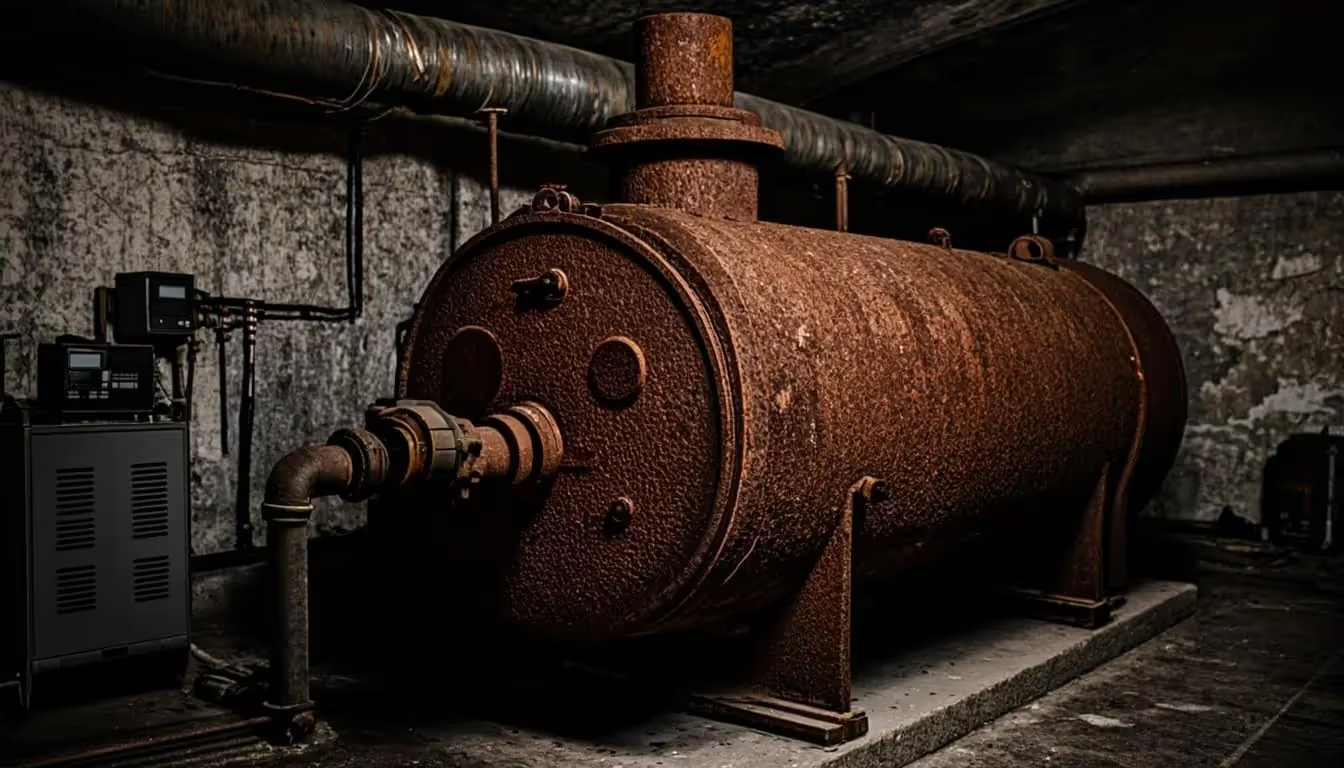
Inside every gas furnace, two air streams run side by side and must never mix. On one side of a folded series of steel chambers, the burners' flame and its exhaust: carbon dioxide, water vapour, and carbon monoxide among them. On the other side, the air your blower pushes through the ducts and into every room of the house. The heat exchanger is the shaped metal wall between those streams, thin enough to transfer heat fast, tough enough to hold the separation for decades, and it is the only single component whose integrity stands between combustion and your family's air. Every other furnace part failing costs comfort or money. This one is different.
The design explains both why it lasts so long and why it eventually fails. The exchanger lives at the hottest point in the system, heats and cools with every burner cycle, and expands and contracts accordingly, thousands of times a season. Manufacturers build them from coated steels shaped into cells or serpentine tubes, and on high-efficiency condensing furnaces the exchanger also handles a second job: extracting so much heat that flue gases condense into liquid, which is why those units have condensate drains and why their exchangers are built from stainless-grade alloys that tolerate corrosion. The engineering is genuinely good, and a maintained exchanger regularly outlives the electronics around it.
What no engineering tolerates forever is abuse. Anything that makes the exchanger run hotter than designed, choked airflow across it, a burner tuned rich, short cycling that piles thermal cycles onto the metal, spends its life faster. That is the honest connection between the maintenance habits in every guide in this series and the verdict in this one: the filter, the tune-up and the combustion analysis are not cosmetic rituals, they are the exchanger's life support. The $129 annual tune-up exists substantially because of this part.
The Five Reasons Exchangers Crack
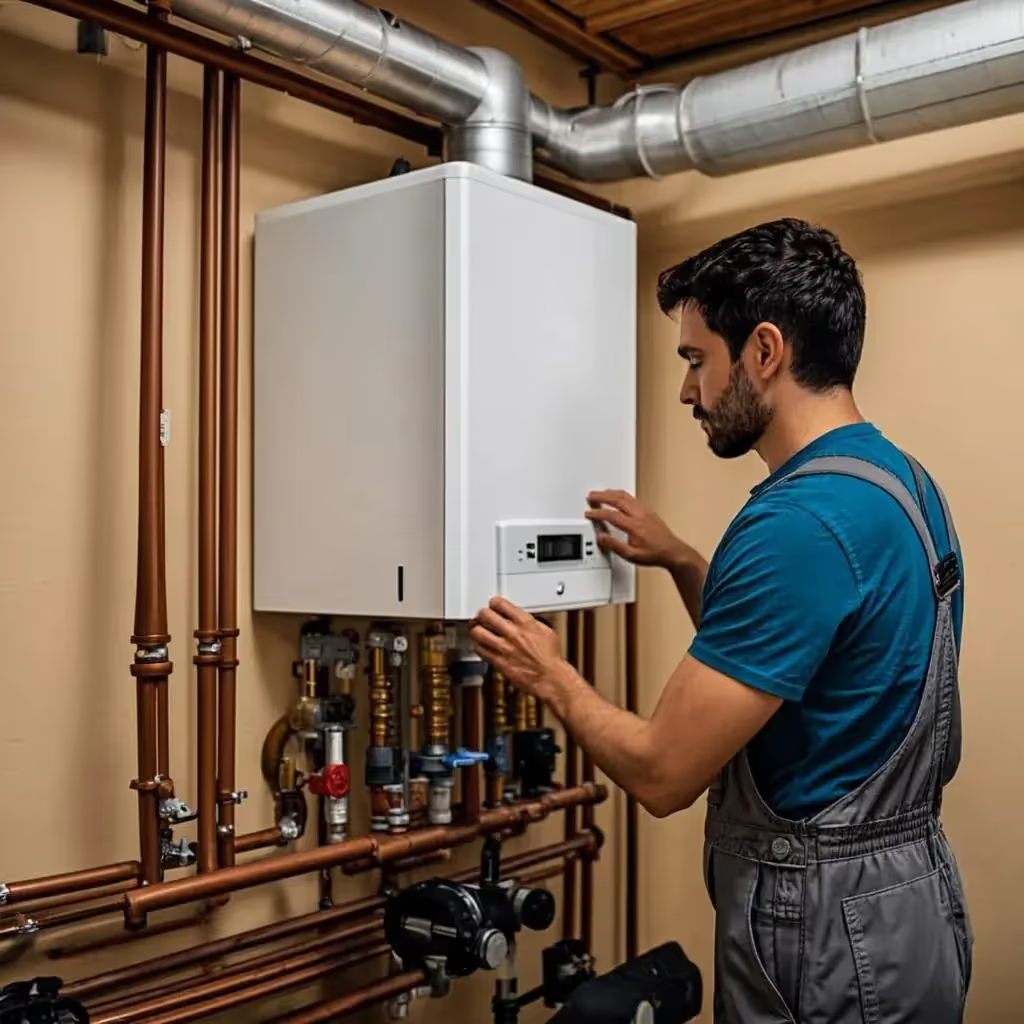
Exchangers fail for reasons that trace back to physics, installation or maintenance, almost never to bad luck alone. These are the five we actually see, roughly in order of frequency on our calls in Vancouver, Surrey, Burnaby and the valley.
1. Thermal fatigue, simply age
Every burner cycle expands the metal and every shutdown contracts it. After fifteen to twenty years of thousands of cycles per season, the stress concentrates at bends and welds, and cracks begin where the metal worked hardest.
2. Choked airflow overheating
A clogged filter, blocked registers or a covered return starve the air that is supposed to carry heat away. The exchanger runs hotter than its rating, cycle after cycle, and overheated metal ages fast. The single most preventable cause on this list.
3. Short cycling
A furnace that starts and stops every few minutes multiplies the thermal cycles per season several-fold. Every short cycle is a full expansion and contraction event, which is how a cycling problem in year eight becomes an exchanger problem in year fourteen.
4. Combustion and installation faults
Wrong gas pressure, misadjusted burners or an oversized furnace installed on square-footage guesswork all push more heat than the design intended. The original installer's discipline, or its absence, is inside every fifteen-year-old exchanger.
5. Corrosion and condensate
Coastal humidity, damp mechanical rooms and, on condensing units, acidic condensate all attack metal. Most relevant to older mid-efficiency units in humid Vancouver basements, and a reason alloy choice matters on the replacement you buy.
One honest footnote: manufacturing defects happen, and they are why exchangers carry their own warranty terms, often longer than the rest of the furnace, on many lines. When a young furnace cracks, warranty coverage changes the math so completely that the first question after the verdict should always be the unit's age and registration status. We check both before anyone talks prices, and the answer is sometimes genuinely good news.
How Cracks Are Actually Found
A defensible verdict uses at least two of these methods, and every one of them produces something you can see: a number, a photo, a reading that changed when it should not have. This is the sequence our technicians run, and it is the standard any diagnosis should meet.
Combustion analysis first
The analyser samples flue gas at start-up and steady state, logging oxygen, carbon monoxide and efficiency. Then the technician disturbs the airflow path, door off, blower speed changed, and watches the readings. In a sound exchanger the numbers hold; in a cracked one, house air leaking into the stream makes them move. A shifting reading is evidence, and it goes in your report.
The visual pass through the burner ports
With the burners removed or through the ports, the technician inspects the cells' first bends and seams: soot trails, hairline separation, scaling, and the burner pattern that uneven draft leaves behind. Design seams get distinguished from faults, because factory weld lines have fooled more than one eager diagnosis, and photos document what is actually there.
Flame behaviour, watched live
The burner flame should sit steady and blue. A flame that flutters when the blower runs, rolling or leaning as the air side pressurizes, is telling you the two streams are connected somewhere they should not be. It is a live symptom, repeatable on demand, and it strengthens every other finding.
Pressure testing and borescopes, where design allows
Some exchangers can be isolated and pressure-tested, and a held pressure is a clean pass or fail. Borescope cameras reach corners the eye cannot, especially on serpentine condensing designs. Both methods take time and instruments, which is exactly why the companies that skip them produce the worst diagnoses in both directions.
And the boundary that matters most: no inspection, by anyone, with any instrument, can certify an exchanger as perfect for the future. What a careful inspection does is raise or lower confidence with evidence. Any contractor who guarantees a clean exchanger over the phone, or condemns one without showing you the readings, is selling certainty that does not exist.
What You Might Notice at Home
Here is the uncomfortable truth first: most real exchanger cracks produce no symptoms at the kitchen table at all, which is why the annual inspection exists. But when a furnace does announce trouble, these are the announcements, and any one of them earns a prompt diagnostic.
Soot where soot should not be
Fine dark streaks around burner ports or inside the cabinet mean combustion products are going somewhere they should not. Soot is never cosmetic, and it photographs well, which matters for your records.
A fluttering or rolling burner flame
Watch the sight window with the fan running. A flame that leans or shivers in time with the blower is describing an airflow connection between the two sides of the exchanger.
Frequent limit trips and short cycling
Overheating, the high limit shutting the burner down early, can be airflow starvation or an exchanger running hot. In an older furnace, it is the symptom that moves an exchanger check to the top of the list.
CO detector activity, at any level
A sounding alarm is the emergency path. A unit that has chirped, drifted or recorded low readings deserves follow-up too. If people in the house have headaches or flu-like symptoms that ease outside, treat it as an alarm, act first, diagnose second.
A hot, metallic smell at the registers
Overheated metal has a smell, and registers that push it are describing an exchanger or airflow problem. Shut the unit off and book the diagnostic rather than running it to see what develops.
Often, nothing at all
The most common symptom of a cracked exchanger is the one an annual combustion analysis catches before anyone feels it. That is not a sales line, it is the entire reason the test exists.
If the CO alarm sounds, the order is fixed
Everyone outside first, including pets. Call 911 from outside and let the fire service measure the air, they carry the instruments and it is the fastest way to know the house is safe. Do not go back in to open windows or investigate the furnace. Once the building is cleared, call us at 604-615-2212 and the furnace gets the combustion analysis before it runs another cycle. The emergency line answers 24 hours a day, and after-hours calls carry a posted $150 flat premium, never a mystery rate.
The Red Tag Process in BC
In British Columbia, a gas fitter who finds an immediate hazard on a gas appliance is required to shut it down and tag it, the familiar red tag, with the findings reported through Technical Safety BC. The tag is not a fine, not a lien on your home and not an obligation to buy anything from the company that applied it. It is a safety record that says: this appliance was found unsafe on this date, and it stays off until the hazard is resolved.
What the tag does mean is that the furnace cannot simply be switched back on. The hazard has to be repaired, or the appliance replaced, and the correction documented. You have every right to a second opinion before spending replacement money, and a reputable second opinion will want the same things: the tag's stated reason, the readings behind it, and access to the furnace. A company that resists your getting a second look at a red tag is telling you something about the verdict. Our furnace repair service in Vancouver handles red-tag second opinions regularly, including ones that end with us agreeing the tag was right, and ones that end with the furnace back on after the real cause was fixed.
The practical sequence, stripped of panic: read the tag, understand what hazard it names, book either the repair path or the replacement path within days rather than weeks, and keep the paperwork. If the verdict is an exchanger crack, Chapter 7 is the money conversation, and it goes better with the evidence in hand.
A red tag is a safety record, not a purchase order. Your obligations are to keep the appliance off and to fix the hazard, and your rights include the readings, the report, and a second opinion from whoever you choose.
Repair the Exchanger or Replace the Furnace?
Start with what an exchanger replacement actually is: the furnace is substantially dismantled, the old exchanger comes out, the new one goes in, and the unit is rebuilt and re-commissioned. On a young furnace with the exchanger still under manufacturer warranty, that math can work, the part may be covered while the labour is not, and a warranty claim resurrects a unit with a decade left in it. Outside of warranty, on a furnace past its early teens, the honest arithmetic almost always points the same money at a new furnace instead, with every other component new along with the exchanger and a full warranty stack behind all of it.
| Situation | The honest call | Why |
|---|---|---|
| Furnace under about 12 years, exchanger under warranty | Pursue the warranty claim | The part may be covered, the unit has real years left, and the labour to rebuild is the whole cost of the rescue |
| Furnace 12 to 15 years, warranty expired | Replacement conversation | Rebuild labour on a mid-life unit buys years the controls and blower may not match |
| Furnace 15-plus years | Replace | The exchanger verdict at this age is the furnace announcing its retirement with evidence |
| Crack confirmed, other symptoms already accumulating | Replace | Repairs on a failing platform stack into paying for a new furnace one part at a time |
| Verdict arrived without readings or photos | Second opinion first | The cheapest item in this entire guide, and it occasionally saves the whole replacement |
The prices in that decision are posted and boring, which is how prices should be: a replacement furnace starts from $3,800 installed for an 80-percent single-stage unit and runs $5,500 to $9,000 for high-efficiency equipment, with financing from 7.99 percent for qualified homeowners. Common repairs like sensors, igniters and limits live in our $180 to $650 flat band, but an exchanger rebuild is not a common repair, and it is quoted as its own job when warranty coverage makes it worth doing. The full part-by-part logic, including how an exchanger verdict weighs against every other repair, is laid out in our furnace repair versus replacement guide, and the crews writing those quotes from Surrey furnace repair calls through the city use the same math, the same flat-rate book and the same 2-year workmanship warranty on completed work.
If Replacement Wins, What Comes Next
The good news buried in a confirmed crack is that a replacement decision arrives at the best moment to make it well: nothing is being decided at 2 a.m. under pressure, the house has a known heat-loss profile, and the whole modern equipment range is open. For most Metro Vancouver homes the strong default is a high-efficiency furnace with two-stage firing and a variable-speed blower, the configuration that runs long and gentle through our five-to-ten-degree shoulder seasons and answers the outflow weeks on high fire. For homes weighing the long game, the question worth asking in the same conversation is a heat pump: the region's climate makes it the most efficient heat source for the mild majority of the year, with the furnace or a dual-fuel setup covering the deep cold.
The rebate math belongs in that conversation early. Combined CleanBC Better Homes, BC Hydro, FortisBC and municipal top-ups can reach $16,000 for cold-climate heat pumps in 2026, and we complete the paperwork, and furnace-specific programs may apply depending on equipment and utility, which we check rather than guess. The starting points for all of it are on our heat pumps service page, and the replacement quotes themselves, sized from a real heat-loss calculation rather than a square-footage rule, come from the same Red Seal estimators who run the rest of our heating work.
The install itself is a known quantity: equipment sized and quoted in writing, the Technical Safety BC permit and inspection handled by us, the old furnace removed, the new unit commissioned with combustion readings on the record, warranties registered in your name, and our 2-year workmanship warranty on top. Most replacement installs are a single working day, and in an outflow week, a house with a red-tagged furnace gets priority scheduling, because we know exactly what that week is like without heat.
How Exchangers Live Longer
Every cause in Chapter 3 has a mirror-image habit here, and none of them cost much. The $129 annual tune-up on our heating page is the spine: combustion analysis, burner and exchanger inspection, gas pressure verification and a written report that tracks the numbers year over year, so drift gets caught while it is still a tuning issue instead of a verdict. Around it, the habits that matter most to this one part:
Protect the airflow
Filter on schedule, returns and registers open, nothing parked over the grilles. Choked airflow is the most preventable exchanger killer there is.
Fix short cycling promptly
Every avoided short cycle is thermal fatigue the exchanger never accumulates. If the furnace is cycling hard, that symptom is this part's future.
Keep the annual appointment
Combustion drift caught in October is a burner adjustment. Caught four years later, it is this guide. The report is the early-warning system.
Dry mechanical room, sealed ducts
Corrosion loves a damp Vancouver basement. Manage the humidity around the furnace and the metal pays you back in years.
CO detectors on every floor
Near sleeping areas and on every level including the basement, tested monthly, expiry dates respected. The last line of defence, and the one that makes every other habit matter.
Demand sizing at replacement
When the replacement day comes, buy the furnace the heat-loss calculation asks for. Oversized units run hot and short, which is Chapter 3 all over again on a brand-new machine.
The One-Page Cheat Sheet
From suspicion to a signed decision, in the order it should actually happen.
| Where you are | What it means | Your next move |
|---|---|---|
| CO alarm sounding, or symptoms that ease outdoors | Safety event, right now | Outside, 911, then 604-615-2212 once cleared |
| Verdict spoken, no readings shown | Not yet a diagnosis | Second opinion with a combustion analyser, $89 diagnostic credited to any repair |
| Crack confirmed, furnace under about 12 years | Warranty question first | Check registration and coverage before pricing anything |
| Crack confirmed, furnace 15-plus years | Replacement conversation | From $3,800 installed, $5,500 to $9,000 high-efficiency, financing from 7.99 percent |
| Red tag on the unit | Safety record, not a purchase order | Read the stated hazard, choose repair or replacement within days, keep the paperwork |
| Replacement chosen | Decide the machine, not just the price | Heat-loss sizing, two-stage and ECM for most homes, heat pump math with up to $16,000 in combined rebates |
| Verdict avoided, this year | Keep it that way | $129 October tune-up, filter habit, vents open, CO detectors tested |
Get the Readings Before You Sign Anything
A $89 diagnostic with combustion analysis, a documented exchanger inspection, and a written verdict you can take to anyone. Or call 604-615-2212, 24 hours a day.
Frequently Asked Questions
Services From This Guide
Combustion-analysis testing, documented exchanger inspections and honest replacement math across Metro Vancouver, seventeen cities, seven days a week.
Furnace diagnostics and safety checks
Combustion analysis and exchanger inspection on every diagnostic, with the $89 fee credited to any repair, across seventeen Metro Vancouver cities.
Furnace repair Vancouver
Suspect exchangers, red tags and second opinions: instrument-backed verdicts, flat-rate repairs when the unit is worth saving.
Furnace repair Surrey
Surrey to Langley: the same combustion analyser discipline, written findings and honest repair-versus-replace math.
Heat pumps and dual fuel
When the exchanger ends the furnace, a heat pump or dual-fuel system is often the strongest replacement, with rebate paperwork handled.
Related Guides
Furnace Repair vs Replace: The Honest Guide
The five golden rules and part-by-part logic behind every exchanger verdict we hand a homeowner.
Heat PumpsHeat Pumps in Vancouver: The Full Guide
The strongest replacement path for many Metro Vancouver homes, and how rebates change the math.
TroubleshootingFurnace Not Working in Vancouver? 12 Checks First
If the exchanger suspicion started as a no-heat call, this is the triage chain that got you here.

Red Seal certified, licensed gas fitters (BC-PL-2019-4421), $2M insured and 15-plus years in the field, with more than 12,000 jobs completed across Metro Vancouver since 2010 and a 5.0-star rating across 26 Google reviews. We wrote this guide because a cracked heat exchanger is the most expensive sentence in heating, and it should never be spoken without an instrument reading, a photo or a pressure test behind it. Homeowners deserve to see the evidence, not just the verdict. To book instead of DIY, see furnace repair in Surrey — same-day across the city.
More about our team →Get the Verdict With the Evidence
Book a $89 diagnostic or a free replacement estimate with a Red Seal estimator. You get instrument readings, photos of what we find, and a written recommendation that separates the safety facts from the spending decision. If a second opinion is what you need, bring the other quote and we will go through it line by line. Zero obligation, same-day quotes on most calls. If you would rather hand this to a pro, our heating & furnace services pages cover Metro Vancouver.
Suspect a crack right now?
If a CO alarm is sounding or anyone has symptoms, get outside and call 911 first. For everything else, the $89 diagnostic is usually same-day in Vancouver, Burnaby and Surrey, and we bring the combustion analyser on every call.
Call 604-615-2212 WhatsApp Us