The Honest Answer Up Front
A heat pump water heater is a tank with a small air-to-water heat pump wrapped around the top of it, and it is the one hot water technology in BC with CleanBC, BC Hydro and municipal support behind it. For the households it fits, the math is genuinely good: a family of four heating water with electric resistance spends roughly $500 to $650 a year on BC Hydro, and a heat pump water heater cuts that by 60 to 70 percent, roughly $300 to $450 back every year, with a UEF of 3.0 to 4.0 against a resistance tank's 0.92 to 0.95.
Now the BC fine print, because this is where the honest version earns its keep. Efficiency follows room temperature: these units publish their best numbers in warm air, and below roughly 10 degrees C their coefficient of performance slides while the backup elements shoulder more load. An uninsulated Metro Vancouver garage sits near 5 to 10 degrees through January, so a garage install works but underperforms its brochure. Placement rules are real: about 700 to 1,000 cubic feet of air, roughly a 7 by 10 foot room, or louvered doors and ducting. And FortisBC gas is cheap here, so a gas tank for a family of four still runs less per year, around $400 to $550, than the heat pump's $150 to $250 on hydro, meaning the HPWH wins on total economics mainly where there is no gas, where rebates close the gap, or where electrification is the goal.
The blunt recommendations: electric tank today, especially in a basement or utility room with volume to spare, the heat pump water heater is the obvious next tank, with support programs, amounts verified at booking, softening the premium. Gas tank today and it is running fine, keep gas, the operating savings do not justify switching unless electrification matters to you. Garage install on the table, insulate the question first: an insulated, semi-conditioned garage changes the answer, a bare single-skin garage wastes part of what you paid for. And if the real question is tank versus tankless, that is a different guide, linked at the end.
The sentence that prevents most disappointment: a heat pump water heater is a placement decision disguised as a water heater decision. The same unit that saves $400 a year in a warm basement saves half that in a cold garage, and no brochure will tell you which room you have.
0 jobs since 2010
Tank, tankless and heat pump water heater work across every Metro Vancouver city we serve.
0
The honest upper band of savings on BC Hydro rates, in the right room, on the right schedule.
0
UEF 3.0 to 4.0 against a resistance tank's 0.92 to 0.95: heat moved, not generated.
0 star rated
From verified reviews, earned across installs, service and the honest advice to not buy one when the room says no.
How a Heat Pump Water Heater Actually Works
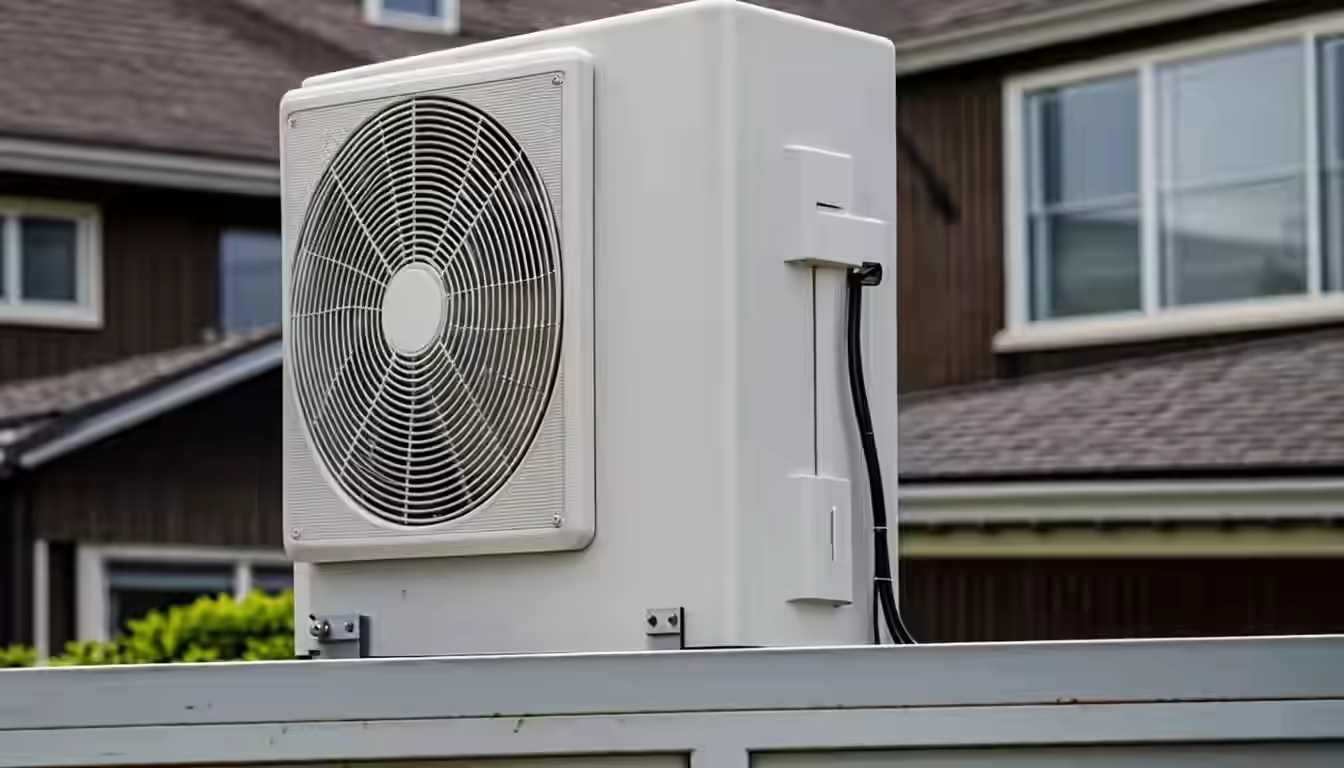
A resistance electric tank is a kettle: elements immersed in the water turn electricity into heat, one for one, which is why its efficiency sits near 0.95 and can never meaningfully exceed 1.0. A heat pump water heater refuses to make heat at all. A small compressor and evaporator coil on top of the tank pull warmth out of the surrounding air, concentrate it through a refrigerant cycle, and deliver it into the water, moving 3 to 4 units of heat for every unit of electricity it consumes. That is the entire trick, and it is why the UEF ratings run 3.0 to 4.0.
Every unit we install also carries backup resistance elements, and the operating modes decide how they are used. Heat-pump-only mode maximizes savings and accepts slower recovery. Hybrid mode, the BC default, runs the heat pump for routine loads and calls the elements during big draws, which is the mode that matches our cold-inlet winters and busy mornings. Electric mode behaves like a standard tank for periods of extreme demand or cold rooms. Set it and forget it is hybrid, and homeowners who dig into the mode settings are usually chasing the last few dollars of savings, which is fine, but the hybrid default captures most of the value.
Two by-products of the physics matter in BC homes and get their own chapters: the exhaust air comes out cool and dry, a dehumidifier and mild air conditioner running whenever the heat pump does, and the unit needs a meaningful volume of air to harvest, which is where small rooms and cold garages get filtered out. The rest of this guide is mostly about placing those two facts inside a Metro Vancouver house honestly. We install and service these units as equipment alongside tanks and tankless, and the water heater services page covers the whole line-up.
The Cold-Garage Truth: BC Placement Reality
Here is the chapter that separates this guide from the brochure. Heat pump water heaters publish performance at warm ambient temperatures, 20 degrees C and up, and their efficiency falls as the room cools. Most units operate down to roughly 4 to 7 degrees C, below which the backup elements take over entirely and the machine becomes an expensive electric tank. Between those points, at a January garage temperature of 5 to 10 degrees, the unit runs, the savings shrink, and the element hours climb.
Metro Vancouver's placement reality sorts into three rooms. The warm basement or interior utility room, 15 to 20 degrees year-round, is where the brochure numbers live, and most Vancouver, Burnaby and New Westminster basements qualify. The semi-conditioned space, an insulated garage or a laundry room on a heated wall, sits 10 to 15 degrees in winter and delivers solid if reduced savings. The bare single-skin garage, common in Port Coquitlam, Surrey and Langley subdivisions, drops toward 5 degrees in an outflow event, and that is the room where we tell homeowners to either insulate first or expect the backup elements to do a lot of January work.
The honest placement rules, in order: warm air beats cold air, big volume beats small, and ducting beats crowding. Many models accept duct kits that draw air from or exhaust to adjacent spaces, which rescues small mechanical rooms; a louvered door is the budget version of the same fix. If the only available room is a bare garage, price the insulation as part of the project, because a few hundred dollars of garage insulation changes the operating economics for the next fifteen years. And a cold-room install is not a reason to abandon the technology; it is a reason to set the mode schedule to hybrid and expect the savings at the honest end of the range.
Bottom line
A heat pump water heater in a warm BC basement earns its full brochure savings, roughly $300 to $450 a year for a family of four on hydro. The same unit in a bare January garage runs on backup elements a third of the season and halves the payoff. Choose the room before you choose the unit, and if the room is cold, insulate it or temper your expectations.
The Savings Math on BC Hydro Rates
Run the numbers the way a bill runs. A family of four using hot water normally consumes roughly 200 to 250 kWh a month for water heating with resistance elements, which lands between $450 and $650 a year on BC Hydro's stepped residential rates, depending on which side of the step threshold the household lives on. A heat pump water heater in a warm room on hybrid mode cuts that load by 60 to 70 percent, returning roughly $300 to $450 a year. In a cold garage the honest expectation is closer to $150 to $300.
Against the capital cost, the payback is real but not instant. Against a standard electric tank at the friendly end of the $1,400 to $2,600 install range, the heat pump unit carries an equipment premium, and the payback on that premium runs roughly 4 to 8 years on full savings, longer on reduced ones, with CleanBC, BC Hydro and municipal support, verified at booking, pulling the payback meaningfully left on qualifying installs. Against a gas tank, the operating comparison flips: FortisBC gas heats a family's water for roughly $400 to $550 a year against the heat pump's $150 to $250 on hydro, so a gas household saves nothing per year by switching and needs the rebate case or the electrification case to justify it, which is an honest and legitimate case in 2026 but should be made with eyes open.
One more BC-specific line item that belongs in honest math: in a heated room, the cool exhaust is air your furnace or baseboards paid to warm, so a winter install in a small heated room quietly shifts a few dollars from the hot water bill to the heating bill. In a basement nobody heats precisely, that line item is zero, which is one more reason basements are the natural home for these units. For the bigger electrification picture, our BC energy upgrades guide sequences this decision against heat pumps, insulation and windows.
CleanBC, BC Hydro and Municipal Support
The support landscape for heat pump water heaters in BC is real and it is the single biggest reason these units moved from niche to mainstream: CleanBC, BC Hydro and several municipal programs, Vancouver, North Vancouver and others among them, have offered meaningful incentives, and combined amounts have historically reached well into four figures on qualifying installs, alongside periodic bonus top-ups that appear and disappear with program budgets.
This guide deliberately does not print a specific number, because any figure we quoted today would be stale by the time you read it. Programs change amounts, eligibility rules and intake windows with budget cycles, and the internet is full of rebate articles citing numbers that expired two intakes ago. What we do instead, and what any honest contractor should do, is verify the current amounts at booking, confirm your eligibility before you rely on it, and complete the paperwork for you, CleanBC, BC Hydro, FortisBC and municipal, so the support you were promised is the support that arrives. Financing from 7.99 percent with approved credit covers the balance when the project needs it.
Two eligibility notes worth knowing before you plan around support: the installed equipment generally must be on the qualifying list, with the UEF to prove it, and the installation must meet code with permits, which is exactly the standard install we run anyway. Some programs have also required the removal of gas service or a switch from gas equipment for top-tier amounts, which matters if you are keeping gas for cooking or a fireplace. The CleanBC rebates guide explains the mechanics, and our booking process applies them to your actual project.

Where They Shine: Basements and Side Benefits
The Metro Vancouver basement is the heat pump water heater's natural habitat, and it is worth saying why. Our basements are naturally cool, 15 to 18 degrees, but not cold, big enough for the air volume rule without ducting, mostly unheated directly so the cool exhaust is not fighting a paid-for furnace cycle, and, in a region with roughly 168 rain days a year, frequently damp. A unit that exhausts cool, dry air while it heats water is a dehumidifier that pays its own way, and in a Vancouver, Burnaby or New Westminster basement that side benefit alone is worth real comfort through the wet months.
Laundry rooms are the second sweet spot, for the same reason plus schedule: dryers and washers dump waste heat into the room all evening, and the water heater harvests it. The summer behaviour deserves a mention too, because a cool exhaust during a July heat event, the heat dome years taught this coast what those feel like, is exactly the air you want moving through a main floor utility space. It is modest cooling, a few hundred watts of it, but it is free and pointed in the right direction.
The honest counter-scenario is the small heated room: a 5 by 8 utility room inside the heated envelope, with the door closed, will cool down under the unit's own exhaust, push the heat pump toward its elements and leach a little heat from the house. That room wants a louvered door or a duct kit, and it is exactly the room where our installers measure before recommending rather than after. The Vancouver water heater page and our other city pages cover the placement patterns we see in each municipality's housing stock.
Noise, Space and the Install Checklist
Noise is the question nobody asks until the unit is running. The honest answer: 50 to 65 decibels depending on model and mode, which is refrigerator-to-quiet-range-hood territory. In a basement or garage it vanishes into background noise; in a utility room off a kitchen you will notice it exactly the way you notice the fridge, which is to say, for the first week. Placement next to a bedroom or a home office is the one spot where we steer homeowners toward the quieter models or a slightly different room, because 60 decibels at 6 a.m. through a thin wall is a lifestyle decision, not a spec.
The physical checklist decides feasibility before any brand discussion. Air volume: roughly 700 to 1,000 cubic feet, a 7 by 10 room at standard ceiling height, or ducting and louvered doors to borrow from adjacent space. Height: most units stand 62 to 75 inches plus filter and service clearance, and older BC basement utility nooks built for a 60-inch tank sometimes fail this measurement by two inches. Electrical: a 240-volt circuit, usually existing if you are replacing an electric tank, new if you are switching from gas. Condensate: the heat pump pulls water out of the air, and that water needs a drain or a small pump, with freeze-protected routing if the path runs through unheated space.
Install day itself is a tank swap plus: drain and disconnect the old unit, set and level the new one on a proper drain pan, connect water and TPR to code, wire the circuit, route the condensate, set the mode schedule, and register the warranty. Permits apply as with any tank replacement, and our 2-year written workmanship warranty covers everything the manufacturer does not, the piping, the pan, the strapping and the condensate path. Most installs are a single day, with hot water restored by evening.
The Cost Table: HPWH vs Electric vs Gas
The honest comparison table, with the operating numbers for a family of four and the install numbers from our Metro Vancouver price list. The heat pump unit quotes toward the top of the tank range plus its equipment premium, which is exactly why the support programs in Chapter 5 exist.
| Option | Installed cost (CAD) | Typical annual operating, family of 4 | Honest notes |
|---|---|---|---|
| Electric resistance tank | $1,400-$2,600, lower half typical | $500-$650 on BC Hydro | Simple, ventless, fits anywhere; the baseline the heat pump improves on |
| Heat pump water heater | upper end of $1,400-$2,600 plus equipment premium, quoted per system | $150-$250 in a warm room | CleanBC, BC Hydro and municipal support on qualifying installs, amounts verified at booking |
| Gas tank, atmospheric or power vent | $1,400-$2,600 | $400-$550 on FortisBC gas | Cheapest to run where gas exists; no electrification support |
| Gas tankless, comparison | $2,500-$4,500 | $350-$500 | Endless hot water, 20-year life, no rebate support |
| Repairs and annual service | $180-$450 | within the same range | Filter rinses are DIY; the annual check covers anode, elements and condensate |
Read the table honestly and the story is consistent: the heat pump water heater carries the highest capital cost of the tank family and the lowest operating cost of any electric option, with support programs, verified at booking, bridging the gap on qualifying installs. The gas tank still wins pure operating economics wherever the service exists, which is the single most important sentence in this chapter for gas households. And the diagnostic on any of these systems runs $89 to $129 and is credited to approved work, whichever technology you end up choosing.
Sizing, Modes and Choosing a Unit
Sizing runs one step up from tank instinct, because heat pump recovery is slower than resistance elements, and our 6 to 8 degree January inlet water stretches recovery further. The honest ladder: one to two people on a 50-gallon unit, three to four on a 65, five or more on an 80. First-hour rating still rules, exactly as with any tank, and the extra gallons are cheap insurance against the lukewarm-shower complaint that sinks most first-time heat pump water heater owners who sized like-for-like.
On brands and equipment: we install and service these units as equipment, the way we do tanks and tankless, and the meaningful differences between qualifying models in 2026 are UEF tier, noise rating, warranty length, whether the unit accepts duct kits, and control features like mode scheduling and leak detection. The rebate programs generally require specific efficiency thresholds, which conveniently filter the market toward the units worth buying, and our recommendation process starts from your room, your household and the current program list, in that order, not from a badge.
Modes, revisited once because it matters: leave the unit in hybrid unless you have a reason not to. Heat-pump-only mode squeezes out extra savings in warm rooms but risks thin hot water on cold mornings; electric mode is for moving day, cold garages in January, or peak-demand households with a schedule. The units that disappoint their owners are almost always the ones installed in the wrong room or set to a mode nobody revisited, not the ones with the wrong logo on the front. Our Coquitlam water heater page and the other city pages show how we run these installs locally.
Heat Pump vs Gas Tank vs Tankless
Three technologies, three honest positions in a BC mechanical room. The gas tank, $1,400 to $2,600 installed, is the operating-cost champion wherever FortisBC service exists and the simplest machine in the room, and for gas households with no electrification ambitions it remains the default answer. The gas tankless, $2,500 to $4,500 installed, buys endless hot water and a 20-year life for households that run out, at the price of gas-line work and no rebate support.
The heat pump water heater is the answer to a different question: what should a household without gas, or a household committed to electrification, buy next? For that household it beats the electric tank it replaces by hundreds of dollars a year, carries the only rebate support in the category, and adds dehumidification that Metro Vancouver basements genuinely appreciate. It does not beat the gas tank on operating cost in most of the province, and pretending otherwise is how rebate articles mislead people.
The decision tree, compressed: no gas service, heat pump water heater in a qualifying room, electric tank otherwise. Gas service, happy with your tank, keep gas. Gas service, running out of hot water, tankless, and the tankless versus tank guide covers that math. Electrification or emissions is the plan, heat pump water heater plus a look at the heat pump services for space heating, where the combined support scale is an order of magnitude bigger. And whatever you choose, escape the rental first if you are renting: the rental versus buy guide explains why that decision outranks all of them.
The Honest Recommendation
Who should buy one, plainly. Homeowners with an electric tank and a basement, laundry room or generously sized utility room: yes, this is your next water heater, the savings are real, the support is real, and the dehumidification is a genuine BC bonus. Households without gas service, condos notwithstanding the air volume rule: yes, with a placement check first. Households committed to electrification with or without a heat pump for space heating: yes, as part of the sequence in the energy upgrades guide.
Who should not, equally plainly. Gas households with a healthy tank and no electrification plans: your operating costs will not improve, so keep the gas tank and bank the difference. Homeowners with a bare, uninsulated garage and no intention of insulating it: expect the honest end of the savings range, and decide with that number. And anyone chasing a rebate number printed on a blog, including this one: the amounts change with every program intake, and the only number that matters is the one verified for your project at booking, which is precisely how we quote them, with the paperwork completed by us and the financing options covering whatever balance remains.
Bottom line
A heat pump water heater in the right BC room cuts electric hot water bills by 60 to 70 percent, roughly $300 to $450 a year for a family of four, carries the only rebate support in the category, and dehumidifies a damp basement for free. In the wrong room it underperforms, and against cheap FortisBC gas it does not win on fuel cost. Choose the room first, verify the support at booking, size up one gallon step, and this is one of the best upgrades available in a BC home.

Frequently Asked Questions
Services That Solve This Faster
Water Heater Services
Heat pump, tankless and tank installs with placement checks, permits, and CleanBC and BC Hydro paperwork completed.
Plumbing Services
Condensate routing, pans, seismic strapping and every fitting that turns a good install into a claim-proof one.
Water Heaters in Vancouver
Basement placement patterns, older housing stock and same-day tank swaps across the city.
Water Heaters in Coquitlam
Garage and subdivision installs with the cold-room placement math done before the quote.
Heat Pump Services
The bigger electrification step, with combined CleanBC and BC Hydro support up to $16,000 on qualifying projects.
Related Guides From Our Team
CleanBC Rebates 2026 — the program mechanics behind the support this article references, verified at booking.
Energy Efficient Upgrades in BC — sequencing hot water, heat pumps, insulation and windows in the right order.
Tankless vs Tank Water Heaters — the gas-side comparison for households with FortisBC service.
Hot Water Tank Rental vs Buy — the BC rental math that should be settled before any upgrade decision.

Red Seal certified, licensed gas fitters (BC-PL-2019-4421), $2M insured, 15-plus years on the tools, 12,000-plus jobs across Metro Vancouver since 2010, 4.9 stars from verified reviews. We wrote this guide because Metro Vancouver homeowners deserve the numbers, the code references and the honest trade-offs before anyone touches a wrench or a wallet.
More about our team →Get Your Heat Pump Water Heater Quote
Tell us about the room and the household, and we will bring the placement math with us: air volume, ambient temperature, electrical, condensate, the honest savings projection for your actual room, and CleanBC and BC Hydro paperwork with amounts verified at booking. Financing from 7.99 percent with approved credit.
No hot water right now?
The 24/7 line answers any hour, and most tank replacements, heat pump or otherwise, are same-day on common sizes. Repairs run $180 to $450, the $89 to $129 diagnostic is credited to approved work, and the flat $150 after-hours premium is disclosed before the truck rolls.
Call 604-615-2212 WhatsApp Us