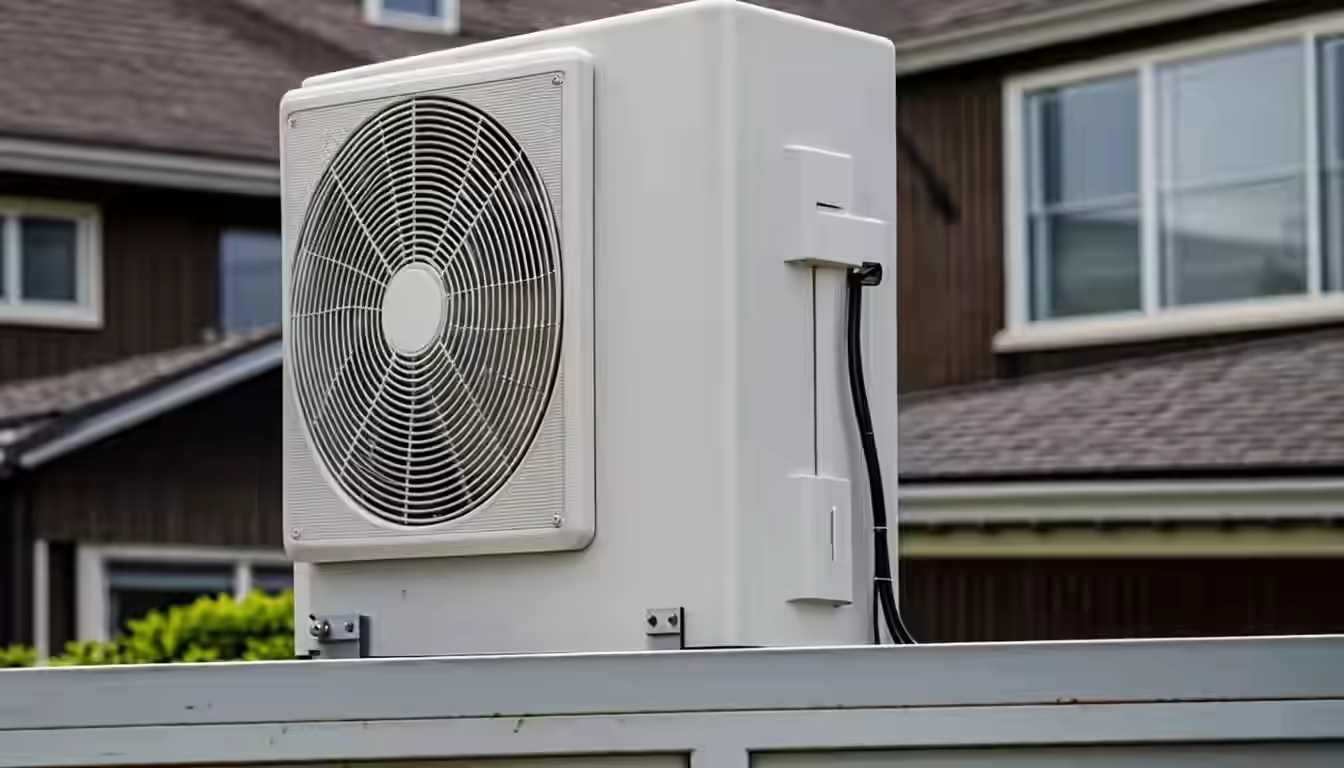
The Honest Answer Up Front
Two numbers grade a heat pump's winter work in BC, and they answer different questions. COP, the coefficient of performance, is a snapshot: how many units of heat the machine delivers per unit of electricity right now, at today's outdoor temperature. HSPF2, the Heating Seasonal Performance Factor, is the season average: total heat delivered across a simulated heating season divided by total electricity consumed. COP tells you how the machine behaves on tonight's outflow night. HSPF2 tells you what it costs to run from October to April.
In Metro Vancouver, the honest numbers are better than most homeowners expect. Our winters are dominated by 4 to 10 degree drizzle, exactly the band where cold-climate heat pumps run COPs of 3 or better, three units of heat per unit of electricity. The deep-cold weeks are rare and short, and even at minus 15 a cold-climate unit typically still posts a COP of 1.5 to 2, matching or beating electric resistance heat at its worst moment. Averaged across a real coastal winter, the seasonal figure that shows up on the BC Hydro bill lands near 2.5 to 3.
That average is the entire financial argument. Baseboard and resistance heat convert electricity to heat at COP 1, one for one, and no machine can beat that by conversion. A heat pump harvests the other two-thirds to one-half of its delivered heat from the outdoor air, which is why our heat pump installs change bills so dramatically for baseboard homes, and why combined CleanBC Better Homes, BC Hydro, FortisBC and municipal top-ups that can reach $16,000 in 2026 are aimed squarely at this equipment. Read both numbers before you buy: the seasonal one for the bill, the snapshot one for the cold snap.
A COP of 3 means two-thirds of the heat in your living room came out of the outdoor air for free. The electricity you paid for moved that heat indoors; it did not have to create it.
0 jobs since 2010
Heating, cooling and plumbing jobs completed by our Red Seal team across Metro Vancouver and the Fraser Valley.
0 star rated, 26 reviews
Homeowners rating the work flat-rate, on time and explained honestly before the wrench turns.
0 average response
Live 24/7 dispatch across 17 Metro Vancouver cities, with the $150 flat after-hours premium posted in advance.
$0 diagnostic, credited
The full system read on your heat pump, deducted from any repair approved the same visit.
What HSPF2 Measures
HSPF2 stands for Heating Seasonal Performance Factor, version two of the test. It divides the total heat a heat pump delivers across a standardized heating season, in British thermal units, by the total electricity it consumes, in watt-hours. A higher number means more heat per dollar of electricity over a winter. Where COP is a photograph, HSPF2 is the whole photo album: it folds in part-load running, cycling losses, defrost cycles and standby, weighted to approximate a real season rather than a single best-condition afternoon.
The 2 in the name matters the same way it does on the cooling side of the label. Since 2023, the North American test procedure runs equipment against higher external static pressure and tighter cycling assumptions than the old HSPF test, so identical hardware scores lower and more honestly. Old-scale HSPF numbers and new HSPF2 numbers are not comparable, and any quote mixing the two scales should be corrected before it is compared with anything. The rating also carries a region number, because the simulated season differs by climate zone; comparing two units rated for different regions is a quiet but common quote error.
- It is a heating number. In BC, where heating hours dwarf cooling hours, HSPF2 usually deserves more weight than the cooling rating on the same label.
- It is a seasonal average. It already prices in the mild weeks, the shoulder weeks and the cold snaps in test proportions, which may differ from your actual backyard proportions.
- It is scale-locked. HSPF2 and legacy HSPF numbers cannot be mixed in a comparison, and region 4 and region 5 figures answer slightly different climates.
What COP Measures
The coefficient of performance is the simplest honest number in heating: heat delivered divided by electricity consumed, at a specific outdoor temperature. A COP of 3 means three kilowatt-hours of warmth for every kilowatt-hour purchased, because the other two came from the outside air. A COP of 1 is the physics of baseboard and strip heat, every unit of warmth costing a full unit of electricity, and no resistance heater on earth can exceed it. A heat pump's COP rises as outdoor temperatures rise and slides as they fall, but it never drops below 1: even in deep cold the machine is matching resistance heat while it runs.
This is why the COP-versus-furnace comparison confuses people until it is stated plainly. A 96 percent AFUE furnace converts 96 percent of its fuel to heat, and no more, ever. A heat pump at COP 3 is delivering 300 percent of its purchased energy as heat, not by magic but by moving heat that already existed. The furnace burns a superior fuel per unit of chemistry; the heat pump refuses to play the chemistry game at all and wins the economics instead, especially on BC Hydro rates.
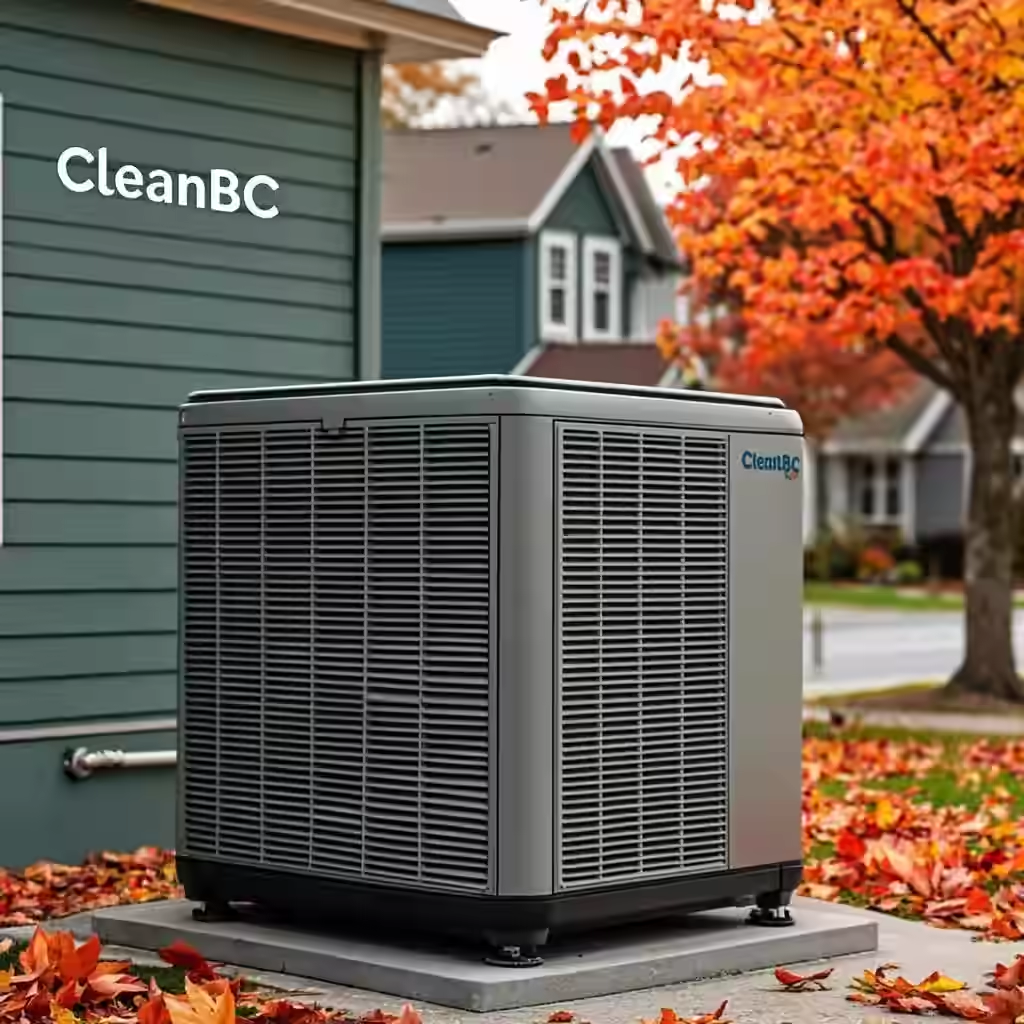
Two COP numbers matter on a specification sheet. The rating-point COP, measured under standard conditions, allows fair comparison between models. The extended performance table, published by the manufacturer across a range of outdoor temperatures, tells you what the specific machine will do at 8C, at minus 8 and at minus 15, which is the version your January actually cares about.
How the Two Numbers Work Together
HSPF2 and COP are not competing ratings, they are different exposures of the same machine, and reading them together tells you more than either alone.
Start with HSPF2 for the bill
The seasonal number approximates your October-to-April cost of heat per unit of warmth, so it is the first figure for comparing models on operating economics in our long, mild season.
Drop to COP for the worst week
The extended performance table shows the machine at outflow temperatures. Capacity at minus 15 decides whether it can hold the house; COP at minus 15 decides what holding it costs.
Check the capacity curve beside the COP curve
Efficiency falling slowly is fine. Capacity falling below the house heat loss is not, and that crossing point, the balance point, is a sizing conversation rather than an efficiency one.
Then check the certification
Cold-climate designation means the unit maintains meaningful heat output at deep cold, the line between a machine built for this province and one that merely sells here.
Reading the Spec Sheet in BC
A heat pump specification sheet is dense, but four lines carry most of the BC decision. Here is what to look for and what each one promises, in the order we teach our estimators to read them.
| Spec sheet line | What it measures | How much it matters in Metro Vancouver |
|---|---|---|
| HSPF2, with region number | Seasonal heating efficiency under the 2023 test | First: our heating hours dwarf cooling hours, so this line approximates the winter bill |
| COP at the rating point | Instantaneous efficiency at standard test conditions | A fair model-versus-model yardstick, but not your backyard number |
| Extended performance table | Output and COP across outdoor temperatures, including deep cold | The cold-snap reality check: what minus 15 looks like before you buy rather than after |
| Cold-climate certification | Maintained heat output at deep cold, verified | Non-negotiable for valley and outflow-exposed addresses; the rebate programs attach to it too |
| Sound rating | Outdoor unit noise at rated operation | Matters on duplex side yards and patios everywhere in Vancouver and Burnaby |
One habit protects all of it: insist that the exact model number on the quote matches the exact model number on the specification sheet and on the rebate eligible-products list. Near-identical models one tier apart can carry meaningfully different cold-weather tables, and the rebate programs read model numbers literally. The equipment-choice background, including the brands and configurations we install, is on the Vancouver heat pump guide.
What a BC Winter Actually Asks of a Heat Pump
Metro Vancouver is, statistically, one of the easiest heating climates in Canada, and the efficiency numbers follow the climate. The coast's heating design temperature, the number engineers size to, sits in the minus 5 to minus 7 range. Most of the season is 4 to 10 degree drizzle, where a cold-climate unit runs COPs of 3 or better while modulating quietly at partial load. If our climate were only its averages, every heat pump sold here would be a hero, and every bill would fall by two-thirds against baseboard.
The averages hide two local patterns that shape the honest read. First, the region is not one climate: Vancouver, Richmond and the North Shore run the mildest hours; Burnaby, New Westminster, Coquitlam and Port Coquitlam sit a step inland; and the valley tier, Langley, Maple Ridge, Surrey's eastern plateaus and Abbotsford, runs colder longer, with outflow weeks that arrive earlier and bite harder. Delta sits coastal-mild; North Vancouver adds hillside exposure and wind. The same machine posts a better seasonal average in Kitsilano than in Ruskin, with everything else equal.
Second, outflow weeks concentrate the stress. A handful of times each winter, continental air pours through the Fraser Valley gap and temperatures run well below coastal norms for days. In those weeks the COP slides toward its floor while the house heat loss climbs, which is why the honest BC read always pairs the seasonal average with the cold-snapshot numbers, and why the balance point and backup-heat question belongs in the same conversation as the efficiency rating. Cold-climate certified units exist precisely for those weeks, and standard, non-cold-climate units that fade fast below about minus 8 are why we will not recommend them for outflow-exposed addresses.
The Honest Arithmetic
Here is the worked comparison we walk customers through, using ratios instead of dollar rates, because ratios survive every rate change. The heating portion of an electricity bill scales by one divided by the seasonal COP. At a seasonal COP of 2.5, the same delivered heat costs 40 percent of what it costs on baseboard. At 3, it costs about a third. At 2.8, roughly 36 percent. That is the arithmetic behind the strongest conversion case in the province: baseboard-heated Vancouver specials and electrically heated homes anywhere in the region.
| Step | The arithmetic | What it means |
|---|---|---|
| Baseboard, resistance heat | Every kWh of electricity becomes one kWh of heat | COP exactly 1, the floor no machine can beat by conversion |
| Heat pump, mild coastal week | COP of 3 to 4 in the 4 to 10 degree band | Three to four kWh of heat per kWh purchased, the season's dominant condition |
| Heat pump, near 0 degrees | COP of about 2 | Still half the cost of baseboard heat at the same output |
| Heat pump, minus 15 outflow week | COP of roughly 1.5 to 2 | Matching to doubling resistance heat at the machine's worst point |
| Seasonal average, coastal winter | Roughly 2.5 to 3 across the whole season | The number that actually lands on the BC Hydro bill |
| Equipment price context | Ducted cold-climate $6,500 to $14,000; multi-zone $9,500 to $16,000; single-zone ductless $4,500 to $8,500 | Rebates and financing decide the net, not the sticker |
Three caveats keep this honest. The ratio applies to the heating portion of the bill, never to the whole bill, and the fridge and the dryer keep costing what they cost. Gas-heated homes compare on actual fuel prices rather than the COP ratio, so the operating gap is narrower and moves with rates. And a system that leans on backup strip heat through cold snaps runs at COP 1 precisely when the rates matter most, which is why sizing and control strategy are part of the efficiency story, not decoration beside it. The full savings analysis by starting fuel is in our energy upgrades ranked by return guide.
Where the Rated Efficiency Gets Lost
HSPF2 and COP are earned in a laboratory with perfect ducts, a verified charge and airflow set to specification. Your house has none of those by default, and the gap between rated and real is where most disappointment comes from. The loss points are known, and every one of them is controllable at installation and maintenance time.
- Sizing. An oversized heat pump short-cycles, never settles into the efficient part-load zone the ratings assume, and dehumidifies worse in summer. Every quote we write starts from a room-by-room load calculation, because the size decision beats the sticker decision.
- Backup strip heat. Resistance strips are COP 1. A system that trips into strips on recovery ramps, or because it was undersized, quietly runs at baseboard economics in January. Smart recovery settings exist to prevent exactly this and are on every commissioning checklist we run.
- Charge and airflow. A refrigerant charge off by a modest margin, or a blower fighting a clogged filter or choked coil, surrenders efficiency every running hour. The $149 to $250 annual service visit, coil cleaning and charge verification included, is a warranty condition as well as an efficiency one.
- Duct leakage. In ducted systems, delivery is the efficiency: heat lost to a crawlspace is electricity the COP number promised and the bill never received.
- Defrost behaviour. Defrost cycles are normal coastal winter operation, but a unit defrosting excessively, or failing to clear ice, is running off its curve and should be looked at rather than tolerated.
The single document that closes these gaps is a commissioned installation: charge verified, airflow measured, backup-heat staging configured, startup data recorded and handed over. That is the difference between buying HSPF2 points and actually receiving them, and it is standard on every system we install.
HSPF2, COP and the Rebate Connection
In 2026, the efficiency numbers and the money travel together. CleanBC Better Homes and its utility and municipal layers attach support to qualifying cold-climate equipment on the eligible-products list, and combined CleanBC Better Homes, BC Hydro, FortisBC and municipal top-ups can reach $16,000 for qualifying cold-climate heat pumps in 2026, and we complete the paperwork. The performance thresholds that separate qualifying models from the rest are exactly the cold-weather capacity and efficiency lines discussed in this guide, which is why reading the spec sheet well is also reading the rebate sheet well.
The sequence matters as much as the amounts. Most rebate paths want a pre-upgrade EnerGuide assessment on file before the equipment is purchased, the exact model number on the invoice matching the eligible list, pre-approval before purchase, and a post-installation assessment to close the file. Skipping the sequence is how earned rebates evaporate, and the full rules, stacking order and timeline are laid out in the CleanBC rebates 2026 guide. Payment plans from 7.99 percent with approved credit, arranged through our financing page, can pair the monthly cost with the monthly saving on conversion jobs.
Comparing Heat Pump Quotes?
Bring both numbers: we translate HSPF2 and COP into real operating costs for your home, with the rebate stack for your address attached. Call 604-615-2212 or request a free estimate.
City Notes Across Metro Vancouver
The seasonal COP is a climate number, and the region spans enough micro-climates to move it from city to city. Here is how our crews frame the winter efficiency read from the coast to the valley.
Vancouver
The mildest run hours in the region: the highest seasonal averages, and the strongest bill case against aging baseboard in the city's specials and laneway homes.
Richmond
Flat coastal exposure and river-damp air: efficiency holds well through the season, and coil fouling is the maintenance item that protects it.
Burnaby
Slopes and concrete towers share the city: baseboard-heated specials and duplexes post some of the biggest conversion savings we measure.
Maple Ridge
Valley cold snaps and acreage lots: the strongest case for cold-climate certification, where the minus 15 columns of the performance table earn their keep.
Abbotsford
The region's coldest winters and real summer heat: both efficiency columns of the label matter here, one for each season.
Langley
Large lots and multi-zone ductless territory: inverter heads modulating through long gentle cycles are the regional comfort and efficiency sweet spot.
Surrey and Coquitlam bridge the coastal and valley bands, New Westminster's hillside exposure nudges its run hours inland, Port Coquitlam runs a touch colder than its neighbours across the river, Delta sits coastal-mild with damp-air maintenance quirks, and North Vancouver's elevations add exposure to an otherwise gentle climate. Local response windows for all of them are on our service areas page.
The Buying Cheat Sheet
The whole guide on one screen, in the order you should use it when heat pump quotes arrive.
| Your situation | The honest call |
|---|---|
| Baseboard-heated home anywhere in Metro Vancouver | The COP ratio alone justifies the conversion; combined rebate support can reach $16,000, so price it before another winter |
| Coastal home, mild exposure | Shop HSPF2 first, sound second, cold-climate certification third: the season is long and gentle |
| Valley or outflow-exposed address | Read the minus 15 columns of the performance table and insist on cold-climate certification |
| Comparing two quotes with different efficiency claims | Same scale, same region number, same matched equipment, then judge the installation scope |
| Wondering about backup heat | Ask for the balance point and the strip-heat staging logic in writing; both belong to the efficiency story |
| Rebate-eligible model on the list | Pre-approval before purchase, exact model number on the invoice, assessments booked in order |
| System more than a year old | The $149 to $250 annual service visit is what keeps the rated COP actually arriving on the bill |
One sentence for the showroom: HSPF2 prices your October-to-April, COP prices your cold snap, and the installation decides whether either number survives contact with your house.
Frequently Asked Questions
Services From This Guide
Cold-climate heat pump installs, conversions and service across 17 Metro Vancouver cities, with rebate paperwork filed end to end.
Heat pump install and conversion
Ducted cold-climate systems from $6,500 to $14,000 and multi-zone from $9,500 to $16,000, rebate filing included.
Furnace and dual-fuel service
Repairs from $180 to $650, the $129 tune-up, and honest heat-pump-versus-furnace math for homes staying on gas.
Financing and rebates
Payment plans from 7.99 percent with approved credit, and every eligible program checked and filed for you.
Heat pump service in Surrey
Fleetwood-to-Fleetwood coverage with the run-hour math and rebate stack for your address in writing.
Related Guides
Heat Pumps in Vancouver
The equipment-side companion: configurations, brands and what the local install day looks like.
MoneyEnergy Upgrades Ranked by ROI
Where heat pumps sit against insulation, thermostats and windows on honest payback years.
RebatesCleanBC Rebates 2026 Guide
The program rules, stacking order and EnerGuide sequence that protect your eligibility.

Red Seal certified, licensed gas fitters (BC-PL-2019-4421), $2M insured and 15-plus years in the field, with more than 12,000 jobs completed across Metro Vancouver since 2010 and a 5.0-star rating across 26 Google reviews. We wrote this guide because heat pump efficiency numbers get quoted without their climate context, and in BC the context is the whole story: read the seasonal average against our long mild season, the cold-snapshot COP against our rare outflow weeks, and the commissioning sheet against everything. To book instead of DIY, see heat pump repair in Langley — same-day across the city.
More about our team →Get the Winter Math for Your House
Book a $89 diagnostic or a free conversion estimate with a Red Seal estimator. You get the honest read on your current system, the seasonal COP math for your actual home and rates, a flat written price across qualifying cold-climate equipment, the rebate stack for your address, and financing from 7.99 percent with approved credit. Zero obligation, same-day quotes on most calls. If you would rather hand this to a pro, our heat pump services pages cover Metro Vancouver.
Winter quote on the kitchen table?
HSPF2 claims and COP tables can be sanity-checked in one visit. Daytime? The $89 diagnostic or a free estimate is usually same-day in Vancouver, Burnaby and Surrey, 24/7 for no-heat emergencies.
Call 604-615-2212 WhatsApp Us