The Honest Answer Up Front
Port Coquitlam is the smallest full city in our service area and the densest mix of housing history: a 1910s CPR streetcar town around the downtown core, postwar bungalows stretching across the flats, the Mary Hill and Citadel Heights benches climbing away from the river valley, 80s-and-90s subdivisions filling Oxford Heights, and 2000s-plus family builds up toward Hyde Creek. Layered over all of it: a duplex-and-suite economy that keeps converting the same houses into two-household homes, and a geography that splits every service question in two, because a house on the flats and a house on the bench are different engineering problems wearing the same postal code.
What PoCo homes actually need, compressed: the character stock downtown needs pipe archaeology, galvanized supply and cast-iron drains are past due, and repipes run $8,000 to $20,000; the postwar stock needs second-round furnaces, $4,800 to $9,500, and honest ductwork corrections; the flats need drainage that works, sump service, and backwater valves at $2,500 to $5,000 where the sewer's age warrants; the suites and duplexes need their own heat, $3,800 to $5,500 for a ductless zone, and hot water sized for two households; and every house here needs a cooling answer since the 2021 heat dome rewrote the region's expectations. Diagnostics are $89, credited to repair, and after-hours is a flat $150, never a mystery.
This guide walks the city in the order the houses were built, then the order the bills arrive. It's written by the crew behind HVAC service in Port Coquitlam and the plumbing trucks that know which streets still have galvanized, which slopes frost-heave first, and which culverts run under which lawns.
In PoCo, never ask "what does a house like this need?" Ask "what does a house like this, on this street, at this elevation, need?" The city is small; the answer still isn't.
0
The year PoCo incorporated as a CPR town. Houses from that decade are still standing downtown, still running on century-old assumptions.
0 rivers + a culverted creek
The Coquitlam and Pitt frame the city, and Tanner Creek runs buried through the downtown flats. Water is the constant in every PoCo foundation story.
0 households, 1 roof
Suite and duplex conversions are PoCo's quiet growth industry, and every one of them re-plumbs the hot water, heating and drainage math.
$0 diagnostic
Credited to any repair, because the first honest hour on a century-old house should be spent finding facts, not writing invoices.
Two Terrains: The Flats and the Benches
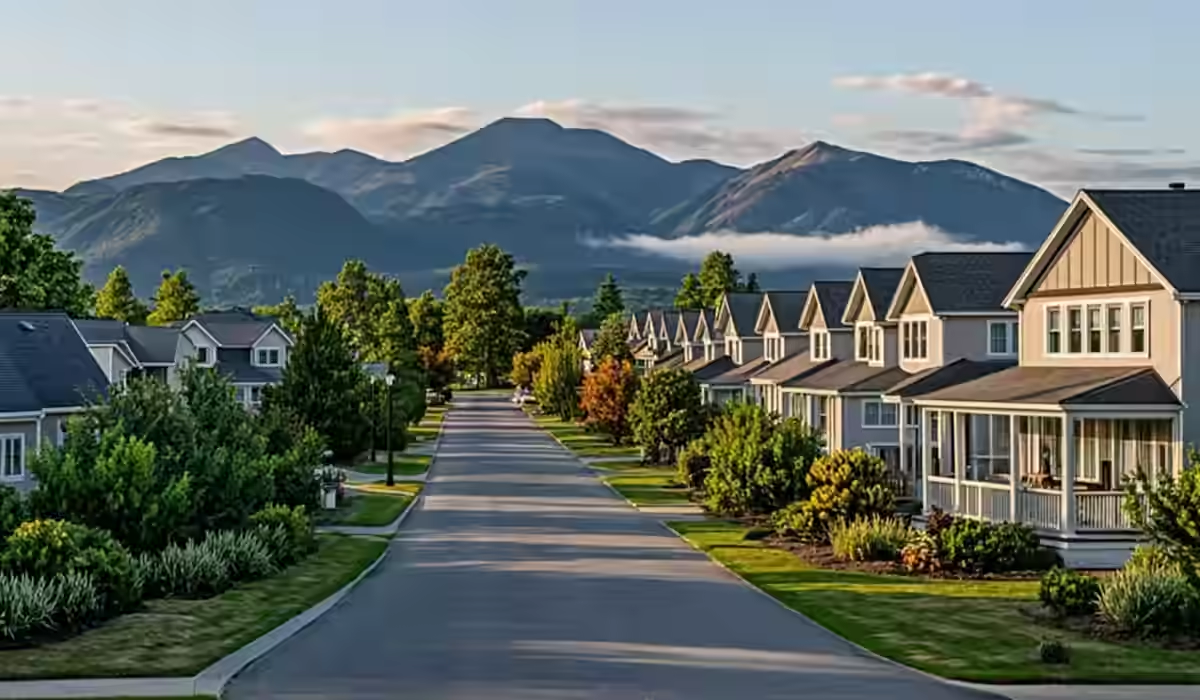
Port Coquitlam sits in the corner where the Coquitlam River meets the Pitt, with Mary Hill and Citadel Heights rising to the west and the developed flats spreading east and south. The split drives everything. The flats, the downtown core, the older neighbourhoods through the basin, the land along both rivers, are low, flat and winter-wet: a high water table through the rainy months, storm drainage that depends on culverts, ditches and pump-assisted outfalls, and a creek, Tanner Creek, that runs culverted beneath parts of the downtown, quietly carrying a basin's worth of runoff toward the Pitt. Homes here live by their sump pumps, their lot grading, and their backwater protection, and every November stress-tests all three.
The benches, Mary Hill's plateau, the Citadel Heights slopes, and the higher ground rolling toward Oxford Heights and Hyde Creek, shed water naturally, sit above the frost-and-water table worries, and trade the flat's drainage anxiety for slope problems: retaining walls, driveways that crack with movement, and the occasional foundation that argues with the hillside. Neither terrain is better. They're different, and the maintenance calendars differ to match: the flat's October ritual is sump test, ditch and drain check, backwater valve verification; the bench's is drainage swales, retaining drainage outlets, and crawlspace inspection after the first big rain.
| Terrain | Typical areas | Water reality | The trade focus |
|---|---|---|---|
| The flats | Downtown core, older east-side neighbourhoods, river-adjacent streets, the Tanner Creek basin | High winter water table, culvert-and-ditch drainage, storm-dependent | Sumps, backwater valves, grading, drain era, crawlspace moisture |
| The benches | Mary Hill, Citadel Heights | Natural drainage, slope movement, rock-adjacent foundations | Retaining drainage, slab and crawlspace checks, standard HVAC era work |
| The in-between | Oxford Heights, Hyde Creek | Newer subdivision drainage, engineered systems | Maintenance, warranties, heat pump and cooling retrofits |
The honest November test for any PoCo homeowner costs nothing: watch where water goes during a long rain. If it sheets toward the house and stands in the yard, you're on the flats and the drainage chapter of this guide is your chapter. If it runs away briskly and your worry is the slope it runs down, you're on a bench, and your chapter is the crawlspace and drainage-swale one. Either way, 24/7 emergency service in Port Coquitlam is the same phone call, with the same flat $150 after-hours premium, when the water picks the wrong direction at the wrong hour.
The Character Stock: PoCo's 1910s-30s Homes
The streets around PoCo's downtown core hold the city's oldest houses, the CPR-era and interwar homes with the tall narrow windows, the front porches and the full basement dug by someone with more optimism than machinery. A century on, they're wonderful houses with honest problems, and the problems are specific. The supply pipe is galvanized steel if it's original, and galvanized doesn't leak so much as close: the shower weakens, the hot tap runs worse than cold, and rust-coloured water shows up at some fixtures and not others. A magnet sticks to it. A repipe, $8,000 to $20,000, is the once-a-century fix, and PEX with a manifold is how we do it.
The drains are cast iron or clay, rooted, belled and sagging in places, and they fail on their own schedule, which is why a camera inspection at $250 to $400 is the best hundred-and-fifty minutes you can spend before buying one of these houses or excavating for any other reason. The heating started life as coal, oil or a floor furnace, and the conversions stacked up across the decades: oil-to-gas in the 60s-80s, furnace replacements since, and the ductwork, sized for blowers that no longer exist and snaking through balloon-framed walls, deserves a static-pressure check at every equipment change. The electrical and hazards layer is where the safety callout lives, below.
The character-home estimate we write is a sequence, not a menu: make it safe, make it dry, make it efficient, in that order, because a new furnace feeding ducts that leak into a wet crawlspace is money spent in the wrong direction. When our Port Coquitlam plumbing crews open these houses, we're usually the second or third generation of trade to work in them, and the work is honest: test what's there, write down what it needs, price it once, in the right order.
The Postwar Stock: 1950s-70s and the Second-Round Bills
Most of PoCo's flat land filled with postwar bungalows and early splits, and those houses are now deep into their second round of every major system. The original galvanized supply has either been replaced, is failing, or is the reason the listing says "sold as-is"; the original cast-iron or clay drains are rooted and due for a camera; the first forced-air furnaces gave way to replacements in the 80s-2000s, and those replacements are now the aging units we service, $180 to $450 per repair, with the repair-vs-replace line usually crossing when a heat exchanger or control board quotes against a $4,800-to-$9,500 modern furnace.
The postwar floor plan is the other half of the story: a bungalow built for one family, one bathroom and a cedar closet keeps getting asked to be a two-bathroom, ensuite-plus-suite house, and every ask lands on the same drain stack and the same panel. That's the bridge to this guide's next chapter, because in PoCo those asks usually arrive as a suite or duplex conversion. The honest pre-conversion checklist on a postwar house: scope the drains first, because a suite doubles the load on a line that's already 80 percent roots by volume; confirm the supply pipe era, because opening finished walls twice is a tax; and static-pressure the ductwork, because a second furnace or a zoning plan depends on knowing what the first one is doing.
What we don't see much of in postwar PoCo, mercifully, is poly-B: the 1978-95 window that filled whole subdivisions in Surrey, Langley and Maple Ridge only clipped PoCo's late-70s-80s edge, mostly in Oxford Heights' early phases. Copper and PEX dominate from the 80s on, which is why our PoCo repipe quotes lean character-home while our furnace and suite quotes lean postwar. Every rule has a street, and every street has a year, which is the sentence this whole guide keeps returning to.
A postwar bungalow at second-system age is a sequencing problem: drains, supply, ducts, equipment, in that order. Skip to the equipment and you'll buy it twice.
Duplexes, Suites and the Densification Decade
PoCo has spent the last decade quietly densifying: secondary suites legalized and normalized, duplexes opened up across much of the single-family land, coach houses and infill following where lots allow, and a West Coast Express station plus long-planned rapid-transit extensions putting a premium on every big lot near the core. From the trades' side, densification is a mechanical specification: two households means separated or zoned heat, doubled hot-water demand, doubled drain loads, separate metering conversations, and a permit trail for every gas and in-wall change. The houses that do it well feel like two quiet homes. The houses that do it cheaply feel like one argument with a shared water heater.
The heating answer we install most is the ductless heat pump zone, $3,800 to $5,500, suite gets its own head, its own thermostat, its own cooling, and a BC Hydro story tenants understand; zoning the main system works where postwar ductwork was built suite-curious and has capacity to spare; baseboard is the option we quote mainly to talk people out of, honestly priced over ten years. The hot-water answer is the two-household math: tankless at $3,800 to $6,500, sized to actual fixture flow, or a second tank where gas and space are cheaper than a swap. And heat pump installs in Port Coquitlam increasingly do the whole job at once, one outdoor unit, heads up and down, both households comfortable, CleanBC rebates softening the invoice.
The permit paragraph, because it matters here as much as anywhere: legal suites and duplex conversions in PoCo run through the city's zoning and building process, and the mechanical work inside them, gas, venting, in-wall plumbing, fire separations, is inspected for reasons that are all named after ways houses hurt people. Our quotes include the permit path in writing, the equipment specified to pass, and the inspection schedule mapped to the build, because the unpermitted suite always surfaces, usually at the worst possible moment, and always costs more to legalize than to build right.
Heating and Cooling on Both Terrains
PoCo's climate sits between the coast and the valley: colder snaps than Burnaby, milder than Abbotsford, snow that visits but doesn't move in. The equipment menu follows. Ducted homes: right-sized furnaces at $4,800 to $9,500, with furnace repair in Port Coquitlam at $180 to $450 keeping the aging ones honest; heat pumps at $6,500 to $14,000 before rebates doing both seasons in one box, cold-climate rated with a backup plan for the -10°C-class nights. Unducted homes, and there are many, the character stock and the baseboard-era houses: ductless zones at $3,800 to $5,500 each, multi-zone at $9,500 to $16,000, replacing baseboard economics permanently.
Cooling, since 2021, is not the optional paragraph anymore. The heat dome made the case city-wide, and PoCo's housing stock, older glazing, big west windows, bedrooms under dark roofs, took the lesson hard. The retrofit logic is the same as everywhere in the region but compressed by PoCo's small lots and tall hedges: houses with ducts add central AC at $3,800 to $6,500 or convert to a heat pump; houses without get ductless heads where the bedrooms actually are. Sizing, as always, is the difference between comfort and a cold, clammy, oversized mistake: the load comes from glazing and orientation, the unit needs to run long enough to dehumidify, and the estimate should show the math.
One PoCo-specific note for the benches: hillside homes sometimes sit on or near rock, with mechanical rooms in odd places and refrigerant line runs that get creative on the way from the side yard to the upper floor. Long line runs are fine when they're planned and charged correctly, and expensive when they're improvised, so the free estimate on a bench house includes the route, not just the equipment. On the flats, the same paragraph applies to the outdoor unit's pad: above the snow line, away from the downspout's splash, with drainage that won't ice the defrost pan in January.
Drains, Roots and the Sump That Saves the Basement
PoCo's mature streets, downtown, the postwar flats, the older bench roads, are lined with the big-leaf maples and cedars whose roots have spent fifty years finding every clay joint and cast-iron crack beneath them. The pattern is regional and reliable: the drain that clears in July backs up after the first October soaker, twice in two years means it's a condition not a clog, and drain cleaning at $149 to $450 is symptom management while a camera at $250 to $400 is the diagnosis. On the flats, add the basin's story: when the rain is heavy and the outfalls are working hard, the difference between a dry basement and a wet one is the sump pit, the pump in it, and the check valve above it.
The sump chapter, then, because on the flats it's not an accessory, it's the protagonist. The annual October test takes five minutes: pour a bucket of water into the pit, watch the float trip, watch the pump move the water, watch the check valve stop the backflow slam. A pump that's 7 to 10 years old is living on borrowed statistics; a replacement installed before the wet season runs $1,200 to $2,800 as the sump-work band, and a battery backup at $900 to $2,000 added is what covers the storm-outage coincidence every flat remembers: the pits fill exactly when the power fails. The 2021 windstorm season made that point region-wide, and the 150,000-plus BC Hydro customers who went dark that November week didn't all have sumps, but the ones who did mostly wished they'd tested them.
The sanitary side of the flats is the backwater valve conversation from Chapter 1's honest summary, $2,500 to $5,000 installed with permit, rebate programs where they run, confirm with the city before booking. And the storm side, the ditch, the culvert under the driveway, the swale along the property line, is the homeowner's own infrastructure on many older PoCo streets, cleared before the leaves finish falling, every year, no exceptions. When any of it fails at the wrong hour, drain service in Port Coquitlam runs 24/7 with the flat after-hours premium, and the first hour of a backup is the same everywhere: stop the source, kill the power to anything wet, start moving water, then argue with the insurance company.
Water Heaters: One Tank, Two Households, One Morning
The suite and duplex conversions changed PoCo's water heater conversation from "when it leaks, replace it" to "size it like the utility it is." The default conflict is the 7-to-9 a.m. overlap, two households showering against a 40-gallon tank, and the BC Plumbing Code's 49°C delivery limit caps how much you can cheat with stored temperature, so the honest answers are capacity and recovery. The menu, with the numbers our estimates actually quote: a bigger tank, 60 to 75 gallons, upper end of the $1,800 to $3,800 band; a high-recovery gas tank for fast refill; tankless at $3,800 to $6,500, endless but flow-bounded, so the fixture count gets run before the unit gets ordered; or a second tank for the suite, full independence, same band as the first.
PoCo's municipal water is Metro Vancouver soft, snowmelt from the North Shore watersheds, which is the kindest water in the region for tanks: less scale, slower sediment, gentler anode duty. That's the good news. The honest maintenance doesn't disappear, an annual flush at $149 to $250 and an anode check every 2 to 3 years at $200 to $350 still stretch a tank years past its warranty, it just isn't the daily battle it is on valley wells. The soft-water footnote cuts the other way for any home with a basement suite and a laundry habit: soft water suds aggressively, and overdosing detergent in high-efficiency machines is the most common cause of the drain smells our crews get called to, which is a diagnosis, not a plumbing defect, and worth hearing before anyone opens a wall.
For the character homes, one more sentence in the ledger: the original tank probably sits in a basement corner the floodplain forgot, on the floor, next to the panel. Elevation on a stand, seismic strapping top and bottom, and a drain pan piped somewhere sensible are the three cheap items that separate "aging appliance" from "the reason the finished basement is a claim," and they ride along on every water heater install in Port Coquitlam we do without being asked.
The PoCo Plumbing Era Decoder
One table to decode any PoCo house from its build decade, the same one our estimators use on the driveway before anyone goes inside. Find your era, read your row, and you'll know what the next decade of ownership is actually about.
| Era | Supply pipe | Drains | Your honest decade |
|---|---|---|---|
| 1910s-30s character | Galvanized, mostly past due | Cast iron / clay, rooted | Repipe, camera the drains, sequence the rest |
| 1940s-50s postwar | Galvanized into early copper | Cast iron, some replaced | Pipe and drain era both landing; suite prep doubles the stakes |
| 1960s-70s | Copper standard | ABS and PVC arrive | Furnace rounds two and three, duct corrections, sump season |
| 1980s-90s | Copper, light poly-B pockets | Plastic, generally sound | Mid-efficiency furnace retirement, cooling retrofits, suite conversions |
| 2000s-today | PEX | PVC, sound | Maintenance discipline, warranty terms, heat pump optimization |
The buyer's version of this table is the same five rows read in reverse: ask the pipe era, the drain history, the furnace age, the sump status and the permit trail before writing a subject-free offer, because in PoCo any of the five can be a five-figure surprise or a five-minute confirmation, and the only way to know which is to look. The $89 diagnostic, the camera scope and the free estimate are the three tools that turn an era into a plan, and they're all cheaper than the first surprise.
What PoCo Work Actually Costs
The flat-rate numbers our trucks quote in Port Coquitlam, one table, no asterisks except the one that's always true: final pricing confirmed in writing after on-site assessment, because a 1914 character home and a 2004 Hyde Creek build can share a fence line and nothing else.
| Job | Honest band | PoCo context |
|---|---|---|
| Diagnostic | $89, credited to repair | The honest first hour on any era of house |
| General plumbing repair | $180-$450 | Fixtures, valves, leaks, toilet rebuilds |
| Whole-house repipe | $8,000-$20,000 | Character-stock galvanized is the usual customer |
| Drain cleaning | $149-$450 | October root calls, flats and benches alike |
| Camera inspection | $250-$400 | Before buying, before excavating, before the second clearing |
| Furnace install | $4,800-$9,500 | Postwar second-and-third rounds, character conversions |
| Heat pump install | $6,500-$14,000 before rebates | The default new system since the heat dome |
| Ductless zone | $3,800-$5,500 per zone | Suite heating, bedroom cooling, baseboard replacement |
| Water heater, tank | $1,800-$3,800 | Upsize or go tankless for two households |
| Backwater valve | $2,500-$5,000 permitted | Flats with older sanitary connections, rebates where active |
| Sump work / battery backup | $1,200-$2,800 / $900-$2,000 | Test in October, replace before the wet season, not during |
| Annual maintenance | $149-$250 | Furnace or heat pump visit, September booking beats December queue |
Financing runs from 7.99% OAC on the big-ticket projects, repipes, equipment, flood protection, which matters in a city where so much of the housing stock is hitting its second-round bills at the same time the densification incentives are arriving. The households that sequence well, safety, drainage, pipes, equipment, in that order, spend the least per decade. The households that react, spend the most per January.
The PoCo Cheat Sheet
The questions our PoCo dispatch line answers daily, compressed to kitchen-table speed.
| Question | The honest answer |
|---|---|
| Flats or bench? | Watch the rain: standing yard water means sumps, backwater and ditch care; brisk runoff means slope and swale season |
| Character-home first move? | Camera the drains, magnet the supply, sequence: safety, dry, efficient |
| Duplex conversion? | Zoning call first, mechanical spec second: ductless heat $3,800-$5,500, tankless $3,800-$6,500, permits throughout |
| Furnace or heat pump? | Heat pump is the default new system, $6,500-$14,000 before rebates; furnaces for the ducted aging stock |
| Sump pump age? | 7-10 years is a career; October test yearly, replace before the wet season, battery backup for outage nights |
| Poly-B risk here? | Lower than Surrey or Langley, mostly Oxford Heights' early edge; copper and PEX dominate from the 80s |
| Water heater for a suite? | Size for the 7-9 a.m. overlap: 60-75 gal, high-recovery, tankless, or a second tank |
| Buying a PoCo home? | Ask the five: pipe era, drain history, furnace age, sump status, permit trail |
One line to keep: Port Coquitlam rewards homeowners who ask "which house, which street, which era?" before "how much?" Call 604-615-2212 for an estimate that starts with the house, not the price sheet.
Get a Straight Answer on Your PoCo Home
A free estimate covers your plumbing era, heating plant, drainage profile and suite plans, with honest priorities in writing and zero obligation. Flooding, no heat or no water right now? 24/7 crews answer with flat after-hours pricing.
Frequently Asked Questions
Services From This Guide
Licensed crews, flat-rate quotes and 24/7 emergency response across the twelve Metro Vancouver cities we serve, from Port Coquitlam's flats to the valley's eastern edge.
Plumber Port Coquitlam
Character-home repipes, suite plumbing and drain work, flat-rate, $89 credited.
PoCo HVAC
Furnaces, heat pumps and AC for flats and benches alike, sized honestly.
Drain Cleaning PoCo
Roots, sumps and storm-season clogs, $149-$450, camera $250-$400.
24/7 Emergency
No-heat, no-water and flood calls answered around the clock, flat pricing.
Related Guides
PEX Repipe Guide
What a whole-house repipe involves, for every galvanized-era street in PoCo.
Water HeatersTankless vs Tank Water Heaters
The two-household hot water math, started here.
HeatingHeat Pumps in Metro Vancouver
Cold-climate ratings, backup heat and the coast-to-valley sizing question.

PoCo is one of our home turfs, a city our crews cross daily: character-home repipes near the downtown core, Mary Hill furnace swaps, Hyde Creek heat pump installs and more suite heating estimates than anywhere this side of Maple Ridge. Red Seal certified, licensed gas fitters BC-PL-2019-4421, 12,000+ jobs since 2010. This guide comes straight off that dispatch board. To book instead of DIY, see furnace maintenance in Port Coquitlam — same-day across the city.
More about our team →Get Your PoCo Home Read Straight
A free estimate covers your heating plant, plumbing era, drainage profile and suite or duplex plans, one visit, honest priorities in writing, zero obligation. If you would rather hand this to a pro, our heating & furnace services pages cover Metro Vancouver.
No heat, no water or flooding now?
24/7 response with a flat $150 after-hours premium posted in advance, and the $89 diagnostic credited to any repair. PoCo's small enough that we're close, and staffed enough that it matters.
Call 604-615-2212 WhatsApp Us