
The Honest Answer Up Front
A smart thermostat saves money exactly one way: by running your heating less. Everything else, the learning, the sensors, the app, the pretty screen, is a mechanism for reaching that goal. If you already program setbacks and close the door on an empty house, the device will find little left to trim. If your thermostat has sat at one number since 2019 while nobody is home between nine and five, it can genuinely earn its cost back, because automated setbacks on a Metro Vancouver heating season are real hours of burner and blower runtime removed.
The second honest point is that the biggest thermostat savings in this province have nothing to do with furnaces. They happen on heat pumps, where a correctly configured thermostat locks out the expensive electric auxiliary heat and lets the compressor do the work. A misconfigured thermostat on a heat pump can quietly double a winter bill, which makes this a small device with out-sized consequences. We are Red Seal certified, licensed under BC-PL-2019-4421, $2M insured, more than 12,000 jobs across Metro Vancouver since 2010, and we configure every thermostat we install to the equipment it actually runs.
The thermostat is the only part of your heating system you touch every day. Buy the one whose settings you will actually use, and spend an hour having it configured to your equipment, because defaults are written for Ohio, not for outflow winds off the Strait of Georgia.
0 jobs since 2010
Furnace, heat pump and thermostat work by our Red Seal team across seventeen Metro Vancouver and Fraser Valley cities.
0 diagnostic, credited
When a thermostat or control problem hides something bigger, one visit isolates it and the fee rolls into the completed repair.
0 star rated
Across 26 verified reviews, earned one honest configuration and one flat-rate quote at a time.
0 workmanship warranty
Every install we touch is warrantied, with 24/7 emergency coverage at a flat $150 after-hours premium, never a mystery multiplier.
What a Smart Thermostat Actually Controls
A thermostat is a switch, and understanding what it switches is the difference between buying wisely and buying decor. On a gas furnace it closes a 24-volt circuit that starts the inducer, opens the gas valve and spins the blower. Multi-stage equipment adds a second circuit for low and high fire. A heat pump adds a reversing valve, a defrost signal and an auxiliary heat call, each its own wire and each its own opportunity for misconfiguration. A smart thermostat is the same switch with a brain: sensors, a schedule engine, a Wi-Fi radio and algorithms that decide when, and at what stage, to close those circuits.
The intelligence is genuinely useful in three places. It automates schedules most people never program on a basic model. It reports, showing runtime history and alerts that reveal problems a monthly bill only hints at. And it integrates with equipment like modulating furnaces and cold-climate heat pumps whose efficiency depends on long gentle cycles rather than on-off blasts. Everything beyond that, weather screens, voice control, energy badges, is comfort, and there is nothing wrong with comfort as long as it is priced as comfort.
The schedule engine
Four setbacks a day on a furnace that runs six months a year is hundreds of runtime hours removed. This is the core saving, and it is old technology done automatically.
The reporting layer
Runtime spikes, long recovery times and constant re-heating are symptoms. A thermostat that shows them catches a struggling furnace weeks before a no-heat night.
The equipment handshake
Modulating furnaces, ECM blowers and inverter heat pumps only hit rated efficiency when the thermostat speaks their staging language. Configuration, not hardware, unlocks this.
Sensor networks
Remote sensors average temperatures across rooms, ending the cold-hallway problem where the thermostat sits. Comfort first, but even heating also means shorter cycles.
The C-Wire: The Problem Nobody Mentions
The single most common smart thermostat failure in Metro Vancouver has nothing to do with the thermostat. It is the missing common wire. Older furnaces were wired with as few as two conductors, heat and power, because a mercury switch did not need a constant feed. A modern smart thermostat does, to run its radio and screen without a battery diet, and when it cannot get steady power it misbehaves in creative ways: Wi-Fi that drops in cold weather when the heat call runs longest, screens that blank, resets that lose schedules, and in the worst cases relays that chatter and call heat by themselves at three in the morning.
The fixes, in order of preference: use an existing spare conductor in the wall, which is free if it exists and takes minutes; add a power-sharing kit at the furnace control board, which works well on single-stage equipment; or pull a new conductor where wall and furnace-closet geometry cooperate, common in the framed closets of Vancouver specials and Surrey subdivisions, awkward in concrete condo towers. Our installers verify the wire map at the equipment end, label everything, and test every cycle before leaving, which is exactly the kind of unglamorous detail that decides whether a smart thermostat is a tool or an expensive clock. If the wall wiring turns out to hide a bigger control problem, the $89 diagnostic isolates it and credits toward the repair.
Buy the thermostat for its algorithms. Wire it like infrastructure. The difference between those two sentences is the difference between a five-year device and a five-month one.
The Model Landscape in 2026
There are four honest categories, and naming them matters more than naming brands, because within a category the differences are cosmetic. Learning thermostats build a schedule by observing occupancy and adjusting setbacks automatically, ideal for households whose week never looks the same. Sensor-network models sell remote room sensors whose averaging and per-room priority fix the cold-room problem, and they suit homes with one thermostat and uneven distribution. Utility-connected models ship through BC Hydro or FortisBC programs, trade a few features for program pricing and demand-response events, and are a perfectly good choice for a straightforward gas furnace. Simple smart programmables do schedules and app control without learning or sensors, at the lowest cost, and they are what we often recommend for rental suites where simplicity is a feature.
What we tell customers to check instead of brand: compatibility with heat pump staging and auxiliary heat lockout if a heat pump is present or planned, support for the multi-stage gas furnace you own, C-wire requirements, and whether the app shows hourly runtime history, the single most useful diagnostic feature in the category. Hardware prices move constantly and are best compared at retail, but the installed cost is small against the equipment it manages, and the configuration labour is where the value lives. When the thermostat is part of a bigger heating decision, our heating and furnace services cover everything from the $129 annual tune-up to full furnace replacement at $3,800 for an 80-percent single-stage and $5,500 to $9,000 for high-efficiency two-stage equipment installed.
Learning models
Best for irregular schedules. Watch for the first two weeks while it builds a pattern, then let automated setbacks do the trimming.
Sensor-network models
Best for uneven homes. Averaged readings end the cold-hallway call and the over-heated living room that follows it.
Utility-program models
Solid fundamentals, program pricing, and occasional demand-response events. A sensible choice for standard single-stage gas furnaces.
Simple smart programmables
Schedules, app, alerts, no learning engine. The value pick for suites and straightforward homes, and the easiest for tenants to use correctly.
Matching the Thermostat to Your Furnace
A furnace and a thermostat have to be introduced properly. Single-stage furnaces, still the majority across older Burnaby and New Westminster basements, need only a heat call and are compatible with nearly everything. Two-stage and modulating furnaces, common in post-2010 construction in Surrey, Langley and Coquitlam, hold their efficiency by running long low-fire cycles, and a thermostat set to single-stage behaviour will hammer them between off and full fire, sacrificing both comfort and the efficiency you paid for. ECM blower motors add a third layer, because continuous low-speed circulation filtered through a proper MERV filter keeps air mixed and rooms even at almost no energy cost, but only if the thermostat is configured to command it.
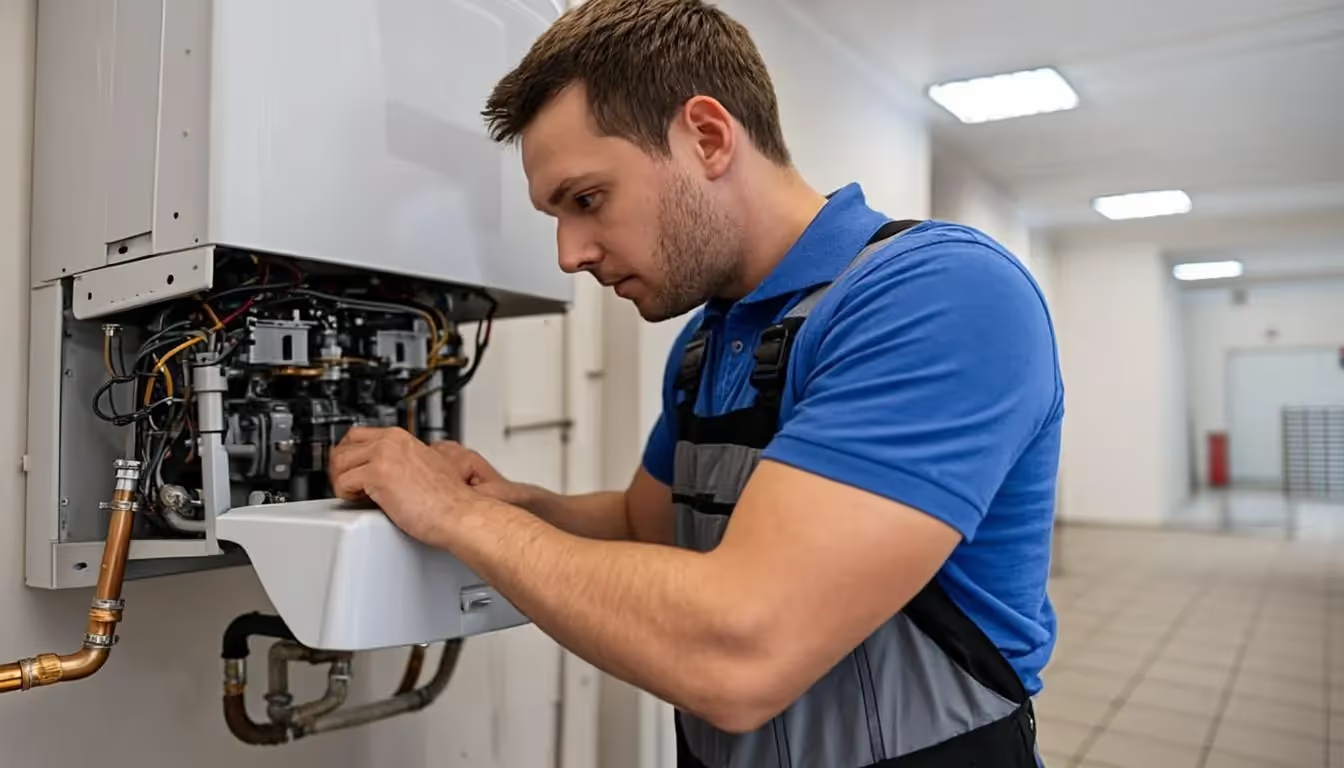
This is also the right moment to say something the thermostat industry will not: the best schedule in the world cannot save money on a furnace that has drifted out of tune. A dirty flame sensor, a partially blocked filter or an over-firing burner shows up in the thermostat's runtime history as long recovery hours, and no algorithm fixes combustion. That is the $129 annual tune-up's job, and pairing a fresh install with a tune-up in the same visit is the single smartest bundle we run. If the runtime history instead reveals a furnace that has started short-cycling, repairs run $180 to $650, and catching that in October through the app, rather than in January through a cold house, is the thermostat quietly earning its keep.
Heat Pumps: Where the Real Money Is
On a heat pump, the thermostat stops being an accessory and becomes the efficiency strategy. Ductless and cold-climate systems installed across BC, at $3,800 to $5,500 for a single ductless zone, $6,500 to $14,000 for a cold-climate ducted system, and $9,500 to $16,000 for multi-zone setups, all live and die by how their controls manage four settings. Combined CleanBC Better Homes, BC Hydro, FortisBC and municipal top-ups can reach $16,000 for cold-climate heat pumps in 2026, and we complete the paperwork, but the rebate is only the beginning of the savings. The thermostat decides how much of the rest you actually collect.
Auxiliary heat lockout
The thermostat that lets electric backup strips run above freezing is the thermostat that doubles winter bills. A technician sets a lockout temperature, commonly near the unit's balance point, so the strips only fire in genuine cold. This one setting, done right, is worth more than every setback schedule combined.
Balance-point logic
A cold-climate heat pump holds capacity well below zero, and the thermostat should let it. Modelling the home's heat loss against the unit's capacity curve decides when supplementary heat is legitimate and when it is laziness. Read how these systems behave through a full BC winter in our Vancouver heat pump guide.
Gentle setpoints, not deep setbacks
Heat pumps prefer steady temperatures with modest 1-to-2-degree setbacks. Deep drops trigger big recovery calls and sometimes auxiliary heat, erasing the savings that motivated them. Furnace logic does not transfer, and the correct schedule is the one written for the equipment.
Runtime monitoring
Aux-heat hours and compressor runtime are the two numbers that reveal whether the strategy is working. A homeowner who can see them, and a technician who gets a screenshot before the visit, fix problems in one trip instead of two.
If a heat pump conversion is on your horizon, start with the equipment decision and let the thermostat follow it, not the reverse. Our heat pump services cover ductless, cold-climate ducted and multi-zone installs, and every one ships with controls configured to this chapter.
How BC Utility Rates Change the Math
Thermostat advice written for provinces with flat rates imports badly. BC Hydro bills residential electricity in two steps, with the second, higher step kicking in at a monthly threshold, so the most expensive kilowatt-hours are the last ones. A thermostat that trims continuous heating is often trimming precisely the hours that push a household over that line, which is why the conservation payoff here is better than in flat-rate jurisdictions. FortisBC gas customers see a different structure, a commodity charge that moves with markets plus fixed delivery, which makes gas savings mostly about total consumption rather than timing.
Two BC-specific consequences follow. First, electric resistance heat, baseboard and electric furnaces, rewards schedule discipline more than any other fuel in this province, because every trimmed hour trims step-two electricity. Second, moving consumption down, not around, is what pays, which is why equipment upgrades out-earn thermostat tuning over the long run. The full stack of insulation, windows, heat pumps and controls is covered in our guide to energy-efficient upgrades in BC. Program incentives change year to year, so for any purchase beyond a thermostat, rebates may apply, and we check eligibility and handle the paperwork as part of the quote.
| Heating type | What a smart thermostat saves best | The bigger prize behind it |
|---|---|---|
| Gas furnace | Schedule automation, filter reminders, runtime alerts that catch small repairs early | High-efficiency replacement, $5,500-$9,000, when the old unit ages out |
| Electric baseboard | Zone schedules that trim step-two electricity, the priciest hours on the bill | Ductless heat pump conversion, $3,800-$5,500 per zone, with rebate potential |
| Heat pump | Auxiliary heat lockout and balance-point configuration, the largest single lever | Cold-climate equipment and envelope upgrades, rebates up to $16,000 combined |
| Boiler and radiant | Outdoor reset curves and setback strategy matched to high-mass systems | Condensing boiler efficiency, $8,500-$14,000, on the replacement side |
The Settings That Actually Save
Installed and configured, a smart thermostat still needs a week of human decisions before it earns anything. These are the settings our technicians set, and the ones worth re-checking each October. Setbacks first: for gas furnaces, a night setback of 2 to 3 degrees and an away setback of similar depth, gentle enough to recover without full-fire drama. Then hold behaviour, because a permanent manual hold silently disables every automated saving, and the correct habit is a scheduled temporary hold that the program overrides next period.
Alerts are the underestimated half. Runtime-hour notifications catch a furnace that starts working harder weeks before the monthly bill lands, and filter reminders keep static pressure in range, the single variable that quietly drags efficiency and comfort down while protecting nothing. Fan circulation, set to run low-speed continuous through occupied hours, evens room temperatures and lets a modest MERV filter actually clean. And the history screens deserve a monthly glance: in a healthy system, runtime tracks the weather in a smooth line, and deviations from that line are early warnings. When the warning is real, our furnace repair crews in Vancouver answer with a $89 diagnostic that credits into the completed fix, which runs $180 to $650 for the majority of ignition, sensor and control failures.
Setbacks that recover
2 to 3 degrees, scheduled, never a permanent hold. Depth you cannot recover from quietly costs more than it saves.
Filter reminders on
Static pressure is the silent efficiency killer. A reminded filter change is the cheapest performance tune that exists.
Runtime alerts on
The app that flags a compressor or burner working overtime turns a future emergency into a planned $180-$650 repair.
Monthly history review
Runtime should track weather smoothly. Any deviation is the system asking for eyes before it asks for a tow truck.
What Professional Installation Includes
A proper smart thermostat install is a furnace-side job wearing a wall-side costume. Our visit runs the same checklist regardless of model: identify and label every conductor at the control board before touching the wall unit; verify or add the common wire; mount the new thermostat level, on an interior wall, out of sun, drafts and supply-air ambush; configure staging to the equipment, including heat pump reversing, aux lockout and fan logic; then test heat, cool if present, fan and every stage in sequence while watching the board respond. The last step is a walk-through of the schedule, the alerts and the two history screens that matter, because a thermostat nobody understands saves exactly nothing.
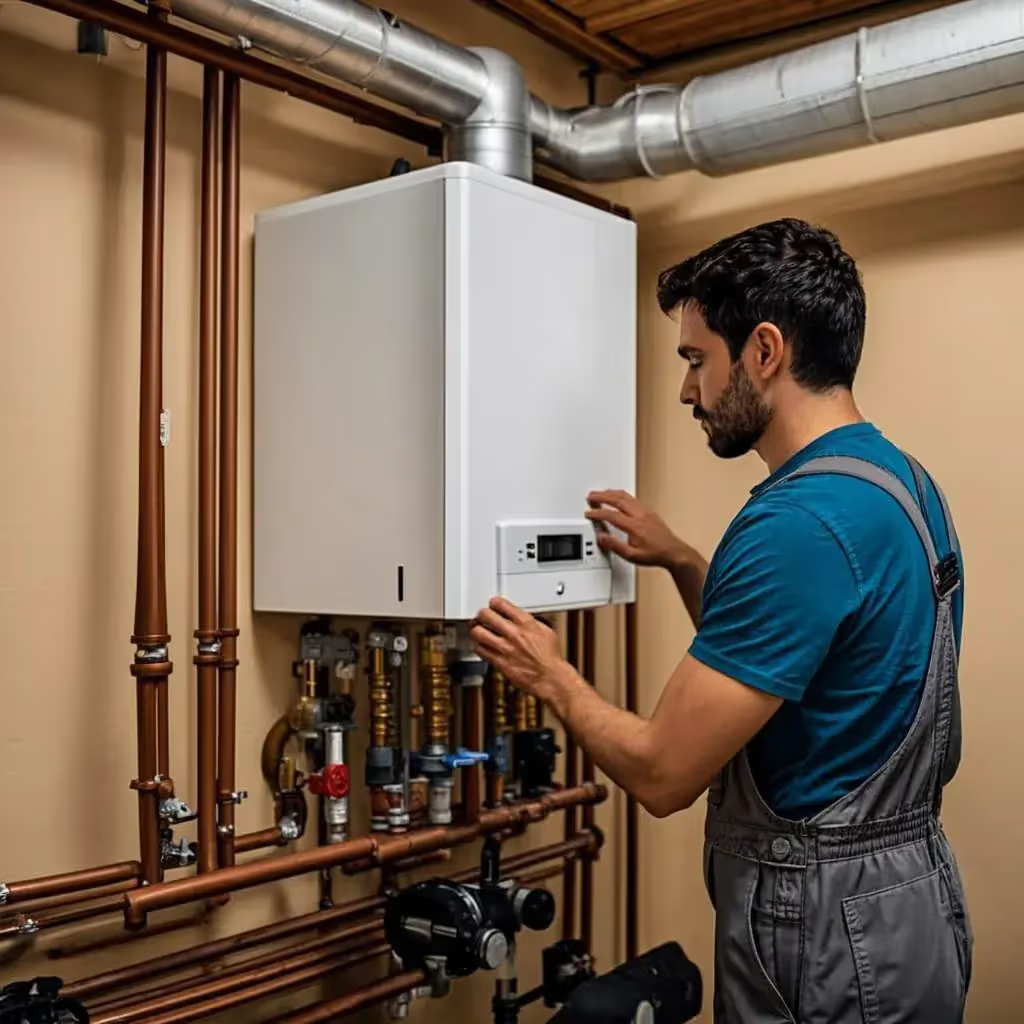
Where the wall wiring reveals something larger, a dead control fuse from a previous DIY attempt, a board that no longer holds settings, a two-wire run with no spare conductor in concrete, the job pauses and becomes a diagnostic, $89 credited to whatever repair finishes it. Emergencies outside hours carry a flat $150 after-hours premium, posted in advance, because a confusing invoice is a strange way to begin a relationship about clarity. Every install is flat-rate priced in writing before work starts, warrantied for two years on workmanship, and backed by our $2M liability coverage and Red Seal certification.
Rentals, Strata and Older Metro Vancouver Stock
Landlords get the clearest arithmetic in this guide. A suite with electric baseboard heat and a fixed monthly rent that includes utilities is a suite where the landlord pays for every hour a tenant heats an empty home, and a simple smart programmable with a locked schedule changes that behaviour on the first vacancy. For gas-heated rentals, a smart thermostat with an app lets an owner watch runtime between tenancies and catch a failing furnace before it becomes a habitability issue in February. The Residential Tenancy Branch rules on entry and control still apply, so configuration is best done at turn-over, with the schedule documented in the condition report.
Strata buildings add their own physics. Concrete towers mean in-suite wall wiring that is hard to modify and, on many Vancouver and Burnaby buildings, electric baseboard whose thermostats are line-voltage devices, a different hardware category entirely, rated for the load and wired at full voltage. Line-voltage smart thermostats exist and work well, but they are not the same product as the 24-volt models on the furnace shelf, and mixing the two is how fires start. Hydronic suites with a shared boiler raise one more wrinkle, in-suite zone control that the strata's boiler service contractor should be looped into, and our crews work with strata property managers across the region every week.
City Notes: Vancouver, Surrey, Burnaby and Beyond
The thermostat conversation changes with the housing stock. In Vancouver, the split is character homes with aging gas furnaces in framed walls that cooperate with new wiring, and concrete condos with line-voltage baseboard whose controls follow the rules in Chapter 10. Surrey and Langley subdivisions are the two-stage and ECM heartland, where correct staging configuration is the whole game and equipment is new enough that controls pay off over long ownership. Burnaby and New Westminster's post-war basements keep single-stage furnaces alive, and there the win is alert-driven maintenance, catching the $180 to $650 repair while it is still that size. Our crews cover all seventeen cities from North Vancouver to Abbotsford, and the configuration work is identical everywhere, from Surrey furnace calls to the same-day diagnostic runs we stage out of Vancouver and Burnaby.
Wherever you sit on that map, the sequence is the same: confirm what equipment you actually have, buy the thermostat category that matches it, and have it configured by someone who reads control boards for a living. That last step is the one that converts a purchase into savings, and it is the one almost nobody does.
The 60-Second Cheat Sheet
| Question | The short answer |
|---|---|
| Will a smart thermostat save me money? | Yes, if it changes runtime. Automated setbacks, alerts and filter reminders are the mechanisms. Households that already schedule tightly see little. |
| Which feature matters most? | On a heat pump: auxiliary heat lockout. On a gas furnace: staging configuration plus runtime history. Everything else is comfort. |
| Do I need a C-wire? | Most 24-volt models want one. Spare conductor, power-sharing kit or new wire, in that order. Baseboard heat needs line-voltage models instead. |
| What does professional install add? | Board-end labelling, correct staging, tested cycles and a configured schedule. It is the difference between savings and a wall decoration. |
| Rebates? | Programs vary by year, utility and fuel; rebates may apply, and we check eligibility and handle the paperwork. The big money attaches to cold-climate heat pumps, up to $16,000 combined in 2026. |
| What should it cost to find out more? | A conversation costs nothing, a $89 diagnostic isolates any hidden control problem and credits into the repair, and after-hours calls carry a flat $150 premium, posted in advance. |
Smart controls are the smallest piece of a well-run heating system, and the piece everything else reports through. Get the wiring right, get the configuration right, and let the device do the quiet work of watching your furnace the way you cannot. When it raises its hand, we are a phone call away, 24/7, at 604-615-2212.
Frequently Asked Questions
Services From This Guide
Smart thermostat installs, furnace tune-ups, repairs and heat-pump conversions across Metro Vancouver, 20 cities, 24/7.
Furnace and heating service
Tune-ups at $129, repairs $180-$650, and replacements from $3,800, all flat-rate and warrantied 2 years on workmanship.
Heat pump installs and service
Ductless $3,800-$5,500, cold-climate ducted $6,500-$14,000, multi-zone $9,500-$16,000, with controls configured right.
Smart thermostat installs
Board-end wiring verification, staging setup and cycle testing across Metro Vancouver, flat-rate, by Red Seal gas fitters.
Seventeen-city coverage
Vancouver to Abbotsford, the same Red Seal crews, flat-rate pricing and 24/7 emergency line everywhere we work.
Related Guides
The Vancouver Heat Pump Guide
What a heat pump changes in a BC home, including the control settings this guide leans on.
EfficiencyEnergy-Efficient Upgrades in BC
The full sequence, envelope, windows, heating, controls, and where the savings actually stack.
HeatingFurnace Repair vs Replace
The honest decision math for the equipment your new thermostat is about to manage.

Red Seal certified, licensed gas fitters (BC-PL-2019-4421), $2M insured and 15-plus years in the field, with more than 12,000 jobs completed across Metro Vancouver since 2010 and a 5.0-star rating across 26 Google reviews. We wrote this guide because the thermostat is the cheapest heating upgrade most BC homes can make, and the one most often wasted by wiring and configuration nobody verified. To book instead of DIY, see furnace maintenance in Delta — same-day across the city.
More about our team →Get Your Thermostat Done Right
Book the $89 diagnostic or a free thermostat-and-equipment estimate with a Red Seal gas fitter. You get an honest read on your wiring, your equipment and the model that fits both, a flat-rate written price for the work, and rebate paperwork handled where programs apply. Zero obligation, same-day quotes on most calls. If you would rather hand this to a pro, our heating & furnace services pages cover Metro Vancouver.
No heat right now?
No-heat calls are answered 24/7 with live dispatch and a flat $150 after-hours premium posted in advance. Daytime? The $89 diagnostic is usually same-day in Vancouver, Burnaby and Surrey.
Call 604-615-2212 WhatsApp Us