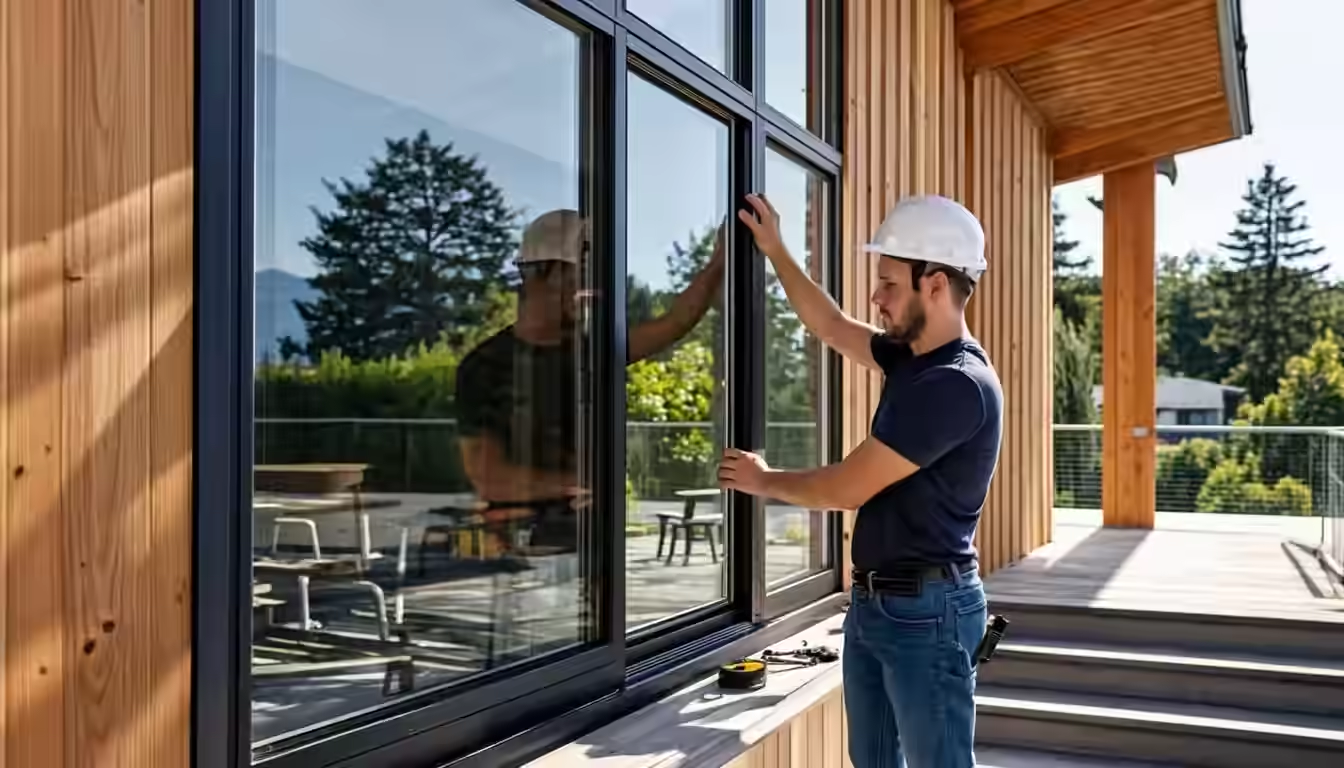
The Honest Answer Up Front
A window warranty is three promises stacked in one folder. The first is about the sealed glass unit: the two panes, the spacer and the gas between them, and specifically the seal that keeps the cavity airtight, the layer most likely to fail in year fifteen and the reason the word lifetime appears so generously on brochures. The second is about components: balances, locks, hinges, frames and finishes, with shorter terms and stricter exclusions. The third is about labour: who physically swaps a failed part a decade from now, whether that is covered at all, and whose phone call makes it happen.
The honest advice we give at the estimate table for our window and door service is that the warranty comparison happens in the fine print, not the headline. Two manufacturers can both print lifetime and mean twenty years on glass seals, five on hardware and nothing on breakage, while a third prints fifteen years and includes labour and transfers cleanly. Meanwhile the installer's own workmanship coverage, ours is a written two-year warranty on every install, frequently ends up mattering more than any of it, because installation quality is what most window problems actually trace back to.
The third honest point is procedural. Warranties do not pay because a window failed, they pay because someone documented the failure, held the right paperwork, hit the terms and followed the process. That is a solvable skill, and Chapters 4 and 10 of this guide teach it directly: what to photograph at install, where the serial numbers hide, who to call first, and which sentences in the document decide the outcome.
Read the three layers, not the logo. The seal term is the one this climate will test, and the labour row is the one your future self will thank you for checking.
0 jobs since 2010
Window, door, plumbing, heating and cooling work across Metro Vancouver, with the paperwork discipline to keep coverage claimable.
0 in every warranty
Glass and seal, components and hardware, labour. Separate terms, separate exclusions, one folder.
0 workmanship warranty
Our own written coverage on every install, on top of the manufacturer terms we register for you.
0 star rated
26 verified Google reviews, a meaningful share of them warranty and second-opinion calls done right.
The Three Promises in One Document
The table below is the skeleton of nearly every residential window warranty in Canada. Terms move between manufacturers, but the categories are stable, and reading any document against this structure takes about ten minutes. The exercise is worth doing with both quotes side by side, because the differences that matter live in the right-hand column, the one sales conversations skip.
| Coverage layer | What it typically promises | What it usually does not cover |
|---|---|---|
| Sealed glass unit, the seal term | Replacement units or credit for hermetic seal failure: fog between panes, moisture ingress, gas loss from a failed seal | Frame issues, hardware, broken glass from impact, thermal-stress cracks, labour to install the new unit unless stated |
| Components and hardware | Balances, locks, hinges, operators and finishes for a stated term | Wear items like weatherstrip and screens in many documents, damage from misuse, corrosion in coastal air beyond stated limits |
| Manufacturer labour | The cost of installing covered replacement parts, usually for a short window of years | Labour beyond the stated term, travel, finish work, or any work performed by third parties |
| Installer workmanship | Our written two-year coverage: correct measurement, flashing, sealing, shimming and adjustment | Manufacturer defects themselves, homeowner modifications, storm and impact damage |
| Glass breakage, often a rider | Accidental or impact breakage of the glass itself where purchased | The most commonly excluded layer of all when nobody bought the rider, and a claim every buyer should price |
Two structural notes. First, proration: some coverage pays full replacement early in the term and a shrinking percentage as years pass, which turns a twenty-year promise into a fifty-percent promise by year twelve. Second, lifetime ambiguity: a document that says lifetime and defines it nowhere is a marketing number, while a document that defines lifetime of what, original owner, first installation, or the product line, is a contract. Chapter 3 takes the seal term apart because it is where both tricks concentrate.
Seal Failure Coverage, Decoded
The seal warranty earns its headline status for one reason: sealed units fail more than any other window component, this climate accelerates it, and replacing glass is real money. A failed unit fogs between the panes, first intermittently on cold mornings, then permanently, then with mineral streaking as the cycles deposit residue inside the cavity. The argon fill is gone with the seal, the insulating value steps down, and the warranty question becomes whether the manufacturer replaces the glass, how much of it they cover, and who does the swap.
Decode four things in any seal term. The term itself, full years versus prorated decline versus the lifetime word with or without a definition. The coverage unit, per sealed unit, per window, or per order, which matters enormously on a ten-window job. The labour row, because a replaced sealed unit that arrives as a pane of glass on your porch is a warranty that paid fifty percent of a two-person job. And the inspection clause, since some documents require a manufacturer-authorized inspection, on their schedule, before any replacement ships, which is either a quality step or a delay tactic depending on the maker's service culture.
| Seal term feature | Strong version | Weak version |
|---|---|---|
| Term length | Stated years, twenty or more, or defined lifetime on the seal specifically | Lifetime, undefined, with a proration table buried on page four |
| Coverage basis | Per sealed unit, any unit in the order, no aggregate cap | Per original invoice, capped, or first-failure-only |
| Labour inclusion | Manufacturer or installer labour included for the stated term | Parts only, glass arrives, install is yours to arrange and pay |
| Proration | Full replacement value for the full term | Straight-line decline so year twelve pays half |
| Transfer | One-time transfer with modest fee and simple notice | Original purchaser only, coverage ends at sale |
| Inspection process | Photo-based claim, unit replaced on documented failure | On-site inspection by their agent, at their scheduling discretion |
The seal term is the warranty you are actually buying. Everything else on the page is supporting cast for the promise this climate will test.
Reading the Document Like an Adjuster
Claims people read warranties backwards: coverage sections last, definitions and exclusions first, because that is where claims go to die. The definitions block tells you what lifetime means, what an original purchaser is, and what counts as a defect rather than wear. The exclusions block tells you what will be on the denial letter. The claims procedure block tells you who must be contacted, within what time after discovery, and with what evidence, and it is quietly the most enforceable section in the folder, because a claim that misses its notice window loses even when the failure is undeniable.
Read the labour sentence with particular suspicion. Whether the document says we will provide replacement parts versus we will provide replacement parts and the labour to install them is the difference between a warranty and a discount on glass. Then find the voids section and read it against your actual life: pressure washing, painters, blinds installers, the neighbour's ladder. Chapter 7 collects the classics.
Definitions first
Lifetime of what, purchaser is who, defect versus wear. Every dispute is argued in these words.
Exclusions second
The denial letter is drafted from this list. Anything that matches your household habits is a live risk.
Claims procedure third
Notice deadlines, contact order, evidence requirements. Miss a deadline and coverage becomes theoretical.
Labour and transfer rows
Parts only or parts plus labour, transferable or purchaser-only. These two rows decide real costs years out.
Terms and dates last
Now the year counts matter, with the proration math applied to the layer you actually care about.
One habit closes the gap between reading and collecting: at install day, photograph every serial number etched on the spacers, staple the invoice to the warranty, and file the manufacturer registration confirmation. Ten minutes at the beginning is the entire difference between a claim that pays and a story about the one that almost did.
Glass Breakage, the Orphan Layer
Breakage is the coverage layer homeowners most often assume exists and most often do not have. A shattered pane from a lawnmower stone, a hockey ball, a moving accident or a branch in the November wind is not a seal failure and not a defect, it is breakage, and standard warranty documents exclude it unless a breakage rider was purchased or the glass carries an explicit breakage term. The result is the classic kitchen-table surprise: a failure everyone agrees was nobody's fault, and a bill nobody's warranty covers.
Thermal stress cracks deserve their own paragraph because they straddle the line. A pane that cracks in a clean line from its edge, with no impact point, may have failed from temperature stress, uneven heating across the glass, a shading pattern, or a frame that grips too tightly, and some documents cover documented thermal stress while others treat it as installation or shading conditions. That ambiguity is why the diagnosis matters before anyone files: impact looks like impact, stress cracks look like lines from edges, and the claim you file should match the crack you have, not the coverage you wish you had.
The pricing reality for the orphan layer: with our installed windows, picture units run $650 to $950 and casements $800 to $1,400, glass package included, so a rider's value is judged against a known replacement cost, not an open-ended fear. On full-home projects, $12,000 to $30,000 installed across Metro Vancouver, the breakage question is worth asking explicitly at quote stage, because that is precisely when riders are cheap to add and impossible to retro-fit.
Parts, Hardware and Labour: The Middle of the Ladder
Between the long seal term and the excluded breakage layer sits the middle of the warranty ladder, where the moving parts live. Operators, multi-point locks, balance springs, hinges, screens and finishes carry their own terms, commonly shorter than the glass, and this is the coverage band that decides whether a decade-old casement that drifted out of adjustment is a warranty service or a repair bill. Quality lines differentiate themselves here as much as on glass: hardware engineered for decades and backed accordingly, versus hardware engineered to a price point with a warranty to match.
| Layer | Common term shape | What it means in practice |
|---|---|---|
| Operating hardware, locks, operators | Commonly five to ten years on defects | A lock that stops throwing bolts in year six is a claim, not a purchase |
| Balance systems on hung windows | Commonly five to ten years, wear debated | Sashes that will not stay up are the classic middle-ladder claim |
| Frame and finish | Longer terms on structure, shorter on finish | Welded joints and profile integrity outlast colour and texture coverage by years |
| Weatherstrip and seals, the wear items | Often excluded or short-term | Consumables, replaced as maintenance, our assessments carry them flat-rate |
| Manufacturer labour | Commonly one to two years | The labour row from Chapter 2: parts arrive, or parts plus the hands to install them |
| Installer workmanship, ours | Two years, written, on every install | Measurement, flashing, sealing, shimming and adjustment done right, guaranteed in contract |
The practical comparison tool is a single question at quote stage, asked identically of both proposals: show me, in the documents, what happens in year eight when a balance spring quits on a second-floor sash. Who supplies the part, who installs it, what it costs, and what paperwork you need to hold. The answer quality separates the manufacturers and the installers faster than any brochure, and it takes ninety seconds to ask.

What Quietly Voids Coverage
Warranty documents protect manufacturers from homeowners doing reasonable things, and the voids list is where that protection lives. Most voids are innocent: normal maintenance done slightly wrong, upgrades installed by the wrong trade, or chemistry nobody warned you about. The list below is the greatest-hits collection we see actually cited on denial letters in this region.
| Action | What it risks | The safe version |
|---|---|---|
| Pressure washing frames and glass up close | Seal and glazing damage cited as owner-caused, voids seal coverage | Two feet back and gentler, or a hose and a soft brush |
| Painting over weatherstrip, glazing or drainage paths | Finish coverage gone, seal performance compromised | Mask seals and weep paths, paint the frame only |
| Acidic or abrasive cleaners on coated glass | Low-E and coated-glass coverage voided | Mild soap, soft cloth, the manufacturer care sheet |
| Interior films applied to the glass | Thermal stress and coating claims denied | Ask first, or choose factory tinted units |
| Drilling frames for blinds, cameras, decor | Structural and finish coverage on that unit | Between-glass options or frame-safe mounts, installed by the dealer |
| Third-party glass replacement or reglazing | Manufacturer coverage on that sealed unit ends | Warranty work through the installer or manufacturer channel |
| Ignoring the care and adjustment schedule | Hardware wear recast as neglect | The two-minute seasonal once-over from our maintenance guides |
One BC-specific note on pressure washing, because it is regional habit rather than national one: the Lower Mainland's wet-season grime sends homeowners at their siding and windows with washers every spring, and the combination of close-range pressure and detergent is the single most common self-inflicted warranty problem we document. The safe rule is simple, distance and dilution, and it protects the seal coverage that Chapter 3 established as the whole point of the document.
Transfers, Resale and the Paper Trail That Decides Them
Houses change hands in Metro Vancouver constantly, and window warranties are one of the quiet line items in those transactions. The rules split into three families: coverage that dies with the sale, coverage that transfers once with a fee and a form filed in the months after closing, and coverage written to a defined lifetime that may simply outlast relevance. None of these are visible from the street, all of them are visible in the paperwork, and the paperwork is the only part a buyer or seller can control.
The seller's job is curation. A warranty folder with the original invoice, serial photos, the registration confirmation and any service history converts invisible coverage into a marketable fact at listing time, and its absence converts real coverage into a shrug at the negotiating table. The buyer's job is verification during the subject-removal window: read the transfer clause, confirm the form exists and can be filed in time, and treat any document nobody can produce as value of zero, whatever the seller remembers about it.
Strata situations add a fourth actor. Building-wide window programs in condos and townhouse complexes carry coverage terms that belong to the corporation rather than individual owners, individual unit coverage on top where private upgrades happened, and a warranty landscape that lives in the strata's document vault. Those files are worth reading before any purchase, and our New Westminster windows and doors crews, who handle a large share of the region's older stock and row housing, walk owners and strata councils through exactly this layer on every assessment.
A warranty nobody can document is a warranty that does not exist. The folder is the coverage.
Comparing Two Quotes on Warranty Terms
Once the price rows are comparable, the warranty rows are usually where proposals genuinely differ, and they differ in ways that show up years later as real money. The comparison table below is the one we recommend filling in for every serious quote, alongside the price and package comparison in our Vancouver window replacement guide, because the two documents together describe the full decade ahead: what you pay now, and what happens when something fails.
| Row to compare | Quote A | Quote B, fill it in |
|---|---|---|
| Seal term, years and basis | ||
| Proration, yes or no, how steep | ||
| Labour included, for how long | ||
| Breakage rider, priced or absent | ||
| Transfer terms and fee | ||
| Installer workmanship term, in writing | ||
| Who files claims and stores serials |
The last row deserves a highlight because it is the one nobody thinks to compare and the one that decides claim outcomes most often. Some installers hand you a folder and disappear from the story. Others, and this is how we run it, photograph serials at install, register manufacturer coverage on your behalf, keep the invoice on file, and file the claim for you when a seal fails in year nine, which converts a warranty from a document you own into a service you can actually trigger. When a full-home project, $12,000 to $30,000 installed, needs financing from 7.99 percent with approved credit through our financing program, the paperwork discipline is the same, because coverage that survives a financed decade is the point of buying quality once.
Making a Claim That Sticks
A claim is a small project, and it runs on evidence. The failure needs to be documented while it is visible, the unit needs to be identified by serial, the coverage needs to be confirmed against the actual document rather than memory, and the notice needs to reach the right party inside the stated window. Done in order, most legitimate claims in this region resolve without drama. Done out of order, the same claim dies on a technicality that nobody at the kitchen table saw coming.
Photograph the failure
Fog, streaks, cracks, hardware, with the whole unit and close detail, before anyone touches anything.
Read the document
Confirm the layer, the term, the proration and the notice requirement, in the actual text, in the definitions language.
Identify the unit by serial
The spacer etching between the panes, cross-referenced with install-day serial photos and the invoice.
Notify in the right order
Installer first for workmanship questions, manufacturer channel for parts, inside stated deadlines, in writing.
Hold the replacement to standard
A replacement sealed unit should match the original specification, gas fill and coating included, and be installed to the same standard as day one.

If the windows were not installed by us, the same rules apply, and second-opinion visits are a meaningful part of what our Richmond windows and doors team and the rest of our crews do: read the documents, verify the failure mode, identify the serial, and either file the claim with the paperwork or tell you honestly that the coverage is not there, so the money goes toward replacement glass with eyes open rather than a claim that was never going to pay.
The BC Context: Builder Coverage, Renovation Coverage, Your Coverage
British Columbia layers a few warranty regimes over the general picture, and knowing which one your windows sit inside prevents a category error that costs homeowners real time. New homes built under the provincial home-warranty structure carry builder coverage on the envelope with terms measured in years, and windows installed as part of that original construction fall under the builder's program, with its own claim paths through the warranty provider. A renovation window installed afterward is a different animal entirely: its coverage is the manufacturer document plus the installer's workmanship warranty, and those are claimed through completely different doors than builder coverage.
The consumer-protection layer matters at purchase time. Window and door work in this province should be done by licensed, insured contractors, our registration is BC-PL-2019-4421 with $2M liability coverage, and the discipline that makes a contractor safe to buy from, written scope, written warranty terms, registered manufacturer coverage, is the same discipline that makes a claim survive six years later. When a contractor cannot produce the documents at sale, they will not produce them at claim time either.
The energy-efficiency thread closes the loop: BC rebate programs have historically demanded certified performance and documented installation for window incentives, terms shift year to year, and window rebates may apply — we check eligibility and handle paperwork, which keeps warranty-grade documentation pulling double duty for both coverage and incentives. That stacking logic, warranty plus performance plus paperwork, runs through our whole BC energy upgrades guide and is the reason we treat the file folder as part of the installation.
The One-Page Cheat Sheet
The whole guide compressed for the quote meeting and the kitchen drawer. If a proposal cannot answer these rows, it is a brochure with a number on it.
| Question | The answer |
|---|---|
| What am I actually buying? | Three promises: sealed-glass coverage, component coverage, labour coverage, each with its own term and exclusions |
| Which layer matters most? | The seal term: fogged units are the most common and most expensive failure, and this climate tests it |
| What is the labour trick? | Parts only versus parts plus install. Read the sentence, not the logo |
| Breakage? | Usually excluded, sometimes a rider. Price the rider against picture windows at $650 to $950 installed |
| Voids to respect? | Pressure washing, painting seals, acid cleaners, films, third-party reglazing, drilling frames |
| Transfers? | Document-dependent: dead at sale, fee-and-form, or defined lifetime. The invoice folder is the coverage |
| Installer coverage? | Two-year written workmanship warranty from us, serials photographed, manufacturer terms registered |
| Claim sequence? | Photograph, read the text, serial the unit, notify in order, hold the replacement to spec |
Frequently Asked Questions
Services From This Guide
Window and door estimates with every warranty layer spelled out: glass, seal, parts, labour and our own two-year workmanship coverage, in writing, before any deposit.
Window and door installation
Installs with every warranty layer documented, manufacturer coverage registered, and our two-year workmanship warranty in writing.
Windows and doors in New Westminster
City crews for Queens Park heritage glass and modern replacements, quotes and claims support included.
Windows and doors in Richmond
Full window and door service across Richmond and Steveston, from estimates to claim paperwork.
Financing and rebates
Replacement projects financed from 7.99 percent with approved credit, with rebate eligibility checked for you.
Related Guides
The Vancouver Window Replacement Guide
The buying side of the decision: packages, prices and install day, with the warranty rows this guide teaches you to read.
Rebates & MoneyEnergy Efficient Upgrades for BC Homes
Where windows rank in the upgrade stack, and how warranty-backed performance holds its value.
Water HeatersTankless vs Tank Water Heaters
Another long-lived appliance, another warranty ladder worth comparing before you sign anything.

Red Seal certified, licensed gas fitters (BC-PL-2019-4421), $2M insured and 15-plus years in the field, with more than 12,000 jobs completed across Metro Vancouver since 2010 and a 5.0-star rating across 26 Google reviews. We wrote this guide because warranty fine print is where window money is quietly won and lost years after the install trucks leave, and because the installer who registers your coverage properly is doing more for you than the one with the loudest brochure. To book instead of DIY, see window & door service in Burnaby — same-day across the city.
More about our team →Get Warranty Terms You Can Actually Read
Book a free in-home window estimate with a Red Seal estimator. You get a room-by-room read on your units, a flat-rate written price with all warranty layers itemized, manufacturer coverage registered for you, and financing from 7.99 percent with approved credit if the timing needs it. Zero obligation, quotes on most calls within days. If you would rather hand this to a pro, our window & door services pages cover Metro Vancouver.
Warranty question before you sign?
Every window and door estimate we write includes the warranty terms in plain print, and we register manufacturer coverage on your behalf after install. Plumbing or heating emergency in the meantime? The 24/7 line is answered around the clock with flat after-hours pricing posted in advance.
Call 604-615-2212 WhatsApp Us