
The Honest Answer Up Front
Window replacement in Surrey is priced per window, installed, and the 2026 numbers are these: double-pane runs $650 to $950 per window and triple-pane runs $800 to $1,400, with the glass package, frame, hardware, installation and old-window disposal all inside that number. Entry doors run $1,200 to $3,500 installed. Those are the ranges we quote from, not teasers — a standard slider in a standard opening sits near the bottom, and oversized or custom units climb from there.
Whole-house math is where the per-window approach pays off. A Surrey bungalow with 8 to 10 windows runs $5,200 to $9,500 in double-pane. A two-storey family home with 12 to 15 windows runs $7,800 to $14,250 double-pane, or $9,600 to $21,000 if you go triple-pane everywhere. Most Surrey homes we quote mix the two: triple-pane on the west face and the rooms facing traffic, double-pane elsewhere. That kind of zoning is how you buy performance where you feel it and skip paying for it where you do not.
Every quote we write is per opening, in writing, before a single sash comes out, and it includes disposal of the old units. The windows and doors services page lists the full scope, and the windows and doors page for Surrey covers local response standards. For the region-wide version of this guide, the window replacement guide for Vancouver is the companion read.
0 double-pane installed
The honest per-window range for Surrey homes, with glass, frame, hardware and installation inside the number.
0 per window, in and out
One opening at a time, so a 10-to-12 window home is a one-to-two day project in any season.
0 jobs since 2010
Windows, doors and every trade behind them, flat-rate quoted before work starts, every time.
0 star rated
Verified reviews across 17 Metro Vancouver cities, with a 2-year workmanship warranty in writing.
What Is Inside a Per-Window Price
A per-window quote is really four prices stacked together. The glass package: double or triple pane, Low-E coating, argon fill and the warm-edge spacer that decides whether the edge of the glass sweats in January. The frame: extruded vinyl, fibreglass, aluminum or wood, in a size and configuration cut to your opening. The hardware: locks, handles, cranks and multi-point latches. And the installation: measuring, ordering, removing the old unit, setting, insulating, sealing and trimming the new one, plus disposal of what came out.
The installation slice is the one that separates a dry window from a warranty claim. In Surrey's wind-driven rain, the details that matter are the sill pan or sloped sill, flashing tape lapped the right direction, low-expansion insulation in the gap, and a sealant joint that is tool-able and maintained. Two quotes can be $150 apart on the same window and the difference is entirely in this layer — which is why the cheapest window with the best install usually beats the best window with the cheapest install.
One more line that belongs in every honest quote: warranty, split into the manufacturer glass and frame coverage and the installer workmanship coverage. Ours is a 2-year written workmanship warranty on every job, alongside the manufacturer terms for the product itself. If a quote you are comparing has no written workmanship coverage at all, you have found the first thing to cross off.
Double-Pane vs Triple-Pane: The Honest Cut
Here is the trade-off in one breath: double-pane with Low-E and argon is the value pick for most of Metro Vancouver's mild winters, and triple-pane earns its $800 to $1,400 price in three specific situations — noise, summer sun and the highest energy targets. The margin between the two is not huge per window, but across 12 windows it is the difference between a $7,800 project and a $9,600 one, so the decision deserves better than a shrug.
| Glass package | Installed price (CAD) | Where it earns its price |
|---|---|---|
| Double-pane, Low-E, argon | $650-$950 per window | The value pick for most Surrey rooms; quiet enough and efficient in a mild climate |
| Triple-pane, Low-E, argon | $800-$1,400 per window | Busy corridors, rail lines, west faces, bedrooms, and the highest energy targets |
| Mixed strategy | Between the two | Triple where you feel noise and sun, double everywhere else; the most common Surrey quote |
On noise, the honest physics: triple-pane's third pane and second air gap cut traffic and train sound noticeably, but the frame seal and installation quality matter as much as the glass count. A properly sealed casement will outperform a drafty triple-pane slider every day of the week. If your home backs onto a rail line through Port Kells or faces King George Boulevard, spend on both the glass and the style — that combination is where the quiet comes from.
Window Styles: Slider to Bay and Bow
Style moves the per-window price more than brand does, because style is really a labour-and-hardware story. The slider is the Surrey standard — it came in most of this city's 1970s-to-90s housing stock, it is the cheapest operating style to build and install, and it remains the honest default. Casements and awnings cost more and seal tighter, pressing a full perimeter gasket against the frame when you crank them closed, which is exactly what you want facing a November storm.
| Style | Price position | The honest note |
|---|---|---|
| Horizontal / vertical slider | Baseline | The Surrey standard; affordable, easy to clean, and fine in sheltered positions |
| Picture window | Low-mid | Fixed glass, no hardware; the cheapest way to get a big view |
| Casement / awning | Mid | Best-in-class sealing; worth it on rain-exposed walls |
| Tilt-turn | Premium | European hardware, two opening modes; a luxury, not a necessity |
| Bay / bow | Top | A small construction project: structure, seat and head boards, roof |
The mixed-style house is the norm here, not the exception: sliders on the sheltered sides, casements on the weather faces, a picture unit where the view earns it. When we quote a Surrey home, the style mix is a conversation about which walls eat the storm, which rooms overheat in July and which windows nobody opens anyway.
Frame Materials and the Rain Question
Surrey takes well over a metre of rain a year, and the frame is what stands in it. Multi-chamber vinyl with fusion-welded corners is the workhorse of the Lower Mainland for honest reasons: it does not rot, it never needs paint, it handles wet coastal air without complaint, and welded corners mean no seams for water to find. It is also where the $650-to-$950 double-pane range lives, which is why most of the windows we install in Surrey are quality vinyl.
Fibreglass is the step up: stronger for oversized openings, dimensionally stable through temperature swings, and paintable if that matters to your colour scheme. Aluminum is the thin-sightline modern look, but it conducts cold and can sweat on the inside face in a coastal winter, so it belongs on covered exposures and in designs that accept the trade. Wood and wood-clad belong in heritage restorations and fine homes; they are beautiful, and they are a maintenance commitment in this climate, not a set-and-forget choice.
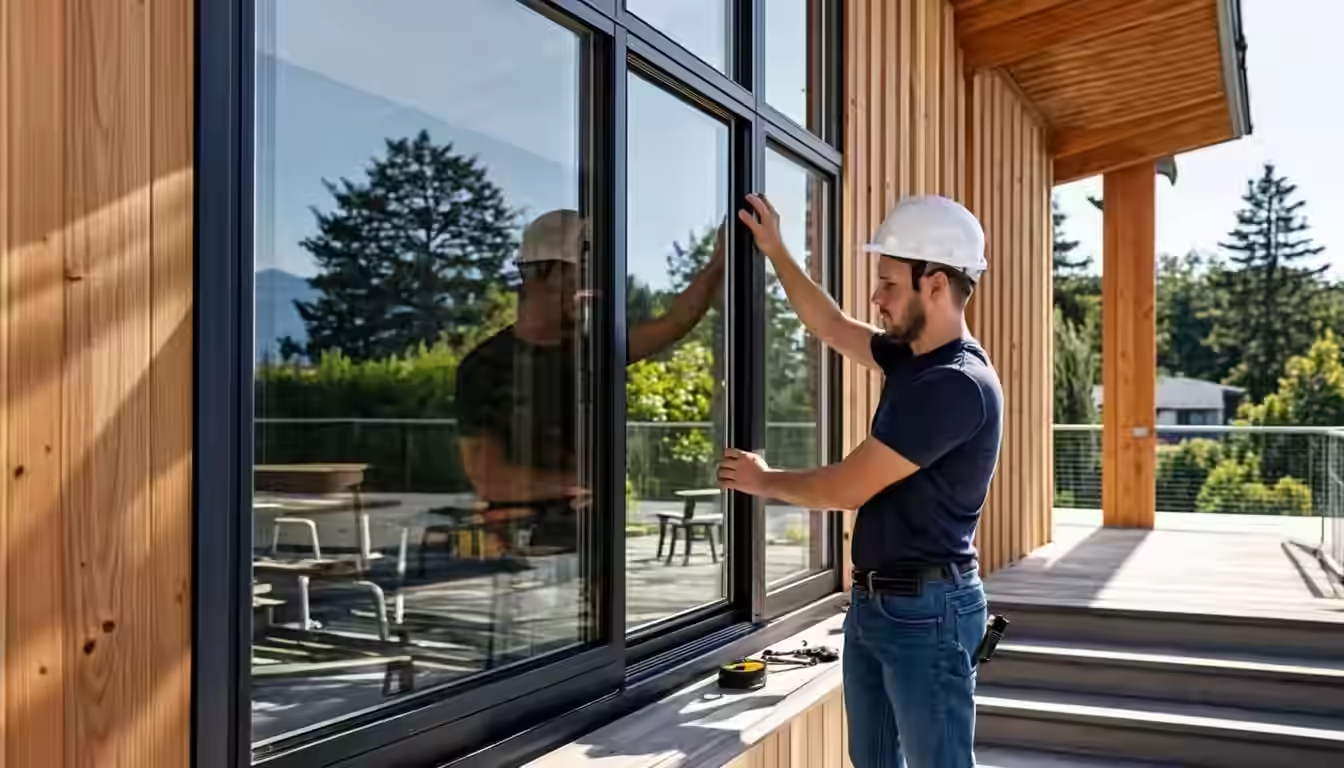
One honest warning about the cheap end of any material: a thin-wall frame with screwed corners and a single weatherstripping line is how a $600 window becomes a draft in three years. The frame is not the place to save the last fifty dollars, because it is the part that carries the seal, the glass and the rain, all at once.
Surrey Housing Stock: Retrofit vs Full Frame
Surrey's window stock is dominated by two eras: the 1970s-to-80s ranchers and split-levels with original aluminum sliders, and the late-80s-to-90s two-storeys in Fleetwood, Cloverdale and North Delta's edge, mostly vinyl retrofits of varying quality. The aluminum sliders are now fifty years old: single-glazed or early double, sweating frames, and hardware that has stopped latching. That stock is where most of our Surrey replacements happen, and it is why this city prices per window — almost nothing is a standard size twice.
Every quote then answers one question: retrofit insert or full-frame replacement? A retrofit keeps your existing frame and sets the new window inside it — cheaper, faster, and right when the old frame is square, sealed and dry. Full-frame takes everything out to the rough opening, re-flashes, insulates and trims — more money, but it is the only version that fixes rot, adds glass area and lets the wall be insulated around the opening. The honest rule is condition-based: if the old frame shows water staining, soft wood or a failed sill, full-frame is not an upsell, it is the job.
Bottom line
A retrofit insert saves money today on a sound frame; full-frame replacement is what you do when the frame is the problem. Choosing full-frame everywhere is overspending, and choosing retrofit on a rotten sill is buying a new window for a wall that is already failing.
Strata townhouse owners have one extra step: check your bylaws before ordering, because many Surrey stratas require a uniform window spec across the complex and written approval before exterior changes. We work to strata spec sheets regularly, and quoting to the bylaw the first time is much cheaper than re-ordering to it the second time.
Entry Doors and Patio Doors
Entry door replacement runs $1,200 to $3,500 installed, and the range is almost entirely about scope. At the bottom: a steel or fiberglass slab hung in your existing frame, which fixes a warped door and a bad seal for the least money. At the top: a full door system — slab, frame, threshold, weatherstripping, sidelites and paint-ready trim — which is the honest buy when the frame is out of square or the threshold has let water into the subfloor for a decade. Hardware, smart locks and glass inserts sit between those poles as choices, not surprises.
Patio doors are quoted like oversized windows, because that is what they are: a two-panel slider or a French door pair is a big glass unit with an operational threshold, and the sealing details under the track are what decide whether your floor stays dry for the next twenty years. In wind-exposed South Surrey and Panorama Ridge backyards, we treat the patio threshold as the most important water joint in the house.
What installation includes, in every door quote we write: removing and disposing of the old door, setting and insulating the new one, adjusting hinges and weatherstripping until the seal holds in wind-driven rain, and the hardware keyed to match the rest of your house. If a door quote does not mention adjustment and sealing, it is a delivery, not an installation.
Whole-House Budgets, by House Type
Here is what the per-window math does to real Surrey house types, using the ranges from Chapter 1. These are honest planning bands, not estimates to sign — the final number comes from measuring every opening, and no two 1985 ranchers have the same window list.
| Surrey house type | Openings | Double-pane budget | Triple-pane budget |
|---|---|---|---|
| 1970s-80s rancher / split-level | 8-10 windows | $5,200-$9,500 | $6,400-$14,000 |
| Two-storey family home | 12-15 windows | $7,800-$14,250 | $9,600-$21,000 |
| Strata townhouse | 6-8 windows + slider | $3,900-$7,600 | $4,800-$11,200 |
| Plus entry door (any type) | 1 door | $1,200-$3,500 | Doors are material-priced, not pane-counted |
Two honest ways to spend less without buying junk: phase the project — weather-exposed faces this year, sheltered faces next year — and mix the glass packages as described in Chapter 3. Financing from 7.99 percent with approved credit is also available for whole-house projects through our financing and rebates program, which turns a $9,000 project into a planned monthly line instead of a November surprise.
Energy Payoff and Rebates, Honestly
Here is the part most window articles dodge: replacing old single-glazed aluminum with modern double-pane will genuinely reduce your heat loss, but windows are a modest slice of a home's energy budget, and the payback on energy alone is slow — often a decade or more in a mild climate where the heating season is short. The honest reasons to replace are comfort you feel daily: no more cold radiating off the glass in January, less condensation on the frames, rooms that hold temperature in the July sun, and the quiet that comes with a real seal.
On rebates, the straight answer for 2026: windows have far less provincial support than heat pumps. In most program years there is no CleanBC rebate for window replacement alone, though some municipal and utility programs have offered modest per-opening incentives, and we check current programs on every quote rather than quoting from memory. The big provincial dollars — up to $16,000 combined — sit with heat pump conversions, which is why the CleanBC rebates 2026 guide and the municipal rebates guide belong on the same reading list as this one.

If energy is your primary driver, sequence the work: air sealing and attic insulation first, then the heat pump decision, then windows for comfort. The energy-efficient upgrades guide covers that sequence, and the heat dome preparedness guide explains why July comfort now costs as much attention as January comfort in this region.
Getting Fair Quotes and Timing the Project
Get two or three quotes, and make them comparable by giving each company the same information: the openings you want done, the style you expect, and whether you want the retrofit-versus-full-frame question assessed rather than assumed. A fair quote lists per-window prices by opening, the glass package and frame brand by name, the install method, disposal, and both warranty layers in writing. A quote with one total and no detail is not comparable to anything, including itself.
On timing: replacement windows are made to order, so production lead time — typically several weeks for custom vinyl — is the real project clock. Installation itself happens year-round in Metro Vancouver; crews open one window at a time and the new unit goes in the same hour, so rain and winter are not the obstacles people imagine. The busiest season is spring and summer; if you want the project done before a November move-in or a spring listing, book the measure appointment six to ten weeks ahead.

Bottom line
Compare quotes per opening, not per page. The company that names the glass, the frame, the install method and both warranties is the one whose number you can actually hold to when the truck arrives.
The Window Budget Cheat Sheet
Find your situation, read the budget, and remember that every number below is a per-opening flat rate approved in writing before work starts.
| Your situation | Honest 2026 budget | Watch for |
|---|---|---|
| Standard slider or picture window | $650-$950 double-pane installed | The baseline of every honest quote; disposal included |
| Noisy or west-facing rooms | $800-$1,400 triple-pane installed | Pair triple glass with a casement for the best seal and quiet |
| Whole rancher, 8-10 windows | $5,200-$9,500 | Phase the project if the full number does not fit this year |
| Two-storey, 12-15 windows | $7,800-$14,250 double | Mixed glass packages cut the top end without buying junk |
| Entry door | $1,200-$3,500 installed | Full system versus slab; sealing and adjustment included |
| Foggy between the panes only | Glass-unit quote first | If the frame is sound, replacing the sealed unit beats the whole window |
The one-sentence version of this guide: price per opening, buy the seal and the install before the badge, and put triple-pane only where noise and sun actually reach you. For a measured, per-window quote on your Surrey home, the form below reaches us directly, and 604-615-2212 answers 24/7.
Frequently Asked Questions
Services That Solve This Faster
Windows & Doors Surrey
Per-window pricing, retrofit and full-frame installs across Surrey, from Guildford to Cloverdale.
Windows & Doors Services
Replacement windows, entry doors and patio doors, installed rain-safe with a written workmanship warranty.
Financing & Rebates
Financing from 7.99 percent with approved credit for whole-house window projects, plus rebate checks.
Windows & Doors Vancouver
The same per-window pricing model across the region, with the Vancouver service standards.
Related Guides From Our Team
Window Replacement Guide for Vancouver — the region-wide version of this guide, with the same per-window honesty.
CleanBC Rebates 2026 Guide — where the real rebate dollars live, and why heat pumps carry them.
Energy-Efficient Upgrades in BC — the right sequence: sealing, insulation, then glass.
Winter Prep for Vancouver Homes — the checklist that gets a home through the wet season intact.
Heat Dome Preparedness — why July comfort now belongs in the window planning conversation.
Red Seal certified, licensed gas fitters (BC-PL-2019-4421), $2M insured, 15-plus years on the tools, 12,000-plus jobs across Metro Vancouver since 2010, 4.9 stars from verified reviews. We wrote this guide because Metro Vancouver homeowners deserve the numbers, the code references and the honest trade-offs before anyone touches a wrench or a wallet.
More about our team →Talk to a Real Technician About This Today
Book a visit with a Red Seal technician: a real diagnostic, a written flat-rate quote before any work starts, honest repair-versus-replace math, CleanBC rebate paperwork handled and financing from 7.99 percent with approved credit. Emergencies answered 24/7 at 604-615-2212.
Want your real per-window number?
We measure every opening and quote per window, in writing: $650 to $950 double-pane, $800 to $1,400 triple-pane, entry doors $1,200 to $3,500, with disposal, sealing and the 2-year workmanship warranty inside the number. Financing from 7.99 percent with approved credit is available for whole-house projects.
Call 604-615-2212 WhatsApp Us