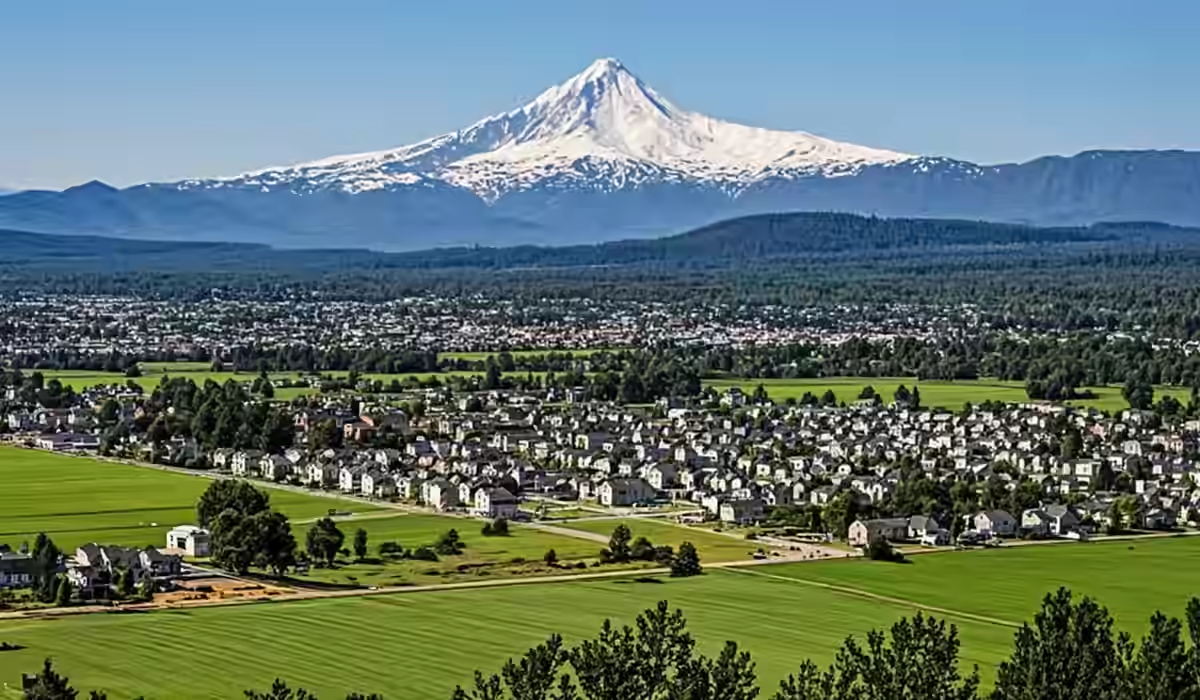
The Honest Answer Up Front
Abbotsford is the climate border. East of Langley, the Pacific moderating effect thins out, and the numbers split away from the coast in both directions: design temperatures around -12°C on the clear January nights, versus -7°C in Vancouver; summer highs that cruise the low 30s and, in the June 2021 heat dome, pushed past 40°C; snowfall that routinely doubles Vancouver's and lingers; wildfire smoke that pools in the valley bowl while the coast gets the thin version. A heating and cooling system here isn't a mild-climate afterthought. It's the working end of the house.
The money, up front: furnaces at $4,800 to $9,500 installed where the FortisBC main reaches, cold-climate heat pumps at $6,500 to $14,000 before rebates that can stack to $16,000, propane systems at furnace prices plus a tank for the acreages of Bradner, Straiton and the Prairie fringe, central AC at $3,800 to $6,500, and ductless zones at $3,800 to $5,500. Maintenance runs twice a year here, $149 to $250 a visit, because both seasons earn it. And on the low ground, the Sumas Prairie lesson from November 2021 prices in an item nobody used to budget: equipment elevation.
This guide is the valley-floor version of the HVAC conversation: what the climate demands, which equipment answers it honestly, what the Prairie's flood history changed, and what the water, the dust and the housing eras add. It's written by the crew behind HVAC service across Abbotsford, from Clearbrook furnace replacements to Bradner propane conversions and Auguston heat pump installs.
In Vancouver, a heat pump is a comfort upgrade. In Abbotsford, it's a piece of equipment with a job description, and the interview questions are -12°C and 40°C, asked six months apart.
0°C design low
The valley's January planning number. Five degrees colder than the coast sounds small; to a heat pump spec sheet, it's everything.
0°C+ heat dome
June 2021's ceiling in the valley, the week that ended the region's "we don't need AC" era permanently.
0
The year Sumas Lake was drained into farmland. November 2021 reminded everyone where the lake used to be.
$0k rebate ceiling
The CleanBC, BC Hydro and FortisBC stack on a qualifying cold-climate install, the number that changed valley heating math.
The Numbers: Coast vs Valley
HVAC decisions live and die on a handful of climate numbers, and Abbotsford's differ from the coast's on every line. Here's the comparison our estimators actually reference, with the consequence of each row spelled out, because a design temperature isn't trivia, it's the number your equipment was sized against.
| Measure | Vancouver / coast | Abbotsford / valley | What it changes |
|---|---|---|---|
| Heating design temperature | ≈ -7°C | ≈ -12°C | Bigger heating loads; cold-climate heat pump ratings matter |
| Annual snowfall | Modest, melts fast | Routinely double, stays days | Outdoor units need elevation above snow, clear drainage |
| Summer extremes | Occasional low-30s | Regular low-30s, 40°C+ in 2021 | Cooling is standard equipment, sized for real loads |
| Wildfire smoke exposure | Episodic | Pools in the bowl, lingers days | MERV 13 filter strategy, recirculation discipline |
| Winter humidity | Damp, hovering near freezing | Colder and drier snaps | Less coastal defrost misery, more deep-cold capacity demand |
One row deserves its own paragraph: the smoke. During the big fire years, onshore flow scrubs some of it out of Vancouver's air while pushing the remainder east, where the valley's bowl shape collects it against the mountains. Abbotsford's air quality during those events runs worse than the coast's for days at a stretch, and the difference shows up in filter choice, ventilation strategy and the portable HEPA unit that lives in the bedroom of any asthmatic in the valley. It's the newest line in the climate table, and it's not going anywhere.
The Fuel Map: Gas City, Propane Country
Abbotsford's heating story divides along the gas main. The urban core, Clearbrook, central Abbotsford, Sandy Hill, Mill Lake, the Auguston and Highlands benches, is FortisBC territory: gas furnaces, gas water heaters, and the full suburban equipment menu. The rural roads east and south, Bradner, Straiton, the Sumas Prairie farmsteads, the acreage pockets toward the border, are beyond the pipes, and they run the delivered-fuel stack: propane furnaces with tanks in the yard, legacy oil units approaching their final decade, and, increasingly, cold-climate heat pumps chosen specifically because they delete the delivery truck from the budget.
The fuel economics, honestly: natural gas remains the cheapest delivered heat per gigajoule where the pipe exists, and a furnace installation in Abbotsford at $4,800 to $9,500 in gas territory is the region's workhorse purchase. Propane runs the same equipment at a per-GJ premium that swings seasonally, plus tank logistics, lease or own, and fill timing. All-electric heat pump heating trades fuel deliveries for BC Hydro's rate schedule, and the Step 1/Step 2 structure means an efficiently sized heat pump mostly lives in the cheaper tier while resistance backup strips live in the expensive one, which is the entire argument for sizing heat pumps to carry the load down to deep temperatures rather than leaning on strips.
The move that's quietly winning the valley is dual fuel: a cold-climate heat pump mated to your existing gas or propane furnace, heat pump carrying the 85-to-95 percent of winter hours that sit above -5°C, furnace taking the deep nights. You buy BC Hydro's rates when they're cheap and gas only when it's cold enough to matter, and no one's comfort depends on a single machine through a -12°C week. For households replacing one side of the pair anyway, the incremental cost of the strategy is small against its operating math, and our estimates lay both futures side by side in writing.
The Heat Pump Question, Answered for -12°C
The question arrives on every Abbotsford estimate now: "Can a heat pump actually handle our winter?" The honest answer is yes, with a valley-sized asterisk. A cold-climate heat pump, the class that holds 100 percent of rated capacity at -15°C and 70 to 80 percent at -25°C, carries an Abbotsford winter in its sleep. A standard, warm-climate unit from a discount quote, the kind that starts sweating at -8°C, cannot, and the difference between the two is a spec sheet, not a sales pitch: look for the cold-climate designation and the capacity tables at real temperatures, not the brochure's +8°C numbers.
The asterisk is backup heat, and there are exactly three honest versions of it. Electric resistance strips: cheapest to install, expensive to run, the valley's Step 2 rates make them a few nights a year of acceptable pain. Dual fuel with a gas or propane furnace: the comfort-first answer, covered in Chapter 3. Oversizing the heat pump itself: sometimes right for a house with no furnace option, and a conversation had with a load calculation rather than a rule of thumb. What's not honest is selling a valley home a heat pump without discussing any of the three, because the cold night always arrives and the electric bill follows it.
Then there's the money: heat pump installs in Abbotsford run $6,500 to $14,000 before incentives, and the CleanBC, BC Hydro and FortisBC stack on qualifying cold-climate equipment reaches $16,000, which turns a mid-band install into a four-figure decision. The rebate rules change the equipment class, and our quotes handle the paperwork, but the honest version of that sentence is that the rebates are conditional on cold-climate ratings, proper sizing and commissioned performance, which is paperwork that protects you as much as it pays you. Sizing matters doubled here: an oversized unit short-cycles through the shoulder seasons and a right-sized one carries the deep nights, and both truths live in the same load calculation.
Cooling: From Optional to Line Item
Before 2021, Abbotsford's cooling market was a fraction of what it is now; after the heat dome, it's standard equipment. The valley's summer pattern, low 30s for days at a stretch with warm nights that never let the house reset, defeats the coast's favourite trick of opening the windows at 10 p.m., because the valley's 10 p.m. is still 27°C. Newer builds in Auguston and the Highlands arrive with cooling built in; the older stock, the 60s-to-90s ranchers and splits of Clearbrook and Sandy Hill, is where the retrofit decisions live, and where AC installation in Abbotsford at $3,800 to $6,500 central, or ductless at $3,800 to $5,500 a zone, lands in the family budget.
The honest cooling decision tree is short. House with sound ductwork: central AC or, better, a heat pump that also does January. House with baseboard or boiler heat: ductless zones, sized for the rooms that actually overheat, usually west-facing bedrooms and any room under the roof deck. Apartment or suite: a single ductless head or, where budget rules, a properly sized window unit rather than a portable, which exhausts its own cooled air out the window hose and loses most of the fight. In every branch, the sizing conversation is the same one honest HVAC always has: the load comes from glazing, orientation and envelope, not floor area, and the unit that runs long enough to dehumidify beats the unit that blasts and quits.
The valley-specific footnote is overnight recoverability. Coast homes cool themselves at night; valley homes often don't, and a system sized only for the 4 p.m. peak runs out of margin during a heat wave's third consecutive 27°C night. That's why our Abbotsford cooling quotes price the shoulder case, the evening and overnight loads, not just the brochure afternoon, and why heat pumps, which carry cooling and heating in one decision, have taken over so much of this market. One box, both extremes, valley-rated.
Sumas Prairie: The Flood Chapter
The Sumas Prairie is farmland where a lake used to be. Sumas Lake was drained in 1924, its bed turned to some of the richest soil in the province, protected by dikes and drained by pump stations, and for nearly a century the engineering held. Then came the November 2021 atmospheric river: the Nooksack River overtopped in Washington state and poured north across the border into the Prairie, dikes breached, water covered fields and farmyards to depths measured in metres in places, the Barrowtown Pump Station fought through the night behind emergency sandbagging to keep running, and the region watched a lake briefly try to re-exist. Hundreds of homes flooded. More than 600,000 farm animals, most of them poultry, were lost. The recovery took years, not weeks.
What that week wrote into the valley's HVAC rulebook, permanently. Elevate equipment: furnaces, water heaters, and heat pump controls on stands in garages and mechanical rooms on the low ground, because a flooded appliance is a condemned appliance. Respect the red tag: any gas appliance that's been submerged is shut down by Technical Safety BC rules and inspected by a licensed gas fitter before restart, no exceptions and no shortcuts, because a compromised heat exchanger or control isn't a DIY verdict. Wells get tested after floods, every time, because floodwater carries everything a farm yard has ever known. And septic fields and high water are a conversation before the wet season, not during it. When post-flood replacement queues ran months in 2021-22, the homes that recovered fastest were the ones whose equipment never got wet.
For the broader valley floor, the Prairie's lesson generalizes: elevation is cheap, water is patient, and the trades now spec mechanical rooms like boats spec bilge pumps. If you're on the low ground, our estimates include a look at where your equipment sits relative to the yard's low point, and if the answer is "on the slab, at grade," the stand that changes it costs hundreds now against a five-figure replacement later. Furnace service in Abbotsford after any flooding event starts with exactly that inspection, and it's the one call that should never wait for a second opinion.
The Water Side: Valley Water and the Sumas Aquifer
Abbotsford's municipal water is a blend: Norrish Creek and Cannell Lake surface water plus a component of groundwater wells, and the well share makes it moderately hard, noticeably more so than the coast's near-soft snowmelt supply. For plumbing, moderately hard water means scale: on shower doors, in kettle elements, and in the bottom of every water heater in the city. The maintenance answer is an annual flush, $149 to $250, and an anode inspection every 2 to 3 years, $200 to $350, two habits that separate the water heaters that die at warranty from the ones that outlive it by five years.
Rural Abbotsford's wells are a different chapter, because they draw the Abbotsford-Sumas aquifer, the cross-border groundwater system that underlies the Prairie and stretches into Washington. It's a productive aquifer with a documented legacy: decades of intensive agriculture left nitrate levels in parts of it above drinking-water guidelines, and the alluvial soils that make the farmland rich make the groundwater fast-moving. Well owners in the valley should test annually, bacteria and nitrate at minimum, through an accredited lab, $50 to $200 depending on the panel, and treat the results as information, not alarm: treatment options exist for every common finding, and the first test is cheaper than any appliance it protects.
For equipment, well water in the valley runs harder and occasionally carries iron or sulfur, so the water heater conversation includes the anode strategy from our water heater playbook, powered anodes where sulfur shows up, treatment loops where iron stains fixtures, and sediment filters as basic hygiene. Our Abbotsford water heater services cover the whole range, tanks at $1,800 to $3,800 to tankless at $3,800 to $6,500, and the valley's harder water makes the flush-and-anode rhythm worth every dollar of it. For the rest of the plumbing, our Abbotsford plumbing crews handle everything from well pressure tanks to repipes at the same flat rates as the rest of the region.
Housing Stock: Clearbrook Ranchers to Highlands Builds
Abbotsford's neighbourhoods are eras with street names, and the era predicts the service call. Clearbrook and central Abbotsford: the 1960s-70s core, ranchers and splits with galvanized-in-the-walls plumbing transitions, aging ductwork, and furnaces now two generations past original. Sandy Hill and the older east-side subdivisions: the 80s-90s wave, poly-B windows in the plumbing, mid-efficiency furnaces aging out in bulk, the region's biggest repair-vs-replace market right now. Auguston, the Highlands, Central Heights and the newer benches: 2000s-to-today, high-efficiency equipment, heat-pump-ready envelopes, owners learning maintenance rather than facing replacement. Bradner, Straiton and the rural roads: the acreage stack, wells and septic and propane.
| Area | Era | The likely 2020s project |
|---|---|---|
| Clearbrook / central | 1960s-70s | Furnace number three, drain era catching up, supply-pipe transitions |
| Sandy Hill / east subdivisions | 1980s-90s | Mid-efficiency furnace retirement, poly-B repipes, AC retrofits |
| Auguston / Highlands / benches | 2000s-today | Maintenance discipline, warranty protection, heat pump upgrades |
| Bradner / Straiton / rural | All eras, acreage | Propane conversions, heat pump installs, well and septic care |
| Sumas Prairie farmsteads | Farmhouse-to-modern | Equipment elevation, post-flood inspections, well testing |
The pattern to respect: valley homes work their equipment harder than coastal ones, so every era reads one stage "older" than its construction date suggests. A 1995 Sandy Hill furnace has run more hard hours than a 1995 Burnaby furnace, the 2021 heat dome and every -12°C snap are billable wear, and the maintenance visit that catches the worn igniter in October is cheaper than the January night that discovers it. That's not a scare line, it's just odometer logic, and it applies to every row in the table above.
Berry Dust, Barn Air and the Filter Calendar
Abbotsford is one of Canada's great berry belts, blueberries and raspberries by the square kilometre, plus dairy, poultry and the whole supporting agriculture, and all of it becomes airborne on dry summer days. Homes beside the fields, which in Abbotsford is a large share of the city, breathe harvest dust, pollen and field grit through exactly the season the AC is running, which means the filter calendar here is not the suburban default. The honest rhythm: check filters monthly through July-September, change every 30 to 60 days in dusty exposure, MERV 8 to 11 as the workhorse rating, and step up to MERV 13 during smoke weeks only if the blower was sized for it.
The coil, not the filter, is where neglect gets expensive. A dust-loaded evaporator or heat pump coil insulates itself, loses capacity, and grows biologicals in the damp layer, and the symptom arrives as a smell before it arrives as a breakdown. A professional coil cleaning, folded into the $149-to-$250 maintenance visit, restores the capacity the dust stole; a garden-hose rinse of the outdoor unit twice a season, gentle fan setting, no pressure washer, removes the berry-dust felt that packs the outdoor coil every August. Two habits, one afternoon each, and the equipment ages at the valley's normal rate instead of agriculture's accelerated one.
The barn-adjacent chapter is its own genre: homes beside poultry barns or on active farmyards deal with fine organic dust year-round, not seasonally, and the honest response is a filtration step up, tighter filter changing, and occasionally a media air cabinet or HEPA bypass, because the goal isn't just equipment protection anymore, it's the household's air. It's the same playbook wildfire smoke forces, applied permanently: better filters, changed on a real calendar, with a blower that was checked for the pressure they add. And when the smoke and the harvest dust arrive in the same week, as they increasingly do, that's the week to have 24/7 service in Abbotsford on the fridge, because equipment that can't breathe is equipment that calls in sick.
A filter in Abbotsford has three jobs: protect the blower, protect the coil, and protect the family's air during smoke week. Buy the one that does all three, and write the change dates on the frame.
The Valley's Seasonal Calendar
Because Abbotsford runs both seasons hard, the maintenance year has two peaks and two shoulders, and the households that follow it spend the smallest fraction of their income on repairs. Here's the calendar as we write it for valley homes.
| Season | The valley reality | What to do |
|---|---|---|
| October | First frosts, rain returns | Fall maintenance visit: heating check, defrost verify, outdoor unit elevation and drainage check, gutter discipline |
| December-February | -12°C snaps, snow that stays | Keep snow cleared around outdoor units, watch for ice dams at defrost drains, know your backup heat actually works |
| March-April | Melt, shoulder season | Spring maintenance visit: cooling check, coil wash of winter's grime, filter strategy for the season ahead |
| June-July | First heat events, harvest dust begins | Filter check monthly, MERV 13 loaded if smoke season opens, portable HEPA staged for bedrooms |
| August-September | Peak heat, peak dust, smoke weeks | Filters on the 30-60 day cadence, outdoor coil rinse, recirculation during smoke, book fall maintenance before the queue |
The two maintenance visits, $149 to $250 each, anchor the year, and everything between them is homeowner moves: filters, hose rinses, snow clearance, and the seasonal awareness that a valley address demands. Budget the visits like tires for a car that drives mountain passes: not optional, and dramatically cheaper than the failure they prevent. Financing from 7.99% OAC applies to the big equipment years, and the maintenance habit is what keeps the big years rare.
The Abbotsford Cheat Sheet
The valley's HVAC questions, answered at the speed the cold snap arrives.
| Question | The honest answer |
|---|---|
| Colder than the coast? | Yes: -12°C design lows, double the snow, snaps that linger. Spec for the valley, not the region's average |
| Heat pump or furnace? | Cold-climate heat pump with honest backup, dual fuel if a furnace exists, rebates to $16,000 on qualifying units |
| Cooling needed? | Yes since 2021: central $3,800-$6,500 where ducts are sound, ductless $3,800-$5,500 a zone otherwise |
| On the low ground? | Elevate equipment, respect flood red tags, test wells after any flooding, every time |
| Valley water? | Moderately hard municipal, harder wells: flush yearly, anode every 2-3 years, test well water annually |
| Filters? | Monthly checks July-September, MERV 8-11 baseline, MERV 13 for smoke weeks, coil rinses twice a season |
| Maintenance rhythm? | Twice a year, $149-$250: October for heat, April for cooling, before the queues |
| Buying a home here? | Ask furnace age, equipment elevation, water source and duct condition, in that order, before the subject-free offer |
One line to keep: Abbotsford runs both ends of the thermometer, and the homes that thrive here are the ones whose systems were chosen for both. Call 604-615-2212 for an estimate that prices the whole year, not just the season you're standing in.
Get Your Valley Home Ready for Both Seasons
A free estimate covers your heating plant, cooling options, heat pump economics and low-ground equipment elevation, written pricing, zero obligation. Deep cold snap or heat wave, 24/7 crews answer with flat after-hours pricing.
Frequently Asked Questions
Services From This Guide
Licensed crews, flat-rate quotes and 24/7 emergency response across the twelve Metro Vancouver cities we serve, from the valley floor in Abbotsford to the coast.
Abbotsford HVAC
Heating and cooling built for valley winters and valley summers, sized honestly.
Furnace Installation Abbotsford
Gas and propane furnace installs, $4,800-$9,500, dual-fuel ready.
Heat Pumps Abbotsford
Cold-climate units with backup strategy, $6,500-$14,000 before rebates.
24/7 Emergency
No-heat and no-cooling calls answered around the clock, flat pricing.
Related Guides
Heat Pumps in Metro Vancouver
The primer on cold-climate ratings, costs and sizing, coast and valley.
CoolingHeat Dome Preparedness
What the 2021 event taught the region about cooling, filters and planning.
RebatesCleanBC and BC Hydro Rebates
The up-to-$16,000 stack on qualifying heat pumps, explained without the fine print fog.

Abbotsford is our eastern frontier and our climate reality check: the city where furnaces work harder, heat pumps have to prove themselves, blueberry dust loads the filters and the Sumas Prairie taught everyone where the water goes. Red Seal certified, licensed gas fitters BC-PL-2019-4421, 12,000+ jobs since 2010 across twelve cities. This guide is written from the valley floor up. To book instead of DIY, see HVAC service in Abbotsford — same-day across the city.
More about our team →Get Your Abbotsford System Right for Both Seasons
A free estimate covers your heating plant, cooling options, cold-climate heat pump economics and equipment elevation if you're near the low ground, written pricing, zero obligation. If you would rather hand this to a pro, our heating & furnace services pages cover Metro Vancouver.
No heat in a valley cold snap?
24/7 response with a flat $150 after-hours premium posted in advance, and the $89 diagnostic credited to any repair. -12°C doesn't wait, and neither do we.
Call 604-615-2212 WhatsApp Us