If the Alarm Sounds Right Now
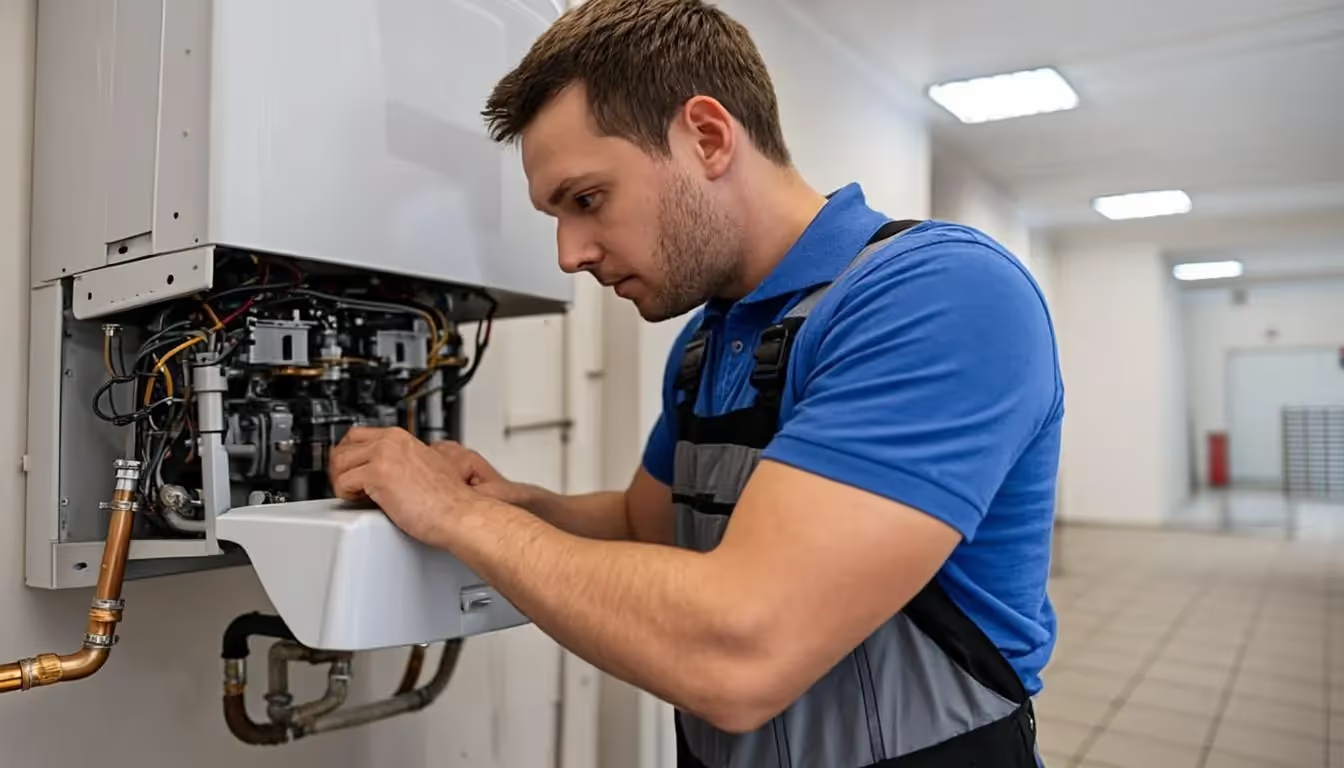
The response plan is four moves, in order, and the order is the whole plan. Every year, preventable deaths in Canada follow the same script: an alarm sounds at night, someone silences it, opens a window and goes back to sleep. Do not be that household. Rehearse this once so it is muscle memory when it matters.
Get everyone outside, immediately
People and pets, dressed however you are, gathering at a pre-agreed meeting spot away from the house. Do not stop to find the source, open windows, or collect belongings. If anyone is dizzy, confused, vomiting or unable to walk, that is a medical emergency, and the next step handles it.
Call 911 from outside
Tell the dispatcher it is a carbon monoxide alarm with symptoms if anyone has them. Fire responders carry CO meters and can measure the home, clear it, and flag whether anyone needs medical assessment. Call from a neighbour's phone or your cell, not from inside the house.
Stay out until the home is cleared
"Aired out" is not the same as "safe". The source is still running, and once windows close again the gas rebuilds. Responders will tell you when it is safe to re-enter, and in most fuel-appliance cases they will advise leaving the suspect appliance shut off until a licensed gas fitter has found and fixed the cause.
Then call us, day or night: 604-615-2212
Once people are safe and the building is cleared, our 24/7 line dispatches a licensed gas fitter to find the source: furnace, water heater, fireplace or venting. Our $89 diagnostic is credited toward the repair, and safety shutdowns, red tags, cracked exchangers and blocked vents, get priority scheduling.
A CO alarm is not a smoke alarm with a different beep: it is a gas meter reading a chemical that disables the judgment you would use to evaluate it. Trust the alarm, get out, and sort out the furnace in daylight, from outside.
What CO Is, and How a Furnace Makes It
Carbon monoxide is a gas produced whenever a carbon-based fuel burns incompletely. Natural gas burned with plenty of oxygen becomes carbon dioxide and water vapour, which is what your furnace is designed to do thousands of times a winter. Starve that flame of oxygen, let it touch a cold surface, or let combustion gases escape the path designed to carry them outdoors, and carbon monoxide is the result. It is colourless, odourless and tasteless, which is why every safety system around it, detectors, combustion analysis, venting, exists to sense what humans cannot.
What makes CO dangerous is chemistry, not toxicity in the ordinary sense. Your blood picks up oxygen on haemoglobin, and CO binds to the same sites roughly two hundred times more readily. Breathe it in and your blood quietly stops delivering oxygen to tissue, and the body with the highest oxygen demand, your brain, shows it first: headache, then dizziness, then confusion, then unconsciousness. The concentration and the exposure time multiply together, which is why a furnace problem that feels mild in the evening can be dangerous across a full night of sleep.
Here is the part that should genuinely calm you: a properly installed, properly maintained gas furnace in a properly vented Metro Vancouver home is very safe. The hazard comes from specific, findable defects, and the rest of this guide is about those four defects and the two habits that defeat them. If you take one sentence from this chapter, take this: CO risk is not a reason to fear your furnace, it is a reason to maintain it and to keep working detectors in the house, because those two layers cover nearly every failure path.
Symptoms, and the Pattern That Gives CO Away
Individually, every CO symptom is also a flu or fatigue symptom, which is why December carbon monoxide is so often misdiagnosed by the people it is poisoning. What gives it away is the pattern across people, place and time.
| Exposure | What people feel | What it gets called first |
|---|---|---|
| Low, ongoing | Headache, tiredness, mild nausea, trouble concentrating | "There is something going around", winter flu, stress |
| Moderate | Throbbing headache, dizziness, nausea, weakness, vision trouble | A bad flu, food poisoning, migraine season |
| High, acute | Confusion, collapse, loss of consciousness | An emergency, finally recognized for what it is |
The pattern clues: symptoms that improve when people leave the house and return when they come back, several people and pets sick at the same time instead of in sequence, symptoms concentrated where people sleep, and everyone feeling worse on the days the furnace runs longest. Any two of those together in a fuel-burning home should end with everyone outside and 911 called, not with another night of acetaminophen. Pets sometimes show it first, because smaller bodies saturate faster, and a dog that is lethargic every winter evening but normal at the dog park is telling you something.
One measurement note for the tool-minded: CO is measured in parts per million, and detectors are built to alarm at exposure levels a healthy adult can still survive and exit. Vulnerable households, infants, pregnancy, elderly family members, people with heart or lung conditions, should treat any alarm or symptom pattern as urgent at lower thresholds, because their margin is smaller than the alarm assumes.
Detectors: Where BC Codes Want Them, and What Kind
BC's building and fire codes expect CO alarms in dwellings with fuel-burning appliances and in units with attached garages, and the placement logic is about sleep. The detector that matters most is the one outside or inside the sleeping areas, because a furnace problem peaks overnight, and people cannot smell what they cannot smell. The full standard we recommend to customers: every sleeping area, every level including the basement where most Metro Vancouver furnaces live, and combination smoke-CO units on ceilings for fire coverage.
Placement physics is simpler than folklore suggests. CO diffuses through house air rather than rising like smoke or sinking like cold air, so the mounting height matters less than the manufacturer instructions say it does, and the things that matter more are: not in dead-air corners behind furniture, not directly beside windows or supply vents that dilute local air, not right next to the furnace where routine fluctuations would nuisance-trip it, and close enough to bedrooms to wake sleepers through a closed door. Read the back of the unit, not the internet, when the two disagree.
On hardware: sealed ten-year electrochemical units are the current standard, with no battery changes over their life and an end-of-life signal when the sensor itself expires. The manufacture or expiry date is stamped on the back, and the honest household move is to copy it onto the front in marker. Test monthly with the button, vacuum the vents a few times a year, and replace the entire unit at expiry, not the batteries. Plug-in units with battery backup are acceptable where outlets are correctly placed; the ones to avoid are anything without a current certification mark or anything older than its stamped life, including the unit that came with the house when you bought it.
The last placement question we get in Metro Vancouver: "Do I still need detectors if the furnace is new?" Yes. CO detectors protect against the whole home's fuel-burning inventory, including the older water heater beside the new furnace, the gas fireplace upstairs, and the neighbour's car in the shared garage under the strata unit. They are also the layer that catches the rare failure no maintenance schedule can perfectly predict. Detectors and maintenance are not alternatives, they are layers, and Chapter 5 is what the other layer, the furnace itself, does wrong when it does.
The Four Ways a Furnace Puts CO in Your Home
Almost every residential CO event traces to one of these four paths. Each has a cause, a season, and a check that catches it, which is why the annual tune-up exists in the exact form it does.
The cracked heat exchanger
The exchanger is the sealed wall between burner gases and the air your family breathes, and it ages through thousands of heat cycles. A crack lets combustion products cross into supply air. Found at inspection, it is a red tag and a repair-versus-replace decision, and on furnaces past 15 years it is almost always replace, which is the full subject of our honest repair-versus-replacement guide.
The blocked or corroded vent
Exhaust exits through B-vent or, on high-efficiency furnaces, through PVC to a wall cap. BC outflow storms drift snow over those caps, wasps and birds nest in them over the summer, and coastal salt air corrodes older metal venting. When the path chokes, products spill instead of leaving, the BC specialty among these four, and a five-second glance at the exterior termination after every storm is genuinely preventive.
Backdrafting and negative pressure
Mid-efficiency furnaces rely on draft, and a tight modern house with a big kitchen exhaust fan or a dryer can pull air down a chimney or vent faster than the appliance pushes it up. The fix is make-up air and correct venting, and the tell is spillage at the draft hood and moisture or soot streaking near the vent connection. Older Vancouver and New Westminster homes with upgraded windows are the regional hot spot.
Installation and renovation errors
Undersized venting, wrong slopes, shared venting that was never designed to be shared, or a basement suite renovation that walls in a furnace room without combustion air. These are caught by a licensed gas fitter reading the venting as a system, which is what the venting integrity check in a tune-up actually is, and why "it worked before the reno" is a sentence we hear in this exact chapter.
The Annual Combustion Check That Prevents All of It
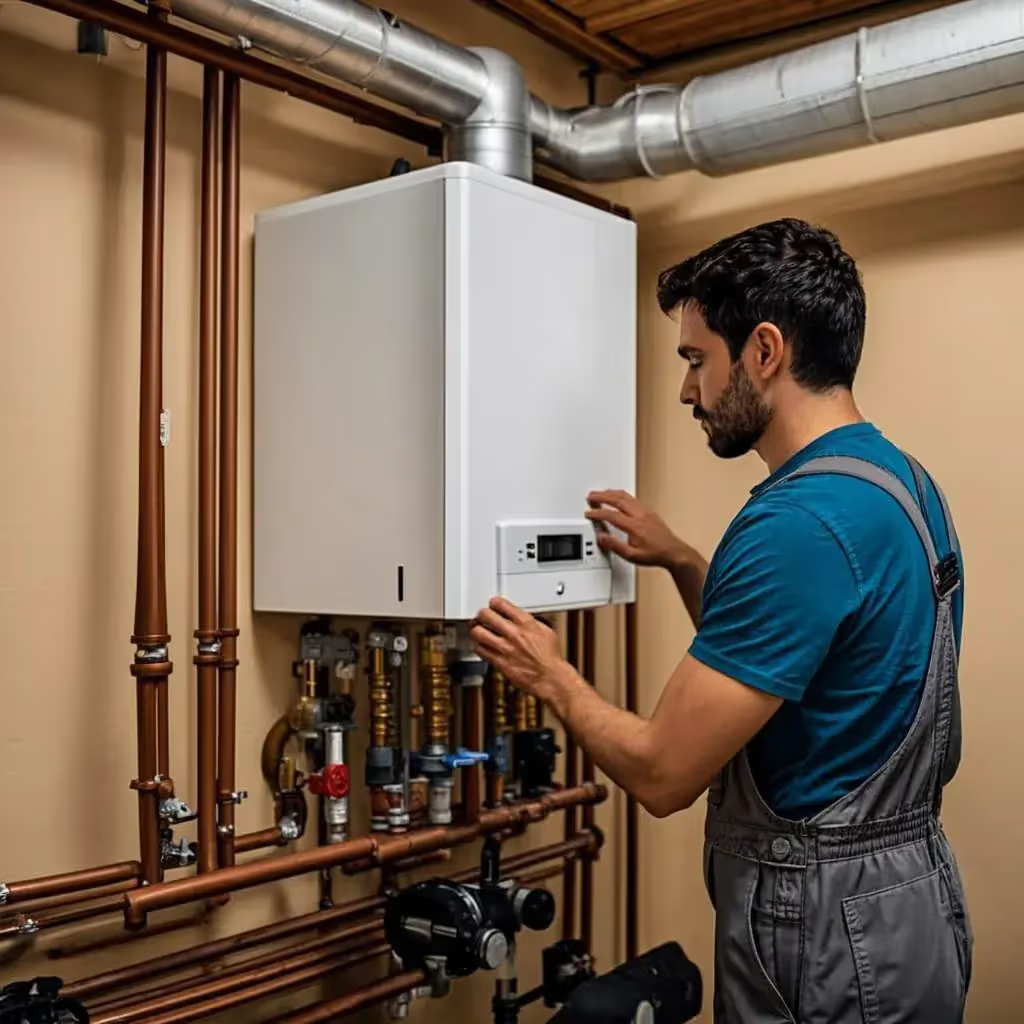
Every failure path in Chapter 5 has a matching test in a real furnace tune-up, and this is the argument for booking one every fall, not as maintenance folklore but as the CO-specific inspection it is. Our $129 tune-up runs four safety instruments and checks in about ninety minutes.
The combustion analysis samples flue gas at the furnace and reads CO directly, along with oxygen and efficiency, so the burner's behaviour is measured rather than guessed at. The heat exchanger inspection reads the exchanger through the burner ports and watches the flame pattern for the tells of a breach. The spillage check watches the draft hood on mid-efficiency units under the home's real conditions, fans running, doors as they are, which is exactly how backdrafting shows itself. And the venting integrity check follows the exhaust path from the inducer to the outdoor termination, checking slope, corrosion, and the wall cap that outflow snow drifts over. You get every number in writing, because a combustion reading only becomes useful safety data when it is compared against last year's.
Two honest limits, because this guide is not a sales pitch. First, no inspection can guarantee a heat exchanger is perfectly sound, on any furnace, by any company; what it does is raise confidence with evidence, and any contractor promising certainty by phone is selling certainty that does not exist. Second, detectors remain necessary even in tuned homes, because they cover the water heater and fireplace too, and because they watch the house on the 364 days nobody has an analyser in the driveway. Layers, not alternatives. If your furnace is due for its combustion check, our heating and furnace service page books the $129 tune-up across all seventeen of our service cities.
CO Sources Beyond the Furnace
A furnace guide owes you the rest of the inventory, because detectors respond to the whole house and the source is not always the furnace. The usual suspects in a Metro Vancouver home, in rough order of how often we meet them behind a nuisance-looking alarm:
The gas water heater
Sits beside the furnace, shares the venting or its own, ages on the same schedule, and gets the same draft and spillage checks at a service visit. Often the older of the two appliances in the room.
The gas fireplace or insert
Direct-vent units are sealed and safe by design, but natural-draft fireplaces depend on a chimney that birds, deteriorating caps and masonry shifts can compromise. Service includes the venting, not just the glass and burner.
The attached garage
A warming car in an attached garage pushes CO into the shared structure for hours, even with the garage door open, and strata parkades put this risk under thousands of suites. Never warm a vehicle in an attached garage, full stop.
Equipment that never belonged indoors
Portable generators, charcoal and gas barbecues, camp stoves and fuel-burning space heaters: every one is an outdoor appliance, and every winter in this province somebody brings one inside during a power outage. Not once, not ventilated, not briefly.
The furnace, in other words, is the best-maintained suspect in the lineup, because it is the one appliance with an annual inspection culture attached to it. Detectors watch all of these, and a CO alarm that survives its battery checks is covering inventory you never think about, which is the quiet argument for placing them on every floor rather than only the furnace room.
Red Tags: What Happens When We Have to Shut Your Furnace Off
When a licensed gas fitter finds an appliance venting CO into a home, or one of the conditions that will make it do so, BC regulations require the appliance be shut off, and the shutdown is documented with a red tag on the gas train. It is not an upsell tactic, it is not negotiable, and it applies to any gas fitter, ours or a competitor's, who finds the same defect. The tag stays until the defect is repaired and re-tested by a licensed fitter.
What red tags are not: a judgment that your furnace is scrap. Most tagged furnaces are back running within days. The repair itself, ignition faults, venting corrections, spillage causes, safety devices, lands inside our $180 to $650 flat-rate repair range, and if the tag traces to a cracked heat exchanger on an older unit, the decision becomes repair-versus-replace: repairing the exchanger where a warranty path exists, or replacing the furnace, from $3,800 for an 80-percent unit to $5,500 to $9,000 for high-efficiency equipment. That decision has its own honest math, the 50-percent rule, age brackets, the two-failure trend, and it is laid out in full in our furnace repair versus replacement guide.
One more option belongs in this chapter because it removes CO from the question permanently: a heat pump heats without combustion, so the fuel-switch conversation, CleanBC rebates included, is worth having before you replace an aging gas furnace with another gas furnace. Our furnace repair crews in Vancouver and Surrey furnace team both quote the honest version of that comparison, with flat-rate pricing on either path and a 2-year workmanship warranty on completed work, and if a second opinion on another company's red tag would help you decide, that is a normal thing to book, not an insult.
The CO Safety Cheat Sheet
The whole guide on one card. If every fuel-burning home in Metro Vancouver ran this list, our emergency line would go quiet in the best possible way.
| Task | Frequency | Why |
|---|---|---|
| Test every CO alarm | Monthly button test | A dead sensor protects nobody |
| Check the expiry stamp | Yearly, and at daylight saving changes | Sealed units die at about ten years, quietly |
| Placement audit | Once, then after any renovation | Every sleeping area, every floor, basement included |
| Combustion analysis at tune-up | Every October, $129 flat | The only direct measurement of what your furnace emits |
| Exterior vent cap glance | After every outflow storm and each fall | Snow, nests and corrosion are the BC blockage trio |
| Flame window check | A few times each winter | Steady blue is healthy; yellow or rolling means call |
| Rehearse the alarm plan | Once with everyone in the house | Outside, 911, stay out, then 604-615-2212 |
Book the Combustion Check Before Winter Peaks
A $129 tune-up measures what your furnace is actually emitting, in writing, by a licensed gas fitter. For an active alarm, get outside and call 911 first. For everything else, we are 24/7 at 604-615-2212.
Frequently Asked Questions
Services From This Guide
Combustion-checked tune-ups, red-tag second opinions and honest furnace repairs across seventeen Metro Vancouver cities.
Furnace tune-up and safety checks
The $129 tune-up with combustion analysis, exchanger inspection and written numbers, the three checks that keep CO on the safe side.
Furnace repair Vancouver
Venting problems, red-tagged units and suspect exchangers diagnosed for $89, credited to the repair, by licensed gas fitters.
Furnace repair Surrey
From Surrey to Abbotsford, the same safety-first diagnostics, flat-rate repairs and 2-year workmanship warranty.
24/7 emergency furnace response
No-heat and safety shutdowns answered around the clock, average 45-minute response, $150 flat after-hours premium posted up front.
Related Guides
Furnace Repair vs Replace: The Honest Guide
The heat exchanger chapter: what a crack means, what replacement costs, and why safety ends the repair debate instantly.
TroubleshootingFurnace Not Working in Vancouver? 12 Checks First
The ten-minute triage list, including the safety checks that tell you to stop and call a gas fitter.
SeasonalVancouver Winter Prep: The Complete Checklist
Detector tests and furnace checks in their seasonal context, alongside the pipes, gutters and outflow-week planning.

Red Seal certified, licensed gas fitters (BC-PL-2019-4421), $2M insured and 15-plus years in the field, with more than 12,000 jobs completed across Metro Vancouver since 2010 and a 5.0-star rating across 26 Google reviews. We wrote this guide because carbon monoxide is the only furnace failure that injures families silently, and because the two habits that prevent it, working detectors and an annual combustion check, are cheaper than a single emergency visit. To book instead of DIY, see furnace repair in Delta — same-day across the city.
More about our team →Book the Safety Side of Maintenance
Book a $89 diagnostic or a free replacement estimate with a Red Seal estimator. A Red Seal gas fitter runs the combustion analysis, checks the exchanger and venting, and reports the numbers in writing. If a suspected CO event is happening right now, get outside and call 911 first, then let us handle the furnace. Zero obligation, same-day quotes on most calls. We cover this in detail in Carbon Monoxide and Your Furnace: The BC Guide. If you would rather hand this to a pro, our heating & furnace services pages cover Metro Vancouver.
Furnace down right now?
No-heat calls are answered 24/7 with live dispatch and flat after-hours pricing posted in advance. Daytime? The $89 diagnostic is usually same-day in Vancouver, Burnaby and Surrey.
Call 604-615-2212 WhatsApp Us