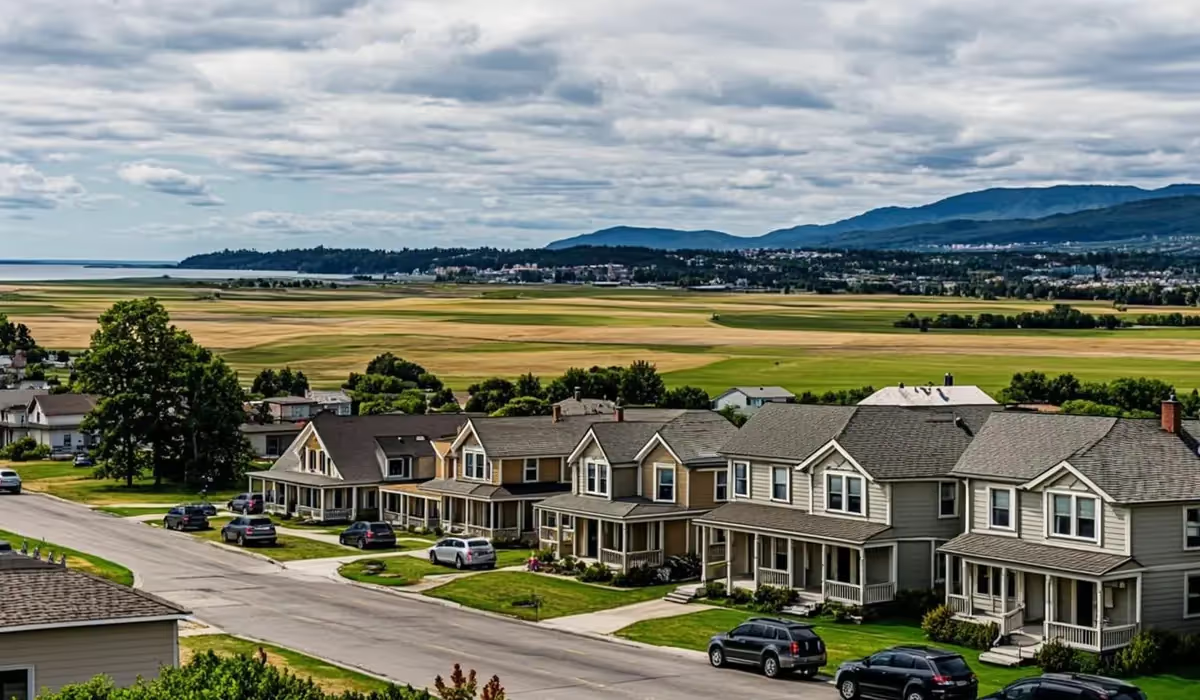
The Honest Answer Up Front
Delta is three towns, Tsawwassen, Ladner and North Delta, spread across one of the flattest, wettest, most deliberately engineered landscapes in Canada. Most of the municipality sits at or near sea level behind dikes and pump stations, on ground where the water table says hello in November, and the housing stock is old: 1940s and 50s character homes in Ladner's village core, 1960s and 70s ranchers across Tsawwassen, postwar subdivisions through North Delta, with 1980s and newer infill filling the gaps. When our Delta plumbing crews open a wall or crawl under one of these houses, we can usually date it within a decade by the pipe.
The three facts that drive almost every Delta service call. One: the pipes are old. Galvanized steel supply lines from the postwar decades are now 50 to 75 years into a 40-to-60-year service life, and North Delta's 1970s-90s stock includes its share of polybutylene. Two: the water has nowhere to go on its own. Flat ground, high winter water table, aging storm and sanitary systems, and a ditch network that homeowners are responsible for keeping clear. Three: the sea is in the air. Tsawwassen and Boundary Bay homes corrode outdoor equipment measurably faster than inland homes, and even Ladner's humid flats are harder on a condenser than Surrey is.
None of this makes Delta a bad place to own an older home, the lots are generous, the streets are quiet, and Tsawwassen's rain-shadow microclimate gets meaningfully more sun than Ladner or North Delta. It makes Delta a place where the trades need to know the terrain. This guide is the terrain: the plumbing eras by neighbourhood, the floodplain logic, the heating and cooling decisions, and what everything honestly costs, written by the crew that answers Delta's calls.
Everywhere else in Metro Vancouver, water leaves your property by gravity. In Delta it leaves by pump, ditch and dike, and every plumbing decision in this guide bends around that fact.
0
The decades that built most of Delta, which means galvanized supply, cast iron drains and converted furnaces are the norm, not the exception.
0 years
The honest service life of galvanized pipe. Much of Delta's is older than that, which is why flow problems arrive before leaks do.
0 years
Typical condenser life near Boundary Bay salt air, versus 15-20 inland. Coastal-rated coils and a rinse routine buy some of that back.
$0-$0
A backwater valve installed with permit, the single best basement protection on a flat floodplain, with municipal rebates where programs run.
Three Deltas, Three Housing Stories
Treat Delta as one market and you'll be wrong a third of the time. Ladner is the oldest of the three: a fishing-and-farming village around which the 1940s through 60s spread bungalows and cottage-era homes, some with original cast-iron drains, knob-and-tube remnants and furnaces that have been converted from oil, to gas, and in some cases twice. Tsawwassen is the 1960s-70s subdivision era on a sunnier, windier peninsula, ranchers and splits on big flat lots, with newer infill replacing the tired ones block by block. North Delta is postwar working suburbia rolling up Panorama Ridge and into Sunshine Hills, 1950s-70s at the bottom, 1970s-80s higher up, with the attendant poly-B and copper eras.
| Area | Typical housing era | What we usually find |
|---|---|---|
| Ladner village and core | 1940s-60s, character and cottage | Galvanized supply, cast-iron drains, oil-to-gas furnace conversions, floors that have settled into opinions |
| Tsawwassen and Boundary Bay | 1960s-70s ranchers and splits, newer infill | Mixed galvanized/copper transitions, salt-air-exposed equipment, generous lots with big duct runs |
| North Delta flats and Scottsdale corridor | 1950s-70s postwar | Galvanized era into early copper, mature street trees driving root intrusion, high clay content in the soil |
| Panorama Ridge and Sunshine Hills | 1970s-80s | Copper supply with poly-B windows of use, better drainage on the ridge, aging original furnaces at end-of-life |
| Rural Tsawwassen and Boundary Bay Road | Farmhouses and acreage builds, mixed | Wells in pockets, field drainage, equipment exposed to marine air with no shelter |
The microclimate split is real and worth money: Tsawwassen sits in the Olympic rain shadow and runs noticeably drier and sunnier than Ladner and North Delta, which is why heat pump adoption there outpaced the rest of Delta years ago and why the cooling conversation in a Tsawwassen rancher starts in May instead of July. Same municipality, different weather, different equipment decisions. Our Delta HVAC crews size to the actual house and the actual peninsula, not a regional average.
Living Behind the Dikes: The Water Reality
Delta exists as dry land because generations of engineers made it so: dikes along the Fraser and the boundary with Boundary Bay, and pump stations that lift stormwater over those dikes, because on ground this flat the water will not leave on its own. The system works, and it is maintained and upgraded on a schedule most residents never see. But for a homeowner the engineering matters in three practical ways: the water table is high through winter, the storm system depends on ditches and culverts that need to be clear, and the sanitary sewer, which serves older neighbourhoods through aging pipes, is the thing that can surcharge backward into a basement when a cloudburst overwhelms it.
The 2021 November atmospheric river is the reference point everyone in the Lower Mainland now shares: Sumas Prairie to the east drowned, Delta's defenses held, and every municipality in the region, Delta included, accelerated its flood-upgrade planning afterward. The honest take-away for a Delta homeowner is not fear, it's specificity: the realistic flood threat to an older Delta home is not the dike failing, it's the basement filling from below or behind, a high water table, a failed sump, or a surcharged sanitary line, and all three of those have specific, affordable defences that Chapter 9 lays out.
The ditch in front of your property is part of the system. Delta's bylaw expectation is that landowners keep ditches on or fronting their land clear and flowing, and every autumn the calls we used to get about "mysterious standing water" trace back to a ditch full of grass clippings and a culvert nobody cleared. When water does get in, at 2 a.m., emergency service in Delta runs 24/7 with the flat $150 after-hours premium posted in advance, and the first hour of any water event is the same playbook: stop the source, kill the power to anything wet, start removing water, and only then, argue with the insurance company.
The Pipe Under the Plaster: Galvanized and Poly-B
Galvanized steel was the standard supply pipe from Delta's postwar boom through the mid-1960s, and its failure mode is patient: the zinc coating corrodes, the inside of the pipe crusts over with rust and scale, and the pipe narrows like an artery until the house has pressure but no flow. The shower weakens first, the hot taps worse than cold (hot water accelerates the corrosion), and the day someone runs the kitchen faucet while you're rinsing shampoo becomes a defining memory. If your Delta home was built before 1970 and the supply pipe has never been touched, assume galvanized until proven otherwise: a magnet sticks to it, and scratching the dull grey shows more grey, not copper.
Polybutylene, the grey plastic with the 1978-to-mid-90s window in our region, is North Delta and Sunshine Hills' contribution to the story: it doesn't narrow, it fails at fittings, and a house with poly-B and a documented leak should be scheduled for replacement, not watched. Copper took over from the 90s, then PEX, and both are quietly excellent. The repipe decision math is honest rather than urgent: whole-house repipes run $8,000 to $20,000 depending on storeys, bathrooms and finish carpentry, and it's one of the rare big-ticket jobs that also solves the flow problem, the rusty-water problem and the insurance-question problem in one pass.
Two Delta-specific footnotes. First, soft water is on your side: Metro Vancouver supply, snowmelt-fed through the Seymour and Capilano systems, is soft enough that Delta water heaters don't die of scale the way valley well-water tanks do, so your maintenance dollar goes further on drains and supply than on descaling. Second, galvanized and drains fail on different clocks: the supply pipes narrow over decades, but the era's cast iron and clay drain lines, especially under Ladner's older homes, crack, sag and grow roots on their own schedule, and that's Chapter 5's story. If you're weighing a repipe, get the drains camera-scoped in the same week so you're only opening the walls once, or at least only paying for one discovery.
Drains, Roots and the October Ritual
Delta's older neighbourhoods were planted with big-leaf maples, willows and cedars that are now half a century mature, and their roots have spent those decades finding every clay joint and hairline crack in the drain lines beneath. The seasonal pattern is so reliable we could set a clock by it: first sustained heavy rain in October, ground saturates, root-choked lines that drained all summer can't take the surge, and the laundry tub backs up. If your main line has needed clearing more than once in two years, it's not a clog pattern anymore, it's a root pattern, and drain cleaning at $149 to $450 is managing a symptom while a camera inspection at $250 to $400 finds the actual problem.
The camera is worth the money precisely because Delta's drain eras demand different fixes: clay with bell joints and offset sections, cast iron with rusted-through bottoms, concrete with crown rot, and modern PVC that usually just needs a good jetting. You cannot know which you own from the street, and the repair economics differ by an order of magnitude, a spot repair on an accessible section versus a lined or excavated replacement. We run cameras on drain calls across Delta every week in exactly this season, and the footage ends the guessing in twenty minutes.
Inside the house, the honest October list is short: run water down every floor drain and confirm the traps aren't dry (a dry trap lets sewer gas into the basement, and it smells exactly like a problem that costs money), clear the ditch and culvert before the leaves finish falling, check the sump by pouring a bucket into the pit and watching it pump, and confirm the backwater valve, if you have one, actually closes, because a valve seized open by decades of silence is a decoration. That's an afternoon, and it's the difference between a wet December and a boring one.
A drain that needs clearing every autumn isn't unlucky, it's trying to tell you something. Cameras cost less than a third excavation of the same roots.
Heating Stock: Conversions, Returns and Second Furnaces
Delta's heating history is a conversion story. The oldest homes started with oil, coal-era layouts or, in the cheapest build years, electric baseboard, and the arrival of the gas main through Tsawwassen, Ladner and North Delta in the 60s-80s triggered a generation of oil-to-gas furnace conversions. What that means today: a 60-year-old house whose furnace has been replaced once or twice, whose ductwork dates to the original build, and whose "new" furnace, installed in the 90s or 2000s, is now 20-plus years old, running at efficiencies a full tier below current equipment. Repairs on aging units run $180 to $450, and the honest repair-vs-replace line usually lands when a heat exchanger or control board failure quotes against a $4,800-to-$9,500 replacement.
The detail that separates a good upgrade from a box swap is return air. Postwar ductwork was sized for blowers that no longer exist, and many Delta ranchers have a single undersized return that turns a modern high-efficiency furnace into a noisy, short-cycling disappointment. A proper upgrade quotes the ductwork alongside the equipment: static pressure measured, returns added where the layout starves, supply runs balanced so the far bedroom stops being the cold one. This is the difference between a furnace install and a heating system, and it's why furnace work in Delta on our schedule starts with a static pressure reading, not a price sheet.
For baseboard homes with no ducts, the modern answer is ductless: a multi-zone heat pump at $9,500 to $16,000 replaces baseboard economics in the rooms that matter, or a single-zone unit at $3,800 to $5,500 handles the addition or the stubborn den. And for the big 1960s ranchers with sprawling single-zone duct runs, zoning, a second system for the far wing, or a properly sized heat pump with the original ducts corrected, beats the one-big-box approach that overheats one end and starves the other. One Delta wrinkle: houses within sight of the water should have outdoor equipment spec'd for marine air, which Chapter 7 handles.
Cooling, Heat Pumps and the Salt Air Tax
Before 2021, cooling in Delta was a nice-to-have that Tsawwassen took more seriously than anyone. The heat dome ended that conversation: when the temperature pushed past 40°C across the Lower Mainland and hundreds died in the province, air conditioning moved from luxury to expectation, and older ranchers with west-facing glass and no mechanical cooling turned out to be the worst-performing building stock in the region. Since then, heat pump installs across Delta have gone from occasional to constant, because a heat pump answers both the July problem and the January problem with one piece of equipment, and the CleanBC stack, up to $16,000 on qualifying cold-climate installs, moves the math decisively.
The salt air tax is the Delta-specific chapter of that story. Units within a few hundred metres of Boundary Bay and the Strait, Tsawwassen's beach neighbourhoods, Boundary Bay village, the Ladner waterfront, breathe marine air year-round, and the aluminum fin packs and copper coils corrode on an accelerated clock: expect 12 to 15 years of service instead of 15 to 20 inland, with pinhole refrigerant leaks as the typical first failure. The mitigations are unglamorous and effective: a gentle freshwater rinse of the outdoor coil a few times a season washes the salt film off before it pits the metal, and at replacement time, coastal-rated coils or factory coil coatings are worth real money. Siting helps too, sheltered from direct salt spray beats exposed.
Sizing is the other half of the coastal cooling conversation, and it's the same lesson every honest sizing exercise teaches: humid Lower Mainland air needs equipment that runs long enough to dehumidify, and an oversized unit cools the air, leaves the moisture, and delivers a house that is cold and clammy at once. For older Delta ranchers, that means a real load calculation, not a square-foot rule, and honest attention to the west-facing single-pane glazing that turns a 4 p.m. August living room into a greenhouse. New windows, $700 to $1,400 each, shrink the load forever; a properly sized AC or heat pump handles what's left, and the two decisions compound.
Water Heaters: Soft Water, Damp Garages and Elevation
Delta's municipal water is Metro Vancouver's finest feature: soft, snowmelt-fed supply from the North Shore watersheds, which means water heaters here don't accumulate the rock-hard scale that kills valley tanks on wells. The trade-off is subtler: soft water is slightly more aggressive on the anode rod that protects a tank's steel lining, so the rod, not the sediment, is the component that quietly expires, and a tank that never had its anode checked is a tank running on luck. The maintenance math is cheap: an annual flush and an anode inspection every 2 to 3 years, $200 to $350, routinely buys years of extra service life out of a $1,800-to-$3,800 replacement.
Where the tank lives matters more in Delta than anywhere else in the region. A water heater on a basement floor that's inches above the winter water table, or in a garage that takes on a half-inch during a King tide event, is a water heater with a flood clock on it, and the 2021 flood taught the whole valley the expensive lesson about gas appliances and water: submerged equipment gets condemned, and Technical Safety BC's post-flood red tags were the beginning of months of replacement queues. The fix costs little: a tank stand raising the burner 12 to 18 inches, seismic strapping, and gas and electrical shutoffs reachable without wading.
And the humidity footnote: Delta garages and crawlspaces breathe marine air year-round, and bare steel parts, tank bases, hangers, valve bodies, sweat on the plumbing, bloom surface rust that would embarrass an inland counterpart. It's cosmetic on the tank body but real on the connections, which is why our water heater visits in Delta include a look at the piping and venting, not just the unit: the $30 flex connector corroded through is the leak that ruins the Christmas holidays. If your tank is 12-plus years old and you don't know its service history, that's the free-estimate conversation, and it takes fifteen minutes.
The Flood-Protection Ladder, In Order
Flood protection isn't one purchase, it's a ladder, and the rungs are in priority order for a reason. Here's the version we quote for older Delta homes, with honest costs and what each rung actually buys.
| Rung | Typical cost | What it protects against |
|---|---|---|
| Grading, gutters, ditch and culvert clearance | A weekend plus dump fees | Surface water reaching the foundation in the first place |
| Sump pump service or replacement | $1,200-$2,800 new; service from $149 | High water table under the slab, the Delta winter default |
| Sump battery backup | $900-$2,000 added | The storm-outage coincidence: pits fill exactly when power fails |
| Backwater valve, permitted and inspected | $2,500-$5,000; municipal rebates up to ~$1,000 where programs run | Sanitary sewer surcharge pushing back into basement drains |
| Equipment elevation and anchoring | Tank stands and strapping in the hundreds | Writing off the furnace and water heater in a shallow flood |
The order matters because each rung assumes the one below it: a backwater valve without a sump strategy can trap groundwater pressure under the slab, and a sump without clear ditches pumps the same water in circles. Rebates change annually and by municipality, so before booking valve work, call the City of Delta and ask what's currently offered, programs have historically run up to around $1,000 in the region. Every item on this ladder is cheaper than the first hour of a finished-basement claim, which is the entire pitch for the ladder.
What Delta Work Actually Costs
One table, every number a Delta homeowner calls about, all from our flat-rate sheet. The only honest asterisk is the one that's always there: final pricing confirmed in writing after on-site assessment, because a 1948 Ladner crawlspace and a 1978 Sunshine Hills basement are different planets.
| Job | Honest band | Delta footnote |
|---|---|---|
| Diagnostic visit | $89, credited to repair | Flat, includes flow and pressure checks |
| General plumbing repair | $180-$450 | Fittings, valves, traps, toilet rebuilds |
| Drain cleaning | $149-$450 | October root calls are a Delta ritual |
| Camera inspection | $250-$400 | Clay vs cast iron vs PVC: know before you dig |
| Whole-house repipe | $8,000-$20,000 | Pre-1970 galvanized homes are the usual customers |
| Furnace install | $4,800-$9,500 | Budget return-air corrections on postwar ducts |
| Heat pump install | $6,500-$14,000 before rebates | Coastal-rated coils near the water, worth it |
| Water heater, tank installed | $1,800-$3,800 | Add a tank stand in flood-prone garages |
| Annual maintenance | $149-$250 | Furnace or heat pump visit, sump check included on request |
| After-hours premium | $150 flat | Posted, not multiplied |
Financing runs from 7.99% OAC on the big-ticket items, which matters here because the honest sequence for a lot of Delta homes is repipe and flood-ladder first, equipment second, and few households want to write both cheques in the same season. Spread the payments, do the work in the right order, and the house outlives the mortgage instead of the other way around.
The Delta Cheat Sheet
Every Delta question that lands on our dispatch line, answered at kitchen-table speed.
| Question | The honest answer |
|---|---|
| Galvanized or copper? | Magnet test, pre-1970 assume galvanized, repipe $8,000-$20,000 when flow, not luck, runs out |
| Flood risk? | Dikes hold day-to-day; the real threat is a surcharged sewer or a high table, both fixable for four figures |
| My ditch? | Yours to keep clear, before the leaves finish falling, every year |
| Heating upgrade? | Furnace $4,800-$9,500 or heat pump $6,500-$14,000, and only after the return-air check |
| AC by the water? | Yes, but spec coastal-rated coils, rinse the unit, and expect 12-15 not 15-20 years |
| Water heater care? | Soft water is kind, anodes still expire: check every 2-3 years, $200-$350 |
| Backwater valve? | $2,500-$5,000 permitted, rebates where programs run, the best basement money on the ladder |
| October ritual? | Ditches, sump test, dry traps, camera the recurring root line before the first atmospheric river |
One line to keep: Delta rewards homeowners who respect the water and the pipe, in that order, every October. Call 604-615-2212 for an assessment that covers both.
Get Your Delta Home Assessed Before the Wet Season
One free visit covers your plumbing era, drains, heating plant and flood exposure, with honest priorities in writing and zero obligation. And when the sewer backs up on a Saturday night, 24/7 crews answer with flat after-hours pricing.
Frequently Asked Questions
Services From This Guide
Licensed crews, flat-rate quotes and 24/7 emergency response across the twelve Metro Vancouver cities we serve, from Delta's diked flats to the North Shore mountains.
Plumber Delta
Repipes, drains and flood-protection plumbing for Delta's older housing stock.
Delta HVAC
Furnaces, heat pumps and AC across Tsawwassen, Ladner and North Delta.
Drain Cleaning Delta
Roots, ditches and storm-season clogs cleared, $149-$450, camera $250-$400.
24/7 Emergency
Backup, flood and no-heat calls answered around the clock, flat pricing.
Related Guides
Burst Pipe: The First 60 Minutes
The shutoff-first playbook every floodplain homeowner should have memorized.
PlumbingDrain Cleaning Before Winter
Why the wet season starts under the house, and what to clear in October.
PlumbingHow to Detect Hidden Water Leaks
The quiet signs of water trouble before it reaches the drywall.

We work Delta week in and week out, from Ladner village repipes and North Delta drain calls to Tsawwassen heat pump installs a stone's throw from the dike, and the same three facts show up on every job: flat ground, old pipe, high water. Red Seal certified, licensed gas fitters BC-PL-2019-4421, 12,000+ jobs since 2010. This guide is those three facts, written down. To book instead of DIY, see HVAC service in Delta — same-day across the city.
More about our team →Get Your Delta Home Honestly Assessed
A free estimate looks at your heating plant, plumbing era, drainage and flood exposure as one picture, with written pricing and zero obligation. Water where it shouldn't be? Emergency crews answer first. If you would rather hand this to a pro, our heating & furnace services pages cover Metro Vancouver.
Sewer backing up or basement flooding?
24/7 response with a flat $150 after-hours premium posted in advance and the $89 diagnostic credited to any repair. On flat Delta ground, water moves fast, and so do we.
Call 604-615-2212 WhatsApp Us