The Honest Answer Up Front
Dual fuel means one duct system serving two heat sources: an electric heat pump that carries the house through the long, mild majority of a Metro Vancouver year, and a gas furnace that takes over automatically when the thermometer hits a programmed crossover point, usually somewhere between 0°C and -5°C here. The heat pump also does all the summer cooling. Done right, it is the most comfortable, most resilient heating arrangement available in this province, and the reason we install so many of them in the Fraser Valley. Done wrong, it is the most expensive way to buy redundancy you will never use, which is why the coast is full of dual fuel systems that should have been plain heat pumps.
The honest screen is two questions. Does your house see enough deep-cold hours, or value combustion backup enough, to justify a second fuel source? And does the equipment situation, an existing healthy furnace, a young furnace you should not scrap, valley exposure, make the pairing cheap to arrange? Yes to either and dual fuel is worth designing properly. No to both, and the right answer is a cold-climate heat pump alone at $6,500 to $14,000 ducted, with the heat pump installation page as your next stop. This guide spends eleven chapters making those two questions answerable, because "ask your contractor" is where honesty goes to die.
What follows is the version of the conversation we run at kitchen tables across the region, 12,000-plus jobs since 2010 behind it. We will explain the shared hardware, the crossover logic that people find mysterious, the real BC costs, the retrofit decision on your existing furnace, the thermostat settings that make or break the whole idea, and the specific households that should walk away from it. There is a decision cheat sheet at the end, and if your situation is not in this guide, call 604-615-2212 and we will tell you which one it is closest to.
Dual fuel is not a premium product, it is a climate strategy. It pays exactly where Metro Vancouver turns into the Fraser Valley, and nowhere else on emotion alone.
0 jobs since 2010
Full-system installs and service across Metro Vancouver, dual fuel designs included, coast to valley.
0 one thermostat
Electricity and gas, heat pump and furnace, coordinated automatically at a crossover point set by your math, not a default.
0 star rated
26 verified Google reviews, including the households we steered away from dual fuel when a single system was the honest fit.
0 on workmanship
Red Seal installers under BC licence BC-PL-2019-4421, $2M liability, flat-rate pricing on every dual fuel design.
One Air Handler, Two Fuel Sources
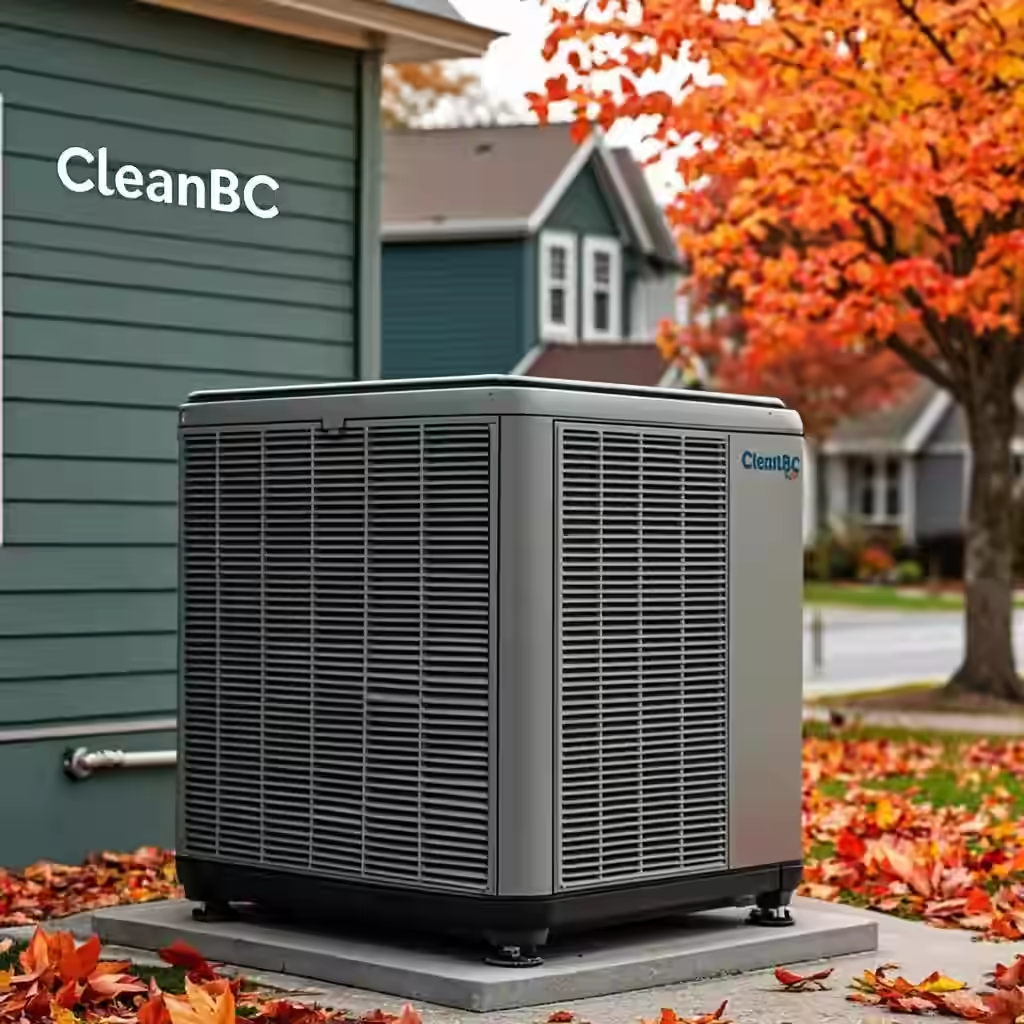
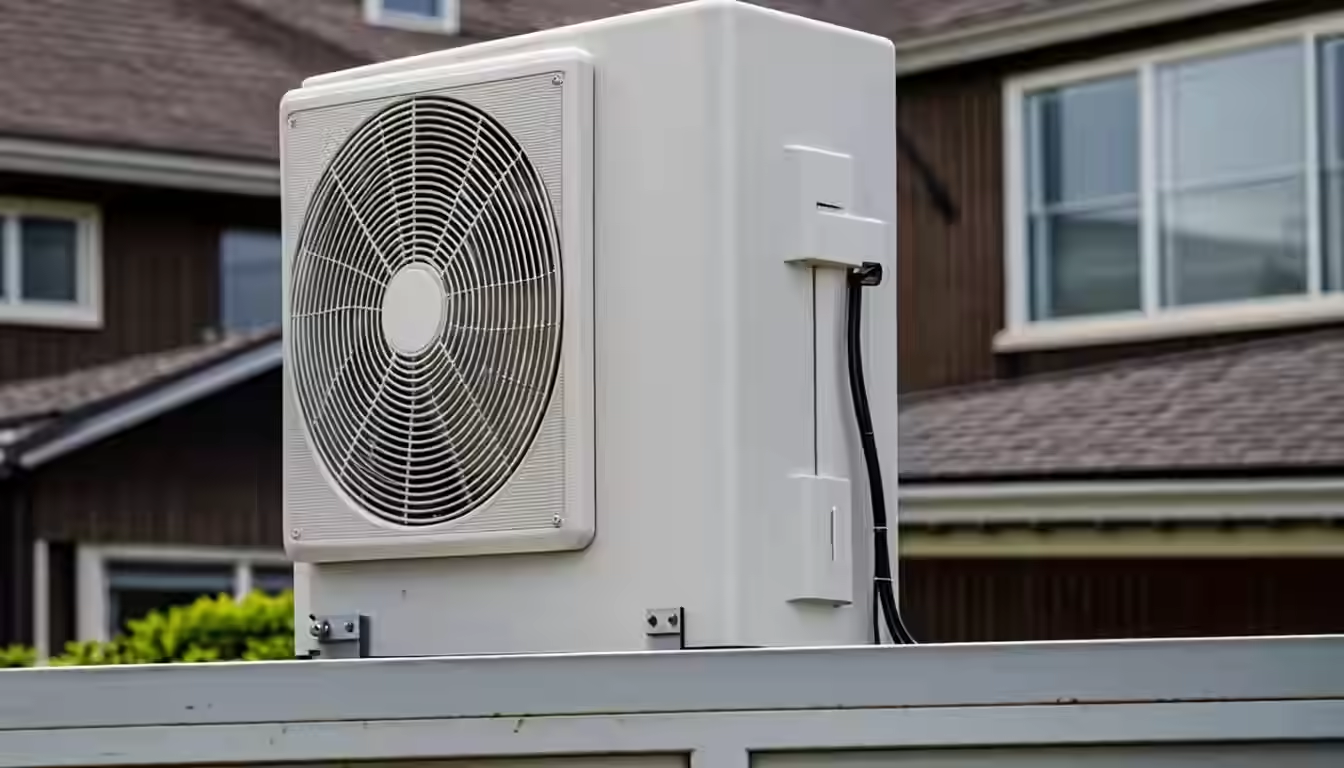
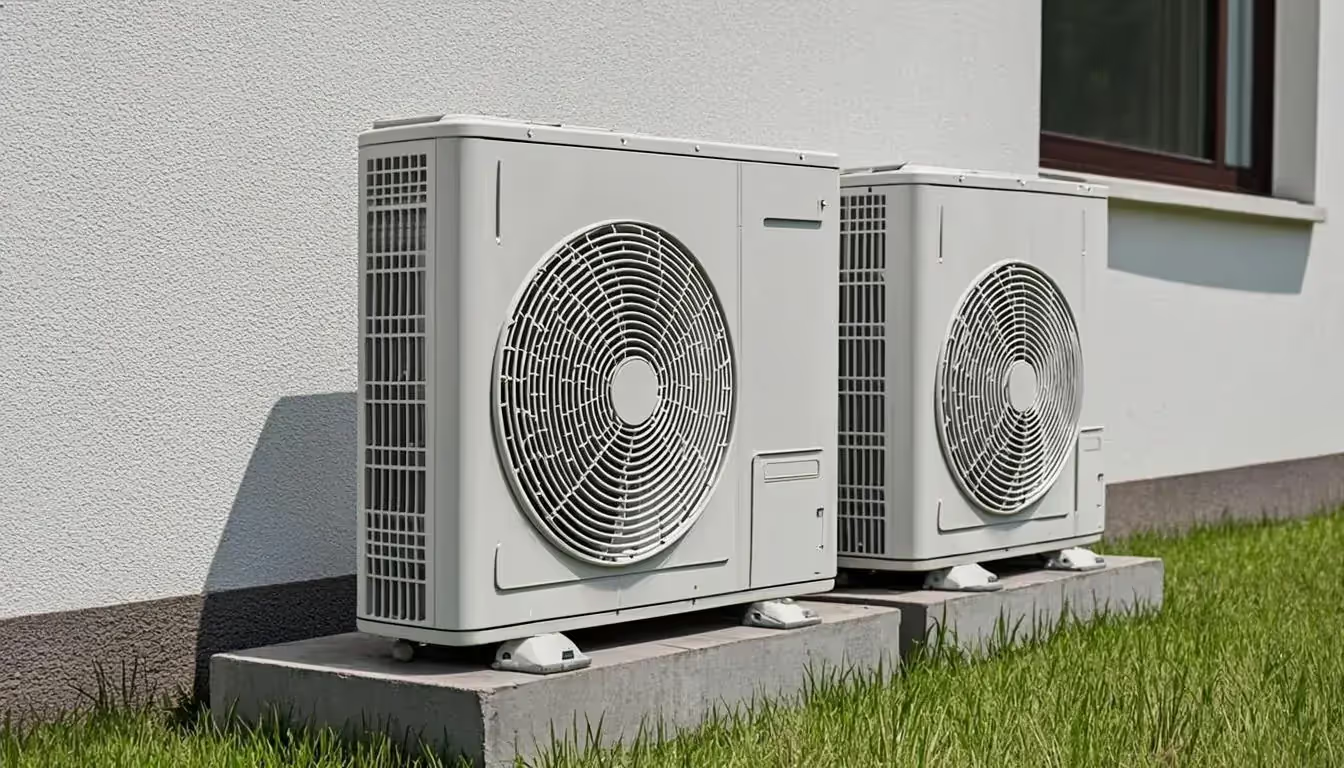
Physically, a dual fuel system is two machines that never meet except in the ductwork. Outdoors sits the heat pump condenser, the same unit that heats and cools millions of homes. Indoors, in place of the air handler a heat-pump-only home would use, sits a gas furnace, and the refrigerant coil mounts above or beside it in the supply path. The furnace’s blower serves both masters: it pushes air across the refrigerant coil when the heat pump runs, and across its own heat exchanger when gas takes over. One distribution system, one set of registers, one filter to change, and two entirely independent ways to make those registers warm.
The coordination lives in the thermostat, and this is the part people find mysterious until it is stated plainly: the thermostat knows the outdoor temperature, knows the programmed crossover point, and knows which fuel to command. Above the crossover, it runs the heat pump, because a COP of 2.5 to 3 in mild weather makes electricity the cheaper fuel by a wide margin. Below the crossover, it stops the heat pump mid-cycle and fires the furnace, because a 96-percent flame is now both the cheaper and the stronger source, and the heat pump’s capacity is sliding at exactly the moment the house’s heat loss is climbing. Changeover is automatic, takes minutes, and announces itself as warmer register air, nothing more dramatic.
Summer inverts nothing: the furnace sits silent while the heat pump runs its refrigeration loop backwards and cools the house through the same coil and blower. And the arrangement carries a resilience bonus no single-fuel system matches: if the heat pump fails in January, the furnace is already sitting there as full capacity backup, and if the gas supply is interrupted, the heat pump still carries everything above its balance point. Two fuels, one air path, and a redundancy that is structural rather than bolted on. That redundancy is also the cost story, which is exactly why the rest of this guide is about whether your house has a use for it.
The Crossover Temperature, Demystified
The crossover point is the outdoor temperature at which the system switches fuels, and it is the single most important setting in a dual fuel install. Set it too high and the furnace runs all season, quietly deleting the efficiency you paid for. Set it too low and the heat pump grinds through deep cold it would rather not, buying efficiency at the cost of capacity and comfort. The right number comes from your house, not a rule of thumb, and it is calculated twice.
The first calculation is capacity: your heat-loss assessment gives the house’s heat demand at each temperature, the heat pump’s extended performance table gives its output at each temperature, and where the lines cross is the balance point. Below the balance point the heat pump cannot keep up no matter what it costs, so the furnace must run, and the crossover should never sit lower than that. The second calculation is economics: with your actual electricity and gas rates, the point where a COP of, say, 2 stops beating a 96-percent flame is the price crossover, and utility rates in this province make that land somewhere in the low single digits Celsius for most homes, moving with every rate change.
| Situation | Typical crossover here | Why |
|---|---|---|
| Coastal home, right-sized cold-climate unit | 0°C to -5°C | Economics lead capacity; deep-cold hours are rare |
| Valley home, outflow exposure | 0°C to 2°C | Deep-cold hours are routine, combustion certainty is bought on purpose |
| Heat pump sized generously | Lower, -5°C to -10°C | Capacity holds longer, crossover is purely a price decision |
| Gas historically cheap | Higher | Price crossover rises with gas rates, drops as they fall |
| Comfort complaint register air | Raise a step | Furnace supply air runs warmer to the hand at any setting |
The setting is software, which means it is revisable: at commissioning we enter the calculated crossover, then adjust after the first winter if the fuel split is not landing where the math predicted, and again whenever your utility rates move meaningfully. A dual fuel system that leaves the factory default crossover untouched is a system whose owner is leaving money on one fuel bill or the other. Ours are set from your numbers, written into the commissioning report, and revisited at tune-ups, which is a boring sentence that describes thousands of dollars.
What Dual Fuel Actually Buys You
Stripped of sales language, the dual fuel premium buys four things, and it is worth knowing them individually because different homeowners value them differently. Efficiency for most hours: the heat pump covers the shoulder seasons and ordinary winter days at COPs a furnace cannot approach, so the gas bill shrinks to the deep-cold weeks and the shoulder-season furnace idle. Cooling for free in the deal: the same refrigeration loop is a full air conditioner, which the furnace-alone path has to buy separately at $3,800 to $6,500.
Resilience on two fuels: heat pump failure in January means the furnace simply runs, full capacity, no emergency call needed for heat, and a gas interruption leaves the heat pump carrying everything but the deepest nights. And rate immunity in both directions: if electricity prices climb, lower the crossover and burn more gas; if gas climbs or carbon pricing bites, raise it and lean on the heat pump, whose COP makes BC Hydro’s rates stretch. That last benefit is the one financial planners like, a hedge you can rebalance twice a year with a thermostat setting, in a province where both fuels have a history of surprising people.
What it does not buy, honestly: it is not cheaper lifetime heating than a right-sized cold-climate heat pump alone in a mild-coast home, because the second machine’s capital and maintenance eat the marginal fuel savings our winters rarely offer. It is not greener than heat pump alone, because the furnace still burns gas in the coldest weeks, though it burns far less than a furnace-only home. Dual fuel is the comfort-and-resilience choice with a solid economic story in the right house, not the maximum-efficiency choice, and any pitch describing it as both at once is describing a house that does not exist.
What It Costs in BC
Dual fuel is quoted as the sum of its halves, so the ranges are the same ones from our heat pump and furnace price books, and the total moves with capacity, efficiency tiers and the site’s electrical and venting work. The heat pump side of a ducted pairing runs $6,500 to $14,000, the furnace side runs $3,800 at the 80-percent tier to $9,000 at the high-efficiency tier, and most complete pairings land between a standalone cold-climate heat pump and a furnace-plus-AC combination in total capital. Where your quote lands inside those ranges is a function of your house, which is why we measure before we price.
| Component | Installed range | Notes |
|---|---|---|
| Heat pump side (ducted, cold-climate) | $6,500-$14,000 | Sized to the heat-loss calc; carries most hours plus all cooling |
| Furnace side (high-efficiency) | $5,500-$9,000 | Two-stage and ECM blowers pair best with heat pump control |
| Furnace side (80-percent tier) | from $3,800 | The budget pairing tier, less common in dual fuel designs |
| Existing healthy furnace | No new cost | The retrofit path: pair it instead of replacing it, Chapter 6 |
| Controls and commissioning | Included in our quotes | Crossover math, lockouts and setup are part of the install, not an add-on |
| Diagnostic / repair visits | $89 credited / $180-$650 | Either fuel; $150 flat after-hours premium posted in advance |
Then the incentive layer, stated carefully because it behaves differently for dual fuel than for full fuel switching. Combined CleanBC Better Homes, BC Hydro, FortisBC and municipal top-ups can reach $16,000 for cold-climate heat pumps in 2026 — we complete the paperwork. The headline tiers reward removing fossil-fuel heating entirely, so a dual fuel pairing with a retained furnace generally draws the lower heat-pump-addition tiers rather than the fuel-switching maximums, and your actual number depends on the equipment, your existing fuel and your utility. We confirm the exact figure in writing before you sign anything, because "up to" is a ceiling, not a promise, and the CleanBC rebates guide decodes the program rules line by line.
Keep the Furnace or Replace Both
For homes with an existing gas furnace, the retrofit decision drives the entire economics of dual fuel, and it runs on the furnace’s age, condition and blower. A furnace under roughly ten years old, healthy, with a variable-speed or at least a decent multi-speed blower, is a strong pairing candidate: the heat-pump side is installed around it, controls are upgraded, and you own dual fuel for the heat pump price alone. The labour of pairing and the labour of full replacement overlap heavily, so paying it twice to scrap a good machine is money burned, and the furnace repair-versus-replace rules apply here exactly as they do in a furnace-only decision.
Furnaces in the ten-to-fifteen-year band are the judgement zone: a well-maintained unit with a good blower can pair and serve five to eight more years, while one with a pending repair, a mediocre blower or a patchy maintenance history usually tips the math toward replacing both at once, matched equipment, one warranty clock, one commissioning, no second disruption. Past fifteen years, pairing is rarely honest, the remaining life is too short to anchor a design around, and the answer is either a matched dual fuel pair or, if the house is coastal and tight, a cold-climate heat pump alone with the furnace retired entirely.
The technical compatibility check, which we run before quoting either path: blower capacity against the heat pump’s airflow requirement, coil fit in the supply plenum, thermostat wiring and control strategy for two-stage fuel coordination, electrical panel headroom for the outdoor unit, and venting condition on the gas side. Nine homes out of ten pass cleanly, and the tenth finds out at the estimate instead of mid-install, which is the entire point of running the check early. Our furnace service crews handle the gas-side assessment on every pairing quote, one company, one warranty, one phone number, which matters more in a two-fuel house than a single-fuel one.
The Control Logic, Decoded
A dual fuel thermostat is running more decisions than a conventional one, and knowing its vocabulary turns you from a passenger into the operator. The crossover, Chapter 3, decides fuel by outdoor temperature. Compressor lockout and furnace lockout are the guardrails: the temperature windows inside which each fuel is allowed to run at all, so the heat pump will not be commanded below its useful range and the furnace will not stage on in October drizzle. Balance and aux logic protect comfort during the changeover minutes, staging one heat off and the other on without a cold gap at the registers.
The settings that matter in daily life: where the crossover sits, which we have covered, and how the system handles setbacks, because a deep overnight setback can trigger a morning furnace burn in a house the heat pump could have recovered gently, quietly defeating the efficiency point. Modern smart thermostats handle this well when configured for the actual equipment, gentle recoveries, heat-pump-first logic, furnace only when genuinely needed, and the configuration is part of commissioning, not a weekend project. Every dual fuel we hand over gets the settings written into the report, the crossover justified by the math, the lockouts stated, so the next technician and the next owner inherit a system with its reasoning attached.
One control myth deserves clearing because it costs people comfort: "the furnace running sometimes means the system is failing" is false. The furnace running is the system succeeding, doing the cold-weather job it was installed to do. What warrants a look is the furnace running in mild weather, the heat pump never running at all, or short-cycling on either fuel, those are crossover or lockout settings drifting, and a tune-up visit resets them against the commissioning report in minutes.
Who Should Not Buy Dual Fuel
The honest half of every dual fuel guide, and the chapter that keeps our reviews at 5.0 stars over 512 of them. These are the households where the right answer is something cheaper, simpler or both.
The tight coastal home
A well-sealed Vancouver or Burnaby house sees too few deep-cold hours to feed a furnace. A cold-climate heat pump alone is the cheaper lifetime choice.
The house without ducts
No usable ductwork, no dual fuel. Multi-zone ductless at $9,500 to $16,000 solves whole-home heating and cooling without the furnace half entirely.
The going-gas-free household
If removing the flame and the CO risk is the point, a dual fuel design rebuilds what you are removing. Heat pump alone is the aligned choice.
The short-tenure owner
Selling in a few years rarely pays back dual fuel’s second machine. Cheap reliable heat plus a cooling story is the listing-ready answer.
The condemned-furnace budget
If the furnace is dead and money is tight, a furnace from $3,800 or a single-zone heat pump at $3,800 to $5,500 solves today without the pairing premium.
The one-room problem
A single cold room does not need two fuels. One ductless head fixes it for a fraction of any whole-home design, dual fuel included.
Five Metro Vancouver Scenarios
The guide compressed into households. Find yours, then verify against Chapters 5 and 6, because numbers beat narratives and your house gets measured either way.
Langley rancher, 8-year-old furnace, wants AC
Textbook retrofit: pair the healthy furnace with a cold-climate heat pump. Valley exposure justifies the backup, cooling arrives, and only half the equipment is new capital.
Kitsilano character home, no furnace at all
Skip dual fuel. A multi-zone ductless or ducted heat pump heats and cools the whole house, and installing a gas line and venting to host a furnace reverses the region’s direction.
Abbotsford family home, furnace at 19 years
Matched dual fuel pair. The furnace is at end-of-life anyway, the valley cold earns combustion backup, and one project buys the whole strategy with rebates applied.
Coquitlam townhouse, shared ducts, tight envelope
Heat pump alone. The envelope and the climate pocket mean the deep-cold hours never arrive often enough to feed a second fuel system.
North Vancouver view home, wind-exposed
Design on the exposure, not the address: outflow wind strips heat from walls, so the heat-loss calc may justify a modest furnace stage where the neighbours’ sheltered homes do not. Measure first.
Valley readers get the pattern: our Langley and Fraser Valley heat pump installs skew dual fuel more than any other part of the region, because the crossover hours actually exist there. Coastal readers get the mirror pattern, and the Vancouver heat pump guide is the deeper dive for that side of the decision.
Design and Install Day, In Order
A dual fuel project is two installs coordinated as one, and the order is not negotiable if the result is to work. This is the sequence our crews run, and the sequence any competent contractor should be able to recite from memory.
Heat-loss assessment and pairing decision
Room-by-room measurement, equipment condition check on the existing furnace, and the keep-versus-replace verdict made on paper before anything is ordered.
Equipment selection and crossover math
Heat pump sized to the heating load at design temperature, furnace matched for airflow and capacity, crossover calculated from your actual utility rates.
Site prep, electrical and coil day
Pad and placement for the outdoor unit, electrical circuit run, refrigerant coil set into the supply path, furnace retrofitted or replaced as the design decided.
Controls, charge and airflow
Thermostat and lockout wiring, refrigerant charged and verified against line length, blower set to the heat pump’s airflow requirement, gas side leak-checked and verified.
Commissioning and the written report
Both fuels run and change over on the bench, crossover and lockouts entered, warranty registrations filed for you, and the commissioning report handed over with the reasoning attached.
Most pairings run one to two days on site, a retrofit on the shorter end and a full matched pair on the longer end. Aftercare is two fuel systems’ worth of attention in one annual visit, heat pump coil, filters, refrigerant and electrical checks, plus the furnace combustion analysis and safety sequence, with the crossover settings re-verified against the commissioning report each year. That tune-up habit is what keeps the design honest, because rates drift and settings should follow.
The One-Page Cheat Sheet
The whole strategy on one card. If a quote contradicts a line here, the quote needs to explain itself, and 604-615-2212 reaches someone who can.
| Question | The answer |
|---|---|
| What is dual fuel? | Heat pump + furnace on one duct system, one thermostat, fuel chosen by temperature |
| Who runs when? | Heat pump above the crossover, furnace below it, cooling all summer by heat pump |
| Crossover here? | 0°C to -5°C coastal, 0°C to 2°C valley, calculated from your house and rates |
| Heat pump side cost? | $6,500-$14,000 ducted, paired with a furnace from $3,800 to $9,000 |
| Pair a young furnace? | Under ~10 years and healthy: usually yes. 15-plus: replace both or skip it |
| Rebates? | Up to $16,000 combined in 2026 on the cold-climate heat pump side, filed by us |
| Skip dual fuel if? | Tight coastal home, no ducts, going gas-free, short tenure, one-room problem |
| Non-negotiable? | Heat-loss calc, calculated crossover, commissioning report with the settings in it |
Frequently Asked Questions
Services From This Guide
Dual fuel design, heat-loss sizing, crossover planning and retrofit assessments across seventeen Metro Vancouver cities and the Fraser Valley.
Heat pump installation
Cold-climate units, ducted and ductless, including dual fuel pairings sized from real heat-loss math.
Furnace install and service
The other half of the pair: honest furnace replacement, $129 tune-ups and repairs from $180 to $650.
Heat pump Langley
Valley-side installs where dual fuel earns its keep most often, with the 2-year workmanship warranty behind them.
24/7 emergency heating repair
No-heat calls on either fuel answered around the clock, average 45-minute response, $150 flat after-hours premium.
Related Guides
The Vancouver Heat Pump Guide
The complete local overview of the heat pump half of the pairing: equipment, costs and sizing logic.
RebatesCleanBC Rebates: The 2026 Guide
The incentive stack behind dual fuel economics, program by program, including how pairing affects eligibility.
HeatingFurnace Repair vs Replace: The Honest Guide
The age-and-condition rules that decide whether your existing furnace is worth pairing or past it.

Red Seal certified, licensed gas fitters (BC-PL-2019-4421), $2M insured and 15-plus years in the field, with more than 12,000 jobs completed across Metro Vancouver since 2010 and a 5.0-star rating across 26 Google reviews. We wrote this guide because dual fuel is the most recommended, least explained system in BC heating: half the homeowners we meet have been told to want it, and almost none have been told what it actually does. This is the explanation we give at the kitchen table, including the part where we talk people out of it. To book instead of DIY, see heat pump repair in Surrey — same-day across the city.
More about our team →Design Your Dual Fuel System
Book a $89 diagnostic or a free replacement estimate with a Red Seal estimator. You get a heat-loss assessment, an honest read on whether your existing furnace is worth pairing, the crossover math run against your actual fuel rates, and a written flat-rate price for the system your house needs. Zero obligation. Zero obligation, same-day quotes on most calls. If you would rather hand this to a pro, our heat pump services pages cover Metro Vancouver.
Heating down right now?
No-heat calls are answered 24/7 with live dispatch and flat after-hours pricing posted in advance. Daytime? The $89 diagnostic is usually same-day in Vancouver, Burnaby and Surrey.
Call 604-615-2212 WhatsApp Us