The Honest Answer Up Front
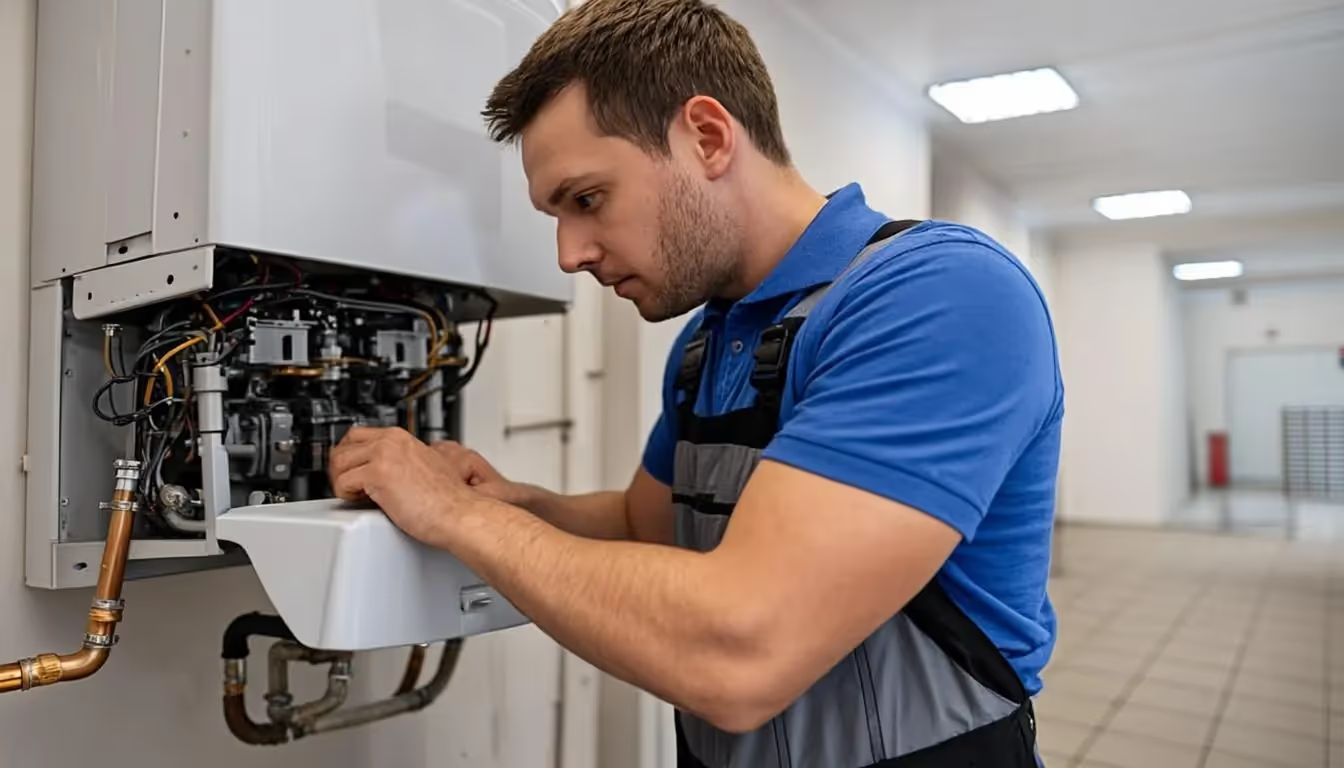
Here is the version we give at the kitchen table after more than 12,000 jobs across Metro Vancouver since 2010. The blower motor is one of the few furnace parts genuinely worth repairing in isolation, because everything else can be healthy while the motor is not. If your furnace is under fifteen years old, has a clean heat exchanger and a decent burner pattern, a blower repair is usually money well spent inside our flat furnace repair range of $180 to $650, with the $89 diagnostic credited toward the work. If the furnace is older, or the blower is the third repair in three winters, the motor is often the part that finally makes the replacement conversation honest.
The second honest point is about motor type, because the type changes both the price and the behaviour. Older furnaces carry PSC motors, simple, rugged, full-speed machines. High-efficiency furnaces from the mid-2000s onward increasingly carry ECM motors with a control module that ramps, adjusts and sips electricity, and they are also the reason a blower replacement costs more when the module, not just the motor, has failed.
Third point, the one that saves people the most money: a large share of the blower motors we are called to replace are not actually dead. Weak airflow is just as often a clogged filter, a frozen AC evaporator coil, a duct blockage or a failing run capacitor, a small replaceable part that takes a PSC motor down with it. The diagnostic exists to separate those before anyone quotes you a motor. If your furnace has stopped moving air entirely, start with our furnace not working troubleshooting guide, then come back here for the motor-specific detail.
A blower motor diagnosis that does not include a measured amp draw and a capacitor test is not a diagnosis. It is a sales call. Insist on the numbers, or call someone who volunteers them.
0 jobs since 2010
Heating, cooling and plumbing jobs across Metro Vancouver and the Fraser Valley by our Red Seal team.
0 diagnostic, credited
Measured amperage, capacitance and control signals, and the fee is credited to any repair you approve.
0 stars, 0 reviews
Verified rating earned one honest diagnostic and one flat-rate quote at a time.
0 workmanship warranty
Every completed blower repair is covered, backed by $2M liability and BC licence BC-PL-2019-4421.
What the Blower Actually Does All Year
The burners make the heat, but the blower delivers the product. It pulls return air from the house, pushes it across the heat exchanger, and drives it back out through the ducts to every register. No blower, no delivery: the burners can light perfectly and the house will still go cold. The furnace will not let the burners run for long without airflow, the high-limit switch shuts the fire down when air stops moving, so a dying blower often shows up first as a furnace that lights, runs a few minutes, and quits.
What most homeowners underestimate is how much the blower works outside of heating season. If you have central air conditioning, the same blower moves all the cooling in summer. If you run the fan continuously for filtration, and plenty of Metro Vancouver households started doing exactly that during wildfire smoke weeks, the motor accumulates thousands of hours that never show up on the gas bill. Continuous fan duty is the biggest driver of blower age, and the strongest argument for the ECM motor type.
The motor drives a blower wheel, a squirrel-cage of carefully balanced fins, and the assembly lives in the path of everything the house returns: dust, pet hair, cooking grease, pollen and smoke particulate. A wheel that has lost its balance from a cake of debris forces the motor to work harder on every rotation, which is why a dirty wheel and a dying motor are so often the same story. The wheel and the motor are serviced together in a proper repair, and the furnace tune-up on our heating page includes the cleaning and the amp measurement that keeps both honest.
| Season | What the blower is doing | What that means for wear |
|---|---|---|
| October to March | Moves heated air, near-continuous duty during outflow cold snaps | Long run hours; the stress test the rest of the year prepares for |
| June to September | Moves cooled air across the AC evaporator coil | Second full season of duty; a frozen coil from low airflow strains the same motor |
| Smoke and pollen weeks | Runs in fan-only mode for filtration, often 24 hours a day | Filters load fast, the wheel loads with them, amperage creeps up |
| Renovation periods | Moves drywall and saw dust through the return path | Heaviest debris load of all; filter and wheel both need attention afterward |
In other words, this is not a winter part. It is an every-day part, and the failure signs in Chapter 4 can appear in July just as easily as in January.
PSC vs ECM, Decoded Without the Jargon
Every residential furnace blower is one of two species. The PSC, permanent split capacitor, motor is the older technology: an induction motor that runs at essentially one speed, relies on a run capacitor to start and keep running, and uses most of its rated electricity at every speed it offers. PSC motors are simple, cheap to keep alive and rugged, but loud at start, coarse in their airflow, and wasteful whenever continuous filtration would be useful.
The ECM, electronically commutated motor, is a DC motor run by its own control module. In constant-torque form it corrects for static pressure changes, so a loading filter does not quietly strangle airflow the way it can on a PSC system. In full variable-speed form, the flagship of high-efficiency furnaces, it ramps gently through an infinite range, runs an actual slow speed for continuous fan, and consumes a fraction of the electricity a PSC burns doing the same job. The trade is electronic complexity: when an ECM fails it is often the module, and module plus motor is a bigger ticket than a PSC swap.
PSC motor
Found in most furnaces up to the mid-2000s and many 80-percent units since. One speed, capacitor-dependent, rugged and inexpensive to service. Ramps with a clunk and uses full power at all times.
Constant-torque ECM
The practical middle child. Maintains torque against rising static pressure, so a loading filter does not strangle airflow. Delivers much of the ECM electricity savings at a friendlier repair price.
Variable-speed ECM
The full modern package: gentle ramps, true low-speed continuous fan, quiet starts and the lowest electricity draw. The motor that makes two-stage and modulating furnaces feel the way they do.
| Question | PSC | ECM (constant-torque or variable) |
|---|---|---|
| Start behaviour | Snaps to full speed, audible whoomp | Ramps, often barely noticed |
| Continuous fan cost | Full-speed electricity, all day, every day | A fraction of the power at low speed, genuinely liveable |
| Airflow as the filter loads | Drops quietly until rooms complain | Compensates by working harder, which is better for comfort and worse for a neglected filter habit |
| Typical failure part | Run capacitor, bearings, windings | The control module as often as the motor itself |
| Repair complexity | Simple, capacitor first | Electronic diagnosis, module programming on some platforms |
| Best fit | Budget-conscious repairs on older sound furnaces | Homes running continuous filtration, two-stage furnaces, anyone paying attention to the BC Hydro bill |
One myth deserves killing: an ECM is not a fragile luxury part. What it does not tolerate is the neglect a PSC shrugs off, a caked blower wheel, a choked filter, months of high static pressure, because the module keeps pushing rated torque into a system that is fighting it. The maintenance habits at the end of this guide are the insurance policy for whichever motor you own.
The Eight Signs of a Failing Blower
Blower failures rarely arrive unannounced. The motor broadcasts its decline through sound, airflow and electricity for weeks or months before it stops outright, and almost every symptom below has a cheaper impostor, which is what the diagnostic sorts out. Treat two or more of these appearing together as your cue to book a visit.
1. Humming, no air
The furnace lights or the fan is commanded on, a hum comes from the cabinet, and the registers stay silent. Classic failed capacitor or motor that cannot start itself.
2. Slow or laboured starts
On a PSC, the blower that needs help spinning, or takes three tries to reach speed, is telling you the capacitor or bearings are done. It will not get better on its own.
3. Squeal or chirp at startup
A brief squeal that fades as the motor warms is a bearing telling you its remaining life. Chirps that keep time with the wheel mean debris or balance, both fixable if caught early.
4. Rumble that follows fan speed
A rumbling or vibration that rises with speed is usually the wheel, a lost balancing weight, a cake of dust, or loose mounting. Left alone it eats the motor bearings next.
5. Weak airflow, clean filter
Air that feels soft from every register with a fresh filter points at the motor, the wheel or the blower control, not the ducts. If it is weak in only one room, look elsewhere first.
6. Burning smell, then nothing
A sharp electrical-burning odour with the fan running means shut the furnace off at the switch and call. That is the smell of windings or a module cooking itself to a hard stop.
7. Tripping breaker or blown fuse
A motor drawing beyond its rated amps will take the circuit out on the coldest day. Reset once at most, and only if the furnace switch was off; a repeat trip is a diagnosis, not a nuisance.
8. Short burner cycles
Burners that light, run minutes and quit with cool air at the registers often mean the limit switch is shutting fire down because the blower is not moving enough air. It mimics ignition trouble, which is why measurement beats guesswork.
The Four Checks You Can Do Yourself
None of these involve opening the cabinet, touching gas components or removing blower panels, all of that belongs to a licensed gas fitter. Together these four checks take fifteen minutes and either clear the cheap impostors or hand us a much sharper starting picture when you call.
The filter and the fan-switch test
Set the thermostat fan to ON. If the blower runs strongly in fan-only mode but airflow collapses when the burners run, the story is not the motor, it is heat-related airflow. If the fan will not run at all, note whether the thermostat clicks and the furnace switch is on before calling.
The breaker and the furnace switch
Check the furnace breaker in the panel and the light-switch-style disconnect beside the unit. A blower that tripped the breaker overnight looks exactly like a dead motor in the morning. If the breaker trips a second time, stop resetting it and book the diagnostic.
The sight and smell pass
With the fan running, stand at a return grille. You are listening for rumble that tracks speed, chirps in time with the wheel, and you are checking for any hot or electrical smell. Note which of the eight signs you can reproduce on demand, because that detail shortens the diagnosis on site.
The register and return walk
Feel air strength at several registers, not one, and confirm nothing is covering the big return grille. Weak air at every register with a clean filter is a motor story. Weak air at one register is a duct or damper story, and no motor repair will fix it.
The boundary is simple: if a check requires removing a panel to see the blower, or the smell is electrical-burning, it stops being DIY. Shut the unit off at the disconnect switch and call. Everything inside the blower compartment, motor, module, capacitor and wheel, is technician territory.
How a Technician Actually Diagnoses It
A proper blower diagnosis is a sixty-minute evidence chain, not a glance and a quote. It starts at the thermostat and ends at the wheel, and every step produces a number or an observation you can ask to see. This is what our technicians run under the $89 diagnostic, which is credited to any repair you approve, the same flat-rate discipline we apply from furnace repairs in Vancouver out through the whole region.
First the control chain: the thermostat command, the control board relay output and the speed tap or module signal, because a motor that never receives a command is not a motor problem. Then the capacitor on PSC motors, measured against its rated microfarads, since a weak capacitor produces nearly every motor symptom at a fraction of the repair price. Then the motor itself: running amperage against the nameplate rating, winding resistance, bearing condition by sound, temperature and shaft play. Finally the wheel and the system it pushes against: debris, balance and the static pressure the ductwork imposes, because a motor failing at high static pressure will fail again on a new motor if nobody names the cause.
The report you should expect names the failing component, the measurements behind the verdict, and the flat price of the fix. On ECM platforms that verdict sometimes points at the module alone, which is a materially different job from a motor-plus-module replacement. The honest version of this visit ends with options and prices, not a single take-it-or-leave-it number.
Repair the Motor or Replace the Furnace?
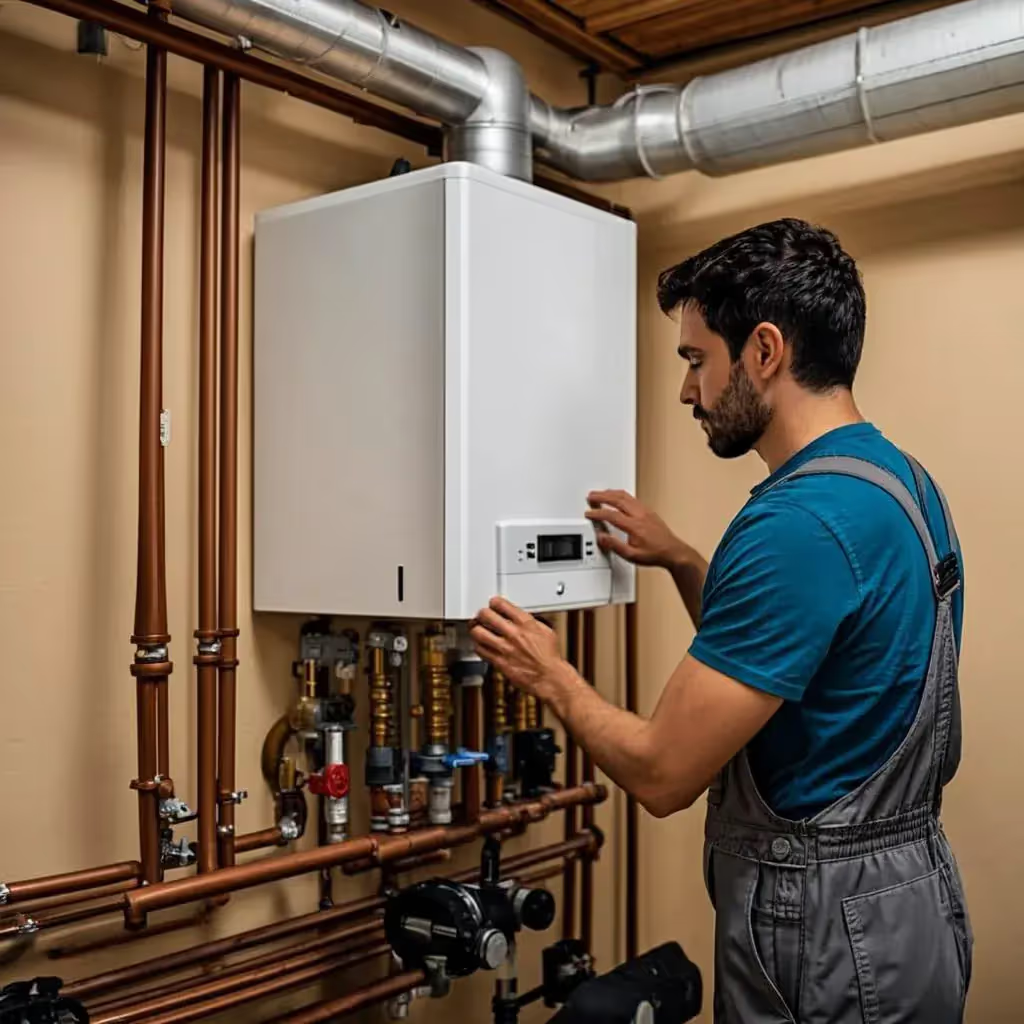
A blower repair is one of the few big-ticket furnace repairs that can be judged on its own, but only after the rest of the unit has been looked at honestly. The decision rides on three variables: the age of the furnace, the health of everything that is not the blower, and your realistic horizon in the home. The table below is the framework we actually use, and the fuller version, with the part-by-part logic, lives in our furnace repair versus replacement guide.
| Situation | The honest call | Why |
|---|---|---|
| Furnace under 10 years, healthy otherwise | Repair the blower | The part is isolated, the rest of the unit has years of life, and the repair carries our 2-year workmanship warranty |
| 10 to 15 years, clean inspection, first major repair | Repair, with eyes open | Still sound economics inside the $180 to $650 repair range, and you keep a unit you know the history of |
| 10 to 15 years, exchanger or burner concerns already flagged | Weight toward replacement | Stacking a blower repair onto a unit with a questionable heat exchanger is paying twice for one outcome |
| 15-plus years, blower is the second or third repair | Replacement conversation | Motor work on a furnace this age buys years you may not get from the parts around it |
| Cracked heat exchanger found alongside the blower fault | Replace the furnace | The exchanger is the conversation-ender; no blower spend makes sense behind it |
| Planning to sell or convert to a heat pump within a few years | Repair, or minimal spend | Replacement payback needs time in the home to make sense |
When replacement wins, the pricing is posted: 80-percent single-stage furnaces start from $3,800 installed, and high-efficiency equipment, where the variable-speed ECM blowers and two-stage firing live, runs $5,500 to $9,000 depending on capacity and features, with financing from 7.99 percent for qualified homeowners. The new furnace resets every clock at once: new exchanger, new controls, a fresh warranty stack, and a blower sized and programmed to the ductwork it actually serves.
The blower is the part most worth repairing and the part most often sold as a replacement trigger. The difference between those two sentences is whether anyone measured the amp draw before the quote.
What Blower Work Actually Costs in BC
Every price below is flat-rate and posted before work begins. The diagnostic is $89 and credits into any approved repair, common furnace repairs including blower and capacitor work run $180 to $650, and the $129 annual tune-up includes the blower amp draw and wheel cleaning that keeps the next motor alive longer. If the failure lands outside business hours, the after-hours premium is a flat $150, never a mystery multiplier.
| Service | Price | What you get |
|---|---|---|
| Diagnostic visit | $89, credited to repair | Control chain, capacitor, amp draw, wheel and static pressure, with the verdict and numbers explained |
| Blower and capacitor repairs | $180 - $650 | Flat-rate band for common furnace repairs; capacitor work sits at the simple end, ECM motor-and-module work at the top |
| Annual tune-up | $129 | Fifteen-point service including blower wheel cleaning and amp measurement, combustion analysis and written report |
| After-hours response | $150 flat premium | 24/7 dispatch with the premium posted in advance, average 45-minute response |
| 80-percent furnace, installed | from $3,800 | Full replacement when repair stops making sense, Technical Safety BC permitted, warranty registered |
| High-efficiency furnace, installed | $5,500 - $9,000 | Two-stage and variable-speed equipment with the ECM blowers this guide keeps promising you |
Two honesty notes on that table. First, an ECM module failure is the reason a blower ticket can sit at the top of the repair range while a PSC capacitor rescue sits at the bottom, and any company quoting a motor without naming which one you have is quoting blind. Second, when a blower estimate arrives higher than the range above, it is either not a blower job or it is being sold as one, and a second opinion is cheap. We run those diagnostics from furnace repair calls in Surrey and the Fraser Valley through the city core, with the same flat-rate book everywhere.
Why Metro Vancouver Is Hard on Blowers, and What Helps
Blower mortality in this region has a local signature. Humidity is the first factor: basements and crawlspaces in older Vancouver, New Westminster and North Vancouver homes keep the air around the motor damp for months, and damp air is corrosive to windings and unkind to bearings. Dust is the second: wildfire smoke weeks, cedar and alder pollen seasons, and the region's endless renovation activity all load the filter and then the wheel, and every gram of cake on that wheel is imbalance the motor pays for on every rotation.
The third factor is the one homeowners choose: continuous fan mode, which became popular here precisely because it works, running the blower slowly through a good filter is one of the best smoke-response habits a household can adopt. The motor hours simply need to be spent on the right motor: an ECM can run fan-only filtration around the clock for a fraction of the electricity a PSC burns, which turns a smoke-week necessity into a year-round habit instead of a wear event.
The filter habit
Monthly looks, changes on condition. A loaded filter raises static pressure, and static pressure is the silent tax every blower pays until it cannot.
The annual $129 tune-up
Blower wheel cleaning and amp draw, recorded year over year. Rising amperage is the motor asking for help while help is still cheap.
Keep the return grille clear
Furniture and storage over the big return grille starve the blower exactly like a clogged filter does. Walk it once a season.
Dehumidify the mechanical room
A dry furnace room extends motor life in older homes. If the basement smells damp, that is the blower's enemy, and a dehumidifier is cheaper than a motor.
Match fan duty to motor type
Continuous fan on a PSC is expensive wear; continuous fan on an ECM is cheap filtration. Know which motor you are asking to work all day.
Post-smoke and post-reno service
After thick smoke weeks or dusty renovations, change the filter immediately and consider a wheel inspection. Debris is cumulative.
The One-Page Cheat Sheet
Everything above compresses to this. Pin it beside the furnace, and when in doubt, the answer is measurement before money.
| Symptom | Likely first suspect | Your move |
|---|---|---|
| Hum, no air, fan ON does nothing | Capacitor or motor start circuit | Shut off, check breaker once, book the $89 diagnostic |
| Weak air everywhere, clean filter | Motor, wheel or static pressure | Diagnostic with amp draw and static pressure measured |
| Squeal at startup, fades | Bearings | Book service soon; it is announcing, not complaining |
| Rumble tracking fan speed | Blower wheel balance or debris | Wheel cleaning and inspection at the $129 tune-up |
| Breaker trips with fan running | Motor drawing over rated amps | Stop resetting, book diagnostic, mention the trips |
| Burning smell with fan running | Windings or module | Furnace switch off now, call the same day |
| Furnace under 10, otherwise healthy | Repair, inside $180 - $650 | 2-year workmanship warranty, diagnostic credited |
| 15-plus years, second big repair | Replacement talk | From $3,800 for 80-percent, $5,500 - $9,000 high-efficiency |
Get the Blower Measured Before the Motor Is Condemned
A $89 diagnostic, amperage and capacitance on the record, and a flat written price for the repair or the replacement. Or call 604-615-2212, 24 hours a day.
Frequently Asked Questions
Services From This Guide
Blower diagnostics, flat-rate motor repairs and honest replacement opinions across Metro Vancouver, seventeen cities, seven days a week.
Furnace repair and diagnostics
The $89 diagnostic that measures your blower instead of guessing at it, credited toward any repair, across seventeen Metro Vancouver cities.
Furnace repair Vancouver
Blower humming, airflow gone or fan refusing to start? Same-day diagnostics in the city, flat-rate repairs and a 2-year workmanship warranty.
Furnace repair Surrey
Surrey to Langley and Cloverdale: measured blower diagnostics, ECM and PSC motor replacements, tune-ups that track amp draw year over year.
24/7 emergency furnace repair
Seized blower on the coldest night of the year? Answered around the clock with the $150 flat after-hours premium posted up front.
Related Guides
Furnace Repair vs Replace: The Honest Guide
The five golden rules behind every repair-or-replace call we make, including where blower work sits in the decision.
TroubleshootingFurnace Not Working in Vancouver? 12 Checks First
The no-heat triage guide: thermostat, breaker, filter, switch and the airflow checks that isolate a blower problem fast.
SeasonalVancouver Winter Prep: The Complete Checklist
Blower health is one pillar of a ready home: filters, vents, humidity and the outflow-week plan in one place.

Red Seal certified, licensed gas fitters (BC-PL-2019-4421), $2M insured and 15-plus years in the field, with more than 12,000 jobs completed across Metro Vancouver since 2010 and a 5.0-star rating across 26 Google reviews. We wrote this guide because the blower is the single most misdiagnosed part in a furnace: half the motors we replace were blamed by someone who never measured amperage, and half the motors we save were condemned by someone who never tested the capacitor. To book instead of DIY, see furnace repair in Delta — same-day across the city.
More about our team →Get a Straight Answer on Your Blower
Book a $89 diagnostic or a free replacement estimate with a Red Seal estimator. You get a measured diagnosis, not a guess: amperage, capacitance, control-board signals and a flat written price for either the repair or the replacement. The $89 diagnostic is credited to any repair you approve. Zero obligation, same-day quotes on most calls. What you actually pay is broken down in Furnace Inducer Motor Guide: What It Does, What It Costs. If you would rather hand this to a pro, our heating & furnace services pages cover Metro Vancouver.
Blower already acting up?
Weak airflow, humming or a blower that will not start is answered 24/7 with live dispatch and flat after-hours pricing posted in advance. Daytime? The $89 diagnostic is usually same-day in Vancouver, Burnaby and Surrey.
Call 604-615-2212 WhatsApp Us