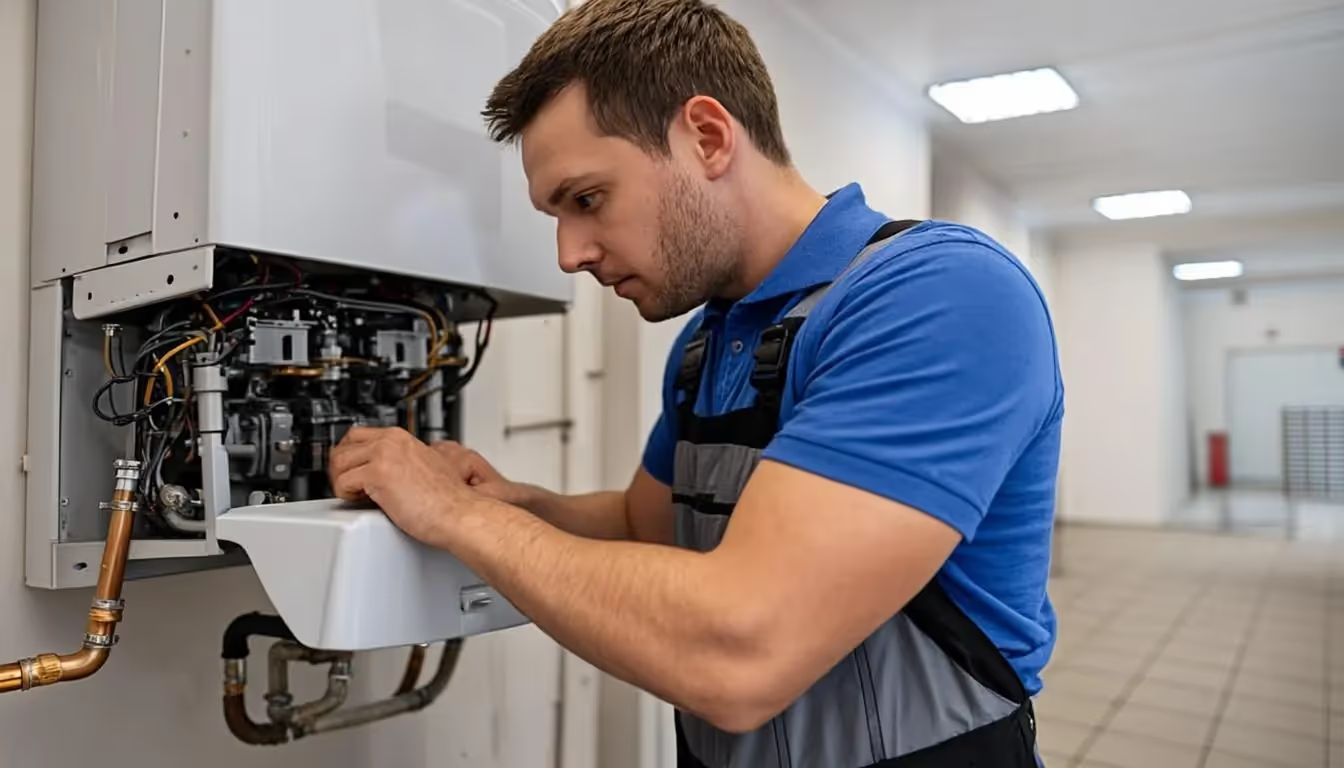
The Honest Answer Up Front
Here is the short version we give at the kitchen table after 12,000-plus jobs across Metro Vancouver since 2010: your furnace needs one professional tune-up a year at $129 flat, a filter changed on a schedule you can actually keep, and six walk-around checks that take you less than an hour across the whole winter. That is it. There is no magic chemical, no quarterly deep-clean, no subscription gadget. Everything else sold as "furnace maintenance" in this province is either a version of those fifteen points or an upsell.
What that modest routine buys you is bigger than it sounds. A tuned furnace is a safe furnace: the combustion analysis and heat exchanger inspection are the only checks that catch carbon monoxide risks before symptoms appear in people instead of instruments. It is a reliable furnace: the parts that fail in January, flame sensors, igniters, condensate switches and blower motors, are the exact parts a tune-up cleans, measures and load-tests in October. And it is a cheaper furnace: a unit that runs clean stretches its realistic lifespan from about 15 years toward 20-plus in this climate, which pushes the $3,800 to $9,000 replacement decision years down the road.
This guide walks all fifteen points, with the honest split between the six you can do yourself and the nine that legally and practically belong to a licensed gas fitter. It ends with the maintenance calendar we actually recommend to Vancouver, Surrey, Burnaby and Fraser Valley customers, and the cost math that makes the $129 decision easy. If your furnace has already stopped heating, start with our furnace not working troubleshooting guide instead, then come back here.
Any company selling you furnace maintenance without a combustion analyser in the van is selling you a vacuum job. The two most important points, flue gas analysis and heat exchanger inspection, are invisible without instruments, and they are precisely the ones that protect your family.
0 jobs since 2010
Heating, cooling and plumbing jobs completed by our Red Seal team across Metro Vancouver and the Fraser Valley.
0 flat tune-up
The real price of the nine professional points, flat-rate and posted in advance. No membership, no tiered packages.
0 star rated
From 26 verified Google reviews, earned one tune-up and one honest quote at a time.
0 in the field
Since 2010 under BC licence BC-PL-2019-4421, with $2M liability coverage and a 2-year workmanship warranty.
What a BC Winter Actually Does to a Furnace
Metro Vancouver is the gentlest furnace climate in Canada, and that shapes everything about maintenance here. The heating season runs October through March, with long stretches of 5 to 10°C drizzle where the furnace cycles lightly. But the coast also gets outflow events: arctic air funnelling down the Fraser Canyon that drop Vancouver to -5°C, the valley floor to -10°C and beyond, and hold it there for a week. A furnace that idled through November can suddenly run near-continuously in January. Maintenance exists to make sure it can.
The second local factor is moisture. Coastal air, damp basements and crawlspaces in older East Vancouver, New Westminster and North Vancouver homes attack exactly the parts that fail here: blower motor bearings, integrated control boards and igniters. Our repair mix skews heavily toward those electrical and ignition parts, while Prairie companies see more heat exchanger and burner wear. That is why points like blower amp draw and board inspection carry more weight in a Vancouver tune-up than a Calgary one.
The third factor is dust events. August wildfire smoke weeks load filters with fine particulate in days, spring pollen from cedar and alder coats them again, and renovation dust from the city's endless laneway and suite construction finishes the job. A filter that would honestly last ninety days in a quiet home can be done in thirty after a smoke event. If you want the filter side of the equation in depth, that pattern is worth understanding before you pick a MERV rating, because Metro Vancouver filter habits need to flex with the season rather than follow the national three-month rule blindly.
Finally, the housing stock itself. Our region is full of 1950s to 1990s homes where a furnace sits in a humid basement for decades, and mid-efficiency 80-percent units from the 1990s still soldier on across Burnaby, Surrey and Coquitlam alongside high-efficiency condensing furnaces from the 2000s and 2010s. The fifteen points below cover both generations, and we flag where the answer differs by type.
The 15 Points at a Glance
Six points are homeowner territory and nine need a licensed gas fitter. The order matters: the first six cost you minutes a month, and the nine professional points are what a $129 tune-up with our furnace maintenance service covers in about ninety minutes on site.
| Point | Who | Why it matters in a BC winter |
|---|---|---|
| 1. Filter check and change | You | The single highest-impact habit; a loaded filter strains the blower and chokes airflow across the heat exchanger |
| 2. Thermostat heat test | You | Confirms the whole ignition chain works while failures are still cheap and the weather still forgiving |
| 3. Supply and return vent walk | You | Blocked returns starve the system; closed supply registers unbalance rooms and disguise real problems |
| 4. Burner flame sight check | You | Steady blue flame is normal; yellow, rolling or lifting flame means call a gas fitter, not a handyman |
| 5. Condensate drain check | You | High-efficiency furnaces drip litres a day; a clog trips the float switch and kills heat mid-cold-snap |
| 6. CO detector test and expiry | You | The last line of defence for the whole home, and the one every fuel-burning appliance shares |
| 7. Combustion analysis | Pro | Measures CO in flue gas and efficiency; the instrument test that proves the furnace is burning safe and complete |
| 8. Heat exchanger inspection | Pro | Pressure and visual checks for cracks; the carbon monoxide line that ends furnace debates instantly |
| 9. Burner cleaning and adjustment | Pro | Dusty burners burn unevenly, rumble and stress the exchanger they wrap around |
| 10. Flame sensor clean and microamp test | Pro | The most common January no-heat cause in Metro Vancouver, prevented with five minutes of steel wool |
| 11. Blower motor amp draw and wheel clean | Pro | Rising amperage flags bearings before they seize; a caked wheel wastes electricity every single cycle |
| 12. Gas pressure verification | Pro | Wrong manifold pressure makes soot, noise and CO; correct pressure is verified against the rating plate |
| 13. Inducer and venting integrity | Pro | Corroded B-vent and blocked wall caps, a coastal specialty thanks to snow, nests and salt air |
| 14. Limit and safety switch testing | Pro | High-limit and pressure switches protect against fire and spillage; both get operated, not just looked at |
| 15. Judgement call: the written report | Pro | Measurements become a record year over year, which is how a trend gets caught before a failure does |
Points 1 through 6 are the homeowner half, and Chapter 4 gives you each one as a small procedure. Points 7 through 15 require a gas licence, combustion instruments or opening the sealed cabinet and gas train, and Chapter 5 explains what our technicians actually do for each, so you know what you are paying for and what a report should show.
The Six You Can Do Yourself This Weekend
None of these involve gas, combustion or the cabinet interior beyond a filter slot. Together they take under an hour a year, catch maybe half of all no-heat causes early, and cost nothing but attention. If any of them turns up something wrong, that is your cue to call a licensed gas fitter rather than push further.
The filter: look monthly, change on schedule
Hold the filter up to a light monthly; when you cannot see light clearly through the media, it is done. Write the change date on the new filter's frame with a marker, and after a wildfire smoke week or a renovation, treat it as done regardless of the calendar. The airflow arrow on the frame points toward the furnace, never the wall side.
The thermostat heat test
One evening in early October, set the thermostat two degrees above room temperature and watch a full cycle: the inducer fan starts, the burner lights, the main blower follows within about half a minute, and the burner cuts before the blower stops. Do this before you need heat and you learn what normal sounds like from your own unit.
The vent walk
Walk the house checking that furniture, rugs and stored boxes are not covering supply registers or, worse, the big return grille, usually in a hallway ceiling or the wall near the thermostat. Closed-off rooms are a common cause of the "one cold bedroom" complaint, and blocked returns can actually starve the furnace in a way that mimics equipment failure.
The flame sight check
Most cabinets have a small viewing window. During a call for heat the flame should sit steady and blue across every burner port. Yellow-tipping, a flame that rolls or lifts, or a burner that lights out of order is a call-us-now observation, not a DIY adjustment: those symptoms point at gas pressure, venting or air mixing, all licensed-fitter territory.
The condensate check
High-efficiency furnaces make about a litre of condensate per hour of hard run. Find the clear drain tube or floor drain tray near the unit and confirm water is moving during a long cycle, and that the area around the furnace is dry. Standing water or a full trap means the drain is clogging, and the float switch that shuts the furnace down to protect itself is close behind.
The CO detector test and expiry
Press the test button monthly, vacuum dust off the vents, and read the manufacture or expiry date stamped on the back. Sealed-unit detectors live about ten years and die quietly at the end. Every sleeping area and every floor, including the basement, should have one, because a furnace problem announces itself to people as flu-like symptoms long before it announces itself as smoke or noise.
The Nine That Belong to a Licensed Gas Fitter
In BC, work on gas appliances legally requires a licensed gas fitter, and for good reason: the hazards, carbon monoxide, gas leaks and fire, are exactly the ones homeowners cannot detect with their senses. Our technicians are Red Seal certified working under BC licence BC-PL-2019-4421, carrying $2M liability coverage, and every completed repair carries a 2-year workmanship warranty. Here is what each professional point actually involves, so a tune-up report can never be a mystery document.
7. Combustion analysis
A calibrated analyser samples flue gas for CO, oxygen and efficiency. The numbers go in your report and prove the furnace is burning complete and venting properly, the single most safety-relevant test of the year.
8. Heat exchanger inspection
Visual inspection through the burner ports and where design allows, plus burner-pattern and flame behaviour reading. Suspect findings lead to further testing before any verdict, because a cracked exchanger is a red-tag event with no partial credit.
9. Burner cleaning and adjustment
Removed, brushed and re-seated burners burn evenly and quietly. Adjustments correct ignition carry-over between ports, the slow domino effect that eventually lights the wrong burner at the wrong moment.
10. Flame sensor clean and test
The rod gets a gentle polish and a measured microamp reading in the report. This is the part whose dirt causes the classic lights-then-dies lockout, Metro Vancouver's most common winter no-heat call.
11. Blower amp draw and wheel clean
Ammeter readings catch bearings years before seizure, and a cleaned blower wheel moves rated air with less power. On a humid-basement furnace this single point prevents the most expensive common repair we do.
12. Gas pressure verification
Manifold and supply pressures are checked against the rating plate. Wrong pressure makes soot, noise and carbon monoxide, and it is one of the few faults that quietly damages a heat exchanger season after season.
13. Inducer and venting integrity
The draft inducer is checked for noise and speed, and the venting inspected for corrosion, slope and blockage. Coastal snow caps and summer wasp nests in wall terminations make this point a BC specialty, not a formality.
14. Limit and safety switch testing
High-limit, pressure and rollout switches are operated and verified, not just visually inspected. These switches are the reason furnace failures are usually inconvenient rather than dangerous, but only if they actually work.
15. The written report
Every measurement lands in a report you keep. Year-over-year records are how real trends get caught, rising amperage, drifting combustion numbers, and how you get honesty instead of vibes at replacement time.
One honest boundary note: no inspection can certify a heat exchanger as perfectly sound, on any furnace, by any company. What a careful inspection does is raise or lower confidence with evidence. Any contractor who guarantees a clean exchanger on an older unit, especially by phone, is selling certainty that does not exist. The full picture of what a suspect finding means, including the red-tag process and the repair-versus-replace math that follows it, is in our furnace repair versus replacement guide.
What a $129 Tune-Up Includes (and What It Does Not)
Our tune-up is $129 flat, and it covers professional points 7 through 15 of this checklist, plus the homeowner points verified so you get a clean baseline. It takes about ninety minutes. Included in that price: the combustion analysis, exchanger inspection, burner service, flame sensor clean and microamp reading, blower wheel clean and amp draw, gas pressure verification, venting inspection, safety switch testing, and the written report with all measurements.
What is not included, honestly: parts. If the tune-up finds a failing igniter or a gum-up that needs a replacement component, you get a flat-rate quote before any repair happens, and the quote stands whether you book it on the spot or next week. Repairs across Metro Vancouver run $180 to $650 for the common ignition, sensor and safety parts, and if you do proceed with a repair after a diagnostic visit, the $89 diagnostic is credited into that repair. Every completed repair carries our 2-year workmanship warranty.
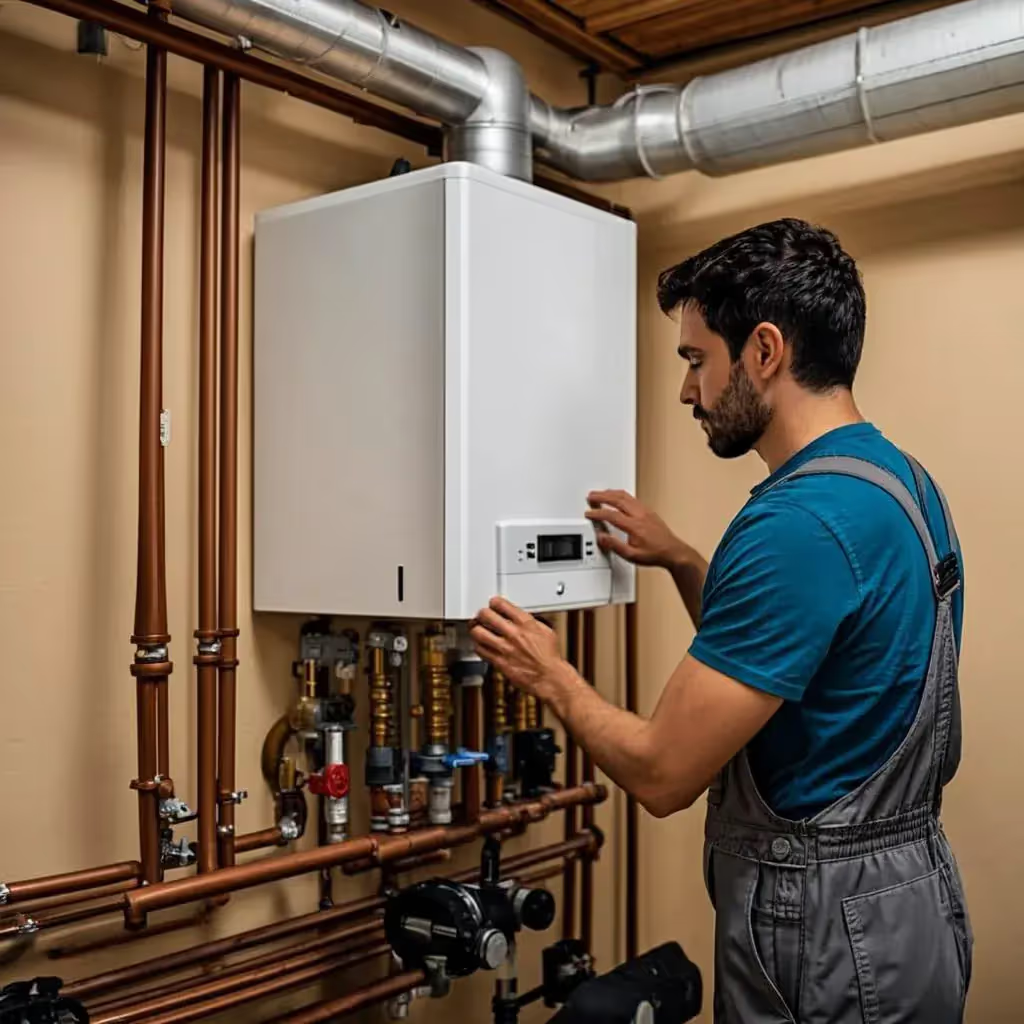
A note on tune-up inflation: some companies sell tiered maintenance, bronze, silver, gold, with the real safety checks locked in the top tier. Combustion analysis is not a premium feature. If the discount tune-up special you are comparing does not include an analyser reading and an exchanger inspection in writing, you are comparing a housekeeping visit to a safety inspection, and the housekeeping visit is the expensive one.
The Cost Math: $129 a Year Versus Neglect
Maintenance pricing is only honest against the alternative, so here is the alternative, drawn from our own January dispatch log. These are the failures that skip-maintenance furnaces actually suffer in Metro Vancouver, and what fixing them costs within our flat-rate repair range of $180 to $650 unless the failure points at replacement instead.
| Skipped point | What it becomes in January | What it costs |
|---|---|---|
| Flame sensor cleaning (10) | Furnace lights, runs seconds, shuts off, locks out on the coldest night | Ignition lockout repair, at the low end of the common repair range; the clean itself is free at the $129 tune-up |
| Filter habit (1) | Overheating, high-limit trips, blower strain, longer recoveries | $180 - $650 blower and limit repairs, higher bills until then |
| Condensate check (5) | Float switch trips mid-outflow; no heat with a dry, healthy furnace | Drain clearing inside the common repair range, often after an $89 diagnostic |
| Burner service (9) and gas pressure (12) | Noisy, sooty, uneven combustion quietly aging the exchanger | $180 - $650 today, exchanger risk compounding behind it |
| Combustion analysis and exchanger inspection (7, 8) | The fault nobody senses until people feel sick, then a red tag | $3,800+ from for an 80-percent replacement, $5,500 - $9,000 high-efficiency |
| Any of it, discovered at 11 p.m. | After-hours service call on the worst night of the winter | $150 flat after-hours premium on top of the repair |
Read that table as an insurance policy with a $129 premium. The repairs are not hypothetical, they are the ordinary consequences of the ordinary skips, and they arrive statistically between late December and February when arctic outflow holds the coast below -5°C for a week. If your furnace is already in the failure column, our furnace repair service in Vancouver runs the $89 diagnostic seven days a week, and our furnace repair crews in Surrey cover the Fraser Valley side of the region with the same flat-rate book.
The other half of the math is life extension. A furnace that runs clean in this climate reaches 20-plus years routinely; a neglected one starts collecting avoidable repairs at year twelve and gets replaced at fifteen angry. Two or three extra years of service on equipment that costs $3,800 to $9,000 to replace is worth more than every tune-up you will ever buy, and that is before counting the avoided emergency premiums and the gas you do not waste pushing air through a dirty filter and a caked blower wheel.
The Metro Vancouver Maintenance Calendar
Maintenance advice that ignores the coast's calendar is generic advice. This is the schedule we give customers from Vancouver to Abbotsford, tuned to outflow timing, smoke seasons and the October booking reality.
| When | What | Why now |
|---|---|---|
| September | Filter check, thermostat heat test, book the October tune-up | Learn what your unit sounds like before you depend on it; appointment slots are still wide open |
| October | The $129 tune-up, all fifteen points | Furnaces wake up for the season; catch the weak ones before the first cold snap creates the rush |
| November - December | Monthly filter looks, condensate check, CO detector test | Steady heating begins; the first long run cycles expose weak igniters and clogged drains |
| January - February | Filter vigilance during outflow weeks, watch the flame window | Near-continuous running in -5 to -15°C outflow is the stress test your tune-up prepared for |
| March | Final filter change, note any noises or quirks from the winter | End-of-season notes give your next tune-up a head start and catch slow declines early |
| Summer | Glance at the exterior vent termination for nests and corrosion | Wasps and birds move in during the off-season; coastal salt air works on vent caps year-round |
| August (smoke weeks) | Swap the filter right after thick smoke clears, whatever the calendar says | Wildfire smoke particulate loads a filter in days; running the fan for filtration finishes the job fast |
The October line matters more every year, because the region's heating trade now runs the same crunch every season: available tune-up slots thin out through late October, and by the first sustained cold snap the calendar belongs to breakdowns. The same calendar logic drives our neighbours' advice too, the whole-home version of this rhythm, gutters, hose bibs, pipes and windows included, lives in our Vancouver winter prep checklist, and it is worth reading once before the outflow arrives.
The One-Page Cheat Sheet
Fifteen points compress to this. Pin it beside the furnace, and when two tasks compete for the same weekend, the safety-adjacent one wins.
| Task | Frequency | Who |
|---|---|---|
| Filter look | Monthly, and after any smoke or renovation event | You |
| Filter change | On condition, guided by the light test | You |
| Full heat-cycle test | Once in early October | You |
| Vent and return walk | October and mid-winter | You |
| Flame window glance | A few times each winter | You |
| Condensate and dry-floor check | During the first long cold snap | You |
| CO detector test and expiry | Monthly test, expiry on the back cover | You |
| The 9-point professional tune-up | Every October, $129 flat | Us |
| Read the report, keep the report | Every year, five minutes | You |
Book the $129 Tune-Up Before the Outflow Does
Fifteen points, ninety minutes, one written report, and a furnace that meets January ready. Or call 604-615-2212 and we will book you in minutes, 24 hours a day.
Frequently Asked Questions
Services From This Guide
Tune-ups, 15-point safety checks and honest furnace repairs across Metro Vancouver, seventeen cities, seven days a week.
Furnace tune-up and maintenance
The $129 tune-up behind this checklist: 15 points, written report, flat-rate honesty across seventeen Metro Vancouver cities.
Furnace repair Vancouver
A skipped tune-up already cost you heat? The $89 diagnostic is credited toward any repair, flat-rate priced before work starts.
Furnace repair Surrey
Tune-ups and repairs from Surrey to Langley and Cloverdale, backed by a 2-year workmanship warranty on completed work.
24/7 emergency furnace repair
No-heat lockouts answered around the clock, average 45-minute response, with the $150 flat after-hours premium posted up front.
Related Guides
Furnace Repair vs Replace: The Honest Guide
The five golden rules and part-by-part repair costs behind every recommendation a tune-up report can produce.
TroubleshootingFurnace Not Working in Vancouver? 12 Checks First
The no-heat triage guide: what to check in ten minutes before you pay anyone, from thermostat to breaker to condensate switch.
SeasonalVancouver Winter Prep: The Complete Checklist
Furnace maintenance is one pillar: pipes, gutters, windows and the outflow-week plan that protects the whole house.

Red Seal certified, licensed gas fitters (BC-PL-2019-4421), $2M insured and 15-plus years in the field, with more than 12,000 jobs completed across Metro Vancouver since 2010 and a 5.0-star rating across 26 Google reviews. We wrote this guide because the best furnace repair is the one you never need: fifteen points of attention, a filter habit, and an October booking habit keep the January emergency call away from your house. To book instead of DIY, see furnace repair in Langley — same-day across the city.
More about our team →Book Your $129 Furnace Tune-Up
Book a $89 diagnostic or a free replacement estimate with a Red Seal estimator. You get the full 15-point safety check, a written tune-up report with photos of anything we find, and a flat-rate quote before any repair is touched. Zero obligation, same-day service on most calls. Zero obligation, same-day quotes on most calls. If you would rather hand this to a pro, our heating & furnace services pages cover Metro Vancouver.
Furnace down right now?
No-heat calls are answered 24/7 with live dispatch and flat after-hours pricing posted in advance. Daytime? The $89 diagnostic is usually same-day in Vancouver, Burnaby and Surrey.
Call 604-615-2212 WhatsApp Us