The Honest Answer Up Front
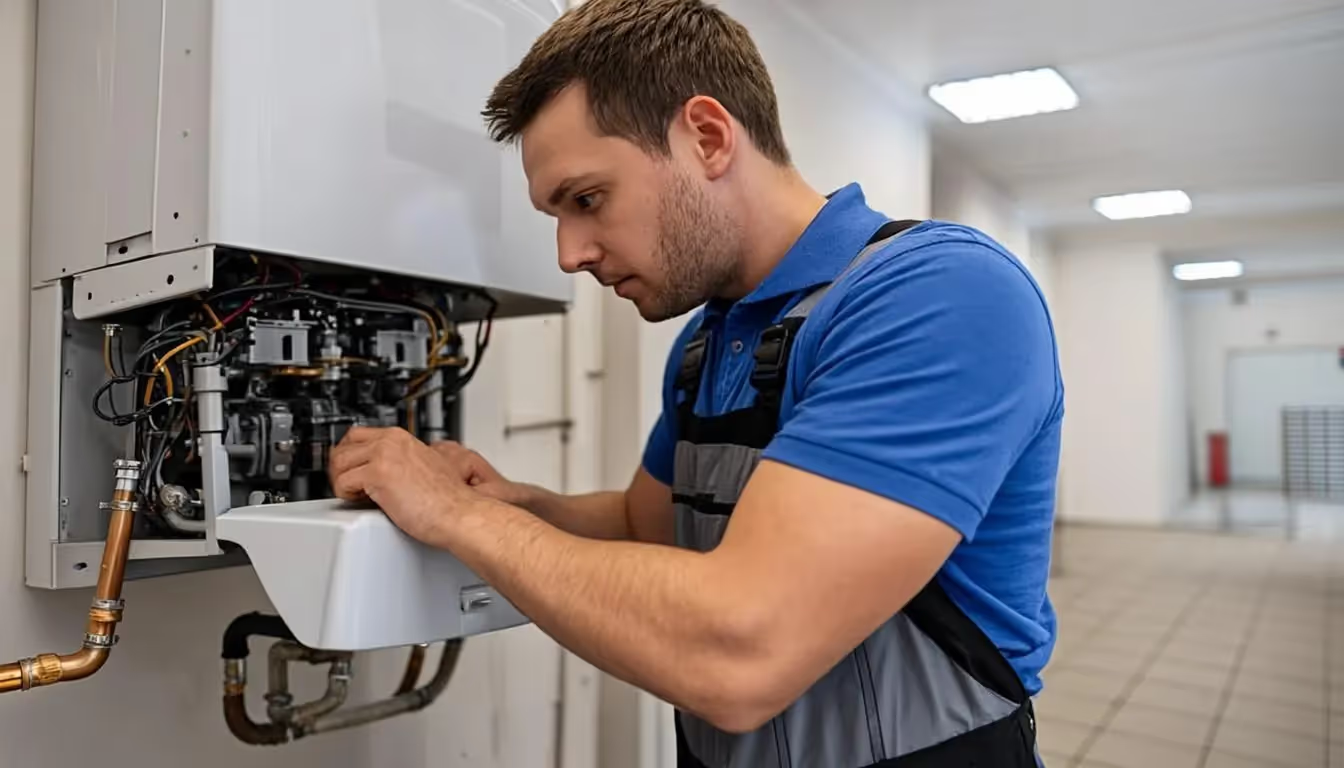
A furnace tune-up in BC costs $129 per visit with us, flat, and that number buys a documented six-point service: combustion analysis, heat exchanger inspection, static pressure and temperature-rise verification, blower cleaning, and control calibration. It does not buy repairs, parts or a miracle; anything the tune-up uncovers is quoted flat-rate before any work starts. What it does buy is the strongest cheap insurance in home heating: a burner confirmed safe, safety switches proven, airflow verified, and a paper trail that keeps your manufacturer warranty clean.
The rest of the maintenance market is murkier. Some companies sell cut-rate specials that are 15-minute filter swaps wearing a maintenance costume; some fold the discount into repair upsells; some quote maintenance cheap and repairs steep. The way to buy any tune-up is to read what the visit includes, and this guide lists ours in full detail for exactly that reason. If a company cannot itemize their tune-up the way Chapter 2 itemizes ours, you are not comparing prices, you are comparing promises.
For the rest of the heating market: repairs run $180 to $650, the $89 diagnostic is credited toward any repair you approve, a replacement thermostat is $220 to $420 installed, an 80 percent single-stage furnace installs from $3,800, and a high-efficiency two-stage furnace runs $5,500 to $9,000 installed. Heat pump maintenance runs twice a year at $149 to $250 per visit. Those are the numbers this guide's math is built on, and the heating and furnace services overview carries the full list.
The tune-up is not for the furnace that is working. It is for the furnace in January that is about to stop, on the one night the outflow wind is blowing, with the $150 after-hours premium attached. You are buying the October version of that night in advance.
0 jobs since 2010
Heating, cooling and plumbing jobs completed by our Red Seal team across Metro Vancouver and the Fraser Valley.
0 flat tune-up
One price, six documented points, booked before October every year without you chasing us.
0 a year
Metro Vancouver's long wet heating season is exactly the profile that fouls burners and wears blowers quietly.
0 star rated
From 26 verified Google reviews, earned one heating season at a time since 2010.
The Six-Point Checklist, Taken Apart
This is the actual work inside a $129 visit, in the order it happens, with the reason each point exists. If you currently buy maintenance somewhere else, hold their checklist next to this one.
Combustion analysis
A flue gas analyser samples the exhaust and reads carbon monoxide, oxygen and stack temperature against the manufacturer's ratings. This is the point that proves the burner is burning clean and safe, and the one no shortcut visit can fake, because the numbers either come out of the analyser or they do not exist.
Heat exchanger inspection
The exchanger is the metal wall between the burner's flame and the air your family breathes. Cracks and corrosion there are how carbon monoxide enters the duct system, so the inspection is visual, where access allows, and instrument-assisted where it is not. Finding a cracked exchanger is the worst news a tune-up can deliver, and the most important news it ever delivers.
Static pressure verification
A manometer measures the air-side resistance of the duct system. High static pressure means the blower is straining, the motor is running hot, and rooms at the end of the runs are quietly losing their share of heat. It is the number that catches undersized returns and clogged filter habits before they cost a blower motor.
Temperature-rise verification
The difference between supply and return air, measured against the rating plate. Temperature rise that is too high means the furnace is overheating on every cycle, which cooks heat exchangers and trips high-limit switches; too low means it is wasting gas. This is the gas-side twin of the static pressure check.
Blower cleaning
The blower wheel collects a felt of household dust that no filter catches completely, and a dirty wheel moves dramatically less air with dramatically more electricity. Cleaning it is unglamorous work that is the difference between a furnace that coasts and one that climbs.
Control calibration
The sequence of operation, igniter timing, flame-sense thresholds and safety switch behaviour are verified against specification. This is the point that catches the pressure switch that sticks in damp coastal air before it becomes the January no-heat call, and the visit closes with the findings documented for your warranty file.
Two honest notes on what surrounds the six points. The filter is checked and replaced if you have one on site, but filters are a homeowner habit, not a tune-up item; and the visit is documented because manufacturers require proof of annual maintenance to keep warranty coverage intact, which makes the paperwork as much a part of the service as the wrenches.
What the $129 Deliberately Excludes
A tune-up is maintenance, not repair, and pretending otherwise is how cut-rate special offers turn into eye-watering invoices. The honest structure is simple: the $129 covers the six documented points, and anything the visit uncovers is quoted flat-rate before any repair work starts. You approve parts knowingly or you decline them knowingly, and the diagnosis stays in your hands either way.
What the exclusions look like in real prices: flame sensor and igniter work sits at $180 to $350 and is the most common finding in this climate; a replacement thermostat is $220 to $420 installed; an ECM variable-speed blower motor, the premium repair, runs $650 to $1,150 and is worth doing on an otherwise sound furnace because the motor is the heart of both comfort and efficiency; and general furnace repairs run $180 to $650 by part, system age and access. If a problem surfaces outside a scheduled tune-up, the $89 diagnostic applies and is credited in full toward the repair you approve.
The exclusion that matters most in a bad-news visit: a cracked heat exchanger is not a repairable item, it is a furnace replacement conversation, and no honest tune-up will patch over it. When the camera-eye and the analyser say the exchanger is done, the right next step is a documented report and a replacement quote, not a chemical sealant and a prayer. The replacement economics live in Chapter 9.
Book the $129 Tune-Up Before October
Combustion analysis, heat exchanger inspection, static pressure and temperature-rise verification, blower cleaning and control calibration, documented for your warranty file. Call 604-615-2212 or get a free quote.
Why BC's Climate Makes It Matter
Metro Vancouver winters average 0 to 6 degrees C with roughly 168 rain days a year: a long, gentle, damp heating season punctuated by brief outflow events between November and February that dip to -10 or -15 degrees C for a few nights at a time. That profile is almost perfectly designed to build problems quietly. Months of steady low-load runtime lets dust felt onto blower wheels and moisture work into combustion air paths; then the three hardest nights of the year arrive at once and ask the neglected parts to perform.
The single most climate-specific failure is the flame sensor. Our wet, mild combustion air fouls them faster than a dry Prairie climate would, and a dirty sensor produces the classic call: the furnace starts, runs thirty seconds, and quits, over and over, until the control locks it out. It is the leading repair on every brand we service, from Carrier and Lennox to Trane, Goodman and Rheem, and it is exactly what control calibration and burner cleaning are for.
The second is damp-air corrosion generally: pressure switches that stick in humid coastal air, corroded wiring connectors, and condensate paths that grow blockages in a region where the furnace breathes soup for half the year. A tuned furnace in BC is not a luxury item; it is the difference between a machine designed for this climate running the way its ratings promise, and one slowly drowning in them. The seasonal version of this argument is our winter prep guide for Vancouver homes, and the what-went-wrong side lives in furnace not working: the Vancouver troubleshooting guide.
When to Book: Before October
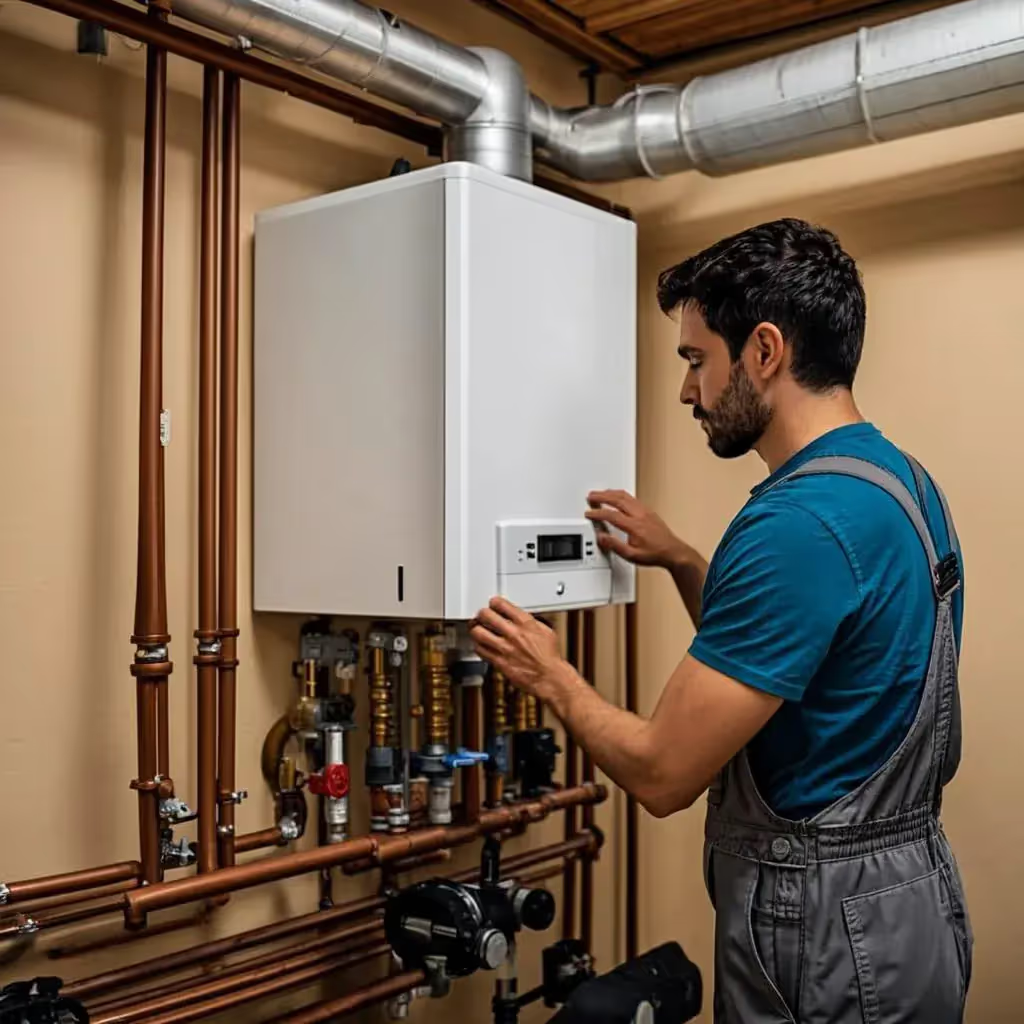
Our maintenance calendar books the annual furnace tune-up before October, every year, and the timing is not a marketing convenience. September gives the technician a furnace that has been idle since spring, with the whole season ahead of it: findings can be fixed at planned, daytime rates, parts can be ordered without a house going cold, and the first outflow night of November meets a machine that has already proven every safety switch.
Book in December instead and every disadvantage stacks the other way: the furnace is mid-season, so any repair means cold rooms overnight; the scheduling is competing with no-heat emergencies, because everyone who skipped the fall visit is now booking breakdowns; and a discovered part failure arrives with the $150 after-hours premium attached if it lands on a weekend. The same work, the same $129, dramatically different context.
The September-and-October window is also when we book customers into standing annual service, so the visit repeats without anyone remembering to call, which is the whole point of maintenance: the calendar works, the paperwork files itself, and the warranty never has a gap. If you are reading this in November with a furnace that is running fine, book anyway; the off-peak visit beats the in-peak one on every axis. Our furnace repair crews in Vancouver and Surrey furnace teams carry the same maintenance calendar year-round.
Furnace vs Heat Pump Maintenance
The two machines want different schedules, and the difference is simple: a furnace works one season, a heat pump works two. Gas furnace maintenance is annual at $129 per visit, one documented six-point service each fall. Heat pump maintenance runs twice a year at $149 to $250 per visit, because the same machine that carried your January also carries your July, and each season wears a different half of the system.
| Maintenance item | Gas furnace, annual | Heat pump, twice yearly |
|---|---|---|
| Schedule | Once a year, before October | Spring and fall, one visit per season |
| Price per visit | $129 | $149 - $250 |
| Combustion side | Combustion analysis, heat exchanger inspection, burner work | Not applicable, no combustion |
| Air side | Static pressure, temperature rise, blower cleaning | Outdoor coil wash, indoor fan and coil deep clean, filter care |
| Refrigerant side | Not applicable | Charge verification, defrost testing |
| Water side | Condensate check | Condensate flushing and drain-line fall |
| Why the schedule differs | One heating season, one wear pattern | Heating and cooling seasons wear different components |
Dual-fuel homes, a heat pump paired with a gas furnace for the outflow nights, need both schedules, and the two visits can be combined into coordinated trips so the year is covered in two stops instead of three. That coordination is also the moment to verify the changeover strategy itself, the temperature and logic at which the heat pump hands off to the furnace, because a badly set handover quietly burns money all winter on either side of it. The full cold-season playbook for that pairing lives in our Vancouver heat pump guide.
The Math: $129 Against the Repairs
Maintenance math is usually sold with vague promises about efficiency percentages. Here is the version built entirely from our own repair prices, which is the only version that can be checked.
| Scenario | Cost if it happens | Tune-up connection |
|---|---|---|
| Dirty flame sensor, classic starts-and-quits | $180 - $350 | Leading repair in this climate; burner cleaning and flame-sense verification target it directly |
| Sticking pressure switch | Within the $180 - $650 furnace repair range | Damp coastal air is the cause; control calibration proves the switch before November |
| ECM blower motor failure | $650 - $1,150 | High static pressure and dirty blower wheels are the slow killers; both are measured and cleaned |
| No-heat call at night or on a weekend | Repair plus flat $150 after-hours premium | Most no-heat calls arrive in-season, at night, in cold; October maintenance removes the common causes |
| Diagnostic on a breakdown | $89, credited to the approved repair | Applies to repair calls, not scheduled maintenance; the tune-up is its own flat $129 |
| Annual tune-up, every year | $129 | The number all of the above is measured against |
Read the table honestly and the claim is modest, which is why it is credible: the tune-up does not prevent every repair, furnaces are machines and machines fail. What it measurably does is attack the leading failures in this specific climate, the fouled flame sensor, the damp-air switch, the strangled blower, before they become in-season calls, and it produces the documented maintenance record that warranty claims and insurance conversations both want to see. One prevented January call pays for several years of tune-ups, and the January call you prevent on a Sunday night is the one that pays for the decade.
There is a second, quieter economy: a furnace running with a clean burner, verified airflow and a calibrated control is doing its rated work per cubic metre of gas. The combustion analysis is literally the instrument that confirms that, which is why it leads the checklist instead of trailing it.
How to Spot a Fake Tune-Up
The maintenance market has a counterfeit problem, and the counterfeit is cheap for a reason. A real tune-up has instruments, time and a paper trail; a fake one has a filter, a flashlight and an invoice. Here is the test.
| Ask to see | Real tune-up | Fake tune-up |
|---|---|---|
| Combustion readings | Numbers from a flue gas analyser, written down | "Looked fine" with no instrument in sight |
| Static pressure | A manometer reading against the rating plate | Never measured, no idea what static pressure is |
| Temperature rise | Supply and return measured, compared to the plate | Hand over a register, "feels warm" |
| Time on site | An hour and more, blower wheel actually cleaned | Fifteen minutes, filter swap, gone |
| Documentation | Findings recorded for the warranty file | Nothing written, nothing filed |
| The upsell | Findings quoted flat-rate, yours to decline | Sale begins before the inspection ends |
| Who shows up | Red Seal certified, licensed, insured | Unlicensed, uninsured, untraceable |
The pattern behind every fake tune-up is the same: the maintenance price is the bait and the repair invoice is the business. A company that itemizes its six points, prints its findings and quotes repairs flat-rate has no room to hide margin in a filter swap; a company whose bargain special cannot name its own checklist is not selling maintenance at all. When you compare maintenance prices, compare the checklists first, because a cheap visit that measures nothing and a $129 visit that measures everything are not the same product at different prices, they are different products.
Tune Up or Replace: Where the Line Sits
Maintenance has a horizon, and honest companies say where it is. On a sound furnace under roughly fifteen years old with a clean exchanger and reasonable repair history, the $129 annual visit is almost always the right money: the machine has years of rated service left and the tune-up protects them. The line moves when three things stack: age, repair frequency and the exchanger's condition.
The repair math is straightforward. Furnace repairs run $180 to $650, and the premium repair, an ECM blower motor at $650 to $1,150, approaches the point where replacement enters the conversation on an older unit. When a single quoted repair reaches roughly a third of replacement cost on a furnace past its mid-teens, the arithmetic stops favouring repairs, because the next component is already aging behind this one. A cracked heat exchanger ends the conversation entirely: that finding is a replacement, documented, with the safety timeline attached.
Replacement, for context, runs from $3,800 installed for an 80 percent single-stage furnace, the honest budget tier for suites, rentals and straightforward swaps, to $5,500 to $9,000 installed for a high-efficiency two-stage furnace, the region's replacement workhorse, with premium variable-capacity equipment quoting toward the upper half of that range. The full decision framework, including the age thresholds and the brand-tier logic, is our furnace repair or replace guide, and financing for the replacement side starts at 7.99% APR with approved credit.
What the tune-up does in a replacement year: it produces exactly the documented condition report that makes the replacement decision honest. Two visits and a furnace's whole story is on paper, which is the difference between choosing a new furnace and being sold one.
The Decision Cheat Sheet
Find your situation, take the action. When two rows match, start with the cheaper one.
| Your situation | Honest cost | The next move |
|---|---|---|
| Furnace running fine, under 15 years, no repairs this year | $129 | Book the annual tune-up before October, then every year |
| Furnace starts, runs 30 seconds, quits | $89 diagnostic, $180 - $350 repair | Classic fouled flame sensor; diagnostic credited to the repair |
| Skipped two or more years of maintenance | $129 | Book now; expect findings, quoted flat-rate, before the season |
| Heat pump instead of a furnace | $149 - $250 twice a year | Spring and fall visits, one per season |
| Tune-up finds a failing igniter or switch | Within $180 - $650 | Flat-rate quote on the spot; approve or decline, documented either way |
| Tune-up finds a cracked heat exchanger | Replacement conversation | Documented report; 80% tier from $3,800, two-stage $5,500 - $9,000 installed |
| Furnace past its mid-teens, second major repair in two years | Compare $650 - $1,150 repair to replacement | Read the repair-or-replace math before approving the repair |
The one-sentence version of this entire guide: the $129 buys instruments, time and a paper trail, once a year, before October, and every part of that sentence is load-bearing. Crews book maintenance across Vancouver, Surrey, Burnaby, Richmond, Coquitlam, Langley, Delta, New Westminster, North Vancouver, Maple Ridge, Abbotsford and Port Coquitlam through the Metro Vancouver service areas list, and the 24/7 line at 604-615-2212 answers for everything that cannot wait.
Frequently Asked Questions
Services From This Guide
The $129 tune-up, flat-rate repairs and right-sized replacements, from Red Seal crews across every Metro Vancouver city we serve.
Heating and furnace services
Tune-ups, flat-rate repairs and replacements for every furnace brand we service, all year round.
Furnace repair Vancouver
$89 diagnostics credited to repairs, from the west side to East Vancouver, 24/7 when the heat quits.
Furnace repair Surrey
Same-day crews across Surrey's subdivision-era furnaces, with the maintenance calendar that keeps them alive.
Heat pump maintenance
Twice-yearly service at $149 to $250 per visit, the schedule that protects efficiency, warranty and both seasons.
Related Guides
Furnace Repair or Replace
The age thresholds, repair-cost math and brand-tier logic behind the biggest heating decision you will make.
HeatingFurnace Not Working in Vancouver
The troubleshooting order that finds the simple causes before the expensive ones.
SeasonalWinter Prep for Vancouver Homes
The October checklist that wraps the furnace visit into the whole-house cold-season routine.

Red Seal certified, licensed gas fitters under BC-PL-2019-4421, insured for $2M and working Metro Vancouver heating since 2010, with more than 12,000 jobs completed and a 5.0-star rating across 26 Google reviews. We wrote this guide because maintenance is the most counterfeited service in heating: the $129 price is easy to quote and the six documented points are hard to fake, and homeowners deserve to know exactly which one they are buying. To turn these numbers into a flat-rate quote, see furnace repair in Delta — same-day across the city.
More about our team →A furnace tune-up in BC costs $129 flat — combustion analysis, heat-exchanger inspection, static pressure, blower work and a written report — or $189 for the deep service on units three-plus years overdue, with the limited-time $99 winter special (was $179) through the heating season. Book annually before October; BC Home Service dispatches 24/7 at 604-615-2212.
Flat-rate CAD, approved in writing before work starts · 24/7 dispatch 604-615-2212 · BC Home Service
Book Your $129 Furnace Tune-Up
Combustion analysis, heat exchanger inspection, static pressure and temperature-rise verification, blower cleaning and control calibration, documented for your warranty file. Slots fill through September and October across Vancouver, Surrey, Burnaby, Richmond, Coquitlam, Langley, Delta, New Westminster, North Vancouver, Maple Ridge, Abbotsford and Port Coquitlam. If you would rather hand this to a pro, our heating & furnace services pages cover Metro Vancouver.
No heat right now?
The 24/7 line answers any hour with live dispatch. Repairs are diagnosed and quoted flat-rate, $89 diagnostic credited to the work, with the flat $150 after-hours premium posted before the truck rolls.
Call 604-615-2212 WhatsApp Us