
The Honest Answer Up Front
A heat pump heats the same house for roughly one third to one half of the electricity that baseboard heaters use, and in BC that is not a rounding difference, it is the difference between the most expensive way to heat a home with electricity and the cheapest. Baseboards are resistance wire: every unit of heat in your rooms cost a full unit of electricity at the meter. A cold-climate heat pump moves heat instead of making it, and over a Metro Vancouver winter it delivers two to three units of heat per unit of electricity. Same house, same comfort, roughly half to two thirds off the heating line of the bill.
The honest counterweight is the installed price. Baseboards cost almost nothing to buy and nothing to maintain, and a full conversion to a heat pump runs from $3,800 to $5,500 for one zone up to $9,500 to $16,000 for a whole multi-zone ductless system, or $6,500 to $14,000 for a ducted cold-climate system where the house has ducts. The upgrade pays back through the bill gap, usually over a handful of years in an electrically heated home, and BC's rebate stack then tilts the table further, because combined CleanBC, BC Hydro, FortisBC and municipal top-ups can reach $16,000 for cold-climate heat pumps in 2026, with the paperwork completed by us. Fuel-switching homes, and baseboard homes are exactly that, are the audience those programs were designed around.
Our heat pump installation service quotes these conversions daily, and our Langley heat pump team handles more of them than anywhere else in our service map, because the valley suburbs were built electric during the hydro boom decades. The five-year question is not whether the heat pump wins the monthly math in an electrically heated BC home. It does, decisively. The question is which conversion path fits the house and the budget, and that is what the rest of this guide works through.
Baseboard heating is a fine idea from an era of cheap power and expensive equipment. A heat pump is the same idea updated for the era we actually live in: equipment costs money, power costs more, and moving heat beats making it.
0 bill reduction
The typical cut to the heating share of the bill when baseboard zones convert to a cold-climate heat pump.
0 baseboard ceiling
Resistance heat can never beat one unit of heat per unit of electricity. Physics, not marketing.
0 star rated
26 verified Google reviews, many from electrically heated homes that finally got off the winter bill rollercoaster.
0 rebate ceiling
Combined 2026 top-ups on cold-climate systems, filed by us. Baseboard switching is precisely the target case.
Why Baseboard Heat Costs So Much to Run
An electric baseboard is a toaster with a thermostat. Current flows through a resistance element, the element glows warm, and the metal fin housing convects room air across it. Every watt that enters the element exits as heat, which is why baseboards are honestly described as 100 percent efficient, and why that number is a trap: the efficiency is perfect at the register and terrible at the source, because each unit of heat in your living room cost a full unit of electricity generated, transmitted and metered.
The system-level numbers make the trap visible. A baseboard-heavy home in Langley or Abbotsford can carry 8 to 15 kilowatts of installed heating across its zones, and on a January night a large share of it runs at once. That draw lands in the upper residential rate tiers through the deep months, which is why electrically heated households see winter bills that make furnace neighbours wince. The heat is fine, the control is fine, and the rooms get warm. The meter simply charges COP 1 rates for all of it, and no thermostat schedule or curtain upgrade changes the physics.
Two more baseboard facts matter for the comparison. First, they are room-by-room devices: each zone heats its own room on its own wall thermostat, which is genuinely good zoning, and a heat pump conversion has to respect that room-level control rather than assume one wall thermostat runs the house. Second, they are nearly immortal: a baseboard element has no moving parts, and the realistic failures are thermostat contacts and burnt wire ends. Baseboards do not break, they just bill. That is why the upgrade decision for these homes is purely an economics and comfort decision, never an emergency one, and it deserves to be made at a kitchen table rather than a breaker panel at midnight.
The Heat Pump Answer: Move It, Do not Make It
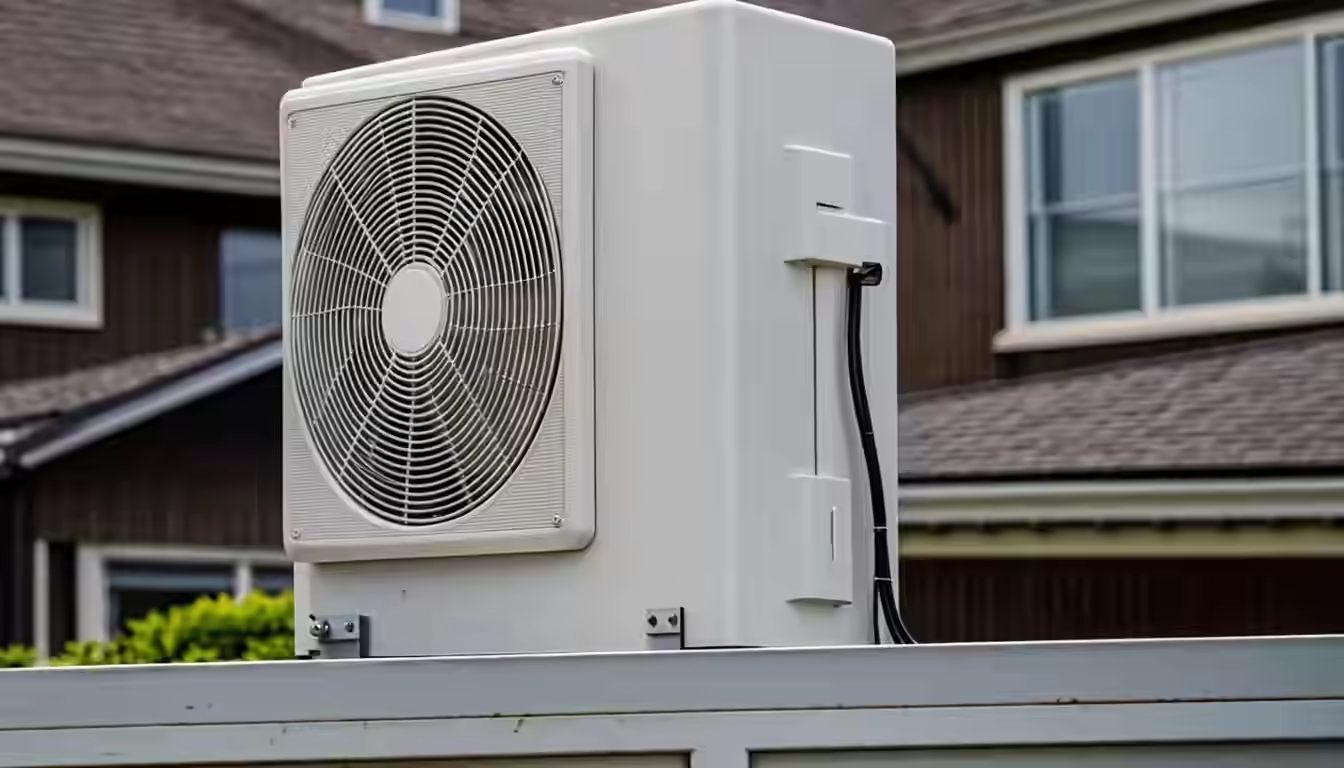
A heat pump does not generate heat, it harvests it. A compressor circulates refrigerant between an outdoor coil and indoor coils or a ducted air handler, absorbing heat from outside air, even cold outside air, and releasing it inside. The electricity you pay for runs the compressor and fans, not the heat itself, so the delivered heat is mostly collected rather than purchased. The ratio of delivered heat to purchased electricity is the coefficient of performance, COP, and it is the entire argument of this comparison.
In our climate the numbers work in the heat pump's favour in a way they do almost nowhere else in North America. Through the long shoulder seasons a modern unit runs at COP 3 or better, near freezing it holds around 2, and during the rare outflow dips it stays near 1.5 to 2 while continuing to deliver heat. Averaged across a Metro Vancouver winter, seasonal COP lands around 2.5 to 3, meaning each dollar of electricity buys two and a half to three dollars of heat compared to the baseboard dollar. BC Hydro's hydroelectric rates, among the gentlest on the continent, then multiply that advantage instead of eroding it, which is why the same conversion that pencils out marginally in the Maritimes pencils out decisively here.
| Metric | Electric baseboard | Cold-climate heat pump |
|---|---|---|
| How heat is produced | Resistance wire, converted from electricity | Harvested from outdoor air by refrigerant loop |
| COP, heat per unit of electricity | 1.0, the hard ceiling | About 2.5 to 3 seasonal in Metro Vancouver |
| Cooling | None | Included, same machine in reverse |
| Summer dehumidification | None | Included with cooling |
| Room-level zoning | Excellent, one thermostat per zone | Excellent with multi-zone heads |
| Installed cost | Minimal per zone | $3,800 to $16,000 depending on scope |
| Maintenance | Near zero | Filter and seasonal care |
| Lifespan | Decades for elements | 10 to 15 years for a heat pump |
The Monthly Math, Without Invented Bills
We will not quote you a fake average winter bill, because your bill depends on your house, your rate tier and your thermostat habits, and generic numbers are how homeowners get talked into the wrong upgrade. What we can do honestly is show the arithmetic structure, because it is simple and it holds for any starting number.
Take whatever you spend on the heating share of your electricity through the winter, call it the baseboard number. The heat pump number for the same heat is the baseboard number divided by the seasonal COP: at COP 2 it is half, at COP 2.5 it is 40 percent, at COP 3 it is a third. A house spending 300 dollars a month on heat in January sees roughly 100 to 150 dollars at the meter for the same rooms at the same temperature. That is the entire effect, it repeats every winter month, and the caveat list is short and honest: the deepest outflow weeks pull the seasonal average down, an undersized system leaning on backup resistance heat drags the ratio back toward 1, and conservation habits, closing off rooms, aggressive setbacks, shift both sides of the comparison.
| Seasonal COP achieved | Electricity used for the same heat | A 300-dollar baseboard heating month becomes |
|---|---|---|
| 2.0 | 50 percent | About 150 dollars |
| 2.5 | 40 percent | About 120 dollars |
| 3.0 | 33 percent | About 100 dollars |
Two further effects stack on top of the ratio. Converting zones to a heat pump moves a large share of winter consumption out of the top rate tiers, which softens the unit price on everything else in the house. And the switch adds summer cooling and dehumidification the baseboard home never had, value that arrives in July rather than January, covered in detail in our ductless versus central air guide from the cooling side of the ledger. When a conversion pays back, it pays back through the winter gap, and the cooling is the part you feel first.

What the Conversion Actually Costs
Conversion prices follow the architecture the house needs, and for baseboard homes that means one of three paths. Single-zone ductless solves one problem room or suite. Multi-zone ductless replaces the whole baseboard system with one outdoor unit feeding two to five wall heads. Ducted cold-climate systems apply where ducts exist, usually from a retired electric or gas furnace. These are our real flat-rate Metro Vancouver ranges, the same ones that appear on written quotes.
| Conversion path | Installed range | Best fit |
|---|---|---|
| Single-zone ductless heat pump | $3,800-$5,500 | One cold room, an addition, a basement suite |
| Multi-zone ductless, 2 to 5 heads | $9,500-$16,000 | Whole-home conversion without ducts, room-by-room zoning |
| Cold-climate ducted system | $6,500-$14,000 | Homes with existing ducts from an electric or gas furnace |
Against those numbers sit the incentives. Combined CleanBC Better Homes, BC Hydro, FortisBC and municipal top-ups can reach $16,000 for cold-climate heat pumps in 2026 — we complete the paperwork. For a household converting from electric resistance heat, the program stack is at its most generous, and in some multi-zone cases the net position lands at or near half the sticker range. Municipal top-ups vary by city, and our crews track the current version of each program because the details change between intakes. Financing from 7.99 percent, detailed on our financing page, lets the winter savings carry the payment instead of the household saving up first, which is the structure most conversions actually use.
What the ranges include matters as much as the numbers. Ours cover the equipment, the refrigerant line sets and vacuum work, the electrical connections, mounting and condensate routing, commissioning measurements and the rebate filing. A quote that omits the electrical panel work or the commissioning hour is not cheaper, it is incomplete, and the missing line items are exactly the ones that surface in the coldest week of the first winter.
Six Baseboard Homes, Answered
Two decades of baseboard conversions have sorted themselves into six recurring households. Find your row, then sanity-check it against the decision path in Chapter 9. Our Abbotsford heat pump crews quote the valley version of every one of these weekly, with backup-heat planning that coastal versions can skip.
1970s electric bungalow, one floor, 1,200 square feet
Multi-zone ductless, three heads. The classic conversion, bill cut by more than half, cooling added, rebate stack near its ceiling.
1960s Vancouver special, two floors, baseboards throughout
Multi-zone ductless with four heads, or a ducted system if usable ducts appear during assessment. Watch the panel capacity check.
Condo with electric heat and a strata heat pump policy
Single or dual head conversions where the strata allows, and a written ruling request where it does not. Strata rules decide this row, not physics.
Newer townhouse, high-efficiency envelope, small loads
The ratio still favours the heat pump, but the absolute savings are smaller. Convert for cooling and comfort, not for dramatic bill cuts.
Basement suite on its own meter
Single-zone ductless for the suite first, landlord and tenant both win, main floor conversion as the phase-two decision.
One perpetually cold room, rest of the house fine
A $3,800 to $5,500 single head solves the room. Nobody should sell a whole-home system to a one-room problem.
How the Conversion Actually Proceeds
The upgrade from baseboards is a sequence, and the order matters because each step protects the next. Skipped steps are how conversions end up undersized, overloaded or rebate-ineligible, and the sequence is short enough that there is no excuse for skipping it.
Room-by-room heat-loss calculation
Every zone measured as built, which sets the head count and capacity. Square footage guesses are how rooms stay cold after upgrades.
Electrical panel and service review
Baseboard homes often have space in the panel once kilowatts of resistance zones retire, but the review happens before the quote, not after the demolition.
Zone architecture decision
Which rooms get heads, where the outdoor unit sits, which baseboards retire and which stay as backup, planned on paper with the homeowner at the table.
Rebate eligibility check
Program and municipal rules verified against the chosen equipment list before anything is ordered, so the system qualifies for what it should.
Install, commissioning, filing
Equipment in, commissioning measurements recorded, warranties registered, and the rebate applications completed by us with the commissioning data attached.
Phasing is legitimate and sometimes optimal. The suite-first or coldest-room-first path converts where the ratio is worst, banks the savings, and lets phase two inherit both the budget and the confirmation that the first head behaves the way the math promised. The only phasing rule that matters: do the heat-loss calculation for the whole house on day one, because the outdoor unit selection has to anticipate the heads that arrive later.
Keeping Baseboards as Backup: The Hybrid Home
The all-or-nothing framing is wrong, and the hybrid version deserves a serious paragraph. A cold-climate heat pump sized for the whole house rarely needs help on the coast, but in the Fraser Valley pockets the last few outflow nights per winter push even right-sized systems toward their floor. A house that keeps a few baseboard zones, the entry, the bathroom, the coldest bedroom, on their existing line-voltage thermostats has backup resistance heat waiting without paying for strip sections inside the heat pump.
The control detail that makes hybrids work: the baseboard thermostats must be set to engage only below the crossover point the installer chooses, typically when the heat pump's efficiency floor approaches the backup's. Modern wall thermostats and the heat pump's own logic coordinate this acceptably, and the wiring matters enough that the hybrid plan belongs in the original quote rather than a retrofit guess. Done right, the baseboards sit idle all season and run a handful of hours per year, and the winter bills keep the heat pump ratio.
One caution in the other direction: a hybrid that keeps half the house on baseboard forever, because the conversion quote got deferred, keeps half the bill at COP 1. The hybrid is a winter-security measure for cold pockets, not a permanent split personality, and the honest quote treats the leftover zones as named, justified and few.
Ten Years of Ownership, Compared Honestly
The monthly ratio is the headline, but a ten-year view prices everything the bill hides: maintenance, lifespan, cooling, safety and the resale story. The table below is the honest ledger, including the two rows where baseboards still win.
| Ten-year factor | Baseboard path | Heat pump path |
|---|---|---|
| Heating energy cost | COP 1 forever, the expensive constant | Roughly a third to a half per unit of heat, every winter |
| Maintenance demands | Near zero, occasionally a thermostat | Filter care plus a seasonal professional check |
| Repair exposure | Trivial, elements and wire ends | Real: capacitors, fans, boards, refrigerant, $89 diagnostic credited |
| Lifespan | Multiple decades for elements | 10 to 15 years, then planned replacement |
| Summer comfort | Nothing, fans and open windows | Cooling and dehumidification included |
| Carbon footprint | High per unit of heat on BC grid | Dramatically lower per unit of heat |
| Resale story | Neutral, expected in older stock | Increasingly a listing asset, bill history attached |
| Upfront cost | Already sunk | Net of rebates and financing, the real decision |
The two baseboard wins are real and they are not nothing: a heating technology with no moving parts and no service calls has genuine value, particularly for a home used lightly. The problem is that its running cost is the exact opposite of its ownership cost, and in an electrically heated BC home the running side dominates every year the house is occupied. That is the structural reason the conversion question keeps answering itself yes in this region, and the maintenance column is the honest price of admission rather than a hidden defect.
The Five-Question Decision Path
Work these in order. Most electrically heated households know their answer by question three, and the remaining questions are only about scope and timing.
What did heat cost last winter?
Pull the actual bills. If the heating share is a meaningful monthly weight, the ratio math in Chapter 4 is working on a big number, and the conversion has fuel.
Does the house need cooling?
If July and August matter, the decision is already made, because the baseboard path offers none and the heat path includes it in the same machine.
Are you staying five-plus years?
The payback math rewards staying long enough for the ratio to compound. Selling sooner still converts for the listing story in some markets, but the arithmetic is thinner.
What does the panel and strata say?
Electrical capacity and strata rules gate the scope before money changes anything. Both answers arrive in days, not weeks.
Whole home or worst zone first?
The heat-loss calculation prices both, and the honest answer depends on budget shape, not on any universal rule.
Then one visit makes it concrete. The Vancouver heat pump guide covers the equipment landscape you would choose from; our estimate puts the heat-loss numbers, the panel review and the rebate position in writing, and the $89 diagnostic, credited toward any resulting repair, applies if the question is a balky existing system rather than a conversion.
The One-Page Cheat Sheet
The comparison compressed for the fridge door. The ratio is the story, the rebates are the accelerant, and the scope decision belongs to your house, not a sales calendar.
| Question | The answer |
|---|---|
| Does a heat pump beat baseboards on cost? | Yes: same heat for roughly a third to a half of the electricity, every winter |
| By how much per month? | Whatever your heating share is, divide it by the seasonal COP, 2.5 to 3 locally |
| Installed cost to convert? | $3,800-$5,500 one zone, $9,500-$16,000 multi-zone, $6,500-$14,000 ducted |
| Rebates? | Up to $16,000 combined in 2026 for cold-climate systems, paperwork filed by us |
| Cooling? | Baseboard: none. Heat pump: included, plus dehumidification |
| Maintenance? | Baseboards: near zero. Heat pump: filter care and a seasonal check |
| Keep some baseboards? | Yes where outflow exposure is real, as named backup zones on a crossover plan |
| Who should not convert? | Lightly used homes and the one-cold-room case, where scope beats system |
Frequently Asked Questions
Services From This Guide
Heat-loss sizing for the whole house, panel review, rebate position and phased plans, quoted flat-rate across Metro Vancouver and the valley.
Heat pump installation
Cold-climate ductless and ducted conversions from baseboard, sized room by room from real heat-loss math.
Heat pump Langley
Valley conversions with the outflow-aware backup planning electrically heated Langley homes need.
Financing and rebates
The 7.99 percent financing structure and the current rebate stack, applied to your conversion numbers.
24/7 emergency service
No-heat calls answered around the clock, average 45-minute response, flat after-hours premium.
Related Guides
The Vancouver Heat Pump Guide
The complete equipment, cost and process overview for the system a conversion installs.
Heat PumpsDuctless vs Central: The Surrey Guide
The architecture decision most baseboard homes face: wall heads versus ducts.
RebatesCleanBC Rebates: The 2026 Guide
The incentive stack behind the $16,000 ceiling, program by program, for fuel-switching homes.

Red Seal certified, licensed gas fitters (BC-PL-2019-4421), $2M insured and 15-plus years in the field, with more than 12,000 jobs completed across Metro Vancouver since 2010 and a 5.0-star rating across 26 Google reviews. We wrote this guide because electrically heated homes in this region have been paying COP 1 rates for decades while the fix got cheaper and the rebates got richer, and the honest comparison deserves numbers instead of slogans. What you actually pay is broken down in Heat Pump Cost in BC (2026): Prices, Rebates and Real Totals. To turn these numbers into a flat-rate quote, see heat pump repair in Delta — same-day across the city.
More about our team →Get Your Baseboard Conversion Quote
Book a free conversion estimate or a $89 diagnostic on an existing system with a Red Seal estimator. You get a room-by-room heat-loss calculation, an electrical panel review, a written flat-rate price for single-zone or whole-home conversion, and the rebate stack applied to the numbers. Zero obligation, same-day quotes on most calls. For the full BC price breakdown, see Cold-Climate Heat Pump Cost in BC (2026): The Real Numbers. If you would rather hand this to a pro, our heat pump services pages cover Metro Vancouver.
Heating down right now?
No-heat calls are answered 24/7 with live dispatch and flat after-hours pricing posted in advance. Daytime? The $89 diagnostic is usually same-day in Vancouver, Burnaby and Surrey.
Call 604-615-2212 WhatsApp Us