
The Honest Answer Up Front
A right-sized cold-climate heat pump carries a coastal British Columbia winter on its own, and that statement is now backed by enough local installations that it has stopped being controversial. The honest part is the second half of the sentence: as outdoor temperature falls, a heat pump's capacity falls with it, its efficiency falls too, and the engineering question is never "does it work in winter" but "where exactly does this house's heat loss outgrow this unit's output, and what covers the gap below that point." The answer is a temperature called the balance point, and for most of Metro Vancouver it sits well below the temperatures we actually see.
The numbers people should hold onto: a modern cold-climate unit holds roughly 60 to 75 percent of its rated heating capacity at minus 15, and its efficiency at that temperature, while roughly half of what it delivers in mild weather, is still 1.8 to 2.4 units of heat per unit of electricity, nearly double what electric resistance produces. Deep-cold hours are a small slice of a coastal season, a much larger slice of a Fraser Valley outflow winter, and the design strategy differs between the two. The heat pump installation page covers equipment and sizing; this guide is the deep winter data chapter of that decision.
A heat pump in winter is not a diminished machine. It is a machine whose two curves, capacity and efficiency, both slope down with the thermometer, and a designer's entire job is knowing where those curves cross the line your house draws.
0 jobs since 2010
Coast to valley, enough cold-snap service calls to know exactly which failures are weather and which are design.
0 winter response
No-heat calls in outflow events answered around the clock, average 45-minute response, $150 flat after-hours premium.
0 star rated
26 verified Google reviews, including the first-winter households whose data we review every tune-up.
0 on workmanship
Red Seal installers under BC licence BC-PL-2019-4421, flat-rate pricing, cold-climate commissioning verified in writing.
The Two Curves That Matter
Every heat pump discussion in winter comes down to two curves, and confusing them is where most bad advice starts. The capacity curve is how much heat the unit can deliver at a given outdoor temperature, and it falls as temperatures fall, because the refrigerant loop has less heat available in the air to move indoors. The efficiency curve, the coefficient of performance or COP, is how many units of heat you get per unit of electricity, and it falls too, but it never falls below 1.0, the score of an electric baseboard or strip heater that converts every unit of electricity into heat by resistance.
That floor is what makes the technology winter-proof in principle: at a COP of 2.0, the unit is still producing twice the heat per dollar of electricity that a baseboard does, even at temperatures that feel punishing. Cold-climate units earn their name with enhanced vapour injection compressors and larger coils that hold the curve up: where a standard unit's output might fall off sharply below minus 8, a cold-climate unit is engineered to keep meaningful capacity down past minus 15 and beyond, the range that arctic outflow events actually deliver here. Both curves live in every manufacturer's extended performance tables, and reading them against your house's heat-loss number is the arithmetic behind every honest quote we write.
The second honest sentence about the curves: they are class averages, not promises. Published data varies model to model, installation quality moves real-world numbers, and our coastal humidity puts units into defrost cycles that consume a slice of the winter's output. That is why this guide speaks in typical ranges and why the commissioning report for your specific install matters more than any brochure chart.
Performance at Temperature: The Data
Here is the table people ask for, with the caveat attached to every cell: these are typical published ranges for the modern cold-climate equipment class sold in BC in 2026. The specific numbers for your proposed model come from its extended performance table, which we review with you before anything is ordered.
| Outdoor temperature | Typical COP | Typical capacity, % of rated | What it means in practice |
|---|---|---|---|
| +7°C, the rating point | 3.5-4.5 | 100-110% | Mild-weather duty, the majority of Metro Vancouver heating hours |
| 0°C | 2.8-3.8 | 90-100% | Steady output, long gentle cycles, defrost begins in humid air |
| -5°C | 2.5-3.2 | 80-95% | Coastal design territory: near-rated output continues |
| -10°C | 2.0-2.8 | 70-85% | Outflow-event territory; capacity management starts mattering |
| -15°C | 1.8-2.4 | 60-75% | Cold-climate class keeps meaningful output; standard units do not |
| -20°C | 1.5-2.0 | 45-60% | Rare even in the valley; backup strategy earns its keep here |
Three readings of that table matter. The headline ratings you see in advertising are measured at the mild end of it, which is fair, because that is where the machine will spend most of its life here, but it means the plus-7 row is not the winter story. The efficiency column stays above 1.8 all the way down, which is the sentence that ends the "heat pumps don't work when it is cold" argument: diminished, yes, never worse than resistance heat. And the capacity column is the number that actually designs your system, because the house's heat loss line keeps rising as the temperature falls, and the crossing point of those two lines is the next chapter's subject.
For the full local equipment context, sizing logic and installed costs, the Vancouver heat pump guide is the companion read, and it covers why the inverter class spends our winters modulating rather than cycling on and off.
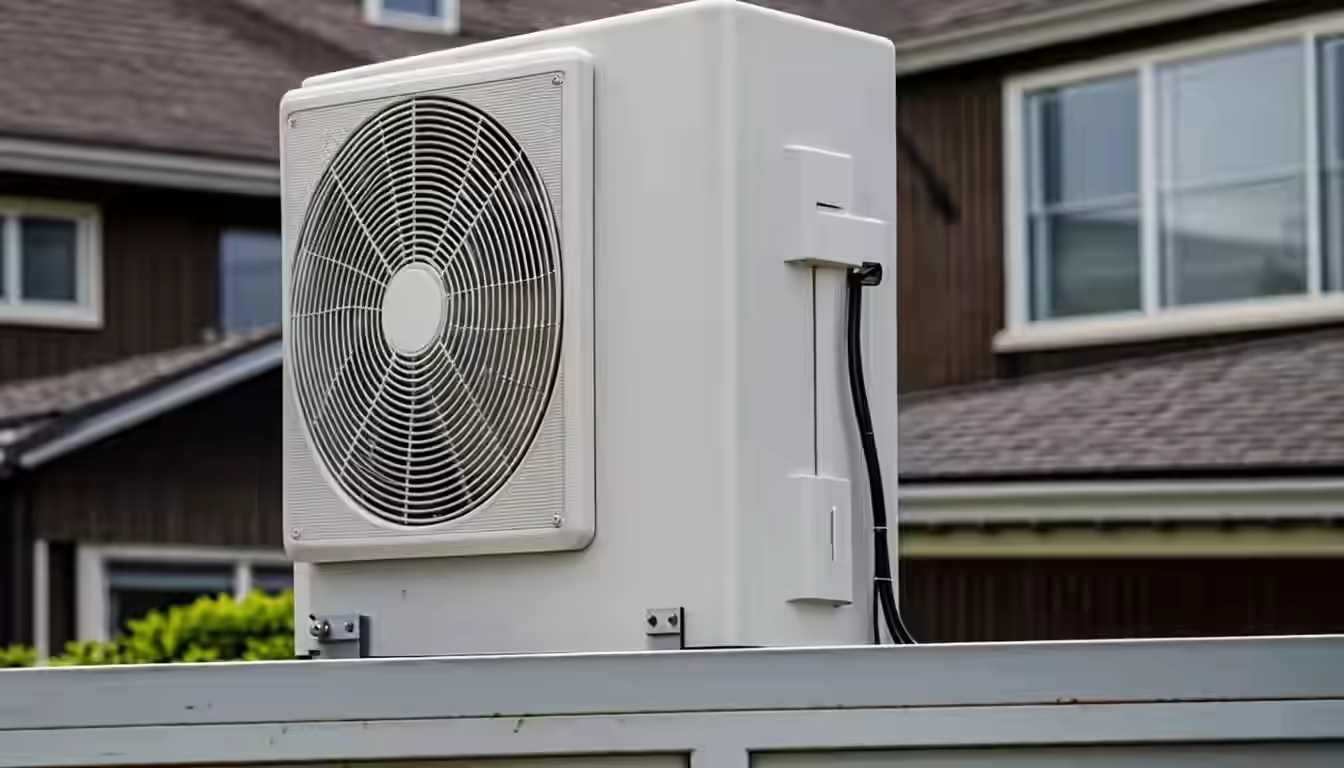
Coastal Winters Versus Valley Winters
British Columbia's south coast is two winter climates wearing one province, and the heat pump design answer differs between them. The coastal zone, Vancouver, Burnaby, Richmond, the North Shore, runs a long, mild, humid winter where the deep-cold hours are rare and the heating season is dominated by temperatures between 2 and 10 degrees, exactly where a heat pump is at its best. Local design temperatures, the number a heating system is sized against, sit in the minus single digits here.
Then there is the outflow climate. When arctic air spills through the interior passes, the Fraser Valley, Abbotsford, Maple Ridge, Langley and points east, gets a dry, windy, genuinely cold event, minus 10 to minus 15 with wind chill below that, lasting a few days to a week, a handful of times each winter. These are the events that test heat pumps here, and they are the reason the coastal-versus-valley distinction is the first question we ask at an estimate. A design that is generous for a sheltered Dunbar street can be genuinely tight on an exposed Abbotsford hillside, and the difference is a settings and sizing conversation, not a technology verdict.
| Where you live | Deep-cold exposure | Design implication |
|---|---|---|
| Vancouver, Burnaby, Richmond, North Shore | Rare; design temps in the minus single digits | Right-sized cold-climate unit carries the winter alone, most years without strain |
| Surrey, New Westminster, Coquitlam | Occasional outflow influence, moderated | Cold-climate class with modest margin; backup rarely called on |
| Langley, Maple Ridge, Pitt Meadows | Regular outflow events each winter | Generous sizing or a backup strategy earns its keep |
| Abbotsford and the valley east | Full outflow exposure, wind-driven | Balance-point math and backup heat designed in from the start |
| Exposed slopes and ridings anywhere | Wind strips heat from the building | Heat-loss calc on the exposure, not the address |
The wind row deserves emphasis because it is the one people skip: outflow wind increases a building's heat loss faster than the temperature alone suggests, so two houses reading the same thermometer can need noticeably different designs. Our Abbotsford and Fraser Valley heat pump installs are consistently specified with more margin than our coastal ones, for exactly this reason, and it is a difference you can see in the commissioning reports.
Defrost Duty in Wet Coastal Air
Between roughly plus 5 and minus 5, in humid air, the outdoor coil of a heat pump in heating mode runs colder than the dew point, and frost builds on it exactly the way it builds on a cold glass. Enough frost blocks the airflow, so the unit periodically reverses itself, runs briefly as an air conditioner to melt its own coil, and then returns to heating. That is the defrost cycle, and coastal winters, which sit in the frost-forming window for weeks at a time, make it a routine part of winter operation rather than an occasional event.
A healthy defrost cycle is short, a few minutes of steam and a paused fan, and it happens at intervals the control board calculates from coil temperature and runtime, typically every 30 to 90 minutes in frost conditions. The energy cost is real but modest on a commissioned unit, a small slice of the season's consumption. The unhealthy pattern is different and unmistakable: defrosts every ten or fifteen minutes, ice that never fully clears, or a unit that runs for hours encased like a freezer chest. Those symptoms point at refrigerant charge, sensor placement or a failed defrost termination control, and they are repair calls, not personality traits of the technology.
Normal defrost
Every 30-90 minutes in frost conditions, a few minutes of steam and fan silence, then heating resumes. Nothing to fix.
The problem pattern
Defrosts every 10-15 minutes, or ice that never clears. Sensor, charge or control fault. Book the $89 diagnostic, credited to repair.
What commissioning changes
Sensor placement, defrost intervals and termination settings tuned to the actual coil, verified on the report you keep.
Snow and ice around the unit
Keep the intake side clear. A buried coil starves the fan, drops capacity and lengthens every cycle. A broom and two minutes.
The Balance Point and Backup Heat
The balance point is the outdoor temperature where your house's heat loss exactly equals the heat pump's output, and it is the single most important number in a winter design. Above it, the unit can hold your setpoint indefinitely. Below it, the house loses heat faster than the unit delivers it, indoor temperature drifts down no matter how hard the machine works, and something else must cover the shortfall. Every backup strategy is an answer to the question "what runs below the balance point," and the options have genuinely different economics.
The design reality for this region: a right-sized cold-climate unit in a reasonably sealed coastal home has a balance point down in the minus mid-single-digits, below the temperatures the coast actually sees, which is why the backup conversation is short here. In the outflow valleys, the same design arithmetic lands the balance point inside the temperature band that outflow events visit, and the backup decision becomes real. The strategies, honestly profiled:
| Backup strategy | How it works | The honest profile |
|---|---|---|
| None, right-sized coastal design | The unit covers the local design temperature outright | Simplest, cheapest, correct for most of Vancouver, Burnaby and Richmond |
| Electric auxiliary strip | Resistance elements in the air handler top up the shortfall | Cheap to install, expensive to run at COP 1.0; a few hours a year in a good design |
| Keep the existing furnace | A dual fuel pairing, furnace takes over below a crossover point | Combustion certainty for outflow homes; capital cost of two systems |
| Generous heat pump sizing | A larger unit pushes the balance point lower | Winter comfort up, summer dehumidification and cycling behaviour down |
| Envelope work first | Air sealing and insulation lower the heat-loss line itself | Moves the balance point for the price of caulk and attic topping, the best dollars in the whole decision |
The strategy that never appears on an equipment quote is the last row, and it deserves its moment: every dollar spent tightening the envelope lowers the house's heat-loss line, which lowers the balance point, which shrinks the backup requirement, all while reducing the bill in every month of every year regardless of what heats the house. We walk it at estimate time because it is the difference between buying capacity and buying comfort. For valley households weighing the furnace-retention path, our Maple Ridge heat pump service area page reflects the outflow-exposure designs we run there, and the honest cases for and against keeping the furnace.
Sized for January, Comfortable All Year
Sizing a heat pump for winter is a heat-loss calculation, room by room, against your local design temperature, checked against the extended performance table of the proposed unit, with the balance point landing where the house needs it. That is the whole discipline, and it is unglamorous arithmetic that takes an afternoon and shapes two decades. The unit's job is to cover the design load at the temperatures your address actually sees, with the cold-climate curve doing the winter work and the inverter range doing the rest of the year.
The failure mode on the other side is oversizing, and it is the more common sin in this region because "bigger" feels like safer winter math. An oversized heat pump short-cycles in the shoulder seasons, which wears the compressor, and it cools too quickly to wring humidity out of a July house, which is the comfort complaint we get called about most in summer. The right size is the one that runs long, slow, continuous cycles through most of the year and only approaches its limit in the genuine design events. Ducted cold-climate systems install at $6,500-$14,000, ductless single and multi-zone at $3,800-$5,500 and $9,500-$16,000 respectively, and inside those ranges, capacity tier and site work move the number more than brand does. Combined CleanBC Better Homes, BC Hydro, FortisBC and municipal top-ups can reach $16,000 for cold-climate heat pumps in 2026 — we complete the paperwork. That stack is one more reason the sizing conversation and the rebate conversation belong in the same visit, and the sizing arithmetic is what earns it.
The last sizing sentence is the one installers like least: the honest answer sometimes includes telling a homeowner their envelope work is worth more than their equipment upgrade, and it is the same honesty that earns the reviews we have. Get the calculation, in writing, against your house's numbers, before anyone quotes you a machine.
The Cold-Snap Playbook
When the outflow event arrives, a commissioned heat pump mostly needs to be left alone, and the list of things not to do is longer than the list of things to do. The playbook we give every homeowner at handover, in order:
Hold your setpoint, do not setback
Deep overnight setbacks force morning recoveries in the coldest hours, when the unit is at its weakest and auxiliary heat is most likely to fire. In a cold snap, steady beats clever.
Keep snow and ice clear of the outdoor unit
A buried intake starves the fan and drops capacity. A broom, two minutes, and full manufacturer clearance restored.
Keep filters and return air clear
Choked airflow hurts at any temperature, and it hurts first when the unit is working hardest.
Expect long runtimes, and trust them
Continuous operation in deep cold is the design working, not a fault. Modulation means the machine simply stays on and holds temperature.
Expect defrost steam and a brief cool breeze
The cycle from Chapter 5, appearing more often in exactly the humid cold that produces frost. Normal, finite, self-managing.
Call when the pattern breaks
Supply air that stays cold, error codes on the thermostat, ice that never clears, or a house that will not reach setpoint by mid-afternoon. Those are service calls: 604-615-2212, 24/7, $89 diagnostic credited to any repair.
The one true emergency in a cold snap is no heat at all, and it is the reason our emergency line stays staffed through every outflow event with an average 45-minute response and a $150 flat after-hours premium posted in advance. Everything else on the list above is a homeowner holding the design's end of the bargain, and it takes minutes a day.
Reading Your Own Winter Data
The first winter is the audit, and modern equipment hands you the data to run it. Smart thermostats log runtime, cycles and energy per day, BC Hydro's account tools show consumption against previous winters, and the pattern that matters is the ratio: as outdoor temperature falls, runtime should rise smoothly and continuously, not in panic steps. A house that runs the unit twice as long at minus 5 as at plus 5 is behaving normally. A house that jumps to auxiliary heat at plus 2 has a settings problem worth a service call.
We build the data review into the first tune-up, because the numbers tell us things the brochure never will: whether the defrost frequency matches the commissioning assumptions, whether the balance point landed where the design predicted, whether the envelope has drifted as the house ages. A heat pump that gets an annual inspection and a settings review against its first-winter data is a machine that keeps its performance numbers for fifteen years instead of quietly surrendering them to fouled coils and drifted controls. And when the winter data is in, the CleanBC rebates guide is the natural next read, because the second heat pump in a home, or the one you recommend to a neighbour, is where the region's rebate stack keeps compounding.
Four Winters, Four Outcomes
The data chapters compressed into households. Find the one that resembles yours, and remember that the numbers behind each verdict came from a heat-loss calculation, not a postcode lookup.
The 1950s Vancouver special, upgraded envelope
Air sealing, attic topping and new windows dropped the heat loss enough that a right-sized cold-climate unit carries the house alone, balance point near minus 6, backup never fires.
The Langley family home, full outflow exposure
Balance point lands near minus 9, inside outflow territory. Generous sizing plus retained furnace covers the design events; the crossover is set from the actual fuel rates.
The Richmond rancher, baseboard conversion
Multi-zone ductless replaced baseboards room by room. Winter energy for identical heat dropped by the COP ratio, and summer cooling arrived as a by-product.
The North Shore slope home, wind-exposed
The heat-loss calc was run against the exposure, not the street average, and the margin it bought shows every January as the wind strips the walls.
Every one of these households was told "heat pumps do not work in our winter" by somebody. The data says otherwise, and the difference is that the data was measured against their actual houses.

The One-Page Cheat Sheet
The whole winter file on one card. If a quote contradicts a line here, the quote needs to explain itself, and 604-615-2212 reaches someone who can.
| Question | The answer |
|---|---|
| Do heat pumps work in BC winters? | Yes. Cold-climate class rated to minus 15 and beyond; coast-side, a right-sized unit carries the season alone |
| What happens to capacity in cold? | Typical cold-climate class holds 60-75% of rated capacity at -15°C, 80-95% at -5°C. It falls, it never falls to zero |
| What happens to efficiency? | COP typically 2.5-3.2 at -5°C and 1.8-2.4 at -15°C, versus 1.0 for resistance heat. Always ahead of a baseboard |
| The design number? | The balance point, where house heat loss crosses unit capacity. Calculated from your house, not a rule of thumb |
| Coast versus valley? | Coastal design temps in the minus single digits; outflow valleys see -10 to -15 events several times each winter |
| Backup strategy? | Coast: usually none needed. Valley: strip heat, retained furnace, or generous sizing. Envelope work helps every option |
| Defrost steam at night? | Normal in humid cold, every 30-90 minutes, a few minutes each. Ice that never clears is a service call |
| Cold-snap rules? | No setbacks, keep the unit and filters clear, trust long runtimes, call only when the pattern breaks |
| What we verify at commissioning? | Balance point, defrost behaviour, auxiliary lockout settings, and the first-winter data review at tune-up |
Frequently Asked Questions
Services From This Guide
Cold-climate heat pump design across Metro Vancouver and the Fraser Valley, with balance-point math run against your actual house and winter, and the 2-year workmanship warranty behind it.
Heat pump installation
Cold-climate and ductless installs sized from heat-loss math, with winter commissioning verified in writing.
Heat pumps in Abbotsford
Full outflow-exposure designs, where balance-point math and backup strategy matter most.
Furnace service and dual fuel
The retained-furnace path: honest repair, $129 tune-ups and dual fuel pairings for valley homes.
24/7 emergency service
Cold-snap no-heat calls answered around the clock, average 45-minute response, $150 flat after hours.
Related Guides
The Vancouver Heat Pump Guide
The complete local overview: equipment classes, installed costs and the sizing logic behind winter design.
EfficiencyEnergy-Efficient Upgrades in BC
The envelope work that lowers your heat-loss line and buys balance-point headroom before equipment.
HeatingFurnace Repair vs Replace
The age-and-condition rules that decide whether your furnace is worth keeping as the backup half.

Red Seal certified, licensed gas fitters (BC-PL-2019-4421), $2M insured and 15-plus years in the field, with more than 12,000 jobs completed across Metro Vancouver since 2010 and a 5.0-star rating across 26 Google reviews. We wrote this guide because "do heat pumps work in winter" deserves the two-curve answer with the numbers attached, not a slogan, and because the households asking it are usually one balance-point calculation away from confidence. To book instead of DIY, see heat pump repair in Vancouver — same-day across the city.
More about our team →Winter-Proof Your Heat Pump Decision
Book a $89 diagnostic or a free installation estimate with a Red Seal estimator. You get the heat-loss assessment, the balance-point arithmetic against the extended performance table of the exact models proposed, a written flat-rate price, and financing options from 7.99 percent with approved credit. Zero obligation, same-day quotes on most calls. If you would rather hand this to a pro, our heat pump services pages cover Metro Vancouver.
No heat in the cold snap?
Outflow-event no-heat calls are answered 24/7 with live dispatch and an average 45-minute response. The $150 flat after-hours premium is posted in advance, and the $89 daytime diagnostic is credited to any repair.
Call 604-615-2212 WhatsApp Us