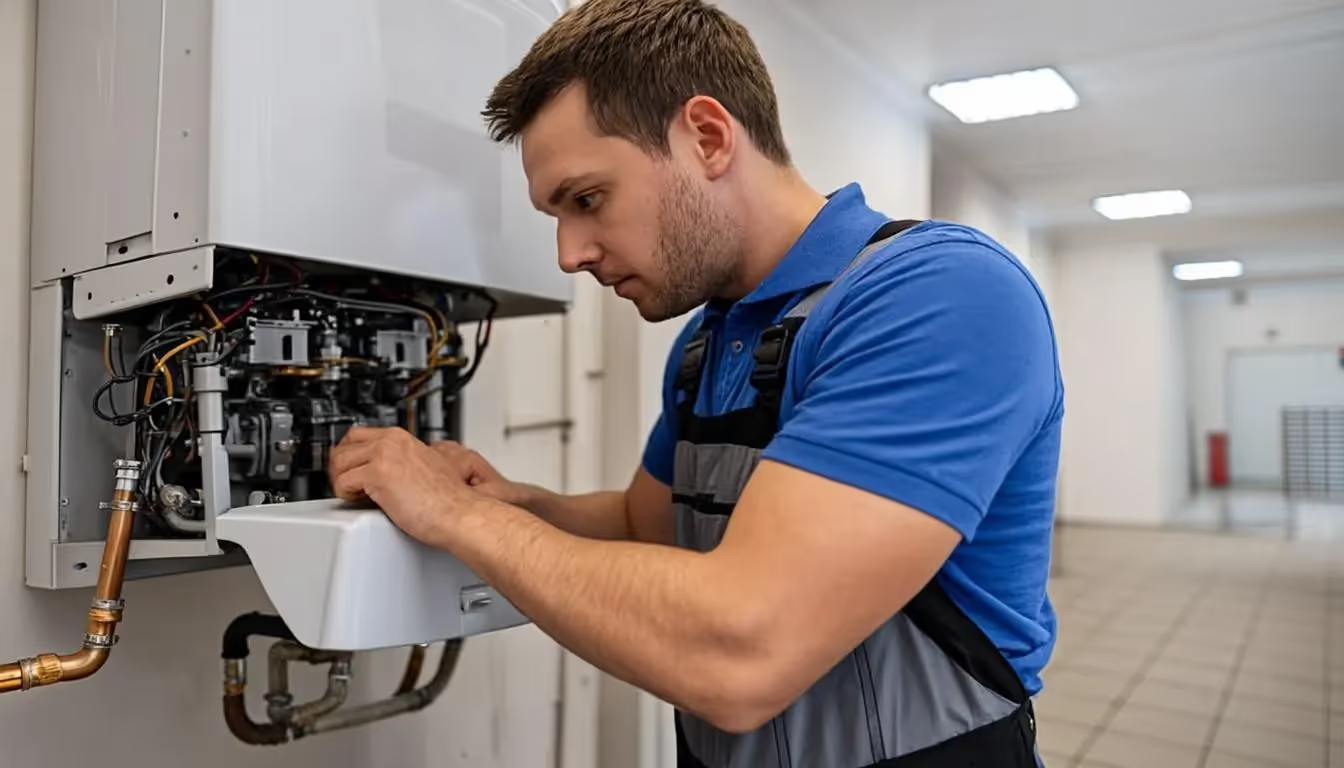
The Honest Answer Up Front
A modulating furnace is the top tier of gas heating: instead of firing at full blast or a single low stage, it adjusts its flame in fine increments across a wide range, running long, gentle, nearly silent cycles that hold temperature instead of chasing it. For the right BC home, a character house with aging ductwork, a family staying decades, a bedroom above the mechanical room, it is genuinely worth the premium, and the reason is our climate: Metro Vancouver spends most of its heating season at partial load, drizzle weather that never asks for full fire, which is exactly where modulating equipment lives.
For the wrong home, it is money spent in the wrong place. A tight budget on a short-stay property is better served by the 80 percent single-stage tier from $3,800 or the 96-plus two-stage sweet spot at $5,500 to $9,000, and the honest efficiency case for modulating is modest on top of two-stage: staging refinements return on the order of 2 to 4 percent in fuel, because most of the condensing-efficiency gain is already banked at the two-stage tier. What you are really buying with the modulating step is comfort engineering: steadier temperature, quieter operation, better air mixing, and gentler treatment of old ducts.
One BC-specific caveat belongs at the top rather than the fine print. If a heat pump conversion is anywhere in your five-year plan, a premium furnace is a bridge you would be paying top dollar to build and then demolish. Combined CleanBC Better Homes, BC Hydro, FortisBC and municipal support that can reach $16,000 for qualifying cold-climate heat pumps in 2026 changes the honest answer for a lot of homes, and we price both paths rather than assume. Our heating services cover both, and the repair-versus-replace rules that should precede any tier decision are in the furnace repair versus replacement guide.
Buy modulating for how it runs, not for what it saves. The fuel savings are real but small; the comfort difference is real and constant.
0 jobs since 2010
Heating, cooling and plumbing jobs completed by our Red Seal team across Metro Vancouver and the Fraser Valley.
0 star rated, 26 reviews
Homeowners rating the work flat-rate, on time and explained honestly before the wrench turns.
0 average response
Live 24/7 dispatch across 17 Metro Vancouver cities, with the $150 flat after-hours premium posted in advance.
$0 diagnostic, credited
The full combustion read on your furnace, deducted from any repair approved the same visit.
What Modulating Actually Means
Three things separate a modulating furnace from the tiers below it. The first is the gas valve: a modulating valve adjusts its firing rate in fine increments across a wide range rather than snapping between off, low and high. The second is the blower: an electronically commutated motor that varies its speed continuously to match airflow to the flame, instead of the fixed speeds of older permanent-split-capacitor motors. The third is the control layer: communicating thermostat and furnace electronics that exchange data continuously and trim the firing rate in a closed loop, so the machine holds a target supply temperature instead of toggling toward a target room temperature.
Put together, the effect is behavioural. A single-stage furnace is a light switch: full fire, short blast, off, repeat, and the room rides a small temperature wave all day. A two-stage furnace adds a low gear for shoulder weather, which smooths most of the wave. A modulating furnace is a dimmer: it finds the firing rate at which the heat produced matches the heat the house is losing, and it simply stays there, sometimes for hours, drifting its output as the weather drifts. The burner that runs at 40 or 60 percent most of the day is quieter, steadier and sits in the most efficient part of its own operating curve.
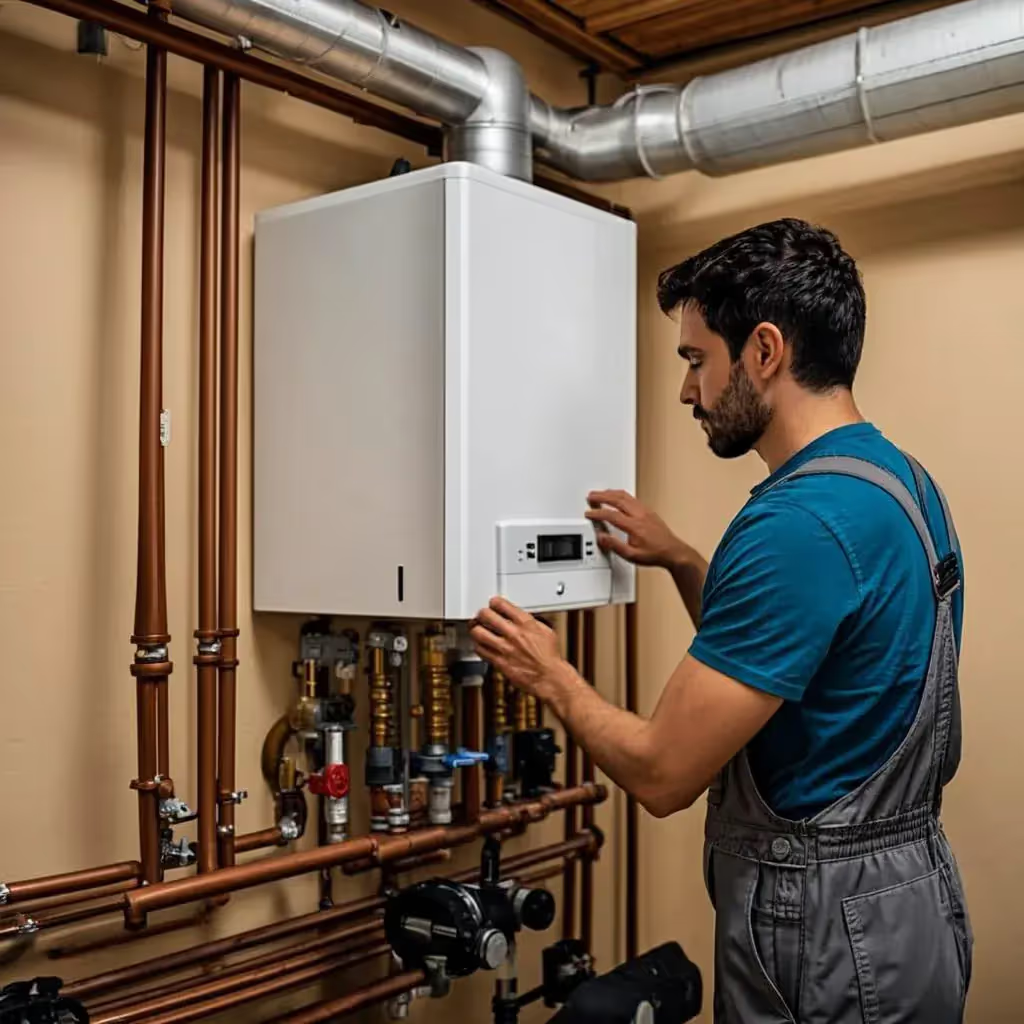
The Three Tiers, Side by Side
Furnace tiers are easiest to compare by how they cycle. Here is the honest field comparison our estimators use, mapped to the housing they fit in Metro Vancouver.
| Tier | How it runs | What it feels and sounds like | Where it fits |
|---|---|---|---|
| Single-stage, 80 AFUE | Full fire or off, the light switch | Temperature waves, start-up noise, shortest cycles | Suites, rentals and budget swaps where dependable heat matters more than refinement, from $3,800 installed |
| Two-stage, 96-plus AFUE | A low gear for most days, high gear for cold snaps | Longer gentler runs, steadier temperature, noticeably quieter | The regional sweet spot for family homes in Surrey, Burnaby and Coquitlam subdivisions, $5,500 to $9,000 |
| Modulating, 97-98 AFUE | Continuous fine adjustment, the dimmer | Near-silent, barely-there heating, the steadiest temperature available in gas equipment | Character homes, long-stay renovations, noise-sensitive rooms and aging ductwork, premium tier quoted per home |
The tier names vary by brand, variable-capacity, fully modulating, communicating, but the mechanics and the behaviour are the same family. What does not vary: every tier we install is sized from a room-by-room load calculation, permitted through Technical Safety BC, and commissioned to the manufacturer startup checklist, because an oversized modulating furnace short-cycles into two-stage behaviour and forfeits exactly what the tier was bought for.
Why Our Climate Loves Long Gentle Cycles
Modulating equipment looks premium everywhere and performs premium in few places as well as Metro Vancouver, and the reason is load profile. The coast spends most of its heating season between 4 and 10 degrees, drizzle weather in which a typical house loses heat slowly and steadily. A furnace sized for a minus 6 design night is running at a fraction of its capacity through most of October to April, which means the single-stage tier spends the season blasting short cycles from a machine bored at half duty, and the two-stage tier runs its low fire for most of the season.
The modulating tier is built for exactly that duty. It can settle at the partial firing rate that matches a mild-weather heat loss and hold it for hours, which is where three separate virtues appear at once: the burner sits in its most efficient operating zone, the blower runs slow enough to be barely audible, and the air keeps moving through the filter continuously instead of in bursts. Then an outflow week arrives, the valley cities cool faster and longer than the coast, and the same machine ramps smoothly up its range without the family ever hearing the step change that a two-stage unit announces.
This is also why the honest staging-efficiency number is modest rather than dramatic. Condensing two-stage equipment already captures most of the fuel-efficiency gain over the 80 percent tier; the fine-grained staging of the modulating tier adds on the order of 2 to 4 percent in fuel on top, because the remaining losses are mostly fixed by the exchanger physics rather than the control resolution. The comfort gain, by contrast, is continuous and climate-amplified: in a heating season this long and this gentle, the machine spends more of the year in its sweet spot than anywhere else on the continent.
The Comfort Case
Comfort is measurable, and modulating equipment moves every metric a homeowner can actually feel. The temperature swing between cycles shrinks, because the furnace corrects drift in small continuous trim instead of waiting to overshoot a setpoint. Register air stays warm and steady, because the supply temperature is held rather than spiking and fading. And the sound signature changes from a start-and-stop percussion to a low continuous presence that most families stop noticing entirely, which is the single most common remark on our follow-up calls after a modulating install in a bedroom-adjacent mechanical room.
- Steadier temperature. The closed loop trims output continuously, holding rooms within a fraction of a degree of setpoint rather than riding the two-degree wave of single-stage cycling.
- Continuous air movement. A slow, matched blower speed keeps air mixed between floors and rooms, which is a real fix for the cold-far-bedroom problem in split-level and character homes.
- Filtration that actually runs. Continuous low-speed airflow passes house air through the filter far more often than burst cycling, which pairs well with a mid-range MERV filter for dust and pollen, without the airflow penalty of a filter too dense for the system.
- Gentler on the machine. Fewer ignitions per season and gentler thermal ramps mean less stress on the heat exchanger and the ignition train over a 15-to-20-year service life, and cleaner combustion records at the $129 annual tune-up.
The BC Housing Fit
The housing stock tells the modulating story better than any brochure. The pre-1940 character homes of Vancouver's west side, Dunbar, Point Grey, Shaughnessy, and New Westminster's Queens Park, usually pair generous volumes with patched, aging, hand-fitted ductwork. A single-stage replacement in that ductwork arrives as noise and swing; a modulating unit runs long low cycles that gently steer old duct systems into steady comfort, with the low static pressure of a matched slow blower doing a kindness to boots and joints that were sealed with cloth tape in 1962.
The 1980s-to-2000s subdivisions of Surrey, Langley, Coquitlam and Port Coquitlam are mostly two-stage territory: sound ductwork sized for simpler equipment, family budgets that the $5,500-to-$9,000 high-efficiency tier serves well, and comfort needs that low fire satisfies on all but design nights. The modulating tier earns its premium there for specific reasons rather than general ones: a nursery above the furnace room, a work-from-home office over the mechanical space, an owner planning to stay decades and wanting the last word in quiet. And the long-stay renovation, where the mechanical room is being rebuilt anyway and the owners intend to retire in the house, is the classic case, because the premium is amortized across the longest possible ownership and the comfort is consumed daily.
The Honest Cost Math
Two anchor prices frame the decision. An 80 percent single-stage furnace starts at $3,800 installed, and the 96-plus two-stage tier runs $5,500 to $9,000. The modulating step above the two-stage tier is priced per home, because the honest number depends on the communicating-control package, the blower and valve configuration, the venting scope and the ductwork preparation the specific house needs, and we quote it flat and in writing rather than as a headline range.
| The spend | What it buys | Who it is honest for |
|---|---|---|
| Single-stage from $3,800 | Dependable 80 AFUE heat, simple controls, shortest install | Suites, rentals and short-stay properties |
| Two-stage $5,500 to $9,000 | The condensing efficiency step, low-fire comfort and quiet, the regional sweet spot | Most family homes in the region |
| Modulating, quoted per home | Fine-grained staging, communicating controls, near-silent continuous running, the steadiest comfort available in gas | Character homes, long-stay owners, noise-sensitive rooms, aging ductwork |
| Thermostat to match, $220 to $420 | Staging configuration that lets the equipment run the way it was built to run | Every tier above single-stage |
| The $129 annual tune-up | Combustion and staging verified across the firing range | Everything, every year, warranty included |
The efficiency arithmetic caps the pure payback claim: if staging adds a few percent of fuel economy on top of two-stage, the comfort premium is paid mostly in comfort, and the honest sales pitch says so. What bends the math is ownership horizon and the heat pump question. Across a 20-year stay, the comfort and quiet are consumed daily and the fuel trim accumulates; across a 3-year hold, the two-stage tier is the better spend and the difference is better banked toward the eventual conversion. Financing from 7.99 percent with approved credit, arranged through our financing page, can put the premium tier on a monthly cost that the fuel savings partially offset.
Deciding Between Tiers?
Get flat written quotes for the two-stage and modulating tiers on the same visit, with the load calculation, duct assessment and heat pump comparison attached. Call 604-615-2212 or request a free estimate.
What a Modulating Furnace Requires Around It
The tier only performs inside a system that supports it, and three requirements come up on every honest quote. The first is ductwork that can run at low airflow without strangling: total external static pressure is measured before the equipment is chosen, and where returns are undersized, adding a return or fixing the worst restriction is part of delivering the tier, because a modulating furnace starved for air will ramp and cycle like the machine below it.
- A communicating or staging-capable thermostat. A basic thermostat set to single-stage behaviour will hammer a modulating furnace between off and high fire, sacrificing both comfort and the efficiency the tier exists for. Installed and configured from $220 to $420, the control is a fraction of the project and most of the intelligence.
- A filter strategy that matches the blower. Continuous low-speed running passes air through the filter constantly, which wants a filter with enough dust capacity to hold a season and low enough resistance to let the ECM blower do its work. We set the filter grade and schedule at commissioning, and the habit is checked at the $129 tune-up.
- Commissioning across the range. The startup checklist on this tier means verifying firing rate, airflow, temperature rise and combustion at multiple points, not just full fire, because the machine spends its life at the bottom of its range. A commissioning sheet handed over on install day is the document that proves the tier was delivered.
- A humidity and bypass review on older homes. Continuous low airflow changes how humidifiers and bypass dampers behave, and both are checked rather than assumed when we replace equipment in an older mechanical room.
None of this is exotic; all of it is the difference between a modulating furnace that runs like a dimmer and one that runs like an expensive two-stage. The seasonal habits that protect the equipment, filter changes, annual service and a thermostat left to do its job, are collected in the winter prep guide for Vancouver homes.
Where the Premium Is Not Worth It
The honest guide includes the homes that should keep their money. Short-stay owners, three-to-five-year horizons, will not consume enough comfort or fuel savings to cover the tier step, and the two-stage machine hands the next owner a fine furnace anyway. Rental suites and basement suites have tenants rather than owners experiencing the difference, and the 80 percent tier from $3,800 is the workhorse that fits.
Homes with a heat pump conversion on the horizon should not buy any premium furnace as a bridge. Ducted cold-climate heat pump systems run $6,500 to $14,000 and multi-zone ductless $9,500 to $16,000, with combined CleanBC Better Homes, BC Hydro, FortisBC and municipal support that can reach $16,000 for qualifying systems in 2026, and we complete the paperwork. A dual-fuel pairing, where the heat pump carries the mild bulk of the season and a furnace waits for outflow nights, is the configuration where a quality gas furnace and a heat pump genuinely share one duct system, and it deserves a price before any single-path decision is made. The equipment side of that comparison starts on the heat pumps page.
And homes whose ductwork is the real problem, rooms uneven, blower struggling, return air starved, should spend on the distribution before the machine, because a premium furnace on bad ducts is a premium furnace performing badly. The repair-versus-replace arithmetic in that conversation, including how we weigh a repair between $180 and $650 against replacement, is covered in the guide linked in Chapter 1.
City Notes Across Metro Vancouver
Housing stock is the local variable, and the region spans five decades of it. Here is how our crews frame the tier decision, city by city.
Vancouver
Dunbar to Point Grey character homes with aging ducts are the regional home of the modulating tier: long gentle cycles that quiet old distribution systems.
North Vancouver
Hillside exposure lengthens run hours and bedroom-adjacent mechanical rooms reward near-silent running more than anywhere else.
Surrey
Fleetwood and Guildford subdivisions are two-stage country: sound ducts, family budgets, low fire for the long mild season.
Coquitlam
Westwood Plateau split-levels with cold far bedrooms: continuous air mixing fixes the problem stairs built.
Langley
Valley outflows reward the smooth ramp to high fire, and long-stay acreage owners are the tier's honest amortizers.
Maple Ridge
The coldest run hours adjacent to the deepest comfort investment: the tier earns its premium through the outflow weeks.
Burnaby and New Westminster split between post-war specials on the value tiers and heritage homes on the premium one, Richmond's slab homes and portables err toward two-stage, Port Coquitlam and Delta follow the subdivision pattern, and Abbotsford runs valley-cold with the same tier logic as Langley and Maple Ridge. Local response times for all twelve cities are on our service areas page.
The Buying Cheat Sheet
The whole guide on one screen, in the order you should use it when furnace quotes arrive.
| Your situation | The honest call |
|---|---|
| Character home, aging ducts, staying decades | The modulating tier is the fit: quiet long cycles gentle old distribution, premium quoted per home |
| Subdivision family home, sound ductwork | Two-stage at $5,500 to $9,000 is the regional sweet spot; step up only for specific comfort needs |
| Suite, rental or short-stay property | Single-stage from $3,800: dependable heat, simple controls, honest price |
| Noise-sensitive room over the mechanical space | The tier difference is audible all day, every day: weight it heavily |
| Heat pump conversion plausible within five years | Price the conversion and the dual-fuel pairing before buying any premium furnace |
| Ducts leaking, rooms uneven, blower strained | Fix the distribution first: a premium furnace on bad ducts performs badly |
| Buying the tier | Budget the communicating thermostat from $220 to $420 and the annual $129 tune-up as part of the tier, not accessories |
One sentence for the showroom: two-stage is the smart buy for most BC homes, modulating is the comfort buy for the right ones, and the load calculation decides which yours is.
Frequently Asked Questions
Services From This Guide
Furnace tiers installed and serviced across 17 Metro Vancouver cities, from value single-stage to commissioned modulating systems.
Furnace install and repair
Single-stage from $3,800, two-stage $5,500 to $9,000, repairs from $180 to $650, and the $129 tune-up that keeps staging honest.
Heat pumps and dual fuel
Cold-climate systems from $6,500 to $14,000, and dual-fuel pairings where a furnace and a heat pump share one duct system.
Financing and rebate filing
Payment plans from 7.99 percent with approved credit, and eligible CleanBC and FortisBC programs checked and filed.
Furnace service in Vancouver
Character-home crews who quote the modulating tier with the duct assessment attached.
Related Guides
Furnace Repair or Replacement
The age and repair-cost rules that come before any tier decision.
HeatingBoiler vs Furnace in Vancouver
The distribution decision that sits upstream of the tier decision in older homes.
SeasonalWinter Prep for Vancouver Homes
The October habits that protect a premium furnace through the season it was bought for.

Red Seal certified, licensed gas fitters (BC-PL-2019-4421), $2M insured and 15-plus years in the field, with more than 12,000 jobs completed across Metro Vancouver since 2010 and a 5.0-star rating across 26 Google reviews. We wrote this guide because the modulating tier gets sold as an upgrade for everyone, and it is really an upgrade for specific houses and specific horizons. The honest quote names which one yours is, even when the answer is the cheaper furnace. To book instead of DIY, see furnace repair in Vancouver — same-day across the city.
More about our team →Get the Tier Math for Your House
Book a $89 diagnostic or a free replacement estimate with a Red Seal estimator. You get the honest repair-versus-replace read, a flat written price for the two-stage and modulating tiers with the load calculation and duct assessment attached, the heat pump comparison, and financing from 7.99 percent with approved credit. Zero obligation, same-day quotes on most calls. If you would rather hand this to a pro, our heating & furnace services pages cover Metro Vancouver.
Choosing a furnace tier?
One visit settles it: load calculation, static-pressure read, and flat quotes for both tiers. Daytime? The $89 diagnostic or a free estimate is usually same-day in Vancouver, Burnaby and Surrey, 24/7 for no-heat emergencies.
Call 604-615-2212 WhatsApp Us