
The Honest Answer Up Front
Mold in an HVAC system is a moisture problem wearing an air-quality costume. Spores are everywhere in this region, on every surface and in every breath of coastal air, and they wait for three things: a surface that stays damp, food in the form of dust and organic film, and darkness. An air handler supplies all three the moment something goes wrong: a condensate drain that clogs, a filter that fits badly, a crawlspace pumping humid air straight into the return. The equipment does not create mold; it distributes whatever grows inside it, to every room, on every cycle.
The honest framing on two counts. First, most musty-smell calls end in a cleaning and a drainage fix, not in equipment replacement, and the diagnostic that finds the answer is our $89 visit, credited to any work that follows. Second, remediation itself is quoted per home, because cleaning a coil on an accessible furnace is a different job from a multi-head ductless deep clean, and any number quoted over the phone for a smell nobody has seen is a guess with a price tag on it.
This guide is written for the twelve Metro Vancouver and Fraser Valley cities we serve, because this climate grows mold the way the Prairies grows frost: October through April delivers months of humid air against cool surfaces, and the summer heat dome weeks add their own condensation chapter. The region chapter maps which homes carry the most risk, and every chapter in between follows the order that works: find it, clean it, fix the water that fed it.
A mold problem in a furnace is a plumbing problem with a fan attached. Chase the water, not the smell, and the smell takes care of itself.
0 jobs since 2010
Heating, cooling and ventilation work completed by our Red Seal team across Metro Vancouver.
0 avg response
Average 45-minute arrival on 24/7 no-heat and no-cooling calls, with a $150 flat after-hours premium posted in advance.
0 star rated
5.0 stars across 26 Google reviews, many from homeowners whose musty-smell calls ended in a cleaning, not a replacement.
0
The $89 diagnostic traces the smell to its source, credited to any cleaning or repair that follows.
What Mold in an HVAC System Actually Is
Mold is a fungus that grows as a colony of threadlike structures and reproduces through airborne spores. Outdoors it is a decomposer and largely harmless to a healthy building; indoors, on a damp surface, a colony establishes in days and releases spores and microbial volatile organic compounds, the actual source of that earthy, musty smell. The smell is the tell, not the threat itself: by the time you notice it, growth has been established long enough to announce itself.
In an HVAC system, growth is almost never random. The classic sequence: an air conditioning coil condenses water out of the house air all summer, that condensate drains through a pan and line, and when the drain clogs or the pan holds water, the wet dust on the coil becomes a growth medium. Furnace-side, the same story runs through humidifier pads left in service year-round, blocked condensate from high-efficiency furnaces, and blower wheels coated in organic dust that got damp once and stayed damp. Ductwork grows only where two conditions meet: interior moisture and food, which is why internally insulated ducts with wetted lining are the serious case.
The distinction that matters for homeowners is surface growth versus systemic contamination. Surface growth on an accessible coil, pan or blower is a cleaning job with a moisture fix attached. Systemic contamination, growth woven into duct lining or spread through a system that stayed wet for a season, is the case where remediation becomes a real project, and it is the only case where equipment decisions start. Our cooling services and heating teams sort the two apart with eyes on the equipment, not with a brochure.
Why BC Homes Grow It: Rain, Condensation and Dark Ducts
The coast runs a seven-month humidity experiment on every home. From October through April, outdoor air sits cool and damp while heated indoor air holds more moisture than the surfaces it touches, so windows, exterior walls, and the cold corners of ductwork and equipment all become condensation zones. Add the region's housing stock, decades of homes with crawlspace returns, basement mechanical rooms and bath fans vented into attics, and the return side of many systems drinks humid air straight from the wettest part of the building.
Summer inverts the physics without solving it. AC coils dehumidify brilliantly, which is exactly the problem: they strip litres of water from the air daily, and every litre has to leave through the condensate drain. A drain that clogs in July turns the coil and pan into a terrarium inside a dark cabinet, which is why the first musty-fan calls of the year reliably arrive with the first stretch of air conditioning. The heat dome years sharpened the pattern, and the heat dome preparedness guide covers the rest of what those weeks demand.
Winter adds the third chapter: high-efficiency furnaces produce their own condensate, humidifiers pad the air, and closed-up houses recycle the same moisture for months. The homes that stay out of trouble are not the dry ones; they are the ones where water has a designed exit. Every prevention item in this guide is ultimately one move: give the water somewhere to go.
Where It Hides: Coils, Pans, Blowers and Ducts
The map below is where our technicians actually find growth, ranked by how often each spot is the culprit. Check your suspicion against it before anyone quotes you anything.
| Location | Why it grows there | The tell |
|---|---|---|
| AC evaporator coil | Constantly wet in cooling season, coated in the dust the filter missed, inside a dark cabinet | Musty smell at blower start, weak airflow, visible spots on the coil face |
| Condensate drain pan and line | Standing water whenever the drain clogs or slopes wrong; the pan never fully dries | Water around the unit, drain overflow, smell strongest at the furnace |
| Blower wheel and filter rack | Organic dust on the wheel plus one damp event is enough; a badly fitted filter feeds it | Dusty-musty odour, visible buildup on the wheel, filter bypass gaps |
| Ductless mini-split heads | Wall-mounted coils with small drains and fans that homeowners rarely clean | Smell when the head starts, visible growth on the louvre or vanes |
| Duct interiors | Requires moisture plus food: wetted internal lining, crawlspace ducts, flooded runs | Smell from specific registers, history of flooding or wet crawlspace |
The ductless row deserves its own sentence, because ductless heads are the region's fastest-growing category and the least-maintained: the Vancouver AC repair crews open head after head with packed filters and dry drain traps. The filter in a wall head is washable for a reason; a monthly rinse is the cheapest mold prevention in this entire guide.
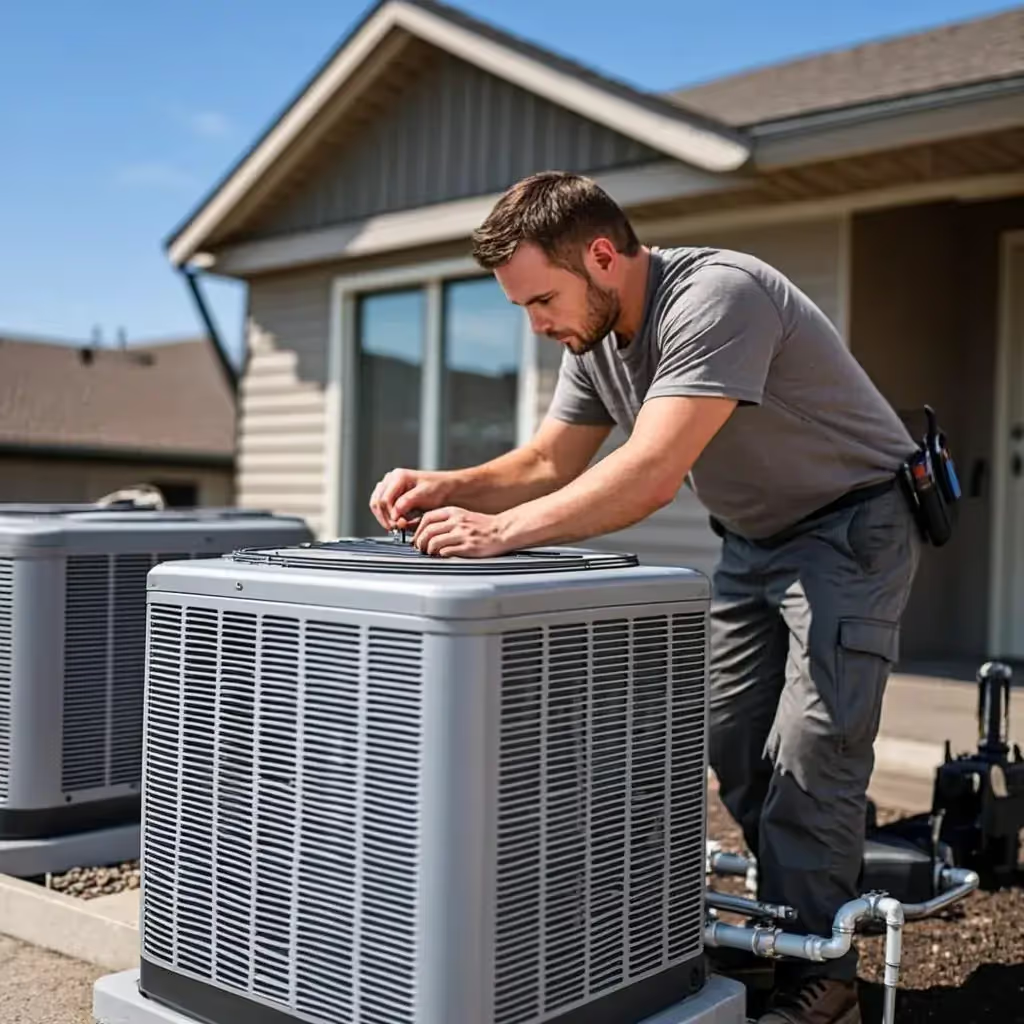
The Smell and Symptom Checklist
Diagnosis at home starts with the fan test. Turn the system on and pay attention to the first minute: a musty wave that arrives with the blower and fades when the system stays off points at the air handler, because the blower is pushing air across the growth. A smell that lives in one room regardless of the fan points at the room, a wall cavity, a crawlspace or a sink cabinet, and that distinction saves a lot of wrong spending.
- Smell timing: strongest in the first minutes after the fan starts, weaker after long off periods, means system-side growth is likely.
- Filter evidence: dark spotting or a damp, warped filter means moisture is moving through the rack, not just air.
- Pan evidence: standing water, overflow staining or algae slime at the drain means the condensate path is already losing.
- Register evidence: smell or dark dust blowing from one specific register points downstream of the air handler.
- Household symptoms: congestion, irritated eyes or coughs that improve when you are away for a day and return with the air.
- History: a past flood, a wet crawlspace, or a summer of AC after a winter nobody serviced the drain.
None of this is a verdict, and none of it replaces eyes on the equipment. The checklist's job is to tell the diagnostic visit where to start, and to stop you from buying an air purifier to treat a clogged drain. If the fan test lands on the system, the furnace repair crews in Vancouver and across the region open the cabinet and confirm it in the first ten minutes.
Health Risks: What Matters and What Is Overblown
The honest science, minus the horror stories. Dampness and mold indoors are consistently associated with respiratory symptoms: nose and throat irritation, coughing, wheezing, and the worsening of asthma and allergies. The mechanism is a combination of spores, fragments and those microbial volatile compounds, and the effect is strongest in people who already have sensitive airways, infants, and anyone with compromised immunity. For that group, active growth in a system that runs daily is a genuine health issue worth fixing promptly.
What is overblown is the notion that every patch of coil mold is an emergency gutting. Most healthy adults notice a musty smell long before they notice symptoms, and the remedy is removal and moisture control, not demolition. The self-test that keeps this in proportion: if symptoms clearly improve when you are out of the house for a day and return with the air, the indoor environment is contributing, and that contribution is worth removing whatever it turns out to be.
Two things we do not do at BC Home Service: sell fear, and diagnose medicine. The health conversation belongs with your doctor; the equipment conversation belongs with us, and the two support each other when the growth is found, removed, and its water source documented. That documentation matters for strata conversations and insurance files too, which is why every remediation we complete ends with a written report.
Smell Something When the Fan Starts?
The $89 diagnostic opens the cabinet, finds the growth and traces its water source, credited to any work that follows. Call 604-615-2212 or get a free quote.
Diagnosis: What the $89 Diagnostic Looks At
The diagnostic visit is where the guesswork ends. Our Red Seal technician opens the air handler and inspects the coil face, the blower wheel, the filter rack and the condensate path; runs water through the drain to see whether it flows, weeps or overflows; and follows the smell through the return side and the registers to localize the source. Where the growth is inside ducts or a ductless head, the inspection extends there, and the visit ends with a written finding: what is growing, where, and, most importantly, where the moisture is coming from.
The $89 fee is credited to any cleaning or repair that follows the visit, which is the only honest way to price diagnosis: the answer should not cost extra when you act on it. What the visit also produces is a scope. Coil and pan cleaning is one job, a blower cleaning is a bigger one, a ductless deep clean across several heads is a project, and each is quoted per home after being seen, never before.
One caution about the wider world: a mould-only contractor with a meter and a brochure can sell a very expensive afternoon. A licensed heating and cooling team that services the equipment it inspects has to live with its own diagnosis, because we are the ones who clean it, fix the drain, and stand behind the system afterward. That is the difference between a finding and a sales pitch.
Remediation: What a Professional Job Includes
Honest remediation has a shape, and you should expect every step of it. First, containment: the system stays off while the growth is being disturbed, because a running blower during cleaning distributes exactly what you are removing. Second, removal: coils, pans and blowers are cleaned at the equipment, ductless heads are opened and their filters, vanes and drain paths cleaned, and duct interiors where indicated are cleaned with contact methods. Third, the moisture fix: the drain is cleared and verified with a water test, the pan checked for slope and condition, and the source that fed the growth, crawlspace humidity, a vented bath fan, a crushed condensate line, identified and scheduled.
Fourth, verification and documentation: the system runs, the smell test is repeated, and you receive a written report of what was found, cleaned and corrected, the same report an adjuster or strata council would ask for. Where the growth involves ducts, the cleaning-versus-replacement decision follows the sequence in the FAQ below, and replacement, quoted per home, is the last resort rather than the first quote.
What remediation does not include, at least from us, is a miracle fog sprayed into the return. Biocide fogs mask odours and kill surface growth temporarily while leaving the moisture source untouched, which schedules your problem for a return engagement. If a quote starts and ends with a fog, keep looking.
Fix the Conditions or It Comes Back
Cleaning without source control is a subscription to cleaning. The moisture audit that follows every remediation is the part that makes it stick, and it runs through four doors in order: the condensate path, the humidifier, the return air source, and the house itself.
- The condensate path: drains cleared, trapped, sloped and water-tested; pans level and free of biofilm. This fixes the majority of system-side growth for good.
- The humidifier: pads replaced on schedule and the unit shut down and dried at season end. A humidifier left wet through summer is a mold factory attached to your furnace.
- The return air source: crawlspace and basement returns checked for damp; a return that drinks crawlspace air feeds the whole system humidity.
- The house: bath fans vented outdoors and actually used, dryer vents sealed, and the winter habits that keep humidity sane. The winter prep guide covers the full checklist.
Where a house keeps producing humidity faster than the system drains it, the conversation moves to dehumidification and ventilation, and that conversation is worth having with the same team that cleaned the coil, because we already know your equipment's airflow and drainage reality. The worst outcome in this whole subject is a cleaned system re-inoculated in a month by a water source nobody went looking for.
Prevention: Filters, Tune-Ups and Maintenance Plans
Prevention is cheap, boring and effective, which is why it gets skipped. The homeowner half: check the filter monthly and replace it on schedule with one that actually fits the rack, because bypass air carries dust straight to the wet coil; rinse ductless head filters monthly through the cooling season; keep furniture and carpets from blocking returns; and run bath fans for the full shower-plus-ten, vented outdoors, never into the attic.
The professional half is the annual tune-up. Our $129 furnace tune-up runs the 15-point inspection, clean and calibration, which includes the coil, the drain path and the filter fit that decide whether the next cooling season grows anything. Maintenance plans in this region run $149 to $250 a year, wrap the furnace and AC service into one rhythm, and add priority booking, which matters when the first July heat wave arrives and every call in the region becomes urgent at once. The spring AC checklist covers the May version of this work, and repairs that surface along the way run $180 to $650 through our flat-rate book.

The Region, City by City
Mold risk across the twelve cities we serve follows housing age, crawlspace culture and how much rain the neighbourhood drinks. Find your city, and you will find which chapters above are homework.
| City | The moisture profile | The priority move |
|---|---|---|
| Vancouver | Century basements and wet crawlspaces; high winter humidity in sealed older homes | Return-air and crawlspace audit |
| Surrey | Big 1980s-90s stock with crawlspace returns and heavy rain exposure | Tune-up with drain verification |
| Burnaby | Sloped lots, damp lower suites, mechanical rooms in basements | Drain path and filter fit check |
| Richmond | Sea-level humidity; slab homes with ductless heads everywhere | Head filter and drain maintenance |
| Coquitlam | Ridge humidity, forest canopy keeping exteriors damp for months | Condensate and ductless cleaning |
| Langley | Acreage homes with well water, humidifiers and crawlspace ducts | Humidifier pad and return audit |
| Delta | Flat, water-adjacent, high water tables under many crawlspaces | Return-side moisture control |
| New Westminster | Century homes, hill-side damp, basements that never fully dry | Full diagnostic with moisture tracing |
| North Vancouver | The wettest air in the region against cool ductwork most of the year | Condensation-zone inspection |
| Maple Ridge | Rural properties, long duct runs, wood heat mixing with forced air | Duct and blower inspection |
| Abbotsford | Valley humidity swings, outflow cold that drives condensation weeks | Seasonal tune-ups, both systems |
| Port Coquitlam | River-flat moisture and dense 1990s stock with ductless retrofits | Head cleaning and drain checks |
Wherever your address lands, the sequence is the same: smell test, diagnostic, clean, then fix the water. The service areas page carries region-wide response details, with live dispatch and an average 45-minute arrival on emergency calls.
The Decision Cheat Sheet
Find your situation, do the move, in this order. When two rows apply, the earlier row is the one to act on first.
| Your situation | The move |
|---|---|
| Musty wave when the fan starts | Book the $89 diagnostic: cabinet, coil, pan and drain, credited to any work that follows |
| Water around the furnace or head | Condensate drain first; a blocked line is both the flood and the farm |
| Spots on the filter or visible growth | Diagnostic and cleaning, with the moisture source traced in the same visit |
| Smell only in one room | Room-side investigation: wall cavity, crawlspace, sink cabinet, before touching the HVAC |
| Symptoms that fade when you leave | Take it seriously: diagnostic now, doctor conversation in parallel |
| System serviced and smell returns | Re-audit the moisture source: return air, humidifier, crawlspace, in that order |
| Ducts found with growth | Clean and verify first; replacement only for failures, quoted per home |
| No smell, no symptoms, no service in years | Book the $129 tune-up before the next cooling season makes the question urgent |
The through-line of this guide: mold in an HVAC system is water with nowhere to go, distributed by a fan. Find it, clean it, drain it, and the air goes back to being just air.
Frequently Asked Questions
Services From This Guide
Diagnostics, coil and drain cleaning, tune-ups and 24/7 no-heat and no-cooling response across 12 Metro Vancouver cities.
Furnace service and tune-ups
$129 tune-ups with coil and drain checks, repairs from $180 to $650, flat-rate and Red Seal certified.
AC and ductless service
Coil and drain pan cleaning, head deep cleans and cooling repair across all brands we service.
Heat pump maintenance
Seasonal service for ducted and ductless heat pumps, CleanBC rebate paperwork included.
24/7 emergency response
No-heat and no-cooling calls answered around the clock, $150 flat after-hours premium.
Related Guides
Spring AC Maintenance Checklist
The May jobs that decide whether your cooling season smells clean when it starts.
HeatingFurnace Not Working in Vancouver
The triage list for no-heat calls, from thermostat to blower, and what each costs.
SeasonalWinter Prep for the Vancouver Home
Humidity, fans and drainage habits that keep the wet season out of your air handler.

Red Seal certified, licensed gas fitters (BC-PL-2019-4421), $2M insured and 15-plus years in the field, with more than 12,000 jobs completed across Metro Vancouver since 2010 and a 5.0-star rating across 26 Google reviews. We wrote this guide because we open these cabinets every week, and the story is almost always the same: a wet coil, a blocked drain and a fan that spread the news. Find the water, and the air takes care of itself. To book instead of DIY, see furnace maintenance in Surrey — same-day across the city.
More about our team →Get Your Free HVAC Mold Assessment in Metro Vancouver
Book the $89 diagnostic, credited to any cleaning or repair that follows. You get the source of the smell in writing, a flat-rate quote for the clean, and the moisture fix that keeps it from coming back. Zero obligation, same-day quotes on most calls. If you would rather hand this to a pro, our heating & furnace services pages cover Metro Vancouver.
No heat or no cooling right now?
Emergency calls are answered 24/7 with live dispatch, average 45-minute arrival and a $150 flat after-hours premium posted in advance. Daytime? The $89 diagnostic is usually same-day in Vancouver, Burnaby and Surrey.
Call 604-615-2212 WhatsApp Us