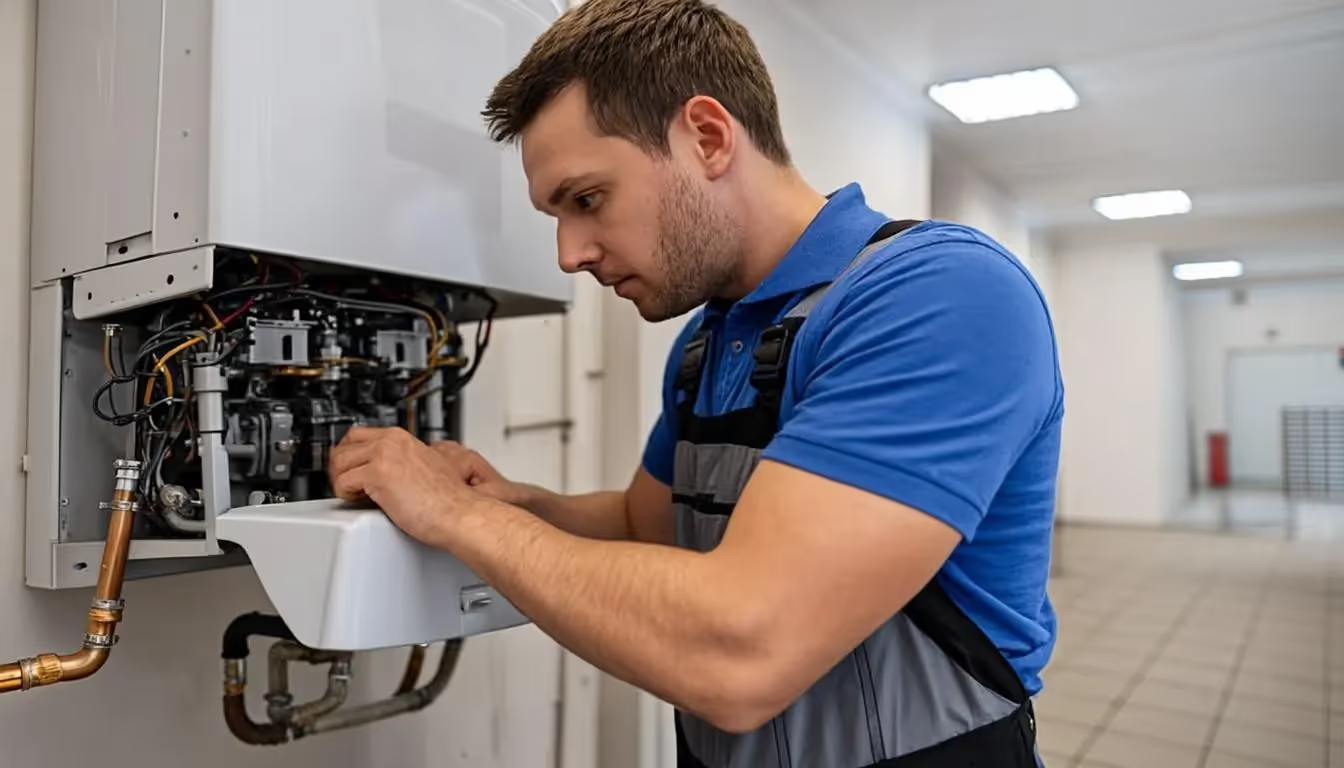
The Honest Answer Up Front
There are three honest answers to the oil question, and only one of them is "convert to gas." If your oil furnace or boiler has two or more winters left and the tank is sound, the cheapest path this year is a professional service, an honest condition report and a plan, not a rush. If the equipment is failing, you have a genuine fuel decision, and gas is the familiar answer: a new gas furnace installs from $3,800 for an 80% single-stage or $5,500 to $9,000 for high-efficiency, gas is piped to the street in most of the region's older oil neighbourhoods, and the conversion removes an aging tank from your insurance file. The third path is the one most Metro Vancouver families have never priced: an oil-to-heat-pump conversion, where combined CleanBC Better Homes, BC Hydro, FortisBC and municipal top-ups can reach $16,000 for cold-climate heat pumps in 2026, and we complete the paperwork.
What we refuse to do is sell the conversion as a panic. Oil equipment is old, not evil, and the oil-to-gas decision is really three decisions stacked: what replaces the furnace or boiler, what replaces the oil-fired water heater most of these homes also run, and what happens to the tank. This guide walks all three, with the real price ladder, the parts of the project that are site-quoted because they genuinely vary, the gas-line and permitting timeline nobody warns you about, and the safety and insurance reality of the tank itself.
Nobody should quote an oil-to-gas conversion over the phone. The gas service line, the tank location, the chimney, the venting run and the water heater all move the number. What we can promise up front is the $89 diagnostic on the equipment you have, credited toward any work you approve, and a written line-item price for every path before you commit to any of them.
0 jobs since 2010
Including the oil-heated generation of homes across the Fraser Valley and Metro Vancouver.
0 star rated
From 26 verified Google reviews, earned on conversions quoted honestly, tank lines included.
0 decisions in every conversion
The heating plant, the water heater, and the tank. Price them together or they get priced for you.
$16,000 top heat-pump support
Combined CleanBC, BC Hydro, FortisBC and municipal top-ups for cold-climate heat pumps in 2026, paperwork included.
Why BC Homes Still Heat With Oil
Oil heat in this province is a geography story. Through the 1950s, 1960s and early 1970s, subdivisions pushed past the edges of the gas grid faster than the mains followed them, and oil furnaces, oil boilers and oil-fired water heaters were the standard package installed in those houses. The gas lines eventually arrived on most of those streets, which is why the region's oil-heated homes now cluster in pockets: older acreage subdivisions in Abbotsford, Langley and Maple Ridge, hillside properties in North and West Vancouver, parts of the Gulf Islands and Vancouver Island, and pockets of Delta and Mission where the mains never made the business case.
The equipment installed in those homes was built to last, and much of it has: a 1970s oil furnace still burning is not a rarity. But the system around it has aged into a liability conversation. Oil prices swing with global markets and delivery minimums punish small tanks; combustion efficiency on a 40-year-old burner is far below anything modern; parts for legacy burners are getting scarce; and the tank, which nobody thinks about until an insurer asks, has a finite service life whether it sits in the basement, leans against the wall outside or lies buried beside the driveway. For most of these homes, the decision arrives when one of three dominoes falls: the furnace or boiler breaks in a cold week, the water heater quits, or the insurance renewal arrives with a tank-related question.
That third domino deserves respect. Fuel oil in soil is a remediation event, not a cleanup, and BC insurers have responded by demanding tank age disclosures, replacement schedules and sometimes certified decommissioning before renewal. An oil tank is not a reason to panic-convert in September, but it is a reason to convert deliberately rather than someday, and our furnace and heating crews in Abbotsford, who see more oil-heated homes than anyone else in our service area, start every oil conversation with the tank's condition, not the equipment's.
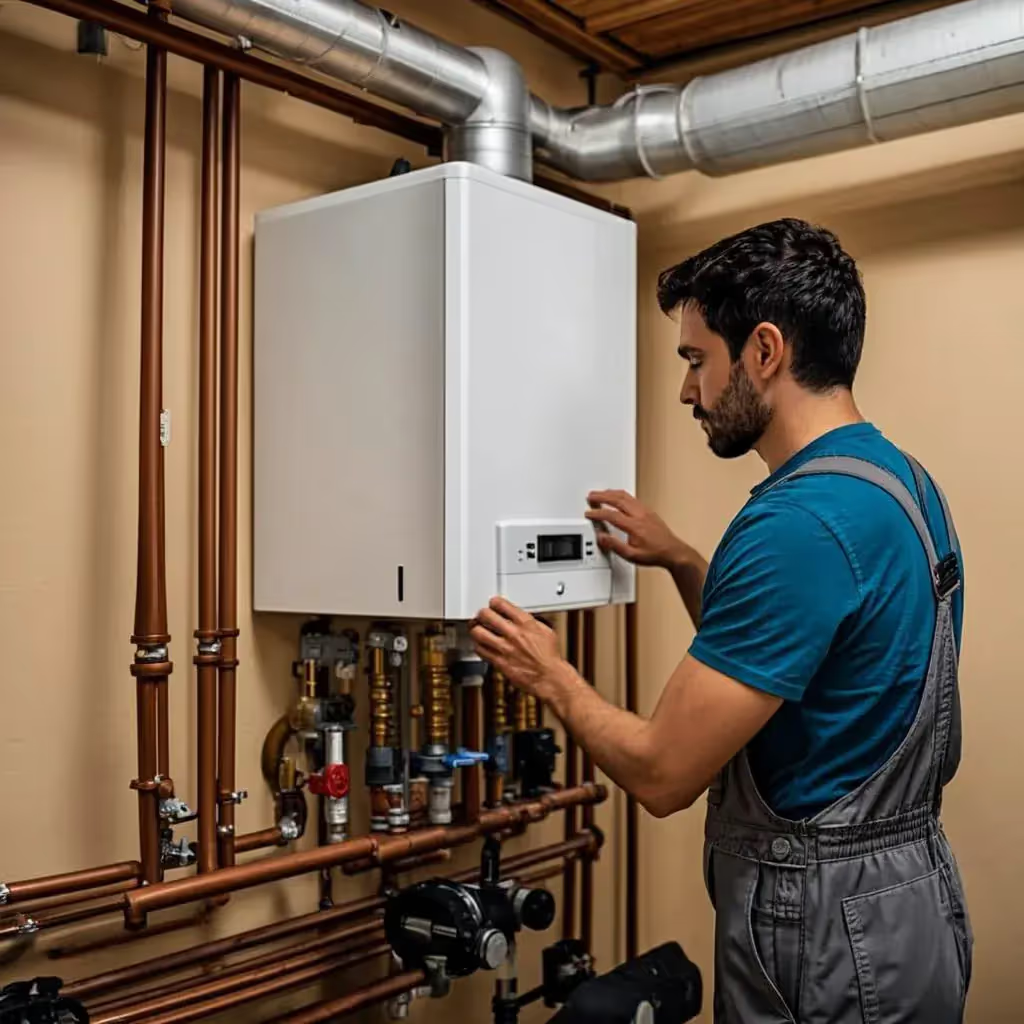
What an Oil-to-Gas Conversion Actually Involves
A conversion is not an appliance swap. It is a small construction project with a utility application in the middle, and knowing the sequence is what keeps it from feeling chaotic. Here is the order, from the day you decide to the day the oil truck stops coming.
Condition report and load calculation
We test the existing equipment, inspect the tank, and run a heat-loss calculation on the house so the replacement is sized to the building as it is now, with its post-2010 windows and added insulation, not as it was in 1968. Oversizing is the original sin of replacement work.
Gas service application
If the street has gas and the house has never been connected, a new service line and meter are required, and that application, in the utility's queue, is usually the long pole in the project. We prepare the load and appliance information for it and coordinate the site work; the timeline is the utility's, and honesty requires saying so.
Equipment selection
Furnace for ducted homes, boiler or combi for hydronic homes, plus the water-heater decision, because the oil-fired tank almost always gets retired in the same project. This is where the price ladder in Chapter 5 comes from, and where the heat-pump alternative gets priced side by side.
Permits and gas fitting
Gas work in BC is regulated under Technical Safety BC. Permits are pulled, the venting is engineered for the new appliance, condensing equipment gets a condensate drain, and every joint in the new gas line is pressure-tested and documented. Licensed gas fitters do this work; it is not a handyman project.
Install, commission and inspect
The swap itself is typically a day. Commissioning includes combustion analysis, gas pressure verification and a written startup report, and the permit closes with an inspection that leaves the paper trail your insurer and a future buyer will both want to see.
Tank pump-out and decommissioning
The old tank is emptied, cleaned and decommissioned to the current standard, above ground or below, with disposal documented. Underground tanks get a soil assessment and, if required, remediation by a qualified contractor. We scope this on site because tank size, access and location move the number; what never changes is that it belongs on the plan, not in the fine print.
The Cost Picture, Line by Line
Some numbers we can promise because they are on our flat-rate book. Others are site-quoted because pretending otherwise is how renovation budgets die. The honest version of an oil-to-gas budget has both kinds of numbers in it, clearly labelled.
| Line item | Typical range | Why it varies |
|---|---|---|
| Gas furnace, 80% single-stage, installed | from $3,800 | Configuration: basement upflow is the simple case, crawlspace and attic runs add labour |
| Gas furnace, high-efficiency, installed | $5,500 - $9,000 | Staging tier, brand, venting conversion from the oil chimney to sidewall PVC |
| Gas combi boiler, heat plus hot water | $7,000 - $11,000 | Hydronic homes; one appliance replaces the oil boiler and the oil-fired tank |
| Condensing boiler, installed | $8,500 - $14,000 | Radiant and high-mass hydronic systems, zone count, controls |
| Replacement water heater, tank | $1,400 - $2,600 | When the heating choice is a furnace, the oil water heater becomes a gas or electric tank |
| Replacement water heater, tankless | $2,500 - $4,500 | Endless hot water and wall-space recovery in the old tank corner |
| Gas service line and meter | Quoted by the utility | Street connection distance and utility queue; we prepare the appliance load data for the application |
| Tank pump-out, decommission, disposal | Quoted after site visit | Above-ground vs buried, access, size, and whether soil assessment is triggered |
| Chimney liner or venting conversion | Quoted after site visit | Condensing appliances sidewall-vent and often retire the oil chimney from duty |
| Diagnostic on existing equipment | $89, credited to work | The condition report that starts the whole decision honestly |
Two honesty notes on that table. First, the boiler-side numbers matter more than most guides admit, because a large share of BC's oil homes are hydronic: radiators or in-floor loops on an oil boiler, and for those houses a combi is frequently the cleanest conversion, one appliance, one venting project, one warranty. Our boiler service pages cover that equipment family in detail. Second, if the number at the bottom of the quote is the obstacle, financing runs from 7.99 percent with approved credit, and the repayment math is worth doing against the oil bills you stop paying.
The Operating-Cost Math, Without the Sales Pitch
The fuel-switch pitch usually leans on a single number: fuel price per litre versus per gigajoule. The honest comparison is efficiency-adjusted: what you pay for each unit of heat that actually lands in the rooms. A legacy oil burner converts roughly two-thirds of its fuel energy into delivered heat on a good service year, and less as nozzles, heat exchangers and settings drift. An 80% gas furnace delivers four-fifths. A condensing gas furnace or boiler delivers nearly all of it, because it harvests the heat from the exhaust water vapour that older equipment sends up the chimney.
Stack that against delivery realities: oil arrives by truck with delivery minimums and price swings tied to world markets, while gas arrives by pipe at a regulated price that utilities publish in advance; oil tanks pay for themselves in nothing, insurance and replacement; and every oil-fired appliance in the basement shares one flue that has to stay right. The direction of the total is not seriously in dispute in this region, which is why oil-to-gas conversions happen every week. The magnitude is house-specific, which is why we run the arithmetic at the kitchen table with your actual fuel receipts from last winter rather than reciting a percentage savings in an ad.
Be suspicious of any conversion pitch that quotes a guaranteed monthly savings number before seeing your bills, your house and your equipment. The honest version is a range built from your own usage, and we will show the arithmetic line by line.
One more efficiency angle that belongs in this chapter instead of a footnote: if the quote is going to include a condensing gas furnace or boiler anyway, the incremental step to a cold-climate heat pump deserves a side-by-side column, because in an oil conversion that step is where the provincial rebate money lives. Chapter 6 is that column.
The Heat Pump Path Off Oil
Here is the alternative most oil homeowners have never seriously priced. A cold-climate heat pump replaces the oil furnace or boiler and the window-unit lifestyle in one move, heats to Metro Vancouver's design temperatures without backup in most homes, and cooling comes free in the same equipment. For a ducted house, a cold-climate ducted system installs at $6,500 to $14,000; for a house without ducts, the oil-boiler-and-radiators case, ductless multi-zone systems covering a whole floor plan run $9,500 to $16,000; and a single ductless head for a focused problem runs $3,800 to $5,500.
Now the sentence that changes the arithmetic: combined CleanBC Better Homes, BC Hydro, FortisBC and municipal top-ups can reach $16,000 for cold-climate heat pumps in 2026, and we complete the paperwork. Against a $6,500 to $14,000 ducted install, that support can cover the majority of the project, and it applies specifically to homes switching off fuels like oil. There is no comparable provincial money for a straight oil-to-gas conversion; other incentives may apply, and we check eligibility and handle the paperwork for whatever exists when you sign. The complete CleanBC rebates guide lays out every stream, and the heat pump Vancouver guide covers the equipment side, cold-climate performance and honest sizing.
The honest counterweights, because a guide that only sells one path is an ad: heat pumps move heat rather than making it, so a badly insulated oil-era house will lean on its electric backup strips during the deepest outflow days unless the envelope improves; hydronic homes lose their radiators, which some families genuinely love; and the gas meter still has to be paid for if you keep any gas appliance. For houses with gas on the street and an aging tank, the balanced move we see most often is the one we quote first: both paths, on one page, priced against the same house. Our heating and heat-pump teams across Metro Vancouver run exactly that comparison on request, from the Valley to the North Shore.
Price All Three Paths Before You Choose One
The $89 diagnostic is credited toward any work you approve. Gas conversion, heat pump conversion, or one more oil season with a plan: every path priced in writing, side by side. Call 604-615-2212 or request the visit online.
The Oil Tank: Insurance, Age and the Part Nobody Budgets
Every conversion conversation in BC eventually arrives here, because the tank is where an appliance purchase becomes a property decision. Fuel oil that escapes into soil is a contamination event: it travels, it taints groundwater, and the remediation belongs to the property owner. Insurers know this, which is why renewal questionnaires ask about oil heat, tank age and tank location, and why buried steel tanks from the 1960s and 1970s have quietly become the single most expensive five hundred litres a family can own.
Tanks fail from the inside out: water condenses in the tank, settles under the oil, and rusts the bottom seam nobody can inspect. Exterior tanks fail at fittings, filters and fill pipes from decades of coast weather. Buried tanks fail invisibly, which is their whole problem. The practical guidance: know your tank's approximate age, keep the fill and vent caps sound, watch for weeping stains or oil smell near the tank, and treat any unexplained diesel odour in the house or soil discoloration outdoors as a same-day issue, not a spring project.
When you convert, the tank is decommissioned, not abandoned: pumped out, cleaned, and either removed or, for buried tanks, assessed and closed to standard, with soil testing where the assessment says so. The work and its documentation stay with the property file, which is exactly what a future buyer's insurer will ask for. We scope tank work on site and quote it as its own line, and where a buried tank triggers remediation beyond the mechanical scope, we say so plainly and bring in the qualified contractors who own that work.
Never convert the appliances and leave the tank full. A decommissioned, empty, documented tank is a closed chapter; a full tank in the basement of a gas house is a liability with no equipment left to justify it, and your insurer will eventually say the same thing in firmer language.
The Realistic Timeline, Week by Week
The install day is a day. The project around it is measured in weeks, and the week count is usually set by the gas utility, not by the contractor. Plan against this shape and the project stops being stressful.
| Phase | Typical span | What happens |
|---|---|---|
| Diagnostic and quotes | 1 visit, quote in days | Equipment condition report, tank scope, load calculation, three paths priced in writing |
| Gas service application | Weeks, utility-dependent | New service line and meter for never-connected homes; existing service may need an upgrade for added appliances |
| Permits | Days to weeks by municipality | Gas and equipment permits through Technical Safety BC oversight; we pull them |
| Equipment | Usually in stock or short order | Sizing confirmed from the load calculation, brand tier chosen with the price ladder in view |
| Install day | 1 day, sometimes 2 | Old equipment out, new equipment set, gas line pressure-tested, venting and condensate completed |
| Commissioning and inspection | Same day, inspection follows | Combustion analysis, startup report, permit sign-off, warranty registration filed for you |
| Tank decommissioning | Scheduled around the install | Pump-out, cleaning, removal or closure to standard, documents into your property file |

Rebates, Paperwork and Financing
The rebate map for oil homes is asymmetric, and saying so plainly is more useful than vague optimism. The large, stacked money is for fuel switching to heat pumps: combined CleanBC Better Homes, BC Hydro, FortisBC and municipal top-ups can reach $16,000 for cold-climate heat pumps in 2026, and we complete the paperwork. For a straight oil-to-gas conversion, other incentives may apply, we check eligibility and handle the paperwork for whatever exists at signing, and you should treat anything found as a discount rather than a plan. FortisBC and BC Hydro program calendars shift through the year, and the honest contractor quotes the equipment first and then works every stream the household qualifies for.
Financing covers the gap between the right decision and this month's bank account: plans from 7.99 percent with approved credit, terms from 12 to 84 months, a soft check that does not touch your score, and no penalty for early payoff. On a $7,000 to $11,000 combi conversion, that is a monthly line item in the same league as the oil bills and delivery minimums it replaces, which is the comparison worth making. Our financing and rebates page consolidates the current programs, and every quote we write shows the financed and cash numbers side by side.
If You Keep the Oil System One More Winter
Sometimes the honest recommendation is: run it one more season, on purpose, with a plan. That verdict is respectable when the equipment passed its service, the tank is documented and sound, the fuel contract is bearable, and the conversion is scheduled for the spring lull when quotes are calmer and scheduling is yours instead of the queue's. What is not respectable is drifting: skipping the annual service because the system is "dying anyway," topping off a suspect tank to delay the conversation, or letting an insurance renewal deadline become the decision-maker under pressure.
An oil system in its final seasons still deserves maintenance, because a well-tuned burner fails honestly and predictably while a neglected one fails during outflow. For hydronic oil homes, an annual boiler service runs $149 to $250 in our book, includes the burner tune, combustion check and safety verification, and buys a written condition report that makes next spring's conversion quote easier, not harder. Ducted oil furnaces get the same annual visit, and if something breaks mid-winter, the $89 diagnostic and flat-rate repairs from $180 to $650 apply exactly as they do on gas equipment, 24/7, with a flat $150 after-hours premium posted in advance. The point of a planned final season is that none of those numbers surprise you.
The Conversion Decision Cheat Sheet
Find your row, take the call. Where two rows apply, the tank row wins, every time.
| Your situation | The call |
|---|---|
| Oil equipment healthy, tank sound and documented | Service it, price the paths, convert on your schedule |
| Furnace or boiler past its last honest repair | Convert now: gas from $3,800, or heat pump with support to $16,000 |
| Hydronic home, radiators you love | Combi at $7,000 - $11,000 or condensing at $8,500 - $14,000, keep the loops |
| No ducts, cooling wanted too | Multi-zone heat pump, $9,500 - $16,000, before counting rebates |
| Tank is old, buried or insurer is asking | The tank decides: convert and decommission, do not wait |
| Gas not on the street and no service timeline | The heat pump path is the only one with a date you control |
| Water heater is oil-fired and aging | Fold it into the project: tank $1,400 - $2,600, tankless $2,500 - $4,500 |
| Quote arrives with tank work missing | Send it back: conversions include the tank or they are not quotes |
| Someone guarantees savings before seeing your bills | Get the second opinion, 604-615-2212 |
Frequently Asked Questions
Services From This Guide
Diagnostics, conversions and heat pump installs across Metro Vancouver and the Fraser Valley, seven days a week.
Furnace and boiler conversions
Gas furnaces from $3,800, combis from $7,000, condensing boilers to $14,000, permitted and commissioned.
Oil-to-heat-pump conversions
Cold-climate systems with combined CleanBC, BC Hydro, FortisBC and municipal support to $16,000.
Oil furnace repair Abbotsford
Valley oil-heated homes are our home turf: burner service, tank scoping and conversion planning.
Replace the oil-fired water heater
Tanks from $1,400 to $2,600 and tankless from $2,500 to $4,500 as part of the same project.
Related Guides
CleanBC Rebates 2026: Every BC Home Upgrade Rebate
The full stream-by-stream map behind the $16,000 heat-pump number in this guide.
Heat PumpsHeat Pump Vancouver: Costs and Rebates 2026
The equipment deep-dive for the path most oil homes have never seriously priced.
HeatingFurnace Repair vs Replace: The Vancouver Guide
The decision framework that applies to aging oil equipment as much as gas.

Red Seal certified, licensed gas fitters (BC-PL-2019-4421), $2M insured and 15-plus years in the field, with more than 12,000 jobs completed across Metro Vancouver since 2010 and a 5.0-star rating across 26 Google reviews. We wrote this guide because oil homeowners get sold one answer by whoever they call first, and the honest version prices all three paths on the same page before anyone signs anything. To book instead of DIY, see HVAC service in Delta — same-day across the city.
More about our team →Get the Three-Path Quote
Book the $89 diagnostic, credited toward any work you approve, or a free conversion estimate. You get all three paths in writing, gas conversion, heat pump conversion, or a serviced final oil season, with fixed prices, the rebate paperwork handled, and financing from 7.99 percent. Zero obligation. If you would rather hand this to a pro, our heating & furnace services pages cover Metro Vancouver.
Oil system down right now?
No-heat calls on oil equipment are answered 24/7 with live dispatch and a flat $150 after-hours premium posted in advance. Repairs run $180 to $650 for the common burner and ignition faults, and daytime diagnostics are usually same-day.
Call 604-615-2212 WhatsApp Us