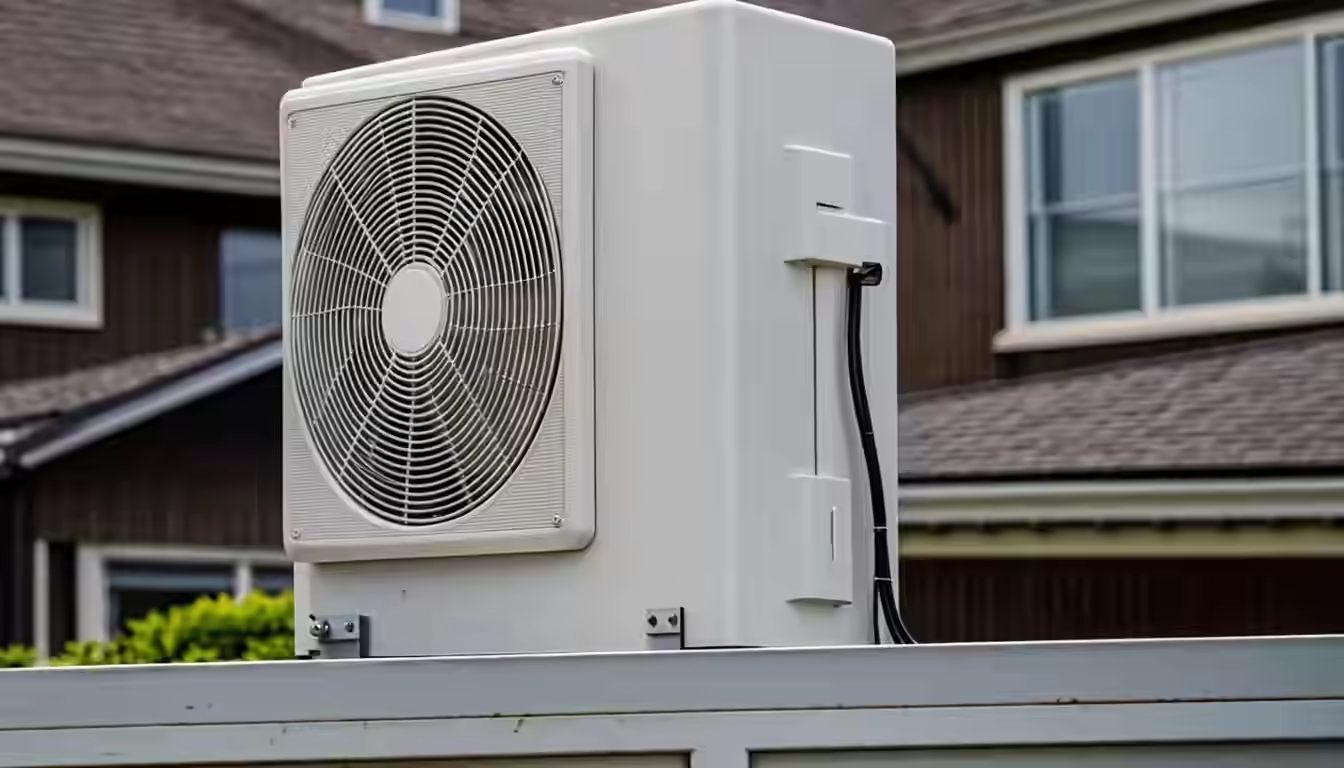
The Honest Answer Up Front
Here is the whole guide in one paragraph: with pets in the house, change your filter on a sixty-day schedule at thirty days for a heavy shedder or multiple animals, default to MERV 11, vacuum and wash your ductless head screens monthly, keep two feet of clearance around the outdoor unit and rinse it with a garden hose once or twice a season, and get the evaporator coil and drain professionally inspected once a year. That routine, plus brushing the dog outside, is the entire difference between a pet-home AC that lasts fifteen years and one that starts costing money at year eight.
What pets actually change is the speed of the mess, not the kind of the mess. Every air conditioner in every home fights the same three enemies: a filter that loads, a coil that gets coated, and a drain that clogs. A golden retriever simply compresses the timeline. A quiet household's one-inch filter honestly lasts ninety days; the same filter behind the same blower with two cats and a labrador is finished in twenty-five. Nothing about the equipment is different, and nothing about the fix is expensive, which is why we are blunt about it: no "pet-safe AC" product, special coating or subscription gadget on the market does anything the routine above does not already do.
Our air conditioning service covers the whole region, and the pattern holds from a Yaletown condo with one cat to an Abbotsford acreage with four dogs: the pet homes that never call us in July are the pet homes that treat filtration as a monthly habit instead of a quarterly afterthought. If your system is already struggling, run the airflow symptoms in Chapter 8 first, because a weak-seeming AC in a pet house is a filter or coil story nine times out of ten.
When a pet home tells us their air conditioner "used to work way better," we pull the filter before we open a toolbox. In our dispatch history, that sentence plus a dog in the hallway means a packed filter about four times out of five, and the fifth time is usually the coil the packed filter was protecting.
0 jobs since 2010
Cooling, heating and plumbing jobs across Metro Vancouver, enough pet households in the mix to know the failure order by heart.
0 pet-home interval
The realistic filter schedule for one pet, halved for heavy shedders, multiples, smoke weeks and renovation dust.
0 star rated
From 26 verified Google reviews, many of them pet households we talked out of a repair they did not need.
0 in the field
Red Seal technicians under BC licence BC-PL-2019-4421, $2M liability coverage and a 2-year workmanship warranty.
How Pet Hair Actually Reaches Your Air Conditioner
Hair does not teleport into a sealed system. It travels a specific path, and understanding that path is what turns pet maintenance from folklore into a checklist. In a ducted central system, the return grille, usually that big ugly vent in the hallway, sucks room air back toward the blower at hundreds of cubic feet a minute. Anything loose in the room, dander, floating hair, dust from a shaking dog, gets pulled toward that grille and the filter behind it. The filter exists precisely to stop exactly there, which is why the filter is the first, cheapest and most decisive line of defence.
What gets through the filter matters just as much. Pet dander particles are tiny, often below three microns, and a loaded or low-MERV filter lets a share of them pass. That share lands on the evaporator coil, which is wet all summer because it condenses water out of your air. Wet plus organic equals adhesion: dander sticks, dust sticks to the dander, and a thin grey felt builds on the fins. That felt is an insulator on a heat exchanger, which is precisely the wrong place for one. Every layer of it makes the coil worse at its only job, absorbing heat from your air.
Hair that reaches the blower compartment is coarser and does a different damage: it winds around blower wheel edges and unbalances a wheel spinning at over a thousand revolutions per minute. An unbalanced wheel wobbles bearings, and wobbling bearings are the humming, rattling noises pet homes describe as "the AC sounds angrier than it used to." In ductless systems the story is faster because the head's mesh screens sit directly in the room, pulling air, and pet hair, straight off the living space with no duct run to slow it down. That is Chapter 4's whole subject.
The last leg of the journey is the condensate drain. Water washing off the coil carries hair fibres and dander downhill into the pan and the drain line, where they settle and mat. In Metro Vancouver's humid summers the drain line runs constantly, and a matted drain clogs quietly until the float switch trips and shuts cooling down, or worse, until the pan overflows onto a ceiling. None of this is dramatic. It is all gradual, and every stage of it is visible months in advance if you know where to look.
Filter Strategy for Pet Homes
The filter is where pet maintenance is won or lost, and the strategy is three decisions: rating, interval and fit. On rating, MERV 11 is the honest default for pet households in this region. It captures pollen and dust like a MERV 8, adds dust mites and most pet dander, and does it without the airflow penalty that MERV 13 imposes on older or smaller blowers. MERV 13 earns its place during August wildfire smoke weeks and for households with allergies or asthma in the mix, then you step back down, because running MERV 13 year-round in a pet home usually means a choked system and a sad blower.
On interval, throw out the ninety-day folklore and start from the pet math. One short-haired animal: sixty days. A shedding breed, or any two animals: thirty days. Add wildfire smoke, spring cedar and alder pollen, or an active renovation and the honest number is thirty days even for a single short-haired cat. The interval is a backstop for the light test anyway: hold the pulled filter up to a bright window, and if you cannot see light clearly through the media, it was done last week. Pet households should run that test monthly, not quarterly.
| Household | Filter depth | Honest interval | Notes |
|---|---|---|---|
| One short-haired pet | 1-inch | 60 days | Light test monthly; buy in multipacks |
| Shedding breed or 2+ pets | 1-inch | 30 days | Golden retrievers, huskies, long-haired cats, any pair |
| Pet home in smoke or reno season | 1-inch | 30 days, no exceptions | Check weekly; the filter is protecting the coil |
| Any pet household | 2-inch | 60-90 days | Half the changes, same nominal footprint, deeper slot required |
| Any pet household | 4-5 inch media | 6-12 months | The upgrade we recommend most for pet homes with compatible cabinets |
On fit, pets make the classic mistakes worse. A filter that sits loose in its track lets unfiltered air, hair included, bypass the media entirely, and a pet home loads that bypass path fast. The filter should slide in with light friction, sit flat against its stop, and match the nominal size printed on the old one's frame exactly. If you upgrade filtration, the correct move is depth, a four-or-five-inch media cabinet, not stacking two one-inch filters, which strangles airflow and can bow the media into the blower. During your annual service we size up households and recommend the media-cabinet upgrade constantly, because it is the single change that most reduces how often a pet home has to think about any of this.
Ductless Heads: The Hair Magnet You Chose On Purpose
Ductless mini-splits and pet households have a complicated relationship. The good news is real: no ductwork collecting decades of dander, per-room filtration, and quiet operation pets tolerate well. The bad news is geometry. The head sits on the wall at exactly the height where cats lounge and below where dogs shake, and its intake screens pull room air directly with no duct run and no mercy. In a pet home, those screens go visibly grey in weeks, and the coil behind them starts collecting everything the screens miss. If you are weighing systems in the first place, our ductless versus central AC comparison covers the full trade-off, pet factors included.
The monthly routine takes five minutes per head. Pop the front latches, lift the screens out, and vacuum them with a soft brush attachment before any washing, because dry hair vacuums off and wet hair turns to paste. Then rinse under lukewarm water with a drop of dish soap, shake, and air-dry completely before reinserting. Fully matters: damp screens re-cake immediately, and the moisture smell people blame on the unit is often a screen put back wet. While the screens are out, shine a phone light at the aluminum coil and the blower wheel behind it. A light grey tint is normal. A felted mat is a professional coil clean, and pet homes in our service mix need one roughly every one to two years, not the three to five a quiet household stretches to.
Two placement habits buy real margin in pet homes. First, keep pet beds, crates and cat trees out of the direct intake path below a head, because that is a hair firehose pointed at the screen. Second, brush or towel the animals in a different room than the one with the head, or better, outside during shedding season. None of this is mandatory equipment spending, it is free airflow protection, and in a ductless system the airflow is the entire machine.
Coils and Drains: Where Dander Becomes Sludge
The evaporator coil is the part of your AC that actually makes cold, and it works by being wet. Air passes over fins colder than the dew point, moisture condenses out, and that water carries whatever was in the air downhill into the condensate pan and drain. In a pet home that water is a dander smoothie, and Metro Vancouver's summer humidity keeps the whole assembly rinsing constantly. The coil is a filter you never chose, and it is self-washing only up to a point. Past that point, the organics win.
The failure sequence is consistent. First the coil fins grow a thin biofilm that insulates them, so the coil runs colder to hit the same target and your supply air is warmer than it should be. Then the capacity loss makes the system run longer cycles, which makes the coil colder still, and in a pet home with a loaded filter the coil eventually passes freezing and grows ice. Ice is where weak airflow becomes no airflow overnight. Meanwhile, hair fibres wash into the drain pan, mat together with dander, and one July morning the float switch trips or the pan overflows. Every one of those stages was visible at a filter change weeks earlier, which is the honest part of this chapter: the expensive pet-home AC failures are rarely surprises.
What you can do yourself is limited and worth respecting. Keep the filter on schedule so the coil gets clean air. After heavy cooling days, run the fan-only setting for an hour to dry the coil and slow biofilm growth. Keep return grilles vacuumed, because the grille catches the coarse hair before the filter sees it. What you should not do is spray store-bought coil cleaner into a modern coil as a DIY project, the foams and rinses are an installer's tool, and pressing on fins with anything bends them into blocked channels that only a fin comb fixes. Professional coil cleaning is part of our AC service visits in Vancouver and everywhere else we run, and for pet homes we schedule it yearly with the drain flush, pan treatment and a check of the float switch that protects your ceiling.
A pet-home coil clean is not an upsell, it is a scheduled reality. The homes that book it annually almost never see a frozen coil or a tripped float switch. The homes that skip it usually meet both in the same summer, and the second visit costs more than five years of the first.
The Outdoor Unit and the Fur Line
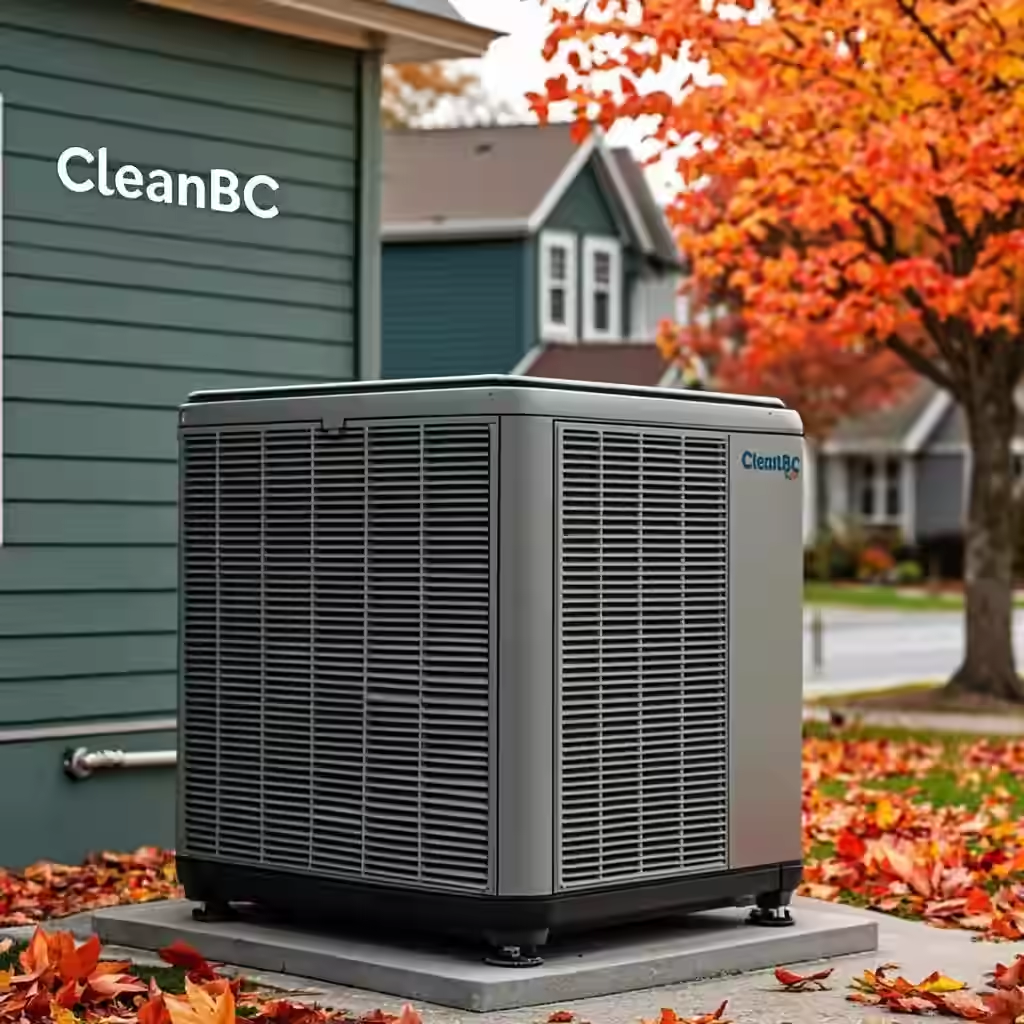
Pet hair rarely travels through the refrigerant circuit, but the outdoor unit has its own enemy: the fur line. That grey felt of hair and dust that collects along fence bases and deck edges gets drawn into the condenser coil the same way dander reaches the evaporator, by airflow. The condenser fan pulls thousands of cubic feet through the coil fins every minute, and anything loose in a two-foot radius is going through it. A felted condenser cannot reject heat, high head pressures follow, the compressor works harder, and cooling capacity drops exactly when July needs it most.
The defence is boring and free. Keep two feet of clear space on every side of the unit, and more on the fan discharge side. Rake or vacuum the fur line within that radius rather than letting it drift against the cabinet. Twice a season, with power off at the disconnect, rinse the coil from the inside out, hose water flowing opposite the fan's direction, garden-hose pressure only. A pressure washer bends fins into a blocked mess and a compressor that cannot breathe, and bent aluminum fins do not heal. Never cover the top of the unit to keep hair out, airflow is the machine, and anything that blocks it is a slow suffocation.
Two pet-specific hazards round this out. Dog urine on the coil is genuinely corrosive to aluminum fins and copper lines, and it kills condensers over a couple of seasons, so if the unit lives in the dog's territory, fence it off or train the route around it. And cats adopted by the warm cabinet in winter are charming until a fan startles them or fur packs the electrical compartment. A lattice screen a foot off the unit solves both animals at once. If the unit already runs loud, struggles on warm days, or trips the breaker, our AC repair crews in Surrey and the Fraser Valley see the fur-line condenser constantly and can usually restore full capacity with a proper coil clean.
The Pet-Home Maintenance Calendar
Pet maintenance works when it is scheduled, not remembered. This is the calendar we hand pet households, keyed to a Metro Vancouver cooling season that starts in May, peaks through the heat-dome weeks of July and August, and winds down by late September, with the filter habits carrying straight into heating season because the same filter and the same blower serve both. Bookmark the heat dome preparedness guide for the full summer playbook; the calendar below is the pet-specific core of it.
| When | What | Time |
|---|---|---|
| Every month, May-September | Ductless head screens: vacuum, wash, dry; light-test the one-inch filter | 5-10 min |
| Every 30-60 days, year-round | Replace the one-inch filter on your pet interval; write the date on the frame | 5 min |
| Monthly | Brush or towel pets outside or away from returns and heads; vacuum return grilles | Your call |
| Twice a season | Outdoor unit: clear the two-foot radius, power off, hose rinse inside-out | 15 min |
| Every spring, before May | Professional tune-up: coil inspection, drain flush, pan treatment, charge and amp check | Booked visit |
| Every 1-2 years, pet homes | Professional evaporator coil clean and ductless deep clean | Booked visit |
| August smoke weeks | Step filter to MERV 13 if the blower carries it; recheck in days, not weeks | As needed |
The spring booking matters more in pet homes than anywhere else. The first sustained warm week of the year is when every neglected coil in the region announces itself at once, and the calendar compresses, prices do not change, but availability does. Pet households that book the tune-up in April get the full inspection while the schedule is still calm, and any coil work happens before the system has to carry a heat event, not during one.

Symptoms That Hair Is Already Costing You Money
Pet damage announces itself politely before it gets expensive. Every symptom below has a cheap window and an expensive window, and the difference between them is usually one filter interval. Check the filter first, always, before assuming the worst about the equipment.
| Symptom | What it usually is in a pet home | Act now |
|---|---|---|
| Weak airflow from registers | Packed filter, felted coil, or matted ductless screens | Filter first, screens second, coil clean if both pass |
| Warmer supply air, longer run times | Coil insulation from dander biofilm; capacity loss | Book the coil clean; check the outdoor fur line |
| Ice on the coil or refrigerant lines | Starved airflow over a freezing coil | Turn cooling off, fan on, melt fully, then fix the airflow cause |
| Pet or musty smell at the registers | Wet coil biofilm from dander | Filter change, fan-dry hour, professional coil treatment |
| Rattling or humming blower | Hair-wound blower wheel, stressed bearings | Diagnostic before bearings fail; wheel clean or motor work |
| Water at the unit or stained ceiling | Matted condensate drain from hair and dander | Stop cooling, drain flush, pan treatment, float switch check |
| Rising BC Hydro bills, same comfort | Efficiency loss across all of the above | Full tune-up; the meter recovers with airflow |
The diagnostic visit is where honesty matters. Our $89 diagnostic is credited toward any resulting repair, so the money goes into the fix instead of vanishing into a call-out fee, and every finding comes with a flat-rate written quote before a tool comes out of the van. In pet homes, that visit ends with "change the filter more and here is your coil plan" more often than it ends with a parts order, which is exactly the outcome a 5.0-star rating across 26 Google reviews is built on.
What Things Actually Cost
Flat-rate pricing, posted in advance, is the only way we quote, because pet homes already have enough variables. The table below is the real menu for the situations in this guide, with the repair range reflecting the difference between a simple fix and a genuinely failed part. Where efficiency-related rebates and incentives apply to a replacement, we check eligibility and handle the paperwork.
| Service | Price | The pet-home context |
|---|---|---|
| Diagnostic visit | $89, credited to repair | The airflow investigation; applies to whatever fix follows |
| AC repair | $180-$450 | Blower wheels, float switches, capacitors, drain clearances |
| Central AC install | $3,800-$6,500 | When the compressor finally loses the fur-line war |
| Ductless system | $3,800-$5,500 | Per-head zone replacement or first install |
| After-hours call | $150 flat premium | The July midnight no-cooling visit, priced before dispatch |
| Filters | Hardware-store prices | The cheapest maintenance money in your entire house |
Do the comparison honestly against neglect. A pet household that skips filter changes and coil cleans does not save those dollars, it defers them into a $180-to-$450 repair with a $150 after-hours premium if the failure lands on a hot night, and eventually into replacement a few seasons early. The routine in Chapter 7 costs minutes. The alternative costs equipment years. There is no version of this math where neglect wins, and we say so even though repairs pay our wages better than habits do.
Six Pet-Home AC Mistakes We See Every Week
None of these come from bad intentions. They come from ninety-day folklore, marketing that sells gadgets instead of habits, and the reasonable assumption that a sealed machine should look after itself. Here are the six, in the order we meet them.
Trusting the ninety-day rule
The sticker assumes a quiet household. With a shedding pet the honest interval is half that or less, and the light test outranks every calendar.
Stacking filters for "pet grade"
Two one-inch filters choke airflow and bow into the blower. The upgrade path is depth: a media cabinet, or MERV 11 on schedule.
Washing screens wrong
Ductless screens vacuumed wet turn hair to paste, and screens reinstalled damp re-cake and smell. Dry-vacuum, wash, dry fully, reinstall.
Pressure-washing the condenser
Garden-hose pressure cleans the fur line; washer pressure bends fins into blocked channels. One is maintenance, the other is damage.
Ignoring the fur line and the dog's territory
Two feet of clearance, a raked radius, and a fence between the condenser and the urine route are free longevity for a $3,800-to-$6,500 asset.
Closing registers to "push air" to pet rooms
Closed supply registers starve the blower the same way a packed filter does. Balance the system instead of strangling it room by room.
The One-Page Pet-Home Cheat Sheet
Tape it inside a closet door. Every line traces back to a chapter, every line is cheaper than the repair it prevents, and nothing on it requires a purchase beyond filters and a marker for the date.
| Question | The answer |
|---|---|
| Default pet filter rating? | MERV 11; MERV 13 for smoke weeks and allergies if the blower carries it |
| Filter interval? | 60 days one pet, 30 for shedders and multiples; light test decides |
| Ductless screens? | Monthly: dry-vacuum, wash, dry fully; check the coil behind them |
| Outdoor unit? | Two feet clear, fur line raked, garden-hose rinse inside-out, twice a season |
| Coil and drain? | Professional clean yearly in pet homes, drain flush and float switch with it |
| Pet smell at registers? | Filter, fan-dry the coil, then book the coil treatment if it returns |
| Weak airflow? | Filter first, screens second, coil third, THEN the diagnostic call |
| When in doubt? | 604-615-2212, 24/7, $89 diagnostic credited to the repair |
Frequently Asked Questions
Services From This Guide
AC tune-ups, coil cleans, ductless head service and honest cooling repairs across seventeen Metro Vancouver cities.
AC tune-up and maintenance
The seasonal check that keeps pet-home airflow strong: coil inspection, drain flush and a filter plan written for your household.
AC repair Vancouver
Weak airflow or a frozen coil already? The $89 diagnostic is credited toward the repair, flat-rate quoted before work starts.
AC repair Surrey
Cooling repairs from Surrey to Langley and Cloverdale, backed by a 2-year workmanship warranty on completed work.
Heat pump service and installs
Heat pumps run the same filters and coils year-round. Pet households benefit most from a single, consistent maintenance plan.
Related Guides
Ductless vs Central AC: The Surrey Guide
Wall-mounted heads are the best and worst thing for pet homes. The comparison that explains the trade before you buy.
SeasonalHeat Dome Preparedness for BC Homes
The June-to-August playbook: pre-cooling, filter checks and the maintenance booking that beats the first 30-degree week.
EfficiencyEnergy-Efficient Upgrades for BC Homes
Filtration, smart thermostats and equipment choices that lower bills, which pet households feel first when airflow drops.

Red Seal certified, licensed gas fitters (BC-PL-2019-4421), $2M insured and 15-plus years in the field, with more than 12,000 jobs completed across Metro Vancouver since 2010 and a 5.0-star rating across 26 Google reviews. We wrote this guide because pet households call us every July with weak airflow that traces back to a filter and a coil, and the fix is almost always a habit, not a repair. The honest version of pet-proofing an air conditioner fits on one page. To book instead of DIY, see AC repair in Delta — same-day across the city.
More about our team →Book Your Pet-Proof AC Tune-Up
Book a $89 diagnostic or a free replacement estimate with a Red Seal estimator. You get a full airflow and coil inspection, a flat-rate quote before any repair is touched, and a filter strategy written for your actual household, pets included. Zero obligation, same-day service on most calls. Zero obligation, same-day quotes on most calls. If you would rather hand this to a pro, our cooling & AC services pages cover Metro Vancouver.
AC struggling right now?
Airflow and cooling calls are answered 24/7 with live dispatch and flat after-hours pricing posted in advance. Daytime? The $89 diagnostic is usually same-day in Vancouver, Burnaby and Surrey.
Call 604-615-2212 WhatsApp Us