
The Honest Answer Up Front
A cold radiator is one of the few heating complaints with a genuinely ordered answer. After more than 12,000 jobs across Metro Vancouver since 2010, our hydronic crews can rank the causes from memory: air trapped at the top of the radiator, a valve that is closed or stuck, an unbalanced loop starving the farthest rooms, a failed zone valve or circulator, sludge packed into the bottom rows, and only then the boiler itself. That order is also the order of cost, from free to the $89 diagnostic and the $180 to $550 boiler repair band, which is exactly why we walk it in sequence instead of quoting a repair over the phone.
The second honest point is that you can safely fix the first two rungs yourself. Bleeding a radiator takes a bleed key, a towel and five minutes, and checking that both valves are open takes less. Homeowners who stop at those two steps still resolve a large share of single-radiator complaints without us. The moment the problem is whole-house rather than one room, or the boiler gauge sits in the red, or the pipes are hot but the radiator is stone cold top to bottom, the cause lives behind sealed panels and pressurized water, and that belongs to a licensed gas fitter.
This guide walks the ladder rung by rung: how a hot water system actually moves heat, the five-minute triage that tells you which rung you are on, the bleeding and balancing techniques worth doing properly, the valve and sludge failures that need a technician, what the fixes cost in our flat-rate book, and the maintenance that prevents the call in the first place. Everything here comes from real radiators in Vancouver character homes, Surrey basement suites and Langley slab-on-grade houses, not from a manual written for a climate we do not have.
Order matters with cold radiators because the cheap causes imitate the expensive ones. Air, closed valves and sludge all produce the same complaint from the couch: that room is cold. A technician who skips the ladder and opens the boiler cabinet first is guessing with your money.
0 jobs since 2010
Heating, cooling and plumbing jobs completed by our Red Seal team across Metro Vancouver and the Fraser Valley.
0 star rated, 26 reviews
Homeowners rating the work flat-rate, on time and explained honestly before the wrench turns.
$0 diagnostic, credited
The full system read on your first visit, deducted from any repair that follows the same day.
0 on workmanship
Every boiler and hydronic repair carries it, under BC licence BC-PL-2019-4421 and $2M liability coverage.
How a Hot Water System Actually Heats
A hydronic system is a closed loop of water doing laps. The boiler heats the water, a circulator pump pushes it out along supply pipes, each radiator or baseboard convector bleeds a share of that heat into the room as the water passes through it, and the cooled water returns to the boiler to be heated again. Nothing about the loop is mysterious, and every cold-radiator cause is just a break somewhere in that sentence: the water is not being heated, not being pushed, not reaching that radiator, or not able to give up its heat once it arrives.
Two features of the loop explain most of the symptoms in this guide. First, water follows the path of least resistance, so the radiators closest to the boiler see the strongest flow and the farthest ones see the weakest unless the system is balanced with restricting valves. Second, air in the loop is lighter than water and migrates to the high points, which in a typical Metro Vancouver layout means the top floor radiators, the top rows of any radiator, and the highest pipe runs in an attic or a cathedral ceiling. One radiator cold at the top and one room cold at the end of the house are the loop telling you exactly where its weak point is.
BC homes run two broad versions of the loop. Sealed systems, common on European-style wall-hung boilers, are pressurized once at installation and refill from a manual fill loop when they lose pressure. Open or older gravity-fed systems survive in pre-1970 character houses, where a cast-iron boiler feeds big steel column radiators that hold a stunning amount of water. The fixes in this guide apply to both, but the pressure habits differ, and Chapter 9 covers the sealed-system version of the story. If you are weighing this heating style against forced air generally, our boiler versus furnace guide for Vancouver homes compares the two systems honestly, including the comfort differences that bring most people to hydronic in the first place, and our boiler service overview covers the equipment side.
The Five-Minute Triage Map
Before touching a single valve, spend five minutes classifying the complaint, because the pattern tells you which chapter of this guide you are in. Feel the radiator in three places, the top, the bottom, and the supply pipe where it enters. Then walk the house and note whether the complaint is one radiator, one zone, or the whole system. Those two facts, where the cold sits and how far it spreads, narrow the causes to one or two suspects most of the time.
| Symptom pattern | Most likely cause | Your chapter | Who fixes it |
|---|---|---|---|
| Cold top, warm bottom | Trapped air at the high point | Chapter 4 | You, with a bleed key |
| Cold bottom, warm or hot top | Sludge or rust scale blocking lower rows | Chapter 7 | Technician |
| Cold all over, pipes hot on both sides | Closed, stuck or pinched radiator valves | Chapters 4 and 6 | You, then technician |
| Cold radiator, cold pipes, rest of zone warm | Balancing or a closed lockshield upstream | Chapter 5 | You or technician |
| Whole zone cold, other zones fine | Zone valve or zone circulator failure | Chapter 6 | Technician |
| Whole house cold, boiler not firing | Boiler fault or lockout, often low pressure | Chapter 8 | Technician |
| Whole house cold, boiler firing | Circulator failure or major blockage | Chapter 8 | Technician |
| Radiators warm up then shut off early | Overheating lockout or thermostat placement | Chapter 9 | Technician |
Two triage habits save our customers real money. Take the readings when the system is actually calling for heat, because a radiator checked twenty minutes after the thermostat was satisfied tells you nothing except that the thermostat works. And photograph the boiler pressure gauge at the same time, with the boiler cold if you can manage it, because a gauge photo turns a vague phone complaint into a scheduled repair with the right parts on the truck. The pressure gauge is the single most informative dial on any hydronic system, and it is the first thing our technicians ask for on a no-heat call.
Air in the Loop: Bleeding Done Right
Air is the number one cause of cold radiators in this region, and the reason is chemistry rather than failure. Fresh water carries dissolved air, and heating it drives that air out of solution as small bubbles. In a well-behaved system those bubbles ride to an air separator near the boiler and leave quietly. In every other system they collect at the high points, which is why the master bedroom radiator on the top floor of a Vancouver character home is the first to go cold each October and the last to be suspected, because nobody visits it until the weather does.
Bleeding is the fix, and doing it in the right order makes it a ten-minute chore instead of a two-hour spiral. The mistakes we see are bleeding with the circulator running full tilt, which can pull more air into the loop while you vent it, bleeding the ground floor before the top floor, which leaves the high points air-locked, and bleeding a sealed system without checking boiler pressure afterward, which converts an air complaint into a low-pressure lockout.
Start at the highest radiator in the house
Air collects high, so vent from the top down. If the top floor is warm and a main-floor radiator is cold, that radiator is the start and the exception.
Set the system to a gentle heat call
Warm water helps carry bubbles toward the vent, but avoid a full-blast call with the circulator at maximum, which can churn the air back into suspension.
Open the vent with a bleed key
Lay a towel below the vent and hold a cup under it. Open slowly. Hiss means air leaving. Close the vent the moment a steady stream of water appears.
Work downward, floor by floor
Bleed every radiator in the house in descending order, not just the cold one, because the air you release elsewhere changes the distribution.
Check the boiler gauge and top up if needed
Each vented radiator costs the system water and pressure. On a sealed system, restore the cold-fill pressure before the next heat call, or the boiler will lock out on low pressure.
The bleed key is the cheapest tool in heating and the most used. But if you are bleeding every few weeks, stop treating the symptom: a system that constantly makes air is a system that is constantly losing water or taking on fresh, air-saturated supply, and that is a leak story, not a vent story.
Balancing: Why the Far Room Heats Last
If the far bedroom warms up twenty minutes after everyone else and never quite catches up, your loop is unbalanced, and the fix is one of the cheapest comfort upgrades in heating. Water is lazy in the specific sense that it takes the easiest path, and the radiators near the boiler, with short, wide pipe runs, present easier paths than the distant rooms at the end of long, narrow runs. Left alone, the near rooms soak up the flow and the far rooms starve on what is left.
Balancing corrects that by deliberately restricting the easy paths. Every radiator has two valves: the thermostatic or hand valve on the supply side that you normally use, and the lockshield on the return side, which has a cap hiding an adjusting spindle and exists purely for this job. The procedure is to open everything, let the system reach temperature, then close each lockshield a little on the hot near-rooms until their temperature drop across the radiator matches the far rooms. It is iterative, patient work with an infrared thermometer or steady hands, and it is well within a careful homeowner range if you accept an hour of adjusting on a cold day.
Two cautions from the field. Lockshield positions are often set deliberately by whoever commissioned the system, so photograph or count turns before changing anything, and if a home has had renovations or added radiators, the original balance is already history. And if balancing does not hold, meaning the far room heats for a week and then fades again, the system is telling you something changed underneath, usually sludge or a weakening circulator, which are the next two chapters.
Valve Failures: TRVs and Zone Valves
Valves are the moving parts of a hydronic system, and moving parts fail in the order they move. The thermostatic radiator valve, or TRV, is the brass valve with a numbered dial on the supply side of many radiators. Inside is a wax-filled sensor head pushing a small pin down into the valve body. When the room warms, the wax expands and the pin closes the valve. The pin is the weak point: it seizes in the closed position from years of sitting at one setting, or sticks open after paint seals it to the seat. A seized-shut pin gives exactly the complaint that opens this guide, one stone-cold radiator with a hot supply pipe.
There is a worthwhile homeowner test for a suspect TRV. Remove the sensor head, usually a plastic cap unscrewing from the valve body, and look for the small brass pin in the centre. It should depress with finger pressure and spring back. If it sits proud and will not move, work it gently in and out with pliers gripping flat, a few millimetres of travel, and reassemble. Often the pin frees and the radiator recovers within one heat cycle. If the pin will not hold its motion, or the valve body itself weeps at the packing nut, the valve needs replacing, which is a drain-down job on that radiator leg and a flat-rate repair within our boiler repair band.
Zone valves do the same job one zone at a time, opening and closing whole floors or wings on demand from their thermostats. A zone valve failure is louder in effect than a TRV failure: an entire floor goes cold while the rest of the house is fine. The failure is usually the motorized head rather than the wet body, and on most modern valves the head swaps off the body without draining anything. Our crews carry the common head types on the truck, and a failed zone is typically a same-visit repair inside the $180 to $550 band, with the $89 diagnostic credited when we do the work.
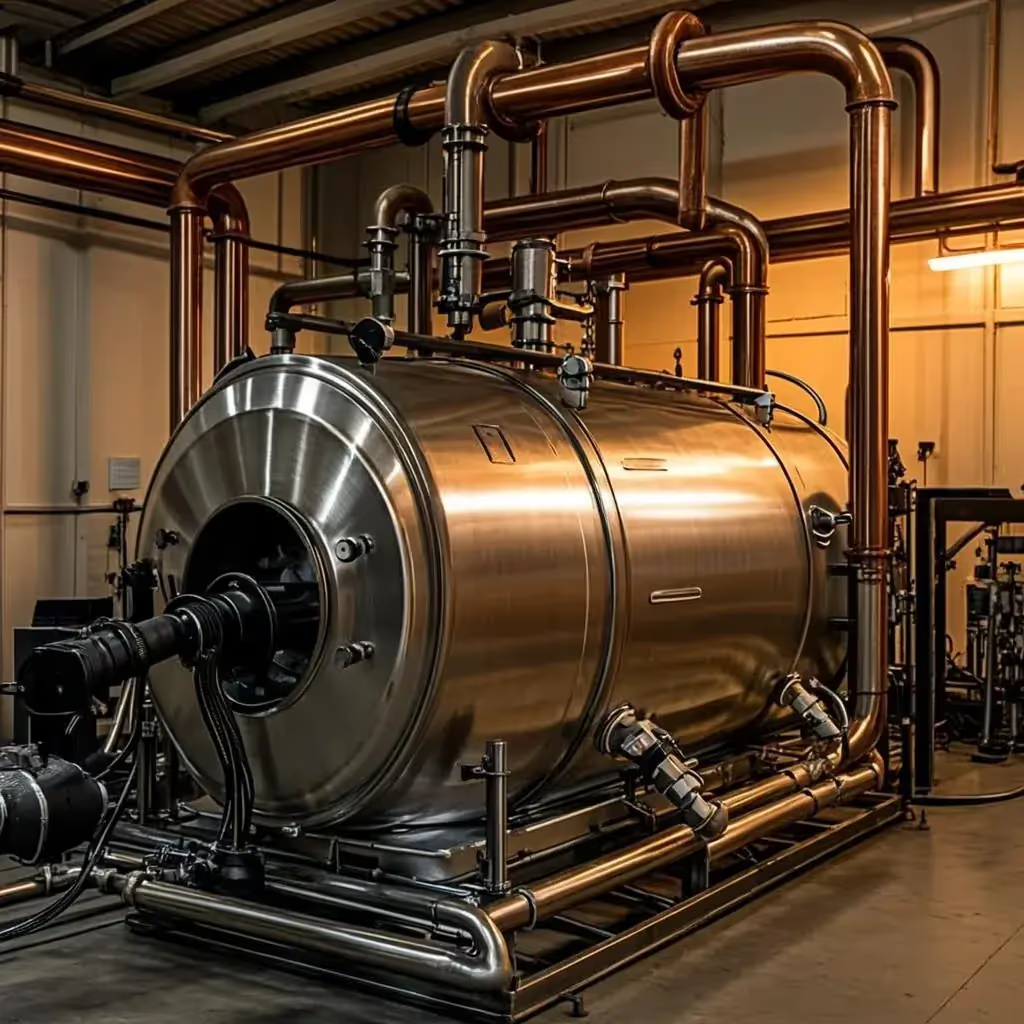
Cold Bottom, Warm Top: Sludge
When a radiator is cold only along its bottom rows, the cause is usually magnetite sludge, the black iron oxide that forms inside hydronic systems wherever water, steel and a little dissolved oxygen meet. The sludge is heavier than water, so it settles into the lowest passages of the radiators and the horizontal pipe runs, packing them the way a river silts. Water still convects through the upper rows, so the top heats, but the radiator loses the majority of its output and the room runs cold while the boiler runs longer trying to compensate.
The tell that separates sludge from a simple blockage is the pattern across the system. Sludge is a system-wide condition that shows worst in the lowest radiators and the longest horizontal runs, so a basement suite with cold-bottomed radiators while the upstairs is fine is the classic Vancouver presentation. You can confirm it by carefully cracking a radiator union into a white container: the first water from a sludged system comes out grey-black and stains the container. One caution, that water is under pressure and staining, so most homeowners should read the symptom and leave the sampling to us.
The honest treatment ladder matters here because the aggressive option is oversold. A system with a few cool-bottom radiators often recovers well from targeted isolation and flushing of the worst radiators, plus a magnetic filter installed on the return near the boiler to catch what is still circulating, plus fresh inhibitor. A full power flush of every loop is the right call only for badly neglected systems, and it is priced after inspection rather than quoted flat from a phone call, because the honest scope depends entirely on how much iron is sitting in the pipe. Our boiler repair visits run $180 to $550 and the annual service that prevents sludge from compounding is $149 to $250, which is the cheaper path by any multi-year math.
When the Problem Is the Boiler
The whole-house version of the complaint, every radiator cold at once, moves the investigation from the rooms to the cabinet. The first check is always the pressure gauge, because modern sealed boilers lock themselves out below roughly 0.8 bar rather than run their heat exchangers dry, and low pressure imitates every bigger failure from the outside. Refill to the cold-fill mark and reset, and if the system runs, Chapter 9 is your chapter. If the gauge reads healthy and the boiler still refuses to fire, or fires and cuts out repeatedly, the fault is internal, and internal faults on a gas appliance belong with licensed gas fitters.
Inside the cabinet the usual suspects are a small and repetitive cast. Ignition failures from a worn electrode or a failing flame sensor top the list on older wall-hung units, followed by the pressure switch or air proving switch on the venting, circulator failures on systems with internal pumps, and, on condensing boilers, a blocked condensate trap freezing during a January outflow week. None of these are exotic, and most land inside the $180 to $550 flat-rate band with the $89 diagnostic credited when we do the repair. Our boiler repair crews in Vancouver and our boiler repair teams in Surrey carry the common control boards, sensors and circulators for the brands that dominate this region, which is what turns a two-visit repair into a one-visit repair.
One age note belongs here because it changes the honest answer. A boiler past roughly twenty years that is failing on a new part every season has crossed from repair territory into replacement math, and the honest conversation is then about system type: a modern condensing boiler at $8,500 to $14,000 installed, a combi boiler at $7,000 to $11,000 where space and hot water needs line up, or a mid-efficiency cast-iron replacement at $5,500 to $12,000. That is a full decision guide on its own, and the pressure habits in the next chapter are the maintenance that decides which side of that conversation your boiler stays on.
Pressure and the Repeat-Call Causes
Half of the repeat cold-radiator calls we answer trace back to system pressure, which is why this chapter earns its place in a radiator guide. A sealed system that slowly loses pressure reaches the lockout threshold in a few weeks, the boiler stops, all radiators go cold, and after a refill everything works again, which is exactly the pattern that disguises a slow leak as a nuisance. Track the cold gauge reading weekly through the heating season. A system that holds its pressure between service visits is healthy. A system that asks for a top-up every two or three weeks is losing water somewhere, and that somewhere is usually a pinhole in a radiator seam, a weeping valve packing, or the expansion vessel losing its charge.
The expansion vessel deserves a paragraph because it fails quietly and expensively. It is a small tank, often inside or beside the boiler, with a rubber diaphragm dividing water from a pressurized air cushion. When it loses its air charge, the system water has nowhere to expand into, and pressure swings wide on every heat cycle: high when hot, low when cold. Those swings stress every joint in the loop, weep valves open, and the top-floor radiators collect the resulting air. A technician recharges or replaces the vessel, and the repeat complaints stop, which is why our diagnostic reads pressure at cold and hot, not just once.
The prevention side is short. Annual service at $149 to $250 checks the vessel charge, cleans the burner and flame path, verifies the relief valve, treats the water chemistry and confirms the fill loop is closed after top-ups. Homeowners running their own October checklist can add three habits: bleed the high radiators at first fire-up, photograph the gauge cold and hot once a month, and close the fill loop after any refill. The broader fall routine, including the plumbing-side items that protect the whole house through an outflow cold snap, is laid out in our winter prep guide for Vancouver homes.

What the Fixes Actually Cost
Our pricing is flat-rate, which means the number is written before the wrench turns, and the diagnostic that finds the fault is $89 and credited toward any repair we perform. This is the honest cost map for the ladder in this guide, using only the prices we actually charge across the region. Where a fix is free, we say so, because the cheapest fix in heating is the one you perform yourself with correct information.
| Fix on the ladder | Typical cost | Time in home | Credited diagnostic |
|---|---|---|---|
| Bleeding the radiators | Free with a bleed key | 10 minutes of yours | Not needed |
| Reopening closed or painted valves | Free | 5 minutes of yours | Not needed |
| Balancing the loop | Free, or included with service | About an hour of patience | Included in a service visit |
| TRV pin freeing or replacement | Within boiler repair band | Same visit | Yes, when we repair |
| Zone valve head or body replacement | $180 - $550 repair band | Same visit usually | Yes, when we repair |
| Boiler faults (ignition, sensors, circulator) | $180 - $550 repair band | Same visit usually | Yes, when we repair |
| Annual boiler service | $149 - $250 | 60 to 90 minutes | Service itself |
| Sludge treatment and filter | Quoted after inspection | Half day to full day | Toward the work |
| After-hours emergency visit | $150 flat premium added | Same-night response | Yes, when we repair |
Two notes on reading that table honestly. The repair band is wide because a flame sensor and a control board are both boiler repairs and they are not the same job, and a flat-rate book is what keeps the difference honest, the price is written against the named part and task, not the hour. And the diagnostic credit is not a marketing trick, it exists because a correct diagnosis is the majority of the work on most radiator calls, and charging you twice for the same information is the pattern in this industry that our 5.0-star rating across 26 Google reviews was built against.
City Notes Across Metro Vancouver
The radiator stock of this region tells a century of building history in pipe. Vancouver and New Westminster character homes run cast-iron column radiators on gravity conversions, heavy, gorgeous and sludge-prone. Burnaby and Coquitlam split between postwar bungalows with fin-tube baseboard and 1980s townhouse zones with TRVs everywhere. Surrey, Langley and the Fraser Valley are slab-on-grade territory, where the loops run long and shallow and balancing problems dominate. Our crews work all of it, and these are the local pages where the same diagnostic, repair and service pricing applies.
Boiler repair in Burnaby
Postwar baseboard loops and townhouse zone valves, stocked trucks across the city, same-day diagnostics most days.
Boiler repair in Coquitlam
Hillside zones, TRV-heavy townhouses and the long runs of Burke Mountain, balanced and repaired by Red Seal gas fitters.
Boiler repair in Richmond
Slab homes and radiant loops over river delta soils, with the corrosion checks a damp crawlspace climate earns.
Boiler repair in Langley
Long ranch-house loops and acreage systems, where balancing and sludge treatment pay back fastest.
Boiler repair in New Westminster
Heritage radiators on converted gravity systems, bled, balanced and brought back to full output carefully.
Boiler repair in North Vancouver
Hillside pressure zones and outflow-cold boiler rooms, with the freeze checks a North Shore winter demands.
The Decision Cheat Sheet
Everything in this guide compresses into one dark table. Read your radiator the way Chapter 3 taught you, find the row, and the right column tells you what to do tonight and what to book. If the answer is a technician, the $89 diagnostic is the correct first purchase on every row below the valve rows, credited toward whatever repair follows, and after-hours no-heat calls carry the $150 flat premium posted in advance, twenty-four hours a day.
| Tonight, from the couch | Do first | Book if it persists |
|---|---|---|
| Top-floor radiators cold at the top | Bleed from the top floor down, then check the gauge | If pressure keeps falling after refills |
| One radiator cold, pipes hot | Free the TRV pin, confirm both valves open | Valve replacement, inside the $180 - $550 band |
| Far rooms heat last and weakest | Photograph lockshield positions, try balancing | If balancing does not hold for a full week |
| Cold bottoms on basement radiators | Read it as sludge, do not keep bleeding it | Inspection and treatment quote, filter install |
| A whole floor cold, other zones fine | Confirm the zone thermostat calls for heat | Zone valve head, usually same-visit |
| Whole house cold, gauge low | Refill to the cold-fill mark, reset once | If it locks out again the same week |
| Whole house cold, boiler silent | Check power and gas, photograph the gauge | Diagnostic, same day, credited to repair |
The homeowners who spend the least on heating are the ones who know the order. Air first, valves second, balance third, sludge and the boiler with a licensed technician. Print the table, tape it inside the boiler-room door, and you have most of what fifteen years and twelve thousand jobs taught us about cold radiators.
Frequently Asked Questions
Services From This Guide
Bleeding, balancing, valve repairs and boiler diagnostics across seventeen Metro Vancouver cities, flat-rate and Red Seal certified, same-day slots most days.
Boiler and radiant services
Repairs in the $180 to $550 band, annual service at $149 to $250, and honest replacement quotes when the math says so.
Boiler repair in Vancouver
Character-home radiators, converted gravity systems and modern sealed boilers, diagnosed in ladder order.
Heating services
Furnace, boiler and hydronic care from one Red Seal team, flat-rate and 2-year workmanship warrantied.
24/7 emergency heating
No-heat calls answered around the clock, $150 flat after-hours premium posted before anyone rolls.
Related Guides
Boiler vs Furnace in Vancouver
The comfort, cost and longevity comparison behind the hydronic systems this guide repairs.
SeasonalWinter Prep for Vancouver Homes
The October checklist that finds radiator and boiler problems before the first outflow cold snap.
Heating & CoolingFurnace Repair vs Replace
The decision math from the forced-air side of the building, same honesty, different ductwork.

Red Seal certified, licensed gas fitters (BC-PL-2019-4421), $2M insured and 15-plus years in the field, with more than 12,000 jobs completed across Metro Vancouver since 2010 and a 5.0-star rating across 26 Google reviews. We wrote this guide because the order of causes is the honest answer to a cold radiator: anyone who opens the boiler cabinet before checking the air and the valves is selling, not diagnosing, and the ladder is something every homeowner deserves to see before the truck arrives. To book instead of DIY, see boiler repair in Langley — same-day across the city.
More about our team →Get Your Cold Radiator Answered Today
Book the $89 diagnostic (credited toward any repair) or an annual service at $149 to $250 with a Red Seal gas fitter. You get the honest ladder walked in order, a flat written price for whatever rung the fault lives on, and a 2-year workmanship warranty on the repair. Zero obligation, same-day quotes on most calls. If you would rather hand this to a pro, our boiler services pages cover Metro Vancouver.
No heat anywhere in the house?
Whole-house no-heat calls are answered 24/7 with live dispatch and the $150 flat after-hours premium posted in advance. Daytime? The $89 diagnostic is usually same-day in Vancouver, Burnaby and Surrey.
Call 604-615-2212 WhatsApp Us