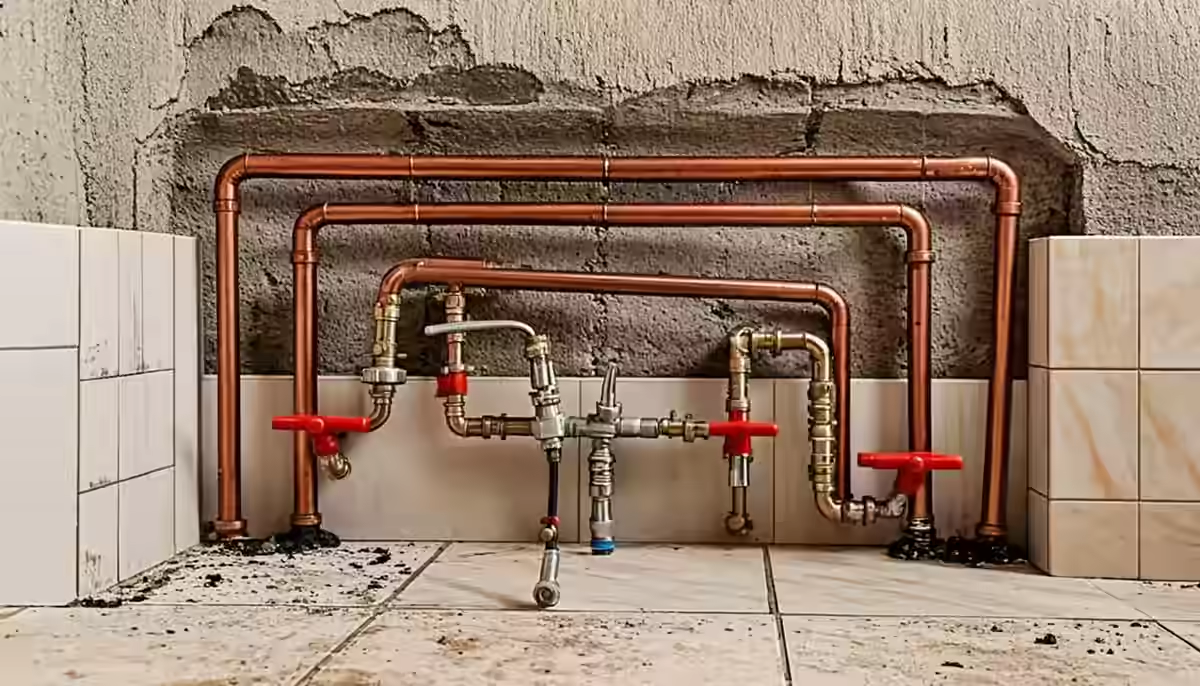
The Honest Answer Up Front
A shower valve replacement in BC costs $450 to $900 supply-and-install when we can reach the valve without demolishing your bathroom — through an access panel, a closet wall behind the shower, or a vinyl surround panel. When tile has to be cut, the range moves to $1,000 to $1,800 including a patch you can live with. The valve hardware itself spans $80 for a solid pressure-balance unit to $450-plus for thermostatic and digital. And in a meaningful share of visits, the honest answer is neither: your symptoms belong to a worn cartridge, a $180-450 repair, and the 30-year-old brass valve body in your wall is still perfectly fine.
The pressure-balance versus thermostatic question, stripped of showroom romance: pressure-balance valves protect you from temperature spikes when pressure changes, cost less, and have been the BC code standard for decades. Thermostatic valves actually measure water temperature, hold it within about one degree, and keep full flow when a toilet flushes mid-shower. If your household includes small kids, elderly parents, or two bathrooms that run simultaneously every morning, thermostatic earns its price. If it's one shower, one adult, one routine — a quality pressure-balance valve does the same job for half the hardware cost. Everything else in this guide is detail on those two sentences.
$0–$0 with access
Full valve replacement, supply-and-install, when the wall cooperates. Tile work moves the band to $1,000-1,800.
49°C, not negotiable
The BC Plumbing Code delivery limit for showers. At 60°C water, a child's skin burns in about one second; at 49°C you have roughly ten minutes.
0+ year valve bodies
What name-brand brass lasts in Metro Vancouver's soft coast water. The cartridge inside it is what usually dies, every 8-15 years.
How Each Valve Actually Works
A pressure-balance valve is a piston that feels pressure, not temperature. Hot on one side, cold on the other; when a toilet robs the cold side, the piston slides and throttles the hot side to match. You stay roughly comfortable because the mix ratio holds, not because the valve knows what 40°C feels like. It's a brilliant, cheap, essentially bulletproof mechanism — which is why building codes across North America, BC included, made it the minimum standard for shower valves in new construction decades ago.
A thermostatic valve adds a thermal element — usually wax or a bimetallic strip — sitting in the mixed water stream. It expands and contracts with actual temperature and continuously rebalances hot and cold to hold your set point within about one degree. Two practical differences follow: you can set a favourite temperature and return to it every time, and a pressure drop doesn't reduce your flow — the valve compensates by rebalancing rather than by choking both feeds. That's why thermostatic shines in homes where the shower shares supply with a busy kitchen, laundry set, or second bathroom.
| Feature | Pressure-balance | Thermostatic | Digital (e.g. Moen U, Delta Temp2O) |
|---|---|---|---|
| What it senses | Pressure differential | Actual water temperature | Temperature, electronically |
| Temp hold accuracy | Within a few degrees | Within ~1°C | Within ~1°C, plus display |
| Flow when toilet flushes | Drops slightly, temp holds | Holds volume and temp | Holds, app control, presets |
| Typical valve price | $80–250 | $250–450 | $500–1,200 plus wiring |
| Failure points | Cartridge spool, seals | Thermal element, cartridge | Solenoids, boards, power |
| Best for | Most single-shower BC homes | Kids, elderly, simultaneous showers | Renovations, accessibility, luxury builds |
One upgrade-path note that matters in BC: digital valves are genuinely good now — precise, safe, and wonderful for accessibility — but they add electronics to a wet wall and, in a power outage, most revert to a preset temperature with manual override. Whether that's a feature or a liability depends on your household. We install all three types; we're just honest that the $120 pressure-balance valve in most Metro Vancouver homes does the safety job the code demands.
The Scald Math and the BC Code Behind It
The reason every valve we install has a temperature limit stop is a set of numbers worth memorizing. At 60°C water — the default storage temperature on many older tanks — a child's skin sustains a third-degree burn in about one second. At 52°C, that stretches to roughly 90 seconds. At 49°C, it takes about ten minutes of continuous exposure to injure. The BC Plumbing Code, in line with the National Plumbing Code of Canada, requires that shower and bathtub valves be of the pressure-balancing, thermostatic-mixing or combination type, and limit water delivery at the fixture to 49°C. That's why the limit stop exists on your valve, and why setting it correctly during installation isn't optional decoration.
The valve at the shower is the last line of defence — behind it sits your water heater, which stores water hot enough (60°C-plus) to control Legionella bacteria. That tension, hot enough in the tank to stay sanitary, never above 49°C at the showerhead, is exactly what a mixing valve negotiates. If you've ever measured a scalding shower at a cabin with a straight two-handle valve and no mixing at all, you've met the pre-code world. If you want the full picture on the tank side of that bargain, our winter prep guide covers safe, code-compliant water heater temperature settings for BC homes.
A related BC reality: many pre-1985 homes here still run two- or three-handle shower valves with zero balancing. They're grandfathered, so nobody forces you to replace one — until you renovate, sell with a pending inspection, or a landlord brings a rental up to standard. The moment we touch that wall for a renovation, the new valve must be a code-compliant mixing type. We've had that conversation in hundred-year-old New Westminster character homes more times than we can count.
What's In Your Wall: A BC Housing-Era Map
You can usually date a Metro Vancouver bathroom by its valve, and knowing the era tells you most of what a visit will involve:
| Era | Typical valve found | Common problems | Typical fix |
|---|---|---|---|
| Pre-1975 (Vancouver Specials, character homes) | Two-handle brass, no balancing; galvanized or copper supply | Scald swings, worn seats, seized stems | Full replacement with pressure-balance or thermostatic |
| 1975–1995 (condo boom, poly-B era) | Early single-handle pressure-balance; poly-B + crimp rings in the wall | Cartridge wear, weeping crimps, brittle plastic | Cartridge swaps; careful transitions if opening walls |
| 1995–2012 (suburban build-out, Surrey/Langley) | Moen/Delta pressure-balance, PEX or copper | Cartridge wear, hard-water scale in the valley | $180-450 cartridge repair, valve usually stays |
| 2012–present (Step Code era builds) | Pressure-balance standard, thermostatic in upgrades | Warranty cartridges, trim aesthetic changes | Rarely needs anything for 10+ years |
The poly-B row deserves a flag for the 1975-95 cohort: that grey pipe with aluminum crimp rings runs through a huge share of Metro Vancouver condos and ranchers, and opening a bathroom wall in those homes sometimes reveals weeping connections that have been quietly dampening framing for years. It's not a reason to panic — it's a reason to have a plumber look before the wall closes, and to know what a repipe conversation sounds like. Our PEX repipe guide covers that decision honestly, including when poly-B can be left alone and when it can't.
Symptom Decoder: Cartridge, Valve, or Something Else
Shower drips with both handles off: on a single-handle valve, that's the cartridge 90% of the time — a $180-450 repair on most name brands. On a two-handle valve, it's a worn seat or stem washer, cheaper still. What it isn't, until proven otherwise, is a reason to open the wall.
Temperature swings when fixtures run elsewhere: worn pressure-balance spool in the cartridge, or no balancing at all in a pre-code valve. The toilet-flush test we describe in the FAQ above is the five-second diagnostic. No hot water at the shower only, while the sink next to it runs hot: usually cartridge, occasionally a failed upstream mixing valve in condos that use master mixers — a building-system issue your strata should hear about. Weak flow that a showerhead cleaning doesn't fix: could be a clogged cartridge screen or failing stops, and in older homes with galvanized pipe, the pipe itself closing for business. And a damp stain on the ceiling below the bathroom, or mustiness in the wall cavity? Stop reading DIY threads and call someone — concealed leaks compound daily. Our hidden leak guide walks through the moisture-map logic.
The shower valve is the hardest-working thing in your bathroom: pressurized, mixed, and touched twice a day for decades. When people ask whether to repair or replace, my honest split is about 70/30 — seventy percent of "dead valves" we see are a $200 cartridge in a perfectly healthy $0 body. The other thirty percent, you open the wall once and do it right.
What the Job Actually Involves
The replacement itself is maybe two hours of plumbing inside a two-day conversation with your wall. Sequence: shut and drain, cut an access opening (from behind wherever possible — a closet or hallway wall is always cheaper to patch than tile), cut out the old valve, dry-fit the new one with its plaster guard set flush to the finished face, connect water lines — solder, press fittings, or push-fit depending on what's in the cavity and how close the wood is — brace the valve so it can't wiggle, pressure-test, then close up. The finishing work — patching drywall or cutting and matching tile — is where quotes legitimately diverge, because a $600 tile patch is a different trade than a $150 drywall patch.
Permits: yes, in most municipalities. A valve replacement alters pressurized water piping inside a wall, and most Metro Vancouver jurisdictions treat that as plumbing work requiring a permit, which we pull as part of the job. The grey zone is a like-for-like cartridge swap — that's maintenance, no permit. If a contractor tells you no permit is ever needed for in-wall plumbing work, that's a yellow flag; if they tell you it's needed for a cartridge, that's the opposite flag. We'll tell you which side of the line your job falls on, in writing.
What It Costs: Scenario by Scenario
These are the ranges we actually quote across Metro Vancouver, with the caveat that matters: access decides everything. Two identical houses, one with a bedroom closet behind the shower and one with the shower backing onto a tiled hallway, are different jobs.
| Scenario | Typical range | Time on site | Notes |
|---|---|---|---|
| Cartridge repair (valve stays) | $180–450 | 1–2 hours | No permit, no wall damage; the 70% case |
| Valve replacement via access panel / back wall | $450–900 | 3–4 hours | Includes valve, connections, drywall patch + permit |
| Valve replacement with tile cut and patch | $1,000–1,800 | Half day + tile visit | Tile matching is the wildcard; stock tile is kind |
| Thermostatic upgrade during renovation | $250–450 hardware + install above | Same as replacement | Best value when the wall's already open |
| Multi-shower home, both valves + trim | $1,400–2,800 | Full day | Shared mobilization makes the second valve cheaper |
Every number above is confirmed in writing after on-site assessment — it's in our terms, not our marketing. And if the wall reveals poly-B that needs transitions or framing that's been wet for a decade, you'll see photos of exactly what we found before any new number exists. That's how our plumbing team handles every in-wall job, from Vancouver condos to Langley family homes.
Digital Shower Valves: The Honest Take
Digital valve systems — Moen's U series, Delta's Temp2O line, a few European imports — have crossed from novelty to genuinely good. The value cases we see in the field: accessibility (a homeowner with limited mobility starting the shower remotely and stepping into a pre-warmed, temperature-locked stream is not a gimmick), families (hard 40°C ceiling that a curious five-year-old cannot override), and luxury renovations where the wall is open anyway and the incremental cost shrinks against the total.
The honest cons: you're installing a circuit board, a solenoid and usually a power connection inside the most humid room in the house. Lifespans are improving but still measured in years, not decades — nobody's digital valve is outlasting a brass pressure-balance body. Battery or hardwired, when power fails most systems default to a safe preset flow, which is fine until you want a different temperature during an outage. And repair parts mean electronics lead times, not a cartridge off the shelf at the supply house. Our rule of thumb: if the shower serves a household member whose safety genuinely benefits from locked, preset temperatures, digital earns its cost. If it's a want-not-need, a $350 thermostatic valve gives you the precision with none of the electronics.
Choosing for Your Household, Not the Showroom
Small children in the house: thermostatic, full stop — set the ceiling at 40-42°C and the bath-time scald conversation changes permanently. Elderly parents or anyone with reduced temperature sensation: same answer, and add lever trim that operates without grip strength. Two working adults showering simultaneously every morning while the dishwasher runs: thermostatic keeps both showers at volume; pressure-balance keeps them safe but each shower will feel the mix tighten. One bathroom, one routine: a quality pressure-balance valve is every bit as safe, and $150-250 cheaper in hardware.
Add-ons worth considering while the wall is open: an upgraded trim kit in a finish that matches the rest of the renovation (cheap now, expensive later), a volume-control handle if you like rinsing at half-flow, and — for rainfall heads — checking that your home's pressure actually feeds a 10-inch ceiling head properly. A big head on starved supply is the number-one "why is my fancy shower weak" call we get in new renovations across Langley·Delta and the valley, where municipal pressure varies more than people expect. The valve is one component of a shower experience; the supply behind it is the rest of the story.
DIY Limits: Where This Job Bites Back
The line we'd draw for a capable homeowner: cartridge swaps, trim replacement, showerhead changes — all fair DIY, no permit, videos exist, go carefully with the model number in hand. Full valve replacement — no. It's not the plumbing skill alone; it's the compounding risk. You're joining pressurized lines in a confined cavity, near wood you may have to heat with a torch or avoid heating, behind a finished surface you have to cut open and restore, with a permit requirement in most municipalities and a code limit-stop that's supposed to be verified at 49°C. Every one of those steps is learnable. Stacking all six on a first attempt, in the one room where a slow failure soaks everything below it, is where smart homeowners call us.
If you're weighing who to call and how to judge the quote, our choosing a plumber guide covers the questions that separate a flat-rate professional from a coincidentally cheap hourly quote. The short version: written price before the wall opens, permit handled by the contractor, valve brand you can buy cartridges for in ten years, and someone who shows you photos of what they found inside the wall. That's the standard we hold ourselves to on every valve job, and it's the standard any contractor in this region should meet.
Making the Next Valve Last 30 Years
Valve maintenance is unglamorous and it works. Once or twice a year, exercise the valve: run the shower through full hot to full cold a few times and cycle any diverter fully. That motion keeps the pressure-balance spool sliding instead of sticking in one position, and a stuck spool is what turns "comfortable shower" into "surprise temperature" years before the cartridge actually dies. While you're there, cycle the shut-off stops under the access panel or behind the wall trim if you have them — a stop that hasn't turned since installation is a stop that won't turn when you need it.
Every few years, the cartridge deserves attention in Fraser Valley homes: hard water in Abbotsford, Mission and parts of Langley cakes the cartridge body and O-rings with scale, which is why valley cartridges fail at the young end of the 8-15 year band. A cartridge pull, clean and silicone-grease re-seat is a 30-minute maintenance item that stretches that interval back out. On the coast, the enemy is different — soft, slightly acidic reservoir water is gentle on brass but works on cheap pot-metal trim screws, so a drop of silicone on the trim screws during any visit saves the stripped-screw misery later.
And if the shower lives in a rental suite — which a huge share of Metro Vancouver basements do — put the valve on the turnover checklist between tenancies. Tenants don't report slow cartridge failure; they report flooded ceilings. A two-minute hot-cold cycle test during turnover catches the wear while it's still a $200 repair instead of an emergency call with a $150 after-hours premium. Landlords in BC have a maintenance obligation on plumbing under the Residential Tenancy Act, and a documented valve check is the cheapest compliance there is.
Get a Straight Answer on That Shower Valve
Book a valve diagnostic and we'll tell you honestly: cartridge repair or full replacement, and the written flat price for each path — including access, tile and permit. The $89 diagnostic is credited to whatever you approve.
Frequently Asked Questions
Services From This Guide
Red Seal plumbers serving Vancouver, Burnaby, Richmond, Surrey, Langley, Coquitlam, Delta, New Westminster, North Vancouver, Maple Ridge, Port Coquitlam and Abbotsford.
Plumbing Repairs & Installs
Valve and cartridge repairs $180-450, full replacements quoted flat-rate in writing.
Plumber Coquitlam
Bathroom valve work across Coquitlam, Port Coquitlam and Port Moody.
24/7 Emergency Plumbing
Burst lines and in-wall leaks, answered around the clock.
Water Heaters
Temperature swings everywhere in the house? It might be the source, not the valve.
Related Guides
PEX Repipe Guide for Vancouver Homes
What's actually inside the walls of BC homes by era, and when it retires.
PlumbingHow to Choose a Plumber in Surrey (and Anywhere in BC)
Flat-rate versus hourly, licences, and the questions that expose a pro.
LeaksHow to Detect Hidden Water Leaks in Your BC Home
A failed valve inside a wall announces itself late — here's how to catch it.

We've pulled cartridges and replaced valves in thousands of Metro Vancouver bathrooms since 2010 — from 1970s co-op showers with two-handle brass to new-build thermostatic installs in Surrey and Langley. This guide is the honest version of the conversation we have standing in your bathroom doorway. Red Seal certified, licensed gas fitters BC-PL-2019-4421, $2M insured. To book instead of DIY, see plumber in Surrey — same-day across the city.
More about our team →Get Your Shower Valve Sorted Before It Floods the Wall
Book a valve diagnostic and we'll tell you straight: cartridge repair or full replacement, access panel or tile, and the written price for each path. Zero obligation, and the $89 diagnostic is credited to the work. If you would rather hand this to a pro, our plumbing services pages cover Metro Vancouver.
Valve leaking into the wall cavity?
Shut the shower stops or the bathroom isolator if you have them, and call. We answer 24/7 with a $150 flat after-hours premium posted upfront — never a surprise.
Call 604-615-2212 WhatsApp Us