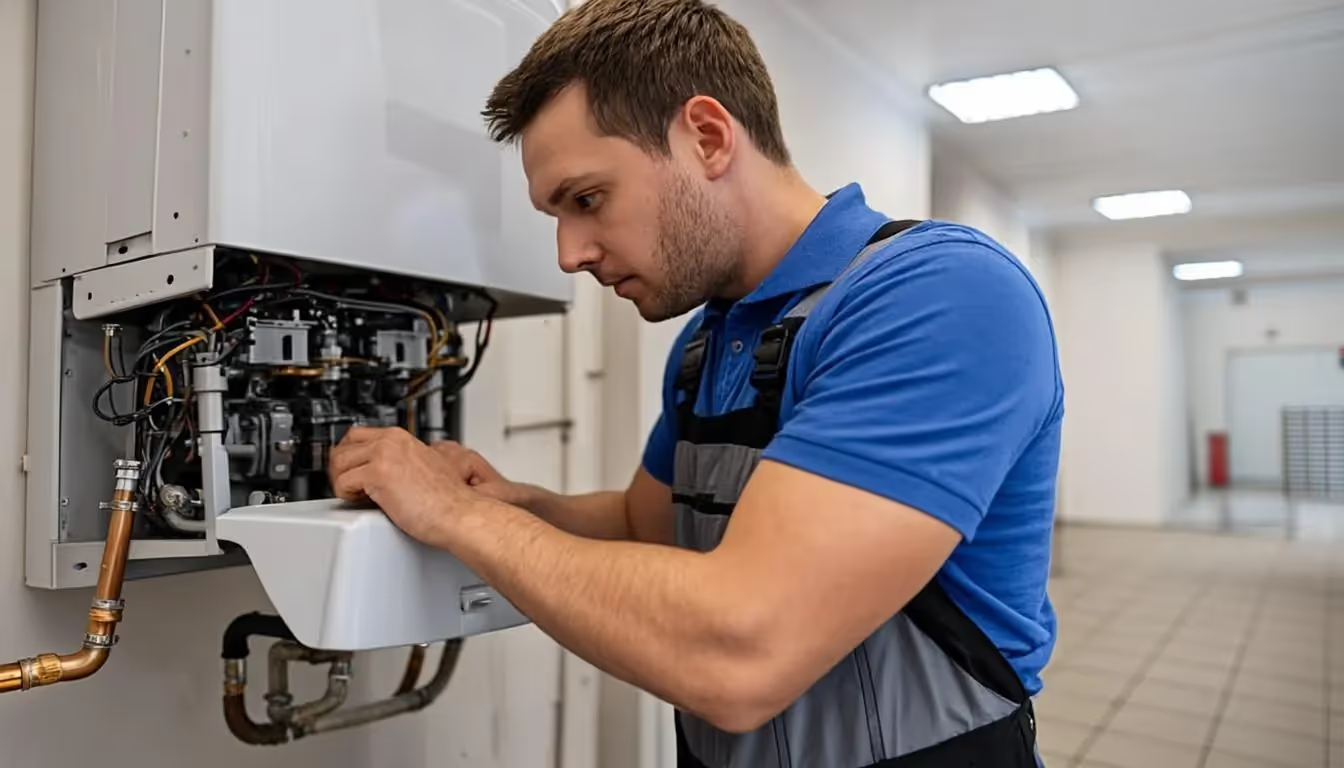
The Honest Answer Up Front
A furnace is sized in BTU per hour, and the number that matters is the output, the heat actually delivered into your ducts, matched to the heat your house loses on a near-worst night in your specific city. For Metro Vancouver homes that number lands somewhere between roughly 40,000 and 100,000 BTU per hour of output for the vast majority of detached houses, with townhomes, suites and laneway homes below that band and character homes with generous volumes sometimes above it. But quoting a number from that range without measuring the house is exactly the mistake this guide exists to retire.
Here is the uncomfortable industry truth: oversizing has been the default failure mode of furnace replacement for generations. Contractors sized up for insurance against complaint calls, for the one cold snap every five years, for warehouse stock, and for the peace of mind of never hearing that the house is cold. An oversized furnace wastes fuel quietly, short cycles its way through flame sensors and heat exchangers, and delivers the blast-then-drift comfort that homeowners describe as drafty without knowing why. The sizing calculation is the cheapest component attached to any furnace invoice, and the heating and furnace page shows what we install once the math is done.
A furnace earns its efficiency rating by matching output to load. Buy twice the size your house needs and you own the most expensive way to be uncomfortable.
0 jobs since 2010
Load calculations behind thousands of furnace installs across Metro Vancouver, coast to valley, one flat-rate sheet.
0 percent too big, seen weekly
The region's basements hold many furnaces half again to twice the size of their measured loads, installed by square-foot guesswork.
0 star rated, 26 reviews
Homeowners rating installs whose output matched the calculation instead of the sales pitch.
$0 diagnostic, credited
Temperature rise, airflow and cycle behaviour measured on your existing furnace, the fee deducted from any repair.
BTU Basics: Input, Output, AFUE
A BTU, British Thermal Unit, is the energy needed to raise one pound of water by one degree Fahrenheit, and furnaces speak in BTU per hour. The two numbers on the rating plate confuse homeowners constantly, so fix them firmly: input is the gas the furnace consumes, output is the heat it delivers, and the ratio between them is the efficiency. An 80 percent AFUE furnace with 80,000 BTU input delivers about 64,000 BTU of heat and sends the rest up the flue. A 96 percent unit with the same input delivers about 76,800.
That distinction matters because your house does not care what you burn, it cares what arrives. The load calculation produces a number in delivered BTU per hour, and the equipment selection converts that back to input through the efficiency rating. It also explains a quiet industry fact: when a homeowner replaces an old 80 percent furnace like-for-like on input, they are accidentally upsizing the delivered heat by roughly a fifth, and compounding whatever oversizing already existed. The correct replacement of an 80 percent, 100,000 BTU input furnace serving a 70,000 BTU load is a 96 percent unit at about 75,000 BTU input, not the same size cabinet with a better burner.
Capacity stages are the other half of the vocabulary. Single-stage furnaces run at full output or nothing, which is why their sizing has to be a compromise between the coldest night and the whole rest of the season. Two-stage furnaces run at a low stage, typically around two-thirds of full output, for the long mild bulk of a coastal winter and reserve high fire for the outflow nights. Modulating, variable-capacity furnaces adjust output in fine increments, running long, gentle cycles that hold temperature within a fraction of a degree. Our Carrier, Lennox and Trane brand pages map those tiers against local housing stock, and the two-stage tier anchors the region's 1980s-2000s subdivisions.
Why Square-Foot Rules Fail
The rules of thumb exist, so name them honestly before retiring them. Old installer folklore puts furnace sizing at roughly 30 to 60 BTU per hour per square foot, with cold-climate quotes at the top of the band and mild climates at the bottom. Multiply floor area by a number from a band that wide and you can be off by a factor of two in either direction, which is exactly the tolerance that separates a furnace that runs properly from one that short cycles for fifteen years.
The rules fail specifically where BC housing lives. A 1946 Kerrisdale character house with lathe and plaster, original double-hung windows and balloon framing loses heat through its envelope in ways a 2018 Coquitlam build with an airtight wrap, triple glazing and HRV ventilation simply does not. The same 2,000 square feet can carry a load near the top of the folklore band in the older house and sit far below the bottom of it in the newer one. Ceiling heights move the volume, a south-facing wall of glass swings the solar gains, a hillside North Vancouver exposure adds wind the calculation has to count, and a basement suite adds a separate load with its own schedule.
There is one legitimate use for the square-foot band: sanity-checking a completed calculation. If the measured load comes back wildly outside the band, somebody measured wrong, and a good estimator re-runs the numbers. Used that way, the rule of thumb is a backstop. Used as the sizing method, it is how the region accumulated its collection of half-again-too-big furnaces, each one installed by a well-meaning contractor who never opened a measuring tape.
What Actually Drives the Load
Every input in a real load calculation earns its place, and knowing them makes you a better buyer of furnaces and a sharper reader of quotes. In rough order of how much they move the number in this region:
Envelope era and insulation as built
Wall cavity depth, attic depth measured with a ruler, basement wall condition. The insulation the house actually has, not the insulation the listing claimed.
Windows: area, vintage, orientation
Every window counted, by age and facing. Original 1950s glazing and a 2018 retrofit are different buildings, and north glass versus south glass changes the answer again.
Air leakage and ventilation
Envelope tightness, fireplace dampers, exhaust fans and HRVs, which exchange heat deliberately while leaks waste it accidentally.
Volume and layout
Ceiling heights, floor count, room-by-room areas, which rooms share ducts, and where the thermostat sits relative to the rooms that run cold.
Site exposure
Hillside wind, canopy shading, corner exposure, and the design temperature of the specific city, covered in Chapter 6.
Two houses of identical square footage can carry heating loads that differ by half or more once those inputs are counted honestly, which is the entire reason the calculation exists. When a quote arrives without any evidence of this work, no room measurements, no window count, no design temperature, the quote is a square-foot guess with a brand name attached. The document to demand before signing is the written load number, comparable between quotes, with the design temperature on it.
The Manual J Process, Step by Step
The calculation is standardized, not mysterious. In Canada the reference method is the CSA F280 standard with the American Manual J as its close cousin, and the process runs the same way every time. What follows is what happens on a proper estimate visit, and what you should watch for if you want to see the math happen in your own hallway.
Room-by-room measurement
Every room measured, every window counted with orientation and vintage, producing a load per room that also predicts which rooms run warm or cold before anything is ordered.
Envelope inputs, not guesses
Insulation as built, attic depth measured, window vintage identified, leakage estimated from construction era and blower-door history where it exists.
Design temperature for your city
The near-worst expected outdoor temperature at your address, coastal -7C through valley -10C, which sets the cold end of the calculation.
Room loads summed to a whole-house load
The total heating load in BTU per hour at design conditions, the number your furnace output must match, with internal gains and setbacks weighed honestly.
Equipment selection and duct check
Models matched to the load at real output, then the blower and ductwork verified for the airflow the chosen furnace expects, covered in Chapter 9.

Design Temperatures by City
The design temperature is the near-worst outdoor temperature a sizing calculation assumes, chosen so the furnace holds the house at setpoint through the coldest hours that reasonably occur, without paying for capacity that serves one night a decade. Metro Vancouver's coastal mildness keeps that number gentler than most of Canada: roughly -7C in Vancouver proper, drifting toward -10C across the Fraser Valley and outflow-exposed communities.
The regional wrinkle is the outflow event. Between November and February, brief Arctic pushes drop temperatures to -10 or -15 C for a handful of nights, colder than the design temperature by design. A right-sized furnace rides those hours by running continuously, dipping slightly below setpoint overnight, or leaning on a supplementary source, which is a fair trade for the efficiency, comfort and equipment life of correct sizing the other 8,000-plus heating hours of the year. The trade works because those outflow hours are rare; in colder valleys like Abbotsford and Maple Ridge, the margin shrinks and the calculation matters more.
This is also where the heat pump conversation enters, because combined CleanBC Better Homes, BC Hydro, FortisBC and municipal top-ups can reach $16,000 for cold-climate heat pumps in 2026, and we complete the paperwork. A cold-climate heat pump holds rated capacity to -25 C, covers the same design loads the calculation finds, and replaces the furnace and AC decision with one decision. The heat pump page carries that path, and the same load calculation serves both conversations, which is the quiet argument for doing the math before choosing the fuel.
The BC Housing-Era Table
The region's housing stock sorts into recognizable eras, and while the era never replaces the calculation, it predicts which side of the folklore band your house lives on and which furnace tier usually fits.
| Housing era | Envelope character | Where the load tends to land |
|---|---|---|
| Pre-1940 character homes | Lathe and plaster, original double-hung windows, generous volumes, often renewed in patches | Toward the top of the band, favoring modulating tiers that handle old ductwork gently |
| 1946-1970 postwar | Minimal wall insulation by modern standards, basements often unfinished, single glazing common | High for the square footage, with big wins available from envelope work before equipment |
| 1970-1995 builder era | Fiberglass batts, double glazing, partial vapor barriers, the poly-B plumbing generation | Middle of the band, the heart of the region's straight-swap two-stage market |
| 1995-2010 subdivision era | Full insulation packages, better windows, tighter envelopes, HRVs in the later years | Below the middle, where like-for-like input swaps quietly oversize the delivered heat |
| 2010+ code builds | Airtight wraps, low-E glazing, mechanical ventilation, suite-ready layouts | Far below the folklore band, sometimes half what a same-size postwar house needs |
Read the table with Chapter 2 in mind and a pattern emerges: the region's replacement wave, the 1980s-2000s subdivisions of Surrey, Langley, Coquitlam and Burnaby, sits exactly where a like-for-like swap based on the old furnace's input is most likely to oversize the new one, because envelopes improved between the original install and today. The honest estimator sizes the house as it stands now, not as it stood when the old furnace went in, and our Surrey furnace work sees that correction made block by block.
What Oversizing Costs You
The damage from oversizing is not one dramatic failure, it is a stack of small permanent taxes. Short cycling leads them: the furnace blasts, satisfies the thermostat in minutes, and shuts down before the ductwork and rooms have reached steady state, which means the rooms furthest from the furnace run cold even as the thermostat says the house is warm. The blast-then-drift rhythm is what homeowners mean when they call a house drafty without being able to find the draft.
Mechanically, every start cycle is the most expensive second of a furnace's life. Ignition sequences stress the flame sensor and igniter, the parts that fail most in this climate and dominate the $180 to $650 repair band, and rapid heat-up-and-cool-down cycles stress the heat exchanger, the part whose failure ends the furnace's story. Condensing furnaces add another wrinkle: short cycles never reach the steady low-fire operation where their efficiency ratings live, so the 96 percent furnace delivers something closer to its worst-case behavior all season. The $129 annual tune-up measures combustion, static pressure and temperature rise, and short-cycle behaviour is usually the first thing it flags in an oversized system.
Undersizing is the rarer mistake and the milder one in this climate: a furnace 10 percent small runs continuously through the outflow nights and holds a degree or two below setpoint for a handful of hours, a trade almost any building scientist would take against the daily tax of oversizing. The genuinely undersized furnace, half the load, shows up as a house that never recovers from overnight setbacks in December, and the fix starts with the same calculation that should have been done the first time. Our repair versus replace guide and the furnace not working guide cover the symptoms in depth.
Blower, Ductwork and Temperature Rise
Furnace size is half of a matched pair, and the other half lives in your walls. Every furnace expects a specific airflow across its heat exchanger, measured in cubic feet per minute, and the ductwork decides whether it gets it. Static pressure is the resistance the duct system presents, and high static pressure is the quiet killer of furnaces and blowers alike: the ECM variable-speed blower strains against it, the temperature rise climbs past the rating plate's range, and the high-limit switch starts cycling the burner off to protect itself. An oversized furnace pushing its full output through undersized 1980s ductwork is the classic recipe, and the ECM motor replacement that follows runs $650 to $1,150.
The temperature-rise check is the honest bridge between the furnace and the ducts, and it belongs in every commissioning report: measure the air temperature entering and leaving the furnace, compare the difference against the range printed on the rating plate, and the ductwork's verdict is on the sheet. Within range means the airflow matches the output. Above range means the air is moving too slowly for the heat being delivered, and the fix is ductwork or blower settings, never a bigger furnace. This is why our commissioning runs static pressure and temperature-rise verification on every install, and why a proper quote includes a look inside the ducts before the equipment is chosen.
Tier selection then closes the loop between sizing and spending. An 80 percent single-stage furnace installs from $3,800, the tier that suits suites, rentals and budget-led swaps. High-efficiency two-stage furnaces run $5,500 to $9,000 and anchor the region's subdivision replacements, where the low stage carries the mild bulk of a coastal winter. Modulating tiers sit at the premium end, the natural pairing for character homes with old ductwork that rewards long gentle cycles. Whatever the tier, the size on the quote should trace back to the load number on the calculation, and thermostat or control installs at $220 to $420 configure the staging to how the household actually lives.
Reading Your Current Furnace
The starting point of every replacement conversation is the machine you already own, and its rating plate tells you more than most homeowners expect. Remove the blower door and look for the plate on the cabinet side: the input rating in BTU per hour, usually between 40,000 and 120,000 in residential equipment, the output rating or an AFUE percentage, and the temperature-rise range the manufacturer designed around. Divide output by input and you have the efficiency; multiply the input by the AFUE on a newer plate and you have the delivered heat.
Then run the arithmetic that reveals the region's quiet oversizing epidemic. If the plate says 100,000 BTU input at 80 percent, the house has been receiving 80,000 BTU of heat, and if a load calculation on the house as it stands today returns 65,000, the honest replacement is not a 100,000 BTU furnace of any efficiency, it is roughly an 80,000 BTU input unit at 96 percent, or a two-stage 100,000 whose low stage lands near the load. Old furnaces were routinely sized with a safety margin stacked on a safety margin, and houses have been re-windowed, re-insulated and air-sealed in the decades since. The replacement is the one chance in twenty years to correct the number, and it starts with reading the plate honestly.
If the plate is unreadable or the furnace's behaviour is the question rather than its size, the $89 diagnostic visit answers it with instruments instead of arithmetic: cycle behaviour, temperature rise, static pressure and combustion analysis, the fee credited to any repair that follows. Furnace repairs run $180 to $650 across brands, with the $129 annual tune-up booked before October as the maintenance that keeps any size of furnace honest, and after-hours calls carrying a $150 flat premium disclosed upfront.
The One-Page Cheat Sheet
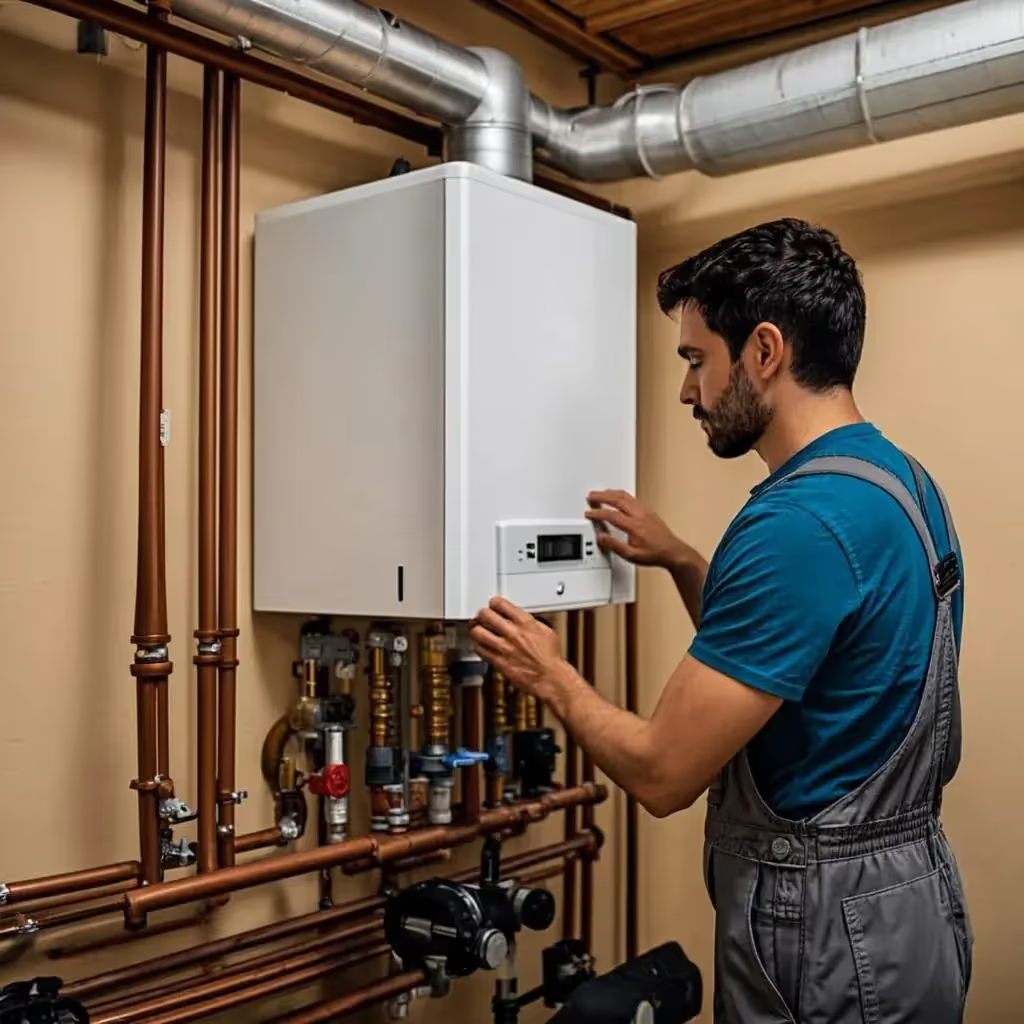
If you remember nothing else from eleven chapters, remember this table: the furnace sizing conversation compressed to the decisions that move money, comfort and equipment life.
| Question | The honest answer |
|---|---|
| How is a furnace sized? | Room-by-room heat-loss calculation at your city's design temperature, output in BTU per hour matched to the load |
| Is there a square-foot rule? | 30 to 60 BTU per square foot folklore exists, fails on BC's housing eras, and belongs only as a sanity check |
| What size do most homes land? | Roughly 40,000 to 100,000 BTU per hour of output for detached houses, measured before believed |
| Is bigger safer? | No, it short cycles, fouls sensors, stresses exchangers, and delivers drafty comfort at full price |
| Can it be slightly small? | Usually tolerable here, with the outflow nights covered by running continuously or supplementary heat |
| Design temperature? | About -7C coastal Vancouver, closer to -10C in the Fraser Valley, with outflow events to -10 or -15 C for a few nights |
| What does sizing cost? | The calculation is part of a free estimate, and the $89 diagnostic on the incumbent furnace is credited to any repair |
| Equipment tiers? | Single-stage 80 percent from $3,800, high-efficiency two-stage $5,500 to $9,000, modulating at the premium end |
Print it, screenshot it, bring it to the estimate. A sizing conversation that cannot survive this table never involved math, and in a region where the envelopes, the weather and the incentives all reward precision, the math is the cheapest component in the entire system. Call 604-615-2212 for a free estimate, and the measuring tape comes out before the brochure does.
Get the Math Before the Machine
A free estimate visit measures your home room by room and hands you the load number in writing, the tier options across every brand we install, and the heat pump conversion math beside it. Prefer to start with the incumbent? The $89 diagnostic reads its cycle behaviour and temperature rise on the spot, credited toward any repair.
Frequently Asked Questions
Services From This Guide
Load calculations, furnace replacement and repair across the twelve cities we serve, from Vancouver, Burnaby and New Westminster through Surrey, Langley, Delta and Richmond, out to Coquitlam, Port Coquitlam, Maple Ridge, Abbotsford and North Vancouver.
Furnace installation
Every size from a room-by-room load calculation, commissioned with static pressure and temperature-rise verification.
Furnace repair in Surrey
The subdivision heartland of the replacement wave, where like-for-like swaps most often need the sizing correction.
Heat pump conversion
The same load calculation answers the CleanBC path, with up to $16,000 in rebates and paperwork filed by us.
24/7 emergency service
No-heat calls answered around the clock, $150 flat after-hours premium, all brands serviced from stocked vans.
Related Guides
Furnace Repair vs Replace: The Honest Guide
The age-and-condition rules that decide whether the sizing correction happens this year or in three.
HeatingFurnace Not Working: The First Checks
The triage order for a no-heat morning before you decide the answer is a new furnace.
SeasonalWinter Prep for the Vancouver Home
The October checklist that pairs furnace commissioning with the envelope work sizing rewards.

Red Seal certified, licensed gas fitters (BC-PL-2019-4421), $2M insured and 15-plus years in the field, with more than 12,000 jobs completed across Metro Vancouver since 2010 and a 5.0-star rating across 26 Google reviews. We wrote this guide because furnace sizing is the single decision that determines whether a replacement delights or disappoints, and the industry's default answer, bigger, has been quietly wrong for decades. This is the math we run before every quote, including the times it sells a smaller furnace than the one being hauled away. To book instead of DIY, see furnace repair in Langley — same-day across the city.
More about our team →Get Your Furnace Sized Right
Book a $89 diagnostic or a free sizing estimate with a Red Seal gas fitter. You get the room-by-room load calculation in writing, the tier options across every brand we install, and a fixed flat-rate price for the size your house needs, not the one a warehouse needs to move. Zero obligation, same-day quotes on most calls. If you would rather hand this to a pro, our heating & furnace services pages cover Metro Vancouver.
No heat right now?
No-heat calls are answered 24/7 with live dispatch and flat after-hours pricing posted in advance. Most repairs finish on the first visit in the $180 to $650 band, with the $89 diagnostic credited to the work, and a proper diagnosis is also how most oversizing gets discovered.
Call 604-615-2212 WhatsApp Us